Friday, 5 December 2014

Saint-Germain-en-Laye

Saint-Germain-en-Laye has a long history dating back to 1122. It has the honour of being the birthplace of Louis XIV who, as an adult, would use the château as the base of his court - until Versailles was built. Originally, there was a new and an old castle which combined made up the royal palace but Louis XIV had the old palace - long neglected - demolished in the 1660s.

Andre Le Nôtre was given his chance to impress the King when in 1669 he was tasked with redoing the gardens which he completed four years later.

When Louis XIV had definitely moved his court to Versailles he let the exiled King James II of England use Saint-Germain-en-Laye as his royal residence. Unfortunately for the English King he would never return to England and he is buried in the nearby church. The château never really regained royal favour and continued to serve as a residence for the exiled English royal family.


Courtyard


View of the castle and gardens in 1614

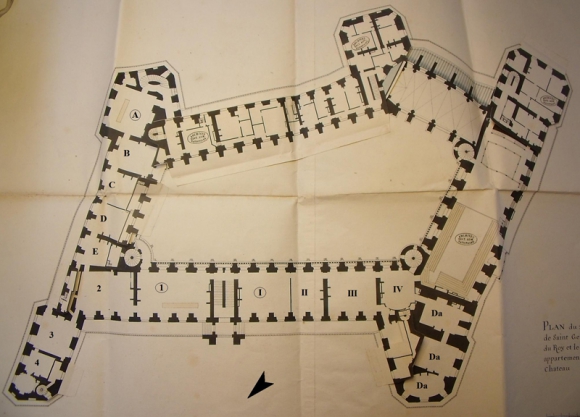
The floor plans:


2nd floor

Thursday, 4 December 2014

The English Garden

The English Garden, designed by Richard Mique, took the place of Louis XV's botanical garden. The English style was wilder and more natural than the straight lines and methodical design that was characteristic for the French garden. As the works of Rousseau became more and more popular, so did this style and Marie Antoinette was more than pleased to be able to break the rather stiff garden design that were usually the style at Versailles.

The English Garden contains these:

The Belvedere 

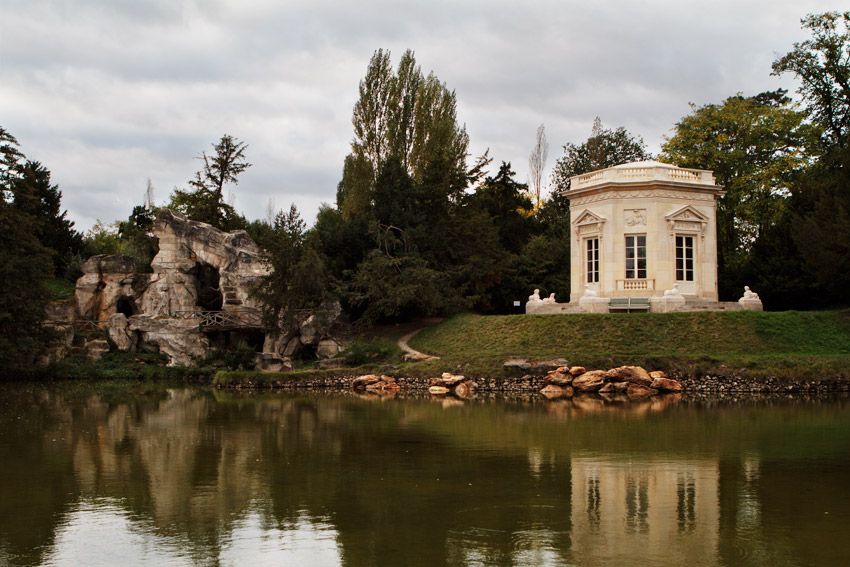
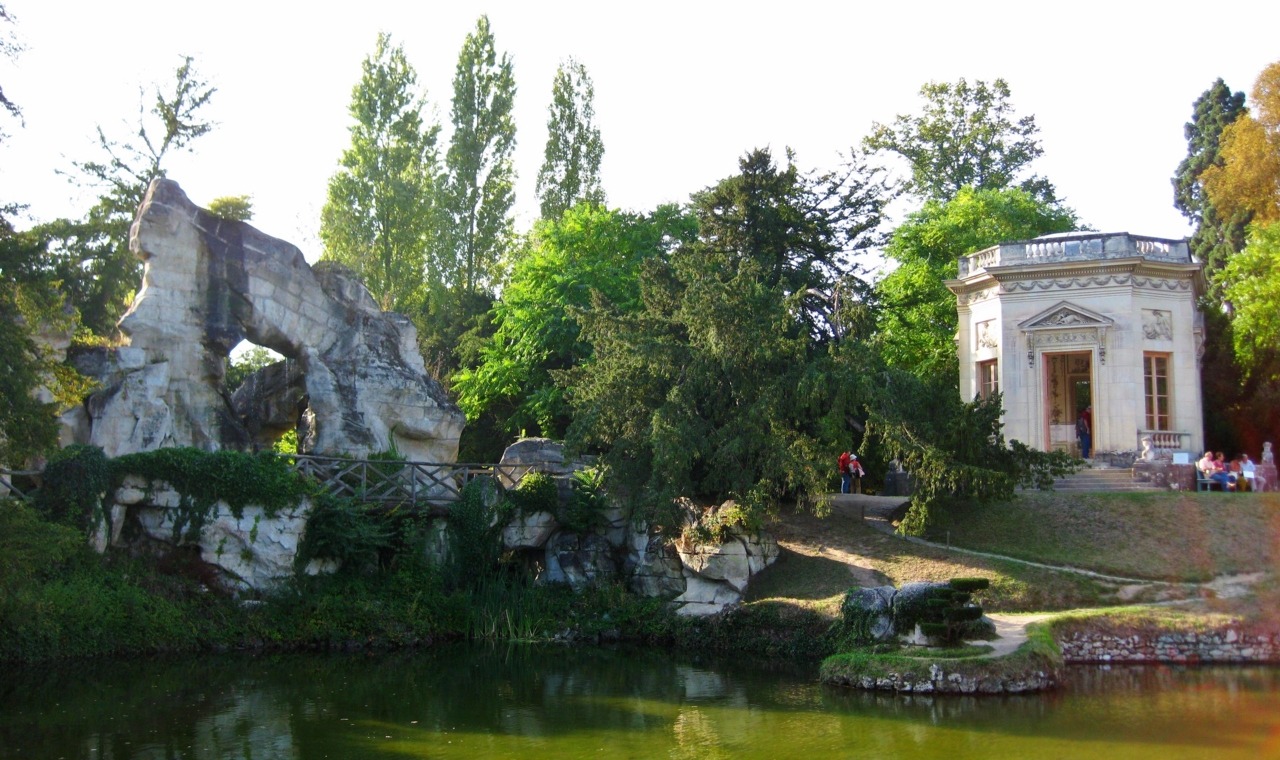
Finished in 1777 by Richard Mique, the Belvedere is decorated by Deschamps who chose a frieze decorated with fruits and flowers. Also, hunting and gardening are depicted in detailed pediments while the windows refers to the seasons. The Belvedere consists of one large living room with a mosaic floor designed by Le Riche.
The Belvedere is located such as to be overlooking the lake; the style of the exterior is inspired by the Asian padogas.


The restored murals


The Love Temple

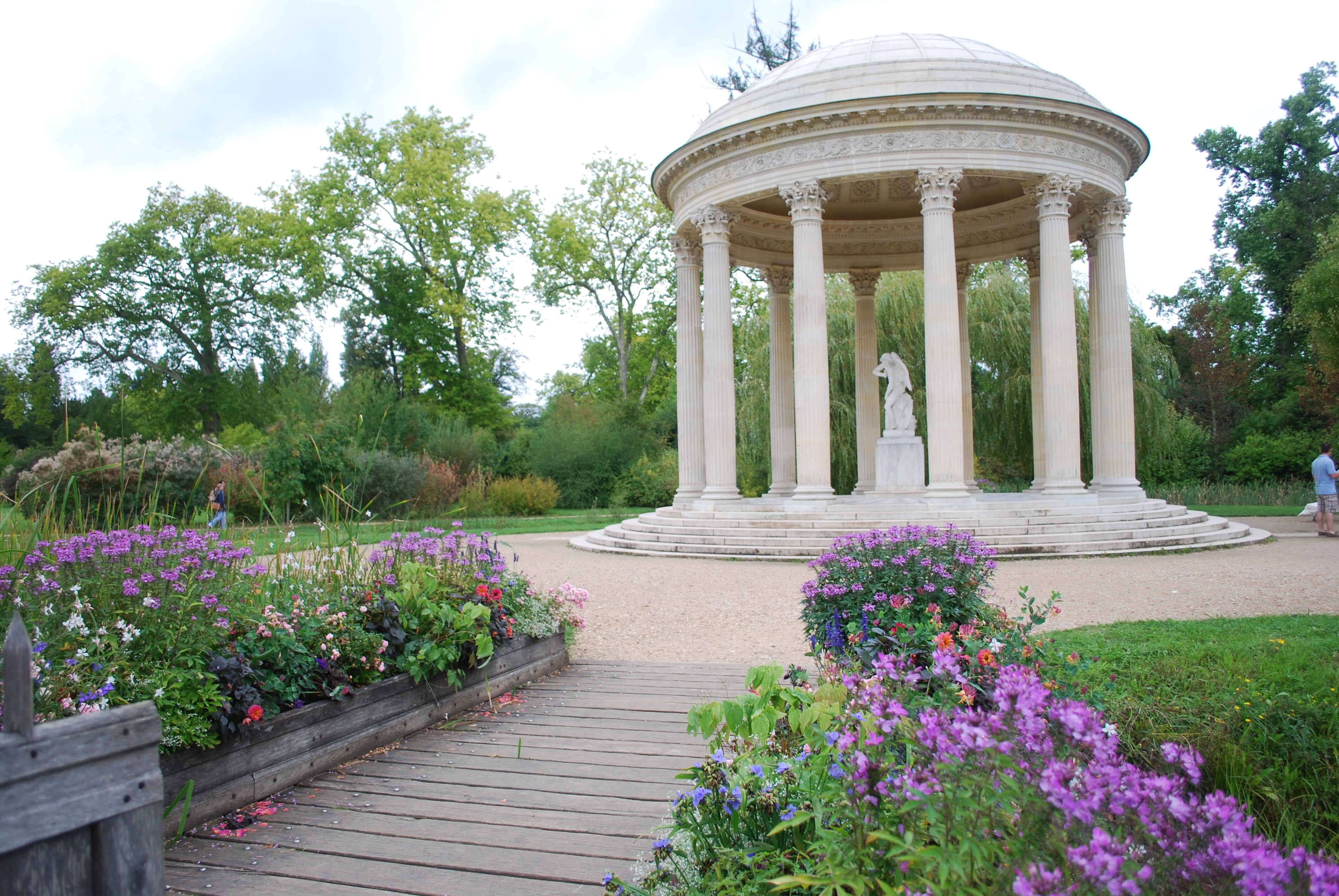
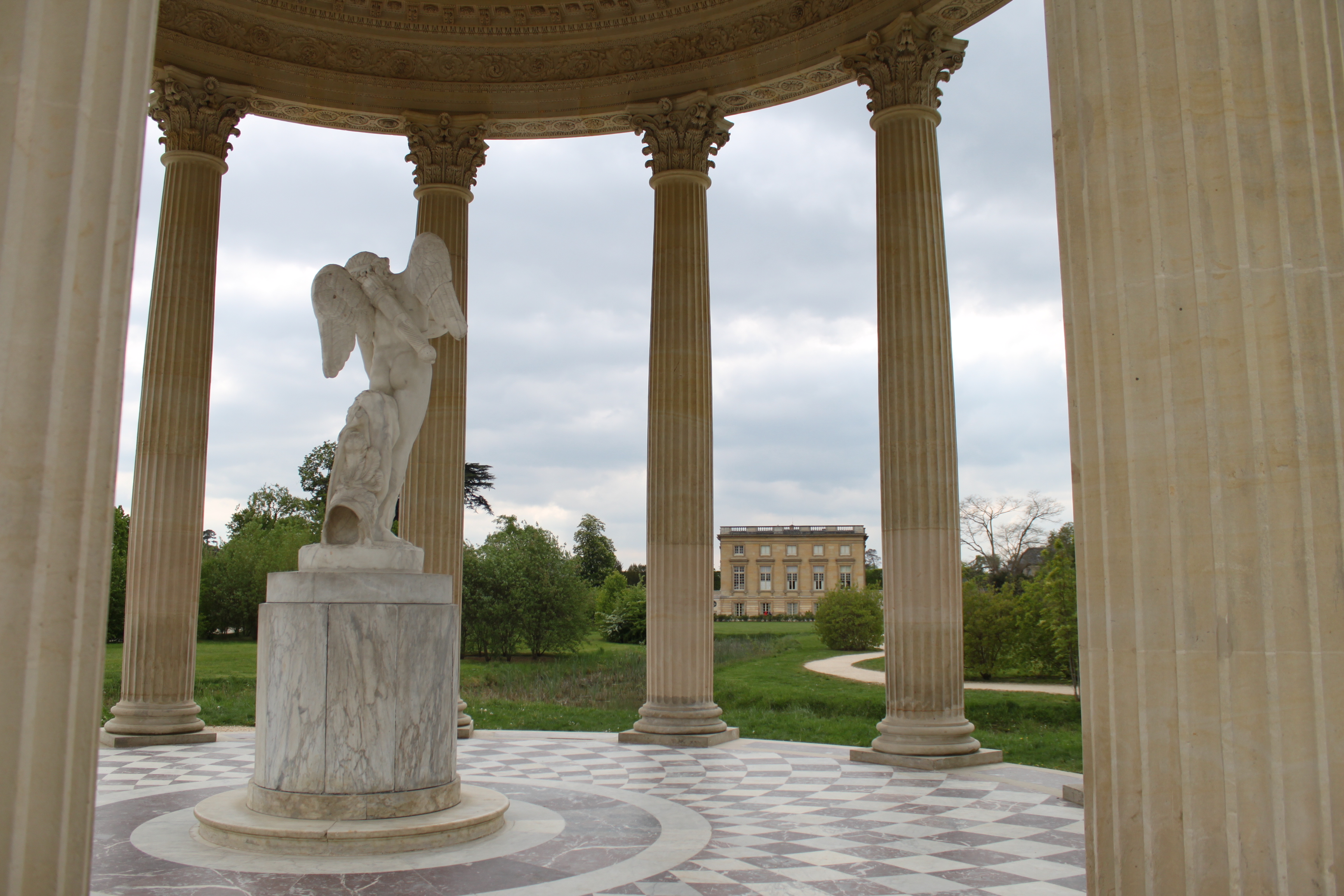
The Love Temple is one of the most recognizable aspects of the English garden and is visible from the Queen's Bedroom in the Petit Trianon. Richard Mique completed the design for the temple which was finished in 1778 and made entirely out of marble. Once again Deschamps was called in to decorate the temple which was dedicated to love, particularly the love between Louis XVI and Marie Antoinette. Of course, Cupid is a central figure in the design.
When Marie Antoinette hosted parties here the temple functioned as a key figure in theatrical performances.


The Rock, Snail Monument and The Grotto

The Rock was quite difficult to create (being completely out of place in the gardens) and was not finished until 1782. It was designed in such a way to allow water to cascade down the rocks and into the lake. The Rock is located right next to the Belvedere.


From the Grotto a little gap in the rocks Marie Antoinette could see who was coming. In those cases when she did not quite want to talk she could always escape down a little staircase. Marie Antoinette considered this shaded and secluded little spot one of her favourite places in her gardens. In fact the entrance itself was difficult to detect for a newcomer. Legend has it that Marie Antoinette was sitting in that exact spot when she was informed that a mob was headed towards Versailles...


Entrance to the grotto


Wednesday, 3 December 2014

The Water Theatre Grove

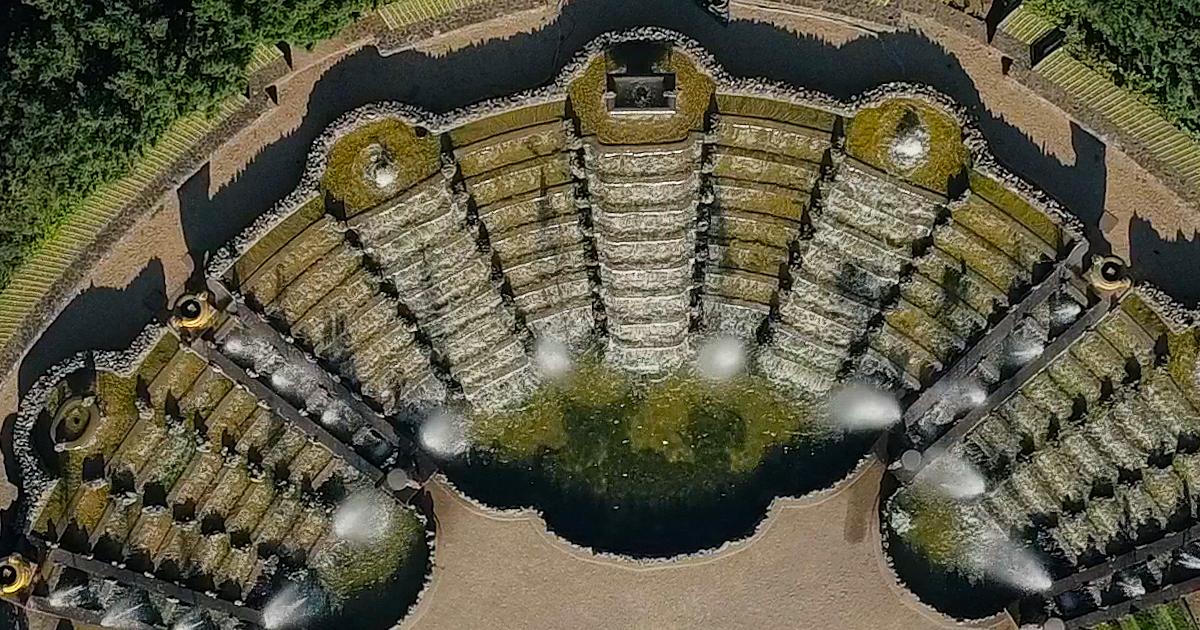
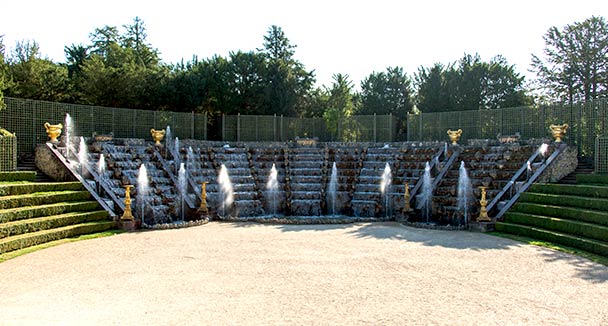
Built by Le Nôtre between 1671 and 1674 it was one of the most elaborate pieces of the garden. As such it became the favourite grove of Louis XIV. It would be used for outdoor theatrical performances which were a great favourite with the Sun King's court.

Sadly, for the Water Theatre Grove, neither Louis XV nor Louis XVI had any particular fondness for the grove and it was left pretty much to itself after Louis XIV died. It was not until 1775 Louis XVI had the Grove completely demolished and gave way to a large, circular lawn. The fate of the Grove was further damaged in the 1990's when two successive storms further damaged it and ever since it has been a storage area.

Recently, Louis Benech was chosen to give the grove a new look and restore it to match the rest of the park.

Since the original garden is long gone we have nothing but these contemporary drawings of the layout to show for it.

Billedresultat for versailles water theatre

Billedresultat for versailles water theatre

Billedresultat for versailles water theatre


Friday, 28 November 2014

Château d'Amboise

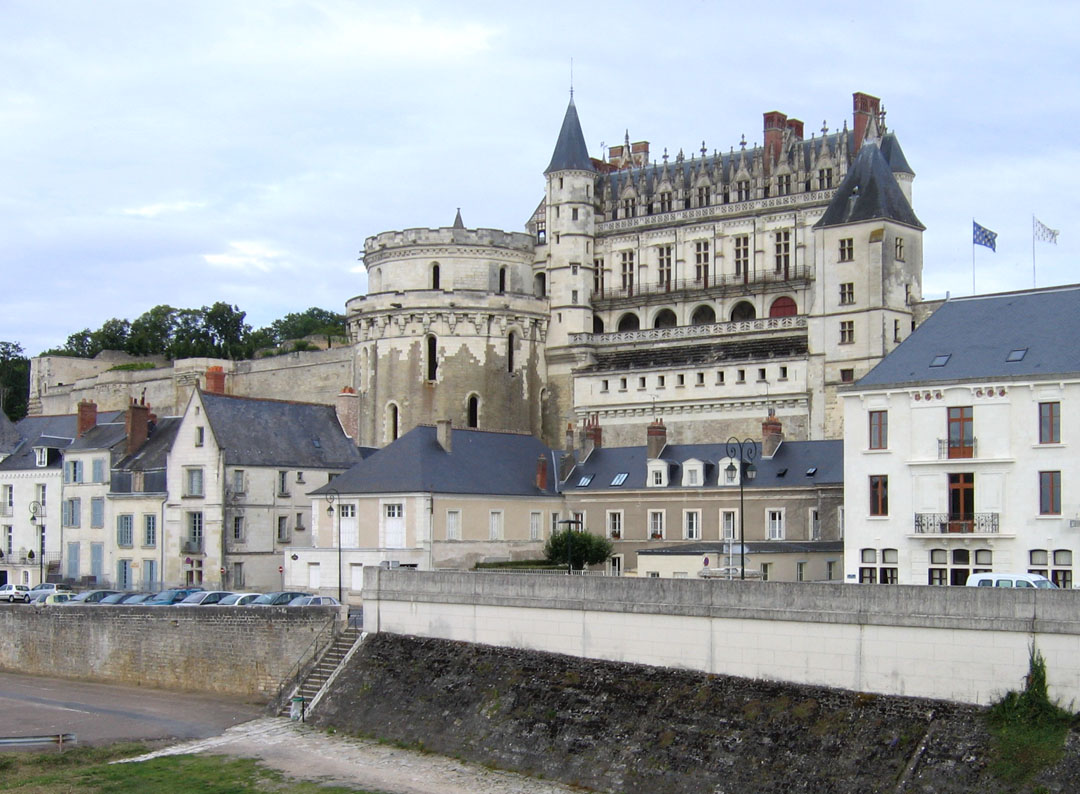
Having been in the hands of nobility ever since the 8th century the Château d'Amboise was confiscated by the Crown in the 15th century by Charles VII. The château received its fair part of royal attention and was both expanded and glorified in such a degree that even Francis I was comfortable there. Catherine de Medici and her husband, Henri II, raised their children here and Leonardo da Vinci was once a guest.

It is quite possible that the château could have remained in power if it had not been for the Amboise Conspiracy during the French Wars of Religion which effectively cooled the French King's taste for it. They can hardly be blamed since about 1200 were hung from the walls until the stench became so unbearable that the royal family left. Having been unoccupied for years the château was given to Gaston d'Orlèans (brother of Louis XIII) but returned to the Crown upon his death. Louis XIV used the castle as a prison during the Fronde and when that matter was settled it was handed over to Nicolas Fouquet - until his disgrace - and then to the Duc de Lauzun.

Louis XV had no real admiration for the château either and gladly bestowed it on his minister, the Duc de Choiseul. Sadly, most of the original castle were destroyed during the First Empire.


File:SchlossAmboiseGrundriss.png
1576


Council Chamber

House of Broglie

Area of Origin: Piedmont

The House of Broglie was established in France since 1643 when they moved from their original Italy to France.

Upon the family's removal to France the head of the family, François-Marie de Broglie (who already held the title of Comte) decided to join the French army. He was successful and was eventually made lieutenant general - a title which he bore to his death in 1656.
François-Marie's son and heir, Victor-Maurice, followed his father's footsteps and was fortunate enough to serve under some of the most famous military leaders in French history including Turenne and Condé. He, also, made his way up the ladder being first made aid-de-camp in 1676, then lieutenant general like his father in 1688 and finally reached the top as a Marshal of France in 1724.

Despite both François-Marie and Victor-Maurice's remarkably successful military careers the family would still have to wait until 1742 until becoming elevated to the rank of Ducs. The title of Prince of the Holy Roman Empire was added by the Holy Emperor Francis I in 1759 which meant that all younger members of the family were addressed as "Prince".

Blason de Broglie
The Family Crest


Francois-Marie, who was head of the family when they moved to France

Victor-François de Broglie.jpg
Victor-Francois, who was granted the title of Duc

The Family Estates:

Château de Broglie
Now converted into a hotel but the castle is still in the family's possession

Your Royal Library

There are plenty of books on this particular subject and in case you do not want to scroll through the Reading the Realms-section - or just want a clear view - here is a list of books that just might interest you.

The Kings, Queens and Courtiers:

  • Marie Antoinette: The Journey by Lady Antonia Fraiser
  • Louis XIV by Dunlop
  • Memoirs of the Duc de Saint-Simon
  • Madame de Pompadour: Mistress of France by Christine Pevitt Algrant
  • Louis the Beloved by Olivier Bernier
  • Madame de Sévigné's Letters
  • Brother to the Sun King: Philippe, Duke of Orleans by Nancy Nichols Barker
  • First Lady of Versailles: Marie Adélaide of Savoy, Dauphine of France by Lucy Norton
  • The Secret Wife of Louis XIV: Madame de Maintenon by Veronica Buckley
  • The Lost King of France by Deborah Cadbury
  • Madame du Barry: the Wages of Beauty by Joan Haslip
  • The King's Midwife: A History and Mystery of Madame du Coudray by Nina Rattner Gelbart
  • A Day with Marie Antoinette by Helene Delalex and Francis Hammond
  • Marie Thérèse: the Fate of Marie Antoinette's Daughter by Susan Nagel
  • Love and Louis XIV by Lady Antonia Fraiser
  • The Real Queen of France: Athénaïs and Louis XIV by Lisa Hilton
  • The Man who Outshone the Sun King by Charles Drazin
  • Louis XIV: a Royal Life by Olivier Bernier
  • Philippe, Duc d'Orlèans: Regent of France by Christine Pevitt
  • Princesse of Versailles: The Life of Marie Adelaide of Savoy by Charles W. Elliot
  • La Grande Mademoiselle at the Court of France by Vincent J. Pitts
Lady Antonia Fraiser's "Marie Antoinette: the Journey" - my favourite book on Marie Antoinette

The Palace & Gardens

  • Versailles: A Private Invitation by Francis Hammond and Guillaume Picon
  • The Sun King's Garden by Ian Thompson
  • Vaux and Versailles by Claire Goldstein
  • From Marie Antoinette's Garden by Élisabeth de Feydeau
  • The Gardener of Versailles by Alain Baraton
  • Versailles: a Biography of a Palace by Tony Spawford
  • Gardens of Versailles by Beatrix Saule
Secret Versailles
"Versailles: A Private Invitation" offers an inside glimpse of the palace
Fashion & Jewellery
  • Seventeenth and Eighteenth Century Fashion in Detail by Avril Hart
  • Fashion Victims by Kimberly Chrisman-Campbell
  • 18th century Embroidery Techniques by Gail Marsh
  • Dress in France in the 18th Century by Madeleine Delpierre
  • The Beau Monde: Fashionable Society in Georgian London by Hannah Greig
  • Embroidered with White by Heather Toomer
  • Queen of Fashion: What Marie Antoinette Wore to the Revolution by Caroline Weber
  • Eighteenth Century French Fashion in Full Colour by Stella Blum
  • Dressed to Rule by Philip Mansel
  • Fashion Prints in the Age of Louis XIV by Kathryn Norberg and Sandra Rosenbaum
Seventeenth and Eighteenth-Century Fashion in Detail: The 17th and 18th Centuries by Avril Hart
A part of a series of fashion history

Court Life & Events
  • The Queen's Necklace by Frances Mossiker
  • The Affair of the Poisons: Murder, Infanticide and Satanism at the Court of Louis XIV by Anne Somerset
  • The Triumph of Pleasure: Louis XIV & the Politics of Spectacle by Georgia J. Cowart
Another book in my inventory! The Affair of the Poisons gives an insight into a far darker side of Louis XIV's court

Furniture & Art
  • French Painting in the Seventeenth Century by Alain Mérot
  • Furnishing the Eighteenth Century by Dena Goodma and Kathryn Norberg
  • Paris: Life and Luxury in Eighteenth Century France by Charissa Bremer-David
  • French Interiors of the 18th Century by John Whitehea
  • Pastel Portraits: Images of 18th Century Europe by Katharine Baetjer and Marjorie Shelly
  • Between Luxury and Everyday by Katie Scott
  • Making Up the Rococo: Francois Boucher and his Critics by Melissa Hyde
  • 17th and 18th Century Arts: Baroque Painting, Sculpture, Architecture by Julius Held and Donald Posner 


French Society
  • The Splendid Century: Life in the France of Louis XIV by W. H. Lewis
  • Royal Censorship on Books in 18th-Century France by Raymond Birn
  • Painters and Public Life in Eighteenth Century Paris by Thomas Crow
The Splendid Century: Life in the France of Louis XIV
A wider look at what France looked like during Louis XIV

Fiction:
  • Mistress of the Revolution by Catherine Delors
  • Farewell, My Queen by Chantal Thomas
  • Dancing to the Precipice by Caroline Moorehead
  • The Man in the Iron Mask by Alexandre Dumas
  • To Dance with Kings by Rosalind Laker
  • Days of Splendour, Days of Sorrow by Juliet Grey


Everything Else:

  • The Libertine; the Art of Love in 18th-century France by Michel Delon
  • The Road from Versailles: Louis XVI, Marie Antoinette and the Fall of the French Monarchy by Munro Price
  • The Devil in the Holy Water: the Art of Slander from Louis XIV to Napoleon by Robert Darnton
The Libertine
"The Libertine"

Saturday, 22 November 2014

The Pouf

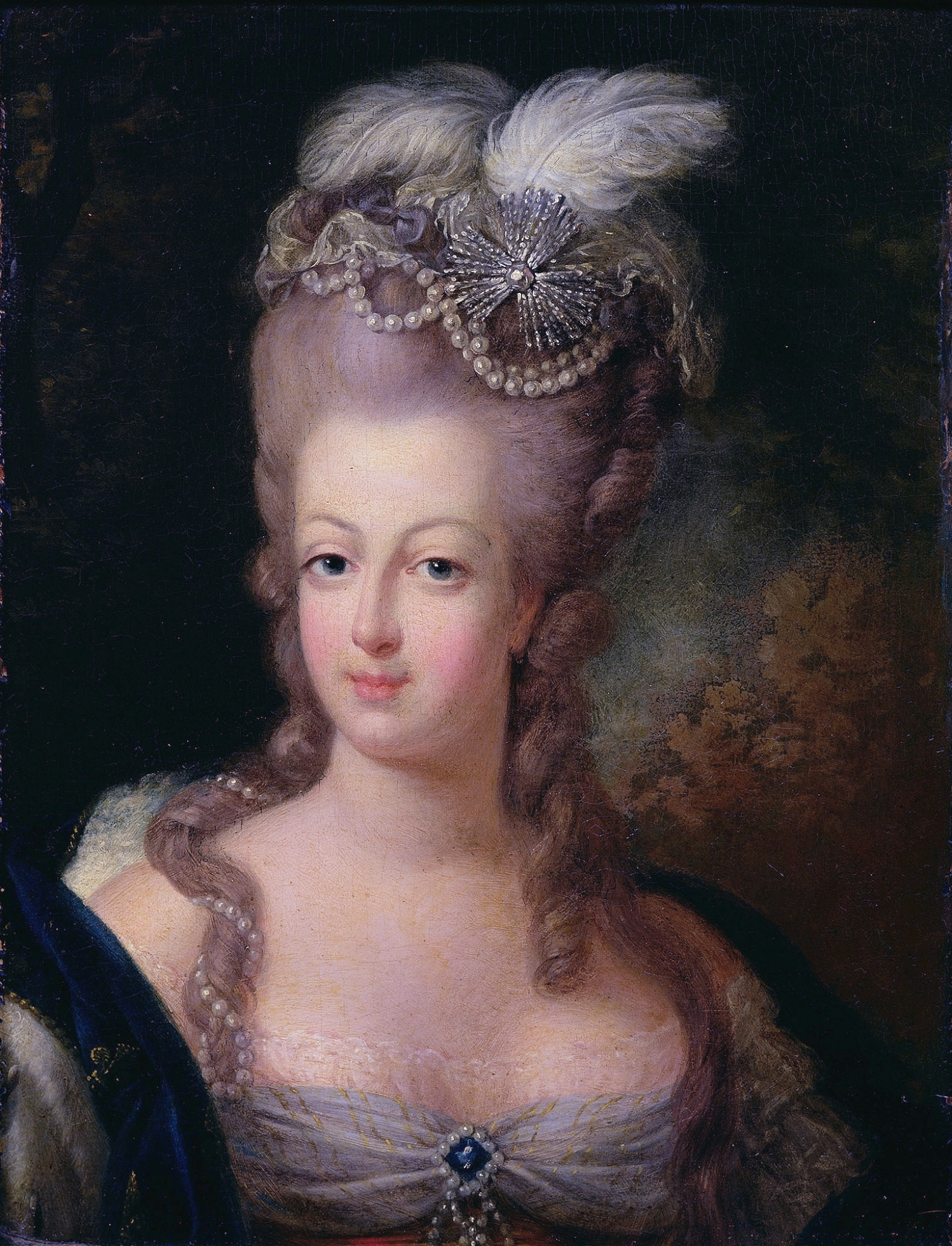
Marie Antoinette was responsible for introducing the Pouf to the French court in 1774 when she appeared at Louis XVI's coronation with such a hairstyle. Immediately, it spread like wildfire.

The Pouf was ideal to express the wearer's mood, celebrating an event or even the political view; there was no limit for the creativity that could be put into the hairstyle. The hair would be arranged high above the head in rolls of the wearer's natural hair intertwined with false hair. Once the rolls were safely fastened decorations could be added. Gemstones, ribbons, pearls and feathers were popular but for special occasions more was needed. Most of you have probably heard of the time when Marie Antoinette wore a small ship in her hair to commemorate the French rescue of the American colonies which did indeed happen.


Marie Antoinette was herself quite a fan of ostrich-feathers, as can be seen from the portrait above. Besides the feathers she is also wearing diamond jewellery, gauze and long rows of pearls are intertwined with the Queen's hair. Normally, the feathers would be snow-white but on special occasions they could be dyed to match a gown.

Marie Antoinette's English friend, the Duchess of Devonshire, was a keen follower of the trend. The famous portrait of her shows the Duchess showcasing the hairstyle which has been topped off by a large hat.
Back in France Leonard and Rose Bertin seemed locked in a rivalry of who could create the most outrageous hairstyles. Admittedly, Leonard had the upper hand in the beginning of the trend's life span.

Some of the more elaborate poufs. Notice that the lady to the left is actually wearing a hat topped with a lot
of feathers. The lady to the right has decided to use jewellery as well.


The Pouf Sentimental
This kind of pouf was first seen on the Duchesse de Chartres at the opera in April 1774 and as the name suggests was adorned with symbols relating to events in the wearer's life. The Duchesse's hairstyle was immense. 14 yards of gauze were wrapped around a tower as well as two figures representing the baby Duc de Beaujolais in his nurse's arms with an African boy (a particular favourite of the Duchesse) at her feet. A parrot and a plate of cherries were also added.

Leonard - favourite hairdresser of Marie Antoinette - was behind this masterpiece and he was to become a seemingly endless source of inspiration to the court ladies.

The Duchesse de Lauzun made another spectacle when she appeared showing a roaring sea complete with little ducks swimming near the shore where a hunter was aiming at them as well as a mill at the top. The miller's wife was with an abbé while the miller was leading a donkey. Needless to say, the price of these Poufs Sentimental could be quite steep.


A pouf sentimental to celebrate the defeat of the British
Over time the height of the Pouf rose to astonishing heights but you will find more on that subject in a later post.