Louise-Élisabeth de Bourbon was the first-born daughter of Louis XV and Marie Leszczynska and the only one to get married. Her union to Felipe of Parma was planned in 1739 and celebrated twice: first in January and then in August of that year.
26 January: The Wedding Contract Celebrations
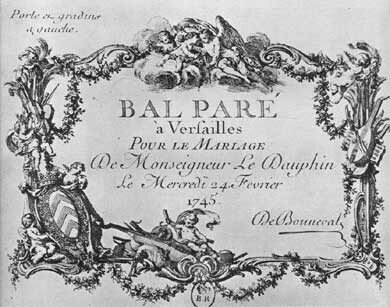
The first was held on 26 January and was to celebrate the agreement between the kings of Spain and France. Technically, the marriage was not to be announced before February but rumours travels fast and everybody already knew by this point. Originally, the king had planned no less than three consecutive balls but Cardinal Fleury considered them to be too expensive and had it reduced to one.
The celebration was divided into four parts: a banquet, a dance, a masked ball and illuminations. For the first time a ball was held in the Salon of Hercules; the ceiling had been completed just three years earlier. Along the walls tiers of seats were erected to accommodate the most prominent members of court. The festivities were planned to begin at five o'clock in the afternoon but a scramble for the seats caused a disruption. It even got so bad that the king had to be sent for to settle matters. Finally, at seven o'clock the king went to the queen's chambers where she had been ready for the last two hours.
The king and queen were splendidly dressed. Louis XV wore a blue velvet suit lined with white satin and trimmed with diamond buttons; the Order of the Holy Spirit sparkled from his chest. The queen's gown was of white silk with embroidered flowers in gold thread. A necklace from the Crown Jewels had been brought out for the occasion; the Sancy and the Regent diamond both shone from around her neck. The royal couple were seated in two armchairs before the princesses of the blood and the ambassadors and envoys behind them.
The dance was opened by Louise-Élisabeth and her brother, Louis Ferdinand, as a stand-in for the bridal dance. Fourteen other couples followed suit. The salon was lighted with an immense number of candles; these - combined with the large number of guests - made the room unbearably hot. The windows had to be thrown wide open.
Two hours later - at nine o'clock - refreshments was served in baskets carried around by servants. The king retired to his own apartment where he enjoyed his supper while the queen remained in the salon to pray before she, too, went to dine in his apartment.
At midnight, the masked ball began. The entire grand apartment of the king (including the Hall of Mirrors) were used for the occasion. Every room was greatly illuminated by hundreds of candles; between 250-300 musicians were placed in their stands to provide the subtle background music. Only the Hall of Mirrors were devoid of musicians; instead, benches were placed along the walls for people to rest on. Three salons were dedicated to dancing - including the salons of Hercules and Mars. Marie Leszczynska stayed at the ball until four in the morning and then went to Mass before going to bed. Her royal husband, however, did not arrive until two and then stayed until seven o'clock.
Louis XV appeared to have enjoyed himself immensely at the masked ball. His distaste for being constantly in the spotlight made it an excellent excuse for disguising his identity. Thus, he changed his costume several times (once he was a bat) and amused himself by asking the guards when the king had arrived only to be told that His Majesty had not yet come.
During the night, a banquet was set up at the end of the Hall of Mirrors as well as in the Salons of Peace and War. Cold meats, pies, confectionary, fruit and pates were spread out on the table and was served with wine, liqueurs and hot drinks. All through the feasting, each table was monitored by an officer in the Maison de la Bouche du Roi.
Finally, every courtyard of the palace was magnificently lit up in an extravaganza of light. Likewise, the chapel, the main staircases and the principal galleries were bright as day.
Exactly what these wedding celebrations cost seems somewhat unclear. One note mentions a payment of 39.533 livres for the celebrations hosted by His Majesty on 26 January while another estimate places the cost at up to 40.337 livres.
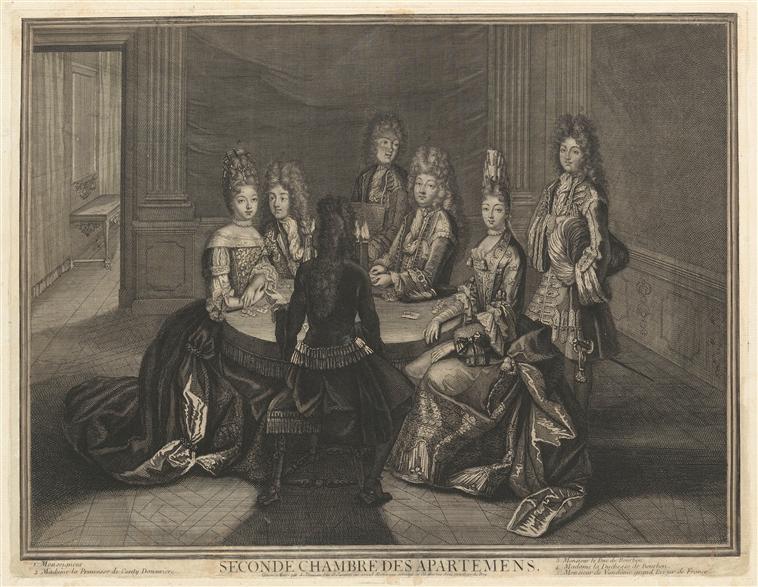
By six o'clock Louis XV and Marie Leszczynska arrived in the Hall of Mirrors were tables were put in place for gambling. The gamblers need not strain their eyes for once again the palace was splendidly illuminated. The bride sat with her brother, the Dauphin, and her twin sister Henriette at the cavagnole table while their parents indulged in lansquenet. The gambling lasted for three hours until the king rose and gave the signal for his court to follow him outside.
In the gardens a temporary "temple" had been erected facing the Hall of Mirrors. The main part was shaped as an Ionic temple with the crowns of Spain and France firmly fastened above. Virtues of Wisdom and Love were represented as well as the goddess of marriage. Nothing had been spared in the decoration of this temple. Minerva was seated atop of cannons and weaponry while several angelic children spoke a clear message of the intention of the marriage: to produce an heir.
Fifteen minutes after the courtiers had assembled in the gardens, the sound of cannons could be heard from the Paris Town Hall and the royal Arsenal. This served as a signal to begin an exhibition of water and fire sprouts from the temple which took the shape of an erupting volcano. This in turn ignited the fireworks that sprung up from the temple and into the dark night sky.
The fireworks were finished and the court returned inside. The royal family made its way to the queen's apartment where they had supper with the princesses of the blood and several privileged ladies. While the royal family ate the rest of the court was treated to an illumination in the gardens. One particularly clever trick had been employed to bathe the temple in red, yellow, blue and green light: very thin horn leaves had been coated in various varnished and then lighted from behind.
The statutes were adorned with garlands of flowers while the flower pots were lighted as well. Like, the previous celebrations the courtyards and staircases were illuminated to a great extent. The cost of the celebrations are estimated to have been between 70.000 pounds and 116.615 pounds.
Several thousand people attended this marriage celebration - both courtiers and commoners from Paris. These would lounge around the gardens or rest on the benches erected for this particular occasion. Some of the Parisians had to remain at the palace until the next day because there were far too few carriages to take them all back to Paris during the night.
The king and queen were splendidly dressed. Louis XV wore a blue velvet suit lined with white satin and trimmed with diamond buttons; the Order of the Holy Spirit sparkled from his chest. The queen's gown was of white silk with embroidered flowers in gold thread. A necklace from the Crown Jewels had been brought out for the occasion; the Sancy and the Regent diamond both shone from around her neck. The royal couple were seated in two armchairs before the princesses of the blood and the ambassadors and envoys behind them.
 |
| Madame Première |
The dance was opened by Louise-Élisabeth and her brother, Louis Ferdinand, as a stand-in for the bridal dance. Fourteen other couples followed suit. The salon was lighted with an immense number of candles; these - combined with the large number of guests - made the room unbearably hot. The windows had to be thrown wide open.
Two hours later - at nine o'clock - refreshments was served in baskets carried around by servants. The king retired to his own apartment where he enjoyed his supper while the queen remained in the salon to pray before she, too, went to dine in his apartment.
At midnight, the masked ball began. The entire grand apartment of the king (including the Hall of Mirrors) were used for the occasion. Every room was greatly illuminated by hundreds of candles; between 250-300 musicians were placed in their stands to provide the subtle background music. Only the Hall of Mirrors were devoid of musicians; instead, benches were placed along the walls for people to rest on. Three salons were dedicated to dancing - including the salons of Hercules and Mars. Marie Leszczynska stayed at the ball until four in the morning and then went to Mass before going to bed. Her royal husband, however, did not arrive until two and then stayed until seven o'clock.
Louis XV appeared to have enjoyed himself immensely at the masked ball. His distaste for being constantly in the spotlight made it an excellent excuse for disguising his identity. Thus, he changed his costume several times (once he was a bat) and amused himself by asking the guards when the king had arrived only to be told that His Majesty had not yet come.
 |
| Philippe of Parma - nineteen years old at the time of the marriage |
During the night, a banquet was set up at the end of the Hall of Mirrors as well as in the Salons of Peace and War. Cold meats, pies, confectionary, fruit and pates were spread out on the table and was served with wine, liqueurs and hot drinks. All through the feasting, each table was monitored by an officer in the Maison de la Bouche du Roi.
Finally, every courtyard of the palace was magnificently lit up in an extravaganza of light. Likewise, the chapel, the main staircases and the principal galleries were bright as day.
Exactly what these wedding celebrations cost seems somewhat unclear. One note mentions a payment of 39.533 livres for the celebrations hosted by His Majesty on 26 January while another estimate places the cost at up to 40.337 livres.
26 August: The Proxy Wedding
Exactly seven months after the ball at Versailles the marriage was celebrated in proxy. Louise-Élisabeth was dressed in her wedding gown and taken to the chapel where the Duc d'Orléans acted as proxy for the Duke of Parma. Then, she was taken back to her apartment where she received the customary congratulations by courtiers and ambassadors alike. This lasted the entire afternoon which must have exhausted her - she was just twelve years old after all. |
| The proxy marriage in the chapel |
By six o'clock Louis XV and Marie Leszczynska arrived in the Hall of Mirrors were tables were put in place for gambling. The gamblers need not strain their eyes for once again the palace was splendidly illuminated. The bride sat with her brother, the Dauphin, and her twin sister Henriette at the cavagnole table while their parents indulged in lansquenet. The gambling lasted for three hours until the king rose and gave the signal for his court to follow him outside.
In the gardens a temporary "temple" had been erected facing the Hall of Mirrors. The main part was shaped as an Ionic temple with the crowns of Spain and France firmly fastened above. Virtues of Wisdom and Love were represented as well as the goddess of marriage. Nothing had been spared in the decoration of this temple. Minerva was seated atop of cannons and weaponry while several angelic children spoke a clear message of the intention of the marriage: to produce an heir.
 |
| Illuminations in the gardens |
Fifteen minutes after the courtiers had assembled in the gardens, the sound of cannons could be heard from the Paris Town Hall and the royal Arsenal. This served as a signal to begin an exhibition of water and fire sprouts from the temple which took the shape of an erupting volcano. This in turn ignited the fireworks that sprung up from the temple and into the dark night sky.
The fireworks were finished and the court returned inside. The royal family made its way to the queen's apartment where they had supper with the princesses of the blood and several privileged ladies. While the royal family ate the rest of the court was treated to an illumination in the gardens. One particularly clever trick had been employed to bathe the temple in red, yellow, blue and green light: very thin horn leaves had been coated in various varnished and then lighted from behind.
 |
| Fireworks over a bridge in Paris |
The statutes were adorned with garlands of flowers while the flower pots were lighted as well. Like, the previous celebrations the courtyards and staircases were illuminated to a great extent. The cost of the celebrations are estimated to have been between 70.000 pounds and 116.615 pounds.
Several thousand people attended this marriage celebration - both courtiers and commoners from Paris. These would lounge around the gardens or rest on the benches erected for this particular occasion. Some of the Parisians had to remain at the palace until the next day because there were far too few carriages to take them all back to Paris during the night.
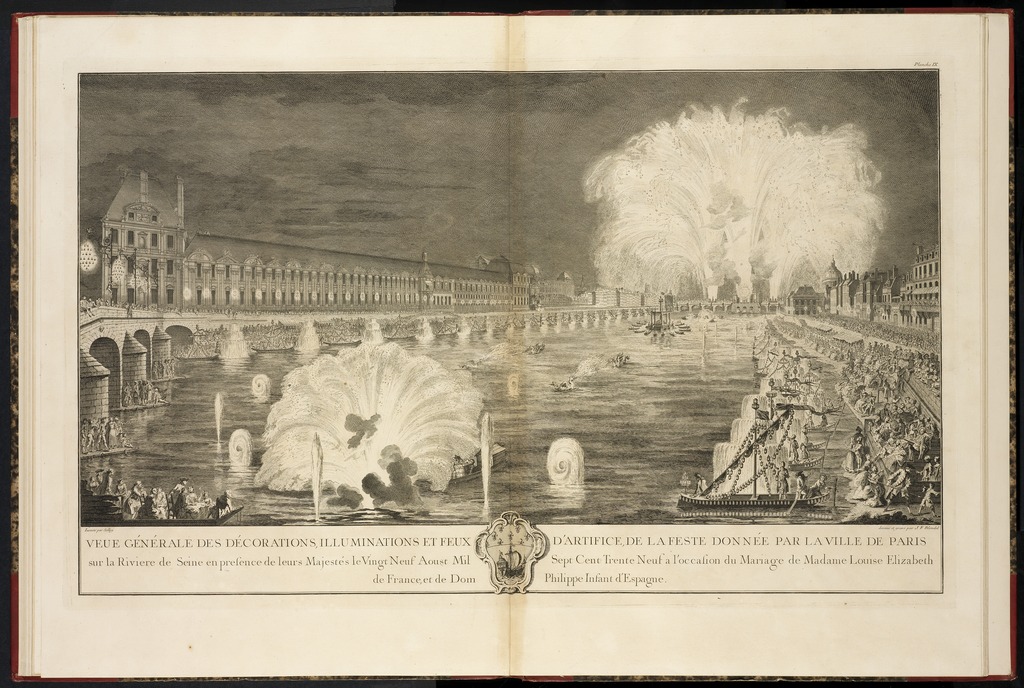 |
| Illuminations over the Seine |