Showing posts with label health. Show all posts

Friday, 24 April 2026

Madame de Sablé: A Hypochrondriac?

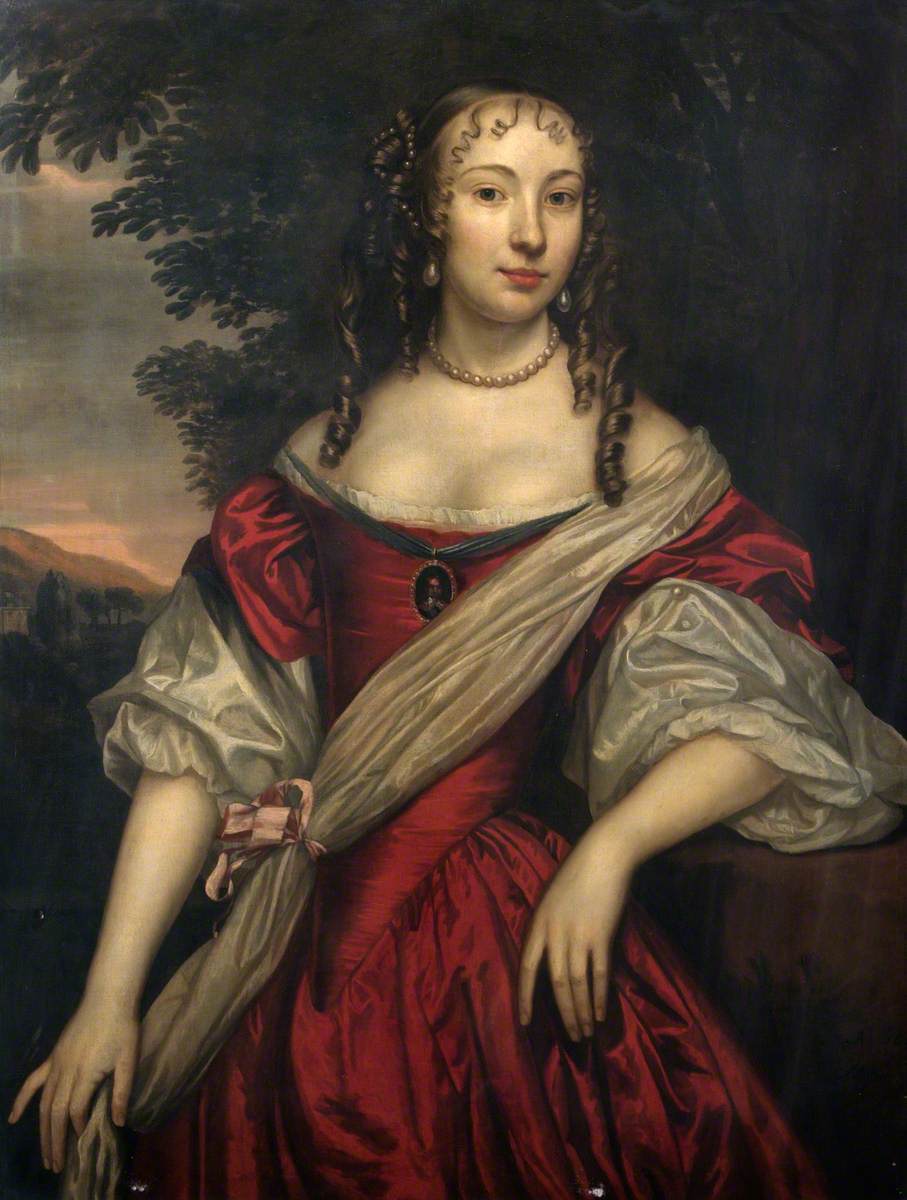
Madeleine de Souvré was quite an odd character at the court of Louis XIV. She had the distinction of being born in the previous century - in 1599, to be exact. Thus, she was already 44 years old when the five-year old Louis XIV ascended to the throne.

By this point, she sported the title of Marquise de Sablé through her marriage to Philippe Emmanuel de Laval-Bois Dauphin. She had been married at the age of fifteen and was widowed in 1640. By the beginning of Louis XIV's reign, her beauty was fading but what marked her out was her salon. She was an intellectual who acted as patron for La Rochefoucauld and harboured constant concerns for her health. As it happens, she was described as a notorious hypochondriac as well as a sharp wit. 


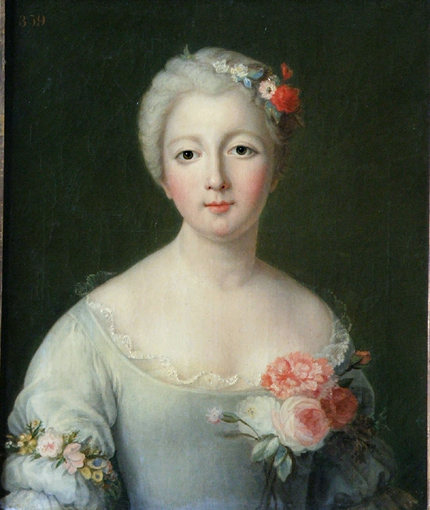
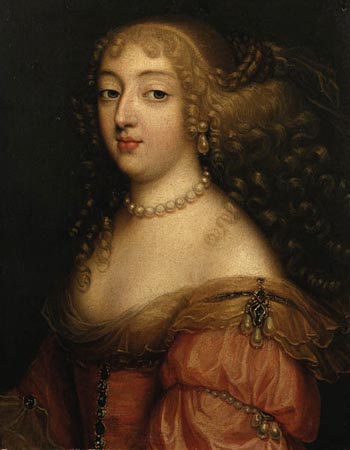
Madeleine de Souvré,
Marquise de Sablé

Her continuous complaints occasionally prevented her from engaging in social engagements. For instance, a surviving letter of hers from 1650 makes her excuses that she has been suffering from several complaints which "have made it difficult for me to pay visits". 

Was she actually sick, though? It is hard to know for sure but her contemporaries certainly thought she exaggerated. Tallemant des Réaux gave a less than flattering image of her: "a fat woman who has no other illness than any she might imagine". Apparently, she combined a deep devotion with a perpetual concern for her own health which caused to fervently avoid any talk of death. An even harsher image is conjured up by Sainte-Beuve in a scathing summary. Sainte-Beuve referred to Madeleine in the years after her retirement from court in 1656:

"In lodging near Port-Royal of Paris, in a building she had constructed next to the convent, she created a novel position for herself... hearing everything, fussing over everyone, interfering with everything, making herself the finest wit and the greatest theologian; avid for the smallest bit of gossip and for the most religious tome; interested from now on only in her salvation and in her new circle of monks, but still maintaining all her best friends from before; keeping close to her austere confessor, but not dismissing her cook; consulting both her physician and her moral theologian on her migraines and on her scruples; sponsoring lectures, colloquia and debates in her salon, but feeling supported by the nuns on Communion day; helping the nuns by her marvelous potions and all-purpose elixirs, but putting into her jams and jellies only what is absolutely permitted..."

If such a character might have been difficult to engage with, Madeleine nonetheless found a close friend in the Comtesse de Maure - another hypochondriac. The two ladies allegedly could spend hours together discussion their "fragile" healths. To be honest, while the description by Sainte-Beuve is not exactly flattering, it also does not invoke the image of a woman who had any ill intent. 

While it is easy to dismiss a hypochondriac as being in good health but merely complaining, it should at least be considered whether she actually did have any genuine complaints. She was described as having "chronic rheumatism" (she herself refers to it) which can be a reference to perceived rheumatism - but what if it was not? As with most medical diagnoses of the time, "rheumatism" could refer to any number of things but would generally cause stiffness and pain the joints. If that was the case, it would certainly explain why she was unable to travel in 1650. It was not the first time that she had been poorly enough to not go where she please. She had wanted to leave Paris for a while but could not go as her health did not permit it which she wrote to the abbess Angélique Arnauld.

There can be no doubt that Madeleine had a penchant for the dramatics. For one, she wrote to her friend, Renaud de Sévigné (uncle of the Madame de Sévigné): "I hate the world, I flee it; pray that I might hate myself as much and that I might think on nothing other than my own salvation". Might be dramatic, but if she was suffering from chronic pain such an existence must have been severely uncomfortable, especially in a time before effective over-the-counter painkillers. 

Another thing was that she was seemingly perpetually having a blocked nose leading her to sneeze frequently and apparently had a never-ending cycle of the common cold. It was said that when she was encumbered by that particular complaint, she could focus on nothing else but her stuffed nose. 

As with all sources, it should be considered where the charge of hypochondria came from. Most of her detractors had fundamental differences on a spiritual, philosophical and religious level and found it quite convenient to dismiss her as a hysterical, aging lady. It further added to her reputation that she became increasingly eccentric as she grew older which often just referred to someone (especially a woman) living on her own terms which she certainly did. 

So, vapours, rheumatisms, colds and fevers were seemingly a recurrent theme in Madame de Sablé's life - whether imaginary or not. She died in 1678 at the age of 79; seemingly of natural causes. 

Saturday, 7 December 2024

The Complicated Labours of Marie Thérèse

Marie Thérèse was brought to France in 1660 as the bride of Louis XIV. Her marriage had a dual purpose: ending hostilities between France and Spain and producing an heir to the French throne. Marie Thérèse duly fell pregnant the following year and would eventually give birth to a total of six children - and bury five. As queen of France, she was subjected to the ritual of public childbirth; unfortunately, two of her pregnancies proved to be near-fatal to the mother.

From the moment Marie Thérèse had fallen pregnant, she had taken precautions. Not only would a miscarriage obviously involve a set-back in the plans for filling the nursery but Marie Thérèse had her own reasons for being apprehensive. Her own mother had died from complications of a miscarriage and Marie Thérèse was understandably afraid of suffering the same fate. Consequently, she remained firmly planted in sofas for as long as possible.


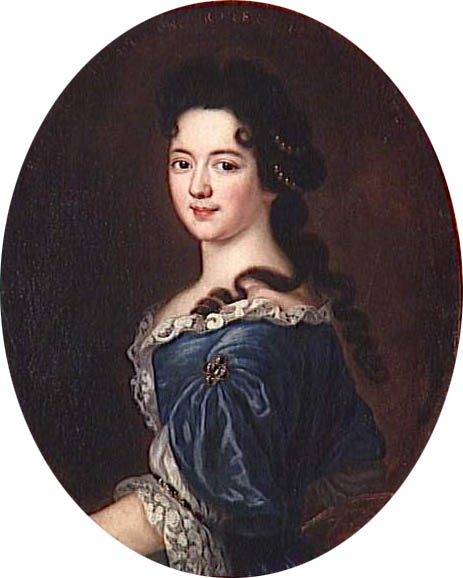
Marie Thérèse as a young woman

The birth of the Grand Dauphin

On 31 October 1661, the court was informed that the queen had gone into labour. Marie Thérèse had become queen of France the year before when she married her first-cousin, Louis XIV. The new queen quickly became pregnant and by Halloween, the baby was due.

Marie Thérèse was facing an arduous deal. By tradition, the birth of an heir to the throne was not a private event and her bedchamber was filled with those high enough on the hierarchical ladder to bear witness to the event. This precaution was to ensure that a stillborn, disabled or - gasp - female child was not substituted for a healthy, male child. While those who were present would eventually see the birth of the Grand Dauphin, they would also witness a harrowing birth.

The young queen - 23 years old - was experiencing her first childbirth. According to contemporary sources, the birth was particularly difficult. The labour dragged on and on throughout the night, thus utterly exhausting Marie Thérèse. Louis XIV remained by her side until five in the morning when he was informed that the queen might not survive the childbirth. He then removed himself to the chapel and prayed for his wife - and son. Having prayed for a while, the king returned to the queen, took her hand and remained by her side until the child was finally born.

For hours, it was uncertain whether Marie Thérèse would survive the birth. The situation became so dire that she was administered the last rites. As it happens, a royal birth was always attended by various high-ranking clergymen for this particular situation. One of those present was the Abbé de Choisy - he would later be present at the birth of the Grand Dauphin's own first child. 

Another witness was Marguerite de La Cuisse. She had neither high rank nor great fortune - but she was a "wise woman" or as close to a midwife as possible. Naturally, the queen was already surrounded by doctors but the presence of a woman whose sole profession was to deliver children must have been a comfort to Marie Thérèse. Marguerite lived and worked in Paris and the king is said to have issued a secret order to fetch her for the birth. There appears to have been a collaboration between Marguerite and the doctors - somewhat unusual for the time, but it serves to show the respect Marguerite had earned in her trade.

It was mentioned that the queen was already ill when she went into labour which could hardly have been beneficial to the strength she needed for the ordeal ahead.

The poor Marie Thérèse was finally released from her agony just before noon on 1 November, when her son was born. Undoubtedly, the experience must have been terrible for her - the pain and anxiety in itself but also having to go through that in front of a group of spectators. Over the next decade, she would repeat the process a further five times - and buried all five successive children. 

While the king's behaviour was both supportive and kind, his attention did not remain long with his long-suffering wife. Having completed a thanksgiving pilgrimage to Chartres, he returned directly to court - but not to the queen. Instead, he rejoined his mistress, Louise de La Valliere, while Marie Thérèse was left to recover by herself and her ladies. The king and queen's relationship was said to have rewarmed after the birth but the position of Louise de La Valliere as the king's official mistress was undeniable - and likely hard for the queen to ignore. In fact, she was said to be heart-broken by the increasingly obvious affair.

Fil:Queen Marie Thérèse and her son the Dauphin of France, dated circa 1663 by Charles Beaubrun.jpg
Marie Thérèse with the Grand Dauphin

A second close call

In the first half of 1664, it became obvious that the queen was pregnant again. Her last child had been born in November 1662 (a son who died that same December) and hopes were high that the queen would deliver a third son. For months, the pregnancy progressed as planned. Marie Thérèse was scheduled to give birth in December 1664 - but then something went wrong.

In early November, the queen's health went drastically downhill. She became feverish and complained of pains in her legs and back. While it may be expected that a woman in her eight month of pregnancy would experience unpleasant sensations in both legs and back, the queen's situation was far worse than just unpleasantness. In fact, she was said to be in considerable pain.

On 16 November - nearly a month before her due date - Marie Thérèse went into labour in dramatic fashion. Once again, Marie Thérèse nearly succumbed during the birth. As she gave birth, Marie Thérèse became so weak that the clergymen brought out the last sacraments again. However, this time Marie Thérèse utterly refused to take them. She is said to have uttered: "I will gladly take communion but I do not want to die".

As before, Louis XIV was by her side and it was he who eventually convinced her to submit to the last rites. The fact that she eventually gave in undoubtedly gives the impression that Marie Thérèse herself felt her strength waning. The birth dragged on and on to the point where Louis XIV allegedly inquired whether it would be possible to save the mother before the child was born.

The doctors present were utterly helpless and their solution was more cruel than helpful. Their remedy was to force-feed the poor Marie Thérèse an emetic intended to make her vomit. Initially, Marie Thérèse understandably refused - can anyone blame her? - but the doctors wore her down. Once the emetic had taken its toll, Marie Thérèse was utterly exhausted. Seemingly by miracle, the child was eventually born - a girl who was promptly named Marie-Anne. The infant had been severely deprived of oxygen and was born almost purple in the face (this would later give rise to the unsubstantiated rumour that the queen had had a black child).

The doctors managed to revive the young Marie-Anne while Marie Thérèse herself was barely hanging on to life. In fact, afterwards, she suffered from severe convulsions which further weakened her health. It was suspected that she suffered "an attack of the nerves" for which her attendants threw water in her face. The conclusion was that she had generally nervous disposition and had become over-agitated by the ordeal - it is hard to see how anyone, stoic or hysterical by nature, could remain level-headed after such a terrible experience.

Sadly, Marie-Anne lived for just a little more than month, dying on 26 December 1664.

... and a third

Two years passed before Marie Thérèse found herself pregnant again - one could hardly blame her if she was apprehensive. On the very first day of 1667, Marie Thérèse went into labour for the fourth time after having gone through an entire nine months pregnancy.

As usual, the traditional birthing process was put into place. Louis XIV duly found his way into her chamber where he allegedly helped the leading doctor, Félix, strap Marie Thérèse's legs down to the birthing bed. Whether she had been restrained in a similar fashion previously is unclear but it can hardly have been reassuring. 

The birth - like the previous ones - was a long one. It was not until the following day (2 January 1667) that the child was born: another daughter, named Marie Thérèse after her long-suffering mother. She would become known as Petite Madame and for years, she seemed to thrive. Tragically, she died of consumption at age 5.

While Marie Thérèse recovered, court life went on. Just fifteen hours after the labour had ended, the court enjoyed the spectacle of a ballet composed by Molière, in which the king himself danced - alongside his mistress, Louise de La Vallière.
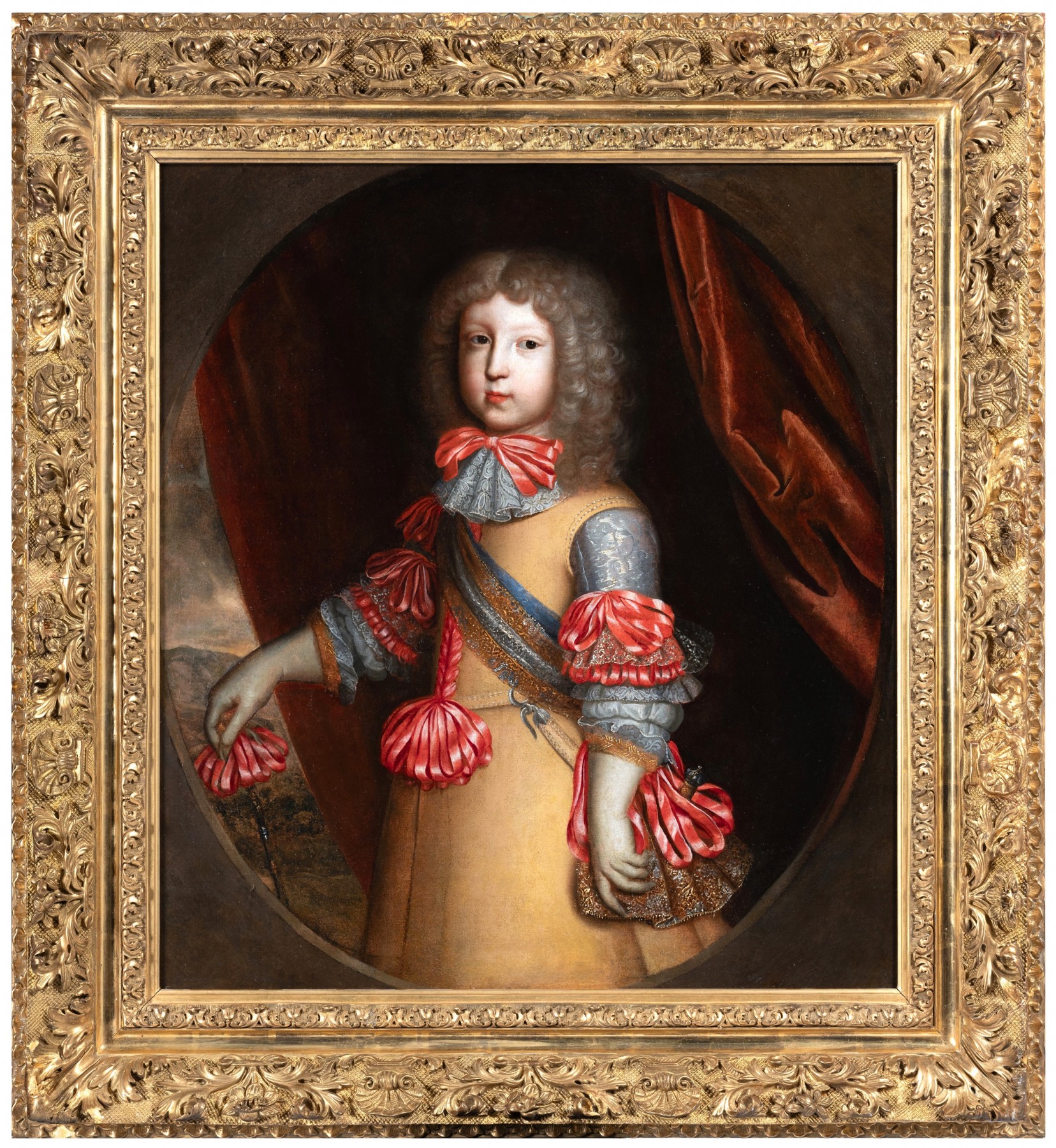

The Grand Dauphin - only surviving child
of Marie Thérèse


The three episodes were tragically typical of the treatment of Marie Thérèse - and other royal women. Nothing was mentioned about whether she received any care after her ordeal - such a thing would simply not have been recorded. In fact, that the birth of the dauphin was so difficult in itself is hardly ever mentioned at all. Instead, biographies of the king or the court typically only mention that the queen gave birth but never bothers to elaborate on the sufferings she went through or the fact that she nearly died. Ironically, the celebrations that followed the birth has been given more attention than the process which occasioned them. 

Likewise, the attentions bestowed upon her by the king was the focus point of considerable admiration. Naturally, this was a time when kings - or fathers in general - were rarely (if ever) involved in childbirth which did make the king's contribution both touching and unusual. However, the comment made by Madame de Motteville during the birth of the Grand Dauphin is quite telling:

"As long as she (the queen) was in great pain, the king seemed so distressed and so noticeably overcome with pain that he left no doubt of the love he had for her"

Full of admiration and attention of the king - the near-dying queen reduced to being in "great pain" while her husband is praised to the skies. Even afterwards, the efforts of the queen was not touched upon again.


Even for the standards of the time, the childbirths experienced by Marie Thérèse seems overly brutal. Strapped down, force-fed emetics and having religious items shoved in her face - icons of her own imminent death - there was nothing glamorous about Marie Thérèse's experiences. The queen herself left no trace of her own feelings in writing nor do any of the numerous memoirs seem to have given it a second thought.

Was she apprehensive upon her next pregnancy? She could hardly not have been anything but nervous, especially given her preexisting fears. Did she receive any post-natal care? How did she feel herself, how did she experience the ordeals? We do not know.

Tuesday, 3 December 2024

Impotence or Disease? The Childlessness of the Comte & Comtesse de Provence

Much has been made of the seven years that elapsed before Marie Antoinette finally became pregnant by Louis XVI. However, the young monarchs were not the only ones in the royal family who suffered from infertility. 

The eldest of the king's brothers - Louis Stanislas, Comte de Provence - was married to Marie Josèphine of Savoy. The marriage was celebrated on 16th April 1771; just about a year after the marriage of the dauphin to his Austrian archduchess. By then it was common knowledge at court that the marriage between Marie Antoinette and Louis XVI had not yet been consummated, so there was intense pressure on both couples. 

Quickly after the wedding ceremony, Louis Stanislas loudly boasted of his prowess and vowed that his wife was surely pregnant. Few people believed him, though, as he was known to go to great lengths to attempt to humiliate his older brother. Marie Antoinette herself urged her mother (via letter) not to believe the gossip that the newcomer was pregnant already, although it was immensely important to Marie Antoinette that her mother was not given new ammunition for her continual reproaches. 

It has been suggested that the Comte de Provence was impotent - some suggests that his considerable weight further impeded his chances of impregnating his wife. However, in 1774 the Comtesse de Provence fell pregnant - much to the chagrin of the still childless Marie Antoinette. Sadly, Marie Josèphine miscarried early on in her pregnancy and did not conceive again until 1781. This would be her last pregnancy (confirmed, at least) which tragically also ended in a miscarriage. Thus, the couple remained childless. 


undefined
Louis Stanislas

Considering that Marie Josèphine had fallen pregnant twice, it is clear that Louis Stanislas was not completely impotent. But what was the matter, then? Initially, wicked tongues blamed the new Comtesse de Provence whose personal hygiene was notoriously lacking. To be fair, that would not have been particularly inviting but could be overcome. Surely, the couple could hardly have been more ill-matched. Both Marie Josèphine and Louis Stanislas would later show either bisexual or homosexual tendencies which would obviously have further complicated matters. 


When the Comte took a mistress, the Comtesse de Balbi, the courtiers began to cast glances at her midriff - would she fall pregnant by the king's brother? Alas, no. Despite being with Louis Stanislas as early as 1779, she did not become pregnant until around 1793, when she had fled with the Comtesse de Provence abroad. By this point, it was obvious that it could not be the child of the Comte de Provence as they had not seen each other physically for months on end. That also prompted their final rupture. 

While Louis Stanislas was clearly not entirely impotent - as evidenced by the two pregnancies of Marie Josèphine - he clearly was not particularly fertile. As for his wife, she would turn to female lovers and it therefore is impossible to tell if she could have had children by another man, if she had so tried.


undefined
Marie Josèphine


Another theory is that the Comte de Provence had diabetes - both type 1 and type 2 can affect a man's chances of impregnating a woman. He experienced rapid weight gain and the lack of knowledge of the disease would have meant that it was entirely unmanaged. His death in 1824 was of gangrene which was said to have begun in exactly unmanaged diabetes. Upon his death, an autopsy was performed which showed no obvious indication that Louis Stanislas had actually been impotent which could indicate that diabetes was to blame.

Wednesday, 24 January 2024

1783: Marie Antoinette's Mysterious Pregnancy

The year-long struggle for Louis XVI and Marie Antoinette to have children is well-known; once they did manage to consummate their marriage, Marie Antoinette found herself pregnant fairly frequently. The birth of Marie Thérèse in 1778 was followed by Louis Joseph in 1781, Louis Charles in 1785 and Sophie in 1786.

It is also known that the queen suffered a miscarriage in 1779; however, in 1783 something odd happened. That happened to be the year of the queen's mysteriously discreet pregnancy. Extremely few court sources mention the queen being pregnant in 1783 at all - except for the queen herself.

References to this mysterious pregnancy are found in the intimate correspondance between Marie Antoinette and her brother, Emperor Joseph II. In September 1783, Joseph II wrote to his sister: "I await with infinite impatience ... the news of your pregnancy". On first glance, this might just have been an expression of the emperor's wish to see his sister have another child; yet, the queen herself responded to the letter by informing him that "My pregnancy and health are marvelous" - then ... nothing. None of either Marie Antoinette or Joseph's ensuing letters ever referenced the pregnancy again. 


The obvious implication was that the queen miscarried again. In fact, it is widely accepted that the queen did indeed suffer a dramatic miscarriage in November, about the time of her own birthday. The pregnancy had apparently been difficult from the beginning and the ordeal made her health worse for months. However, this does not explain the utter silence of the courtiers on the subject. After all, the pregnancy of a queen was not personal news - it was state business. The fact that Marie Antoinette was apparently certain herself that she was pregnant implies that the pregnancy was established. Consequently, it ought to have been remarked upon by everyone. Yet it was not.

It is generally accepted that the queen's pregnancy was announced in June 1783 which would mean that she was at least three months pregnant by the time of the September letters. Consequently, when she lost the baby in November, she was at least five months along.


Marie Antoinette in 1783


The oddity of the radio silence of the court is the marked oddness of it. Nothing at court was ever truly secret, especially not when it came to the lives of the royals. It has even been suggested that the child was not even Louis XVI's but that of Count Fersen. This, alone, would have made it gold for gossip mongers set on further destroying the queen's reputation. Sadly, that particular story has been repeated by authors such as Evelyn Farr who remains convinced that Marie Antoinette not merely loved Fersen, but had a physical affair with him, too. Farr speculate that the queen had fallen pregnant by Fersen. The theory is extremely doubtful, at best. 

There is nothing concrete to suggest that Marie Antoinette and Count Fersen ever developed a physical liaison. On the contrary, throughout her life, the queen had shown marked distaste for adultery and relations outside marriage - even going as far as entirely snubbing Madame du Barry because of her role as royal mistress. While the subject of Marie Antoinette and Fersen deserves its own post, suffice it to say, that the theory lacks credibility of any kind.


Considering that the pregnancy was allegedly a difficult one it is puzzling that no one bothered to mention it. Discretion or consideration of the queen's loss seems unlikely. By this point in time, Marie Antoinette was already the object of remarkably vicious rumours and slander. There is nothing to suggest that everyone at court would suddenly have become gracious enough not to torment her on that head. The fact that no one then suggested that the child was not the king's adds to the unlikeliness of the Evelyn Farr-theory. Her detractors would have given anything to be able to pin such a story on the queen - just imagine the outrage it would cause, if the already deeply unpopular queen was thought to have fallen pregnant by another man! The story would have been too tantalizing to receive so little attention. 


As stated, few remarked on the pregnancy. Amongst these was the Marquis de Bombelles who wrote on 29 August 1783: 

"There is a worrying silence on the Queen's condition. Many people think that she had a miscarriage last Sunday; and conclude this from the fact that at 11.00, the queen sent for Madame de Polignac, who seemed sad and very worried when she returned..."

This snippet further murks the waters. It suggests that even at the time, the court was eerily silent on the matter, although the fear of a miscarriage in itself ought to have set tongues wagging. Bombelles' statement also confirm that the pregnancy was a difficult one. After all, he wrote the excerpt in late August, when the queen was still pregnant. If it was already suspected that she might have miscarried, it is fair to assume that there were considerable problems with the pregnancy. Furthermore, the queen was said to have been so big at just 4-5 months that doctors already predicted twins. Relying again on Bombelles, he himself reported in October that she queen already looked as if she was at least 6 months pregnant.

Bombelles goes on to comment on the fact that the queen's dame d'honneur, Madame de Chimay, was refused access to her mistress - something that was entirely unheard of as Madame de Chimay - in her capacity as dame d'honneur - had the right to enter the queen's apartment at any time. At any rate, the situation was deeply unusual for the court.


Another aspect must be considered which likely contributed to the aura of mystery of this pregnancy. The queen - and king - had already established a court life in which the monarchs were far more withdrawn from their own court than usual. The couple's love of privacy meant that they retired to their own apartments with a select group of friends whereas hitherto the lives of the monarchs were lived entirely in public. It was noted that Marie Antoinette withdrew even further during her difficult pregnancy. Being thus only surrounded by her entourage, the queen might have felt more comfortable, but to the excluded courtiers, the queen's condition became all the more mysterious. After all, it is far easier to conjure up shadows when kept in the dark.

Miscarrying in itself was - and remains - a deeply personal tragedy. Given Marie Antoinette's pride and determination not to appear weak, it is not unlikely that she consoled herself with her friends over her loss. There might have been nothing mysterious, at all, in the entire affair.


When the queen did miscarry in November, Bombelles is again remarkably well-informed. He felt sure enough of his knowledge to state outright that the miscarriage was luck in disguise, as the fetus was deformed. How would he have known? Unlike the birth of a child (stillborn or living) a miscarriage was not a court event; people were not summoned for it, nor had they the right to witness it. Considering that the miscarriage took place in the middle of the night, Bombelles would not have been anywhere near the queen herself. He cannot have seen the "deformed fetus" for himself. It makes it more likely, then, that he was speculating or repeating rumours he had heard elsewhere. 


As for the queen's own silence on the matter - especially in her correspondance with her brother - that has a far more reasonable explanation. The loss of a child in itself was harrowing enough; the situation was only made the worse for the health issues it brought it with. It was not until December 1783 that the queen once again remarked to her brother that her health was good. Interestingly, that same letter reveals her desire to have a second son, but her own assurance that "a few months rest will put me in a better condition to carry it (the pregnancy) through". Clearly the ordeal had been traumatic for both mind and body.

It has been speculated that the queen was remarkably - even unusually - silent about the episode. It can be argued that her behaviour was not different from her typical self. Having a sensitive nature, the queen was not the daughter of Maria Theresia for nothing. Sensitive, yes, but deeply devoted to duty and the image of herself as queen. The latter automatically required her to appear constantly composed - even in the throes of heartache. All in all, it is not unlikely that Marie Antoinette wished to put the episode behind her and focus on the two children she did have.

Wednesday, 22 March 2023

Deadly Labours: Deaths in Childbirth at Court

Childbirth is a dangerous experience - even more so in an age where knowledge of bacteria was yet more than a century away. Unfortunately, this lack of knowledge resulted in the deaths of thousands of women, of which the ladies of the court were certainly not exempt. Generally speaking, childbed fever (as it was termed) was caused by a streptococcal infection leading to sepsis - unfortunately, this was typically transferred to the birthing woman's nether regions by the hands of those attending her. The numbers vary according to the source; some claim that 40 of 1000 women died during the childbirth itself whereas another source points to 1 in 20. The latter number also accounts for women dying after the birth itself - i.e. from complications - which makes it far more plausible.


At court, the highest-ranking woman who succumbed to death in childbed was the dauphine Marie Thérèse Raphaëlle. She had been married to Louis-Ferdinand for just about a year when she gave birth to their only child on 19 July 1746. Sadly, she appear to have been infected during this period and sepsis soon set in; the dauphine died on 22 July at the age of 20 years old.


The pressure to "produce" an heir for the various aristocratic families often led to such deaths as being quickly forgotten. If the child survived - and was male, mind you - it would still be necessary to produce a spare to the valuable heir. Thus, the late mother was quickly replaced by a new woman. The women involved were often quite young as they were married in their mid-teens and quickly set about establishing  the next generation.


Anne Marie Louise de La Tour d'Auvergne, Princesse de Soubise, had been married off at the age of 12. She conceived her first child, a daughter, at the age of 15 before falling pregnant again at 17. The second delivery went wrong, however, when she fell seriously ill after having birthed her son in September 1739. She died shortly afterwards - her husband went on to remarry twice. In a disturbing twist of fate, her successor would suffer the same fate. The widower, Charles de Rohan, remarried a year and a half after the death of Anne Marie Louise to Anne Thérèse of Savoy. Anne Thérèse was 27 years old - in other words a decade older than Anne Marie Louise - when she went into labour with her first child. Little is known of what actually happened except that the Princesse de Soubise died after having giving birth. One can only wonder whether it were the same people attending the two consecutive princesses...


Auguste of Baden-Baden, Duchesse d'Orléans, had given birth three days earlier when she died on 8 August 1726. The 21-year old had been brought to France from Bavaria to marry the Duc d'Orléans just two years earlier. The widower remained unmarried until his own death sixteen years later.


The pregnancy of Gabrielle Émilie du Châtelet, Marquise du Châtelet, was neither planned nor particularly welcome. She had been estranged from her husband for quite a while which allowed them both to indulge in their separate affairs. The extremely intelligent marquise had a steady relationship with Voltaire before becoming entangled with the poet Saint-Lambert. She fell pregnant by him at the age of 42 which in itself caused quite a scandal. There is some suggestion that Gabrielle Émilie had misgivings about her pregnancy; she confided to her friends that she did not think she would survive the birth.

Such misapprehension would be common enough even for a woman who had given birth thrice before. When she went into labour on 4 September 1749, her fears appeared to be well-founded, but not due to gynecological issues. The marquise died of a pulmonary embolism six days after the delivery.

Emilie Chatelet portrait by Latour.jpg
Marquise du Châtelet


The daughter of the Duc de Bouillon, Armande de La Tour d'Auvergne, was married at the age of 15 to the Prince d'Epinoy. Rather quickly the young princess conceived their first child; she went into labour in early April 1717. However, something went wrong, although it is unclear exactly what happened. The result was devastating with both the 19-year old mother and the child dying.


The premature death of the Princesse de Conti, born Louise Diane d'Orléans, was the result of a premature delivery. She was five months pregnant when she went into labour at her private estate of Issy. The child appears to have been stillborn but the mother suffered severe complications from her ordeal. For three whole days, she lingered before dying on 26 September 1732, at the age of 20. 


Pierre Gobert - Portrait of a Princess of Conti - Versailles MV 3821.jpg
Louise Diane 

Marie Louise Élisabeth d'Orléans, Duchesse de Berri, lived a remarkably scandalous life. Infamous for her numerous affairs, drinking issues and her extreme life style, the Duchesse de Berri fell pregnant which caused yet another scandal. The crux of the issue was that her husband had died five years previously which made it painfully obvious that the child was illegitimate.

The Duchesse de Berri attempted to conceal her state by deceiving clothing and continuing her lifestyle, even continuing participating in theaters and her father's notorious suppers. On 30st March 1719, she went into labour which would turn out to be particularly gruesome. The child, seemingly, would not arrive. For four days, she suffered to the point of a priest being summoned. He, however, refused to give her the last sacrament due to her scandalous lifestyle. Eventually, she gave birth to a girl. Her health was entirely shattered by her ordeal but wanted to continue the illusion of having not been pregnant at all. Thus, she retired to her estate of Meudon where she participated in a ball. However, this exertion was far too much for her weakened body to endure which caused her health to further deteriorate.

Madame herself paid the Duchesse a visit the following month which gives an indication of how poorly she truly was. According to Madame, the Duchesse had severe pain in her feet which caused her doctors to bleed her from the foot. While the pain was somewhat alleviated, her health failed to restore itself. By 21st July 1719, Marie Louise Élisabeth was extremely weak. She died that day; the obligatory autopsy revealed that she was pregnant again.


Pierre Gobert, Gallery of Beauties, Nymphenburg - Duchesse de Berry.jpg
Duchesse de Berri


Originally born in Modena, the Italian Marie Thérèse Félicité d'Este was married to the Duc de Penthièvre in December 1744. She had the good fortune of enjoying a good marriage to her French spouse which resulted in six children. However, when she became pregnant with her seventh child, the Duchesse de Penthièvre had seemingly run out of luck. At this point, Marie was 27 years old and she managed to give birth to a daughter before dying herself. It is unclear whether she died directly after the labour or from puerperal fever.

Her husband was reported to be completely devastated by her loss; for the rest of his life, he was said to tear up when her name was mentioned. Sadly, the daughter, too, did not survive for more than a few hours. For once contemporary sources give an indication of what might have contributed to the tragic incident. Apparently, the many consecutive pregnancies had taken their toll on her body and the labour for each was described as "laborious" which could indicate long labour.


Image illustrative de l’article Marie-Thérèse-Félicité d'Este
Duchesse de Penthièvre

The eldest "Mazarinette", Laura Mancini, had come to France on the invitation of her relative, Cardinal Mazarin. There, she had been married off to the Duc de Mercœur at the age of 14. Giving birth to her first child at 17 and her second at 18, Laura was pregnant again when she turned 20. On 27 January 1657, she gave birth to their third son, Jules César. It is likely that she contracted puerperal fever after the birth which resulted in a period of ill health after the delivery. 14 days later, Laura died.


Laura Mancini 01.jpg
Laura Mancini


The king's mistresses were not excluded from the plight of their fellow women's suffering. Mademoiselle de Fontanges notoriously died at the age of 19 after having given prematurely birth to Louis XIV's child.

Charlotte Rosalie de Choiseul-Beaupré was exiled by Madame de Pompadour for getting too close to Louis XV. She died of childbirth the following year with the child being rumored to be having been the king's. Pauline Félicité de Mailly-Nesle, Marquise de Vintimille, had fallen pregnant by the king. Unlike other women on this list, she died during the childbirth itself from convulsions. The child survived and was raised by her relatives; sadly, her body was mutilated by an angry mob when the guards left their station.


undefined
Pauline-Félicité

Whereas death was obviously the extreme end of the spectrum, women faced considerable obstacles in an age with limited knowledge of both female anatomy and general hygiene. One can only imagine the agony experienced by the Marquise de Clermont whose labour lasted a staggering eight days in 1758.


Frustratingly, it is often impossible to determine exactly what happened during such deliveries. Details were rarely - if ever - mentioned as being considered too intimate for public release. Instead, it is usually simply mentioned that the woman in question died in childbirth. It is also likely that the doctors simply had no answers to share; they might be able to diagnose puerperal fever but had not means of curing it. Likewise, if something went wrong during the delivery itself there was very little to be done.


Today, most infections experienced by new mothers can be treated with antibiotics - something which was entirely unknown until the 20th century.

Sunday, 30 October 2022

The Alcoholism of the Comtesse de Provence

Marie Joséphine of Savoy was married to Louis XVI's brother, Louis Stanislas Xavier, Comte de Provence, in 1771. When she arrived at the French court, she found herself as the second-highest ranking lady at court, immediately behind her sister-in-law, Marie Antoinette. Yet, over the years an increasing amount of people noticed that the young woman had a penchant for alcohol which seemed to go beyond the norm.


In the beginning, Marie Joséphine had a tendency to withdraw into her private apartment with her closest ladies and then proceed to drink copious amounts of alcohol. According to the Comtesse de Boigne, the Comtesse de Provence would drink so much that "the consequences were obvious in public". There is one particular aspect of the young lady's conduct which leads to the conclusion that she might already have had problems when she arrived at Versailles. Just four days after her wedding, she contacted the Piedmontese ambassador with a request for him to acquire a specific Piedmontese wine for her. Of course, this might just have been a preferred type of wine but considering the issues which she later exhibited it seems a tad more ominous. 

Some were pointing a finger at one of Marie Joséphine's closest friends, Madame de Gourbillon. This lady was accused of supplying Marie Joséphine with alcohol. One source relate the story of an incident which allegedly took place in 1789 when Louis XVI and the Comte de Provence surprised Madame de Gourbillon with a pot of unknown liquid. When asked what it was she claimed it was a broth for the Comtesse. That appeared to be the last straw and she was exiled from court. Yet, the removal of her close friend - and suspected mistress - did nothing to help the young woman with her addiction.


Marie Joséphine


The reasons for why Marie Joséphine turned to drink is naturally a matter which is difficult to discuss at the distance of several centuries. What is clear, though, is that she led a life of little fulfillment. She was an intelligent woman who had no way of pursuing any particular career; furthermore, she was said to be quite unattractive in a court which valued beauty. As the wife of the king's brother she had no influence at court and did not have a close relationship with her husband. Significantly, she fell pregnant twice but both pregnancies ended in a miscarriage - such losses would understandably add to the psychological toll. It was noticed that her drinking escalated after her husband began his affair with Madame de Balbi, one of her own ladies-in-waiting. Perhaps it was a way for her to escape?

Her addiction was not a closely guarded secret. Both the French public and her family in Turin were aware of her alcoholism; the pamphlets of the time typically mocked the royal family's failings (real and imagined). It says something about how well-known Marie Joséphine's addiction was that it was a prominent theme in the satires targeting her.

Marie Joséphine never overcame her addiction. Throughout her life - including her exile during the revolution - her alcoholism was a well-known secret. When she was reunited with her husband in Mitau (now Jelgava, Latvia) in 1799, she responded to her husband's refusal to recall Madame de Gourbillon by locking herself into her own rooms with no other company than a bottle of wine.

Thursday, 10 February 2022

The Difficult Pregnancies of Henriette of England

Henriette of England - better known at court as Madame - is best known partly for being the first wife of the flamboyant Philippe d'Orléans and partly for her sudden and untimely death. 

At the age of 16, the English exile had been married to Philippe in the Palais-Royal; shortly afterwards Henriette found herself to be in "the family way" - that would prove to be the first step in what would prove to be a troubled series of pregnancies. For the next eight years, Henriette would find herself pregnant every single year. Inevitably, this would have an immensely detrimental effect on her health. 

Initially, there was little to suggest that she would have a particularly difficult time producing an heir to the Orléans-branch. Even considering the sky-high infant mortality rates and utter lack of knowledge of either bacteria or basic gynecology, both mother and father were young and seemingly healthy. Henriette's first pregnancy only strengthened the perception that children would surely come - she carried the child to term and finally gave birth to a healthy daughter on 26 March 1662. The infant girl was baptised Marie Louise and quickly handed over to a wet-nurse. It was noted that the delivery was slightly premature but due dates were difficult to ascertain and it was remarked that the birth was without complications.

Yet, it would soon become evident that Henriette's health was anything but sturdy. She was prone to illness and following the birth of Marie Louise, she suffered from insomnia, lost weight rapidly and coughed non-stop. As early as 1661, Charles II - her brother - felt concerned enough to personally write to inquire after her. Still, she recovered some of her strength and once she did her contemporaries expected her to produce a male heir. 


File:Portrait of Henriette of England, Duchess of Orléans seated in a landscape from the studio of Sir Peter Lely.jpg
Madame in 1662 - she had given birth
to a healthy daughter and was possibly
pregnant again

The young Mademoiselle was healthy, alive - but a girl. As such, she was not able to inherit her father's estates due to the prevalent Salic Laws. For Henriette, this meant that although she had just been safely delivered of a strong child, she was expected to conceive soon and she did not disappoint. Exactly when she became pregnant again is unknown but this second pregnancy was nothing like the first. In 1663, it was reported that Madame had suffered "an accident" - a common term referring to miscarriages.

Around November 1663, Henriette was pregnant again. This time, there were no tragic "accidents" and when she went into labour on 27 July 1664, both she and Philippe were overjoyed to find the child to be a boy. Named for his father and grandfather, the newly-born Philippe Charles d'Orléans would join his sister in the nursery - but only for a short while. To the sorrow of his parents, Philippe Charles died at the age of just 2 years old.

Infant mortality was rampant in the 17th century so the untimely death of Philippe Charles might not have been the cause of an underlying medical condition. This is further supported by the fact that Louis XIV himself noted in a letter to Henriette's mother (Henrietta Maria of France) that both child and mother were in good health after the birth. This, at least, indicates that the birth had not been as traumatic as her first ordeal.

From 1664, something appears to have changed. The years 1664 - 1668 saw the Duchesse d'Orléans pregnant no less than four times; but tragically, each pregnancy ended in disaster. On 9 July 1665, Madame was delivered of a still-born daughter. Both her mind and psyche would be further rocked by three consecutive miscarriages in 1666, 1667 and 1668 respectively. It can only be imagined the indescribable toll this must have taken on the young woman who was not yet 25 years old. 

Henrietta Anne of England portrait by Jan Mytens.jpg
Henriette in 1665. Considering that
she miscarried this very year, she
might have been pregnant when she
sat for the portrait


It is worth stressing that Henriette's own life was endangered with each pregnancy. When she miscarried in 1667, she fell so gravely ill that for ten days, few expected her to survive. It is actually from Philippe himself that we gain insight into this particular loss. He wrote to Henriette's beloved brother, Charles II, to inform him of his sister's condition. In doing so, Philippe explain that she had suffered "an accident" on the 5 July 1667, following which she had been thought to be dead for about 15 minutes. Afterwards, she was not able to sit up on her own for a week, according to her husband.

By December 1668, she would conceive for a final time. Given the losses of the previous years, one can hardly blame her if she felt terrified at the prospect of another miscarriage or stillbirth. Besides the emotional torment such losses brought, it should also be remembered that each one brought her own life in danger. However, as the months wore on, nothing went awry and by 27 August 1669 Henriette gave birth to her third living child - another girl. The infant was named Anne Marie d'Orléans and appeared in perfect health.

Sadly, the same could not be said of her mother; just 10 months later, Henriette of England was dead.


Madame holding a portrait of
 Monsieur


This string of eight pregnancies of which only two resulted in children living past the age of 2 years old, leads one to wonder: why? Was there a particular reason for Madame's troubled record?


It has been suggested that perhaps she suffered from syphilis, passed on to her by her husband, Philippe. Those who argued in favour of this theory puts forward that it would explain why their eldest surviving daughter, Marie Louise, was unable to have children herself. If Henriette had contracted syphilis via her husband, it is likely that she passed it on to her children as congenital syphilis. It could be an explanation as to why she suffered so many miscarriages and stillbirths.

As for Marie Louise and Anne Marie, if their mother was infected with this venereal disease, then they would potentially suffer from it, too. However, it might not have been obvious from an untrained observer. While congenital syphilis can result in very clear symptoms - i.e. bone deformities, blindness or skin rashes - it could also show in hidden ways, such as anemia or an enlarged liver or spleen.

This is where especially the fate of Marie Louise becomes interesting. In an eerie turn of events, Marie Louise died at the exact same age as her mother had - and she exhibited the same symptoms immediately prior to death. Both mother and daughter complained of a sharp pain in her abdomen. While Henriette's pain could be attributed to a ruptured ulcer - as medical experts of the 20th century concluded - Marie Louise's could have been a result of either an enlarged liver or spleen. However, this sharp pain could just as easily be attributed to something completely different - for instance a burst appendix.

Anne Marie, on the other hand, had no problems conceiving. She gave birth to eight children of which two were stillborn. Sad is it is, that was not uncommon for the time, nor were the fact that several of her children died in childhood. 

According to Lee Goldman, MD, the risk of a mother passing the infection on to the fetus is at its largest "at least the first five years of her infection" - if Henriette had been infected shortly after her wedding or even the birth of her first child, then this could explain why her last pregnancy resulted in a full-term pregnancy rather than a miscarriage/stillbirth.

It should also be pointed out that it was a rumour only that Philippe had syphilis - he might or might not have had that disease. In this connection it is interesting that his second wife, Elizabeth Charlotte, did not suffer any miscarriages (that we know of) and all their three children were born alive - although their eldest died young. 


Marie Louise - the eldest daughter
of Monsieur and Madame who
would share her mother's fate
of dying at age 26


It has also been suggested that Henriette suffered from that one illness royalty seem unable to escape: porphyria. As an example, author Irvin Sherman noted in his book "Twelve Diseases that Changed Our World" that Henriette showed symptoms of porphyria. However, there is no common connection between miscarriages and that particular disease nor is the life expectancy generally affected.

This brings another aspect into consideration - another affliction keenly known by royalty at this time: inbreeding. Philippe and Henriette were first-cousins which could have had an impact on their ability to conceive healthy children. After all, Philippe's brother, Louis XIV, had also married a first-cousin, Marie Therese, and she suffered several miscarriages as well.

At the end of the day, we will likely never know if Henriette actually did suffer from a serious illness. It is just as likely that her premature death was the cause of 8 years with non-stop pregnancies combined with a naturally delicate health. The lack of medical knowledge at the time would have made her chances of a longer life even more doubtful when one takes these aspects into consideration. Like all other women, she would have been the prey of infections, puerperal fever, hemorrhaging etc. It would not be surprising if a woman whose health was delicate from the beginning would be further exasperated by spending almost a third of her life either pregnant or giving birth.

The impact such losses had on her mental health cannot be underestimated either. Besides the obvious damage due to losing her children, Henriette - like all other women of high status - was exposed to a constant and unwavering demand for a male heir. Philippe would often publicly complain that he had no son to succeed him and Henriette herself was known to also publicly vent her frustration at the gender of her two children. This alone can only have added to the physical strain she must have been under.

Monday, 27 December 2021

The Queen's Condition: Marie Antoinette's Hair Loss

Marie Antoinette's hair was the focus of much attention from the moment of her arrival at court in 1770. Its beautiful ashen-blonde colour was made the inspiration for a new colour tapestry while it would later set the fashion in the ever-rising coiffures of the 1770's. 

Generally speaking, the queen's hair was said to have been one of her strengths. Its colour and thickness was envied by many and she was understandably proud of it. During her time, Marie Antoinette would suffer two different but marked issues connected to her royal locks: 

1. Hair Loss

By 1780, Marie Antoinette was experiencing a new issue regarding her appearance: hair loss. The towering hairstyles favoured by the court in the 1770's meant that the hair had been exposed to everything from ironing and "frizzling" to prodigious amounts of grease and hair powder. As can easily be imagined, this would have left its fair share of damage to any person's hair - and the queen was not exempt. Apparently, she had already experienced some balding spots due to the excessive hair-dos of her younger days.

Léonard, the queen's infamous hair-dresser, naturally fretted over what could be done. He tasked the royal perfumer Fargeon with providing a concoction to be massaged into the royal scalp. In response, Fargeon sent plenty of oils of violet, jonquils and jasmine as well as powder meant to thicken the queen's hair. Alas, despite their best efforts, it was in vain.

Not to be deterred, Fargeon then suggested another powder - this time of crushed irises which were to be mixed with a pomade of essential oils of lemon, jasmine, tuberose and jonquils. Surprisingly, it seemed to have actually had an effect but the queen was not completely rid of her bugbear. 

Fearing that the effect would be but short-lived, Léonard took a drastic decision: the queen's locks would have to be cut short - very short. Thus, Marie Antoinette found herself sporting a very short hairstyle which was immediately emulated by her contemporaries. It was given the name of "coiffure à l'enfant" or the "child's hairstyle" - luckily, the name had a dual purpose. On one hand it referenced the short her of very young children while still referring to the queen's condition.

Undoubtedly, the coiffure à l'enfant must have come as a relief to both the fashion conscious - and those paying their bills. It was far easier to maintain and the lack of any expensive adornments meant that costs could be kept low. On a more practical level, it must have been far more comfortable than the enormous towers of hair covered in grease, powder and everything the heart could desire. 

Tea at Trianon: From an Old Book | Marie antoinette, Marie antionette,  Portrait
Marie Antoinette in 1781


2. "Marie Antoinette Syndrome"

Alopecia Areata - such is the latin term for the condition in which a person suddenly loses colour from their hair. Historically speaking there are plenty of anecdotes of people whose hair became unexpectedly - and suddenly - either completely grey or white. Marie Antoinette is amongst the most famous people who  allegedly endured such a thing.

The story goes that the queen's hair - which had already starting to grey due to the stress of the revolution - turned completely white during the night before her execution. It should be kept in mind that the queen was just 37 years old and as such could have had some naturally grey hair but were slightly too young to be experiencing a "whitening" of that scale.

Nevertheless, Madame Campan described the hair of her mistress as having become "as white as a woman of seventy". While medical professionals argued against the idea of hair turning colour over night, more recent medical research have provided a different explanation. In the article "Hyperactivation of sympathetic nerves drives depletion of melanocyte stem cells" it was discovered that mice exposed to considerable stress at different points in the hair growing process lost the pigment in the stem cells that gave their hairs their colour. 

This could be the explanation for what has become known as Marie Antoinette Syndrome. For instance, it was pointed out by the authors that acute stress had a clear and marked impact on the stem cells - and the condemned queen can certainly be said to have suffered from acute stress. 

Monday, 29 November 2021

What Happened to the Children of Louis XIV and Marie Thérèse?

Louis XIV married the Spanish Infanta Marie Thérèse in 1660 and their marriage was shortly followed by the announcement that the queen was with child. She went into labour on 1 November 1661 and gave birth to a healthy son - the much-desired heir of the young French monarch. So far, their union had been ideal - a harmonious marriage which had quickly resulted in a son and heir. But the young infant - named Louis for his father and grandfather - would be the last child of the couple to survive infancy. He would be followed by five siblings; all of whom would be buried at a very young age.

Marie Thérèse was soon pregnant again and hopes rose that she would give France another prince. Instead, she gave birth to a girl on 18 November 1662 and the child was named Anne Élisabeth. Around Christmas, the young princess suddenly fell seriously ill. The doctors noted that she suffered from a "chest infection" - sadly, due to the disparages between modern and 17th century medicine, there is no set definition for exactly what was meant by this diagnosis in modern medical terms. It has been suggested that she potentially caught a type of pneumonia. She died on 30 December 1662. The following day, her heart (as per custom) was taken to Saint-Denis by her grand-mother, Anne of Austria. 

In eerily similar circumstances to their first daughter's short life, Marie Thérèse went into labour almost on the very same day; this time, the queen's pains began on 16 November 1664. Her efforts resulted in another girl who was given the names Marie Anne. Much like her sister, Marie Anne would not live for long. She died on 26 December 1664. Unlike her siblings, there appear to have been no given explanation for her untimely death.


Fil:Queen Marie Thérèse and her son the Dauphin of France, dated circa 1663 by Charles Beaubrun.jpg
Marie Thérèse and her son, Louis -
ca 1663


One could easily understand that the couple would wait a few years before attempting to conceive a fourth child. It was not until 2 January 1667 that Marie Thérèse went into labour for the fourth time - much to the irritation of her contemporaries, the queen gave birth to a third daughter in a row. The infant was named after its august mother: Marie Thérèse. For a while, the young girl seemed to outdo her sisters in strength. She passed the ominous one month, then two months - eventually she had passed an entire year. By this time she was referred to as Madame Royale or La Petite Madame.

She was absolutely adored by her parents who had her painted despite her young age. Her mother were already eagerly arranging for a prestigious match - preferably with a Spanish prince. Sadly, at the age of 5, when the family was at Château Neuf at Saint-Germain, Marie Thérèse fell seriously ill. As with her siblings there has been some speculation as to what ailed the little princess. Elizabeth Lurgo (author of Marie-Louise d'Orléans) assert that Madame Royale suffered from acute tuberculosis. Through the memoirs of Madame (Elizabeth Charlotte of the Palatinate) we are led to believe that the doctors had performed a procedure on the child. More specifically, Madame recalls that they had performed a "cautery" on the nape of her neck which had "drawn her mouth all to one side" - exactly in connection to what the doctors had seen fit to cauterize her neck is not mentioned. Madame does say that shortly before she died her mouth resumed its normal position. 

The young princess was cared for by her own parents and several other courtiers whose names are known to history; including those of Mesdames de La Vallière and de Montespan. Both of the king's mistresses were noted as caring for the child as she lay in her bed.

Exactly what she suffered from is - and will probably remain - unknown. What is certain is that the young Marie Thérèse succumbed to her illness. She died on 1 March 1672.

Her father was said to be completely distraught and could not stop weeping. Meanwhile, her mother had not been allowed to be present at the moment of death, as she was pregnant again - it was thought that the shock might endanger the new baby.


Marie Thérèse de France, Madame Royale by Jean Nocret (Museo del Prado).jpg
Marie Thérèse with a lemon - she looks 
remarkably like her mother in this portrait


Louis XIV was given the news that his wife was pregnant again in 1668. This time, the queen gave birth to a boy. He arrived on 5 August 1668 and was promptly named Philippe Charles. As was customary for young male heirs, he was immediately given a title. Thus, Philippe Charles became known as the Duc d'Anjou. Particularly the child's mother had plans for his future; she was noted as having approached La Grande Mademoiselle with less-than-subtle suggestions that she should leave her immense fortune to Philippe Charles. Understandably, La Grande Mademoiselle found the hint somewhat distasteful. However, they would not have to bicker over it for long.

The couple were again staying at the Château de Saint-Germain-en-Laye when the young prince became seriously ill. To the horror of his parents, he seemed to be suffering from a similar chest infection to Anne Élisabeth. On 10 July 1671, the young Duc d'Anjou followed his three sisters to the grave.

It would appear that the king was not with his son when he died as the Abbé Bousset was charged with informing the king of his death. Louis took refuge - with his court - at the nearby Château de Maisons.


Marie Thérèse would conceive her final child in the late autumn of 1671; on 14 June 1672 she gave birth to a boy: Louis François. He was given the same title as his older brother whose death had preceded his own birth by 11 months. Thus, Louis François became the Duc d'Anjou and would be baptized on 1 November. Sadly, he would not live to see his first birthday - he died on 4 November 1672 at Saint-Germain-en-Laye.

Because Louis François had died so young, there are no portraits of him. Like his sister, Marie Anne, there are no available explanation for his death. By this time, tongues at court were wagging and the deaths of the king's children were seen by some as divine punishment for the king's incessant infidelities.


Detail of a family portrait from 1670 with nearly all their 
children: 1) Louis, le Grand Dauphin, 2) Philippe Charles,
3) Marie Thérèse, Madame Royale, 4) Anne Élisabeth and
5) Marie Anne

The couple never had more children nor did Marie Thérèse conceive again. Upon the birth of their last son, Marie Thérèse was 34 years old. While this is not an age that excludes pregnancy by any means, it should not be ignored that the royal couple had suffered immense heartbreak over the last decade. They had had the euphoria of welcoming six children into the world - and the heartbreak of burying five of them.

There are several factors that must be considered when posing the question: what happened to the royal children? First, child mortality was rampant in the 17th century. For once, this was an aspect of life in which rich and poor were very similar. While the numbers for the 17th century are murky at best, we do know that 18th century France had an infant mortality rate of one in three. As such, it was hardly surprising that Louis and Marie Thérèse were almost bound to lose a child. Still, the fact that the couple lost five out of six children far surpasses the 1/3 rate. 

Naturally, it cannot be ruled out that the very place of privilege enjoyed by the young children did little to aid their chances of surviving infancy. As any other child of their time they were at risk of catching a myriad of deadly diseases and the doctors had no vaccines. In reality, even the "cures" used by the leading medical men of the day would be just as likely to further weaken the patient than to restore them - especially if the patient was an exhausted infant.

It is interesting that three of the children died while staying at the same place: Saint-Germain-en-Laye, the birthplace of their father. Located near the river Seine, Louis XIV had Le Nôtre rebuilt the gardens with all the marvels of a baroque garden which included fountains and other waterworks - perhaps the presence of so much water made the place susceptible to diseases such as pneumonia? One can only speculate.


The Grand Dauphin as a child


Finally, there is one aspect that should not be ignored. Louis and Marie Thérèse were first cousins. A study by H. Delacour, F. Ceppa and P. Burnat ("Louis XIV et Marie-Thérèse d'Autriche: un couple à travers le prisme de la génétique") looked into exactly whether this close familial connection had an impact on the remarkably high child mortality of the couple. The authors examined the remains of the sole surviving child of the couple: the Grand Dauphin. The result was quite as could be expected: the Grand Dauphin were far more inbred than the king's other children by his mistresses. This meant that he was more vulnerable to the physical and mental disabilities brought on by inbreeding - he was also more likely to have genetic diseases. 

It therefore seems likely that the rampant infant mortality combined with a high degree of inbreeding had a direct impact on the offspring of the Sun King and his wife. Considering that Madame Royale would have been married off to a Spanish prince, had she lived through childhood, it is all too easy to imagine how this tragic circle could have continued for generations.

Wednesday, 7 April 2021

What Happened to the Other Royal Children?

It is well-known that Louis XIV and Marie Thérèse produced an heir in the shape of Louis - better known as the Grand Dauphin. However, Louis had five siblings none of whom survived their childhoods. But exactly what happened to them?

The Grand Dauphin was the eldest child of the couple. He was born in 1661 and augured well for the hopes of any future progeny - he was both male and robust. However, whatever hopes his birth might have sparked, these were soon shattered.


The very next year - 1662 - saw the arrival of another royal baby. This time it was a girl who was  born on 18 November and christened Anne-Élisabeth. However, after just over a month of life, the little girl contracted a chest infection which led to her death on 30 December. Apparently, the tradition of placing the hearts of deceased royalty in the Val-de-Grâce arose around the time of Anne-Élisabeth's death. The nuns allegedly requested Anne of Austria permission to keep the young girl's heart which was granted - and following that it would be the final resting place of the literal hearts of the royal family.

One aspect stands out as a testament to the rigid calendar of court life. Anne-Élisabeth's death occurred in the midst of the festival season. Just a week after her death, the court ballet "Ballet des Art" was performed - and re-performed the day after her funeral. Several members of the royal family performed in person, including Louis XIV and Henrietta of England. 

To modern observers this appears obscene, at best. However, there was not a tradition for putting on mourning for children under the age of 7 - not even royal ones. While the parents were naturally allowed to grieve in private, no public show of grief was exhibited: no court festivities were halted. This can also be attributed to the sex of the child. Female children were considered to be of less importance since they could not inherit - thus, their deaths in infancy were rarely mourned.

Marie Thérèse with the Grand Dauphin

After the death of Anne-Élisabeth, the Queen found herself pregnant two years later. Another daughter was born and named Marie-Anne; but the story of Anne-Élisabeth repeated itself with eery similarity. The child was born on 16 November and would die on 26 December. Like her sister, there was no official show of mourning for the young Marie-Anne. It was Marie-Anne's birth that gave rise to the rumours that the queen should have given birth to a dark-skinned child. However, contemporary sources refer to the fact that the child was possibly born prematurely and was born with a bluish tint usually associated with deprivation of oxygen. Either way, the infant must have recovered her breath since she did manage to live for little over a month.


When Marie Thérèse went into labour for the fourth time, the court was sorely disappointed when yet another daughter was born on 2 January 1667. The newborn was named after her mother and proved to be more robust than her older sisters. At court, she became known as Madame Royale - a title later renewed for the daughter of Louis XVI. Apparently, Marie Thérèse were eager to place her daughter on the throne of Spain - her own native country. If this had happened the implications - genetically speaking - could have been disastrous. 

While her mother was thus dreaming of a future queen of Spain, the little girl was adored by both the royal family and the court. She was raised at the Château de Saint-Germain-en-Laye, which also happened to be the birthplace of her august father. Sadly, this would also turn out to be her last residence. At the age of 5, the young Madame Royale contracted tuberculosis from which she died on 1 March 1672.


Marie Thérèse de France, Madame Royale by Jean Nocret (Museo del Prado).jpg
Madame Royale


If the birth of Madame Royale had been a disappointment, the arrival of Philippe-Charles on 5 August 1668 was anything but. The young boy was named after his uncle and immediately given the title of Duc d'Anjou - incidentally, this title had previously belonged to that very uncle. While it was hoped that the dauphin Louis would grow into adulthood and inherit the throne, it was always necessary to have a "spare" in case of sudden death. For the royal couple, there was yet another reason to rejoice at the birth of their newest child. Marie Thérèse is alleged to have repeatedly attempted to make him the sole heir of the king's cousin, the Grande Mademoiselle, whose fortune was unequalled.
Once again, the queen's hopes were dashed. Like his sister before him, Philippe-Charles contracted a chest infection which led to his death on 10 July 1671.

The final child of Louis XIV by Marie Thérèse was another longed-for son: Louis-François. He was born on 14 June 1672. Like his brother, he was given the title of Duc d'Anjou. Unfortunately, his life would be short and he would die on 4 November 1672 - aged just five months old.


Detail of a portrait of the royal family as Greek gods.
Standing is the Grande Mademoiselle,
Louis XIV is wrapped in a golden cloak,
Marie-Thérèse dressed in pink and blue.
The three children are the Grand Dauphin (with the red sash over his legs), 
Philippe-Charles as cupid and the little Marie-Thérèse with a garland of
flowers.


There are a few aspects about the children's deaths that warrants comment. First, they were all born and lived at the same place: the Château de Saint-Germain-en-Laye. Considering that at least two of the children died of chest infections, it might have been a contributing factor. After all, the royal castle had been built in 1124 and rebuilt in 1529 which meant that building features such as insulation and sanitation were not ideal. 

Child mortality was rampant, too, for much of history. The Institut National d'Études Demographiques records that by the 18th century, one in three French children died in infancy or childhood. As such, the death of the royal children were not surprising. It should also be remembered that even though they were born into a state with physicians and regular food - far from the norm - they were definitely not more secure against the scourges of childhood. For instance, the quality of medical practices were far from high and the drastic "cures" applied to them might just as well have killed them.

But there is one final aspect that should definitely not be overlooked: inbreeding. Louis XIV and Marie Thérèse were cousins - and first-cousins at that. Furthermore, besides the fact that their parents were siblings, their other ancestors were often related to some degree. It cannot be ruled out that the inbreeding had had seriously detrimental health consequences for the young, royal children. 

Wednesday, 10 March 2021

The Dolls of the Blood

People of the past were generally shorter than we are today; even so, some stood out due to their remarkably small figures. Four ladies at the court of Versailles were in just such a situation: the daughters of the Prince de Condé.

Marie Thérèse, Louise Bénédicte, Anne Marie and Marie Anne de Bourbon-Condé were princesses of the blood (princesses du sang) and unusually small - even as adults. Their height was quickly noticed which led some courtiers to refer to them as poupées du sang - dolls of the blood. This monicker has traditionally been traced back to the Duchesse de Bourbon. Others were less polite and called them simply "little black beetles" - a reference to their very dark eyes and hair.

Their diminutive height appears to have been hereditary. La Grande Mademoiselle was present at the marriage of their grandmother, Claire-Clémence de Maillé, and described her as very short. It had apparently been necessary to put her in elevated shoes (this was before the advent of high heels) for the occasion which caused her to trip in her dress. Also, their brother - Louis, Duc de Bourbon - was also quite short. He was 18 years old at the time of his marriage; nevertheless, both he and his bride were described as "marionettes" by the Marquis de Sourches.

Louise Bénédicte


Marie Anne de Bourbon, Duchess of Vendôme.jpg
Marie Anne


Naturally, such an obvious attribute as one's height was impossible to conceal - even with high-heeled shoes. Even their own father could not help but commenting on his children's remarkably short statures. According to the Duc de Saint-Simon, the Prince de Condé is said to have joked that if his family went on diminishing they would eventually disappear completely. Others could not help but add some vulgarity to the speculation and claimed that the princesses were so small because their mother had had "a dwarf" in her inner circle...

When the Duc du Maine became old enough, he wished to marry. Madame de Maintenon - who had been his governess - set about finding him an ideal wife. Initially, she was not keen on a marriage to one of the Condé-daughters. In a letter of 27 September 1691, the king's maitresse revealed her reasons for being apprehensive. As she wrote to the Abbess of Fontevrault, "... the daughter of Monsieur le Prince are mere dwarfs. Do you know of any others?" 

Follower of Pierre Gobert - Portrait of a Princess of the House of Bourbon4.png
Anne Marie who was passed over by
the Duc du Maine


Despite this, the Duc du Maine was eventually told to chose a wife from amongst the unwed daughters of the Prince de Condé. It is said that he chose Louise Bénédicte because she was slightly taller than her elder sister, Anne Marie. According to Madame, Louise Bénédicte was no taller than a child of 10 years. The rejection was hard on Anne Marie. Her health was not good and she soon declined rapidly; naturally, it was claimed that her death not long afterwards was caused by chagrin at the rejection.

It was even alleged that their height had prevented an otherwise advantageous match. The Italian Duke of Mantua had looked at both Anne Marie and Marie Anne as potential brides but as the duke was said to abhor very short women he was eventually abandoned the project. Of all the princesses the tallest also happened to be the eldest. Marie Thérèse, Princesse de Conti was still short but not quite as tiny as her younger sisters.


Pierre Mignard portrait painting of Marie Thérèse de Bourbon (1666-1732), Princess of Conti.jpg
The tallest of the sisters, Marie Thérèse