Showing posts with label disease. Show all posts

Saturday, 19 November 2022

The Final Disease of Madame de Pompadour

In 1764, Jeanne Antoinette Poissons, Madame de Pompadour, died at the age of just 42. Throughout her life, she had been plagued by frequent diseases which had only been exasperated by the whirlwind pace with which she led her life at court. Her finest task was to keep Louis XV from falling even further into his melancholia; that required a constant attendance to his every possible need. The king's need for distraction never truly ceased; thus, it fell to her to arrange the time-consuming private theatricals, the trips to their numerous country estates, the intimate suppers, balls etc. 

All the while, Madame de Pompadour had garnered a position of influence at court. Her toilette was visited by both ambassadors and ministers just as it was well-known that she had considerable influence when it came to appointments. Even without such cares, she was constantly the target of malicious attacks and attempts at replacing her.


It is hardly surprising, then, that a woman with a weak constitution was very vulnerable in such a position.  By early 1764, the royal mistress was once more under the weather. However, as that was so often the case, it was hardly given a second thought. Her first symptoms occurred as early as January. Her long-time friend, the Marquise de La Ferté, finally agreed to come visit her in the cold, wet month of January that year. She wrote that Madame de Pompadour complained of insomnia, indigestion, and trouble breathing when she walked upstairs. Later - in February - when she and Louis were at Choisy. Being struck suddenly by such a violent headache that she had to support herself on a valet.

She continued somewhat poorly but did experience a period of about three weeks with improved health. Her friends even had hope that she would eventually recover, although they dared not voice such hopes aloud. Thus, she was deemed safe enough to return to Versailles where she arrived shortly after. However, the weather throughout that spring continued to be unusually wet, cold, and dark.

As it happens, the prediction of Madame du Deffand turned out to be correct. Deffand had written to their common friend, Voltaire, and expressed her doubts that the marquise's illness was truly over. It did not take long from her arrival at Versailles for Madame de Pompadour to become considerably worse.


Madame de Pompadour


By April, Madame de Pompadour's condition was deeply worrisome. She often found it almost impossible to breathe even when sitting upright. She received her final visit from her doctors on 11th April - that very evening they declared that nothing could be done for her. At this point, she was still at Versailles on the king's insistence. 

Throughout her ordeal, her courage was exemplary. Even her staunch opponent, the dauphin, admitted that she was "dying with a courage rare in either sex. Every time she breathes, she believes it to be for the last time. It is one of the most painful ways to die and one of the cruelest one can imagine..."

It was now entirely impossible for her to breathe lying down; she therefore remained in her arm-chair where she continued to receive guests. It was widely noted that she never complained although she was clearly in pain. During these days, the king never left for more than a few minutes. When it became clear that she would not have long left, it was determined that a priest should be sent for. Finally, the king was obliged to leave - once she had confessed and received her blessing, the two could not see one another anymore. Louis therefore left her chamber and headed upstairs to his private apartment - he never saw her again.

She did have enough clearness of mind to add a codicil to her testament which she had written in 1757. The codicil still exists - and the tears shed by the writer, Monsieur le Cochin, are still plain to see.

Palm Sunday was as sombre as could be - she spent it with Messieurs Choiseul, Soubise and Gontaut. Finally, she turned to them and allegedly said: "It is coming now, my friends. I think you had bette leave me to my soul, my ladies, and the priest". Her ladies suggested a change of clothing but she rejected it as she was too tired. Initially, the attending priest took that as his cue to leave but when he rose to go, she stopped him with the words: "Wait a moment, Monsieur le Curé, and we will go together" - she was right. Just a few moments later, Madame de Pompadour died.


What exactly killed the king's beloved mistress? Traditionally, her death had been attributed to tuberculosis. Caused by the bacteria Mycobacterium Tuberculosis which was accompanied by heavy coughing, weight loss, weakness, fevers, night sweats, and chest pains. It is likely that she had had the disease from quite an early age; throughout her life, during her frequent bouts of illness, she often referred to a shortness of breath, insomnia and various fevers. Certainly, the symptoms which she exhibited during the spring of 1764 is consistent with tuberculosis. 

Evelyn Lever, author of a biography on Madame de Pompadour, suggest that she also suffered from a heart condition which only furthered weakened the marquise's health. François Guizot went even further when he attributed her death entirely to heart disease. If so, she had mentioned problems with her heart herself - in 1758 (during yet another bout of illness), she described her symptoms as heart palpitations, fevers, and migraines. 

It has also been brought forth that her heart troubles were exasperated by stress and anxiety - both factors which were a constant companion in her life.

Tuesday, 5 September 2017

The Sneaking Death: Gangrene

Gangrene causes tissue to decay most commonly due to issues with the blood supply or diabetes. Usually, when a limb is gangrened it becomes blue, purple or black. The most famous sufferer of gangrene at Versailles was Louis XIV - it would kill him in 1715.  Another prominent member of the royal family who suffered from it was the Grande Dauphine; when she died in 1690 her autopsy revealed that her stomach was severely gangrened. 

When Louis XIV contracted gangrene the doctors would also refer to it as "mortification". It shows just how feared the disease was that no one was willing to inform the king of his actual state; it was not until they had no other choice that the message was finally delivered. 


Dry gangrene of the foot and ankle Wellcome L0061216.jpg
A gangrenous foot


The doctors facing gangrene had few options. The one most agreed upon was amputation of the infected limb if possible. Obviously, in the case of the Grande Dauphine it would not have been an option. Considering not only the excruciating pain of having an amputation performed without anesthetics but also the high risk of infections it is little wonder that some people refused to undergo the procedure. One such was Lully. He actually gave himself gangrene during one of his performances in January 1687; the composer accidentally pierced his toe with his baton. The toe became infected but he refused to have it removed - it would be his death.

Amputation is still considered to be the most effective way of stopping gangrene. The scary part about this disease is that it will continue to spread if not checked beforehand. Suffering from the affliction is agonizing but also a rather smelly affair. When Louis XIV was on his deathbed the courtiers were unwilling to stay anywhere near his bedchamber due to the stench.
Billedresultat for gangrene historical illustration
Amputation of a gangrenous leg. No wonder the patient is praying ...

The example of Cardinal Dubois makes it more understandable why some might be hesitant to be operated on. The original cause for the surgery was an abscess on the bladder; consequently, the surgeons cut into his body to remove it. In the process they discovered that the organs in his lower body was terribly afflicted with gangrene. Whether due to the gangrene or the operation, the cardinal died shortly afterwards.

The Comte de Provence would be terribly plagued by gangrene after the French Revolution when he was king himself. It would eventually lead to his death, too. 

Friday, 23 January 2015

Sickness of Shame: Syphilis

Syphilis was one of those diseases one did not talk about but everyone knew existed. Being sexually transferred it was tabu; quite odd considering that both adultery and liaisons were not only common but accepted. Throughout Europe syphilis also had another name though it is unlikely that it would have won favour with the French: the French pox. In France it was referred to as the "Neapolitan disease".

Syphilis was a particularly nasty type of illness which was impossible to hide from the outside world. Patients suffered first from sore ulcers in the genital area which could later evolve into blindness, paralysis and it was far from uncommon that the nose simply caved into the face. This latter symptom meant the rise of artificial noses which could be enamelled or painted to look as much like the original as possible.

Artificial nose
During the 17th century the doctors relied on mercury as the sole "treatment" for this dreadful disease - it need hardly be said that they had little success. Instead their patients suffered mercury poisonings which included uncontrolled salivation. This treatment gave rise to the saying: "A night with Venus, a lifetime with Mercury". To make matters worse syphilis was a slow killer.

Being sexually transferred it was immediately assumed that anyone who fell victim to the disease led a life of debauchery. In some cases that was indeed the case and since the noblemen of France has never scorned the society of Paris' finer brothels it is very likely. But, there were some who led completely decent lives and who had merely been infected through their (cheating) spouse. The court in which Louis XIV grew up in definitely saw syphilis as a sign of god's wrath for a misspent life. The mother of the unfortunate Fouquet made it clear that she considered the two aspects definitely intertwined.

A so-called "syphilis syringe" used for administering mercury to the wounds
Syphilis was considered not only a disease of debauchery but also one that followed armies like flies after a dung pile. According to Voltaire, in a battle between two forces of 30.000 men each, 20.000 had syphilis.
By 1736 the problem had become so imminent that Jean Astruc, royal physician to Louis XV, wrote one of his greater works on the disease.

Sadly for the courtiers of Versailles, syphilis remained an incurable disease until 1928.

Courtiers who suffered from syphilis:

Francois Louis de Bourbon, Prince de Conti
Henriette de Bourbon-Conti, Duchesse de Chartres
Louis Joseph, Duc de Vêndome
The Duchesse d'Uzès

Friday, 14 November 2014

Smallpox - the Speckled Monster

Smallpox (referred to as "the speckled monster" by an English contemporary) was without doubt one of the most feared diseases of the Ancien Regime and with good reason. Everyone could catch "the pox" and there was no known cure for it.

During Louis XIV's reign smallpox had overtaken the plague, syphilis and leprosy as the leading cause of death in Europe. Paris was seized by epidemics in 1719 and 1723.

By the early 18th century 400.000 people died each year in Europe (the number is not counting Russia) of smallpox and every 10th child in France died due to the disease in this period. Of those infected about 30 % died and even if you were fortunate enough to survive there was another side effect. One that might mean more to the courtiers than to the common person: pockmarks. Just about 65-80 % of those who survived had quite obvious pockmarks which were usually dominant on the patient's face. Often this would mean the ruin of a young lady looking to get married. Marie Antoinette's sister, Maria Elisabeth, was one such lady who was celebrated for her looks until she contracted smallpox which left her permanently scarred; she was then withdrawn from the marriage market and died unmarried.

This is a pretty good example of the kind
of scars smallpox would leave
Blindness was another side effect that seemed to be predominant with patients of smallpox in the 18th century. According to records of the time about a third of those who survived the illness became blind.

There was no actual cure for the sickness but by the 17th century it was widely accepted that the disease spread through personal contact which meant that people were usually encouraged to stay away from patients sufferings from the illness. Louis XIV was - reluctantly - persuaded not to go and see the Duchesse de Conti when she suffered from the illness. After the death of Louis XV Versailles was abandoned for a time in favour of the other châteaux for fear that smallpox would be lingering.

Edward Jenner, the Brit who invented the smallpox
vaccine
As said, no cure was known for some time. Before the inoculation (read below) was introduced to Europe there was little to be done about it. Doctors would - even after the inoculation - blame the disease on "miasma" which was "bad air" and an excessive diet. Isolation seemed to be the only way to at least try to contain the illness.

It had been noted that those who had once had smallpox could not be infected again which gave birth to a new idea. It was during the first part of the 18th century that so-called inoculation emerged which was a sort of vaccination. The doctor would take a "sample" of puss from an infected person and would then introduce it to a person who had not had the disease (usually a leg or an arm were chosen). In this way it was hoped that the patient's body would ride out the illness and would then be immune.

Collection of inoculation tools and a drawing of a patient
Of the French court there were many deaths due to smallpox, the foremost being the death of Louis XV. Beside Louis XV, five other reigning monarchs succumbed to the disease in the 18th century: Mary II of England, Emperor Joseph I of Austria, Luis I of Spain, Ulrike Eleonora of Sweden and Peter II of Russia. To give an impression of how the court was infected by the disease here is a list of some of the French courtiers and royals who had or died from smallpox.

Deaths from smallpox:
Louis XV
Louis Armand, Prince de Conti
The Grand Dauphin
The Duchesse d'Olonne
Madame d'Armenonville
Marie Charlotte de La Tour d'Auvergne, Princesse de Beauvau
Gaston de Lorraine, Comte de Marsan
Jules de Rohan, Prince de Soubise
Louis Joseph de Lorraine, Duc de Guise
Anne Julie de Melun, Princesse de Soubise
Marie de Rabutin-Chantal, Marquise de Sévigné
Duc de Bourgogne (father of Louis XV)

Courtiers with smallpox:
Marie Anne de Bourbon, Princesse de Conti
Louise Françoise de Bourbon, Duchesse de Conti
The Duc de Saint-Simon

Saturday, 23 August 2014

Lead Poisoning - the Threat from Everywhere!

An 18th century French courtier was constantly exposed to the dangers of lead poisoning. Lead was everywhere particularly in the daily-applied make-up and symptoms of lead poisoning was common. So, how did lead poisoning effect the French court?

The Fountain of Saturn is gilded with lead

Not only make-up was filled with lead, medicine too was no safer; French doctors were notorious for using lead to "cure" their patients. For example a doctor in Montpellier used lead against inflammations, stiffness in the joints and gun wounds! The strange thing is that people knew that lead was dangerous to use but it nevertheless remained in common use.

Lead is easily absorbed by the body and the usage would have led many courtiers complain of head aches, bowel problems, dizziness, nausea etc. It was also normal that the skin would become inflamed and red which the courtier would then cover up with yet more lead-based make-up. Baldness was yet another common side-effect and because the problem was so rife it became fashion to shave the hairline back. In the most extreme cases people died from the lead-exposure - the English Countess of Coventry was a said to be the most beautiful woman at the English court but her massive use of Venetian ceruse led to her death at just 27 years old.

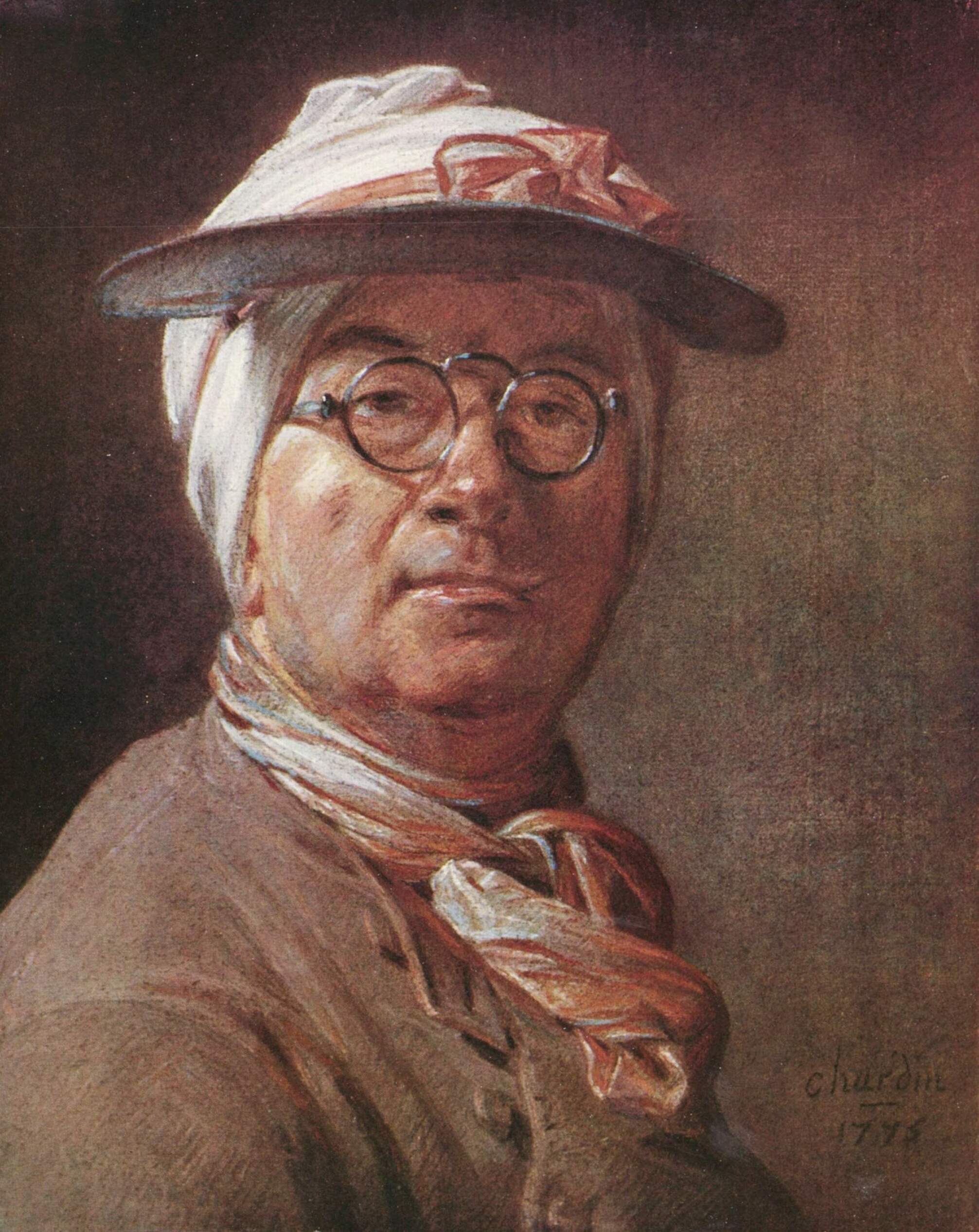
Jean-Baptiste Simeon Chardin who had eye issues
due to lead poisoning

The Château de Versailles was in itself a hazardous place to be. In 1660 Louis XIV had ordered a round of alterations which included decorative lead-roofs. The gardens were no safer with the countless statues and fountains often gilded with lead or made out of lead entirely. It is a wonder that the Sun King did not succumb to lead poisoning! The artist Jean-Baptiste Simeon Chardin (who created the firework display for the birth of Louis XV's son and restored the frescoes in the Gallery of Francis I at Fontainebleau) was one of the men at court who suffered from lead poisoning. In 1770 he suffered from an eye affliction due to lead poisoning which he got not from make-up but from the white-pigmented oils that were favoured by painters of the time.