Showing posts with label military. Show all posts

Tuesday, 7 February 2023

The Maréchaux de France: A Troublesome Rank

Maréchaux de France was the only rank which was deprived entirely from the military; they were the commanders on the battlefield and thus merited a certain recognition at court - but how to properly classify those whose title was not a birth right?


The matter of inheritance is a key aspect of the rank of Maréchal; it was granted entirely on merit and thus did not pass from father to son.

Generally, there were two types of maréchaux: maréchal de camp and maréchal de France. The former was a rank unto itself. As such, a maréchal de camp ranked immediately beneath a General and a Lieutenant General. Unlike the maréchal de France, the maréchal de camp was a far more widespread rank. By the mid-1600's, the French army was divided so as to be employed in different conflicts. This led to a massive increase in the amount of maréchaux de camp; as stated by David Parrott, in 1652 alone Cardinal Mazarin appointed 152 new such. Over time, this would result in plenty of in-fighting over precedence.

Meanwhile, the title of maréchal de France was not a rank per se but a distinction only given to generals who had performed outstanding deeds. Initially, this immense honour was only bestowed on few men; however, during the Bourbon-dynasty, the appointments exploded. For instance, François I had had 11 such while Henri III had seven. In contrast, the record-breaking reign of Louis XIV saw no fewer than 53! The boom had begun already during Louis XIII who appointed 33 but it continued until the revolution. Louis XV's reign counted 49 maréchaux de France while Louis XVI made do with 20.

In broad terms, a maréchal de camp commanded a specific division whereas a maréchal de France had command of an entire army. Naturally, as the number of maréchaux de France often exceeded the amount of separate "armies" available, competition was fierce.


Ill. 2 : Anonyme, Modèle de bâton réglementaire de maréchal de France d'Ancien Régime dit de "Belle-Isle". Dessin et aquarelle. 1758. 0,22 m / 0,645 m. Paris, musée de l'armée.
The symbol of the Maréchal de France was a baton with gilded
fleur-de-lys

Surprisingly, one did not have to be a Frenchman to earn the honour of the title of maréchal de France. Louis XIV and Louis XV both appointed foreigners who had served in the French army to this particular honour, including the Danish Count of Rantzau and the Irish Count of Thomond. In the end, the final maréchaux de France created during the ancien regime were Jean-Baptiste Donatien de Vimeur, Comte de Rochambeau and Comte Luckner - both created in 1791, after the royal family's removal from Versailles.


As a group, the maréchaux had certain prerogatives. At council, they were ranked immediately behind the dukes, however when in the army, the maréchaux took precedence. This is the only instance of such reversal of court precedence which makes it quite unusual. Unlike the duchesses, the spouses of the maréchaux - generally distinguished by adding an "e" to their husband's rank, thus "maréchale" - were not entitled to a tabouret when with royalty. Their husbands, however, had the right to claim a so-called carreau during official visits from ambassadors; the carreau was a large, square pillow which they could rest upon.

As the rank was given individually, the group of maréchaux was far more diverse than any of the other social groups at court. Instead of being composed entirely of noblemen from a certain income bracket, their background was often a good deal more varied.

Generally, there was no hierarchy within the rank of maréchaux itself. In comparison, the precedence amongst the dukes were according to the age of their peerage; thus, the duke whose dukedom was registered earliest ranked above the second-oldest etc. This could potentially cause some friction amongst the maréchaux on the battlefield. As they ranked equally, they were not duty-bound to obey orders from a fellow maréchal. Considering the need for a clear line of command, this caused quite an issue.


Uniform of a maréchal de camp

An instance of such confusion broke out in 1672. The Vicomte de Turenne had been made maréchal général de camp twelve years earlier which meant that he received his orders from Monsieur le Prince. For clarity, the chain of command in this instance went from the king to his brother, Monsieur, to Monsieur le Prince and from then to Turenne. Turenne, in turn, commanded three maréchaux: Bellefonds, Créquy and d'Humières.

That extra step in the chain greatly upset all three. While the three men held the rank of maréchal de France otherwise they outranked Turenne. While Bellefonds and Créquy enjoyed the rank of marquis and d'Humière that of duke, Turenne was a mere vicomte. Consequently, both men outright refused to take orders from Turenne which resulted in all being exiled.

Sunday, 11 April 2021

The Price of Glory: Military Injuries

The vast majority of male aristocrats spent a part of their lives in the king's army; some made it their primary career while others served briefly. The risk attached to that service varied depending on whether France was currently at war. If not, a military service could consist of managing a regiment or a posting to a specific garrison. However, if France was at war the service became far more active - and far more dangerous.

Then, as now, military service inevitably involves the risk of serious personal injury or even death. Naturally, this was the case for the aristocratic sons of France as well although they did not expose themselves to the same amount of danger as the professional soldiers in the front lines. It should be pointed out, though, that in order for a young man to distinguish himself (and potentially be rewarded by the king) he would have to stick his neck out. This would often entail being at the very centre of the action, i.e. by leading cavalry charges.

As could be expected not everyone made it home safe and sound. Some never returned at all while others had to live with the permanent damages. Interestingly enough, the contemporary memoirs rarely mentions such things even when describing men who had spent their entire lives in the army. One exception is the memoir of the Marquis de Dangeau but there was a very clear reason for this: the injured was his own son.


Philippe de Courcillon was 22 years old when he was serving at the Battle of Malplaquet on 11 September 1709. During the battle, the young man was injured in the leg and the wound proved very serious; so serious that the doctors on hand decided to amputate his leg. His father, the famed memoirist, mentions that the amputation had been performed on the thigh. Philippe was sent back to Versailles where the king was kind enough to lend him his personal surgeon, M. Marèchal (his name, not to be confused with the title). The days that it took to bring Philippe back to court had left his wound in a terrible state. 

The surgeon found the patient in such imminent danger that he decided to remove more of the thighbone. The concerned father explained that the surgeon's decision was because the wound had begun to fester and the skin had regrown "too quickly". One can only imagine the pain that Philippe must have been in. Almost miraculously he survived the second operation as well. However, it cannot be ruled out that the trauma had caused irreparable damage to Philippe's body and mind. He died ten years later, at just 32 years of age.


Also at Malplaquet was Pierre Montesquiou d'Artagnan, Comte d'Artagnan, who commanded the right flank of the French forces. As he led his forces, the Comte d'Artagnan (whose name would be immortalised in "The Three Musketeers" by Alexandre Dumas) was a prime target for musket shots. During the battle three horses were shot from under him and he himself did not go completely unscathed: after the battle, four dents from bullets were found on his cuirass protecting his chest. He was wounded, presumably by just such a musket shot.

Pierre de Montesquiou d'Artagnan
Comte d'Artagnan


Of all the men who were wounded at Malplaquet, one of the most distinguished was Claude Louis Hector de Villars, Duc de Villars. Like the Comte d'Artagnan, he was the victim of a musket shot which hit him in the knee. Despite his obviously painful injury, the newly-created Marèchal de France insisted on remaining with his troops and continued giving orders from a litter until he finally fainted. He was then carried back to the French camp. The incident is referred to in his private memoirs. He mentions that he had his wounds dressed "at once" - he also attest to the immense amount of pain he must have been in by writing that once he was insensible he was carried all the way back to Quesnoy without his knowing it. 

It is not surprising that the Marèchal de Villars was a popular man with his troops. Besides this fervent devotion to duty, he had voluntarily made do with the decreased rations of the common soldiery after the disastrous winter of 1709.


Marèchal de Villars


A few decades later, Louis de Brienne de Conflans, Marquis d'Armentières, found himself at the battlefield of Guastalla during the War of the Polish Succession. There, he served under the Marèchal de Coigny when the battle commenced on 19 September 1734. At the time, Louis was 23 years old and had commanded his own regiment since the age of 16. During the battle Louis was wounded by a musket shot which hit him in the neck. Remarkably, Louis survived but he must have had a visible scar which he carried until his death in 1774.


The Battle of Fontenoy was the greatest military triumph of Louis XV's reign but it saw its fair share of death and injury as well. One who experienced just than on his own body was Marc-René de Voyer de Paulmy d'Argenson, marquis de Voyer and son of the Minister for War. Marc-René was Mestre de Camp of the Berry-regiment which meant that he led the charge against an English detachment. In some manner, he appears to have been knocked unconscious and was dragged back behind French lines. For two hours, he remained unresponsive and was generally believed to be dead. It is not unlikely that he suffered at least a concussion and appears to have made a full recovery. 

Marc-René was wounded again, 13 years later when he partook in the Battle of Crefeld. However, this particular injury is unspecified and does not appear to have been serious either. 


File:Battle of Fontenoy 1745.PNG
The Battle of Fontenoy


One man who did not sustain his wound on European soil was a man with an impressive amount of first-names: Jean Baptiste Charles Henri Hector d'Estaing, more commonly referred to as the Comte d'Estaing. He offered his services when France (once again) went head-to-head with England in India. The Comte d'Estaing was posted to the siege of Madras in December 1758. During a minor battle between French and English troops, the Comte d'Estaing found himself in a very unfortunate situation when he was unhorsed by the English troops. Nevertheless, he continued to fight until he was stabbed twice with a bayonet. Only then did he formally surrender.

Rather than shipping him the long way back to France, he was taken into the very city that he was besieging. His wounds were treated but cannot have been particularly bad since he was soon negotiating with the English governor. He was given the opportunity to be released on parole but initially preferred to be kept until an exchange of prisoners could take place - this would also allow him to resume fighting. It was not until the arrival of the English fleet at Madras that the Comte accepted his situation and agreed to the parole. The consequence was that he would only be released - unmolested - if he refrained from further action against the English. 


Noël de Jourda de Vaux, comte de Vaux, maréchal de France (1705-1788).jpg
Comte de Vaux - wounded five times during his career

By the end of his career, Noël Jourda de Vaux, Comte de Vaux, had participated in five major battles, thirty sieges and earned the esteem of two Marèchaux de France: de Broglie and de Saxe.

The Comte de Vaux was wounded no less than five times. In and of itself, such a number might not seem terribly high but considering the non-existing hygiene and dubious medical practices, this is quite impressive. He sustained his first two wounds in the battles of Parma and Guastalla while serving as a captain in 1734. Five years later, he found himself once again engaged on Italian soil - more precisely at Corte. While holding his post in a monastery, he and his troops were set upon by about 2.000 Corsicans. At a disadvantage, he was wounded twice but the French soldiers managed to drive the Corsicans out which left an opportunity for medical treatment. 

His final wound is the only one we know the origin of. At the siege of Bergen-op-Zoom, his division was deployed to the village of Vouet. It was here that an enemy force of 10.000 men descended upon the French soldiers who had to retreat. During the battle, a shell exploded near the Comte which caused his final battle scar.

Friday, 12 March 2021

The King's Foreign Soldiers

In the 17th century, the French army was a formidable opponent. France produced plenty of eminent soldiers herself; Turenne, Condé, Luxembourg, Créquy etc. However, the glittering standards bearing the fleur-de-lys attracted likeminded warriors from other nations. While obviously not in the majority, the foreign soldiers could be given the same honours as their French counter-parts; including the title of Marèchal. These were some of the foreign soldiers who volunteered for the French army in the 17th and 18th century.


Armand-Frédéric de Schomberg, Duc de Schomberg

Born in Heidelberg, Armand-Frédéric was a co-patriot of the second Madame, Elizabeth Charlotte. He entered the French army in 1635, eight years before the birth of Louis XIV. During the Fronde, he served under Turenne with the rank of maréchal de camp. Despite having served Louis le Grand in his fight to maintain royal power, that same power would eventually force him to leave France.  Armand-Frédéric was a Protestant and refused to convert to Catholicism - as a consequence, he was obliged to leave France after the revocation of the Edict of Nantes in 1685.


Armand-Frédéric


Charles O'Brien, Vicomte Clare

Originally an Irishman, Charles entered the French army as a colonel and would fight against Spain in 1718. He would be awarded the title of maréchal de camp after having participated in the War of the Polish Succession and later the Battle of Fontenoy in 1745. Besides his new title, he was also invested as a knight of the Order of Saint-Louis in the chapel at Versailles.


Conrad de Rosen, Comte de Bolweiller

Conrad was born in Livonia, then under Swedish control. Initially, he entered the Swedish army but was exiled when he killed an officer in a duel. He used his relative's, Reinhold Von Rosen, influence to gain a place in the French Army where he would excel on several occasions, including the Siege of Cambray where he was wounded. While he was never awarded the title of Maréchal, he was promoted to general.

1705 - Conrad von Rosen-Kleinröb (copie Joué).jpg
Conrad


Donald Cameron

A Scotsman by birth, Donald Cameron was the chief of Clan Cameron but had to flee Scotland after the Battle of Culloden - in which he was severely wounded. He was received by Louis XV who allowed him to enter the Regiment of Albanie and granted him a knighthood in the Order of Saint-Louis. However, he would not serve in the French Army for long as he did in 1748.

DonaldCameronOfLochiel.jpg
Donald


Frantz Adam Karrer

Frantz was born in Alsace, which was not French at the time, but first entered French service in 1686 at the age of 20. He was a prime example of how a commoner could raise himself up through the armed forces. When he began service, he was an officer cadet but rose through the ranks as lieutenant before buying a half-company of his own in 1709. He would later raise a regiment of foot-soldiers which would be given his name; he would finally become a brigadier before handing over his regiment to his son.


Josias Rantzau, Comte de Rantzau

The Comte de Rantzau was born in Denmark where he would acquire a military background - this he would use in the service of the Danish king, the Prince of Orange, the king of Sweden, the Holy Roman Empire and finally France. He partook in the Thirty Years' War, after which he was made Marèchal de France.


Maurice de Saxe, Comte de Saxe

Born in Lower Saxony, Maurice would partake in both the War of the Polish and the Austrian Succession. In the latter, his assault on Prague spread his name throughout Europe - and resulted in Louis XV awarding him the title of Maréchal de France. It was his achievement at the Battle of Fontenoy - where Louis XV himself was present - that would cement his status at the French court. His strategy secured a French victory and the French king awarded him the elaborate Château de Chambord for life.

Maurice de Saxe (1696-1750).PNG
Maurice 


Johann Nicolas Luckner, Baron de Luckner

The Bavarian Luckner spent his first years as a soldier in the armies of Bavaria, the Netherlands and Hannover. Despite having fought against France in the Seven Years' War, he would enter into the French Army in 1763 as a lieutenant-general. Unlike the others on this list, his title of Maréchal de France was awarded due to his support of the French revolution. He would fight for the new republic but his support did not save his life - he was guillotined at the age of 71.


Nicolas luckner.jpg
Johann Nicolas


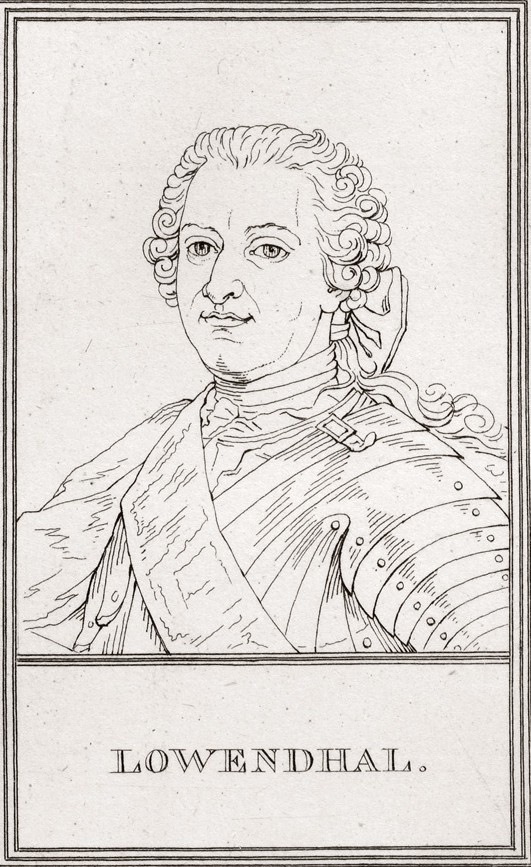
Woldemar de Lowendal, Comte de Lowendal

Another Dane, Woldemar Lowendal (or Valdemar Løvendal) received his military education in the armies of Denmark, Russia and Saxony. He would fight for France in the War of the Austrian Succession during which he would partake in the Battle of Fontenoy as well as the sieges of Ostende, Namur, Oudenarde and Gent. However, his greatest achievement was the conquest of the Dutch town Bergen op Zoom for which he was awarded the title of Maréchal de France.


Lowendal.jpg

Friday, 30 October 2020

The Maréchaux of Louis XIV

The title of Marèchal de France was specific to the court of France; it should not be confused as being a military rank - rather it was an honourific title granted to generals who had distinguished themselves in an extraordinary manner on the battlefield. The outward signs were the baton of office which were blue and adorned with golden fleur-de-lys. The uniform of the lucky recipient also underwent changes once the honour was granted; seven stars were embroidered onto the epaulettes.

During the reign of Louis XIV, the title was granted to no fewer than 53 officers. Below you will find a complete list of their names, familial allegiances reason for receiving the honour - and a fun fact.


César de Choiseul, Duc de Choiseul

Family: Choiseul
Year granted: 1645
Military campaigns: La Rochelle, Isle of Ré, Italian campaign of 1635
Interesting fact: he remained on the side of the royal family during the Fronde which earned him the gratitude of both Anne of Austria and Louis XIV

Caesar, duc de Choiseul.jpg

Josias Rantzau, Comte de Rantzau

Family: Rantzau
Year granted: 1645
Military campaigns: Franco-Spanish War (for France)
Interesting fact: Josias was a Dane who used his military skill on behalf of four different sovereigns: the king of Denmark, the king of France, the Prince of Orange and the king of Sweden

Alaux - Josias Rantzau (1609-1650) - MV 1002.jpg

Nicolas V de Neufville de Villeroi, Duc de Villeroi

Family: Neufville de Villeroi
Year granted: 1646
Military campaigns: Italian campaign (possible the Cretan War of 1645)
Interesting fact: he gained the honour through Cardinal Mazarin and was later appointed as governor of the young Louis XIV


Antoine d'Aumont de Rochebaron, Duc d'Aumont

Family: Aumont
Year granted: 1651
Military campaigns: Fronde, Thirty Years' War
Interesting fact: he died from a fit of apoplexy in 1669

Antoine d'Aumont de Rochebaron


Jacques d'Étampes, Marquis de La Ferté-Imbert

Family: d'Étampes
Year granted: 1651
Military campaigns: Fronde, La Rochelle, Thirty Years' War
Interesting fact: before Louis XIV's ascension to the throne, he served Louis XIII in his wars against the French Protestants

Jacquesdestampes.jpg


Henri II de la Ferté-Senneterre, Duc de la Ferté-Senneterre 

Family: La Ferté-Senneterre
Year granted: 1651
Military campaigns: Dutch revolt against Spain, La Rochelle, Louis XIII's campaign in Lorraine and Rocroi
Interesting fact: he received his title following a successful defense of Hesdin against the Spanish army in 1639. When he was captured - during a campaign - in 1656, he was ransomed by Louis XIV to whom he had remained loyal during the Fronde


Charles de Monchy, Marquis d'Hocquincourt 

Family: Monchy
Year granted: 1651
Military campaigns: Franco-Spanish War, Thirty Years' War
Interesting fact: he died while defending Dunkirk

Charles de Monchy d'Hocquincourt

Jacques Rouxel, Comte de Grancey

Family:
Year granted: 1651
Military campaigns: Thirty Years War, Religious Wars
Interesting fact: he was originally intended - as the sixth child - to go into the church but decided on the army instead

Armand Nompar de Caumont, Duc de La Force 

Family: Caumont
Year granted: 1652
Military campaigns: Italian and German campaigns of Louis XIV
Interesting fact: he was a Huguenot Protestant who had no less than two horses shot out from under him during the Siege of Hondarribia

Armand de Caumont, duc de La Force.jpg

Philippe de Clérambault, Comte de la Palluau 

Family: Clérambault
Year granted: 1652
Military campaigns: Thirty Years' War, Fronde
Interesting fact: he was granted his title of Marèchal for his loyalty to the crown during the Fronde

Philippe de Clérambault

César Phoebus d'Albret, Comte de Miossens 

Family: Albret
Year granted: 1652
Military campaigns: Eighty Years' War (fighting for the Dutch against the Spanish), Dunkirk and Mardyck 
Interesting fact: Cardinal Mazarin was hesitant about fulfilling his promise of the title of Marèchal; it was only after court intrigue - including by César's cousin, Madame de Montespan - that César was given it.


Louis de Foucault de Saint-Germain-Beaupré, Comte de La Daugnon

Family: Foucault
Year granted: 1653
Military campaigns: Fronde and Siege of Orbetello
Interesting fact: he was initially opposed to the crown during the Fronde but changed sides in 1653


Jean de Schulemberg, Comte de Montejeu  

Family: Schulemberg
Year granted: 1658
Military campaigns: Thirty Years' War (where he partook in the defenses of Coblenz and Arras before commanding troops in both Berry and Artois)
Interesting fact: one of his finest military moments was when he drove back the Grand Condé before the city of Arras in 1654

Abraham de Fabert, Marquis d'Esternay

Family: Fabert
Year granted: 1658
Military campaigns: sieges of La Rochelle, Stenay and Exilles during the Huguenot Rebellions
Interesting fact: Abraham differed from the majority of the men on this list in one particular aspect - he was not an aristocrat. As such, he would become the first commoner to reach the title of Marèchal de France.

Fabert, Abraham (de), BNF Gallica.jpg


Jacques de Mauvisière, Marquis de Castelnau 

Family: Caustelnau-Bochetel
Year granted: 1658
Military campaigns: Flanders Campaign, Thirty Years' War, Franco-Spanish War
Interesting fact: he was shot while inspecting the Fort of Léon but managed to return to court. A short time later he died of his wounds

Jacques de Castelnau

Bernardin Gigault, Marquis de Bellefonds 

Family: Gigault
Year granted: 1668
Military campaigns: Fronde, Franco-Spanish War of 1635-59, War of Devolution, Franco-Dutch War of 1672-78, War of the Reunions, Nine Years' War etc.
Interesting fact: he was given the prestigious posts in the royal households of both Louis XIV and the Grand Dauphine and Grande Dauphine. If anything, he certainly deserved his promotion - he spent 41 years in active service!

Bellefonds, marechal.jpg

François de Créquy, Marquis des Marines 

Family: Blanchefort de Créquy
Year granted: 1668 
Military campaigns: Franco-Spanish War of 1635-59, Occupation of Lorraine, War of Devolution and War of the Reunions
Interesting fact: both he and his brother remained loyal to the crown during the Fronde. He would fall from grace in 1675 when he failed to hold the city of Trier - he was blamed for the failure by both Louis XIV and his ministers. Although not entirely disgraced, he would never enjoy the same confidence again

François de Blanchefort de Créquy (1629-1687).jpg


Louis de Crevant, Duc d'Humières 

Family: Crevant
Year granted: 1668
Military campaigns: Franco-Spanish War of 1635-59, Nine Years' War, War of Devolution and War of the Reunions
Interesting fact: along with the Marèchaux de Créquy and Bellefonds, he was exiled briefly in 1672 when they refused to serve under Turenne - it was a long-standing tradition that one Marèchal did not serve under another

Louis de Crevant, maréchal d'Humières, Grand Maitre de l'Artillerie (1685-1694).jpg


Godefroy d'Estrades, Comte d'Estrades

Family: d'Estrades
Year granted: 1675
Military campaigns: Italian Campaign of the 1640's, Catalonian Campaign of the 1650's and the Dutch Campaign of 1675
Interesting fact: he was a skilled negotiator who was sent by Louis XIV to settle the treaties of Breda with Denmark and Nijmwegen with the Netherlands. He also arranged the restitution to France of Dunkirk.


Philippe de Montaut-Bénac, Duc de Navailles 

Family: Montaut-Bénac
Year granted: 1675
Military campaigns: Thirty Years' War, Fronde, Franco-Spanish War, Ten Years' War, War of Devolution, Franco-Dutch War
Interesting fact: he was exiled with his wife when she refused Louis XIV entry in the chamber of Anne of Austria's young ladies

Philippe de Montaut-Bénac de Navailles


Friedrich Hermann von Schönberg, Duc de Schomberg 

Family: Schönberg (Schomberg in French)
Year granted: 1675
Military campaigns: Catalonian Campaign and many others (but for foreign powers)
Interesting fact: This German (born in Heidelberg) had the honour of being not "only" a French Marèchal but also a General in both the English and the Portuguese Armies. He was forced to leave France after the Edict of Nantes was revoked. He died in the Battle of the Boyne.


Jacques Henri de Durfort, Duc de Duras

Family: Durfort
Year granted: 1675
Military campaigns: War of the Grand Alliance and Thirty Years' War
Interesting fact: he took part in the destruction of the Palatinate - home of Madame, Louis XIV's sister-in-law. He was in high favour with the king who allowed him to say what he pleased.


François d'Aubusson, Duc de La Feuillade 

Family: d'Aubusson de La Feuillade
Year granted: 1675
Military campaigns: Fronde, Franco-Spanish War, Austro-Turkish War, Franco-Dutch War and War of Devolution
Interesting fact: he spent lavish sums on his Hôtel de La Feuillade which is said to have cost over 7.000.000 livres.

François III d'Aubusson.jpg


Louis Victor de Rochechouart, Duc de Mortemart

Family: Rochechouart 
Year granted: 1675
Military campaigns: Flanders, Franco-Dutch War
Interesting fact: he was the brother of Madame de Montespan whose influence aided him in getting the position of General of the Galleys. He was later made Viceroy of Sicily and First Gentleman of the King's Chamber

1780 engraving of the "Maréchal de Vivonne" (Louis Victor de Rochechouart, Duke of Vivonne).jpg


François-Henri de Montmorency, Duc de Luxembourg 

Family: Montmorency-Bouteville
Year granted: 1675
Military campaigns: Franco-Dutch War, War of the Grand Alliance and War of Devolution
Interesting fact: he suffered from the disability of being hunch-backed; nevertheless, his mind was sharp and he is credited with never having lost a battle

Marshal luxembourg.jpg


Henri Louis d'Aloigny, Marquis de Rochefort 

Family: d'Aloigny
Year granted: 1675
Military campaigns: War of Devolution, Franco-Dutch War
Interesting fact: he was gravely wounded in 1676 which led to his death at Nancy


Guy de Durfort, Duc de Lorges 

Family: Durfort
Year granted: 1676
Military campaigns: Franco-Dutch War, Nine Years' War and the Destruction of the Palatinate
Interesting fact: he was born a twin, but his brother died in infancy. He would later so impress Louis XIV that he was elevated from his title of Comte de Lorges to Duc de Lorges

Blondel - Guy Aldonce de Durfort de Lorges (1630-1702) - MV 1042.jpg


Jean II d'Estrées, Comte d'Estrées 

Family: d'Estrées
Year granted: 1681
Military campaigns: Caribbean and Franco-Dutch War
Interesting fact: he was the nephew of Gabrielle d'Estrées, mistress to Henri IV. He suffered a naval disaster at Las Aves for which he was blamed by some. Nevertheless, once he made it back to France, the king absolved him of blame


Claude de Choiseul, Marquis de Francières 

Family: Choiseul
Year granted: 1693
Military campaigns: Franco-Dutch War


Jean Armand de Joyeuse, Marquis de Grandpré 

Family: Joyeuse 
Year granted: 1693
Military campaigns: Nine Years' War, Franco-Dutch War and War of the Spanish Succession
Interesting fact: during the Battle of Neerwinden he was shot which resulted in the end of his active military career


François de Neufville, Duc de Villeroi

Family: Neufville de Villeroi
Year granted: 1693
Military campaigns: War of the Grand Alliance, Franco-Dutch War and War of the Spanish Succession
Interesting fact: his nomination was almost entirely based on royal favour. He had been the governor of Louis XIV and had been a firm favourite for years. When he was made Marèchal he had never had a significant command in either army or navy. It was he who - for no apparent reason - decided to bombard Brussels to such an extend that the city had to be rebuilt in the 18th century

Caminade - François de Neufville de Villeroy (1644-1730) - MV 1043.png


Louis François de Boufflers, Duc de Boufflers

Family: Boufflers
Year granted: 1693
Military campaigns: Conquest of Lorraine, Franco-Dutch War and Nine Years' War
Interesting fact: he was wounded while besieging Mons and partook in the Siege of Namurs alongside Louis XIV 

Portrait du duc de Boufflers (bgw18 1264).jpg

Anne-Hilarion de Costentin, Comte de Tourville

Family: Costentin
Year granted: 1693
Military campaigns: Nine Years' War
Interesting fact: he was an immensely successful naval commander who managed to heavily damage the 97 ships of the Anglo-Dutch fleet while himself having just 45 ships at his disposal - eventually, his enemies sent fireships at him which forced him to retreat. He would also inflict another defeat on the English-Dutch alliance in 1690 when he sunk or captured 15 ships

Tourville-musee-marine.jpg

Anne Jules de Noailles, Duc de Noailles

Family: Noailles
Year granted: 1693
Military campaigns: Nine Years' War and War of the Spanish Succession
Interesting fact: he raised a regiment which (naturally) was named after him

Anne-Jules, duc de Noailles (1650-1708).jpg

Nicolas Catinat

Family: Catinat (commoner)
Year granted: 1693
Military campaigns: War of Devolution, Franco-Dutch War, Italian Campaign and War of the Spanish Succession 
Interesting fact: the other commoner on the list, Nicolas was the son of a magistrate


Louis Joseph de Bourbon, Duc de Vendôme

Family: Bourbon-Vendôme
Year granted: 1695
Military campaigns: Franco-Dutch War, Nine Years' War and War of the Spanish Succession 
Interesting fact: he was one of the best strategists of his time, even receiving praise from Eugene of Savoy. He earned the respect of his men by his calculated maneuvers which caused minimal loss of lives

Duc de Vendôme, 1706.jpg

Claude Louis Hector de Villars, Duc de Villars

Family: Villars 
Year granted: 1702
Military campaigns: Franco-Dutch War, Nine Years' War, War of the Spanish Succession and War of the Polish Succession
Interesting fact: while being a successful general, he was better known at court for his boasting - and his love for young men

0 'Le maréchal de Villlars' - Rigaud - Vaux-le-Vicomte.JPG

Noël Bouton, Marquis de Chamilly

Family: Bouton
Year granted: 1703
Military campaigns: Franco-Dutch War, Nine Years' War, War of the Spanish Succession and War of Devolution
Interesting fact: he was granted the Order of the Holy Spirit


Victor Marie, Duc d'Estrées 

Family: d'Estrées 
Year granted: 1703
Military campaigns: Franco-Dutch War, War of the Spanish Succession 
Interesting fact: he served as a member of the Regency Council but had little flair for politics. Instead, he devoted his time to his enormous collection of art and books

Nicolas de Largillière - portrait of Victor Marie d'Estrées, Duke of Estrées in 1710.jpg


François Louis Rousselet, Marquis de Château-Renault 

Family: Rousselet
Year granted: 1703
Military campaigns: Franco-Spanish War, Nine Years' War and War of the Spanish Succession
Interesting fact: he managed to withstand an attack by Cornelius Evertsen with 25 ships despite having just 6 ships at his own disposal

Chateaurenault.jpg

Sébastien Le Prestre, Marquis de Vauban

Family: Preste de Vauban
Year granted: 1703
Military campaigns: Franco-Dutch War, Nine Years' War, War of Devolution, War of the Reunions and War of the Spanish Succession
Interesting fact: he was a forward thinker whose ideas clashed with the time he lived in. For example, he suggested that taxation should be spread out more equally and that borders should be decided by coherence and defensibility 

Sebastien le Prestre de Vauban.png

Conrad von Rosen, Marquis de Rosen

Family: Rosen
Year granted: 1703
Military campaigns: Franco-Dutch War and Nine Years' War
Interesting fact: he was originally from Livonia - then under Swedish control - where he was exiled for killing an officer in a duel

1705 - Conrad von Rosen-Kleinröb (copie Joué).jpg


Nicolas Chalon du Blé, Marquis d'Huxelles 

Family: Chalon du Blé
Year granted: 1703
Military campaigns: Nine Years' War
Interesting fact: he represented the king during the negotiation for the treaty of Utrecht  

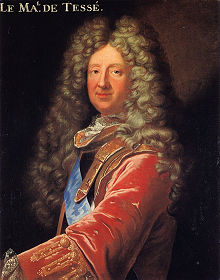
René de Froulay, Comte de Tessé

Family: Froulay
Year granted: 1703
Military campaigns: Franco-Dutch War, NineYears' War, War of the Spanish Succession
Interesting fact: he was one of the leading officers who carried out Louis XIV's scorched-earth policy in the Palatinate

Le maréchal de Tessé.JPG


Camille d'Hostun, Duc de Tallard 

Family: Hostun de La Baume
Year granted: 1703
Military campaigns: Nine Years' War, War of the Spanish Succession 
Interesting fact: Camille witnessed the utter destruction of the forces under his command at the Battle of Blenheim after which he was captured by the English. Nevertheless, he was made a Marèchal and made a duke when he returned to France


Nicolas Auguste de La Baume, Marquis de Montrevel 

Family:
Year granted: 1703
Military campaigns:
Reason for receiving the title:
Interesting fact:


Henri d'Harcourt, Duc d'Harcourt 

Family: d'Harcourt
Year granted: 1703
Military campaigns: War of the League of Augsburg, Nine Years' War, Franco-Dutch War
Interesting fact: he was serving in the French Army of the Rhine when he suffered a stroke which forced him to retire

Maréchal d'Harcourt Beuvron.jpg


Ferdinand de Marchin, Comte de Marsin 

Family: Marchin
Year granted: 1703
Military campaigns: War of the Spanish Succession, Flanders Campaign
Interesting fact: Ferdinand died while serving as he was severely wounded at the Battle of Turin. He was captured and died in prison shortly afterwards


James FitzJames, Duke of Berwick 

Family: Stuart
Year granted: 1706
Military campaigns: Nine Years' War, War of the Spanish Succession
Interesting fact: he was the illegitimate son of James II of England (whose claim to the English throne Louis XIV supported) and Arabella Churchill

James Fitz-James, primer duque de Berwick (Museo del Prado).jpg


Charles Auguste Goyon, Comte de Matignon 

Family: Goÿon de Matignon
Year granted: 1708
Military campaigns: Franco-Dutch War, War of the Spanish Succession
Interesting fact: he accompanied James II when set sails for Ireland

Charles Auguste de Goyon de Matignon

Jacques de Bazin, Marquis de Bezons 

Family: Bazin de Bezons
Year granted: 1709
Military campaigns: War of the Spanish Succession, Nine Years' War and Siege of Candia
Interesting fact: he was made a member of the Regency Council following the death of Louis XIV

Pierre de Montesquiou, Comte d'Artagnan  

Family:
Year granted: 1709
Military campaigns: War of the Spanish Succession
Interesting fact: not to be confused with the famous Musketeer from Alexandre Dumas' "The Three Musketeers" - although he was the cousin of the man whom that character was based on. He had no fewer than 3 horses shot out from under him during the Battle of Malplaquet

Alberico III Cybo-Malaspina, Duc de Massa

Family: Cybo-Malaspina
Year granted: 1703
Interesting fact: he was an Italian and appears to have led a rather obscure life