Showing posts with label film-fashion. Show all posts

Tuesday, 28 December 2021

Film Fashion: Livery Edition

Every royal and noble household had their livery - a uniform in the colours of their house worn by the servants attached to their household. This had several purposes including identifying a person as belonging to specific nobleman or royal as well as emphasizing the wealth of the master; after all, he would be the one paying for the uniform. Thus, any court in Europe was awash with servants wearing multi-coloured uniforms. 

For the servant in question, the colour of his livery could mean that he was treated with respect by his peers - for instance, being clearly marked as the employee of a powerful man could have its benefits. Furthermore, it signalled to the guards and residents at court that the wearer had a reason to be at court which in itself might just spare them some unpleasant scenes.

Most movies do not feature liveries very prominently; rather, they can usually be seen briefly in the background.

The king's livery was blue, red and white - coincidentally the colours later chosen for the French flag. Other members of the royal family often chose their own; for instance, the Comte d'Artois had an apple green and Madame de Pompadour dressed hers in purple for her estate of Bellevue. Purple was also a colour of choice fro Marie Antoinette's Petit Trianon but at Versailles - where her household was largely mixed with her husband's - it was also the traditional colours.


These three uniforms featured in the 2006 movie "Marie Antoinette" by Sophia Coppola. To the left can be seen the black and gold of the Habsburgs - Marie Antoinette's family. In the middle an officer of the king's household holds open the door for the new dauphine which clearly shows the golden embroidery often adorning their uniforms. Finally, a porter can be seen bowing to the titular figure as she enters her new bedchamber. This time, the uniform is a different shade of blue and appears less ornate - this would be rather accurate, as the uniform depended on the office.


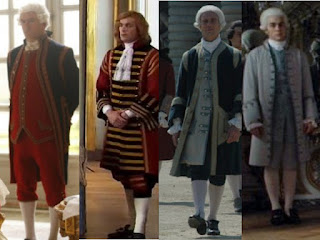
These four images show different interpretations of the king's livery. The first from the left is from the move "Louis XVI, l'Homme qui ne voulait pas être Roi" and shows by far the most modern version. The second is from "Versailles: Le Rêve d'un Roi" and shows a more 17th century version. Interestingly, the two last - both from "Jeanne Poisson: Marquise de Pompadour" are of a much lighter blue and white and has completely omitted the red and gold.


These three men clearly depicts three different households. The man to the left, wearing the otherwise Habsburg-colours, served the Marquise de Merteuil in "Dangerous Liaisons". The two other men feature in movies about English nobility: the man in green is from Jane Austen's "Love and Friendship" - the adaptation of her novel Lady Susan. Finally, the man in brown feature in "the Duchess" and as such is meant to be in the employ of the Duke of Devonshire.


This time, these liveries represent other monarchs in the 18th century. The gentleman in the dark livery with golden accents is in the fictional employ of Christian VII of Denmark-Norway ("A Royal Affair") while the man at the centre featured in the 2014 series "Ekaterina" about Catherine the Great. Finally, the sorely tried man to the right is depicted as serving George III of Great Britain in "The Madness of King George".

Sunday, 26 September 2021

Film Fashion: Jeanne Poisson, Marquise de Pompadour

This French movie depicts the life of Louis XV's most famous mistress: the Marquise de Pompadour. Released in the same year as Sofia Coppola's "Marie Antoinette" - 2006 - the movie stars Hélène de Fougerelles and Vincent Perez as the semi-royal couple. It is one of the few movies to include a depiction of Marie Leszczynska and her children by Louis XV which makes the movie quite interesting.


Marquise de Pompadour


An apple-green robe à la Française with yellow/orange details. On first look, the dress is not particularly special but upon a closer look, the details truly shows. Several ruffles edge the bodice as well as the overskirt's edges and matches the three attachments - one on the left side of the bodice and one on each sleeve. Rather than jewels, Hélène was styled with lace and silk ribbons around her neck - quite true to the real Pompadour's style.


If this gown had been turquoise rather than lavender, it would have been almost a complete replica of the one worn by the Marquise de Pompadour in her most famous portrait. As it is, the pink bows and matching ruffles were the very style favoured during the rococo-period - the bejewelled stomachers were only worn for special occasions. 


In a complete contrast to the other, more pastel-coloured gowns worn by Hélène as Jeanne Poisson, this robe à la Française was worn during a scene in which the new favourite is introduced to the queen. That might be why the fabric is much heavier, almost old-fashioned; as such, it could be seen as an effort to blend in with the tastes of the queen's elder entourage.

Besides the heavy golden/black brocade, the bodice is quite interesting. The embroidery's pattern is very unusual compared to what was usually seen at the time.


Another robe à la Française designed for the Marquise de Pompadour. This one in pale blue silk with small embroidered flowers and blue ruffles along the neckline and down the length of the bodice. The skirt is hardly seen but what can be peeked from beneath her arm it appears to continue in the same pattern.


This yellow set is interesting from a historical fashion point of view. A caraco is rarely seen in historical movies in quite this manner; usually they are made of a matching fabric to the skirt. While the black contrasts suits the colour well, it is a shame that they look a bit too modern - almost like something that could be found in a normal fabric-shop. Nevertheless, the fabric chosen for the caraco is very beautiful; a yellow silk brocade that gives an impression of luxury.

The straw hat is a very nice touch which the actual Pompadour herself wore on occasion; as is the case for the white neck-ruffles.


The left gown is very simple and worn before Jeanne Poisson was introduced to court. Such a gown would never have been seen at Versailles but corresponds to what bourgeoisie women would wear on an everyday basis. This is particularly emphasized by the complete lack of accessories - no ruffles, no bows, no pearls or gemstones.

The second gown is somewhat puzzling. It looks more like something from the 16th century with the way the sleeves are cut to reveal the chemise below. Furthermore, the machine-embroidered flowers on the bodice and the choice of what looks to be velvet gives the entire dress almost a Renaissance look - quite an odd choice for the woman who embodied rococo!


These last two gowns are good examples of fabric used for 18th century gowns; on the left, a blue/white chinoiserie fabric is a nice nod to the fascination with the Far East that was sweeping through Europe. The gown is rather simple in itself with no contrasting colours but the overall impression is of an impeccably clean and sophisticated lady.

The second is a far more classic floral pattern on a white background. The fabric looks more like a type of cotton or similar type of fabric. Again, the only ornaments are the white ruffles and a few buttons on the bodice. For women choosing to wear such a floral pattern there was one particular advantage: it could be matched with almost all colours. Blue, red, green are all found in the pattern which would allow for a more adjustable piece of clothing.

Louis XV


A yellow silk suit with a matching golden waistcoat in a damask-pattern, there is an echo of the yellow outfit worn by Madame de Pompadour above. The black details only add to the similarities; the king's black velvet tricorne hat is topped with white feathers and the black is again seen on the bow tying his perruque together.

The embroidery on the overcoat was a classic trait of menswear from the high-nobility during this point in time. Metal thread and even actual gemstones were used to create a more luxurious appearance - and of course, it would be hand-embroidered.


Again, the elaborate embroidery is the key factor of this coat. Silver thread with some gold thread interwoven in the fabric gives a shining effect to the sky-blue velvet. The coat was used on two different occasions in the movie - on the right photo, an order can be seen attached with a bright red fabric as well as the sky-blue sash of royalty.

On the left photo, the king wore a pink waistcoat embroidered with more silver - this time in emblem-patterns. As was the custom, his cravat can be seen sticking out at the neckline - generally, a gentleman's (even a king) cleanliness was judged by how clean his linen were.


Considering the pastel hues used as a matter-of-fact by the emerging rococo, this suit is remarkably dark. Dark blue silk makes up the foundation of the suit with burgundy embroidery and golden buttons. Although it is hard to see, the waistcoat is a deep red, almost scarlet silk with golden embroidery.


This is a good example of an outdoor coat - the design does not vary a lot from the coats worn by the men of the court during the latter years of Louis XIV. The large buttons and the leather-gloves indicates that the king wore this coat for hunting. The coat itself was made from blue silk with silver embroideries on it. The trousers appears to be pink.

Marie Lezczynska


A robe à la Française, this is the main gown worn by Marie Leszczynska in the series. The design corresponds well to the style of the actual queen which was often described as being rather conservative - some even called it "boring". However, the colour combination is certainly anything but. The greenly turquoise clash with the rusty burgundy - the overall impression is of a somewhat unfashionable gown. It is very likely that that was done on purpose.


Due to the monochrome colour scheme - presumably worn for a mourning scene - the gown is somewhat difficult to discern properly. Yet it appears to - again - be other simple with the sole ornaments being the two bows and ruffles along the outer skirt. But this might very well be due to the context the gown is worn in. During mourning periods, displays of jewels were prohibited.


This was the only photo I could find of this gown which looks far more in tune with the reigning fashions. The muted rode-tone of the brocade is feminine but the cut gives the gown a more matronly look - again, undoubtedly on purpose. Note, that the mauve ruffles appear to continue down the length of the gown and is matched by a bow on the bodice and two more - one on each sleeve.


Mesdames


Madame Adélaide is depicted wearing this robe à la Française in golden/beige brocade with coral details. The design chosen is far more in keeping with the emerging rococo style than the gown worn by her mother; the gown is overflowing with adornments: ruffles, elaborate embroidery on the bodice and lush silks.

The fabric used for the bodice is a tone brighter than the coral of the outer skirt. The result is that the wearer's pale complexion is highlighted.


In comparison to Madame Adélaide's gown, this one is very plain, primarily due to the choice of a single-coloured silk for the outer skirt and sleeves. The colour-scheme itself is not far from her "sister's" with the same golden and pink tones reappearing. The most dominating feature of the bodice is the somewhat large, embroidered bow with a jewel at the clasp in the centre.

Others


The gown was worn by a waiting-woman of Madame de Pompadour's which explains the plainer appearance of the design. The costume designer did a very good job at demonstrating the difference in class by the costumes. The fabric used for this particular gown appear to be of a poorer quality and while it does have ruffles, the overall impression is of a woman from a lower, social background.

The gentleman's suit follows the fashion trends for men quite well although both the overcoat and the waistcoat seems to be too big for him. Another thing is that the waistcoat would not usually hang like that. The embroidery is a good example of a man of quality - but lesser means - as it is of a rather limited scope but still in golden thread.


These three ladies also display a difference in class through their clothing. The right and left photo are both of the same woman - Madame de Pompadour's mother. It is clearly made for a bourgeoisie woman who tries to emulate the tastes of the court.

The courtier in the middle, in contrast, wears a lavishly adorned bodice. The effect appears to have been made using a mixture of ruffles, bows and pearls. The fabric is of a green silk with reddish details. Note that the lady repeats the choice of pearls on her wrist, around her neck and in her hair.

Tuesday, 20 April 2021

Film Fashion: Dangerous Liaisons

Based on the novel of the same name by Pierre Choderlos de Laclos which was published in 1782. The novel - and movie - focuses on the diabolical couple of the Marquise de Merteuil and the Vicomte de Valmont whose mind games and utter lack of compassion cast their other companions' lives into turmoil. Eventually, however, the two get what is coming to them.

The movie was released exactly 206 years after the book and features Glenn Close, John Malkovich, Michelle Pfeiffer and Uma Thurman. Although the original book was released in the final decade of the ancien regime but the costumes in the movie points to a somewhat earlier date - most likely in the mid-18th century.

Without a doubt, this movie contains some of the most accurate and beautiful costumes for a movie set in the 18th century.


Marquise de Merteuil

This pink/peach robe à la Française is a perfect example of the sort of fashion, a woman from the aristocracy would wear for a soirée at her own estate. It has just enough of the elaborate decorations - i.e. the bows and the pleated ribbons - but is kept in an overall discreet tone. In comparison, some of the contemporary gowns worn for court were often in bold patterns or brighter colours.


Another costume which corresponds perfectly with the scenario it is intended for. The yellow silk set consists of a caraco jacket and a silk skirt with contrasting gloves, fastenings and hat in black. Notice that the caraco and the skirt are not made of the same fabric - instead they are kept in matching tones.


There is a distinct resemblance between this gown and the turquoise/pink gown worn by Madame de Pompadour in her famous portrait. Another robe à la Française in deep blue silk with pink details and a stunning pearl parure. Like in the pink gown above, the bodice is dominated by three bows increasing in size. The roses on the ribbons are quite an unusual choice but complements the gown very nicely.


Usually, the dressing-scenes of 18th century films shows a chemise and often a rather plain corset. In contrast, the costume department for this movie has applied a sense of realism in the toilette of the Marquise de Merteuil. Notice the pannier which is based on actual, surviving pieces from the 18th century. Likewise, the corset in a bright blue - possibly silk - fabric is not unlike those housed by museums today. Everything in this scene reflects the character's wealth: the three servants helping her get dressed, the lavish amount of lace and the expensive silks.


Compared to the other gowns worn by the Marquise this one is remarkably muted in colour. The white is quite unusual since white gowns would normally be adorned with colourful details such as embroidered flowers or pleated ribbons - or perhaps more bows. This one is rich in adornments but they are kept in either white or champagne and therefore does not provide the usual colour contrast. 


Personally, this is my least favourite of the marquise's costumes but it cannot be denied that it is beautifully executed. The bodice is quite unusual; it does not appear to be a separate piece but simply created by putting a sheer fabric over the fabric beneath and lining the edges with a contrasting green fabric. The bows on the arms are made from the same green fabric.


Vicomte de Valmont

A beautiful example of a male courtier's clothing - lush velvet and very elaborate silver embroideries and buttons. The colour is remarkably hard to discern correctly. On some photos it looks bluish with a purple tone but in others it is clearly dark green. Either way, the coat's colour is accented by the embroidery on the waistcoat.


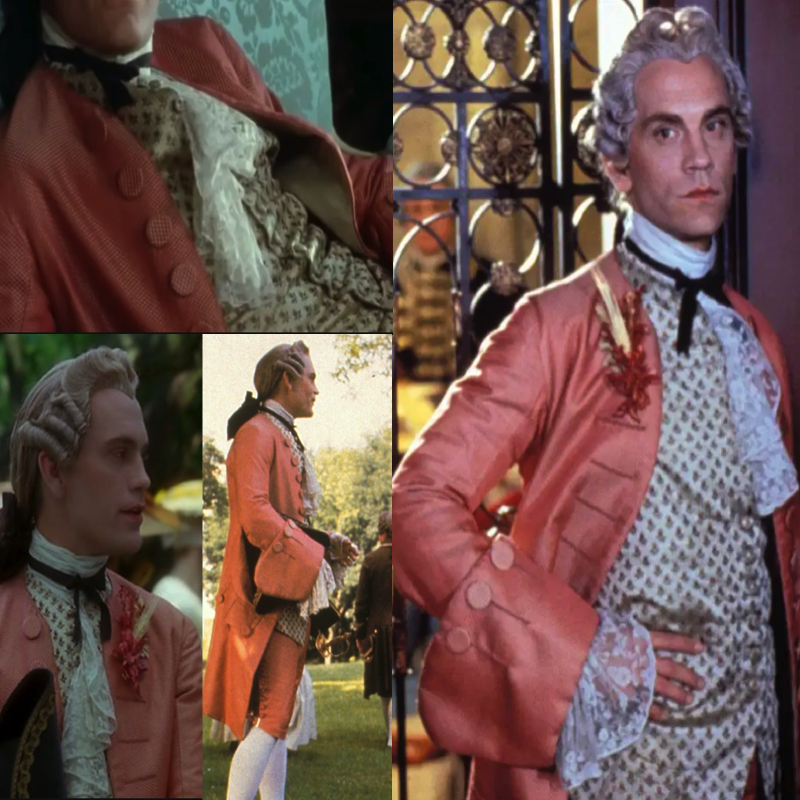
This pink suit matches the colour of the marquise's dressing gown seen in the beginning of the movie almost perfectly. While the coat in itself is rather simple, the waistcoat adds a layer of luxury to the ensemble with its delicate embroidery in what appears to be metallic thread.


The floral pattern is somewhat unusual in that the flowers are quite large. At this point in time, fashion tended more towards smaller flowers - usually done in embroidery. The suit itself is quite dark which is also a tad odd compared to the brighter costumes of the time. However, the scene in which this suit is worn is very melodramatic and as such the costume neatly underlines the atmosphere.


A grey coat with a fine pattern in white and matching breeches. The waistcoat is most likely the same as is worn in the costume beneath. Again, the buttons are quite large and appears even more so when contrasted with the delicate embroidery on the waistcoat and the pattern of the coat.


Another one of the vicomte's suits where the design is focused primarily on the waistcoat and edges of the coat - all of which have been heavily embroidered with golden and champagne-coloured thread.


Cécile de Volanges

Céline's dresses are generally more modest and more neutral in their colours. This particular gown is typical of the type of fabric that became fashionable in the 1770's - particularly the small flowers. This robe à l'Anglaise is really quite simple with no adorned bodice or contrasting petticoat. The only show of extravagance is the layered lace at her elbows.


Another white gown worn by Uma Thurman in her role as Cécile, this one looks like a less elaborate version of the white gown worn by the Marquise de Merteuil - perhaps reference to Cécile coming more and more under the control of the marquise? Of course, the colour symbolism should not be disregarded either; at this point in the movie she is still an innocent, virtuous young lady.


Madame de Tourvel

A rather neutral beige dress with small pink flowers, this gown would be suitable for a woman of her rank: not quite as extravagant as an aristocrat's but suited for the wife of a statesman. While the gown itself does not have the otherwise typical ribbons or bows, the ruffles at the neck provides a modest piece of accessory.


The only one of Madame de Tourvel's gowns to have a more bright colour-scheme, this outfit is also a caraco combined with a contrasting skirt. The pattern on the blue caraco almost looks like chinoiserie which became very popular in the 1770's.


Again, the bodice has been framed with ribbons rather than being its own separate piece of clothing. This robe à la Française is neatly topped off with a straw-hat - also adorned with flowers to match those on the gown itself. Note that pleats hanging from the shoulders.


Others

Madame de Rosemonde (played by Mildred Natwick) wears predominantly dark colours associated with widowhood. As such, her clothing stands in stark contrast to the occasionally very flamboyant colours of her co-stars. It was not unusual for women to discard the lightest colours as they grew older - for instance, Marie Antoinette ceased wearing pink when she turned 30.


The mother of Cécile, Madame de Volanges, wears this bright fuchsia gown with a green petticoat - and an impressive array of pearl jewellery. Note that the bodice has been arranged in a scallop pattern in ruffled ribbons.


Peter Capaldi stars as the valet of the Vicomte de Valmont, Azolan, and as such is primarily seen in his livery. Therefore, it is practical but not entirely devoid of embellishments as this would have been an outward symbol of his employer's wealth.


And finally, Laura Benson portrays Émilie who is one of the vicomte's more mercenary mistresses. She is seen wearing a bright yellow robe à la Française with red bows on her bodice - perhaps it is not a coincidence that the shade of red is exactly that of Azolan's? After all, they are both in the vicomte's pay.


Thursday, 26 March 2020

Film Fashion: Marie Antoinette (2006) - Marie Antoinette

The titular character - played by Kirsten Dunst - had over 60 costumes for this 2006-movie. The tones are ranging from the softest pastels to dark mourning, thus reflecting the dramatic journey of the ill-fated queen's life.

Since she had such an abundance of dresses, I have divided them according to colour.

Takes place: 1770-1789

Note! Not all of Kirsten's costumes are featured here


The Blues

Blue "Austrian" Gown

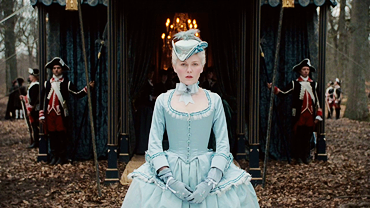
The first actual gown we see the character in, this gown serves as a contrast to the blue "French" gown. The fabric is not as delicate and looks a good deal warmer than the silky, French piece. The colours, too, are more muted but the silver threads on the bodice and edges gives it an air of elegance.

Marie Antoinette.   No suntan for this lovely girl.  And no wrinkles later on in life either....Kirsten Dunst in ‘Marie Antoinette’ (2006).


Blue "French" Gown
Elegant, refined and the epitome of "French-ness" at this period in time, this blue gown is a good example of a travel ensemble for a lady. The chic tricorne hat and the trimmings are rich but still suitable for travelling; note the pet-en-l'air.

Sartorial Adventure — Costumes from Marie Antoinette (2006) (click to...

Marie Antoinette.

Marie Antoinette, Beginners: grande_caps — LiveJournal


Blue, Red-Belted Gown
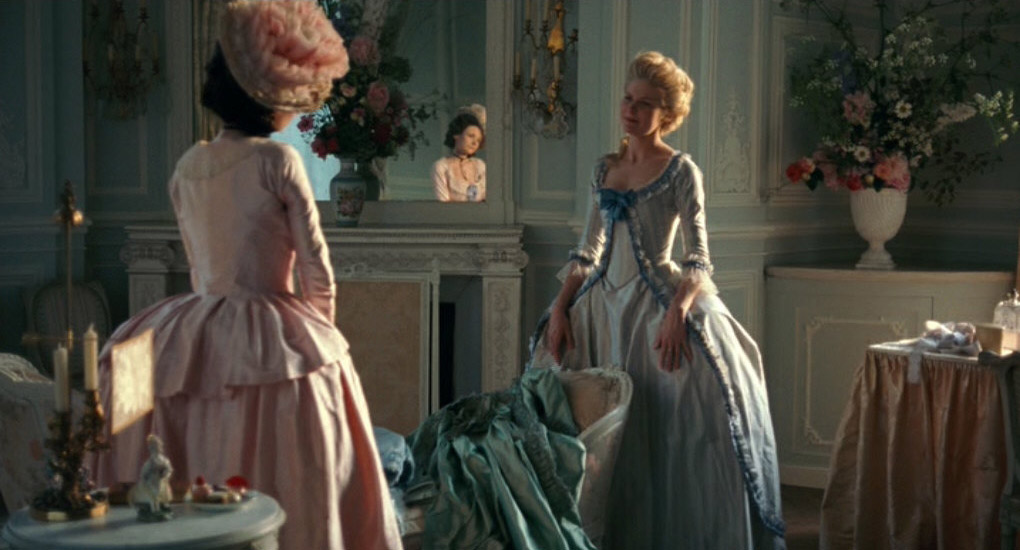
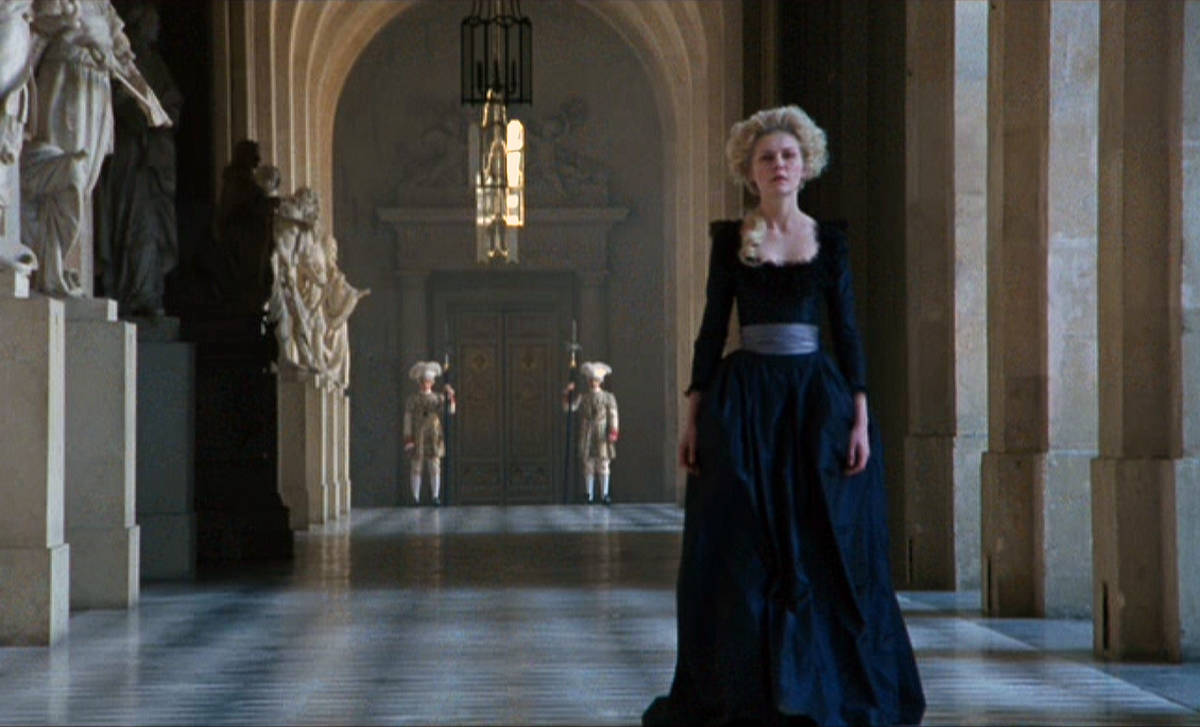
A robe à l'Anglaise in a soft pastel blue with a contrasting belt in deep red. The ruffles on the bodice almost indicates a zone-look. When she runs down the corridor, the voluptuousness of the gown truly comes into its own with its flowing skirt.

Contrast Sash    Another beautiful contrasting sash - striking even from audience distance.

Blue Trianon Gown (with Ruffles)
Unlike the other gowns she wears at the Petit Trianon, this one is equipped with panniers. The fabric is very typical of the 1780's - vertical stripes and soft colours. Actually, the style of this dress seems to incorporate both the elaborate extravagance of the 1770's and the more relaxed one of the 1780's. The panniers, the ruffles and the bow is indicative of the first years Marie Antoinette spent in France whereas the striped fabric and very pale colours suits the "natural" air which she attempted to establish at her private retreat.


Marie-Antoinette-1190

Marie Antoinette


Blue Robe à la Retroussée
At first glance, this wonderful gown might look like a Polonaise but it is indeed a retroussée - note the skirt has been (literally) hooked up at the back rather than being sewn that way. It would be a good example of an everyday-gown for a French dauphine. It is not overly decorated but retains a degree of elegance suitable for a young woman of her rank.

Must have information as well as tips about weddings?.Photo gallery


Blue Gown With Bows

There is something juvenile about this gown; whether it is the pink bows or simplicity in the blue silk, it evokes a feeling of youth and innocence. Note the decorative ribbon around her neck - tied in a bow, of course. 

Finally the back!!Trust your heart if the seas catch fire...


Blue Zone Gown
Worn while at the Petit Trianon, this is one of the rare zone-gowns used in the movie. The stomacher and petticoat are of monochrome white whereas the sleeves and bodice are very era-appropriate with its vertical stripes and pastel tones. Note how the fan matches perfectly.

New post on pretty-little-fools                              …Relaxing at Petit Trianon


The Pinks 

Pink Ruffle Gown
Almost cake-like, this gown is also incredibly youthful. Ruffles are plentiful and can be found at every part of the gown: the bodice, the sleeves, the skirt - even the ribbon around her neck is ruffled! The colour is one that Marie Antoinette was fond of in her youth.

Marie Antoinette - Publicity still of Kirsten Dunst


Green & Pink Striped Gown

Again, the vertical stripes are very characteristic of the age - even more so, because they are in different colours. A look into Marie Antoinette's actual wardrobe book shows fabrics of just such a variation. The accessories are very appropriate: a diamond necklace, plenty of ruffles and bows, feathers in the hat and a diamond-encrusted fan.

Marie Antoinette

 A First Look At Marie Antoinette’s Lavishly Restored Apartments In Versailles | British Vogue


Pink Feather Gown
One of the more iconic looks of this movie, is this spectacular ensemble of bright pink and a trim of white feathers. The plethora of feathers make it look almost fuzzy - especially when combined with a matching tricorne hat and a muff. The bodice is cut in a classic zone-look which is a bit too early for when that particular style came into fashion.

Marie Antoinette-ddpimages_00469365

Powerful in pink: The most iconic pink dresses on the big screen

Peach Gown
There is quite a lot of matching in this outfit. The vertical stripes of the bodice lays the foundation for the colour scheme with the ruffles and petticoat being a slightly darker tone. Note that the flowers (orchids?) incorporates all the shades of peach. However, the colour scheme seems to wash out Kirsten a bit - which could very well be on purpose. After all, the scene in which she wears it, shows how frustrated and vulnerable she feels in her marriage.


Marie Antoinette

Light Pink Gown
A very light pastel gown of silk seems like a combination of the queen's Petit Trianon style and the more formal Versailles-style. Silk was a stable at Versailles whereas the simplicity was characteristic of Petit Trianon. The floral wreath on her head is accurate too - many portraits of the time show the sitter wearing such an accessory. 

.

Marie Antoinette (2006)


The Greens

Green Trianon Gown
Not only is this gown simple, it almost seems like a riding-gown with the cut of the bodice. Such a lack of decoration is perfect for Trianon; even without the trappings of the court, she looks regal and elegant.


Pale Green Dress - Marie Antoinette foto (32456944) - fanpop

Pale Green Dress - Marie Antoinette Photo (32456947) - Fanpop


The Yellows

Pink & Yellow GownAnother cake-like gown, this gown perfectly shows the fondness for colour-contrasting of the 18th century. The pink is very bright and would perhaps not have been quite so strong in the 1770's whereas the yellow is the perfect shade. Note, in particular, how the pink has been continued in the trimming of the bodice and the neckline. 


Marie Antoinette dress, Rococo dress, 18th century dress, Movie dresses, Rococo clothing, Historical


Yellow Gown
This yellow robe à l'Anglaise is made from a patterned silk in a lovely, yellow colour. The straw hat is absolutely gorgeous - the border, especially, is very stylish. Note that the hat has also been adorned with feathers, a bow and lace around the crown.


 Modern hat - cool image


The Florals

White Floral Gown I
A robe à l'Anglaise in a silk fabric with delicate flowers. The closed bodice is emphasized by the ruffles and - primarily - the blue ribbons added to the ruffles. Note that the ribbon around her neck matches. The hat incorporates both the blue and red elements which is quite a nice touch.

Like the neck ribbons as inexpensive accessories. Also, these kinds of red gloves might be a "match Valmont" accessory.Strawberry Dress-Marie Antoinette


Marie Antoinette. A movie directed by Sofia Coppola in 2006. I absolutely adore the beauty of this movie.


White Floral Gown II
Unlike most of her other costumes, the petticoat is in a different fabric than the overlaying skirt - the white silk petticoat perfectly matches the gloves. Note the border at the hem of the petticoat; it consists of ruffles made from the same fabric as the bodice and skirt.


Marie Antoinette

Kirsten Dunst as Marie Antoinette

Floral Gown
By first glance, the fabric chosen for this gown seems to have been inspired by the walls of the queen's bedchamber, just in slightly softer tones.

The Whites

White Silk Gown
When you look a little closer, it becomes apparent that the gown is not completely white; a very small amount of turquoise ribbon has been added to the border of the ruffles. Again, the ruffles are used to make a zone-look.

Sophia Coppola's Marie Antoinette (2006). Costume Designer: Milena Canonero.Best Movie Hair of All Time:  Marie Antoinette (2006) Kirsten Dunst as Marie Antoinette | allure.com

Marie Antoinette (2006)


Birthday Gown
This gown is remarkably simple considering the occasion it is worn for; one would expect a bit more extravagance from the queen's birthday gown. The whiteness of the silk bodice and overskirt is nicely contrasted by the sharp turquoise; the pink flowers and feathers brings a little more life into the ensemble.


Trust your heart if the seas catch fire...Kirsten Dunst as Marie Antoinette


White Gown
This gown is the epitome of Petit Trianon. The white muslin fabric has a far more natural feeling than the often stiff silks of court life at Versailles. The colours, too, shows a return to the natural tones loved by the queen. Even the lack of decoration (neither hat, jewels nor bows) screams a break from the traditional court gowns.

Marie Antoinette


Chemise à la Reine
Considering the influence this type of dress had in her life, it is shown very little in the movie. The white muslin and the over-hanging neckline is characteristic of the style - as is the sash at the waist. Usually, the sash would have been in a slightly sharper colour but due to the lighting, it cannot be seen clearly.

Marie Antoinette (2006)

The Blacks

Mourning Gown (with sash)
A very simple gown worn with a sky-blue sash. It seems to me to be the same gown worn when the king and queen watches the coffin of their eldest son drive away - but without the sash and with a large, mourning hat.

Dressed in Black: 17th and 18th Century | Frock Flicks

treasure for your pleasure: marie antoinette

Black Opera Gown
This gown is a bit too 21st century, as is the "mask". The entire skirt seems to be made from black gauze whereas the bodice seems to have been adorned with sequins - a bit too modern. This could very well be intentional but from a historical perspective, it is not very realistic.

Marie Antoinette / Kirsten Dunst. costume design by Milena Canonero.My favorite woman in history to study!! Haters may hate, but Marie Antoinette was a rock star ahead of her time.


Black Ermine Gown
Worn for the infamous interaction between Marie Antoinette and Madame du Barry, the gown is very simple. Black fabric (possibly velvet) is lined with the regal ermine. Usually, ermine was seen on the official portraits of royalty - perhaps it was chosen to emphasize the difference in rank between the two women?

2009 Costume Projects | Page 2 | Jedi Council Forums

Ermine Collar Dress | Marie antoinette, Marie antoinette 2006 ...


Mourning Gown
This black zone-gown is the first mourning gown worn by Kirsten and it is absolutely beautiful. It is very true to history that the mourner wore no jewels; however, Kirsten appears to be wearing pearl earrings.


Kirsten Dunst in ‘Marie Antoinette’ (2006).


The Goldens & Champagnes

Wedding Gown
The design is very true to an 18th century wedding gown - except for the fabric. Cloth-of-silver was usually chosen for a royal bride but the fabric cannot be properly reconstructed. In lieu of the original fabric, this champagne-coloured silk is very fitting. The fact that the gown is a robe à la Française is quite symbolic.
There is one thing that would have been different: jewels. Jewellery (primarily diamonds) were usually sewn onto the gown to an immense degree and the actual wedding gown of Marie Antoinette was no exception. The bodice in particular would have been very much adorned.

the-garden-of-delights: Kirsten Dunst in the title role of Marie Antoinette (2006).Marie Antoinette, 2006 Kirsten Dunst in an opulent three-quarter-sleeve gown with bow details and large panniers by Milena Canonero.


Because I want dance like this, escape from the party to frolic in fields of lavender and then fall to the ground with laughter.  :)


These Iconic Movie Wedding Dresses Will Take You Way, Way Back


Coronation Gown
This gown is a masterpiece of 18th-century elegance combined with 21st-century design. Sequins did not exist in the same manner and cloth-of-gold would have been more traditional for a coronation gown. The jewels are magnificent; the diamond necklace, the earrings and the massive aigrette are perfectly era-appropriate.
The gown would have been somewhat boring if it had not been for the addition of the golden trimmings. The choice of a white gown seems symbolic - a new start with a new king.

Lexii J Couture “New Collection”… What to Expect? | Lexii J Lifestyle


Kirsten Dunst in the title role of Marie Antoinette (2006).Silver Hair Trend: Would You Try This Look for Your Locks?


Champagne Gown

Worn for a night of gambling with the king's brothers (and their wives) this dress is only seen briefly. It appears to be of a champagne tone with almost beige details and black bows.

Sapere Aude