Showing posts with label favourites. Show all posts

Thursday, 10 April 2025

Floral Favourites: The Perfumed Mistresses of Louis XV

During the 18th century, the court of Versailles was known as la cour parfumée - the perfumed court - and Madame de Pompadour certainly did her part for that reputation. 


The royal favourite's patronage of the porcelain factory at Sèvres ensured that her perfume burners were always exquisite. The factory delivered intricate burners which ensured that her apartment at Versailles always had a strong scent of perfume. Smaller bottles for individual use - or to transport with someone - also became popular. The burners could also be used without fire to display potpourri. 

It was not just her perfume burners that were exquisitely expensive. It was said that Madame de Pompadour spend about 100.000 livres per year on perfumes. Some sources have that number at 500.000 francs or even as high as 1.000.000 francs. Regardless of which number is accurate, it is apparent that she spent a fortune on her scents. 


Pompadour at Her Toilette - Wikipedia
Madame de Pompadour at her toilette

Her fascination with scents even transferred to France's diplomatic relations. Madame de Pompadour routinely gave visiting diplomats small vials of rose essence which the king himself occasionally distilled within the sanctuary of his laboratory. Madame de Pompadour herself experimented with customised scents including a scented vinegar around 1740.√

She had a hand in making the timeless eau de cologne popular; the scent had been invented by Farina but really received its heyday after the interference of the royal mistress. 

As for Madame de Pompadour's own favourites, lavender water is said to have been a continual favourite but so was jasmine and rose. If she was to live up to the trend of a different scent every day of the week, she could certainly afford to have a few different favourites. But one thing was being fond of individual ingredients, it was quite another to combine them. Amongst her preferred scents was called Oil of Venus and consisted of rose, sandalwood and iris. Another was eau de Portugal which had a citrus scent dominated by oranges. 


Besides actual perfumes, Madame de Pompadour followed the trend of adding perfume to just about everything. Her fans could be scented as could the gloves covering her fingers. Wigs, too, were a popular target for perfume and small satchets of perfume could be attached to clothing. Flowers themselves were valued as a decorative element that had the benefit of smelling nicely. Thus, both her estate of Choisy and the gardens of Trianon were abundant with sweet-smelling flowers. 

Even inside, an anecdote tells of a prank (an expensive one) that she played on Louis XV. Having invited him to her estate of Bellevue in the dead of winter. When the king arrived, she had arrayed her house in flowers - despite the time of year - which the king immediately stooped down to sniff. He then realised that the flowers were porcelain and the scent was perfume.


As for her successor, Madame du Barry, she did not hold back either. Her signature scents - plural, like Pompadour - indicates a different taste than her predecessor. Whereas Madame de Pompadour leant towards the florals, Madame du Barry's perfumes were heavier. One of her favourites contained iris root and amber while another was an intoxicating mix of bergamot, neroli, rosemary, lavender and grape spirit. However, she was also a fan of the eau de cologne which Madame de Pompadour had made so popular.

Madame du Barry also made use of the satchets used by Pompadour. She was said - allegedly - to have used them to seduce the king as the scents she hid under her gowns were said to be aphrodisiacs. To be honest, that sounds rather more like the almost inevitable rumour spread about a royal mistress but does show that satchets for personal use were still in fashion.


Louis XIV: 'the sweetest-smelling king of all' - The Perfume Society
Madame du Barry

To the annoyance of the royal family, du Barry was given free access to the royal perfumer, Fargeon, which spurred her interests. It certainly added to her expenses as she ordered 1400 livres to be transferred to Fargeon in 1776 - two years after Louis XV's death.

In fact, Madame du Barry's taste for perfumes long outlived her stay at Versailles. At the time of her death by guillotine, she owed her perfumer 2.275 livres - quite a large sum.

Wednesday, 7 February 2024

The Princesse de Lamballe & the Duchesse de Polignac: Rivals for the Queen's Favour

The duo of the Princesse de Lamballe and the Duchesse de Polignac are usually mentioned as the friends of Marie Antoinette; generally, the three women have been depicted as forming a trio of female friendship through turbulent times. While it is true that both Lamballe and Polignac were integral parts of Marie Antoinette's inner circle, their mutual friendship seem to have been somewhat more prone to petty jealousies and rivalry.


The Savoyard princess Marie Thérèse was married into the extended royal family in 1767 when she became the Princesse de Lamballe. Being widowed at just 19 years old, she enjoyed the privileges of being a princess of the blood. As such, she was there to welcome the new dauphine, Marie Antoinette, when she arrived in 1770.

Meanwhile, Yolande Martine Gabrielle de Polastron was French by birth, but had moved in rather obscure circles of nobility before being invited to Versailles by her cousin, Diane, in 1775. It was there that she was introduced to Marie Antoinette who was said to have been immediately struck by the newcomer. Thus, Yolande was the latest edition to the little group and she would soon become well-acquainted with Madame de Lamballe.


Coincidentally, the two women shared an exact birthday - 8 September 1749. Hierarchically, however, Polignac was far beneath the Princesse de Lamballe. Not only was Marie Thérèse a member of the Savoyard royal family - and thus related to the kings of France - she was also a princess of the blood by marriage. In contrast, Gabrielle's family was old nobility but had become quite impoverished and had hitherto failed to break through into the very elite of the aristocracy. 

Ideally the two women would have found a common cause in the resentment their favour with the queen brought; after all, Marie Antoinette was an extremely generous friend. Both ladies were showered in favours, positions, even money when at the height of their respective favour. While the position of Surintendante of the Queen's household was reinvented for Lamballe, Polignac was granted the post of governess to the royal children. These were two of the most prestigious positions available for women and its distribution shows both the queen's wish to benefit her friends - and their rivalry.
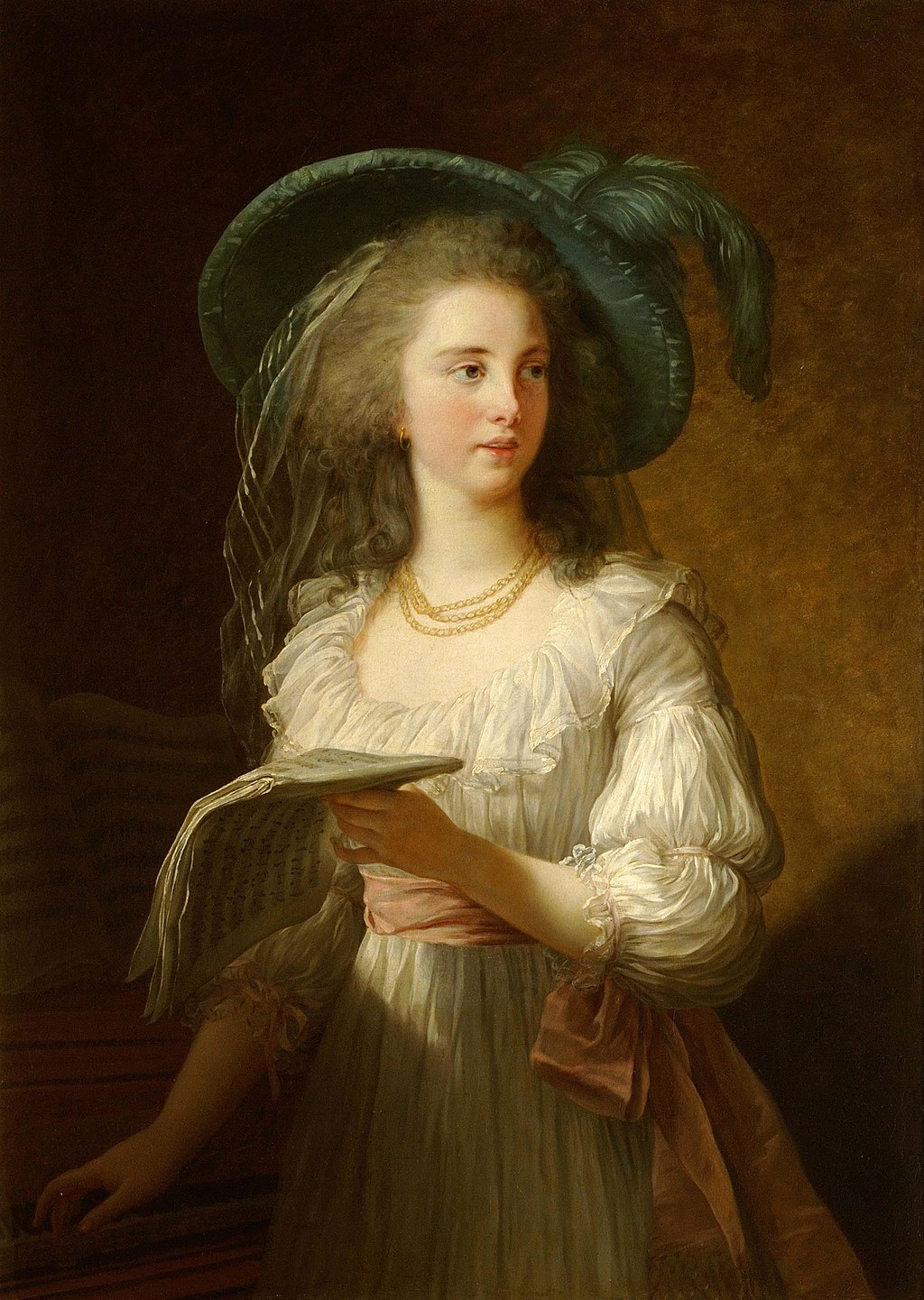

undefined
Madame de Polignac

Conveniently, the Austrian ambassador Mercy-Argenteau kept the queen's august mother, Empress Maria Theresia, abreast of everything regarding her daughter's life. This included her social life, and it is partially thanks to the assiduous ambassador's frequent missives to Vienna, that we are able to follow the unfolding rivalry between Lamballe and Polignac.

As early as 15 November 1775, Mercy-Argeanteau wrote:

"Her Majesty (Marie Antoinette) does not know how to reconcile the princesse de Lamballe to the Comtesse de Polignac, because these two favourites, who are jealous of each other, have been presenting the queen with respectful little complaints disguised as marks of the most loving sensitivity"

Remember that Yolande had only been presented to the queen earlier that year. Perhaps - not entirely unfounded - did Lamballe see the new-comer as a threat to her position. Undoubtedly, the queen began to spend more time with the headstrong Yolande and slightly less with the sensitive Lamballe. If Marie Thérèse did indeed feel herself slipping out of royal favour, she was not handling it well.

By May 1776, Marie Antoinette was showing clear signs of being very irritated with Lamballe who was picking fights with everyone in the queen's household. Thus, the queen turned even more to Polignac which only further exasperated the frustrations of Lamballe. As mentioned by Mercy-Argenteau, this (quite frankly silly behaviour) caused the queen to constantly having to act as peacemaker in her own household.


As time went on, Marie Antoinette continued to split her favour somewhat equally - at least outwardly. When Yolande's husband was made the queen's Premier Écuyer, the Duc de Chartres (a dear friend to Lamballe and son of the Duc d'Orléans) was immediately made governor of Poitou. Tit for tat. Yet, these attempts at keeping the peace only worked for brief periods of time.

By January 1777, Mercy-Argenteau once again reported on the state of the queen's closest friends:

"The queen often has some difficulty in keeping up the appearance of friendship between the princesse de Lamballe and the Comtesse de Polignac."

If Mercy-Argenteau was correct in his assessment (and he did have access to the queen which few others did) the relationship had become more than strained. The ambassador was personally in no doubt of the reason for this enmity. In the same letter, he wrote:

"As the latter's favour (Polignac) grows, that of the Surintendante withers away so that she has now become a bore and an annoyance to the queen"


Mercy-Argeanteau might be slightly harsh here. Marie Antoinette was not known for doing things she rarely wished to do and it would have been very easy for her to dispense entirely with the social company of the Princesse de Lamballe. Yet, she did not. As her surintendante, the queen could not escape her company but she did have the option of excluding her from social events which she refrained from doing. There can be little doubt that Lamballe - despite often being likened to an angel - was intensely jealous of her rival.

Madame de Polignac herself was entirely aware of this and - equally as petty as Lamballe's jealousies - took full advantage. As her company was increasingly considered necessary to the queen, Madame de Polignac did not rise above the temptation to "bad-mouth" Madame de Lamballe. Both Marie Antoinette and Yolande de Polastron shared a somewhat sharp sense of humour which (unfortunately) occasionally delighted in ridiculing others. It can easily be imagined that such snide comments were carefully intertwined in otherwise casual conversation in the queen's private company.


undefined
Mercy-Argenteau - the man who had
plenty to say of the two ladies

While the Princesse de Lamballe was not known for her intelligence, she was clearly not unaware of the decline of her favour with the queen. The later years of the 1770s, she spent an increasing amount of time away from court, primarily for health reasons. Publicly, this was widely seen as a natural consequence of the clear change in favorites exhibited by the queen; however, when she returned, Lamballe was still welcomed into the queen's inner circle, albeit with less warmth than before. Even so, Lamballe did not surrender without a fight. Knowing the queen's near-constant search for amusement, she ensured that her well-stocked coffers offered what the royal treasury increasingly could not: balls, high-stakes gambling, operas. Alas, even these attempts had little impact as Lamballe often found herself snubbed in favour of La Polignac. 

Socially, they moved in slightly different circles. Besides the all-important company of the queen, the two women drew support from separate groups at court. Whereas Madame de Polignac surrounded herself with her family members and the male members of the queen's entourage, Madame de Lamballe found support in the princes of the blood. Particularly, the Duc de Chartres was a close friend as was the Comte d'Artois. Unfortunately, this division only further added to the schism between the women as their individual supporters gladly took sides in any conflict between them.


By 1780, Mercy-Argenteau bluntly reported Lamballe's deroutement to the Empress of Austria:

"The Comtesse Jules (Polignac) has completely succeeded her rival in the affection of the queen"


Did this mean that Madame de Lamballe was entirely excluded? Not quite. Hers was the lot of previous royal favourites whose time has run its course. She was welcomed politely into the queen's circle but over the following years, the queen made no attempt at hiding her preference for Polignac. There was nothing for Lamballe to do but to accept her new position and attempt to regain her former ascendancy. For a brief period towards the latter half of the 1780s, Madame de Polignac felt briefly out of favour with Marie Antoinette. The result was a trip to London where Gabrielle basked in the company of the Duchess of Devonshire. Upon her return, things seem to have mended (perhaps she had rid herself of a noisome alleged lover, the Comte de Vaudreuil, infamous despised by the queen?).  


undefined
Marie Antoinette

If Lamballe was jealous, what was Polignac? Considering the immensity of the favours she reaped from her friendship with the queen, it is possible that Yolande never truly considered Madame de Lamballe a threat to her position. The queen's generosity ensured that she had amble proof of Marie Antoinette's esteem, so maybe her somewhat backhanded comments regarding Lamballe was considered sufficient to keep her rival at bay.


While Mercy-Argenteau provides a wonderful insight into the private sphere of the queen, it should be remembered why he was at the French court. He was, first and foremost, a politician. Throughout his correspondence, he rarely refers to the two ladies solely in their own capacity. In his eyes, they each represented a different faction; each was carefully weighed and measured according to the level of threat he regarded them as. It should be pointed out that Mercy-Argenteau had continuously reported to the Empress that Polignac was the greater threat but he still would prefer if the two ladies could cancel their respective influences out. Either one - he mused - presented a threat in her own right to the queen's reputation and proper conduct. This should be kept in mind when discussion his depiction of their relationship.

It is highly unlikely that the queen considered her relationships with the same political cynicism. To be sure, she might have found Madame de Lamballe slightly boring after a while, but she never ceased caring for her first friend in France. When Madame de Lamballe fell ill at her private estate, the queen assiduously inquired after her and never excluded her entirely from her private apartments.

What the queen did do, however, was almost as mortifying. As Madame de Polignac's influence grew, so did the number of relatives of hers who surrounded the queen. It was noted by Madame Campan (another insider to the queen) that Lamballe had been greatly concerned at the rapidity with which Madame de Polignac gained the queen's favour. Her concern turned to mortification when the queen began shutting herself in her private apartments. This, of course, had always been the queen's tendency, but hitherto, Madame de Lamballe had been on the other side of the door. While not exiled from the queen's presence, she was not invited to the gatherings when they consisted of Madame de Polignac and her family and friends.


The possibility exist that Mesdames de Polignac and de Lamballe were not so irreconcilable as observers such as Mercy-Argenteau mused. Both would have known full well that royal favour was fleeting. Considering that they seemingly kept any quarrels somewhat private - very few contemporary sources noted any concrete examples of outright infighting - it is possible that their relationship had developed into one of necessary tolerance rather than blatant enmity. After all, by the mid-1780s, they had both been in the queen's company for ten years and neither had succeeded in formally ousting the other. Perhaps, then, it was better to seek the queen's good graces by more subtle, courtly manners. 

While neither Lamballe nor Polignac have left written testament to their personal feelings for one another, their outward conduct tells its own tale. Neither woman visited the other at their private estates - not even following an illness or an accouchement. The separation of the Polignac-clan from Madame de Lamballe's company is a further indicator that they did not see eye to eye. Finally, whereas Marie Antoinette wrote them both assiduously, they did not seem to have corresponded.
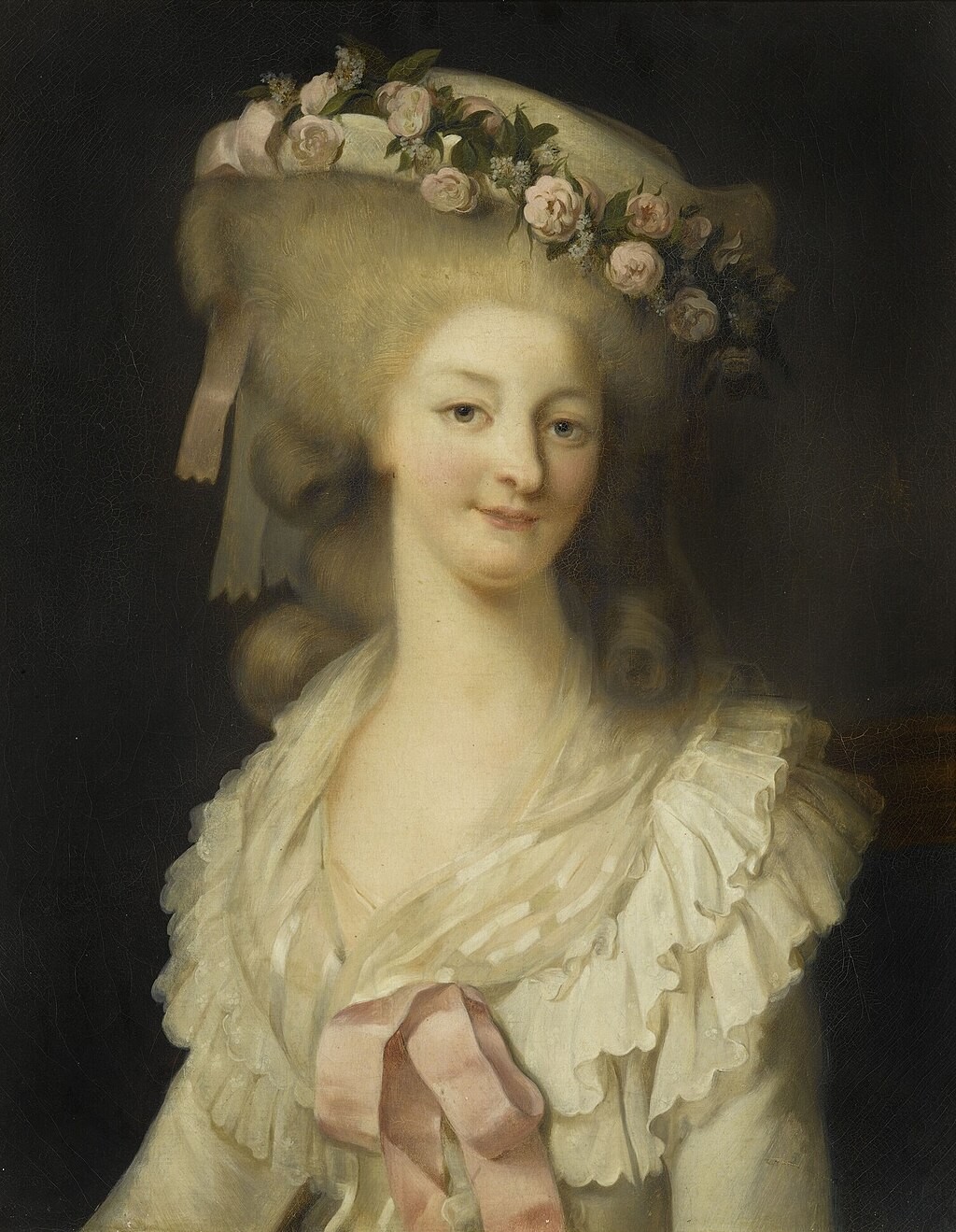

Portrait of Madame de Lamballe
Madame de Lamballe


When the revolution broke out, once again the two ladies found themselves in completely different situations - but with the same outcome. By the end of 1793, Marie Antoinette, the Princesse de Lamballe and the Duchesse de Polignac were all dead.

The first to succumb to the violence of the time was the Princesse de Lamballe. Having been hauled before a tribunal, her captors demanded that she swore an oath to liberty and denounced the royal family. She agreed to the former but utterly refused to denounce her friend. Upon leaving the courthouse, a furious mob set upon her and massacred her. Stabbed, beaten and decapitated, her head was placed on a pike and placed outside the queen's window. The queen herself died on the guillotine just a month later. 

This left Madame de Polignac. By the time of her erst-while rival's grisly death, she was long gone. Her unpopularity had reached almost unprecedented heights and she had fled France and gone to Vienna, the birthplace of Marie Antoinette. There, she died in December 1793 of an unknown illness.


Mesdames de Lamballe and de Polignac had certainly been rivals for the queen's affection and the bounty of royal favour. Yet, they had also shared years of their lives together with their mutual friend. None of them survived the Revolution and thus their relationship remains inextricably tied with their lives at Versailles. 


Saturday, 28 January 2023

The Unknown Favourite: Thérèse-Lucy de Rothe

The Princesse de Lamballe and the Duchesse de Polignac are primarily known as two of Marie Antoinette's closest friends - yet, there was another young woman whose charm quickly earned her a place in the inner circle of the queen.

Thérèse-Lucy de Rothe came to Versailles as the Comtesse de Dillon; she had married her cousin, the Irish Arthur Dillon, in 1770. Although her rank made her appearance at court acceptable, there was nothing in her family relations to suggest that she would initially be considered as a suitable companion for the queen. Her parents - Charles Edward de Rothe and Lucy Cary - were hardly amongst the most well-known names at court. Yet, they were not entirely unimportant. For instance, they were amongst the highest ranking nobles of Ireland and Arthur Dillon became Maréchal de France. As such, the young Thérèse-Lucy - as a Maréchale - was not entirely unsuitable but there were many of other (French) candidates for the queen's attention.

What, then, attracted the attention of the one woman whose company was sought by all? For one, Thérèse-Lucy was a very beautiful woman which always help - particularly at the rather superficial world of Versailles. The queen was taken in by the charm and beauty of the newcomer and quickly considered her indispensable. Certain of her contemporaries noted that Thérèse-Lucy could be sweet as sugar which was another trait which had always attracted the queen.

The queen's attentions towards to the Comtesse was noted at the typical card parties of the court. The queen began paying increasing attention and extending various minor courtesies towards the otherwise somewhat unknown young Thérèse-Lucy which caught the courtiers' attention.

The Comtesse de Dillon was not in a position which warranted an immediate place in the queen's entourage. Marie Antoinette herself came up with the solution of attaching Thérèse-Lucy to her personal household as a supernumerary dame du Palais. Typically, the queen had twelve such but Thérèse-Lucy was soon made a thirteenth.


La comtesse de Dillon – Marie-Antoinette Antoinetthologie
Thérèse-Lucy - she has a slight resemblance to
Marie Antoinette in this portrait


The court was quite outraged at the Comtesse's sudden rise in the ranks; however, her lack of pedigree was not the primary concern for everyone. Some were uneasy at the behaviour of the new dame; the queen's abbé de Vermond even warned Marie Antoinette of the undesirable company of certain of her friends. The clergyman primary referred to Thérèse-Lucy and the Princesse de Guéménée - as it happens, Thérèse-Lucy was the mistress of the Prince de Guéménée.

But was Thérèse-Lucy truly so bad? The Abbé de Vermond was not wrong in warning the queen of the people she associated with. For instance, the Duchesse de Polignac was notoriously grasping and quite blatantly used the queen's friendship to further herself and her family. Meanwhile, Thérèse-Lucy does not appear to have been an active part in the increasing amount of scandals which surrounded the royal court but she died share Polignac's tendency to be grasping. Her own mother, Madame de Rothe, was notoriously avaricious and relentlessly used her daughter's connection for further gain. It is said that Thérèse-Lucy's requests to the queen eventually caused Marie Antoinette to look elsewhere for companionship. It is only ironic that the person who took the lion's share of the queen's attention at this time was none other than Madame de Polignac who was just as bad in that department.

That Marie Antoinette genuinely cared for Thérèse-Lucy becomes apparent in the fact that she never gave up their friendship. Instead, the queen seemed to have listened to her advisors and made it clear to the Comtesse that her continuous requests for favours had to come to an end. Even after that, the queen continued to extend her personal friendship.

There might have been another reason for Thérèse-Lucy's seemingly reluctance to engage herself in court squabbles. By the early 1780's, Thérèse-Lucy was thirty years old. She had borne a single child at the age of 18 but does not appear to have conceived again. It is not unlikely that there were complications with her first pregnancy, as it was noted that her health had never quite been the same. Despite being young, Thérèse-Lucy was not healthy. It should be said that her absence from specific scandals does not necessarily mean that the Comtesse was a saint of a woman. Some attributed her health issues to her "nastiness" which could indicate that there were something less pleasant about her.

In 1782, she began coughing up blood. On the recommendation of her doctor, she planned a trip to Spa but lacked the funds. Eventually, Marie Antoinette aided her dear friend but it seemed to have little effect. Returning to Paris in the autumn, Thérèse-Lucy worsened to the point of her having to remove herself from court. Marie Antoinette's genuine nature is evidenced in the fact that the queen herself visited her. Afterwards, the queen sent her royal pages on daily trips to enquire after her health. Alas, there was no hope for Thérèse-Lucy; she died on 8 September 1782, at the age of 31. 


It is likely her early death which has rendered her somewhat anonymous in the eyes of history. She died seven years before the revolution broke out and before the even larger scandal of the Diamond Necklace befell the queen. Also, the Duchesse de Polignac was taken up a large portion of the queen's time which naturally lessened the focus on the increasingly absent Thérèse-Lucy. Thus, she was not connected to these turbulent times nor was she a target of particular ire from the public. Her husband, Arthur Dillon, was less fortunate. He served in the army and saw little of his wife - he did not return for her final illness. In the end, he was guillotined during the revolution just like Thérèse-Lucy's erstwhile friend Marie Antoinette.

Sunday, 12 June 2022

The End of an Era: The Fall of Madame de Montespan

Undoubtedly the most celebrated maitresse-en-titre of Louis XIV, Françoise-Athénais de Rochechoaurt had been the king's declared mistress since about 1666; she had since given him no less than seven children. Her relationship with the Sun King was a passionate one and despite several attempts, the couple always found their way back to each other - even the king's growing religious fervor was overcome time and time again.

So, when their relationship began unravelling in ca. 1677, the court probably expected it to be another storm that would eventually end in reconciliation. However, this time it was different. The infamous Affair of the Poisons had created an entirely new breeding ground for suspicions. Due to the nature of their relationship, the king was well-aware that his mistress would always be wary of being supplanted in his affection. So far, the charms, intelligence and beauty of La Montespan had been enough to keep his attention but the king was now persuaded to believe that she might have been involved in more occult methods. 

As the Affair of the Poisons unravelled, it quickly became clear that the royal favourite was somehow associated with the whole sordid affair. It did not take long before rumours started spreading and there was no limit as to what Madame de Montespan was accused of. 

Some said that she had used the services of the "witch" La Voisin to concoct love potions for the king in 1665 before finally succeeding in catching. Others claimed that she had prayed to the devil and had black sabbaths performed - complete with the obligatory sacrifice of an infant - to keep her lover's interest while yet others pointed to the recent death of Mademoiselle de Fontagnes. The young lady had captured the king's attention and had fallen pregnant as a result - she died after delivering the child.


Madame de Montespan


Had the affair simply been a matter of jealousy, the king could easily have overlooked it. But this was something entirely different. This concerned the very life of the king - and it did not take long before scandal mongers started whispering that Françoise-Athénais had attempted to kill the king. Despite the absurdity of this charge - after all, Madame de Montespan would lose everything if the king died - the king was alarmed. One can hardly blame him for being unnerved as the use of poison was not a by-gone weapon in his age; even the typically useless "potions" could be lethal if dangerous ingredients were added. This might not even be intentional as certain ingredients were considered harmless then but is known to be highly dangerous today.

Was there anything to suggest that Madame de Montespan actually was involved? The Lieutenant General of Police, Gabriel Nicolas de la Reynie, was presented with several witness accounts which placed numerous ladies of the court as customers of La Voisin - including Madame de Montespan. Before diving further into this particular claim it is necessary to look closer at the attitude to the occult of the time. 

While the superstitions of the Middle Ages were not nearly as strong as they had been, they were far from eliminated. Even amongst the better educated parts of society a remarkably large number believed that black magic, potions and black sabbaths were very much effective. Others saw it merely as something interesting which could be used for entertainment on a boring day; for instance, young ladies would occasionally seek out palm readers to disclose their future but never went beyond that. Either way, there is no actual evidence to suggest why Madame de Montespan went to La Voisin - or if she even did.

It is telling that the potential visits to La Voisin only became suspicious after Madame de Montespan's maid, Mademoiselle Desœillets, was noted to be a frequent visitor herself. It was therefore easy to claim that where the maid went, so too might the mistress go.

It has often been put forward that Louis XIV's own reaction shows how little merit there was to the accusations levelled at his mistress. He himself had ordered the establishment of the so-called Chambre Ardente (the court passing sentences over the Affair of the Poisons) and as such would have been presented with every finding and evidence. If he had genuinely feared for his life, he would have ended their relationship - but he did not. Instead, she kept her place for no less than another decade.

But if the king did not believe Madame de Montespan to be genuinely guilty, why then did their relationship fall apart? Here it might help to look to something as simple yet complicated as human nature. The two had been together for a long time - far longer than any of his previous liaisons. It is not unheard of that they simply fell out of love with each other. As has often been pointed out, relationships that are so passionate will almost always fade out eventually.


Louis XIV


Furthermore, there is a decided shift in character in Louis XIV at this point in his life. Up until this point, he had been somewhat carefree in his love affairs; whether it was elevating La Montespan while La Vallière was pregnant with his child or having both mistresses ride in the same carriage as his wife, his attitude towards his dalliances were typical of his age. A king was expected to have mistresses - everyone, even the queen, knew this and it was generally accepted as a fact of life. However, as he grew older, Louis became more and more prone to religious reflections. 
Throughout his entire relationship with Françoise-Athénais, the most damning accusation levelled against both of them was that of double-adultery. Of course, the church had never been fond of the king's infidelity but it had turned a blind eye when the lady in question was unconnected by marriage. For instance, both Marie Mancini and Louise de La Vallière were unmarried when they first became the king's mistress - the former apparently never even had a physical affair with him.

Madame de Montespan, however, had been married to the Marquis de Montespan in 1663 and was therefore a married woman when she became the king's mistress. While the church could always explain away the king's guilt by pointing to the divine favour which all monarchs were said to hold, the same could not be said of her. This was therefore a matter of double-adultery - a sin that would not wash off quite so quickly. As it happens, this very reasoning had been the cause of their split in 1675, which had occurred after the church refused to give her absolution and even withstood the pleading of the king. 

In 1675, the church's argument had not been enough - it seemed to be more pressing as the king grew older. 

Thus, it does not seem unlikely that a mixture of cooling passions and growing religiousness was what eventually caused the downfall of Madame de Montespan. What is more certain - and unusual - is the manner in which that downfall occurred.

Typically a jilted royal mistress would be sent off with a handsome parting gift or she would voluntarily retire to a convent. Either way, the rupture would be somewhat obvious to everyone at court. However, Madame de Montespan continued to play a part in the king's life as their relationship cooled. Their split was not one which could be traced to a dramatic final interview or specific event. Rather, it was dragged out over several years. 


Madame de Montespan with her
children, 1677


For those watching - and everyone at court certainly was - the changes were small but of immense significance. The one thing that stood out was how much time the king devoted to a new lady: Madame de Maintenon. She would often be summoned to spend their evenings in conversations while Madame de Montespan remained conspicuous by her absence. Despite her reputation for being a very devout woman, Madame de Maintenon certainly did not shy away from using the king's religious fears to her advantage. Thus, a number of contemporary courtiers remarked that she was sought for by the king because he increasingly felt a need for religious discussion. 

The otherwise always-present Madame de Montespan found herself excluded from more and more activities at court. While she was still frequently invited to the king's beloved Marly in 1686, she would soon receive a very public (figurative) slap in the face. The king was suffering from his highly unpleasant fistula which he sought to cure by taking the waters at Barèges. Naturally, wherever the king went, the court followed - but not Montespan. To her great astonishment and frustration, she was deliberately not invited to this excursion; the message could hardly have been louder. In her anger, she took her youngest son by the king - the Comte de Toulouse - and went to Paris but was stopped on the way with orders that the young boy was to accompany his father. In the end, the trip to Barèges never materialised but the humiliation was complete.

By this point in time, no one had any doubts that their relationship was as good as dead. The king had adored Françoise-Athénais for years and such a public snub would have been unthinkable just a few years ago.

Yet despite this dramatic incident, the king still did not call things off officially. While he certainly was a creature of habit, Louis XIV had never shown a reluctance to cut off people who had displeased him - it therefore seems more likely that the continuance of La Montespan at court was due to a certain respect and affection (although not love) that he must still have had for her. Furthermore, it should not be underestimated that her position as the mother of many of his children earned her some credit with him - after all, he was notoriously fond of his illegitimate children and it would have been a scandal if their mother was thrown out without a second thought, especially after so long a relationship.

These years cannot have been particularly pleasant for Madame de Montespan. Her pride was notorious and she had been accustomed to wielding immense power at court. Now, she was reduced to having to endure both the presence and influence of another woman; much like Louise de La Vallière had before her.  Whereas Françoise-Athénais would have had no problem keeping the king interested in her conversation through her wit and charm, that still required private time with him - and that was increasingly reserved for La Maintenon.

File:Portrait d'Athénaïs de Rochechouart, marquise de Montespan (1641-1707), maîtresse de Roi.jpg
Françoise-Athénais, around 1680


Françoise-Athénais was no fool; she knew that the king's affections were not what they had been and she acknowledged that her time was over. Finally, it would be her who took the step to remove herself from an increasingly awkward situation. In 1691, after 25 years as the king's official mistress, she informed Louis of her decision to leave court. It is very telling that she did not do so in person; rather, she asked the king's trusted Boussuet to deliver the message.

There is one aspect of their final separation that is worth noticing. While much have been made of Louis XIV's ever-increasing religiousness, that same development in Madame de Montespan has been somewhat overlooked. Just like her royal lover, the former favourite was getting older and she shared many of Louis' fears for her eternal soul - after all, she did not have the benefit of claiming divine favour as a redeeming factor in her adultery. Perhaps this is an indication that their relationship simply had run its course - if they still had the same passionate love for each other, their new-found sense of religion could easily have united them as they grew older. This could have been strengthened further by their common interest and genuine affection for their children. Instead, it caused them to finally end their legendary liaison.

Madame de Montespan retired to the convent of Filles de Saint-Joseph in Paris. While Louis would spent the remainder of his life with the austere Madame de Maintenon - potentially even marrying her - the mother of seven of his children spent her years with charity. She spent large sums on charitable works and had cut all contact with the court - and the king. The king appears to have shown some sign of gratitude at her taking the first step; her father was given the governorship of Paris while her brother was made Marèchal de France. As for their children, they had been legitimised and their future was therefore secure.

When she died in 1707, their relationship was a thing of the past. While their children mourned for her, the king curiously forbade them from wearing official mourning. This last act has been interpreted as spiteful by some and it certainly does have elements of pettiness. However, it cannot be said to be an indication of resentment - after all, the king had not seen his former beloved for 15 years. Meanwhile he was desperately trying to have his children by her absorbed into the legitimate lines of aristocracy - perhaps their mother was an unwelcome reminder of the fact that they were, in fact, not only illegitimate but the result of double-adultery.

Whatever the king's motives for refusing mourning was can never be known. What is more certain is that his infamous relationship with Françoise-Athénais de Rochechouart dominated a good portion of his life and brought him seven beloved children. The end of their liaison was also a turning-point in the king's personal life. The carefree and splendid years were behind him and austerity took over - it truly was the end of an era at Versailles.

Monday, 16 November 2020

The Queen's Expensive Favourite: Madame de Polignac

The family of Polignac were of sound aristocratic stock but sadly impoverished. Before they rose in favour, they had had to mortgage their estates to an amount of 800.000 livres. Therefore, they could not afford to stay at court and rarely had a chance to mingle with those higher up on the social ladder. However, their fortune was to change - and abruptly, too.

In 1775, the Comte and Comtesse de Polignac went to Versailles to pay homage to the new king and queen. There, Yolande de Polignac caught the eye of the young queen Marie Antoinette. The queen was immediately charmed by the new arrival and before long Madame de Polignac was a welcome sight in the royal apartments. Once the royal favour was caught, the family of Polignac entered a golden age - the consequences of which they could not have anticipated.

Life at court was expensive and Madame de Polignac soon amassed significant debts. However, on the queen's request, the king cleared her debts of 400.000 livres. When the queen found herself pregnant (after 7 long years) the coveted post of Governess to the Children of France was bestowed on Yolande. This caused considerable anger at court; usually, that was one of the most prestigious female posts at court and it was felt that it should have gone to a higher ranking lady. The post brought her an annual salary of 50.000 livres.

The position of Governess meant the right to a permanent apartment at court. On an almost unprecedented scale, Marie Antoinette ensured that her friend got a most sumptuous apartment - of 13 rooms! As if this was not enough, the queen's own Maître d'Hotel was appointed to prepare the new suite for the royal favourite. 

Besides the salary that Yolande received she was also further enriched by the queen's generosity. On several occasions, the queen paid out of her own pocket for her friend's expenses. 


Duchess de Polignac.jpg
Yolande de Polignac


Even in the queen's private sphere, Madame de Polignac was granted exceptional favours. When the Hameau de la Reine had been built, Yolande was given her own little house there. This was an area that was otherwise completely off-limits to anyone who had not been given express permission from Her Majesty. 

However, Yolande was not the only one who benefited enormously from her friendship with the queen. Her immediate family saw the chance of quickly enriching themselves by taking advantage not only of their relation but of the queen's generous nature.

The first to benefit was Yolande's husband, Jules de Polignac. Hitherto, he had enjoyed the rank and title of Comte de Polignac. In 1780, he was raised to Duc de Polignac - a considerable social step forward. He was also made First Equerry of the Queen which brought him a solid wage of 80.000 livres per year. The post also gave him access and use of the queen's horses and her carriages. Finally, he was given the post of Director of the Post from which he could get a handsome pay.


Aglaé - daughter of Yolande

The daughter of Yolande and Jules - Aglaé Louise Françoise Gabrielle - was to make a very advantageous marriage. She was betrothed to the Duc de Guiche and needed a dowry worthy of the match. However, her parents were not quite capable of providing this in 1780, so the king and queen provided an immense sum of 800.000 livres. While it was not uncommon for the royal family to give dowries to favourites, this was a great sum indeed. 

The new member of the family, the Duc de Guiche, was made Captain of the Guards while Yolande's brother-in-law, the Vicomte de Polignac, was given the coveted post of ambassador to Switzerland. The latter post caused some strife, as the Minister for Foreign Affairs, Comte de Vergennes, had wanted for a relative of his own.

Meanwhile, Diane de Polignac (Yolande's sister-in-law) was given a position in the household of Madame Élisabeth as dame d'honneur. It was she who had officially presented Yolande to Marie Antoinette - bizarrely enough, the queen did not like her but accepted her presence as a courtesy to Yolande.


Diane de Polignac

The entire family received massive pensions - paid for by the royal treasury. The new Duchesse de Polignac had a pension of 90.000 livres alone. In total, the family received pensions amounting to 700.000 livres per year. This was enough to cause considerable consternation amongst the other courtiers - especially since pensions were handed out to a far wider circle of people than usually. 

For instance, Madame d'Andlau received a pension of 6.000 livres. At first glance, this does not appear to be particularly extravagant. Comtesse Marie-Henriette d'Andlau was Yolande's aunt and had been in the household of Madame Adélaide (daughter of Louis XV). However, when it is taken into consideration that Madame d'Andlau had been exiled from court for providing her young charge with a pornographic book, the pension becomes far more questionable.


After all these favours, the family asked for the estate of Bitche which was worth 100.000 a year. For once, they were rejected but not without compensation. Instead, they were given the estate of Fénestrange which was worth 60-70.000.


The shower of positions, pensions and properties made plenty of enemies for the Polignacs. The major court families resented both their somewhat lowly status before their drastic rise and the fact that they completely cut off the queen from the rest of the court. The queen readily handed out the most coveted posts to members of their family and they were often the only guests allowed in the queen's apartments.

However, rumours of the expensive habits of the Polignacs seeped out to Paris. As was usually the case, the public loved to hate the royal favourites. As the 1780's wore on, the public hate against especially Madame de Polignac became so intense that the family was forced to flee shortly before the revolution broke out.