Showing posts with label liaisons. Show all posts

Sunday, 5 October 2025

Marie Antoinette & Axel von Fersen: Truly an Affair?

One of the great mysteries surrounding Marie Antoinette was – and is – the nature of her relationship with Count Axel Fersen. 


Throughout her life, the queen was continuously accused of various types of affairs including lesbian affairs, an affair with her brother-in-law (the Comte d’Artois) and a whole array of other candidates. The accusation of adultery was a tried-and-tested way of diminishing the character of a public figure, particularly female ones. However, whereas her contemporaries readily believed any slur against her character, history has been kinder to this aspect of Marie Antoinette’s character. 


Yet, her relationship with Count Fersen has never quite escaped further scrutiny and even today some historians consider him to have been the queen’s lover. But was he really?


Marie Antoinette met Count Fersen on New Years’ Day in 1774. The Swedish Count was blessed with a mixture of handsome looks, a vast personal wealth – and a person whose foreign birth meant that he had no allegiance to the complicated system of powerful French families at court. His gentleman-like air and his pleasant manners quickly meant that he was included in the queen’s private circle which included the Princesse de Lamballe, the Duchesse de Polignac and several middle-aged gentlemen of the court. 


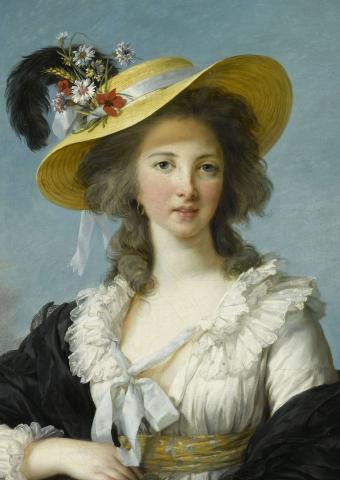
Marie Antoinette in a chemise à la reine - the
casual ensemble which Fersen must have seen
her in


Throughout the remaining 15 years of court life, he led a nomadic existence where he frequently visited the French court before disappearing for months – or years – at a time. Thus, the dauphine (and later queen) frequently corresponded with him during his absences. 


It was certainly not a matter of love at first sight. Upon their meeting, Fersen was on route to England where he intended to woo an English heiress by the name of Catherine Lyell whereas Marie Antoinette was deeply concerned with the state of her own marriage. It is a tell-tale sign that Fersen did not mention Marie Antoinette personally in his private journal – a pursuit he kept throughout his life, and which frequently discuss the beauty and attractiveness of various ladies he had met on his travels. Neither does Marie Antoinette seem to have considered him as anything more than a welcome breath of fresh air to her social circle.


What exactly was it about their relationship that made even Lady Antonia Fraser (author of one of the most comprehensive biographies on Marie Antoinette) conclude: “But did the Queen in fact sleep with the handsome Count? On balance of probabilities, the answer must be yes”. But must it?


Lady Antonia Fraser herself provides no proof of any physical romance whatsoever. On the contrary, herself admits that the contemporary sources – including the scandalmongering pamphlets which otherwise freely accused the queen of sleeping with anyone she may meet – does not mention it. It would have been irresistible ammunition for her enemies who never drew back from slandering her in any way possible, if the queen had committed that betrayal. In fact, it could have provided the basis for returning her to her native Austria in disgrace. Fraser only provides two contemporary sources for her conclusion: the memoir of the Comtesse de Boigne and the journal of Lady Elizabeth Foster. 


The Comtesse de Boigne published her memoirs after the revolution. The main reference to the “affair” made by the Comtesse is the sentence that “intimates scarcely doubted that she yielded to his passion”. The problem with this particular source is that she was born in 1781. She was therefore an infant and toddler when these events allegedly occurred and was therefore not present herself. Neither was she a second-hand witness. Her statement was based on court gossip – a fact that Lady Antonia Fraser herself readily admits – and the court gossiped about everyone. For instance, the Comtesse’s own uncle was also rumoured to have been the queen’s lover, but that gossip was not taken as proof. Considering the sheer number of men that the queen was accused of “entertaining”, she would have had a prodigious track record if even half was true.


The other source mentioned was Lady Elizabeth Foster. As can be gleaned from her name, the author of the journal was an English lady who never met Marie Antoinette. They did, however, share a mutual friend in Georgiana, Duchess of Devonshire. Lady Foster wrote on 29 June 1791 that Fersen was “considered the lover and was certainly the intimate friend of the queen for these last eight years”. In fact, their friendship – platonic or romantic – reached back to 1774. What exactly made Lady Foster consider Fersen to be the lover of the French queen? It is not mentioned. It can therefore be speculated that that was also the biproduct of gossip, particularly because the queen’s reputation was at an all-time low.


A contemporary who was actually present (and an adult) was the Marquis de Bombelles. His memoirs were published in 1978 – long after any sensibilities regarding the persons concerned had ceased to be regarded. He himself mentions the rumour of their relationship but rejects that anything physical took place.


It has been suggested that the silence regarding Fersen in other contemporary sources is a confirmation of something suspicious. To be sure, the queen’s friends might want to lightly pass over any physical affair in correspondence, but her enemies certainly had not such scruples. Considering that foreign ambassadors – for one – had no reason to hide such an affair, it would be odd indeed if they collectively decided to ignore something as grand as the infidelity of a queen. As a parallel example, Queen Caroline Mathilde – wife of King Christian VII of Denmark – had been discovered to have had an affair with the king’s own doctor. Nothing stopped gossip from spreading like wildfire in that (contemporary) case and when the Danish King eventually sent her away, it was likewise widely publicised. 


Axel von Fersen


The few contemporary sources that do allude to Fersen’s relationship with the queen never provide any clue, proof or even slight hint at something concrete. On the contrary, those that actively claim that he is “known” to be Marie Antoinette’s lover make that claim on seemingly nothing more than gossip. 


Fersen himself exhibited no particular loyalty towards the queen on a romantic level. The Count had a seemingly endless stream of mistresses and continued his pursuit of a wealthy wife. Consequently, even if the count had managed to seduce the queen (or vice versa) the relationship was clearly not an exclusive one on his side. It obviously could not have been exclusive on Marie Antoinette’s side as she was married to Louis XVI.


That leads to another vital aspect to be considered – an aspect that is oddly (and quite uncharacteristically for the otherwise extremely well-written book) omitted in the consideration of an affair between queen and count: the queen’s character. As repeatedly put forward by Lady Fraser herself, the queen was anything but a romantic coquette. Ironically, when (re-) reading Lady Fraser’s book, it is difficult not to be struck by the self-contradictions in the assertion as the author spent page after page denouncing the use of mere gossip as a reliable source (for other incidents, political and courtly) before concluding that such a damaging accusation against the queen must be true – on the basis of gossip. It is, however, a testament to how good Lady Fraser’s book otherwise is that deservedly has received the Enid McLeod Literary Prize. 


Of all the charges of frivolity or recklessness put on Marie Antoinette, that of flirtatiousness was omitted. There were two instances where the queen was faced with open attempts at flirtations. One by the Duc de Lauzun whom she icily – but politely – rejected with the freezing “Go, Sir”, after he dared to propose himself as a lover.


Her own brother, Emperor Joseph II, visited Versailles in an attempt at sorting out why the marriage to the king remained unconsummated. Joseph liked his sister but had no illusions about her personality and he certainly did not shy away from ruthless criticism when he saw fit. He described her as sexually prudish – a sentiment echoed by other courtiers. One other courtier noted that she had a talent for being gracious and amiable while simultaneously keeping her male courtiers at an arm’s length. 


It should also be considered the history of such intimate pursuits in her life. To Marie Antoinette physical intimacy was a duty required of her to fulfil her role bearing children. Throughout her childhood, this point had been hammered home and when she married the dauphin, she received regular letters from her mother on the subject. Enjoyment or pleasure was never considered an object in that regard. Furthermore, the humiliation of having been constantly scrutinised, blamed and shamed for not consummating her marriage to the king had likely led to that prudishness later observed by her brother. While such unpleasant associations certainly do not mean that she could never have wanted to experience that sort of physical pleasure, it makes it extremely unlikely that she would in one fell swoop turn from being the “prude” to the adulterer.


Marie Antoinette’s sense of duty was another matter. She considered it her unwavering duty to remain by the king’s side – even when her own life was threatened. Upon the outbreak of the revolution, she was given several chances to flee with her son, but she refused on the very ground that her place was by the king’s side. That hardly corresponds to a woman who had happily betrayed him physically. Louis XVI himself might have been a passive monarch in many aspects but there is a reason to suspect that infidelity on behalf of his wife would not have met with passive acceptance. From his childhood he had been inculcated with a suspicion of all things Austrian and when his marriage to the Austrian Archduchess Marie Antoine was announced, he was warned not to trust her. It took her years to gain any kind of trust from him – surely an extramarital affair would have destroyed whatever trust he did develop. One might even say that the king would have seen it as confirmation of all those warnings of his youth.


Furthermore, each sexual encounter would have resulted in the risk of pregnancy or STD. Certainly, birth control in the shape of condoms did exist but they were far from a reliable contraceptive. Considering that even today’s versions are not entirely safe, it is unlikely that the 18th century versions would have been more so. It seems unthinkable – considering Marie Antoinette’s character – that she would have gambled with her position as both queen and mother of the royal children by risking an illegitimate pregnancy. Louis XVI, for one, never doubted that the children she did bear were his.


As has also been stated, the gallant Count was a bit of a womaniser. The risk of contracting a disease would therefore have been heightened by his frequent change of bed partner.


The correspondence between Fersen and Marie Antoinette offers another clue. The queen had a massive network of people with whom she wrote regularly – or as regularly as an irregular correspondent such as herself could. Codenames were normal and several letters addressed to a “Josephine” was likely occasionally the queen – one of her middle names was Josepha. However, she was not the only one whom the gallant Count referred to by that name as several other ladies have been identified as also being “Josephine”. It might simply have been the moniker he chose for ladies whose identity he might not wish to be revealed. Besides using a codename is hardly even an indication that the people involved were engaged in a sexual affair.


Marie Antoinette


Occasionally Fersen referred to staying the night “chez Elle” when he was referring to his various mistresses. Much has been made of his use of that phrase on a singular occasion when he visited court. Once again, it seems a massive leap to conclude that this means that he slept with the queen – particularly because the phrase literally translates to “at her (house)” not “with her”. It would also be odd that after years of discretion he should suddenly openly mention it in his own writings.


An argument occasionally used is that Fersen’s correspondence with the queen during the revolution was published by his descendant. In the first publication, this descendant had redacted or blotted out various sentences which immediately made people assume that this concealed incriminating evidence of a physical affair. For years, the descendent claimed that he had destroyed the remaining evidence “out of respect”. In that respect it is no wonder that people immediately surmised that something untoward had happened. However, the descendent had not been entirely honest. He had not destroyed the evidence and in 1982, the documents were found by other, later descendents of Count Fersen. His redactions were so efficient in the original documents that we cannot know what they said. One reference, however, was revealed from the queen’s hand: “I can tell you that I love you”.


Given the nature of their relationship, it is not unlikely that the queen and the count did have strong feelings for one another, perhaps even romantic feelings. The language of the time – for one – was far more intimate than today. Relationships – platonic and otherwise – were often described in very flowering terms. For instance, it was not unusual for Marie Antoinette to sign letters to her friends and family with declarations of love or fidelity. These “declarations” were fashionable at the time. Yet, trendy as they may have been, they obviously do not eliminate actual declarations of love.


It would be irrational to reject the possibility that they may have been in love – but the conclusion that that resulted in a full-blown, physical affair is equally irrational as well as self-contradictory considering the factors mentioned above.


The conclusion is therefore difficult to make as we can never truly know exactly what occurred between Marie Antoinette and Count Fersen. It is bordering on irresponsible to conclude outright that the two did have a physical affair as no actual evidence exist to proof this. Whether they had a romantic connection seems more likely but the escalation into a full-blown liaison does not follow as a matter of course. It is difficult not to see the continuation of the various accusations of adultery when such conclusions are drawn on a virtually non-existent basis. To continue the question posed by Lady Antonia Fraser – must the queen have had a sexual affair with Count Fersen? On the balance of probabilities – it seems unlikely. 

Thursday, 1 February 2024

Were They, Weren't They? Yolande de Polignac & the Comte de Vaudreuil

The relationship between the Duchesse de Polignac and the Comte de Vaudreuil was a stormy one, at best. The queen's (in)famous friend, Yolande de Polastron, had been married to Jules de Polignac since 1767 whereas Joseph Hyacinthe François de Paule de Rigaud remained unmarried until after Yolande's death. While at Versailles, the Comte served as Captain of the Gardes du Corps which would have brought him into contact with both the queen and - by extension - Yolande. He might already have known Yolande, though, as they were distant cousins. Legend has it that the two were actually intended to have married when both very young but Joseph refused after glimpsing her in a convent and finding her not pretty enough - he would later drastically change his mind but she had already been married off. He had also attached himself to the company of the Comte d'Artois and therefore already had an "in" with the royal family's inner circle.


As the relationship between the two grew, it caused many of Yolande's friends - including Marie Antoinette - to worry. The Comte de Vaudreuil was known for his violent temper and his extreme ambition which made him unwelcome in most circles. However, as the two became closer, he became indispensable to the queen's favourite. Even Marie Antoinette begrudgingly accepted his presence in their small circle of friends, despite often lamenting his presence - notably, the queen was outraged that a raging Vaudreuil had broken one of her billiard cues. 

Interestingly, the exact nature of Yolande and Joseph's relationship is not quite clear. Even at the time, people were doubting whether their liaison had become physical. Yolande was considered to be a rather cold woman who did not lend herself easily to a physical relationship. This has been further evidenced by the ease with which she distanced herself from Vaudreuil when he overstepped the queen's patience. If they were in love, it was evidently not a blinding sort of love, and Yolande was not willing to risk her position for him.


Madame de Polignac | Palace of Versailles
Yolande de Polignac


Meanwhile, others gleefully (and loudly) speculated that when Yolande gave birth to a son in 1780, it was Vaudreuil's. Neither Marie Antoinette nor Louis XVI believed that particular rumour, though, and even went so far as to visit the infant which was otherwise not done.

Another intriguing fact about their relationship is the utter lack of correspondence between them. It is possible that they burned or otherwise destroyed such evidence - or maybe they did not write to each other? 

Greed was an unfortunate characteristic shared by both Yolande and Joseph. They both shamelessly exploited their proximity to a generous queen, although Yolande was considerably more successful. However, as the 1780s wore on, Marie Antoinette became increasingly disillusioned with the grasping nature of Madame de Polignac. The queen had already showered her with money, favours, positions, etc. yet, the demands kept coming. The relentless pressure from Vaudreuil is said to have contributed to the cooling of their relationship, although it did not end entirely.


When Yolande died in late 1793, Joseph wrote a letter to the exiled Comte d'Artois. The letter clearly expresses the Comte's seemingly heartfelt sorrow at her death - but also ends on an entirely different note. Rather than focusing the short letter on the death of a woman he cared for, Joseph ends it with a practical note regarding his financial matters. It does give the impression that Joseph was not that distraught - despite his eloquent expressions.

On another note, the memoirs of Yolande's life - written by her own sister-in-law - does not mention Vaudreuil at all. Likewise, Yolande's last will and testament also left nothing to Joseph. Rather unhelpfully, the attitude of Yolande's husband does not help clear the situation up. The relationship between husband and wife was rather more like two friends; they got along, but no one suspected that they had any particular romantic love for one another. The fact that Joseph was welcomed into their home - by both parties - consequently cannot be taken as a token of platonic relationship.


Collectively, these clues give their relationship an odd character. Joseph was clearly important enough for Yolande for her to risk the queen's wrath by bringing him with her - but not important enough to risk the queen's displeasure. It poses the question of whether Vaudreuil - in his capacity as a relation - was yet another blindly ambitious family member who was more than willing to use Yolande's relationship for his own advantage? If so, he succeeded, as he was granted both a pension of 30.000 livres and the position of Grand Fauconnier of France - neither of which he would have gained without Yolande.


Comte de Vaudreuil


Their behaviour during the revolution is quite telling, too. Both fled France during the revolution but went in separate directions. Yolande embarked on a journey through Europe, ending in Vienna where she herself died shortly after Marie Antoinette's execution. Joseph, meanwhile, had left far in advance. Already by the storming of the Bastille in 1789 - before the attack on Versailles, mind you - Joseph had left for the Austrian Netherlands. Furthermore, there is nothing to suggest that Yolande made any attempt at contacting Joseph after she fled France. It should not be ignored, either, that Joseph did not attend her funeral. Therefore, it seems likely that any connection they might have had in France was well and truly over by 1789.

Coincidentally, Yolande experienced a resurgence in her relationship with Marie Antoinette in the dying years of the 1780s. Whereas the queen had - as mentioned - become exasperated by her friend's demands, something changed after Yolande had spent a bit of time in England. Perhaps that change was the discarding of Vaudreuil? It would explain both why the queen happily accepted her friend back as her pushy lover would no longer be an inconvenience. It would also explain the seemingly sudden rupture of Yolande and Joseph's relationship. Considering that just a few years before, Yolande had been constantly flanked by Joseph, it would have taken quite a turn-around for something to change that drastically.

Given Yolande's willingness to remain in the queen's good graces, it might have become obvious that her relationship (whatever its nature) with Vaudreuil was more hindrance than help.


Saturday, 18 November 2017

The Marquis d'Argenson & the Duchesse de Gontaut

Réne-Louis de Voyer de Paulmy d'Argenson is better known to history as the Marquis d'Argenson due to his memoirs. When the Marquis was 23 years old (and still a Comte) he met a young lady who at the time went under the title of Marquise de Biron. That lady's name was Marie-Adélaide de Gramont and she was four years his junior. 

Marie-Adélaide had been married at an early age to the Marquis de Biron and had then taken her place at court as a dame du Palais to Marie Leszczynska in 1725. The following year she and her husband were elevated to the rank of Duc and Duchesse de Biron although they were known as the Duc and Duchesse de Gontaut. On account of the Marquis d'Argenson himself (who describes her in his memoirs) their affair lasted for just year because he was obliged to leave on a political mission to Hainaut. 


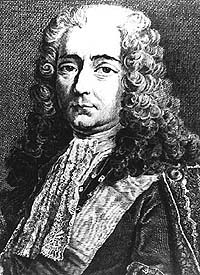
The Marquis d'Argenson


D'Argenson's memoirs leaves us with a vivid image of the Duchesse:
"She had a touching face, was sincere and full of feeling, constant, reasonable and generous; extremely seductive in a tête-en-tête..."

Rather surprisingly, the Marquis admits that the affair was instigated by her. This he did not attribute to any particular sense of coquetry but rather, that since she had been married at an early age, she was more experienced in love than him. Their affair seems to have ended amicably; once the Marquis left she took another lover - her husband having been dead some years - and eventually married him.
Whether the Duchesse continued to habour romantic emotions for her former lover is unknown but we do know that that was the case for him. His memoirs attest to the fact that he continued to love her even after her marriage - in his own words he "often regretted their rupture".

Even though their intimate affair lasted just a short while several letters of theirs survive which tells us that they had a special relationship for quite some years before that. The letters that survive dates from 1737 to 1740 - the year that Madame de Gontaut died.

Despite his regret - or perhaps because of it - he ceased to visit her in her house following her marriage. He himself did not exclude himself from female company; other mistresses followed his dear Madame G. If you are wondering why the Marquis did not marry the Duchesse himself there was a very good reason for that: he was already married.
In 1718 Réne-Louis had married Marie-Madeleine Méliand; her year of death seems disputed but one source puts it as late as 1781 - if true then she would have been very much alive when the affair took place.

Friday, 26 May 2017

The Prince de Condé & the Princesse de Monaco

Louis Joseph, Prince de Condé had been married to Charlotte de Rohan since 1753 but their marriage was not one of mutual love. Instead, he began a long-lasting affair with Maria Caterina Brignole, Princesse de Monaco. Their relationship became increasingly serious following Charlotte's death in 1760.

In 1769 the liaison had become so serious that the Princesse had made a home for herself in the Parisian Hotel de Lassay; conveniently, this was an annex of Louis Joseph's residence, the Palais-Bourbon. Unsurprisingly, news quickly spread beyond the borders of France to Maria's husband.

The Prince de Monaco was not pleased with his wife's French escapades. In a jealous fit to keep her with him he closed the borders of Monaco. However, she managed to side-step his maneuver and made it to Le Mans. Here, she sought refuge in a convent. While she was locked up in the nunnery the Prince de Condé attempted - in vain - to persuade the Prince de Monaco to separate himself from his wife.


At court their love-affair was no less cause for scandal. Marie Antoinette had been brought up to disdain mistresses - a consequence of her mother's life-long jealousy of her father's mistresses - and did not look kindly on Maria's position. This did not deter the couple who were reunited in Paris in 1770. Four years later, they planned the construction of the Hotel de Monaco which was to provide her with a permanent home close to her lover.

By the time Maria returned to Paris her marriage was as good as over. In January 1770 she was granted a legal divorce from her husband.


By the outbreak of the revolution the couple was still together. First, they fled into Germany and then made it on to England. Maria found herself a widow following the death of her husband in 1795. The couple was finally able to marry; this ceremony  was performed on 24 October 1798. However, the couple was not free to openly admit to their marriage. In fact, the marriage was kept a secret for 10 whole years before it was finally acknowledged in late December 1808.

Maria spent her vast fortune in a vain attempt at restoring the Bourbon-dynasty to power in France which left her destitute.

Thursday, 2 February 2017

The Comte de Provence & the Comtesse de Balbi

Louis Stanislas, Comte de Provence was well-established at Versailles as the brother of Louis XVI. As such he was entitled to a household paid for by the crown - and so was his wife.

It has been suggested that Anne Nompar de Caumont, Comtesse de Balbi had set her eyes on the royal brother and made him her target from an early stage. It was certainly whispered that that was the very reason why she sought employment with his wife, the Comtesse de Provence.

Billedresultat for comtesse de balbi
Anne, Comtesse de Balbi

Whatever the reason behind Anne's appointment she was made a lady-in-waiting to the Savoyard princess in 1780. Anne herself was already married to the Comte de Balbi with whom she had four children. Nevertheless, it was soon clear that the two had become engaged in a liaison. The Comte was said to only have taken the Comtesse de Balbi as his mistress because he was angry with his wife over her devotion to Marguerite de Gourbillon. If this was true then the commencement of his own relationship did nothing to further his marital bliss.
Later the Comtesse would go on to become dame d'atours to the Comtesse de Provence which can only have alienated the couple further.

As Anne's place beside Louis was soon firmly established he decided to honour her by building a pavilion for her. The pavilion was erected on a parcel of land within the gardens of Versailles; it would promptly be referred to as the Parc Balbi. The Comte would store a part of his massive book collection here.
When Louis purchased the Château de Brunoy he had a sumptuous apartment installed there for Madame de Balbi; furthermore he gave her a residence in Paris where the two could meet.


Billedresultat for comte de provence
Louis, Comte de Provence

The Comtesse de Provence had turned her back on her husband over the affair but the reaction of the Comte de Balbi was far more violent. He was deeply angered by his wife's affair and made the mistake of openly protesting. The Comte de Provence did not care for this sort of charade and had the poor husband declared insane; he would be sent to an asylum where he would remain until his death.

When the revolution broke out the Comte and Comtesse de Provence escaped France - with them came the Comtesse de Balbi. It is widely assumed that she helped the two in organising their escape.

However, the husband and wife was due to split ways since the Comtesse wanted to return to her home in Savoy. As her lady-in-waiting Anne was obliged to follow her there and had to accept being apart from her lover. The relatioship would not last long after this. The reason for the eventual final split between Anne and Louis was the birth of a pair of twins during Anne's time at Savoy. These children could not have been the offspring of the Comte de Provence since the time gap between their last meeting was far too great.
Once the Comte de Provence learnt that his mistress had apparently been having other lovers he gave up the relationship.


Sunday, 29 January 2017

Mademoiselle de Coëtlogon & the Marquis de Cavoye

Unlike most affairs in this section this particular one was mainly one-sided. Louis Oger de Cavoye was known as the Marquis de Cavoye and as such was a regular fixture at court. Here, he was remarked for his beauty - even the Duc de Saint-Simon admitted that he was "one of the best made men in France". Naturally, such an appearance was bound to attract admirers but in Cavoye's case his admirer was one he would rather be without.

Mademoiselle de Coëtlogon was a maid-of-honour to Queen Marie Thérèse when she first noticed the handsome Marquis. She fell so intensely in love with him that everyone at court soon new of her feelings; it would be odd if they did not considering that she never attempted to hide them. While Mademoiselle de Coëtlogon was swooning and could talk of little else the target of her affections was not particularly interested.
The Marquis considered the young woman's infatuation with him to be a nuisance that he sought to end sooner than later. His way of doing so was apparently to treat poor Mademoiselle de Coëtlogon with great "cruelty" by which should be understood that he was terribly rude to her. Nevertheless, her feelings remained unaltered. In the end the King was obliged to reprimand his Officer of the Crown since the King could not abide rudeness especially towards the fairer sex.


Billedresultat for Cavoye
The Marquis de Cavoye


One reason why the Marquis might not be attracted to Mademoiselle de Coëtlogon could be related to just that. She was not very beautiful; on the contrary she was unfortunately described as being rather ugly. It is not impossible that her appearance caused the Marquis to turn away from her advances especially since he was said to be superficial on occasion.

The court was greatly amused at the young Coëtlogon yearning for Cavoye when things took a turn for the dramatic. Cavoye was imprisoned in the Bastille for having acted as a second in a duel. Distraught, Mademoiselle de Coëtlogon went to the King where she pleaded with him to let her darling go. The King refused and she went into an absolute fit of hysterics. First she even dared to scream at the Grand Monarch who attributed this offence to her passionate feelings and refrained from punishing her. However, it was soon clear that Mademoiselle would not give up so easily. Soon after she refused to perform her duties as maid-of-honour and dressed in as mean clothes as possible. Seeing that her tantrum had no effect on the King she grew virtually ill and was at last permitted to go see her beloved in the Bastille - how the Marquis felt can only be imagined.

Eventually, the Marquis was released and Mademoiselle de Coëtlogon once again adorned her dressed as befitted a court lady. By this point the apparently ceaseless admiration on behalf of Coëtlogon had begun to tire both the King and Queen. Knowing that the Marquis de Cavoye had always desired an office in the King's household Louis XIV sought to bring about the marriage using such an office as bait.

Recently, the post of Master of the Logis had become available so the King offered it to him - on condition that he would marry Mademoiselle de Coëtlogon. Finally, the Marquis relented and the couple was married in 1677.

Tuesday, 13 December 2016

The Duchesse de Berri & La Haye

The Duchesse de Berri was infamous for her reckless lifestyle and scandalised the court by taking lovers immediately after her wedding. One of these were thought to be especially unsuitable: a young man by the name La Haye. He was the equerry of her husband, the Duc de Berri.

The couple is said to have met in 1710. The Duchesse's passion for him grew so fervent - as illustrated by the intense letters they exchanged - that she suggested that they ran away to Holland. However, La Haye was well-aware that his mistress was far above his own standing and her father - the Duc d'Orléans - stood to become Regent. To put it simply, La Haye was afraid of what would happen if he complied.
He refused and had to endure the tantrums she threw as a consequence. Changing between fits of tears and overtures of love she tried to sway his mind but to no avail.

Billedresultat for marie louise d'orléans la haye
The beautiful Duchesse de Berri

Instead, he went to the Duc d'Orléans and reported the Duchesse's proposal. Understandably, the Duc d'Orléans was not pleased but was also too fond of his daughter to severely punish her. He made it clear that her scheme was never going to materialise; then he turned his attention to keeping the scandal far from the King's ear.

It was not possible to keep it from her husband, though. The Duc de Berri was more than frustrated by his wife's countless infidelities and saw the choice of her new lover as another insult. He threatened to have her sent to a convent but never followed through - it would probably have been difficult considering that her father was soon to become Regent.

Exactly how many knew of the affair seem to be unknown. Saint-Simon reports that "everybody knew" since the lingering looks cast between the two at Marly left no one in doubt. Although, the affair inevitably cooled down after the revelation of the Duchesse's wild scheme it was not quite over. At least the Duchesse was said to have loved La Haye for a while after her husband's death. After that event she secured him a new employment since he could no longer be an equerry.

Friday, 18 November 2016

Philippe II d'Orléans and the Comtesse de Parabère

The Regent during Louis XV's minority certainly had the Bourbon taste for women and amassed a great amount of varying mistresses through his life. One of his principal mistresses was of noble birth - Marie-Madeleine, Comtesse de Parabère.

The two were official lovers during the peak of Philippe's power: the Regency. It is generally thought that their relationship began in the winter of 1715 and two years later she is still mentioned as his "established mistress". Considering the speed with which the Regent usually switched mistresses this was quite a long while.

Marie-Madeleine was married to the Marquis de Parabère who was 30 years her senior and cared for little other than drinking and amusing himself. According to Cardinal Dubois Philippe met Marie-Madeleine shortly before the regency began at a ball he threw. Allegedly, the future Regent was so attracted to her that he immediately engaged in a long conversation with them which cannot have been easy since they were both drunk beyond measure.

Once introduced into each other's society it did not take long before a closer relationship was established. Philippe was completely taken in with Marie-Madeleine's beauty, her high humour, her seemingly disinterestedness in politics and her boldness. He quickly found that she was not so greedy as his earlier mistresses which definitely suited him.


Billedresultat for comtesse de parabère
Marie-Madeleine and Philippe
Philippe wished to have his beloved mistress situated in a house suiting her rank and consequently he bought an estate in Asnieres for her. As the couple grew closer he even moved the infamous suppers from between the Palais-Royal and her house.

When  the scandal with the financier Law was at its height Madame de Parabère was well into her affair with the Regent. She was so firmly established that she showed up - highly pregnant - at the opera (and other public places) where the Regent's wife was present without a murmur from Philippe.

Madame de Parabère was the only one of the Regent's mistresses who managed to have any political influence. Knowing full well that Philippe hated when his mistresses pushed their way into his business Marie-Madeleine gave an air of complete disinterestedness. By not wilfully forcing herself into her lover's affairs the Comtesse de Parabère actually achieved far more influence than she might otherwise have.
Her influence seemed enormous. Even the Duc de Saint-Simon acknowledged that she had full sway over Philippe; he also begrudgingly admitted that she had far more influence than he himself had.

Lasting testaments to the strength of their relationship are the portraits of the two which were commissioned.

Billedresultat for comtesse de parabère
Philippe and Marie-Madeleine as Adam
and Eve

The couple seemed not to have been exclusive one since both partners dallied in other liaisons. In 1720 Madame de Parabère took another lover, Beringhem, and Philippe was soon to follow suit. When the Regent's attention began to linger on a certain Duchesse de Phalaris everyone thought that it was a matter of time before Marie-Madeleine was history.
The Duchesse de Pharalis became a mistress to the Regent at the same time as Beringhem became Marie-Madeleine's. Philippe was not prepared to share Marie-Madeleine - despite not himself keeping from other women - and immediately had Beringhem exiled.

Although the Duchesse had in mind to become the Regent's principal mistress her dreams were dramatically smashed. It would seem that the Regent's feelings for the Comtesse de Parabère were stronger than people had expected. In the winter of 1720-21 the both Madames were actually his mistress at the same time.

As the year 1721 advanced it became apparent that Philippe and Marie-Madeleine were not done with each other. Suddenly, the Duchesse was booted out and the Comtesse was back in all her glory; although the reunited couple had a violent spat over several minor flings the Regent had had with some opera girls.

Relateret billede
Philippe in armour and Marie-Madeleine was Athena

For whatever reason the opera girls were too much for Marie-Madeleine. It seems unlikely that the infidelity should have been the trigger since Marie-Madeleine had been unfaithful herself and had accepted the brief winter-reign of the Duchesse de Pharalis. Exactly what caused the final break is lost to history but shortly after their reunion Marie-Madeleine left Philippe.
Desperate to get her back, Philippe employed a close friend, Nocé, as an intermediate but in vain. When that did not work Philippe went in person several times but Marie-Madeleine was adamant that their relationship was over.

Surprisingly enough, Marie-Madeleine entered a convent after her affair with Philippe but did not remain there long and took other lovers. Philippe never quite got over the Comtesse de Parabère and it is very likely that he was still in love with her when he died in 1723. Marie-Madeleine lived for another 32 years.

Saturday, 24 January 2015

The Power Couple

During the minority of Louis XV one of the most significant players on the political scene was Louis Henri, Duc de Bourbon and - perhaps even more so - his mistress Jeanne Agnès Berthelot de Pléneuf, known as Madame de Prie or the Marquise de Prie. Luckily for the couple, the Marquis de Prie was employed as the Ambassador to Savoy which meant that there was plenty of time for the couple to scheme their way to the top.

In 1723 the Duc de Bourbon managed to get himself promoted to the post of Prime Minister but at court there was never any doubt that the real power lay with Madame de Prie. Louis Henri had little will to resist the manipulative nature of his mistress.
At this point in time the young King fell seriously ill and his life was nearly despaired of. With an engagement to the five-year old Infanta of Spain there was no hope of an heir to the throne for quite some time. Consequently, the engagement was broken off. This is where the Duc de Bourbon and Madame de Prie came into play.


Madame de Prie

Marie Leszczynska had long been intended as a bride for the Comte de Charolais who was the brother of Louis Henri. However, now that the King was to marry - and now - an opportunity presented itself to impose their own will on a vital matter. It was thanks to the Duc de Bourbon and Madame de Prie that Louis XV was eventually married to Marie Leszczynska.

Madame de Prie was not a well-liked figure at court. Her arrogance as well as her wild ambition meant that she made enemies pretty much everywhere. Her lover was not much better. Never having been a strong character, Louis Henri was the type of man who should never have been Prime Minister in the first place.


Louis IV Henri de Bourbon-Conde.jpg
Louis Henri
Still, they managed to hold on to just that position for another two years during which they enjoyed the full gratitude of Marie Leszczynska who was only too well aware as to whom she owed her position. But as it often is with very ambitious people, they simply did not know where to stop. It is quite likely that the idea originated with Madame de Prie. She had long been weary of her lover's rival, the Cardinal Fleury, and now decided that it was time for him to go.

Relying on the debt owed to them by the Queen they manipulated Marie Leszczynska into participating in the plot. Poor Queen! Marie was never a political being and it was easy for the couple to trick her. They convinced her that Louis XV really wanted to get rid of his tutor but was too timid to actually carry out the deed. But it all went wrong when Louis XV found out that his beloved tutor was about to be shipped off. Furious, Louis sent Madame de Prie and Louis Henri into exile and stripped the Duc of his office. It does not seem that the relationship survived the crisis.

Tuesday, 11 November 2014

Never Get In The Way Of The King's Love

Marie Anne de Mailly never actively sought the position of the King's maitresse-en-titre. By 1742 Louis XV's recent mistress - and Marie Anne's sister - Madame de Vintimille had died giving birth to the King's child and the Duc de Richelieu was searching for a new mistress for his master - preferably one he could control.

Eventually, the Duc de Richelieu decided to stay in the family and pushed Marie Anne in front of the King who took a liking to her. However, Marie Anne was not as enthusiastic. It was not that she found the King unattractive (Louis XV was known to be the handsomest man at his own court) but that she was already in love with someone else. Of course, the fact that two of her sisters had already been the King's mistress might just have crossed her mind...

Emmanuel-Armand de Richelieu,
Duc d'Agénois

This someone else was at the time known as Emmanuel-Armand de Richelieu, the Duc d'Agénois even though he would later inherit the more famous title of Duc d'Aiguillon - he was no other than the Duc de Richelieu's nephew. The couple were both young and were generally known to be in genuinely in love with each other. For Marie Anne the case was clear: she was not about to give up her darling lover - not even for a King. That could have been the end of the story had it not been for the Duke de Richelieu's perseverance. He had set his mind on placing Marie Anne in the King's bed and were not about to drop the subject.


Marie Anne de Mailly
The King, too, wanted Marie Anne. So, in true Alexandre Dumas-style the poor Duc d'Agénois was reluctantly sent to war where he was to fight against the Austrians. Meanwhile, the King would have plenty of time alone with Marie Anne; and there was always the chance that d'Agénois would not return. This almost became the case when news arrived at Versailles that d'Agénois had been severely wounded in battle. Marie Anne was distraught. Luckily, the young Duc survived and was permitted to return to Versailles where he was received as a war hero.


So far, Richelieu's plan had failed and Louis was far from pleased. In an attempt to avoid the King's displeasure Richelieu made sure that his nephew would not reclaim his mistress, d'Agénois was sent from court to Languedoc. Here, the Duc de Richelieu had arranged for a beautiful lady to await d'Agénois with plenty of smiles and praise for the war-hero. Eventually, it worked. Richelieu managed to intercept several letters interchanged between the two of them and were able to present them to Marie Anne.

Distraught and furious Marie Anne decided to let her former sweet-heart go and turned her full attention to the King instead. Thus, their romantic affair ended with no sign that the two ever became close again.

Friday, 28 March 2014

A Possessive Affair

Comtesse de Verrue
It was no secret to courtiers that the Comtesse Jeanne de Verrue - daughter of the Duc de Luynes - was the mistress of Monsieur de Savoie and had been so for quite some time. Having been only fourteen years old when Jeanne married the Comte de Verrue she soon draw to her the attention of Monsieur de Savoie who had fallen in love with her in 1688. For quite some time the young woman had resisted the powerful Savoie's advances but was soon encouraged by Louis XIV himself to take advantage of the devotion Savoie had for her. Jeanne had kept both her husband and her mother-in-law up to date with the advances made towards her by Monsieur de Savoie; both praised her for good fortune. However, they drew the line when she requested to go to the countryside. Actually, Monsieur de Savoie had by this time spoken to her several times which leads us to wonder whether he might have suggested a meeting there? Anyhow, the Comtesse de Verrue was not inclined to take no for an answer and pretended to have been taken ill which meant that she was sent to the health-giving waters of Bourbon.

Now that she was away from Turin Jeanne's father and the Abbe de Verrue agreed that she should stay there in the hope that Monsieur de Savoie would move on. However, all was not as it seemed. As it would happen the Abbe de Verrue was himself deeply in love with the far younger Comtesse de Verrue and used her stay at Bourbon to make advances of his own. Jeanne was far from interested causing the Abbe to become bitter - he would from then on take every advantage of slighting Jeanne. Eventually, the Comtesse de Verrue had had enough and she finally gave in to Monsieur de Savoie whom she had managed to keep in touch with. As for the Monsieur himself he was thrilled to finally find himself the lover of the woman he had adored for years. The Verrues were far from sharing his point of views. Back in Turin the Comtesse became the most powerful and influential woman at the Court of Savoy now that she held the complete confidence of Monsieur de Savoie himself. Her new position quickly went to her head and she became reviled for her haughtiness. During their time together the Comtesse gave birth to two children (a boy and a girl) who were both recognized as Monsieur's offspring.


Monsieur de Savoie
Things took a turn for the dramatic when the Comtesse was poisoned in an obvious attempt at getting rid of her - luckily her devoted lover was there and quickly provided her with an antidote which saved her life. Entirely, devoted and completely in love with the Comtesse Monsieur de Savoie even nursed his mistress himself when she fell ill with small-pox not long after her assassination attempt. The Monsieur de Savoie might have been devoted but he was very possessive as well. Little by little he had isolated her from the remaining court in an attempt to have her all to himself. Naturally this could only go on for so long and eventually the Comtesse was tired of her solitary way of life.

Reaching out to her brother the Chevalier de Luynes they arranged to take advantage of Monsieur de Savoie's upcoming trip to Chambery. While he was away the Comtesse was hastily removed and with her brother's aid she made it to Paris leaving both her children behind; here she sat up a salon. This was the end of the turbulent affair of the Comtesse de Verrue and Monsieur de Savoie.

Saturday, 28 September 2013

A Genuine Fondness

Armand de Vignerot du Plessis, Duc de Richelieu is one of the greatest womanisers of the entire l'ancien régieme (so prepare to see much more of him in this section!). His longest affair was with Émilie du Châtelet. They first met in 1729 and began their affair when Armand was 34 and Émilie was 24 years old.


The two had a connection prior to their own relationship since Armand's sister had married Émilie's brother-in-law. During their time together a genuine interest grew between the two and Armand discovered that Émilie was interested in a variety of subjects some of which he had a thorough knowledge. Consequently, he encouraged her in hiring several professors to teach her higher mathematics and the likes - the subjects were normally never considered in a woman's education. Richelieu absolutely adored her bright mind and saw no reason to feel intimidated - or even emasculated - by it. Due to his high rank it is possible that Armand put Émilie in contact with these bright-minded professors.


Jean-Marc Nattier (1685-1766) - Portret van maarschalk hertog Richelieu - Lissabon Museu Calouste Gulbenkian 21-10-2010 13-34-54.jpg


The affair lasted 18 months which is longer than any other of Richelieu's many affairs; it should also be noticed that he had no other mistresses during this time period. The special thing about this relationship is that unlike many other liaisons at Versailles it was more than just a physical attraction. When their affair was no longer physical they continued a good friendship for 16 years only ending due to Émilie's death. They wrote countless letters to each other. There appear to have been no jealousy whatsoever between the couple (Émilie was married) and she even attended Armand's wedding in 1734.
So, this affair between the eager and talented student Émilie and the infamous womaniser Armand turned out to be far more than just sex - it was a relationship of devotion and respect.

Monday, 17 June 2013

Louise Élisabeth and Philippe Charles

This affair is one of those that not much is known of but I chose to post it anyway.
Louise Élisabeth de Conti (Bourbon by birth) had been married off to her first cousin Louis Armand, Prince de Conti but engaged in a liaison with Philippe Charles de La Fare, Marquis de La Fare.
Philippe Charles was reported to be handsome while Louise's husband was known to be awfully unattractive - perhaps this triggered the affair? One thing that can be said with certainty is that Louise Élisabeth had had other lovers than Philippe Charles.

Philippe Charles - he does
not seem as handsome as
rumoured to be 
The affair was well-known at the ever-curious court but when Louise Élisabeth's husband found out, he reacted violently in such a manner that a doctor had to be called at least twice. Whether Louise's affair with Philippe Charles continued hereafter is unknown but after that episode with Louis Armand it is unlikely.

Friday, 14 June 2013

Lovers and Friends

Louis Philippe (first Duc de Chartres, then Duc d'Orlèans) was the husband of Louise Marie Adélaïde de Bourbon but after the first attachment to his wife had faded, he began an affair with one of his wife's ladies-in-waiting: Stéphanie Félicité Ducrest de St-Albin. Stéphanie Félicité was a noblewoman herself and was known at court as the Comtesse de Genlis.

Madame de Genlis 1780.jpg
Stéphanie Félicité

The romance began in 1772 but lasted for a remarkably short period of time - in 1773 the relationship had already died out according to court rumours. During their affair Stéphanie became known as a woman of bad morals since a liaison with a married man (a man married to a friend even!) was considered bad behaviour and certainly not becoming of a Comtesse. On the other hand Louis Philippe's involvement in the affair did not come as quite a shock to the court; Louis Philippe was known as leading a "loose" lifestyle. However, the end of their romance was not the end of their relationship as friends. It caused a lot of talk in the corners when Stéphanie Félicité was promoted to governess of Louis Philippe and Louise Marie Adélaïde's children in 1781.

Louis Philippe
It was through her love affair with Louis Philippe and her marriage that Stéphanie developed her own career and even published a few books. The strange thing about this affair is that not only did the couple remain friends afterwards but Stéphanie's friendship with Louise Marie Adélaïde was not ruined by it - on the contrary it remained good until
Stéphanie's teaching took on a path that did not suit Louise Marie Adélaïde.

Rumours would later hint that a woman by the name of Stephanie Caroline Anne Syms was in fact the daughter of Louis Philippe and Stéphanie Félicité - the rumour was made even stronger by the fact that she was considered an adopted daughter of Stéphanie Félicité. To this day no one really knows if she was the result of the short-lived affair.

Sunday, 2 June 2013

Lovers and Threats

Louise Henriette de Bourbon Conti was married to Louis Philippe, Duc d'Orléans and the couple actually had a happy marriage - at first. But as it often was with these "convenient" marriages of the court, the passion  soon faded. While her husband showed an increasingly disturbing passion for gambling (which earned him several debts) Louise Henriette looked for love elsewhere. And she certainly found it.
At the time she was known to have had one constant lovers and several others just "passing by"..

The Comte de Melfort was rumoured to be one of them. In the memoirs of Jacques Casanova (written by Giacomo Casanova) the Comte de Melfort was mentioned as
"the favourite of the Duchess of Chartres, who had just become the Duchess of Orléans". 
It is believed that the two of them met at the Château de Saint-Cloud shortly after the birth of her first-born son in 1747. Louis Philippe was not pleased. He demanded that she gave up her lover immediately or be sent away to a convent! For all we know this seems to have ended the affair.

Louise Henriette de Bourbon Conti

Thursday, 11 April 2013

Scandalous Affairs

Bisexuality was far from uncommon at the French court (as well at many other courts) but it was frowned upon. This did not - however - stop a ménage à trois that involved purely aristocrats!

One of them was Guy Armand de Gramont, the Comte de Guiche, who was already infamous for being a "playboy" with very good looks. He was also a bisexual and caused a scandal at the French court - quite an achievement considering what went on behind the closed doors of the château.
Guy Armand de Gramond had an affair with Philippe I, Duc d'Orlèans but what made it a scandal was that Guy also had an affair with Philippe's wife, Henrietta!

Apparently, Henrietta had begun her affair with Guy Armand early into her marriage with Philippe who was definitely not pleased that his wife was having an affair with his own ex-lover. He became extremely jealous of Henrietta and complained to Queen Anne of Austria. It was even questioned whether the daughter that Henrietta gave birth to after the marriage was actually Philippe's child - it was suggested that Guy Armand was the biological father of the infant girl. One can only imagine what that did to their marriage.


Monday, 18 March 2013

A Royal Affair

One of the most discussed and disputed affairs was that of Marie Antoinette and Axel de Fersen. It is still not certain whether or not they actually had a sexual affair or if it was platonic. But let's take a look at the rumoured affair anyway:

The Swedish count first met the French Queen at a mask ball in 1774 and when they were introduced again four years later, Marie Antoinette exclaimed: "Oh, he's an old acquaintance!". He immediately became a part of the Queen's inner circle when he moved to Versailles and was often invited to the exclusive dinner parties given by the Queen herself. He was even invited to Petit Trianon and spent many hours with the Queen and her friends. Axel de Fersen was sent off to fight in the American war of independence and divided his time between court and his regiment.

The correspondence between the Queen and the count show their affection for one another. These letters has nourished the legend of their affair and many has wondered whether Axel meant Marie Antoinette, when he wrote this to his sister: "I have taken the decision never to marry [...] I cannot belong to the one person whom I would truly wish to be mine [...] So I do not want to belong to anybody." 

When Marie Antoinette and her family was imprisoned during the revolution, Fersen had stayed - unlike many of her other friends - and even arranged the flight to Varennes. When Marie Antoinette was beheaded Axel was devastated. He noted that now that Marie had died, he had lost everything that he had in the world. He continued on noting: She whom I have loved, for whom I would have given my life a thousand times for, no longer exists. He himself died in 1810.


The Duchesse and the Comte

Another widely rumoured affair was between the Queen's favourite, Yolande duchesse de Polignac and the Joseph, Comte de Vaudreuil.

Madame de Polignac
The alleged affair is still not proven and there is no way that we will ever know for sure. But at the time there were many rumours that the couple was indeed lovers and that Joseph was actually the biological father of Yolande's two youngest children: Jules (who would later become prime minister) and Camille. We can almost with certainty say that her two eldest children were not fathered by the comte because Yolande gave birth to them before she even met Joseph.

The assumed relationship between the two were not approved of by the Queen, Marie Antoinette. As the closest friend of Yolande de Polignac it must have been rather awkward if the rumours were true. The reason why Marie Antoinette's disapproval was that she had an intense dislike towards the comte de Vaudreuil - a dislike that most likely began when the comte broke one of the Queen's ivory billiard cues in a fit of rage.

Comte de Vaudreuil
Were they lovers or were they not? We do not know and the topic is still being discussed. It is very likely that we will never know at all but that is the way of history.