Showing posts with label wars. Show all posts

Monday, 29 April 2024

Impot du Sang: The Price of Nobility

Military service was the traditional avenue of service for aristocratic men - the older branches of the French aristocracy particularly distinguished themselves from the newer, bourgeoisie nobility whose very nobility had been bestowed on them due to bureaucratic services. Those families who had earned their nobility by military service was known as the noblesse d'épée (nobility of the sword) whereas the newer ones were referred to as the noblesse de robe (nobility of the robe). 


Naturally, warfare included an obvious risk of injury or death - not to mention the financial loss incurred by the families who had to pay for their own equipment, transportation, food etc. during campaign. During the reigns of Louis XIV, Louis XV and Louis XVI, France was involved in 27 conflicts. These varied from minor skirmishes with foreign countries to full-blown wars such as the Thirty Years' War or the War of the Austrian Succession.


The losses of three families are further explored in this post: Montmorency, Choiseul and Rochechouart. These families all suffered particularly from the French conflicts. In the period of 1621 - 1762, the Choiseul family lost 24 (!) men to warfare while another 4 were injured. Meanwhile, Montmorency (1632 - 1760) experienced 12 fatalities and 13 injuries while the house of Rochechouart (1621-1746) was reduced by 11 men with a further 6 suffering severe injuries.


Rather morbid, this duty had been referred to as the "impot du sang" - the blood tax.


Montmorency 

Georges de Montmorency, Vicomte de Roullers
Killed at the siege of Arras, 1640

Guy de Montmorency-Laval-Bois-Dauphin (unknown first-name)
This gentleman was wounded at the siege of Mardick (13 August 1646) but survived. However, he was relocated to Dunkirk where he was wounded again; this second injury proved to be fatal and he died that same year.

François-Ignace de Montmorency, Comte d'Esterre 
Served as a cavalry captain when he was killed at the battle of Lens in 1684

Gilles de Montmorency-Laval, Chevalier de Bois-Dauphin
Killed during a skirmish in the outskirts of Stenay, 1650

Jacques de Montmorency-Laval, Marquis de Bois-Dauphin
Killed at the siege of Candie, August 1669

Charles de Montmorency-Laval, Marquis de Bois-Dauphin (likely the successor of the man above)
Killed during the defense of Woerden, 1672, when the dutch made sortie against the French 

Charles de Montmorency
Fatally wounded at the battle of Maastricht in 1673

X de Montmorency 
Had his thigh broken by a musket while serving at Mayence, 1689

Henri de Montmorency
Killed at Mayence, 1689, at the age of 18

X de Montmorency
Was also present at Mayence where he was killed in September 1689

Henri-François de Montmorency, Duc de Luxembourg
Maréchal de France and captain of the king's bodyguards, he was wounded at the battle of Rethel in 1650, at the siege of Valenciennes and again - a wound to his hand - in 1678

Léon de Montmorency, Marquis de Fosseuse
Killed at the battle of Marsaille in 1693

X de Montmorency, Comte d'Esterre 
Wounded in 1700 after which he returned to service. He received a fresh wound to the throat which he somehow survived and was made Knight of the Golden Fleece for his troubles.

Charles de Montmorency, Prince de Robecque
Wounded at Landau in 1703

X de Montmorency, Chevalier de Luxembourg
Wounded on 18 October 1705 near Serès

Claude-Roland de Montmorency, Comte de Laval
Wounded by a cannon ball before Nice in December 1705

François de Montmorency, Marquis de Montmorency
Knight of the Saint-Louis, François was wounded in the neck on 18 June 1712 while giving chase to enemy troops

François de Montmorency-Laval
Shot in the jaw at the siege of Fribourg on 13 October 1712 which killed him

Paul-Sigismond de Montmorency, Duc de Châtillon
Another Knight of the Saint-Louis, Paul-Sigismond was also a brigadier of the king's army when he was seriously wounded in the leg at Nerwinde in 1692 - he survived and lived until 1731.

Charles-François-Frédéric de Montmorency-Luxembourg, Duc de Piney-Luxembourg
Undoubtedly one of the most titled persons on this list, he was also duke of Beaufort-Montmorency and prince of both Tingry and d'Aigremont. He was likewise wounded at Nerwinde in 1693.

X de Montmorency de Fosseux
Knight of Malta and simply reported as having "died in the king's service"

Charles-Auguste de Montmorency, Prince de Robecque
Grandee of Spain, Charles-Auguste was wounded by a musket shot in the arm at Chiari in 1701, received another wound in 1705 before being finally "lightly" wounded in the neck in 1709.

Christian-Louis de Montmorency-Luxembourg, Prince de Tingry
Knight of Saint-Louis and Maréchal de France, he was wounded when battling the Habsburg forces in 1705 at Mantes

X de Montmorency-Laval, Marquis de Laval
Wounded at Raucoux in 1746

Joseph-Pierre de Montmorency, Comte d'Olonne 
Head of Schomberg's regiment, he was wounded on 11 August 1760 at Ober-Istingen


Choiseul


Charles de Choiseul, Marquis de Praslin
Charles was a Maréchal de France who had participated in 53 sieges and 27 battles - clearly a career soldier, he had sustained 22 battle wounds over his career.

Henri-Louis de Choiseul, Comte de Sorcy
Lieutenant-general and colonel of a regiment bearing his own name, Henri-Louis was seriously injured at Denain in 1742
 
Marc-Gabriel-Florent-Christophe de Choiseul-Beaupré
Colonel of the Navarre Regiment, he was wounded by a gunshot at the battle of Laufeldt in 1747

Claude-Antoine-Cleriadus de Choiseul-Beaupré
Lieutenant-general and a knight of Saint-Louis was wounded by two strikes by a saber in 1762 - he survived but was later guillotined in 1792

undefined
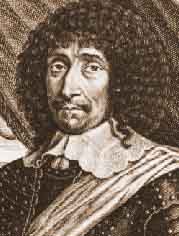
César I - founder of the
ducal, and martial, house
of Choiseul

Maximilien de Choiseul
Serving as a cornet in the king's cavalry, Maximilien was killed in the siege of Spire in 1644

Chrétien de Choiseul
Brother of Maximilien, he was killed while on campaign in Germany

Giles de Choiseul, Vicomte d'Hostel (also referred to as the Comte d'Hostel)
A Maréchal de Camp, Giles was also a lieutenant-colonel when he was killed in the siege of Saint-Ya in 1644.

Antoine de Choiseul-Beaupré, Seigneur d'Aillecourt
A major in the Duc d'Orléans' cavalry regiment, he was fatally wounded in the battle of Lens (1648). He was taken as a prisoner of war and would succumb to his wounds while in captivity.

César de Choiseul
Knight of Malta who died at the battle of Cremone in 1648. He was 20 years old at the battle - a bittersweet fact is that his father (the Duc de Choiseul) would go on to win that particular battle.

Charles de Choiseul, Comte de Plessis  
Brother of César, Charles was a Maréchal de Camp when he died at the battle of Rethel in 1650

X de Choiseul
His death was announced in the Mercure Gallante, but unfortunately, his first-name is not clearly recorded.  He was the brother of César and Charles - however, he might have been an illegitimate brother. He died at the siege of Ast in 1644.

Alexandre de Choiseul, Comte de Plessis-Praslin
Yet another brother of César and Charles, Alexandre was killed at 38 by a cannon ball at the taking of Arnheim, 1672. He had initially been accepted into the Church but left the clergy to join the army.

Charles de Choiseul
Killed at the battle of Cassel in 1677

François de Choiseul
Killed at the siege of Candie, 1668

Adrien de Choiseul, Seigneur de Vauteau
Killed at the siege of Condé 

Jean-Baptiste-Gaston de Choiseul, Comte d'Hostel and Marquis de Praslin
He was another career soldier who had achieved the rank of lieutenant-general who had been seriously injured at the siege of Iprès in 1678. He later had his hand broken by a bullet during the battle of Cassano (1705) - he continued fighting until he was shot through the torso. He was taken to the ducal palace of Milan where he died after several hours of agony.

Claude-Bernard de Choiseul
Killed in Germany, 1679

Pierre de Choiseul
Unlike his relatives, Pierre joined the navy where he was killed during the bombardment of Algiers in 1683.

César-Auguste II de Choiseul, Duc de de Choiseul
Serving as Premier Gentilhomme of the Duc d'Orléans, the duke was mortally wounded when he led the siege of Luxembourg in 1684 - a bomb (likely a cannon ball) exploded right near him. He was not yet 20 years old.

François-Joseph de Choiseul
Knight of Malta who was killed at the Battle of Nerwinde of 1693

Cleriadus de Choiseul, Marquis de Lanques
Died at the head of his regiment in the 1690's

X de Choiseul
Another Knight of Malta and another man whose name does not appear clearly. He was killed at Spire, 1703.

Charles de Choiseul, Marquis de Meuze
Also killed at Spire

François-Joseph de Choiseul, Comte de Choiseul and Baron de Beaupré
Killed during a naval battle in 1711

François de Choiseul-Ambouville 
Served as an ensign in the navy when he was killed at Algiers on 27 June 1683

Comte de de Choiseul-Beaupré
Captain of his vessel, he was killed in action on 18 May 1711

François-Louis de Choiseul-Meuze
Colonel of the Regiment of the Dauphin, he was killed at Anvers on 31 May 1746


As can be seen, the house of Choiseul paid heavily for their military duty towards the king. Few - if any - noble family lost as many men during such a relatively short period. As a further example, the head of the house - César Auguste III - participated in nine conflicts over the span of 23 years. In the 1670's, especially, César Auguste was continuously absent as he was at war in 1672, 1674, 1675, 1677 and 1678. During these years, he travelled to various fronts, including in the Netherlands and Belgium. In total, he spent 32 years in active service.

Such service was an ideal opportunity for the king to reward obvious fidelity. To be sure, Louis XIV fully appreciated this concept and did not fail on his part. César Auguste went from colonel of an infantry regiment to maréchal de France (and lieutenant-general), made First Gentleman of the Bedchamber to the Duc d'Orléans and was made a Knight of the Saint-Esprit.

Particularly the family of Charles de Choiseul and Marie de Porcherot saw more than their fair share of the "impot du sang" - they had eight children of which four sons died in war: Charles, François, Pierre and Claude-Bernard.

The Battle of Spire, 1703, which killed off 
numerous men from the Choiseul-family


Rochechouart

Guy de Rochechouart, Seigneur de Châtillon-de-Roy
Killed at the siege of Saint-Jean d'Angely in 1621

Jean-Louis de Rochechouart, Baron de Barbozan
Died during the religious wars, near Parmiers

X de Rochechouart, Comte de Vivonne
Wounded while passing the Rhine in 1672

X de Rochechouart, Seigneur de Clermont
Captain of the light horse, he was killed at Maastricht in 1673

François de Rochechouart
Killed at the battle of Seneff, 1674

X de Rochechouart, Duc de Vivonne
General of the king's galleys, he defeated the Spanish fleet at Messina; during that battle he was wounded and then created Maréchal of France

Charles-François de Rochechouart, Comte de Limoges 
Fatally wounded at Ypres in 1678

Louis-Victor de Rochechouart, Duc de Mortemart 
Another well-titled man, Louis-Victor was also Duc de Vivonne, Prince de Tonnay-Charente, Viceroy of Sicily and Premier Gentilhomme of the King's Bedchamber. He was wounded at the siege of Lille in 1667 and then again (seriously) while crossing the Rhine in 1672.

X de Rochechouart-Jussac
Killed at the Battle of Fleurus, 1690

Charles de Rochechouart, Marquis de Montpipeau
Killed at Leuze, 1691, at age 30

Louis de Rochechouart, Duc de Mortemart
Was considerably wounded at the beginning of the Battle of Eckeren but persisted fighting 

François-Charles de Rochechouart, Comte de Rochechouart
Shot in the arm at the Battle of Guastalla in 1734

X de Rochechouart
Killed during a skirmish against a force of hussars at Eins, 1734

Charles-Auguste de Rochechouart, Duc de Rochechouart
Grandee of Spain and Knight of the Saint-Louis, he served Louis XV as Premier Gentilhomme of the Bedchamber. He received two wounds at Ettingen, 1743, which he eventually died from

Pierre-Paul de Rochechouart
Killed at the Battle of Plaisance, 1746

X de Rochechouart, Chevalier de Rochechouart
Colonel of the Anjou-regiment, wounded in action on 10 August 1746, near Tidon

X de Rochechouart, Chevalier de Rochechouart
Killed at the battle of Turin, 1706 - it is rather sad that even the book on the history of the Rochechouart (written by a Rochechouart) does not even record his name
undefined
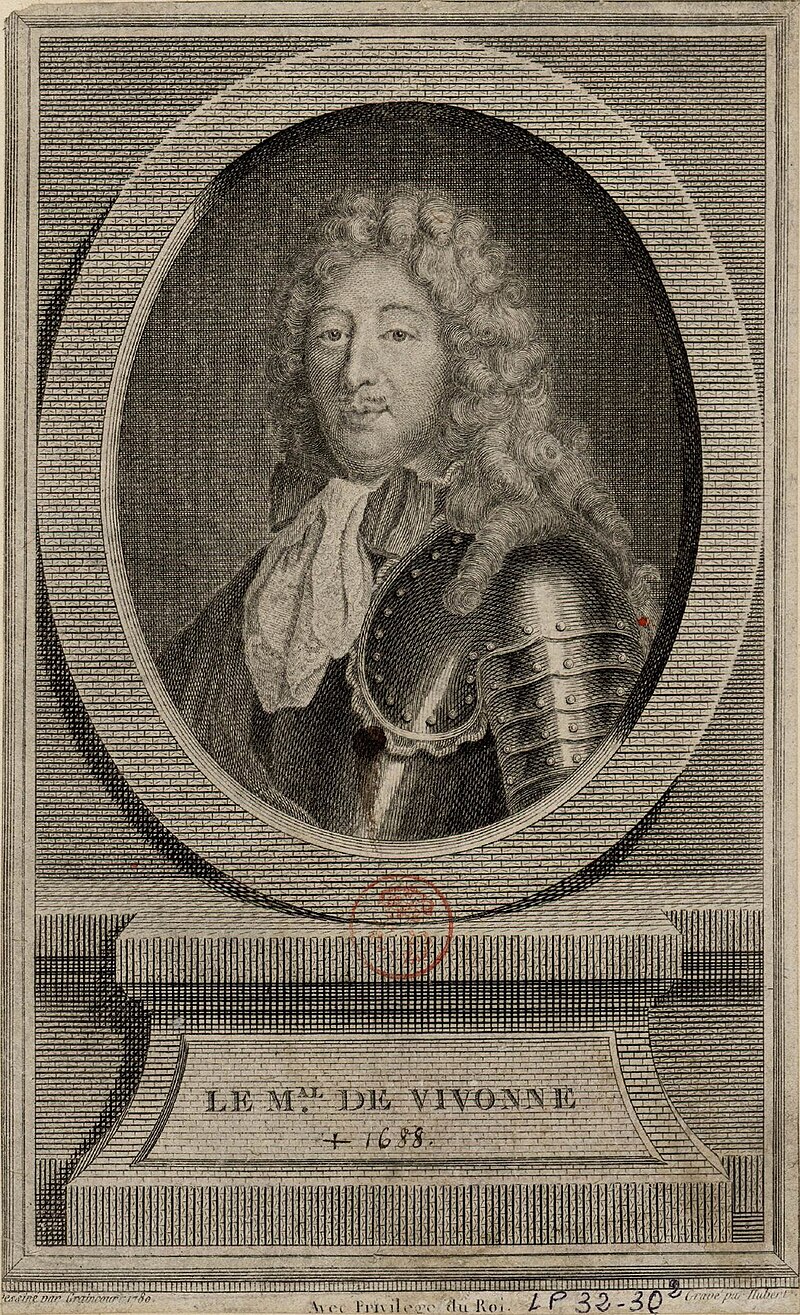
Louis-Victor de Rochechouart


Thursday, 13 October 2022

Bloody Duty: Youths at War

Military service was all but obligatory for the young men of the nobility; those who could afford it gave their sons prestigious educations, for instance in the school of pages which was housed in the Grand Écurie. At the end of their education, they would receive a commission or a regiment - once more, bought and paid for by their family. The consequence was that 18-20 year old men were placed in charge of trained soldiers without having no practical experience themselves.


Yet, not everyone could afford to purchase a rank but still hoped to advance themselves through the army. Louis XIV wished to accommodate them while providing himself with a new corps of fresh officers with noble blood. In 1682 - the same year that the court settled at Versailles - he established a system of cadets gentilhommes which catered to young men from aristocratic but impoverished families. They would be sent to frontier garrisons where they would receive their education - afterwards they could use that knowledge to keep the frontier secure.

Louis XV also attempted to incorporate the never-ending need for new officers with this desire for service; he created the École Militaire which accepted 500 youths ranging from 8 years old to 20 years old. The only requirement was a proof of nobility going back four generations on the father's side. After their education, they were deployed in the king's service.


Considering the young ages of the boys involved, it is no wonder that many of them had a rude awakening when they first encountered the military. For instance, François-Marie d’Arod was just fifteen years old when he entered the army. As he later recalled, the first time a captain reprimanded him, he burst out in tears.


Others were not even that fortunate. Eager to make a name for themselves, the bloody battlefields of the 17th century caused the death of several young men from court:

Vincent-Dominique-Régis de Boufflers was the son of the Marquis de Remiencourt and thus a part of the Boufflers-family. At the age of 13 he was already serving as a standard-bearer for a regiment in the king's guards. They were deployed for the Battle of Dettingen on 27 June 1743; Vincent-Dominique-Régis did not survive the battle. Sources disagree as to his age; some claim that he had been born in 1723 while others place his age as low as 13. A single source even claim that he died due to blood-loss after his arm was shot off by a canon. 

Unfortunately, it is quite likely that Vincent was just 13 years old. The post he held was often given to very young boys who were in the very start of their military career. Typically, such a position was unpaid but he was permitted to wear an officer's uniform.


While older than Vincent-Dominique-Régis, Godefroy de Duras was already colonel of his infantry regiment at the age of 25. His father was the Marquis de Duras who himself held the title of Maréchal de Camp. Known as the Comte de Rozan, he died in the battle of Candie on 29 June 1669.


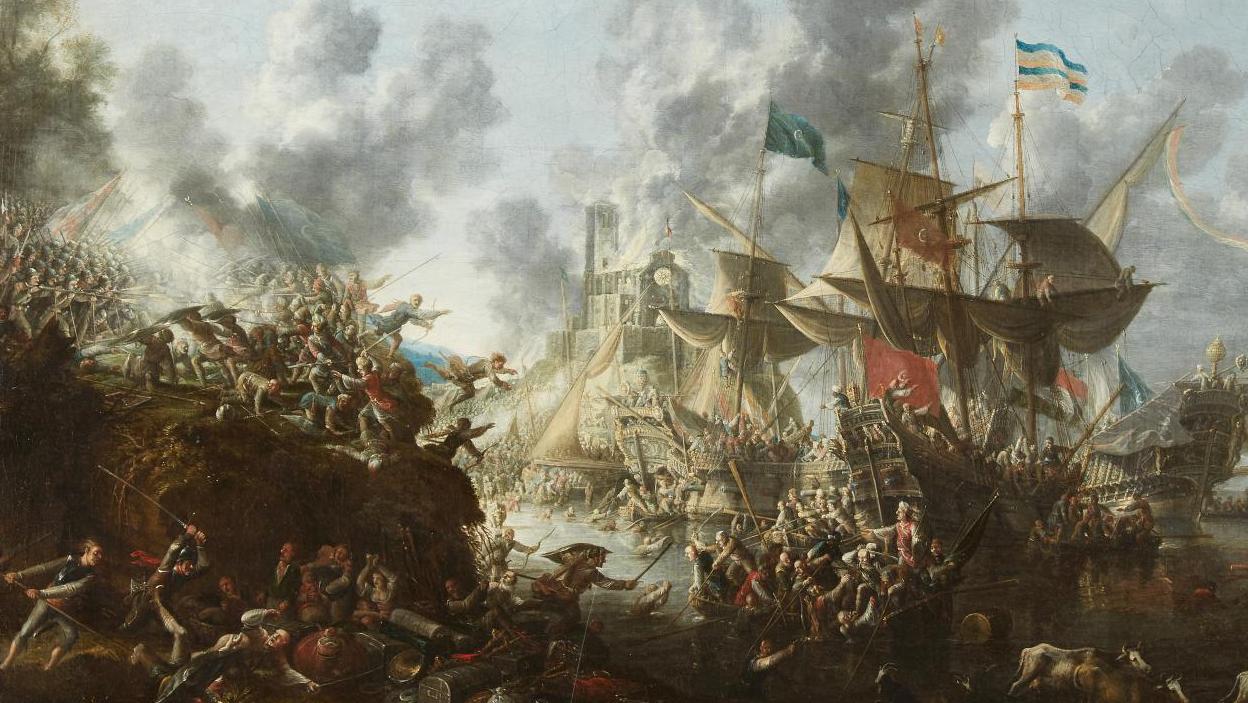
Jan Peeters (1624-1677), Combat des chrétiens et des Ottomans : la prise de Candie,... Dans le tumulte d’une bataille
Jan Peeter's depiction of the battle of Candie 
which saw French forces come to the aid of
the Venetians against the Ottomans


From an immense flock of siblings (18 children), Emmanuel Jules de Noailles was the son of the Duc de Noailles and held the title of Comte de Noailles at court. At the age of just 8 years old, he was made governor of Guyenne - a practice that allowed his father to exert actual control until he himself came of age. Sadly, that would never happen. Deployed with his regiment in 1702, he fought near the Rhine where he received several wounds to his head. Despite being evacuated back to Strasbourg, he died on 20 October at the age of 16.


Louis de Rohan, Prince de Rohan, was colonel of a cavalry regiment when he participated in the French campaign in Flanders of 1688. In the summer of that year, he was wounded - not enough to be immediately serious, but enough to warrant sending him home. It is unclear how the doctors managed to keep him alive for so long; he died in Paris on 5 November 1689, with the cause of death stated as being from the wounds he had sustained during the previous battle. He was 22 years old. 


At the age of just 20, César-Auguste de Choiseul was Duc de Choiseul and First Gentleman of the Chamber to Philippe, Duc d'Orléans. He was sent to Luxembourg in the spring of 1684 to besiege the city; while doing so, he was wounded and died shortly afterwards. He had not yet had time to marry.

César-Auguste was far from the only Choiseul to perish on the battlefield. The sons of Charles de Choiseul, Baron d'Ambonville appear to have been particularly unfortunate in this regard. Of Charles' 9 children, 6 were male - and four died in battle. Charles (second son of the baron) was a cavalry captain when he died in the Battle of Cassel in 1677, François also died at the battle of Candie (like Godefroy de Duras), Pierre died near Alger in 1683 while Claude-Bernard had died in Germany in 1679. 


By 28 years old, Louis Potier, Marquis de Gandelus, was brigadier as well as colonel of first the d'Albret-regiment and then that of Vaisseaux. He was the third son of the Duc de Tresmes. Louis XIV sent him to fight in the Sun King's campaign in the Palatinate which placed the young man at Oberkirq where he was seriously wounded. Taken back to Strasbourg, he died on 24 April 1689.

His younger brother, Jules-Auguste, died just three months after Louis. Jules-Auguste was also a soldier as well as a Knight of Malta. He was killed during the taking of Coron on 18th July 1689, at 26 years old. 


Louis-François de La Rochefoucauld had become a page to the king at the age of 18; this inevitably led to a military position. In his case, Louis-François was made aide-de-camp to the Comte de Roye. It was while following Roye to Seintzen in 1674 that the young seigneur de la Bergerie was killed in action at 24 years of age.


Having just married his cousin, Emmanuel-Henri de Beaumanoir, marquis de Lavardin, set out to fight in the War of the Spanish Succession. He held the post of Lieutenant General of the king's armies in Lower Brittany as well as a cavalry colonel. On 15th November 1703, the 19-year old was in the battle of Spire during which he died.


1706-05-23-Slag bij Ramillies.jpg
Battle of Ramillies


Serving as sub-lieutenant in the king's gendarmes, Maximilien-Gaston-Guy-Benjamin de Rohan was also dispatched for the king during the War of the Spanish Succession. When the battle of Ramillies broke out on 23rd May 1706, Maximilien was 26 years old. He was shot in the head by a musket, presumably (and hopefully) killing him rather instantly. 

Like the Choiseul-family above, that of Rohan also followed the traditional way of purchasing titles for the sons of the family. By spreading them out to various regiments, the family might also hope to widen their sphere of influence. Such a scattering of relatives had the added advantage of lessening the risk of annihilation of the next generation; imagine if all young men of a single family were placed in the same regiment - that would inevitably place the future of their family at risk if they were sent into battle. 

Maximilien-Gaston-Guy-Benjamin de Rohan himself was the sixth son of the Prince de Soubise. His father had passed on the post of captain-lieutenant to his second son. Interestingly, Maximilien might have served with his brother, the Prince de Soubise's fourth son, Henri-Louis. Both Maximilien and Henri were enrolled as ensigns but whether that was in the same regiment is unknown.


Pierre-Gabriel de Simiane, Comte de Carcés, fought at the battle of Cassel in 1677. He was a member of the king's bodyguard known as the French Guards. During the fighting, he received no less than five wounds which caused him to be evacuated to Ypres. Sadly, he never recovered and died there at the age of 22; as such, he predeceased both his parents.


Naturally, there are many, many more men who lost their lives on the battlefield but it would simply be impossible to mention them all. The period in question - particularly the reign of Louis XIV - was dominated by bloody conflicts including the War of the Spanish Succession, the Nine Years' War and the War of the League of Augsburg.

Sunday, 11 April 2021

The Price of Glory: Military Injuries

The vast majority of male aristocrats spent a part of their lives in the king's army; some made it their primary career while others served briefly. The risk attached to that service varied depending on whether France was currently at war. If not, a military service could consist of managing a regiment or a posting to a specific garrison. However, if France was at war the service became far more active - and far more dangerous.

Then, as now, military service inevitably involves the risk of serious personal injury or even death. Naturally, this was the case for the aristocratic sons of France as well although they did not expose themselves to the same amount of danger as the professional soldiers in the front lines. It should be pointed out, though, that in order for a young man to distinguish himself (and potentially be rewarded by the king) he would have to stick his neck out. This would often entail being at the very centre of the action, i.e. by leading cavalry charges.

As could be expected not everyone made it home safe and sound. Some never returned at all while others had to live with the permanent damages. Interestingly enough, the contemporary memoirs rarely mentions such things even when describing men who had spent their entire lives in the army. One exception is the memoir of the Marquis de Dangeau but there was a very clear reason for this: the injured was his own son.


Philippe de Courcillon was 22 years old when he was serving at the Battle of Malplaquet on 11 September 1709. During the battle, the young man was injured in the leg and the wound proved very serious; so serious that the doctors on hand decided to amputate his leg. His father, the famed memoirist, mentions that the amputation had been performed on the thigh. Philippe was sent back to Versailles where the king was kind enough to lend him his personal surgeon, M. Marèchal (his name, not to be confused with the title). The days that it took to bring Philippe back to court had left his wound in a terrible state. 

The surgeon found the patient in such imminent danger that he decided to remove more of the thighbone. The concerned father explained that the surgeon's decision was because the wound had begun to fester and the skin had regrown "too quickly". One can only imagine the pain that Philippe must have been in. Almost miraculously he survived the second operation as well. However, it cannot be ruled out that the trauma had caused irreparable damage to Philippe's body and mind. He died ten years later, at just 32 years of age.


Also at Malplaquet was Pierre Montesquiou d'Artagnan, Comte d'Artagnan, who commanded the right flank of the French forces. As he led his forces, the Comte d'Artagnan (whose name would be immortalised in "The Three Musketeers" by Alexandre Dumas) was a prime target for musket shots. During the battle three horses were shot from under him and he himself did not go completely unscathed: after the battle, four dents from bullets were found on his cuirass protecting his chest. He was wounded, presumably by just such a musket shot.

Pierre de Montesquiou d'Artagnan
Comte d'Artagnan


Of all the men who were wounded at Malplaquet, one of the most distinguished was Claude Louis Hector de Villars, Duc de Villars. Like the Comte d'Artagnan, he was the victim of a musket shot which hit him in the knee. Despite his obviously painful injury, the newly-created Marèchal de France insisted on remaining with his troops and continued giving orders from a litter until he finally fainted. He was then carried back to the French camp. The incident is referred to in his private memoirs. He mentions that he had his wounds dressed "at once" - he also attest to the immense amount of pain he must have been in by writing that once he was insensible he was carried all the way back to Quesnoy without his knowing it. 

It is not surprising that the Marèchal de Villars was a popular man with his troops. Besides this fervent devotion to duty, he had voluntarily made do with the decreased rations of the common soldiery after the disastrous winter of 1709.


Marèchal de Villars


A few decades later, Louis de Brienne de Conflans, Marquis d'Armentières, found himself at the battlefield of Guastalla during the War of the Polish Succession. There, he served under the Marèchal de Coigny when the battle commenced on 19 September 1734. At the time, Louis was 23 years old and had commanded his own regiment since the age of 16. During the battle Louis was wounded by a musket shot which hit him in the neck. Remarkably, Louis survived but he must have had a visible scar which he carried until his death in 1774.


The Battle of Fontenoy was the greatest military triumph of Louis XV's reign but it saw its fair share of death and injury as well. One who experienced just than on his own body was Marc-René de Voyer de Paulmy d'Argenson, marquis de Voyer and son of the Minister for War. Marc-René was Mestre de Camp of the Berry-regiment which meant that he led the charge against an English detachment. In some manner, he appears to have been knocked unconscious and was dragged back behind French lines. For two hours, he remained unresponsive and was generally believed to be dead. It is not unlikely that he suffered at least a concussion and appears to have made a full recovery. 

Marc-René was wounded again, 13 years later when he partook in the Battle of Crefeld. However, this particular injury is unspecified and does not appear to have been serious either. 


File:Battle of Fontenoy 1745.PNG
The Battle of Fontenoy


One man who did not sustain his wound on European soil was a man with an impressive amount of first-names: Jean Baptiste Charles Henri Hector d'Estaing, more commonly referred to as the Comte d'Estaing. He offered his services when France (once again) went head-to-head with England in India. The Comte d'Estaing was posted to the siege of Madras in December 1758. During a minor battle between French and English troops, the Comte d'Estaing found himself in a very unfortunate situation when he was unhorsed by the English troops. Nevertheless, he continued to fight until he was stabbed twice with a bayonet. Only then did he formally surrender.

Rather than shipping him the long way back to France, he was taken into the very city that he was besieging. His wounds were treated but cannot have been particularly bad since he was soon negotiating with the English governor. He was given the opportunity to be released on parole but initially preferred to be kept until an exchange of prisoners could take place - this would also allow him to resume fighting. It was not until the arrival of the English fleet at Madras that the Comte accepted his situation and agreed to the parole. The consequence was that he would only be released - unmolested - if he refrained from further action against the English. 


Noël de Jourda de Vaux, comte de Vaux, maréchal de France (1705-1788).jpg
Comte de Vaux - wounded five times during his career

By the end of his career, Noël Jourda de Vaux, Comte de Vaux, had participated in five major battles, thirty sieges and earned the esteem of two Marèchaux de France: de Broglie and de Saxe.

The Comte de Vaux was wounded no less than five times. In and of itself, such a number might not seem terribly high but considering the non-existing hygiene and dubious medical practices, this is quite impressive. He sustained his first two wounds in the battles of Parma and Guastalla while serving as a captain in 1734. Five years later, he found himself once again engaged on Italian soil - more precisely at Corte. While holding his post in a monastery, he and his troops were set upon by about 2.000 Corsicans. At a disadvantage, he was wounded twice but the French soldiers managed to drive the Corsicans out which left an opportunity for medical treatment. 

His final wound is the only one we know the origin of. At the siege of Bergen-op-Zoom, his division was deployed to the village of Vouet. It was here that an enemy force of 10.000 men descended upon the French soldiers who had to retreat. During the battle, a shell exploded near the Comte which caused his final battle scar.

Friday, 15 August 2014

The War of Devolution

The War of Devolution was a very short-lived war lasting from 1667-68.

France                                                                     vs.                                                                       Spain
England
The Dutch Republic
Sweden

Background:
Louis XIV was a young King in 1667 and obsessed with proving his worth as a ruler which according to the times he lived in was done through war. The French King set his eyes on the Spanish Netherlands (Belgium today) and once again it was the missing dowry of his Spanish wife, Marie Thérèse, that sparked the conflict. The Spanish King died in 1665 which meant that as a child of his first marriage, Marie Thérèse had a claim to some of the Spanish territories since the dowry had not been paid. However, these territories went to Carlos II who was a child of the King's second marriage.

England and the Dutch Republic were involved in a war of trade but they halted their hostilities since France would be too powerful if she succeeded in integrating the Spanish Netherlands into France. The two countries were joined by Sweden which made up the Triple Alliance in support of Spain.

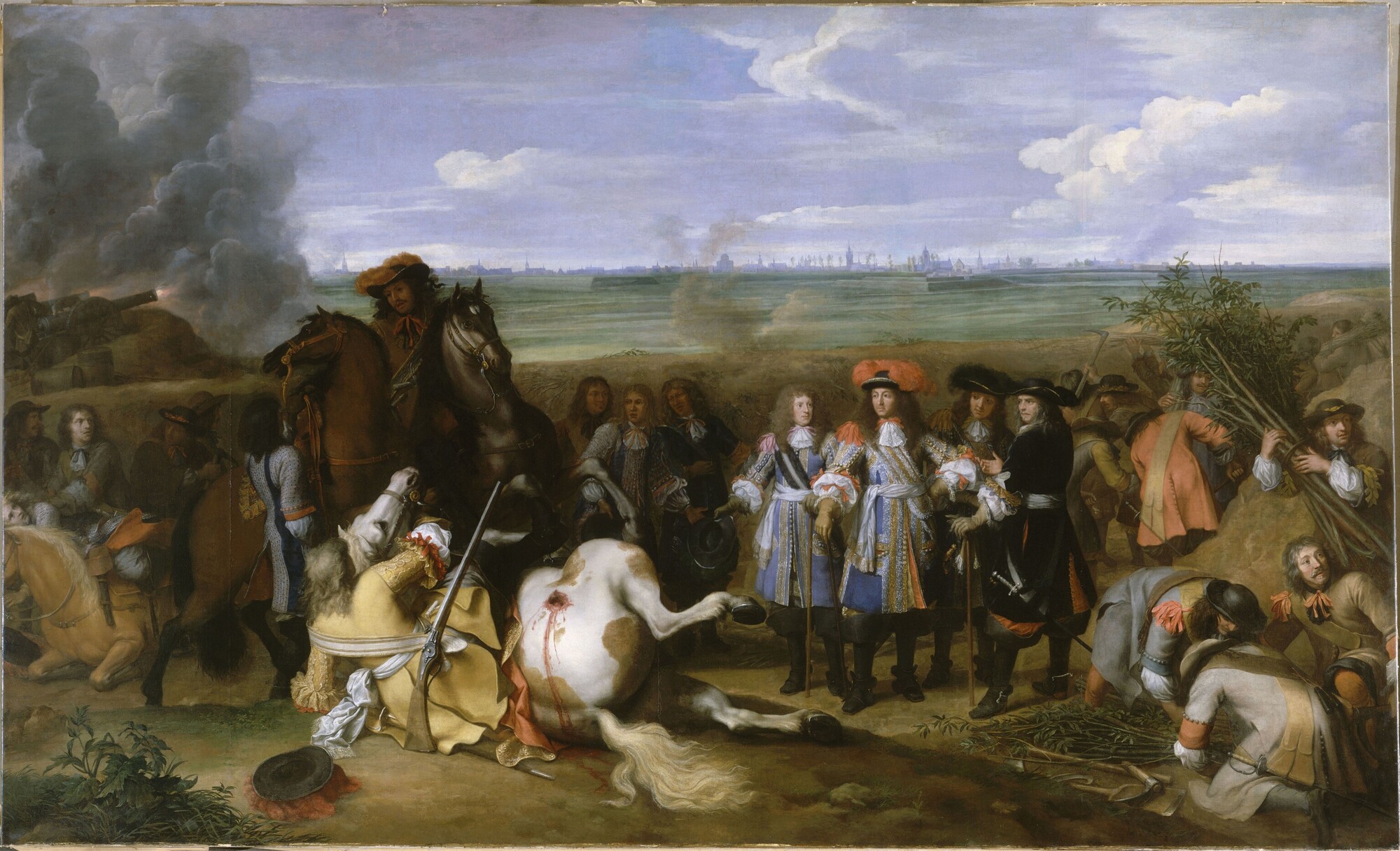
Louis XIV visits the trenches

Trivia - The French court and the War of Devolution:
  • Louis XIV assembled an army of 72.000 men 
  • He appointed the Prince de Condé, Henri de La Tour d'Auvergne and the Viscount Turenne as commanders of his armies - two of them had fought in the Thirty Years' War
  • Louis XIV led the siege of Lille in person
  • The entire court travelled with the King to the front causing a massive logistical issue
  • Queen Marie Thérèse was forced to travel in the same carriage as her husband's two mistresses, Louise de La Valliére and Athénaïs de Montespan
  • The King had arranged for several artists to accompany the court to document his efforts at the front, including Lully, Molière and Charles le Brun
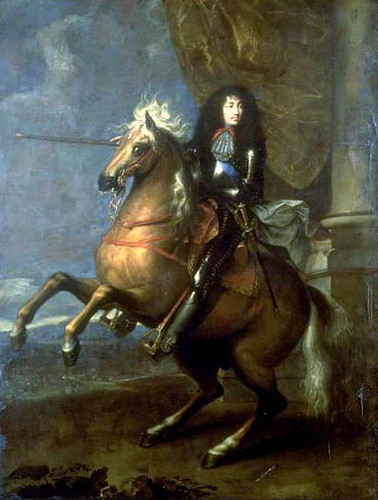
Louis XIV by Charles le Brun, painted during this period

Outcome:
Louis XIV soon realised that despite his reason for the war actually was legal the coalition against him was getting too grand (Spain had recently made peace with Portugal). So, he agreed to a secret treaty with the Holy Roman Emperor, Leopold I; this treaty meant that the Emperor would allow France to gain parts of the Spanish Netherlands on the death of the sickly Carlos II. This gave Louis XIV the confidence to settle the war with the - from French point of view - very generous Treaty of Aix-la-Chapelle in which France got to keep several strongholds on the border to the Empire as well as towns within Flanders. However, she had to give up Franche-Comté.   

Friday, 25 July 2014

War of the Spanish Succession

The War of the Spanish Succession lasted from 1701 to 1714.


France                                                                                                 vs.                                                                                     Austria
Spain (loyal to Philip V)                                                                                                                                                       Preussia 
Bavaria                                                                                                                                                                                         Hanover
Mantua                                                                                                                                                                                Great Britain
Savoy
The Dutch Republic
Portugal
Spain (opposed to Philip V)


Background: 
With the death of Charles II of Spain who died without a male heir two contestants claimed the throne of Spain. One was Philip V, who until then had held the title of Duc d'Anjou at the French court; he was also the grandson of Louis XIV. The other was Archduke Charles from the house of Habsburg. In fact Charles II had actually proclaimed Philip V to be his successor but as often before no one seemed to care about the monarch's will once he was actually dead. 
The situation would seem rather easy to solve if it had not been down to the fact that Philip's Spanish grandmother, Maria Theresa, who was the wife of Louis XIV and sister of Charles II had renounced her rights to the Spanish throne on condition of a massive dowry of 500.000 - but the dowry was never paid. This meant that her renunciation was viewed as invalid because Spain had never fulfilled her part of the agreement. The mother of Archduke Charles was also a sister of Charles II and she had also renounced her rights upon her marriage to Ferdinand III, Holy Roman Emperor. However, since Maria Theresa was the eldest sister she was given the advantage which was made even greater by her missing dowry.

Duc de Villars (far right) leads his troops in the Battle of Friedlingen which the
French won


Trivia - the French court and the War of the Spanish Succession 
  • Louis XIV had an army of just above a quarter of a million men - 255.000 to be more precise
  • In 1709 Louis XIV was approached with peace conditions that were very hard on France; in response he issued a public request for support from his people to help him keep France's dignity - 90.000 men enlisted 
  • There were five French noblemen - besides the King - who were generally in charge: The Duc de Villars, Duc de Vendôme, Duc de Boufflers, Duc de Villeroi and the Comte de Tessé.
  • Louis XIV had to agree to end the war due to financial chaos in France 
  • The winter of 1709 was one of the most severe seen in ages and devastated the King's treasury and his peasants
  • The Battle of Blenheim (illustrated below) was the first mayor military defeat of the French in over 40 years


Battle of Blenheim in 1704
Outcome:
Out of the three treaties designed to end the war two are more important: the Treaty of Utrecht and the Treaty of Baden.

The Treaty of Utrecht was signed in 1713 and is really a line of agreements of peace between France and Great Britain, Savoy, the United Provinces (The Dutch Republic) and Portugal. 

The Treaty of Baden was signed in 1714 and finalised the peace by bringing France and the Holy Roman Empire to peace.

The overall result was that Philip V was accepted as King of Spain under the condition that he formally renounced his claims to the French throne. France got to keep everything she had conquered but had to accept Great Britain's territories of Newfoundland and Rupert's Land - they also had to give Acadia to the British.