Uniforms & Armour
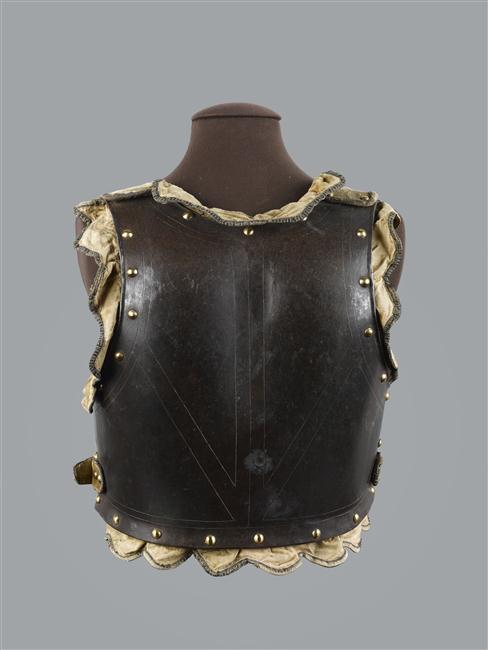
Considering that all courts across Europe had a tradition of sending their young aristocratic men into military service, it is hardly surprising that accessories for their martial part of life were common gifts. Louis XIV was gifted this armour in 1668 by the Republic of Venice. It was worn over the chest in an attempt to deflect incoming "projectiles" - whether in the shape of bullets, wood splinters or the like. It would seem that the plate has been subjected to some kind of use - note the indentation on the right side. Whether that happened during the Sun King's time or later is unknown.

The breastplate below is historically associated with the Marèchal de Turenne, to whom it may have belonged. It was created in the latter half of the 17th century with an outer "shell" of iron and a lining of velvet.
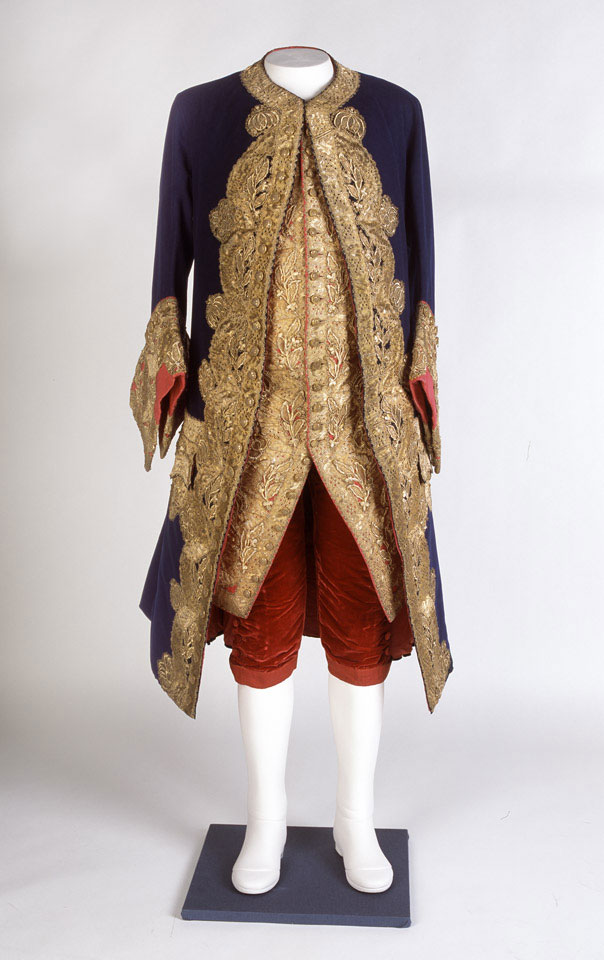
The crude metal of the protective armour was neatly contrasted by ornate embroidery, lace and rich fabrics. This coat, waistcoat and breeches belonged to either a French General or Marèchal. It is dated between 1690 - 1710 which would destine it for either the War of the Spanish Succession or the Nine Years' War.
While not technically a uniform, this remarkably well-preserved set gives a good impression of the main part of a cuirassier's armour during the 1650's. Photo credit: Musée de l'Armée, Dist. RMN-Grand Palais / Pascal Segrette. Just like the breastplate of Turenne's above, this one is lined with velvet.
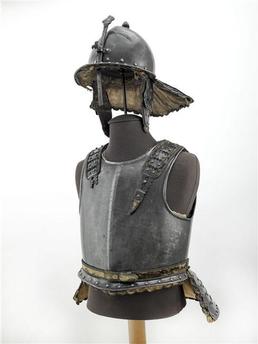
While being from a slightly earlier period than what this blog usually deals with, these tassets were just too ideal to not include. They were created in 1630, either in France or Flanders. Tassets were meant to be strapped to the thighs, thus offering protection to this area. This pair was rather sophisticated as it has been designed to cover the larger part of the knee. The tassets was worn by a cuirassier.
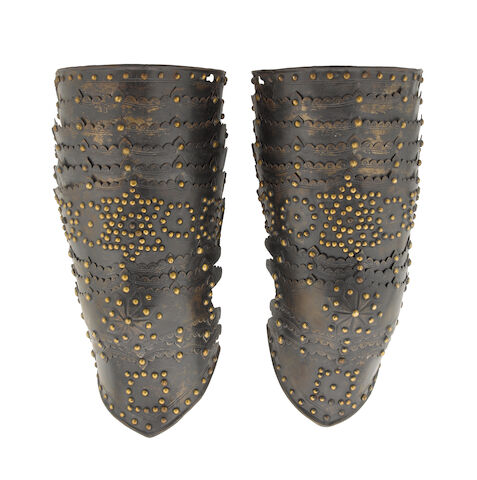
Another pair of tassets produced in 17th century France. This one covers the entire knee; one tasset is made up of 29 metal plates. The pair was sold at auction by Czerny's.

Weaponry
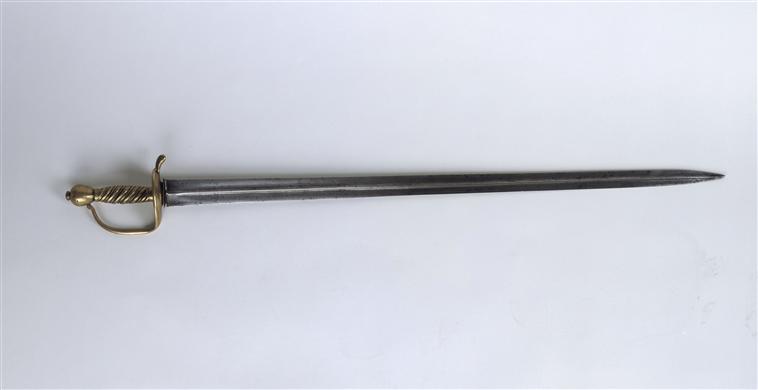
Swords were not only a symbol of aristocracy but (naturally) used in its intended setting: war. This particular sword belonged to an officer in the Tessé Regiment of Dragoons. It was made between 1685-90 - as such it could have been used in the War of the League of Augsburg.
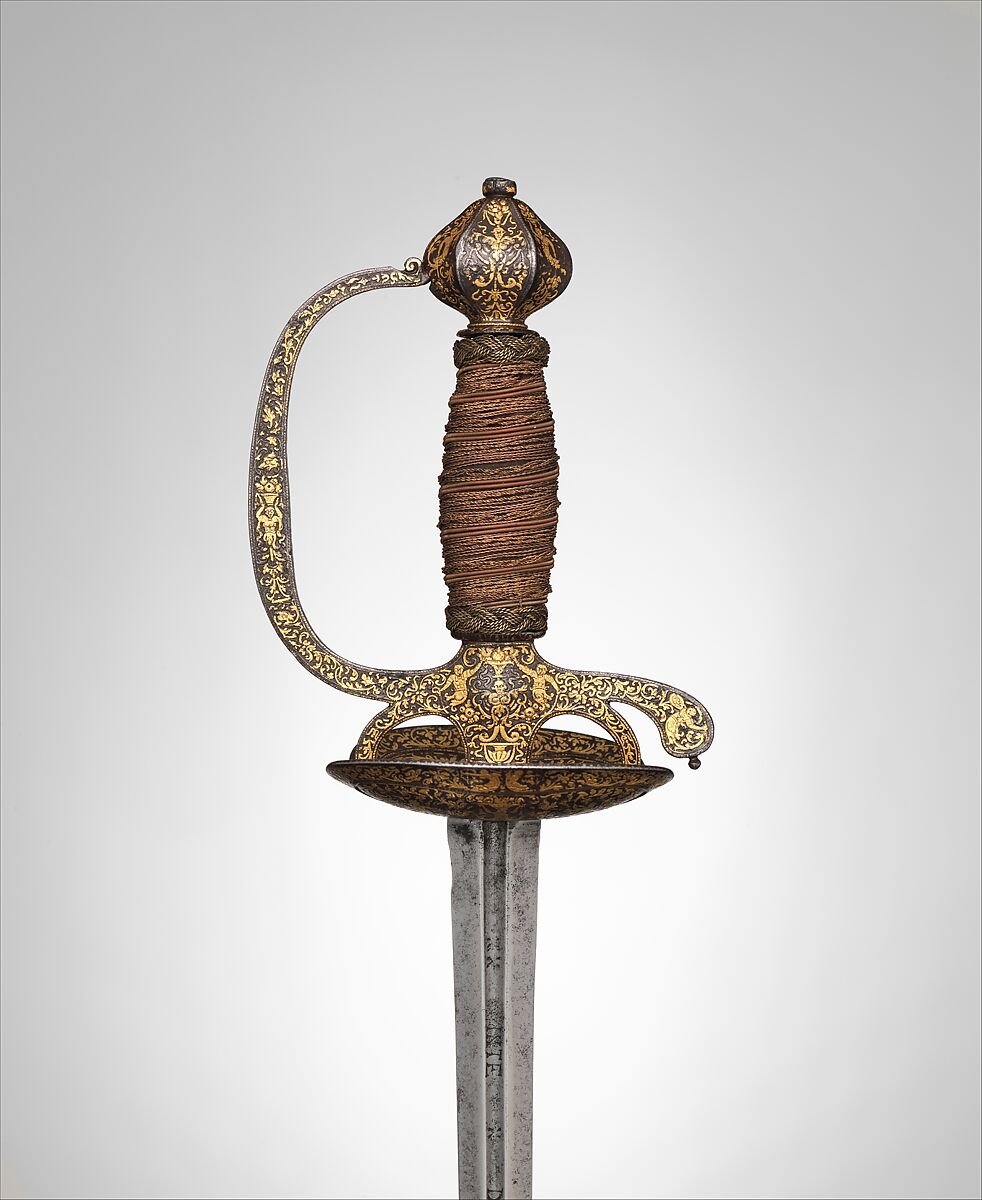
In contrast to the sword above, the rapier below was not originally intended to be wielded on a battlefield. Instead, it was intended to serve as the customary accessory to a nobleman's everyday attire. Since the Middle Ages, swords were worn as a status symbol and this continue well into the Enlightenment and beyond. Indeed, the only official requirement for access to the palace of Versailles (for a male) was that he wore a sword by his side. This particular one (now in the Metropolitan Museum of Art in New York, from whose website this photo is taken) was made in France in the 1650's. Note that the blade is significantly slimmer than the sword above - but it was still very much capable of inflicting mortal injury.
It was not uncommon for the king to bestow especially beautiful articles of weaponry on men who had conducted themselves in an exceptional manner while fighting for the king. This sword was given by Louis XIV to his Captain of the Corsairs, Alain Porée in 1693. The latter had participated in the defense of Saint-Malo against the English onslaught where he had distinguished himself. Unlike the sword from the unknown Dragoon above, this one is clearly intended to be for more ceremonial use. It is not only heavily gilded but is adorned with portraits of both the king and the captain.

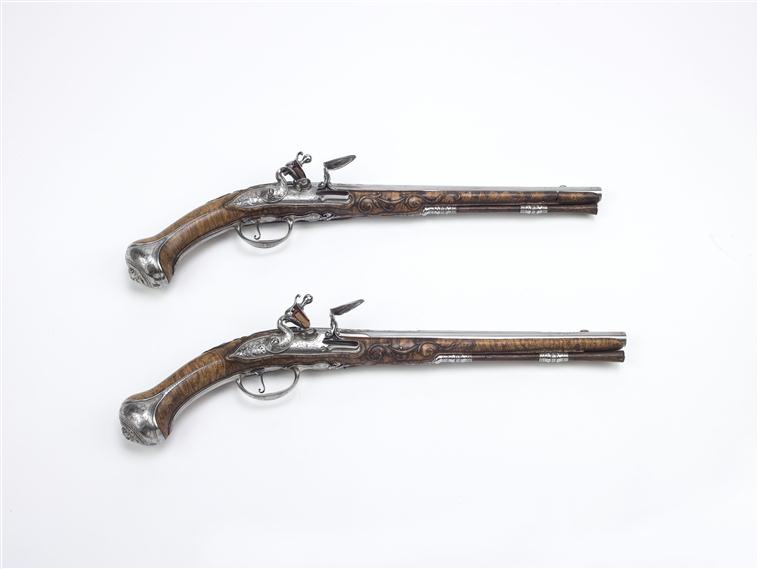
Not all weapons were intended solely for war. Hunting or shooting parties were common pastimes, so it was no unheard of for a man of the time to have a veritable armoury at hand - even in peacetime. These pistols were made for the Grand Dauphin and does not appear to have been made for use in active warfare. They are from 1687.
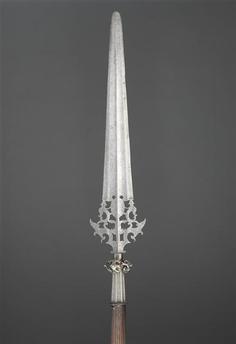
Generally, weapons were not an uncommon sight at court. Besides the mandatory sword worn by gentlemen and the sporting pistols of the aristocracy, the palace was heavily patrolled by both Swiss and French guards. Naturally, their primary function was to keep the king safe and they were fully equipped for the purpose. This pole arm was carried by the king's bodyguards between 1678-1710 and proudly display the sun - in clear reference to their sovereign lord. Note also the coat-of-arms with the French fleur-de-lys.

The one below belonged to a guardsman in the Dauphin's bodyguard - quite a difference between his and his father's! Nearest to the blade, there appears to be two dolphins (in their mythical shape) supporting the blade. This was quite common for articles belonging or referring to the Dauphin, as the French word for "dolphin" happens to be dauphin. The photo credit belongs to Réunion des Musée Nationaux.
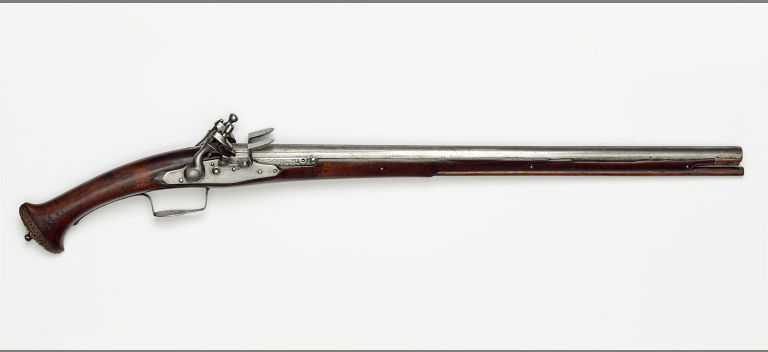
The firearm below is flintlock pistol from ca. 1650 and was made in France. The metalwork is more detailed than what one might think by a quick look at it. It is adorned with both cupids and flowers. It is currently in the collection of the English Victoria & Albert Museum.
Accessories
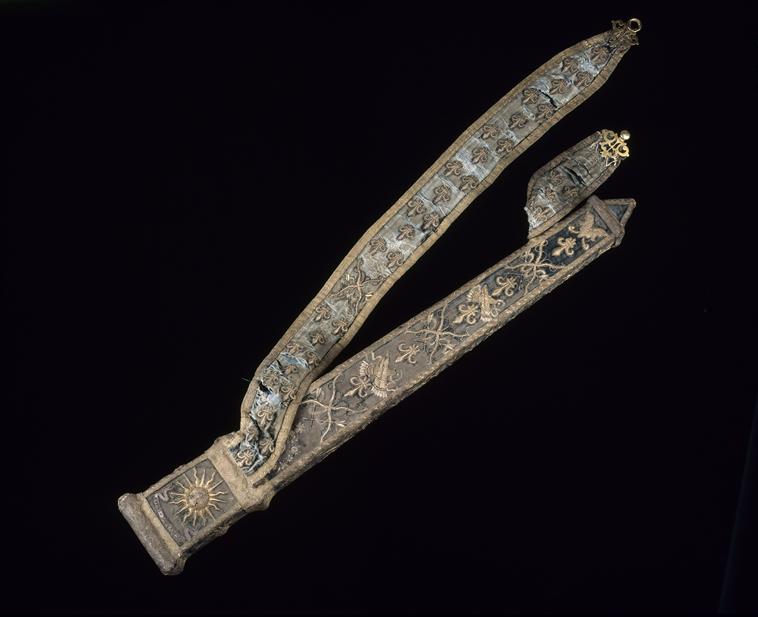
Going to war, as royalty, meant more than the political issue at hand. Once a member of the royal family arrived, he would often take part of or complete leadership. As such, it was necessary for him to be easily recognised. This sword sheath is adorned with the arms of the Duc de Bourgogne - note the fleurs-de-lys and the sun.
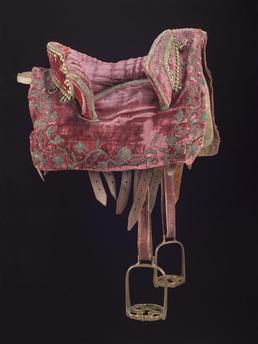
The saddle below (photo credit: Musée de l'Armée, Dist. RMN-Grand Palais / Anne-Sylvaine Marre-Noël) belonged to an officer. The saddle is particularly made in order for the rider to sit perfectly erect while performing the intricate maneuvers usually associated with French horsemanship. The officer must have been of some means; the saddle is made from velvet and has been adorned with golden embroideries.