Showing posts with label toilette-table. Show all posts

Saturday, 15 April 2023

Poudre à la Maréchale

Originally created by the Maréchale d'Aumont, this particular type of cosmetic dates back to either 1669 or 1675 depending on the source consulted. The powder - poudre - was used on the wearer's hair; such cosmetics were becoming increasingly popular as powdered wigs became a necessity in the fashion world.


Amongst the many attributes which made the poudre à la maréchale so popular was both its efficiency and its pleasant scents. Perfumed powders were gaining ground in a wide variety but the maréchale appears to have hit a particularly popular blend. The main perfumes in the powder were iris, coriander, rose, clove and tiger nut. However, these ingredients were far form the only ones used in the concoction. According to the Parfumeur Français, a proper version also contained orange blossom, sandalwood, lavender, cinnamon, lemon peel, marjoram, benzoin and labdanum. 

Whether they were all combined into the same batch is somewhat unclear but it does not seem terribly unlikely. The presence of some rather expensive ingredients certainly helped bring the price up - especially considering that some recipes called for ingredients imported from very specific places. Some were within France itself - such as roses from Provence - whereas others had to be brought in from abroad - like irises from Florence.


The main body of the powder was a type of starch which could become conveniently greasy enough to use on the intricate coiffures. As such, it was fairly widely used.

A rather unusual anecdote exist surrounding this powder. Allegedly, Madame de Pompadour received a mysterious snuff box with unidentified white powder traces. Fearing that it might be poison, she had her physician, Quesnay, examine the material. In a somewhat anticlimactic end, he concluded that the powder was poudre à la maréchale.

The popularity of the powder continued after the fall of the ancien regime; largely aided by the long-lasting effects of the powder.


Interestingly, the powder could also be combined with other products. If sold in smaller packages, they could be mixed with a lotion or pomade to imbue an otherwise bland concoction with its delicious - and heavy - scent. Furthermore, the scent achieved by the myriad of luxurious ingredients also made a popular perfume - still sold today by high-end perfumers. 

Wednesday, 17 March 2021

Eau de la Reine d'Hongrie

The so-called "elixir" of eau de la Reine d'Hongrie was known to the English as Hungary Water. The name is derived from the woman for whom it was first made: Elizabeth of Hungary. Legend has it that a hermit offered the queen a vial in 1370 - this would be the first alcohol-based perfume. Allegedly, the new wonder-water preserved the queen's beauty. From there, it was transported via Hungarian merchants throughout Europe.

Its dominant notes were rosemary but later lavender would be added - some would even add a bit of sage or thyme. The latter two were described in the recipe for the concoction by Simon Barbe. He would also advocate adding the plant alkanet which rendered the water a delicate purple. Besides the alcohol, it would be distilled with rosemary water.

Rather than being considered merely as a perfume, it was also believed to have strong medicinal powers. For example, it was thought to be ideal as a replacement for smelling-salts. As is usually the case for such concoctions, its medicinal purposes were considered to be wide-ranging. The Princesse d'Epinoy held such high hopes on her Hungary Water that she is said to have asked her son to bring her some, as she was feeling very unwell. Whether he did or not is unclear but she would die shortly after from apoplexy. 

In the next century, Fargeon prescribed the perfume as a soothing agent for Marie Antoinette when she expecting her first child. She suffered under the intense heat of the summer and used the water to help her relax before going to bed. Fargeon was not the first to use it in this manner, though. Almost 70 years prior - specifically on 29 July 1720 - the Regent of France (Philippe II d'Orléans) had been seized with what appears to have been a panic attack during a council meeting. However, as Mathieu Marais relate, he was restored to his senses after having been given the famed elixir.

Sébastien Matte la Faveur described the production process of Hungary Water in detail in his "Pratique de Chymie" of 1671. Naturally, he was amongst those who sung the medicinal praises of the water. He proclaimed that it was well-known to be a cure for all illnesses related to cold, including gout and tremors. It was also claimed to work against jaundice and even heart palpitations. 


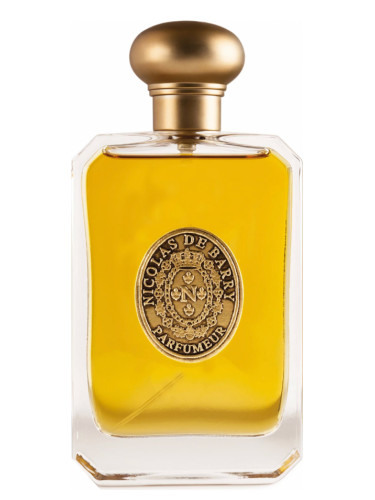
Eau De La Reine De Hongrie Maison Nicolas de Barry for women
A modern bottle of Hungary
Water by Nicolas de Berry


The production appears to have been a lengthy process. Faveur dedicated at least 3 days just for the initial distillation of rosemary and Barbe advocated that the finished product was to be left exposed to sunlight for a whole month.

It is therefore not surprising that eau de la Reine d'Hongrie would be a stable amongst the French aristocracy. When the Duc de Saint-Simon described the rigours of the winter of 1709 he specifically mention that it was cold enough indoors to freeze even the Hungarian Water. Later, it would be given as a gift from Empress Maria Theresia to Madame de Pompadour upon the alliance between France and the Austrian Empire in 1756 - quite a fitting gift, since Maria Theresia was Queen of Hungary. Nor was the present unappreciated, as the royal mistress was noted to rub her temples with it.

Madame de Maintenon had declared it to be her favourite and had it distributed to her young wards in the Saint-Cyr institute. Likewise, Madame de Sévigné swore by it.

The eau de la Reine d'Hongrie appears to have universally favoured - both men and women had it and it remained a stable within aristocratic society throughout the 18th century even when it received competition from eau de Cologne. Besides its suggested benefits, it was naturally used as a perfume, too. It is still being used today - for instance, the exclusive perfumer Nicolas de Barry carries it in its original form. 

Tuesday, 5 December 2017

A Perfumer's Dream: Favourite Scents of Louis XVI's Court

It is not for nothing that Versailles was referred to as "the perfumed court" -  ever since the court moved there in 1682 the halls and salons was flooded with the sensual notes of perfume. While Louis XIV preferred the strong scents of flowers - orange blossom being a favourite - perfume developed over the 18th century. By the time of Louis XVI and Marie Antoinette the trade had developed into an art.
As it is today, everyone had their own preferences. The difference from most people today and the courtiers at Versailles is that the French elite had perfume made specifically after their own preferences in scents. Few people understood the delicate art of perfume as well as the royal perfumer, Jean-Louis Fargeon. He was made perfumer to Louis XVI and his court which gave him direct access to the royal family. The perfumes he made for them were inspired by the individual person and their moods.

Other influential perfumers of the time included François Houbigant who was under the patronage of the Duchesse de Charost - he was a direct rival of Fargeon's when it came to the queen's favour.    The perfumery of Houbigant still exists and boasts that Marie Antoinette wore three vials of their perfume on her way to the guillotine for strength. Furthermore, there were Vigier who had served the court of Louis XV and Jean-Marie Farina who invented the still famous Eau de Cologne. 

Some of the more famous perfumes of that age are as follows.

Eau de Cypre Composée 
The celebrated perfumer was first introduced to Madame du Barry around 1773; the royal mistress at first wanted something to preserve the shade of her hair and soon became infatuated with Fargeon's perfumes as well. 
To her he brought a vial of eau de cypre composée which was made of jasmine, rose, iris, angelica and orange blossom topped off by no more than three nutmegs and thirty drops of amber. Madame du Barry was in ecstasy about it.

According to Antoine Hornet - who published his book on perfumes and their distillations in 1788 - the best way of preparing this perfume is to go lightly with the amber since it "offends" the noses of most people.


Eau d'Ange
Unlike some of these other scents, the eau d'Ange was universally applicable. It could be used as a base for other perfumes and could be used in baths. In the latter part of the 18th century it was believed to keep the skin white - thus signalling the desired status symbol of a skin not tainted by working in the fields. Marie Antoinette used it to preserve her much-celebrated complexion. 

Fargeon's version included iris, rosewood, benzoin, sandalwood, calamus aromaticus and storax. 

The Parisian brand Jeanne Piaubert still carries the eau d'Ange in their assortment.
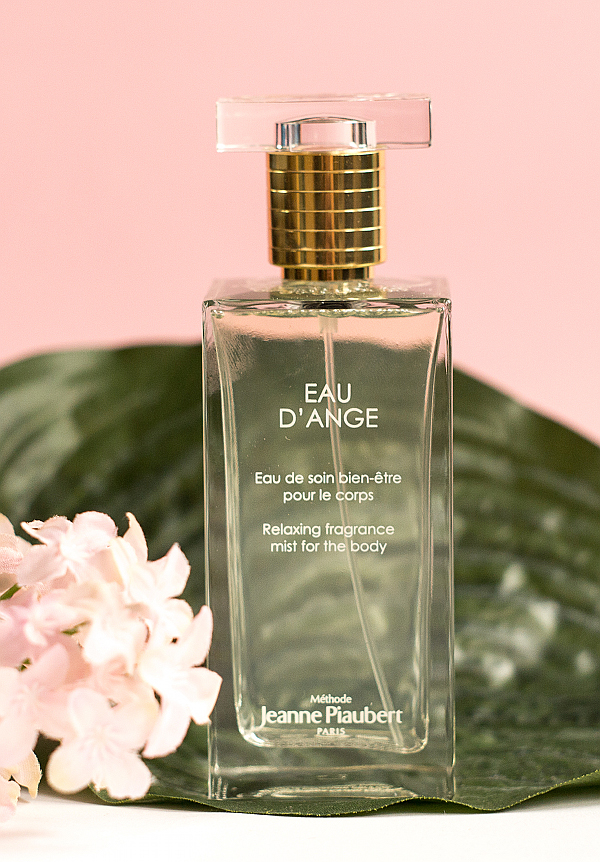

Billedresultat for eau d'ange
The modern version by Jeanne Piaubert


Eau de Mille Fleurs 
This perfume has roots as far back as 1686 when Nicolas de Blégny published his works on the secrets of perfumery. The name could easily give rise to expectations of a strong floral scent but it is really rather heavier. Consisting of rose, benzoin, marjoram and musk it often had a base of eau d'Ange. Blégny was also convinced that the concoction could remedy certain physical disorders.

The types of flowers used could depend on the client; some wished to add lavender while others wanted orange blossom. Samuel Frederick Gray's book of 1831 mentions jasmine, essence of lavender, orange blossom and essence of bergamot as key ingredients. Perhaps this is where the name originates from - the possibility of adding any flower possible?


Eau d'Houbigant
The second oldest perfumery in France the House of Houbigant launched this particularly popular perfume not long after the ascension of Louis XVI to the throne. It consisted solely of flowers which gave it a sensual but light aroma. The founder advertised his new creation with the following words:
"It is to the beauty of the face what the morning dew is to the flowers; it refreshes and stimulates the skin while imbuing it with exquisite smoothness..."

Jean-François Houbigant - the creator of
this perfume

Eau du Roi 
Although the orange blossom was not the centre of a perfume until the reign of Louis XV it was definitely on the radar of the French court before that. Throughout his life Louis XIV would prefer this scent to any other - even in his later years when he could hardly stand any perfume he still found it soothing.


Eau de Mélisse
A blend of lemon, cinnamon, angelica, cloves and coriander; Fargeon gave it to Marie Antoinette to soothe her. It was not a new mixture. Charles V is rumoured to have used it and Richelieu always kept a vial of it on him - it was also referred to as eau de Carmelites since it was produced by Carmelite nuns for centuries. 


Eau de La Reine d'Hongrie 
The perfume was originally made for Elizabeth of Poland, Queen of Hungary in 1370. It was made from rosemary macerated in alcohol. Later bergamot, lavender, jasmine and amber were added. It was immensely popular at the French court. Madame de Maintenon and Madame de Sévigné both used it habitually.
Not only was it popular as a perfume but was also considered to have medical propensities - rheumatism amongst others. When Louis XIV was struck with sharp pains in his leg in 1675 he was administered several medicaments - including eau de La Reine d'Hongrie. It was given again in September 1678 when a bout of rheumatism plagued him.


Parfum du Trianon 
Created by Fargeon following an audience with Marie Antoinette at her private retreat. The dominant note was rose but added orange blossom, essentials oils of lemon and bergamot, lavender, galbanum, iris, violet, a bit of jasmine, jonquil and tuberose. Inspired by the lanes of the Petit Trianon he added cedar and sandalwood; amber and musk was chosen as a counteragent to the flowers. Finally, he added a little vanilla as a reference to her Austrian childhood.

Marie Antoinette was infatuated with the perfume. As a sign of favour she granted him access to her grande toilette where he would meet new clients.


Billedresultat for petit trianon lane versailles
The back of Petit Trianon where Fargeon was met by the
queen


Eau à la Marèchale
Named for the Marèchale d'Aumont, this perfume remained a favourite even when the monarchy fell. It was rich in everything: iris, rosewood, benzoin, eau d'ange, nutmeg, cloves, bark from a lemon tree, oranges, jasmine, coriander, marjoram, lavender, roses etc. Popularly said, it had so many scents that it was hard to define it by a single note.


Eau aux Herbes de Montpellier
This perfume's primary note was thyme and it was used for cleansing one's face. Marie Antoinette was given it for her nightly washing.


If you are interested in learning more about Fargeon and his relationship with not only Marie Antoinette but her court, I strongly recommend Elisabeth de Feydeau's book: "A Scented Palace: the Secret History of Marie Antoinette's Perfumer".

Friday, 6 March 2015

Toiletries: A German Necessaire

Nécessaire

This is a nécessaire or a portable toilet service which were very popular among the upper classes. This particular nécessaire is from Germany and was created between 1745-50. Among other things it contains perfume bottles, a watch, tweezers and a thimble. The materials are mother-of-pearls with gold ornaments.

Nécessaire
The lid


Nécessaire

Tuesday, 3 March 2015

Pompous Pomades: A Greasy Necessity

Pomade is a greasy substance used for several purposes: for the hair, the lips or the cheeks. When used for hair, it was especially practical since it made the powder stick to the hair. It could be smeared directly onto the hair or combed more precisely in. If the pomade was used for the skin it was to achieve that shiny effect.


Pomade pot with octagonal vase-shaped body with flat pull-off lid, part of the Keir Toilet Service of silver made by Colin Mckenzie, Edinburgh, 1703 - 1704, for the Honourable Marion Stewart on her marriage to James Stirling of Keir, 24 February 1704
Pomade set, 1704
The word "pomade" is derived from the French word for apple ("pomme") since apples were often a part of the recipe. They were usually made of fat - bear and ox fat was favoured in the 18th century - and was considered a luxury item.

By the 1740's a courtier could not do without pomade. Consequently, new kinds of pomade were sold which were scented to make the sticky substance more appealing. Scents such as lemon, bergamot, jasmine and orange were wildly popular. Usually, pomade was sold in pots but already in 1750 new solid sticks of pomade appeared. They made it easier to get into all those curls and poufs required by fashion.

Pomade pots from Chantilly


However, there was another reason than just mere costumer-pleasing to the advent in scented pomades. A proper hairdo took time and quite a deal of money, so it was common to keep the hair in the same style for weeks - or pretty much until the pomade could no longer keep it together. As it happens the smell of grease rotting on top of one's head is not the pleasantest in the world. This is where the sweet flavours come in. In fact, the pomade would often become so rancid that lice, fleas and even rats was attracted by it!


Pomade Pot from a 12-piece Toilet Service, English, 1680,
English pomade pots, 1680

Since most pomade was sold in pots it did not take long for the perfumers to realise that their exclusive customers appreciated a beautiful packaging as well. Even Sèvres and Chantilly created pomade-pots!

Thursday, 26 February 2015

The Wig Curlers

The wig curlers that could be found on the dressing tables at Versailles were not that different from those found in stores today. They were made of clay and varied in sizes depending on the curl size desired.


Clay curlers, around 1700

People already know that heat would make the hair stay curly which lead to a variety of odd ways to curl the hair. The simple way was to heat the curlers beforehand which is probably why they were made of something as simple as clay and not porcelain. For those who wanted permanent curls this was the procedure: first you twirl the hair around a clay curler and the curler would be steeped in boiling water. Another way was to make the hair damp and then place the hair in an oven until the hair would stay.


The curlers were thick and round at each end while the middle was thinner to keep the hair in place. Unlike most other make-up tools, the wig curler was actually widely used. Considering how simple the technique was to create the desired curls it is no wonder that even those of smaller fortunes would find the means to get hold of one.


Powder Carrots

Powder Carrots or powder bellows were essential to maintain the fashion of a powdered wig. It is pretty much a little, handheld bellow used to distribute the powder over the wig. That task would fall to a valet and would often take place in a separate room from where the dressing took place - otherwise there would be powder everywhere. Literally, everywhere. During this powdering process the gentleman (or lady) would be covered in the same type of clothes that hairdressers today strap around us.


Rare rosewood, horn and ebony wig powdering carrot. English,18th century. BM Gallery
Rosewood, horn and ebony powder carrot, English

Each carrot would be airtight with a little opening used to put new powder in it. Also, most of the bellows would have a rather narrow opening which lessened the risk of having to remove powder from one's ears for months..

Wig powderer, 18thC - Made from polished wood and brown leather with traces of powder inside. It is a truncated cone of leather on a metal spiral. At the smaller end there is a ring of wood with a fine metal mesh over a central hole. The wider end is a wooden disc that unscrews to open.
Polished wood and brown leather,

Here is the powder carrot that belonged to none other than the English George III who himself was very fond of the French fashion of tall, powdered wigs.

Another intriguing royal memento going under the hammer is a tiny pair of bellows used for powdering the wig of (the famously oft-times mad) King George III

Wednesday, 25 February 2015

Home of the Scents: The Perfume Bottle

Throughout most of Louis XIV's reign perfume bottles were made of porcelain. Perfume went from being solid (which would be rubbed on) to liquids which meant that the perfume bottles could take on a new design. Ever since the evolution of perfume in the 18th century, new thought was given into the presentation or rather the package. After all, perfume was quite expensive and since the customers were already paying large sums for the perfumes then it would only be suitable if the bottles matched that quality.


English Bulbous Cage Work Scent Flask, Circa 1760 Gold cage work scent flask with chained shell stopper and French inscription around neck 2 inches high.
English glass perfume bottle, 1760's

Now, perfume bottles could also be made from cut glass or crystal, which in turn could be lavishly adorned with swirls of gold or colourful enamel. For those with an exotic taste jade bottles were available too. In France carved glass was a particular favourite ever since the opening of Baccarat in 1765. In England, Austria and Germany porcelain remained the preferred perfume bottle material.


Bottle, Scent  Date: 18th century (?) Culture: French Medium: Gold, diamonds
Silver covered perfume bottles, France
The bottles' stoppers would receive no less attention. Some were intricately carved into the shape of a woman's head or perhaps a flower or even a mythical creature! Not only were the bottles with their precious drops expensive, they were often unique. Since perfumery was perfected into an art-form more and more merchants realised that there were a good deal of money in making sure that each lady had her very own distinctive symbol.


A circular perfume box with its key, c.1780, in the taste of André Charles Boulle richly décorated with flowery rinceau, palmettes and foliages in gilded and silvered brass on dark wood background. A star-shaped pattern adorn the top of the lid. Inside, a crystal flask with its cork hightened with foliated interlace. The heel and the collar of the flask are underlined with gilded nets.
Perfume bottle with matching case, 1780

Though there would definitely have been a perfume bottle on a lady's toilet-table, she was by no means restricted to returning to her room for every new drop. Most courtiers carried smaller vials around with them. Before long ladies discovered that such a vial could easily be concealed in a muff or within a glove.


(L) Bottle, early 18th century, Labradorite, gold, carved stone cameos.   (Center) Perfume bottle, ca. 1750, Agate, gold. United Kingdom.  (R) Bonbonniere, ca. 1750  curving rococo gold cage work over gray agate. Hinged lid with white enamelled band showing the phrase, “Eloignez de vous rien n’est agreable” (Separated from you nothing is pleasant) (c) cooperhewitt.org
Agate perfume bottles, early 18th century (possible from England). Inscription reads:
"Eloignez de vous rien n'est agreable" or "Separated from you. nothing is pleasant"

Baccarat had its' carved glass but the other glass manufacturers in 18th century France had their own signatures. Madame de Pompadour's beloved Sèvres was renowned for their pear-shaped bottles - a shape which had been in mode since Louis XIV reigned. The bottles from the factories of Saint-Cloud were recognizable from their golden gilding.
Even the very design of the bottles showed the trends of the new age. The heavy baroque style was quickly discarded in favour of a styling more in sync with nature; birds, flowers, butterflies were all popular motifs.

Friday, 22 August 2014

White - the Colour of the Upper Class

For a long time before the Ancien Regime a white complexion was considered an essential part of an aristocrat's look; compared to the peasants whose daily work outside caused a sun-burnt complexion. Actually, this was exactly what the courtiers wanted to be noticed: they - as the privileged class - did not need to work outside. So, the whiter, the better.

Parasols, hats and even masks were used by both men and women who wanted to preserve their perfect, white skin tone. But since it could be difficult to always avoid catching the sunlight especially considering the life led at court where both men and women were expected to follow the King and Queen out hunting or for walks in the vast gardens. Along came the make-up.

The Comtesse de Provence is almost
as white as her gown in this portrait

Make-up was usually divided into two categories: the blancs and the rouges or the whites and the reds. Various recipes existed to top off the ideal complexion. Some of them were quite harmless and would consist of vinegar, egg whites or bismuth and as long as you could stand the smell of vinegar all day long you were fine. Others were not so harmless. Ceruse had been around for centuries but the ingredients were pretty much the same the main ingredient being: lead - or to be more precise the white chalk of lead. Then there was "pearl powder" which was made from actual pearls and gave the skin a very shiny look.
There were cheaper alternatives to the rather expensive white lead which was aluminium sulphate or simply "alum" while bismuth was the knock-off pearl powder. It was also common to enhance the blue colour of the veins to make the skin seem even paler!

The white make-up would be applied in thick layers using a brush to wipe out all signs of wrinkles or other ageing signs. Women would also whiten their shoulders as well as their bosom. While in France the white make-up was a sign of the courtier, in England it took a little longer for the aristocracy to join in since it was considered the look of a courtesan or an actress. Eventually, though, the English followed suit.

Both husband and wife seems to have taken up the white trend
As the 18th century progressed the knowledge of the dangers posed by continuous exposure to lead became ever greater but it had little effect upon the fashionable society (as these things never have).

Saturday, 26 July 2014

Rouge à la Mode!

The rose-red circles on a pale face is one of the best known features of the cosmetics of the 18th century. It was used to highlight the whiteness (really white) of the skin.

Sadly, for a fashion-conscious woman of Versailles, rouge was often made from toxic materials; for example the nuance "vermilion" was contained mercury while "creuse" had lead in it. Therefore, it was not uncommon for women to suffer from skin problems and in the worst cases it could even lead to death. Still, by 1781 it was estimated that French women went through 2.000.000 pots of rouge every year!

The rouge were in powder-form and arrived in decorative boxes - the lady would apply it to her face with the use of wet wool or more commonly a brush. She would normally make actual circles or streaks on her cheeks that would reach the lower eye-lashes. It was common to apply one layer of a darker colour first, then a slightly lighter tone on top of that.
The ladies at Versailles were among the few who could afford rouge made from cochineal insects (carmine) from as far away as South America! Some rouges were even scented with a flowery note. As the demand for rouge rose so did the supply which meant that soon rouge could be quite cheap. To keep the prestige of the trend the noble ladies ordered their rouge in ornate boxes which were sometimes worth more than the actual rouge.

18th century rouge box with brush

The court at Versailles was renowned - and notorious - for the fashionable red circles which were imposed on every new princess arriving from abroad including Marie Leszczynska and Marie Antoinette. The latter wrote to her mother of her daily rutine:

"I apply my rouge and wash my hands in front of the whole world!" 

Actually, the court of France was the only one that really engaged in the usage of rouge on a larger scale which resulted in many a comment from foreign visitors. The Scotsman Tobias Smollett was very much against it exclaiming: "this horrible mask destroys all distinction of features."
Even gentlemen used rouge though on a lesser scale than their ladies.

Billedresultat for 18th century rouge
Madame de Pompadour applying
rouge with a delicate brush

There was quite a lot of symbolism connected with the usage of rouge. First of all, it was to indicate health (believe it or not) as well as modesty - or even sexual arousal! Then there was the symbol for those who cared to think twice about it: the flow of blood to the cheeks could be seen as a reference to the blood of the nobility, that is to say a higher class.
It was a trend for the young and beautiful. The Comtesse de Genlis stopped using rouge when she turned 30 years old because she knew that "old women" who wore rouge were talked ill of.

Madame Adélaîde
During the 18th century the trend spread from the aristocracy to the rising middle-class and bourgeoisie in France. With the French revolution rouge almost disappeared from the toilette of high-strung ladies because it was associated too much with the nobility and extravagance. Those bourgeois-women who wanted to follow the trend but did not have the purse to follow it used more natural sources which were far better for the health. These materials were safflowers, sandalwood and safran; they would also prefer a pinker tone to the deep scarlet of the nobility.


There were different types of rouge:

  • In powder-form where the powder could be mixed with grease or the more exclusive rose water in order to make it easier to apply with a brush.
  • Then there was au crépon where a piece of cloth or handkerchief was dyed with for example carmine which would be made moistened and dabbed onto the face.
  • Finally, there was liquid rouge which would be based on vinegar and would leave a longer-lasting colour

Thursday, 26 September 2013

Beauty Spots - More Than Just a Mark

Beauty spots first appeared in the Roman empire and since the 18th century took a lot of inspiration from the Antiquity it seems almost appropriate to take some beauty advice as well. When the French courtiers adapted the trend it became a way to give small signals to your fellow courtiers - mostly about romantic affairs or personality traits.

Both men and women wore beauty patches that could be made of black fabric such as taffeta, silk, velvet or leather. The patches were cut out in little shapes; circles, hearts, stars and crescents. To make the little patch actually stick to the face one side would be smeared with a sticky substance produced by sapping a tree. Many courtiers used patches to cover the severe scaring that was the inevitable consequence of catching smallpox. Like most other fashions at this time even the patches became more and more elaborate over time. Eventually patches could be shaped as carriages or ships and most courtiers carried extras with them just in case!

The Louisbourg Institute gives us this explanation as to what a beauty patch's location means:

    • Lower lip: discreet
    • Middle of cheek: gallant
    • Middle of forehead: dignified
    • Besides the mouth: kissable 
    • Corner of the eye: passionate
    • Between the mouth and chin: silent
    • Heart-shape on the right cheek: married
    • Heart-shape on the left cheek: engaged
    • On the nasolabial fold: playfull
Sometimes the patch could also be placed on the shoulder or at the cleavage. The patches were normally kept in elaborately decorated porcelain boxes often decorated with pretty motifs such as flowers. In the end the trend vanished when the vaccine against smallpox was invented in 1796.