Showing posts with label royal-gossip. Show all posts

Sunday, 8 December 2024

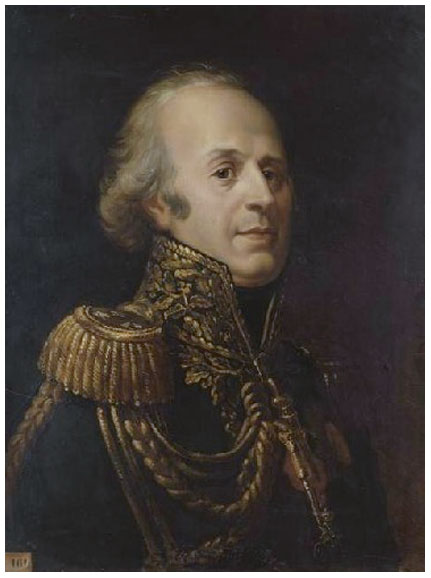
The Turbulent Marriages of the Prince de Soubise

Charles de Rohan, Prince de Soubise, was primarily noted for his renown on the battlefield but deserves some attention for his rather turbulent private life. A man of his standing was a prime target for the noble families of the court and he certainly did not lack for potential wives.

In 1733, he was betrothed to Anne Marie Louise de La Tour d'Auvergne - an 11-year old girl from an equally ancient family. The couple was married on 29 December 1734 when the bride had turned 12 years old; Charles himself was 19. At the time of his marriage his new wife had not yet been presented at court but that would be rectified in 1737; it is not quite clear whether Anne Marie Louise was already pregnant at this time. If not, she shortly became so and gave birth to a girl, Charlotte Élisabeth Godefride. The fifteen-year old mother fell pregnant again two years later when disaster struck. 

Anne Marie Louise went into labour while staying at the Hôtel de Soubise, the private hotel of her husband. The very same hotel had just recently been refurbished with depictions of love in mythology by Boucher himself; whether the remodeling (and choice of motif) was her choice or that of her husband is not clear. She died giving birth to a son at just 17 years old; her boy was not baptised as he died at just three years of age.


Charles de Rohan


Charles still needed a male heir but was still a man in his prime. He waited four years before marrying Anne Thérèse of Savoy who had grown up in Paris despite her Savoyard background. She was described as a rather reserved person who saw little of the world. Unlike her predecessor, Anne Thérèse had already passed through puberty when she married the prince. She was 24 years old upon their marriage in 1741 and became pregnant in 1743. She gave birth to a daughter who was named Victoire Armande Josèphe. She would later become the Princesse de Guéménée who notoriously suffered the greatest private bankruptcy in the ancien regime. 

Anne Thérèse became pregnant again in late 1744 and went into labour on 5 April 1745. Sadly, she would not survive the ordeal and died that same day. It is unknown whether her child lived or even if it was a boy or a girl.


Anne Thérèse


Frustrated by the continued lack of a male heir, Charles did not hesitate to look about for a new wife. Whereas he had had the decency to wait a few years after the death of Anne Marie Louise, he certainly did not this time. Charles remarried just six months after the death of Anne Thérèse.


Much like the princesses of Europe began side-eyeing Henry VIII when he came proposing, it is hard to imagine that any new candidate would not be slightly disturbed by the track-record of his unfortunate wives. The choice for Charles' third wife was a German: Victoria of Hesse-Rotenburg, whose named was "French-ified" into Victoire.

Victoire was 17 years old upon her marriage while Charles had reached 30. The marriage very quickly turned sour. Charles kept a string of mistresses (particularly with ballerinas) and before long, Victoire followed suit. That led to a remarkable scandal which erupted in 1757 or about 12 years after their marriage. By this point, the union had not produced any children and would remain childless. The relationship between the two appears to have broken down completely and Victoire attempted to leave France with her lover, Monsieur de Laval-Montmorency. However, she was arrested in Tournal as she had taken jewellery with her which was said to amount to 900.000 livres. Due to the laws of the time, any property she herself might have brought into the marriage immediately became her husband's property.

Having noticed that the jewels - and his wife - was missing, Charles had turned to Louis XV had her arrested before she could leave the country. Others claimed that Victoire had been supplying her brother - currently on the wrong side of a conflict with France - with privy information. Considering that she was in a prime position to intercept such information it might have been true. Typically, wives were not exiled even after the break-down of their marriages so there was likely a political motive, too. 


undefined
Victorie of Hesse-Rotenburg

It was apparent that any reconciliation was out of the question. As a further punishment, the king exiled Madame de Soubise from court which left her in a very unpleasant situation. Finally, an agreement was reached with her parents who accepted a pension of about 24.000 livres to basically take her back. Victoire promptly moved back to Germany and remained separated from her husband. Ironically, this seemingly shameful conclusion to their marriage might have been what saved her life.


Charles himself died in 1787, on the eve of the French revolution but Victoire was still very much alive. She outlived her husband by five years (dying on the exact same date) and would have been a prime target for the revolutionary mobs. 

Charles' quick (and disastrous) remarriage to Victoire was undoubtedly a quest for the coveted male heir. Alas, he would never achieve his goal and the title died out with him. His marital life had definitely been a turbulent one; in the space of eleven years he had had married three wives and lost two.

Friday, 15 November 2024

Marie Adélaide of Savoy: A Spy in Their Midst?

The arrival of the just 11-year old Marie Adélaïde of Savoy in 1697 ushered in a rejuvenated era at Versailles. The court had become increasingly morose during this latter part of the Sun King's reign, especially as the influence of Madame de Maintenon rose. However, the newly arrived girl breathed fresh air into the marble halls of the palace with her natural joy and childlike naïveté. Marie Adélaïde became the Duchesse de Bourgogne when she married the king's eldest grandson which also placed her on the path of becoming Queen of France - she technically already ranked as first-lady of Versailles as there was neither queen nor dauphine.

Tragically, Marie Adélaïde died prematurely at the age of just 26 - she was followed shortly after by her husband and eldest son. Upon her death, her private apartment was naturally gone through and the clean-up brought an unexpected surprise. Several letters found in her apartment clearly showed that the devoted grand-daughter in law of the Louis XIV had been forwarding sensitive information to her birthplace, the court of Savoy. But was it spying?

Upon the discovery, the king is said to have exclaimed: "So the little rascal tricked us!" - the statement smacks of invention. Firstly, it was claimed by Duclos in 1745 - he was just 8 years old when the event took place. Secondly, how would he possibly have known what two people had said in a private conversation at a place he was not at?


Marie Adélaïde

The recipients of these letters included her father, Victor Amadeus II of Savoy, whose most reliable characteristic was his tendency to change sides in the never-ending conflicts of Europe. As it happens, it had been one of those conflicts that had even placed Marie Adélaïde at Versailles. 


From the very beginning of her stay at Versailles, she had utterly charmed Louis XIV. It was later said - somewhat cynically - that she was one of two people the king had ever truly loved, the other being his mother. She had cast herself into the arms of Madame de Maintenon whom she affectionately called "ma tante" (my aunt), a discreet middle-ground as Maintenon was not officially recognised as the king's wife. As mentioned, she had been in France longer than in her native Savoy but nevertheless remained in contact with her parents and sister in Savoy.  


But was Marie Adélaïde truly a spy - and if so, a willing one? Surely, keeping in contact with one's family cannot be said to be espionage per say but she might have been unwittingly regaled her family with information that turned out to be important.

Yet it would erroneous to suppose that the charming, naive 12-year old bride remained so her entire life. Actually, she was already remarkably politically astute at that tender age. She certainly recognised the need to keep on the good side of Madame de Maintenon although she might not have entirely understood her relationship with the king. For one, while she would certainly have been briefed by her parents and instructors beforehand, it was her own doing that they became so close. That she was keenly intelligent was obvious. One observer described her as having a "solid intellect and much good sense".


So it seems unlikely that the childish child turned into a childish woman - but intelligence or keen wit does not necessarily lead to maliciously spying on the people she loved. After all, she seemed genuinely attached to both the king, her husband and ma tante - she certainly knew them better than she had ever known her father. Her letters definitely proof as much. Her sister had been married off to the Spanish king but that did not prevent Victor Amadeus of attempting to work against both his daughters' adoptive countries. In fact, Marie Adélaïde was often highly critical of her father in her letters which seems to emphasise that she did not habour an unquestioning filial loyalty. 


Marie Adélaïde's father,
Victor Amadeus II

There is another aspect to be considered: what, exactly, could she have imparted to Savoy, even if she had wished to divulge French state secrets? She had no access to either state nor military councils or papers, she was not included in political discussions and the king infamously never discussed politics with either family or courtiers. Even though she was occassionally allowed to rummage playfully through the king's drawers, it is extremely unlikely that such a prudent man would have permitted it if he had had state secrets lying around.

A letter from 1711 to her mother gives an indication of what might have been the motive for providing intimate details from her life: the alliance. She expressed her desire to bring her father "back to reason" - the man was (once again) considering abandoning his current alliance for a fresh, tempting one. To Marie Adélaïde that would have been disastrous. Not only would it cause an immense rift between her birth family and her in-laws, it would make her situation extremely unpleasant. By keeping "the family" close, she might have attempted to restrain her father from any lapses in loyalty.

Nothing from her behaviour since her arrival in France indicated that she still personally identified herself as a Savoyard rather than a Frenchwoman - the sad reality of princesses was the expectation that they surrender their entire identity upon their marriage into the French royal family. For instance, she repeatedly referred to "us" and "our" when speaking of French interests.

Those interests were not merely those of an ailing grandfather-in-law - her own husband stood to become king and once she had given birth, her son would inherit after him. Any trouble caused by such division would have had a direct impact on not only her life but on the country she was adored by.


The conclusion must be that Marie Adélaïde certainly kept a correspondence with her family - but it seems very unlikely that she was actively betraying her French family.

Wednesday, 19 April 2023

The Corset Debacle of Marie Antoinette

Being synonymous with fashion excess and trendsetting, the contemporaries of Marie Antoinette were not always too pleased with the queen's choices. The most famous of her "shocking" creations was the flowing, sheer robe à la Reine, immortalized by Vigée le Brun. However, before she even queen, the young dauphine caused a stir on an issue that few - including both her mother and the Austrian ambassador - had expected: corsets.

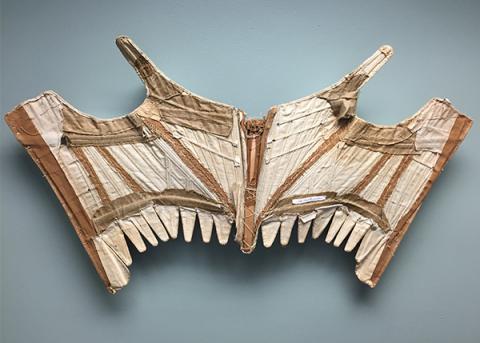
The rigidly-tight whalebone corsets were a staple amongst the aristocratic ladies; its tightly-wound silhouette stands as one of the hall-marks of 18th century fashion. Yet, the newly arrived dauphine attempted to do away with the necessity of the harshest of corsets - those of whalebone. Already from an early age, the young Marie Antoinette preferred the less restricted fashion choices which were far from accepted by her contemporaries. Exceptions might have been more forthcoming had her reasons for ditching the corset been a pregnancy but that was far from the case.

Thus, shortly after arriving in France in May 1770, Marie Antoinette began refusing to don the traditional corset.


File:Marie Antoinette as Dauphine of France in 1772 by Drouais.jpg
Marie Antoinette as dauphine

The problem was the grand habit which was the required uniform for court ladies for official occasions; it is the stereotypical silhouette of the late 18th century with the wide panniers, narrow waist and heavy silks. For a 15-year old girl, the garment was immensely heavy and made even more uncomfortable by the restricting corset. In desperation, Marie Antoinette's dame d'honneur (Madame Etiquette) complained that there was "no convincing Madame la Dauphine to wear a corset". 

Contemporary opinion believed that the corset was not merely a status symbol but a necessity to obtain a correct figure. In continuous attempts to make the dauphine regain the corset, one of most frequently used arguments was that her figure was already deteriorating. In an August-letter from Mercy-Argenteau to the Empress, he reported that the Comtesse de Noailles complained bitterly that the lack of a corset had rendered her charge's waist "misshapen and her right shoulder out of kilter". It was likely this missive which prompted the Empress to take personal action. As for the dauphine herself, she made no attempts at hiding the situation from her mother. She even wrote that she was growing larger around the waist as she was not wearing a corset anymore. Neither she nor Madame Etiquette appear to have taken into account that the famously slender teenager was growing in to a woman's body.


The corset - and Marie Antoinette's refusal to adopt it - was given a far greater meaning than the young girl could possibly have predicted herself. Whereas she saw it as an unnecessary and uncomfortable piece of clothing, others saw her rejection as the rejection of all things French. Immediately, such a seemingly trivial piece of "news" was spread to other European courts which had prompted the involvement of the Empress herself. The Comtesse de Noailles had attempted to get Louis XV to intervene personally but he had refused to meddle in the matter.

Reminding her daughter of her duty both towards king, husband and country (and, apparently corsets), Maria Theresia sent several Viennese corsets with her letter of admonishing from November 1770. To the Empress, this refusal was both baffling and unexpected. The Marie Antoinette she had neatly packed away in her gilded carriage was obedient and eager to please; however, the stubborn streak was beginning to show which she would retain for the rest of her life.


corset Stays, open view
View of the interior of a corset, 1780

For the French, it was embarrassing. No lady of quality could be considered well-dressed without a corset, especially not one who held the position of first lady of the court. That the dauphine was not well-dressed was exactly what the visiting Countess Windischgrätz reported to her large acquaintance scattered across Europe. For a while there was a stalemate between a stubborn dauphine, an exasperated household and an irate mother. The end of the matter came in October 1771; its origin could be found not in the wardrobe but in the bedroom.

The arrival of the new Comtesse de Provence brought a new onslaught of complaints that the marriage between Marie Antoinette and Louis Auguste remained unconsummated. Despite being naturally slender, the constant eyes directed towards her midriff caused endless speculation of whether the dauphine had become pregnant or was "losing her figure" (at fifteen, mind you). This, in turn, kept the state of her marriage in an unpleasant spotlight which she desperately attempted to divert. Turning to the Austrian ambassador, Mercy-Argenteau for comfort, Marie Antoinette was finally convinced to wear the corset again. The much-tried ambassador reassured the Empress that there would be no fear for her figure if she continued in her improved ways.

Saturday, 15 April 2023

The Complicated Family Relations of the Duc de Bouillon

Marriages between cousins were the norm rather than the exception for centuries; it was therefore not considered unusual and is still practiced in some areas today. Likewise, having official or public extramarital affairs were not necessarily scoffed at either.

However, even in such a society there were relations that caused starched eyebrows to be raised - and the Duc de Bouillon is a good example of that.

Charles Godefroy de La Tour d'Auvergne was the result of a union between the houses of La Tour d'Auvergne and La Trémoille. As the son of a duke, he found himself at the very pinnacle of French society, even more so after the premature deaths of his two elder brothers which made him the heir. He was married to a Polish noblewoman in 1724. Her name was Maria Karolina Sobieska and she was nine years his senior which was quite unusual.


Charles-Godefroy de La Tour d'Auvergne.jpg
Charles Godefroy


What was even more unusual was the fact that she happened to be the widow of his late brother, Frédéric Casimir, who had died at just 20 - in 1723. That meant that immediately upon his death, arrangements were made for the young widow to be remarried to her brother-in-law. Sadly, the marriage between Maria Karolina and Frédéric Casimir must be amongst the shortest at Versailles. They had been married on 20th September 1723; ten days later, the bridegroom was dead, allegedly from the aftermath of a serious horse-riding accident. The fact that he also contracted smallpox - which he infected his new bride with - did not help matters.

The union between Maria Karolina and Charles Godefroy would have needed a papal dispensation as the governing law of the catholic church considered them to be already related. Maria's own relative, Clementina, personally wrote to the pope and was apparently successful. However, her father had not even been informed of the new match which left a deep rift between father and daughter. Their marriage would result in two children: Marie Louise and Godefroy Charles Henri. To make matters even more complicated, Maria had initially been considered as a bride for the brothers' father, Emmanuel Théodose.

The marriage was a disaster. The couple were not well-suited for each other which finally resulted in a public separation in the early 1730's. It is rather sad to think that Maria Karolina went to such great lengths to obtain the marriage only for it to turn out so poorly.


Portrait of Maria Carolina de Bouillon - Google Art Project.jpg
Maria Karolina


Having married his brother's widow, Charles Godefroy made another (more dubious) decision which would come dangerously close to incest. As was almost expected, Charles took a mistress. That in itself would not have raised many eyebrows if the object of his affection had not been his own step-mother!

Louise Henriette Françoise de Lorraine was notoriously beautiful with piercing dark eyes, an oval face and red lips. She had married Emmanuel Théodose in 1725 which made her the stepmother of a man who was a year older than herself. Five years later, her husband was dead which left her widowed at just 23 years old. She herself would die at 30 having made a name for herself as a woman with many lovers and few scruples.

Their affair was a massive scandal which garnered plenty of attention; after all, Emmanuel Théodose had only just died before his son and his widow got together. Their liaison caused considerable damage to the already terribly strained marriage of Charles Godefroy and Maria Karolina. It is said that the latter coolly commiserated with her husband on the loss of his "dear stepmother" - although the same letter also mused that her husband would surely not be too heartbroken.


The entire absurd family history ended somewhat tragically for most parties. Louise Henriette Françoise died young, Maria Karolina died alone in Poland (little regretted by her husband) and Charles Godefroy continued on in his debauched life.

Thursday, 2 February 2023

A Scandalous Mésalliance: The Marriage of Marguerite de Rohan

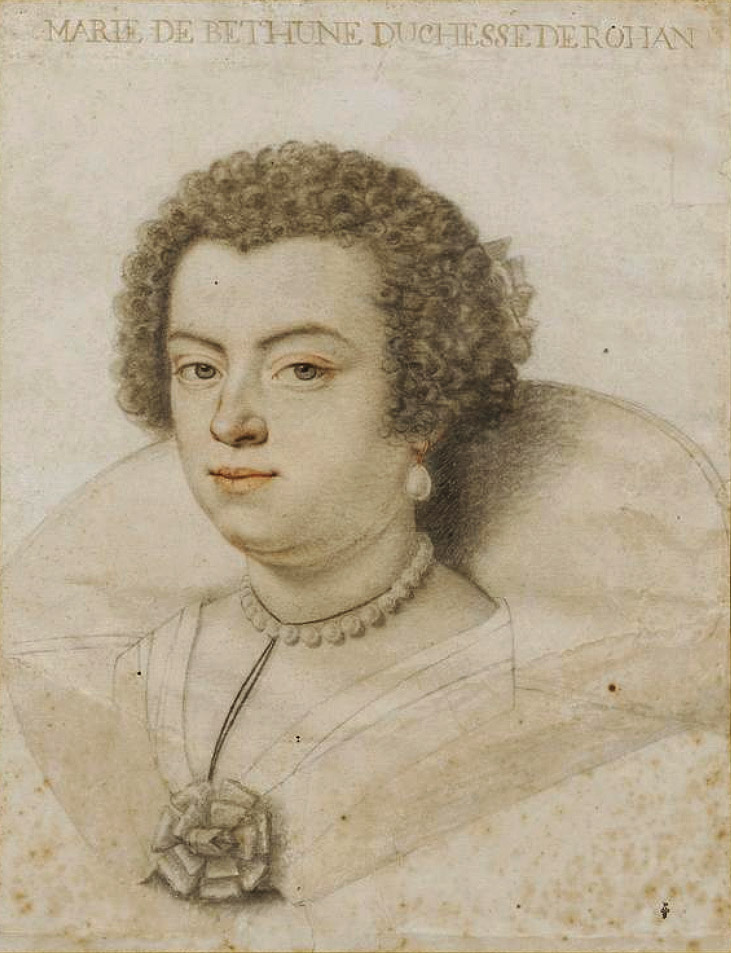
The house of Rohan occupied an immensely prestigious position both at court and in society as whole. By the early years of Louis XIV's reign, the family was headed by Henri de Rohan, Duc de Rohan, who had married Marguerite de Béthune. The couple had not been fortunate regarding children; having been married in 1603, it was not until 1617 that Marguerite finally gave birth to their only child.

The newborn was a girl - much to the disappointment of the family as girls were prohibited from inheriting. Nevertheless, the young child flourished and was named after her mother, Marguerite. Once it became obvious that the couple would have no more children, Marguerite was made sole heiress of her father's fortune and title. This arrangement was only possible because the king accepted her position.

Once she became of marriageable age, Marguerite de Rohan was quite the catch. As her title of Duchesse de Rohan was held suo jure it would immediately be passed on to her husband when she married. She was also a Foreign Princess, as the Rohan-family classed amongst the Princes Étrangères at court. Naturally, such a dowry - including her fortune - was a tempting prospect and it was taken for granted that she would marry a duke.

However, Marguerite's teenage years passed and no marriage was agreed to, although not for lack of offers. Amongst those who proposed marriage were the Comte de Soissons who was a prince of the blood as well as a cousin to Louis XIII; she was also propositioned by foreign princes including Prince Rupert of the Rhine and the Duke of Saxe-Weimar. However, they were all rejected.


Marguerite de Rohan, Duchess of Rohan, Princess of Léon.jpg
Marguerite de Rohan


The thing was that Marguerite had fallen in love. While the object of her affection was a nobleman he was certainly not her equal. Henri de Chabot descended from an aristocratic family from Poitou but held no higher title than Seigneur de Saint-Aulaye. Henri could not claim a large fortune either or considerable land; in fact, he was the younger son and had no claim to either. What he did have was good popularity with the court (fickle as that might be) as well as the friendship of the Duc d'Enghien, as well as being a confidant of both the Duc d'Orléans (Gaston, not Philippe) and the Prince de Condé.

Despite the obvious mésalliance, Marguerite had chosen her spouse.

Marguerite was no fool. Knowing full well that her status would be decided by the man she married, she approached Anne of Austria who influenced the young Louis XIV to act on Marguerite's behalf. Thus, by 1645, the king decreed that in the case of a marriage between Marguerite de Rohan and Henri de Chabot, Marguerite would retain her position as a foreign princess at court. Furthermore, any children born to the union would be known as Rohan-Chabot rather than just Chabot.

This paved the way for the marriage and simultaneously showed the degree of influence held by the Rohan-family. Marguerite herself was aware that she could still choose not to proceed with the marriage; in fact, when she was asked about her plans, she replied "I do not know If I shall be able to marry him, but I do feel that I could not bear it if he married someone else".

In the end, Marguerite was spared that unpleasant thought. She and Henri married on 6 June 1645; they would go on to found the branch of Rohan-Chabot with their six children. In 1648, Henri was recognised as the Duc de Rohan by virtue of his wife's claim. While the ducal title thus remained in the family, the status of foreign princes was not handed down to their descendants. In stark contrast to the remaining Rohan-cousins, their children were not considered as princes étrangères. 


Oddly enough, it was Marguerite's own mother who voiced the greatest objections to the union. When the king had made it clear that Marguerite and her husband would inherit Henri de Rohan, Marguerite attempted to have an alleged son of her late husband recognised as the legitimate heir. However, Parliament rejected her plea and confirmed the rights of Marguerite and the future Rohan-Chabots.

Marguerite de Béthune - mother
of Marguerite who unsuccessfully
attempted to strip her daughter of her
inheritance

However, was the story truly a love match? It has been suggested that Marguerite agreed to marry Henri de Chabot because the king promised her the continuance of her rank and status at court. This would explain why Marguerite apparently remained somewhat uncertain on whether to actually go through with the marriage beforehand. 

In fact, the Crown had a very good reason to wish for such a seemingly disproportionate marriage. Henri de Rohan - Marguerite's father - had become aligned with the Protestant cause. In contrast, Chabot was a Catholic. By marrying Marguerite to Henri de Chabot, Marguerite would have to convert to Catholicism, thus bringing the dukedom once more under the Catholic faith. The mother of the bride herself was a staunch Protestant which, again, would explain her extreme reluctance to allow the marriage. 

If Marguerite had been entirely opposed to the marriage herself, she would have found herself in an unpleasant situation. The Crown would not have appreciated the refusal and the king could have withdrawn his consent to any other proposed marriage; in that case, he would simply have to wait until Marguerite either died or became too old to have children. That would ensure the end of this branch of the Rohan-line and would have been a far bleaker prospect for Marguerite herself.


All matters considered, this union would seem to be the rare example of duty meeting love. Marguerite was - by all accounts - smitten with Henri which certainly lessened any qualms she might have had at the prospect of marrying beneath her. Besides, their marriage appears to have been a happy one. If one is to look at the positives, neither party had much reason to complain of the other at the time of the marriage. While Marguerite's riches and status has already been discussed, she was further considered to be quite beautiful. Henri, meanwhile, was said to have both a handsome face and a well-made figure. In other words, they would have made a handsome couple - together they could enjoy her riches and rank and his connections at court. While the latter might seem a small bargaining tool, it is worth noting that both the Prince de Condé and the Prince de Conti took Henri's side in a later quarrel with the Duc de La Meilleraye.

As is often the case, the true feelings of the people involved are lost to history; what is more certain is that the marriage caused quite a scandal in 1645.

Saturday, 17 September 2022

Prince de Lamballe: "Mort de débauches"

Louis Alexandre de Bourbon was the son of the Duc de Penthièvre and became known as the Prince de Lamballe during his short life-time. Born as the heir of one of the greatest fortunes in France, the young man quickly discovered that he had the world at his feet. His wealth procured him anything he wanted and his rank protected him from any dire consequences of his actions - despite, of course, to his health. 


Already as a young man, his father worriedly watched Louis Alexandre fall into bad society. He had always been a restless person - even as a child. As an adolescent, he would often steal out of his father's château going no-one-knew-where. A story goes that his father even had him followed but when the "spy" was noticed by Louis Alexandre, he threatened to beat him unless he convinced the worried Duc de Penthièvre that all was well. Naturally, with such a high-profile youth going astray, rumours began swirling - one had it that the prince had married a peasant girl he had encountered on his wanderings.

It was with this concern that he chose a suitable bride for his 19-year old son: Marie Thérèse Louise of Savoy, who became Princesse de Lamballe in 1767. The young lady - known primarily for her close relationship with Marie Antoinette and her grisly death - was a picture book image of piety and sweetness. 

Initially, the plan worked. For weeks, the Prince de Lamballe settled to a life with his pretty, young wife but soon became unbearably bored. To the great scandal of the court, he eloped with Mademoiselle de La Chassaigne. The mademoiselle was employed as a dancer and singer in the opera and gleefully enjoyed the lavishness of her aristocratic lover. Meanwhile, his wife was left to deal with the humiliation on her own. 


Charpentier - The Prince of Lamballe (cropped and edited).png
Louis Alexandre


Mademoiselle de La Chassaigne was certainly not the only young lady of dubious repute with whom the prince was intimate. She fell pregnant which prompted the Duc de Penthièvre to send her abroad - apparently, the prince de Lamballe did not care enough to go after her. Yet, if his dutiful wife had hoped for a reunion, she was disappointed. Shortly after the departure of Mademoiselle de La Chassaigne, another woman made her appearance. Whereas La Chassaigne had been sweet but simple, Mademoiselle de La Forêt was not quite as pliable. She understood the benefits of having a very rich lover and he knew that to keep her, he was to shower her with jewels. Such gifts were expensive and his own debts were mounting. 

While aristocratic men have been giving their mistresses jewels for centuries, few dared to follow in the Prince de Lamballe's footsteps. If Mademoiselle de La Fôret had wondered at the exquisite quality of her new diamonds, she need only have looked to her lover's wife. Upon her marriage, the Princesse de Lamballe had been given some simply outstanding pieces of jewellery - now they adorned the prince's mistress.


Jewels of such quality were bound to be reported missing. While the Prince de Lamballe did not hesitate to inform his wife of what he had done, he was less forthcoming with his father. The Duc de Penthièvre initiated an investigation which promptly led to Mademoiselle de La Fret fleeing - with the diamonds. It was not until she discovered that she, too, was pregnant with the prince's child, that she returned. Outraged, the Duc de Penthièvre promised to take care of the child but she was never to see his son again.

He is also known to have also taken Mademoiselle La Cour as his mistress; she was his reigning favourite when he died. By then, his personal debts were out of control, helped along by excessive gambling.


While he was the heir to a vast fortune, he did not yet possess it. So, with his unlimited spending and expensive tastes, he soon ran into debt. That was not uncommon for noblemen - rather the norm than otherwise - but he went so far as to sell his wife's diamonds to get the creditors off his back. The utter lack of remorse for his actions is clearly shown in Louis Alexandre's behaviour. Merely weeks after the scandal of Mademoiselle de La Fôret, he disappeared - twice. Both times, his father's agents found him in "undesirable" company. Such company was not curable by simply removing the prince from his surroundings; a good deal of them were aristocrats themselves, including the Duc de Chartres.


His lifestyle quickly exhausted him and drove his health over the edge. Besides the early signs of syphilis, he had also had a terrible fall from his horse while hunting. The injury was bad enough to require surgery so he was sent to the countryside to recuperate. In May 1768, he was back at his estate of Louveciennes but terribly ill. His syphilis was now wreaking havoc on his body and mind. Worn out by a lifetime of excess, Louis Alexandre died on 6 May at the age of just 20. Quite tellingly, he had been nursed personally by his wife in whose arms he died.

Thursday, 7 July 2022

The Exiles of the Chevalier de Lorraine

Philippe de Lorraine is best known under his title of Chevalier de Lorraine, the life-long passion of Philippe, Duc d'Orléans. The chevalier was a controversial figure even in his own time - as beautiful and charming as he could be, he was equally unscrupulous, manipulating and even brutal. His open relationship with the Duc d'Orléans in a time when homosexuality usually led to a death sentence was in itself enough to cause a stir. However, given the willingness shown by Louis XIV to turn a blind eye to his brother's escapades, the Chevalier might have gone unscathed through life if he had been wise enough to stay under the radar - yet, that was not in his nature.


During his lifetime, Philippe would find himself exiled from court - and the Duc d'Orléans - twice. The first exile came in January 1670 when Philippe was 27 years old and had been the Duc's lover for twelve years. After such a long time as the favourite of the king's beloved brother, the Chevalier might have considered himself somewhat untouchable. However, when the king's men barged into the Chevalier's chambers in the early hours of 30th January 1670, that illusion shattered. 

By this point, several factors had led to the forcibly removal of the Chevalier de Lorraine. The most important one has historically been attributed to none other than the Duchesse d'Orléans. Henriette of England, first wife of Monsieur, found her marriage increasingly crowded. While she might have expected her husband to take a mistress, she certainly could not have expected him to flaunt his lover in such a open manner. As the two Philippes became ever closer, it soon became clear that the Chevalier de Lorraine  held complete sway over the Duc d'Orléans - and he was scrupulous enough to take advantage of it. Hitherto, his influence had been on the increase but this development was considered problematic on two accounts.

First, Henriette had become a dear companion to the king who haboured a genuine affection for his sister-in-law. Whereas she had previously been welcomed as a new addition to the family, the king now considered her to be a valued companion. Secondly, Louis XIV was seeking an alliance with Charles II of England who happened to be Henriette's brother. It would not do to attempt an alliance while the English king's most beloved sister was subjected to various humiliations in her own house by her husband's lover. Thus, it became a matter of urgency to have the Chevalier removed, at least temporarily.

Yet, Olivier Lefèvre d'Ormesson's diary gives another hint as to why the king chose that moment to strike against his brother. The Bishop of Langres has recently died and as his diocese was located within the territory belonging to the Duc d'Orléans, he had thought himself free to bestow it as he saw fit. According to Ormesson, the Duc d'Orléans had promptly promised two abbeys in the diocese - and their incomes - to the Chevalier de Lorraine . Yet, Louis XIV refused to ratify the gift which had caused Philippe to angrily leave his brother's presence making his intentions of removing himself entirely from court obvious. He chose to retreat to the rather remote Villers-Cotterets. 

As the Chevalier de Lorraine was known to dictate his lover's actions, it is not unlikely that the king considered this anger partially due to the slighted Chevalier.

Whichever - if not all - was the reason behind the disgrace, Philippe de Lorraine found himself on the road to Lyons which would serve as his initial place of imprisonment. Here he would be held under guard at the Pierre-Encise. 


File:Philippe de Lorraine dit le Chevalier de Lorraine 1643 - 1702.jpg
Presumed to be the
Chevalier de Lorraine


Back at court, Monsieur was furious with his brother. He bombarded the king with in turn threats, tantrums and pleas but the Duc d'Orléans himself remained away from court. Not only had he removed himself from court, but he had also used his legal prerogative as a husband to force his wife to accompany him. Perhaps that was why the king decided to have the Chevalier de Lorraine moved from Lyons into the notorious Château d'If located in the Mediterranean. If the king truly did move the Chevalier de Lorraine as a means of pressuring his brother, it worked. On 24th February - almost a month after his lover's arrest - Philippe returned reluctantly to court.

As for Philippe de Lorraine, he was released from his gloomy prison but was not welcomed back to court. Instead, it was made abundantly clear that he was to remove himself to Rome. There he would arrive in the spring of 1670 - and there he would learn of the unexpected death of Henriette. Immediately, there were those at court who insisted that he must have sent poison from Rome to be administered to his rival - after all, Italy was infamous for overflowing with poisons. 

Although he certainly did not appreciate it, Philippe de Lorraine ought to have counted himself lucky. Amongst his many titles was that of Knight of Malta and Louis XIV had allegedly been inclined to force him into fulfilling his duties as such - undoubtedly, Philippe would not have appreciated swapping his luxurious and comfortable lifestyle for one of harsher military service far removed from any semblance of influence.

While the court mourned the loss of Henriette, the Chevalier de Lorraine was sulking in Rome where he was bound to spend two whole years before finally being recalled to the French court. Once he had returned, he found a new Madame to contest with: Elizabeth-Charlotte of the Palatinate.

As it happens, it has been suggested that the Duc d'Orléans - knowing full well that his house had no male heir - made the return of the Chevalier de Lorraine  a bargaining point for agreeing to remarry. Whether true or not can be guessed at but it is a remarkable coincidence that the Chevalier de Lorraine was given his permission to return on the same day that the German princess arrived in Strasbourg...


For several years, life at the Palais-Royal marched on as it had before Philippe's first exile. His relationship with the Duc d'Orléans was as brazen as ever, as was Philippe's imposing attitude towards his lover's wife. An entire decade would elapse before Philippe once more found himself in hot water with the king - and this time it was not instigated by the king's sister-in-law, but by his own son.

Versailles had recently become the fixed residence of the fixed court in 1682 when the court was rocked by a scandal. The scandal included several young men of the finest families who were revealed to be using the gardens for their "unnatural meetings" - amongst them was the king's own son, the Comte de Vermandois. Having been born of Louise de La Vallière, the Comte de Vermandois was the king's first illegitimate son to be recognised at court. When he was implicated in the scandals, he was immediately hauled before his august father whose intense questioning finally broke the 15-year old. Vermandois confessed to having been "debauched" by a long list of high-ranking men, including the Prince de Conti - and the Chevalier de Lorraine.

Louis XIV could not public exile the Prince de Conti, a prince of the blood, without causing international scandal. However, the Chevalier de Lorraine was a different matter entirely. Probably further angered by Vermandois' claims that Lorraine had been amongst those who had attempted to entice the dauphin himself into the Italian vice, the king decided to once more made his fury known.

This time, the king chose not to send Philippe into outright exile. Instead, he informed his brother's lover that it would be in his best interest not to be seen at court too often. One could hardly be clearer. 

Yet, once the storm had passed, it did not take long for the Chevalier de Lorraine to find his place at court once more - and the king refrained from commenting on it. It is not clear exactly whether the Chevalier de Lorraine actually had "debauched" the young prince; he certainly was a part of a so-called brotherhood but it is not unthinkable that the Comte de Vermandois mentioned him when pressured by his father, the king. It would certainly seem very odd if Louis XIV should permit Philippe de Lorraine to return to court so shortly after the scandal had been exposed, if he had indeed been the driving force behind it.


While it would certainly not be the last scandal of the Chevalier de Lorraine, he would not find himself exiled again. Until his death in 1702 he remained a constant companion of Philippe - and thus continued to be a shadow that undoubtedly irritated both Philippe's brother and wife.

Saturday, 2 April 2022

Crime & Punishment: The Thrice-Imprisoned Duke

Exile or imprisonment of wayward noblemen was nothing new in the 17th century. While the former does not sound nearly as dire as the latter, it must be remembered that in the age of the Sun King - and his successors - to be seen was everything. A man's entire career could be unbalanced if the king did not physically see him at court; therefore, in a court living very much by the "out-of-sight, out-of-mind" mentality, exile could be just as punishing as imprisonment.

Yet, there were cases were the king needed the set a sterner example. If not used to punish downright criminal behaviour, imprisonment was a viable option to counteract particularly scandalous behaviour. Few people caused as much scandal at the court of France in the 18th century as Armand de Vignerot du Plessis, Duc de Richelieu.  


The Duc de Richelieu


Armand was born in 1696 into extremely fortunate circumstances. Not only was he the son and heir of a duke, he was also a godson of Louis XIV - thus, his life began remarkably well. As he grew into a young man, it soon became very clear that he had a strong licentious streak and a definite taste for the fairer sex. Sure enough, his attitude would lead him figuratively into trouble - and literally into the Bastille.


Already at the age of 15, Armand was remanded to the notorious prison for the first time. His behaviour had become so displeasing to his family that his own stepfather had requested the king to imprison his son - and the king obliged. Oddly enough, when Armand had joined court he had been much admired and considered both polished and "honest" at play; however, once the Duchesse de Bourgogne began lavishing her affections on him it became too much. It was whispered that the Duchesse's blatant favouritism had caused the king, Madame de Maintenon and the then-reining Duc de Richelieu to convene and intervene before things went any further than court flirtation. 

On 22 April 1711 he was conducted there to reflect on his behaviour. While sulking in prison - with his stepfather's threat of leaving him there hanging overhead - he was visited by his young wife, Anne Catherine de Noailles. There was no love lost between the two as their marriage had only been contracted to distract from the rumours about the Duchesse de Bourgogne. Nevertheless, Anne Catherine took the time to provide him with fresh provisions.

While there, his family clearly hoped to amend his utterly neglected education. The archives of the Bastille show that he was visited not only by his stepfather but by his wife's relatives, too - including the Cardinal de Noailles. His tutors were also allowed access to the young man to further his education. Added to that congregation of relatives were his friends, including the Prince de Conti.

Armand was noted as behaving like a model prisoner, yet he was not released as quickly as he might have hoped for. All through the summer he languished there - although he did receive visits from his friends and family. By October, he suddenly fell gravely ill with the dreaded smallpox and it was feared that he would die. His condition allegedly became so desperate that he receive his final communion on the 3 October. 

After a fortnight, Armand was well enough to wish to leave but if he had thought his near-brush with death would liberate him, he was sorely disappointed. It was not until the middle of June 1712 that he was finally released. By then, he was a year and a half older - but apparently not much wiser.


The Bastille at the time of Richelieu's last imprisonment


The Duc de Fronsac - as he was known before inheriting his father's title - did not return to court immediately. Rather, he went directly to his regiment in Flanders. Military service was all but mandatory for physically fit young noblemen and Armand might well have thought that his reputation could do with some martial glory. To the surprise of some of his contemporaries, Armand was a remarkably adept military commander. Under the guidance of senior officers, he was sent back to Versailles to inform the king of the capture of Douai, amongst others.

His military exploits certainly did raise his name at court and his prestige was further elevated upon the death of his father when he thus became the Duc de Richelieu. The death of Louis XIV followed and while Armand was reported to have wept for the old king, he certainly did not share his austerity - or his view on duelling. 

Louis XIV had been an avid opponent of the age-old "conflict-resolution" that was duelling. Yet, it continued - and would continue for decades - to be a respectable way to settle matters between often less than respectable gentlemen. With the death of Louis XIV the austerity of the court was replaced by a sense of frivolity - much like a house of teenagers when a strict parent went away. This was even more so the case for Armand whose own father had hitherto acted as a counterbalance to his lifestyle (despite his father's own reputation for being somewhat of rake). 

To those of the court who were young, rich and bored, it was truly a remarkable time. As one of the leading noblemen of France, it is hardly surprising that the young Richelieu took (more than) his fair share of the amusement. By February 1716, however, his escapades were once again catching up to him. Rumours spread across Paris that the Duc de Richelieu had fought a very public duel with the Marquis de Gacé over a remark made to a lady at a masked ball. According to Denis Bingham, in "The Bastille", Gacé had been escorting a beautiful lady around when they encountered the duke. Upon their meeting, the marquis is alleged to have warned his fair companion of the fickleness of the duke's affections.

Acting as only young men would they immediately went to settle their differences but did not consider their surroundings. Rather than performing the duel - still illegal at this point - in private, they crossed swords in the open street and was thus observed by numerous people. Naturally, the parliament learned of this and had both hotheads imprisoned in the Bastille. However, despite the parliament's fervent attempts to succeed in finding them guilty it was in vain. Parliament was at loggerheads with the peerage and no one would willingly step forward and witness against a duke. Furthermore, as a peer of the realm, Armand demanded to be tried by his peers - that is, other dukes. Naturally, none of them found him guilty and as both the duke and the marquis denied the duel, there was little for parliament to do. Thus, both men were released and Armand exited the Bastille for the second time in May.


Hitherto, the circumstances that had led the young Duc de Richelieu to the Bastille had been somewhat minor. However, his third - and final - imprisonment was on far more serious charges: conspiracy against the crown. On 29 March 1719, the Duc de Richelieu was arrested on orders of the regent for having participated in what was to become known as the Cellamare Conspiracy.

The Cellamare Conspiracy - named for its main author, the Prince de Cellamare - was a plot against  the Regent, Philippe II d'Orléans, who acted for the young Louis XV. The conspirators aimed at deposing him and having him replaced with the king of Spain, Philip V, who was Louis XV's uncle. Considering that the king was only nine years old in 1719, his recent bouts of ill-health naturally gave rise to grave concerns about the succession. The Spanish court were adamant that should Louis XV die without an heir, the crown of France should go the heirs of the Spanish king - not the Duc d'Orléans.
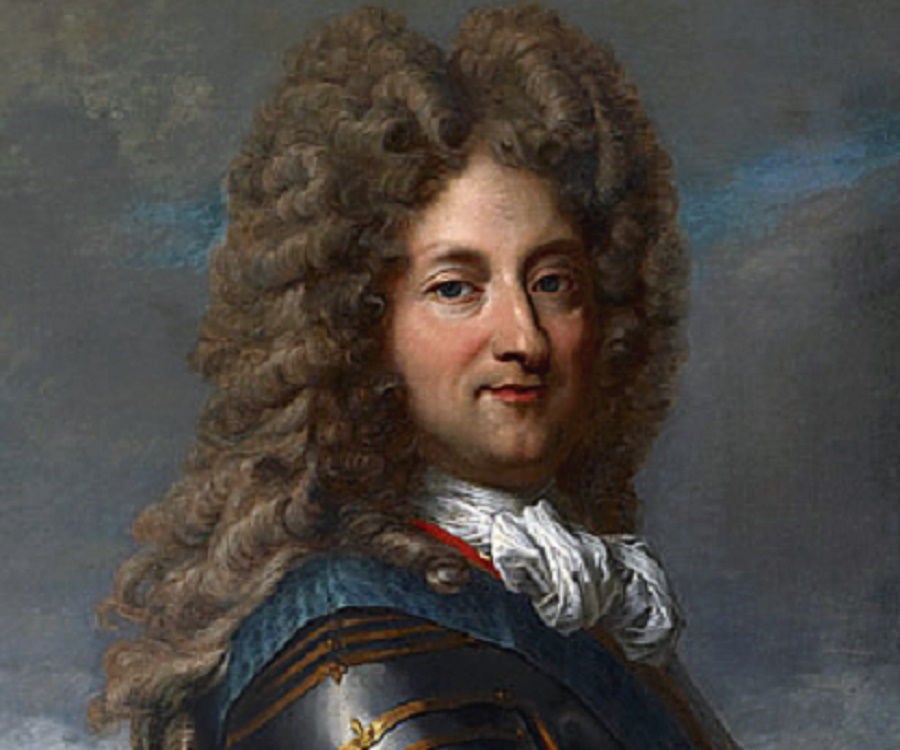

The Regent - Philippe II d'Orléans

His fellow dukes were incensed at the manner of the arrest - rather than being arrested like a nobleman, he was escorted by archers like a common criminal. Despite the outrage of the peerage, the Regent was not without cause in his suspicions.

Nevertheless, incriminating evidence was found upon his arrest, including correspondence between himself and the Spanish ambassador. He was also known to have been in close contact with Cardinal Alberoni, whose position as a powerful minister in Spain made him a natural agent for the Spanish to use. It was a letter from him to Richelieu that would prove particularly damaging as it openly offered the French duke riches and fortune in return for support, including in the form of handing over the French city of Bayonne to the Spanish.

Due to the nature of the accusation, he was not treated in the same style as before. During his first two stints in the Bastille, he had been given comfortable rooms and servants as well as permission to receive company. Yet, now, his situation was far less pleasant and the fripperies of his former imprisonment were long gone - although he was allowed to keep a single manservant. His new lodgings was an octagonal cell which was only lit by a slit in the solid brick walls. The room was terribly humid - so much so, that it was said that it took only an hour for a person's clothing to be completely permeated.

It should not be underestimated that while he might have had a part in the conspiracy, the Regent had another reason for wanting him locked up: Armand was having an affair with the Regent's daughter, Mademoiselle de Valois. 
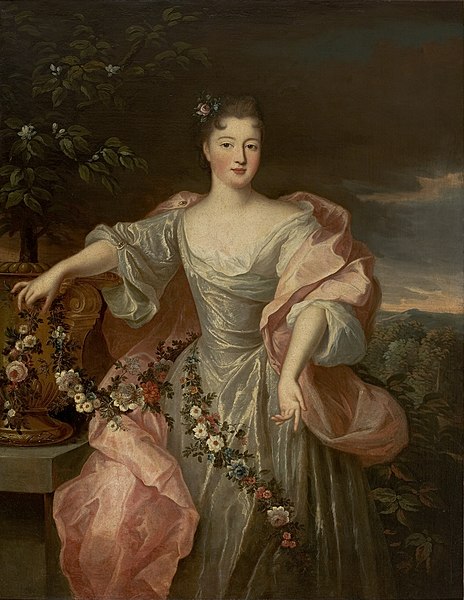

File:Pierre Gobert - Retrato de Noiva com Flores.jpg
Mademoiselle de Valois

It has been claimed that the chief of police, d'Argenson, attempted to lure Richelieu into a trap by resealing the opened letters and giving them to a man by the name of Marin. Marin was passed off as a Spaniard who had come to deliver the duke his mail and would take the opportunity to tempt him with offers of high-ranking military positions, endless fortune etc. However, Richelieu did not take the bait. 

It is probably in some part due to Mademoiselle de Valois that he did not fall for the trap. While it is unlikely that she actively conspired against her father (no proof of this exist nor does it seem plausible) we know from surviving letters that she warned her lover of the fact that the Regent claimed to have incriminating letters in his possession. Armand was therefore able to foresee that something was amiss when the unknown Marin suddenly appeared.

Despite his often cold treatment of his former mistresses, the Duc de Richelieu was immensely popular with the ladies of both court and capital. Once they heard of the conditions of his imprisonment they publicly decried the harshness of the Regent. It was even said that he managed to continue his affair with Mademoiselle de Valois while imprisoned; a feat they supposedly accomplished by disguising the young lady when she came and went. It certainly did not go unnoticed that prior to his release from prison, the young Mademoiselle de Valois was forced to marry the Duke of Modena.

Considering the nature of the circumstance which had landed him in the Bastille for a third time, Armand's outlook was bleak. Conspiracy against the crown - or in this case, the man acting for it - was typically punished with a death sentence. It was therefore to the astonishment of most when the conspirators were let off remarkably easy. Some were exiled to their estates while Armand was released entirely.


Despite his often outrageous lifestyle, the Duc de Richelieu lived a remarkably long life. In 1786, he is said to have gone back to the Bastille - this time voluntarily - for nostalgia's sake. To be sure, the world had changed drastically by then. When he stood on the ramparts and gazed down upon Paris, he could well have reflected that he first entered that very fortress no less than 75 years ago - in a different age, ruled over by a different king. Since then, he had seen two kings die but would (luckily for him) not live to see the fall of the monarchy - or the fortress which had thrice been his prison.

Monday, 7 March 2022

The Unknown Prince: Louis, Comte de Narbonne-Lara

Like his predecessor, Louis XV had a keen interest in women - however, unlike his great-grandfather, he was not wont to publicly recognise his illegitimate children. While it is well-known that he fathered several children out of wedlock - it would be difficult not to considering the number of mistresses he had and the state of contraceptions - few have been recorded to history in more than a few words. Of these children, one in particular stands out: Louis, Comte de Narbonne-Lara.


By 1755, Louis XV was 45 years old and considered to be one of the handsomest men at his own court. It was there that he would have encountered Françoise de Chalus, Duchesse de Narbonne-Lara, who served as a lady-in-waiting to Louise Élisabeth, the king's daughter. By 1749, this eldest daughter of the monarch had become the Duchess of Parma and was visiting her native country - in her entourage was a Spanish Grandee with the title of Comte de Narbonne-Lara. Jean François - as he was christened - would marry Françoise de Chalus in 1749.


Françoise de Chalus as a young
lady

As Louise Élisabeth was due to return to her husband's duchy of Parma in 1755, the couple accompanied her. Whether Françoise knew it yet or not cannot be ascertained but by the time they arrived in Parma, she found herself to be pregnant. Typically, this would hardly have been surprising for a young lady who had been married for six years but the pregnancy still set tongues wagging at both the courts of France and Parma. The thing was that eight years prior - in 1747 - Jean François had served as a soldier in the War of the Spanish Succession. While there, he had sustained an injury which left him "unable to have children" - more specifically, he had received a gunshot to his lower abdomen. This was far from mere speculation as Jean François himself had included it in a petition to Louis XV of 1747. Yet here he was, with a pregnant wife.


It was soon speculated that the real paternity lay with the king. When the child was born in August 1755, he was baptised Louis.


There is another aspect to this story which warrants a closer look. Louis was not Françoise's first child - she had an older son by the name of Philippe who was also born after his "official" father sustained his injury, more specifically in 1750. As it was widely rumoured that Madame de Narbonne-Lara had been a minor mistress to the king, it is possible that Philippe, too, was the king's child.

But why, then, was it only Louis who became the centre of the courtiers' attention? 

The brief answer would be: his looks. Throughout his life it would be remarked that the young Comte de Narbonne-Lara had an uncanny resemblance to the king - something that his elder brother does not appear to have shared. It should also be remembered that Philippe's father might not have been the king at all.


Some has argued that the later bestowal of the title of "Comte de Narbonne-Lara" is an indication of royal favour. However, it should be remembered that the child's official father was the duke of that same name. It would therefore not be unusual for his son to have a similar title.


narbonne
Louis, Comte de Narbonne-Lara in
his older years


What could be seen as a sign of the child(ren's) royal paternity is the extraordinary good fortune of Jean François following his injury. Besides being allowed to marry a frenchwoman with a substantial position at court, he was later showered with royal favours - especially after the births of Philippe and Louis. His war injury excluded him from reentering active military service yet he was given the rank of colonel and appointed to the king's son-in-law's personal household. Later, when the young Louis was seven years old,  Jean François was further rewarded for his complaisance with two major distinctions: the rank of Maréchal and the title of Duc de Narbonne-Lara.

This is quite the astonishing rise for a man such as Jean François. To be sure, he was from an ancient noble family and had certainly made sacrifices during his military service to the king. However, this could easily be said of several other men at court who never received equal rewards. Considering that Louis XV was well-known to have enjoyed his wife's favours, it seems more likely that these benefits were a repayment for graciously remaining quiet on what was practically an open secret. 


From a purely logistical point of view, it is possible that the king was indeed the father of the two children. While Madame de Narbonne-Lara was officially settled in Parma, she did travel extensively between Paris and Parma. The timing, too, adds to the probability. Madame de Pompadour had recently withdrawn her more intimate favours and the king had not yet begun seeing the stream of unknown bourgeoise women that would later be so ruinous to his reputation. This would mean that there was an open position for a young woman - as long as she accepted that she would not become the official mistress. Perhaps Madame de Narbonne-Lara had hopes of replacing Pompadour in the king's affection - perhaps not. Either way, Madame de Pompadour might have accepted that she served as a distraction, knowing that she would - eventually - be obliged to return to Parma.


Portrait of Louis XV of France (1710-1774), 1763, Workshop of Louis-Michel van Loo
Louis XV


Some of the more scandalously inclined courtiers were quick to speculate in wilder terms as to the paternity of Louis de Narbonne-Lara. Even to a modern reader, the stories concocted by such persons seem astonishing. Some were certain that Françoise was not the mother at all but that she had agreed to pose as such in return for royal favours. Those supporting this theory claimed that the child was the offspring of one of the king's daughters - some even went so far as to say that the child was the result of an incestuous affair between the king and one of Mesdames.

Others claimed that the dauphin or even the Duke of Parma had fathered the off-spring which - in either case - would be a terrible embarrassment to the royal family. Either one of these theories seem far fetched to say the least; Mesdames were in the public eye constantly and a pregnancy would certainly not have gone unnoticed. While both the dauphin and the Duke of Parma technically could have fathered the child the question would be - why go to such extents to hide it? After all, this was an age where illegitimate children of high-born princes was hardly a foreign concept. Even if the Duke of Parma would have been eager not to anger his august father-in-law, surely it would have been easier to ship the child off to some family far away from court.


Finally, there is another indication that Louis XV truly was the father. While they had been born in Parma, Louis and Philippe were taken back to Versailles where he would not only be given a lavish education - alongside Mesdames no less - but would be attached to their households afterwards. No other child was allowed to share in the royal children's upbringing to such an extend. But it was the children's baptisms that seemed to cement their royal parentage. Rather than being baptised in the chapel, they were taken to the king's private cabinet - something that had previously been reserved for a king's illegitimate children.

The very intimacy he enjoyed with the royal family was truly something out of the ordinary. Besides being a frequent visitor in the apartments of Mesdames, he was also welcomed by the dauphin. Even after the outbreak of the revolution forced Mesdames to flee to Rome, he would accompany them and return as a staunch monarchist.


Both Louis and Philippe survived the revolution, dying in 1813 and 1834 respectively.

Tuesday, 26 January 2021

The Scandalous Conduct of the Comte de Saint-Vallier

The nobility sought to have their marriages sanctioned by the king - while they did not legally need the king's permission, woe be to him who married in spite of the king's wishes! Such an act would attract the king's wrath which was tantamount to career suicide.

Consequently, when Pierre-Félix de la Croix de Chevrières, Comte de Saint-Vallier wished to marry Mademoiselle de Rouvroy, he sought the king's permission - and got it. Saint-Vallier had purchased the post of Captain of the Garde de la Porte while Mademoiselle de Rouvroy served as a fille d'honneur to the queen. Besides the king's official blessing, the bridegroom was also given 1.675 francs in a brevet de retenue as well as a pension of 6.000 francs. It would appear that the Comte de Saint-Vallier was in financial troubles which caused him to borrow 10.000 écus from his future mother-in-law. So far, so good, but the affair was about to turn scandalous.

No sooner had the captain borrowed money from Madame de Rouvroy before he sent her a promise of that very sum - and promptly disappeared.

Naturally, Monsieur and Madame de Rouvroy were furious, their daughter embarrassed and the king indignant. When Louis XIV was informed, he is said to have uttered: "It is all very well that M. de Saint-Vallier should make a mockery of M. and Madame de Rouvroy, but I will not accept him making a fool of me". Following that he issued an ultimatum to the runaway groom: return and marry the young Mademoiselle or go into exile, relinquish your post and have the acquisition of that title taxed. 


The young captain was not the only one who risked feeling the brunt of the royal disfavour. His father was the President of the Parlement in Grenoble and had initially refused to give his blessing to the match. While he eventually came around, the actions of his son might have made him wish that he never changed his mind.


While Saint-Vallier dithered, the courtiers amused themselves by making witty couplets on the occasion:

Ӄpouse, ou bien nՎpouse pas,

De ta charge il te faut défaire;

Une femme, avec tant d’appas

Donne au logis assez d’affaire;

Renonce à la porte du Roi,

Et te fais portier de chez toi”


(”To marry or not marrying,

Of your charge, you must relinquish,

A woman with so many charms,

Gives the home enough concern,

Renounce the king’s gate

And guard your own”)


The couplet indicate that the young Mademoiselle de Rouvroy was somewhat careless with her favours. Indeed, she had been dismissed from the queen's service - along with several other ladies - and was rumoured to have been one of the king's minor dalliances. This could very well explain why Louis XIV agreed to sign their marriage contract - and why the President was unwilling to give his consent. The dismissal was not due to personal misconduct though, it was the work of Madame de Montespan who feared that the king might find solace amongst the queen's younger attendants. Even so, the favourite's intrigues does not appear to have been completely successful as Mademoiselle de Rouvroy appears to have been the king's bedfellow for a brief period in 1681.


Mademoiselle de Rouvroy was considered to be one of the beauties of the court. Both Saint-Simon and Primi Visconti describes her as a great beauty. Undoubtedly, this and her lineage helped her to quickly gain new employment. She was placed as fille d'honneur to the new Madame, Elizabeth of the Palatinate, before marrying the Comte de Saint-Vallier.


Eventually, there was little doubt as to the outcome. In an absolute monarchy, it was all but impossible for a nobleman to thrive while in the king's bad graces. Pierre-Félix saw some sense and must have returned to his charming lady. We know that the couple married between 13 June and 10 July 1675 since Madame de Sévigné first mentions the scandal in a letter to her daughter of 12 June and finally tells of the couple's marriage in that of 10 July 1675.


Thus ended the unusually dramatic preparations for the marriage of the Comte and Comtesse de Saint-Vallier.

Sunday, 30 June 2019

The Abducting of Mademoiselle de Roquelaure

The betrothal between Louis, Prince de Léon, eldest son of the Duc de Rohan and Mademoiselle de Roquelaure was considered a suitable - both bride and groom being the offspring of peers of the realm - but there was another advantage for the Duc de Rohan. Mademoiselle de Roquelaure was said to be the daughter of Louis XIV, although the king never recognised her as such. The marriage contract was all but signed when the mother of the bride-to-be suddenly changed her conditions and demanded that the Duc de Rohan gave his son a larger allowance.

Neither the Prince de Léon nor Mademoiselle de Roquelaure were allegedly pleased with this decision but to no avail. Interestingly, neither was the king. The Marquis de Dangeau relates that the king was eager to see the marriage concluded and even went so far as to pressure the Duc de Rohan to increase his son's allowance. 

Consequently, Mademoiselle de Roquelaure was shipped back to the convent where she had received her education. However, she was not to remain there for long. The Prince de Léon had not given up on marrying her and decided to abduct her. Abduction usually infers a sinister motive on behalf of the abductor but in this case it was quite the opposite: the Prince de Léon intended to honour the promises originally made between the two families. It was claimed that the would-be bridegroom had a carriage outfitted with his coat-of-arms and sent to the convent. There, a message was to be given to the Mademoiselle de Roquelaure that her mother was waiting for her. Instead, the carriage would take them to a house owned by the Duc de Lorges. He and Mademoiselle de Roquelaure were married on 6 March 1708.


Mademoiselle de Roquelaure


Infuriated, the Duchesse de Roquelaure - mother of the mademoiselle - went straight to the king to complain. However, the plan did not go quite as she had wished. Rather than being outraged, the courtiers (chief amongst them the Duchesse de Bourgogne) found the whole situation hilarious. The absurdity lay not in the disrupted marriage agreement but in far more personal attributes. Both the Prince de Léon and Mademoiselle de Roquelaure were known to be rather ugly. The latter was said to be hunchbacked and "very ugly" and her husband no better off. The court were accustomed to tales of such heroic romanticism but (then and now) heroes and heroines are always beautiful. Besides, the bride was 25 years old and was not considered likely to make another such advantageous match.

The Duc de Saint-Simon informs us that once the marriage rites had been performed, the couple was left alone for a few hours and the new Princesse de Léon was taken back to the convent where she informed her mother - via letter - of her recent nuptials.

The Duc de Roquelaure was just as furious as his lady wife. He demanded that the Prince de Léon be prosecuted as a criminal. Few took him seriously and those who reasoned that it could not possibly hold up since the bride had not been forced into the marriage.

The king ordered that the marriage be honoured since it had already taken place. In response both the families involved decided to reduce the money given to the newlyweds. The result was that the couple had severe financial difficulties during their first years of marriage. At the end of the day, the efforts of the Prince de Léon turned out to have been all but useless. Hénault relates that the couple were never on good terms.

Monday, 7 January 2019

Noble Enemies of Rose Bertin

The woman who would become known as Marie Antoinette's "minister of fashion" was introduced to court and quickly became a household name. Her extravagant creations caused heads to turn; unfortunately, the creator's own head appears to have been turned by her sudden rise to the highest echelons of French society. Before long her haughtiness became legendary and earned her the enmity of a score of aristocrats. 

The Baronne d'Oberkirch was outraged at the middleclass woman's behaviour. In her memoirs, the Baronne describes her as "thinking herself equal to the princesses". 

Rose's behaviour were such as many at court had never seen the like before. One notable instance was when she ran into a certain Julie Picot in the Hall of Mirrors. Julie Picot had worked for Rose Bertin and had used her position to gather clients for herself - and slander her employer. By this point the two were no longer on speaking term and when Bertin discovered that Picot had been allowed into the queen's apartments she was furious. In a fit of rage, Rose spat in her face. The two were separated by the guards and Rose was fined for her misdemeanor. Some of the aristocratic onlookers were simply amused; others thought it was a proof of the baser characteristics of her social class.

Indeed, her sense of equality with those around her was shown in rather brazen acts. When the Duchesse de Cossé - then acting dame d'atours - was presented with the bills for some clothing delivered to Marie Antoinette, the duchesse refused to pay thinking them too exuberant. In an act of defiance Rose Bertin went straight to the queen instead. By-passing a duchesse in such a rude manner could only have made her even more unpopular in the strictly hierarchical Versailles.

The political views of the milliner caused more enmity to brew - on both sides. For the monarchists it was not merely the fact that she was not an aristocrat; that could be accepted (but not forgotten) if she had acted with more humility. It was far more the fashions that she provided to Marie Antoinette. The most daring piece was the chemise à la Reine which was far too plain for a queen of France - at least in the eyes of the supporters of the Ancien Regime. While some pointed the finger of blame at the queen herself, others chose the less risky course of blaming her milliner. 

The lower classes watched with a mixture of envy and disdain. To them, it seemed that she merely encouraged a spendthrift nobility, thus adding fuel to the fire.

Even those who were more socially equal to Bertin agreed that the "minister of fashion" had lost touch with her background. The infamous writer Théveneau de Morande said of her "nothing can equal the impertinence and arrogance of this lady since she has been admitted to intimacy of the queen..."

Billedresultat for rose bertin
Rose Bertin


Bertin certainly did all she could to make sure that no one forgot whom she also supplied. Her business cards and salons were soon covered with the words "supplier to the queen"; not even those who avoided her could be safe from her bragging of her "intimacy" with Marie Antoinette. Apparently, she enjoyed mentioning it often - and loudly - to most people she met; besides she was quite often at Versailles.

As Rose Bertin's visits with the queen became a fixed point in the court timetable, her ego led her to even turn away customers. A friend of the Vicomtesse de Fars - the wife of a lawyer - had consulted the salon of Bertin in the absence of the maestro herself. She had put down a large payment of 200 livres for a hat in a certain new style. Once she returned to her own residence, the would-be customer soon heard a knock and was greeted by a servant of Bertin's carrying a note. In it she was informed that the fashion mogul had no time for the wife of a lawyer since she was busy with the ladies of the court! One can only imagine the indignation of both the scorned customer and her more aristocratic friend.

Other reports details how Rose Bertin herself treated customers in her shop. A gossip magazine (and being such it should be taken with a grain of salt) from 1778 tells of a noble woman who went to her shop where she found the fashion maker reclining on a chaiselong. Without even getting up, Bertin merely nodded her head although etiquette demanded that she curtsy. Nor would she serve her herself; instead, she called one of the shop-girls and tasked her with showing "that lady" some of her new hats.
A rather similar account of a different date have Rose Bertin merely looking up and down a well-to-do lady before redirecting her to another shop-girl's attention.

By January 1787, news spread that send a smile across the faces of her enemies: the fashionista had gone bankrupt. This was not the end of her career, though, as her name was still famous throughout Europe. Some even attributed the notice of bankruptcy as a ruse on behalf of Bertin herself. In her defence, the upper class was notorious for being extremely tardy in their payments - if they ever paid at all.

Saturday, 13 October 2018

The Demands of Madame de Châteauroux

Before Marie Anne and Louis XV even became an item Madame de Châteauroux had her reservations about jumping into the royal bed. This is hardly surprising given that royal mistresses tended to be discarded literally on a whim. Therefore, she drew up a list of demands to be met before she gave in to the king's advances.  The court was absolutely scandalized; Versailles had never witnessed so brazen an approach from a woman who had not even been formerly recognized. Madame de Montespan's greed had been infamous but she was already established and had given Louis XIV seven children.

Her demands were as follows: 


A duchy
The demands posed by Marie Anne were significant and extensive. First, she wanted to be granted the title of duchesse with all its privileges and splendour. This was possible due to the fact that she had been widowed prior to meeting the king; thus, the monarch could bestow the honour on her without risking making a potentially problematic husband a peer (which was exactly what prevented Louis XIV from doing the same to Madame de Montespan). This wish was fulfilled on 22 October 1743 when she was given the title of Duchesse de Châteauroux - the duchy came with an annual income of 80.000-85.000 livres.

At court the title gave her the right to sit on a tabouret - a stool without a back - in the presence of the royal family. Hitherto, she had been obliged to stand since her married title was the Marquise de La Tournelle. The annual income alone gave her a far greater freedom than before since the only way women at court could earn money was through official posts.


A château
According Louis Thérèse Latour her exact demand was for a house "as sumptuous as Madame de Montespan's had been". This was some demand indeed. The Château de Clagny had been truly grand and was greatly admired at the time. It might eventually have become reality but for the time being she was instead presented with the apartment of the royal favourite. Perhaps, if she had lived for longer she would have been granted her own domain.


Dismissal of her sister
Louise Julie de Mailly had been the king's official mistress before Marie Anne supplanted her. Not unsurprisingly, Marie Anne feared that Louis XV might be tempted to go back to his former lover if she remained at court. The would-be favourite therefore acted in a rather ruthless manner considering that she was dealing with her sister. Marie Anne demanded that Louise Julie was sent from court into exile and that Louis XV broke contact with her. This Louis XV agreed to but granted Louise Julie one final dinner before they parted.

Marie Anne further stated that if the king ever resumed his contact with his former mistress then he would forego Marie Anne's company. At this point her influence over the king appeared to have been very strong; he agreed and never admitted Louise Julie into his confidence again - not even after Marie Anne's untimely death.


Recognition of children
Louis XIV's children by Louise de La Vallière and Françoise-Athénais de Montespan were famously legitimized and given both prestigious marriages and key positions at court. However, the sun king's successor was less enthusiastic about acknowledging the fruits of his extra-marital affairs. Therefore, Marie Anne stipulated that should she bear the king any children they would be formally legitimized. This was particularly important since Marie Anne was unmarried; thus any children by the king could not fall back on the paternity claim of her husband.

Nevertheless, the two never had any children. This might have been due to the fact that their union was cut short by her death but it is also possible that Marie Anne could not become pregnant. She had  no children by her late husband and there is no evidence that she ever conceived at all.


Billedresultat for madame de chateauroux
Madame de Châteauroux

Courtship
Due to the advantages connected with the title of maîtresse-en-titre there was no particular need for the king to woo his mistresses. However, Marie Anne had no intention of merely slipping into the king's bed and risking becoming a "one-night stand". Rather she would be courted - and publicly, too.  There were those who thought it beneath the king to put himself in such a position.


Formal recognition 
Finally, Marie Anne wanted formal recognition of her status as maîtresse-en-titre. This would serve as another shield against public humiliation; after all, it was better to become the king's official mistress than to be counted as another woman who failed to interest the king for more than one night.


Carriages
This was a minor claim but one nonetheless. Marie Anne had no carriages of her own and was apparently loath to use those of the king. In itself this was not an extravagant demand since most high-ranking courtiers had their own carriages emblazoned with their coat-of-arms. Louis XV was happy to oblige and did so promptly. Being himself a great horseman he immediately sent her six magnificent horses as well as a berlin for them to pull.