Showing posts with label ladies-fashion. Show all posts

Friday, 28 July 2017

The Redingote Gown

The term "redingote" really refers to both a male and female type of garment; this post will concern itself with the latter. The word itself is derived from the English "riding coat".

Originally, the redingote was a coat which was used out of doors. In the early 18th century it was a bulky type of clothing; this is typical of a fashion which was originally adopted by women for its practicality's sake - and then evolved. It was not until the last two decades of the 18th century that the redingote gown became a fashion statement in itself. By this time it was  closely fitted to the waist. As with a good deal of ladies' fashion it was inspired by men's fashion.

As a garment is was an incredibly versatile style. It could be used both for more sporty activities such as hunting or promenading and for society gatherings. A redingote was intended to be worn over a corset, a skirt and a petticoat; the skirt itself was quite voluminous. This large skirt gave it the gown-like appearance that made it acceptable in the salons as well as outdoors. Occasionally, the petticoat was separate from the skirt. Some redingotes were cut open in the front to show off the skirt underneath.


A Most Beguiling Accomplishment: Galerie des Modes, 54e Cahier, 2e Figure. Redingote of violet taffeta, revers, collar, and cuffs white, steel buttons, striped and spotted muslin petticoat: puce straw hat trimmed with large steel buckles: it is edged and belted with black velvet. (1787)
Redingote of violet taffeta, 1787 
Billedresultat for redingote gown portrait
End of the 1780's


Generally, a redingote gown was cut with long sleeves. Several aspects of the male fashion reappeared in the female counterpart. Ruffles at the end of the sleeves as well as a prominent collar were both traditionally male. Also, it was common for a redingote was double-breasted; most people recognize the cravat of 18th century male costumes. A similar type of garment was fashioned to go with the redingote. 

Depending on whether the wearer used her redingote gown for a more formal event or during her leisure hours, a train could occasionally be attached. The types of fabric also illustrates the versatility of the style. Everything from delicate silks to more enduring wool could be used.
This dress is c. 1790 and is made from silk and cotton. It is one of the less formal redingote gowns which has neither embroidery nor train:


Billedresultat for redingote gownBilledresultat for redingote gown


The decoration was mainly centered around large buttons and cuffs and collars in contrasting colours.  The redingote worn at court would often be adorned with embroidery; this would be delicate embroidery compared to the larger pieces seen on other court gowns. The green redingote beneath is a perfect example of how a redingote could be "dressed up".

1786-1789, the Netherlands - Redingote or dress - Silk, chenille, floss
This magnificent Dutch redingote dates to 1786-89
Billedresultat for redingote gown portrait
This photo really shows off the embroidery and the
lushness of the fabric


Marie Antoinette was fond of redingotes; she would often wear them at the Petit Trianon. One particular redingote of hers caught particular attention - it was of a pale grey taffeta. The redingote was connected with German style in the minds of the French; perhaps this also played a role in the Queen's fondness for it? On the night that Versailles was stormed the Queen had just time to put on a yellow redingote before she was obliged to flee through the secret door in her bedroom.

As seen in portraits:
1778 Marie-Antoinette wearing riding dress by Antoine Vestier (private collection) mod
Marie Antoinette in a blue redingote
Billedresultat for redingote gown
Lady wearing a dark blue redingote by Louis Gauffier
Billedresultat for redingote gown portrait
Ines Maria Aguirre y Yoldi by Adolf Ulrik Wertmüller
Billedresultat for redingote gown portrait
Detail of Marie Antoinette hunting in a grey redingote,
1785 - perhaps this was the gown that caught the court's attention?
Baroness Stroganova

Tuesday, 23 May 2017

The Garters

With most depictions of a delicate garter tied around a young woman's thigh it is hardly surprising that most people associate the garters with female dress. Until around the 16th century, however, it was also used by men in ceremonial dresses.

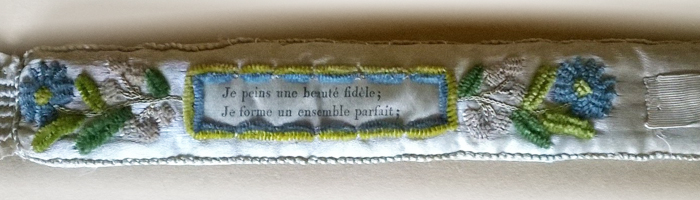
As this blog focuses on the 17th and 18th century I will restrict myself to the female ones from this period. Garters were ribbons of fabric which were worn either above or below the knee. For the upper classes they were made from expensive materials such as silk. These garters would often be richly decorated with embroideries of ornate patterns or personal mottos. Unlike the male counterpart, ladies' garters were not visible to the naked eye; men had worn them on their hoses while ladies' hid them underneath a full body of skirts.


Pink silk garters with motto

Their main function - other than as a fashion statement - was to hold up the stockings. They could either be fastened with buckles or laces; the latter seems to be a more comfortable choice, though. As most fashions this could have a dark side as well. Some women tightened their garters so tightly that their blood circulation suffered as a result. To avoid any chafing garters were often padded.

One peculiar episode concerning garters involved the Sun King's mistress, Marie-Angélique de Fontagnes. Her signature hairstyle - naturally named after her - came to be when she found her hair disheveled while out hunting and bound it up using her garters.


This photo shows how clasps were used as well as padding


Usually, garters were white but could be extensively decorated. As an example the purchase of the Duchesse d'Orléans from 1737 illustrates this. She bought seven pairs of garters; one was embroidered with green and gold, another with silver. Yet another consisted itself of silver cloth while a fourth pair was embroidered with silver in four colours.
As can be deduced from this order garters were worn on both legs - to keep both stockings up. The rather newer trend of having a single wedding garter is of a more symbolic nature.

Detail of a garter allegedly belonging to Marie Antoinette

Legend has it that Marie Antoinette's remains were identified by the characteristic Habsburg-jaw as well as a monogrammed garter.

As seen in portraits:
Naturally, since the garter was a part of a lady's delicates they were not shown on official portraits. However, thanks to the wonderful art of the 18th century we are left with some beautiful examples nonetheless.

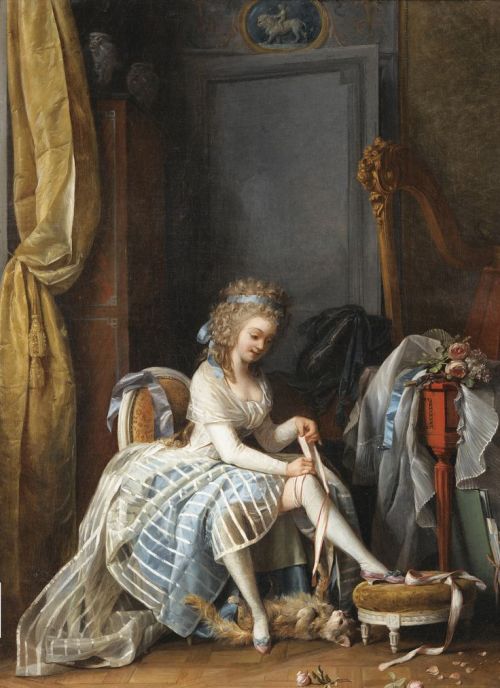
Francois Broucher's "La Toilette" shows a young lady
neatly tying her garter around a silk stocking

This portrait - attributed to Nicholas Lavreince -
also focuses on the garter


Michel Garnier's elegant lady is apparently
not aware of her peeping-tom 

Monday, 22 May 2017

The Buckle

In an age without zippers the stylish way to ensure that a garment did not become undone by a gust of wind was by buttons or buckles. Buckles were used for shoes, breeches, hats and stockings - even the occasional banyan was secured by a buckle. Both men and women used buckles although it was used more generally in men's fashions.

The cheaper - and more affordable - versions were often made from brass or iron which could then be coated with tin to give it a silver-look. For the greater court events gold or silver were preferred; these would often be quite intricately made in themselves and often carried the maker's mark on them. As an indicator of how precious such buckles could be they were stored in jewelry-boxes.

Shoe Buckles
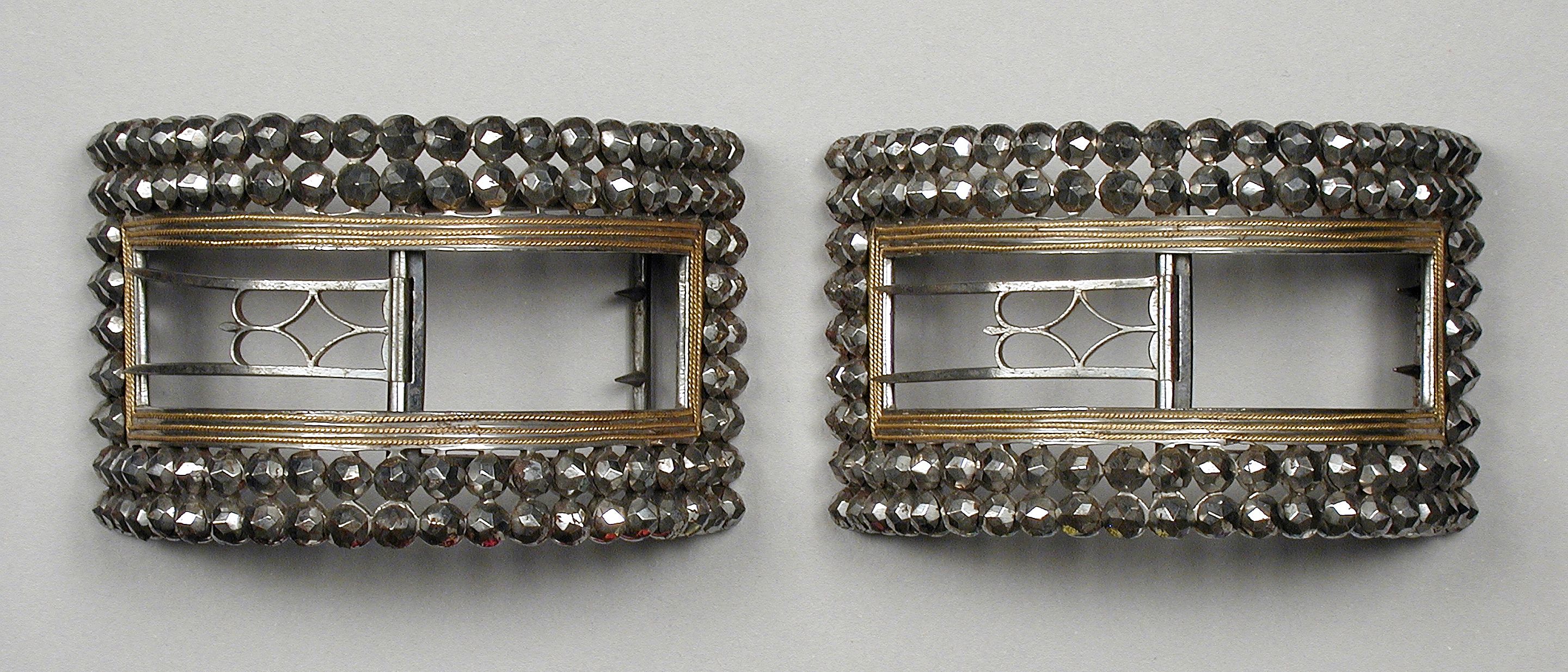
Until 1670 shoes had been tied with ribbon which was tied into large bows. Buckles became more in fashion by this period. The shape of the shoe buckles developed through the ancien regime. During Louis XIV they were largely rectangular but in the 18th century they became smaller and round. Finally, they retook the rectangular shape during Louis XVI by which they were also larger - so large that they covered the foot's length.

Women's shoes, 1740's


At the mid-18th century the fashions for buckles became more splendid. Gemstones and paste were by now frequently used to decorate ornately spun shoe buckles. Although it was far from everyone at court who could afford to adorn their buckles with genuine gemstones some found a way to imitate the style. Coloured glass was often used as a substitute; most of the surviving buckles carry these glass-stones rather than the extravagant gemstones.

Certain gatherings kept their guests first-class by refusing to let "lace-shoed gentlemen" in; only those wearing silver buckles could gain admittance at such parties.

This shoe buckle from 1770 shows how elaborate the
designs could be

From the 1780's onward it became more common amongst men to replace shoe buckles with laces which fitted well with the emerging simpler fashion.

Knee Buckles
Buttons had been the primary method of "binding" breeches to the stockings underneath but buckles gradually became more popular around 1735. The fashionable men would attempt to match their knee buckles with those adorning their shoes. As it became the fashion to wear tight-fitting breeches knee buckles were also used to ensure a close fit.

Knee buckles, 18th century
Unlike the shoe buckles these were small and often oval; the wearer could have three small buckles on each knee. However, the shape depended much on the wearer's taste. In the 1770's both oval and square knee buckles were in fashion.

Hat Buckles
Usually, these were rectangular and made from lighter materials than the brass or iron used otherwise. This was mainly to avoid damaging the delicate fabrics often used for the fashionable hats as well as not weighing down the wearer's head.
Luckily for the fashionable people buckles had more than merely a good look to them; they could just as easily be used to fasten the increasingly elaborate hair accessories. The usage of hat buckles did not really come into style before the 1770's.

Men's shoe buckles, 1775-80


Mourning Buckles
In time of mourning it was considered in extremely poor taste to adorn one-self with ornaments. As such neither gemstones, pearls or paste were worn during mourning periods. Instead, they were bronzed.

As seen in portraits:

The knee buckle can just be seen to the
left

Detail of Louis XIV's shoe buckles


Thursday, 9 February 2017

Robe à la Circassienne

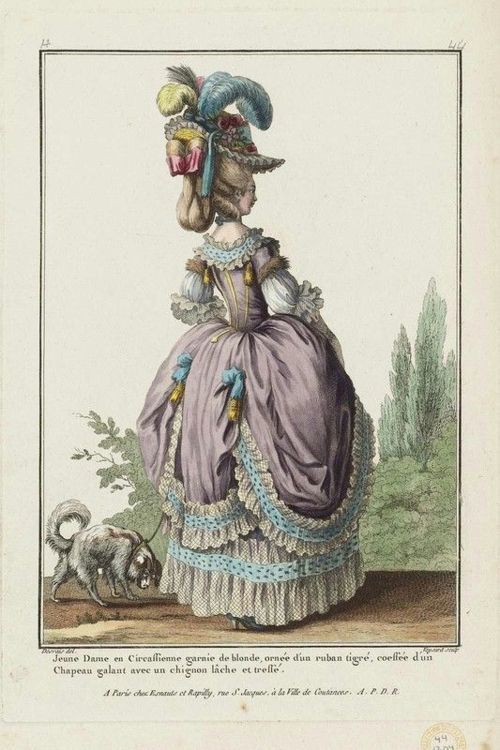
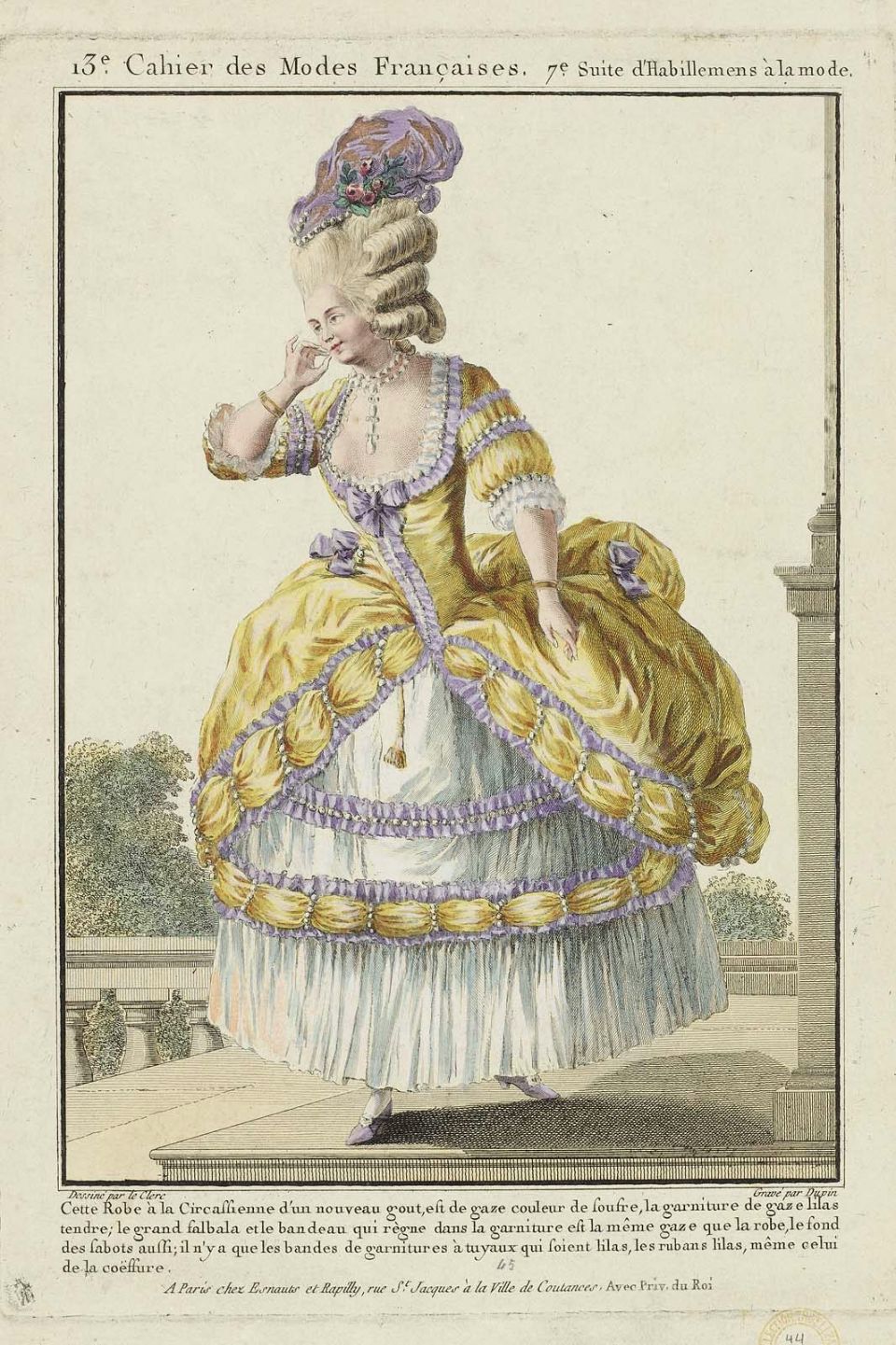
A robe à la Circassienne was a variation of the robe à la Polonaise only it was adorned with so-called Oriental tassels or fur. Another difference was that the robe à la Circassienne had small "over-sleeves" which was inspired by the fashions of the Middle East. These over-sleeves were normally shaped like a funnel and overlapped tight-fitting long - or three-quarter length - sleeves. The long sleeves would often end in cuffs; the skirt would often be fitted with frills

The style seems to have become popular in the 1770's and would remain in style till the revolution. In France the style would continue to be puffed up whereas the English version would eventually become less full in the back. The bodice of this type of robe was often very low

Comtesse de Vauban wearing a robe à la
Circassienne, 1776

Robe circassienne :1780
Robe à la Circassienne, 1780
This is a proper robe à la Circassienne with tassels,
frills and the over-sleeves

1778

Billedresultat for robe a la circassienne

Tuesday, 7 February 2017

Caraco

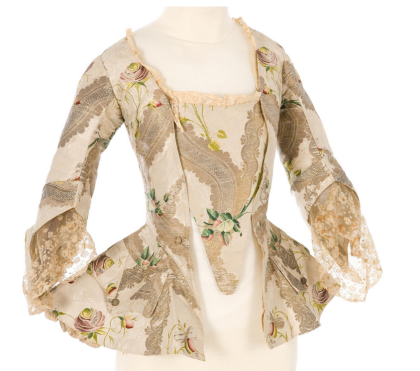
Caraco is a term describing a jacket which became popular in the middle of the 18th century. The jacket was recognisable by being either fitted at the waist or having a sack-back (in the style of a robe à la Francaise). When the latter was the case it would often reach as far down as the wearer's thighs. This was known as a caraco à la Francaise and as the name indicates it was particularly popular in France in the 1720's-40's.

Billedresultat for caraco 18th century
This - rather dark photo - shows how long the caraco
could be at the back

Another version of the caraco was the caraco à la Polonaise which became popular in the 1770's-1780's. Like the French version it took its name from the type of gown which it looked like. The caraco would be tight-fitted around the waist but would flare up at the back. It was different from the caraco à la Polonaise by having a bodice where the lower part curved toward the back.

Billedresultat for caraco 18th century
Here is the opposite of the one above - looser
and with hardly any "tail"

Usually, the caraco was worn over a petticoat and was considered an informal article of clothing.
The sleeves were either full-length or three-quarters length but were always tightly fitted. This is one type of clothing which was not exclusive to the upper classes since middle class and lower class women were also wearing it - although with less rich materials. As it happens this particular style worked its way up in society since it was common among the lower classes before the aristocracy noted an opportunity for a new trend.

Billedresultat for caraco 18th century
Dutch version of a caraco from the second half of the
18th century

In France the caraco would often be open at the front displaying a beautiful bodice while the English preferred to have the jacket sewn completely together.
Some caracos were attached to a hood; these were known as a caraco à coqueluchon. A caraco could be made to match the petticoat underneath but others preferred to have a contrasting colour or pattern.


matching stomacher
A caraco with a matching stomacher


Over the years the caraco went through an evolution. In the 1740's it was basically a gown which had been cut off at hip-length but forty years later it was tightly fitted at the waist and flared loosely at the wearer's back. The 1780's caraco were not stiffened by whalebone and only a somewhat loose corset was required to wear it. This is quite possibly why Marie Antoinette was fond of it since she detested wearing the tight-laced corsets demanded by French fashion.

Gallerie des Modes, 1780.  I LOVE this outfit!  Lttle matching jacket and petticoat set off by the gorgeous trimming!:
Caraco à la Polonaise, 1780

Billedresultat for caraco portrait 18th century
Caraco à la Francaise with a hood! 1790

Billedresultat for caraco portrait 18th century
Mariana Victoria of Spain wearing a caraco displaying
an elaborate bodice

Lady Mary Fox, 1767. #painting #classic #art #Georgian #1700s:
Lady Mary Fox following the English tradition of
having a closed caraco

Monday, 6 February 2017

Robe à la Turque

By the late 18th century - particularly in the 1780's - the upper classes were fascinated by the exotic Turkish influences. This can easily be seen by the popularity of the "Turkish"-rooms which became a must in the fashionable circles; Marie Antoinette and the Comte d'Artois both had one. As for the robe à la Turque it is rather hard to describe since little is said of it despite its popularity. According to the Museum of Fine Arts in Boston the style first appeared in July 1779.

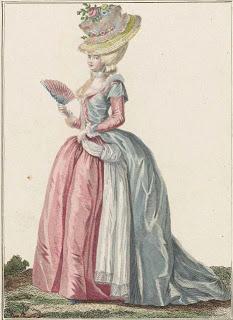
The robe à la Turque was distinguished by having the upper skirts (or manteau) being of a different colour than the petticoat, sleeves and bodice/corsage. This upper skirt would often be longer than the petticoat which caused it to trail the ground. As such it was not uncommon for the upper skirts and the attached short sleeves were often not sewn together with the remaining dress - but in some cases they were. Nevertheless, the overdress was cut in one piece of fabric.
The sleeves were worn long in opposition to the quarter length sleeves of the robe à la Francaise or the robe à l'Anglaise.

It was quite common to wear a robe à la Turque with a sash around the waist. Otherwise the front resembled that of a robe à l'Anglaise with the fitted bodice forming a triangle. What makes the robe à la Turque hard to identify is the variations. Some had longer sleeves than others while some did not necessarily have a sash.

Billedresultat for robe a la turque
Henriette Anne d'Aguesseau wearing a
robe à la Turque, 1789
Billedresultat for robe a la turque
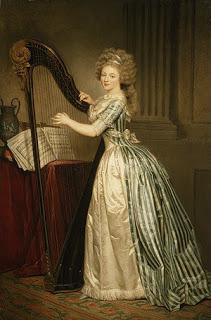
Self-portrait by Rose-Adélaide Ducreux
Un projet de plus : Robe à la turque d'hiver
Robe à la Turque as seen on a fashion plate
Billedresultat for robe a la turque
This fashion plate clearly shows the difference
between the upper skirts and the petticoat

Saturday, 17 October 2015

Panniers

The panniers started out simply as a petticoat made from stiffened fabrics; in this way the main function was to give shape but it was as of yet not an individual article of clothing. It should be said that the idea of the pannier was nothing new. The farthingale of the 16th century and eventually the crinoline dresses of the 19th century both represents a different variant of a pannier.


The use of panniers began in Spain; the paintings of Velazquez show some fine examples of early panniers. The actual pannier appeared around the early 1710's in France. At this point in time the pannier was made of either metal or cane - later whalebone - and was attached to the chest by tapes around the waist; in this way the pannier would essentially be hanging from the wearer's body. This meant that the shape would often be rather bell-like.


Around the middle of the eighteenth century the panniers reached their maximum width (between 150-2 metre or 5-7 feet) and became flatter too. The width eventually made certain social functions almost impossible. Two ladies could not walk through a door at the same time and would often be obliged to walk sideways through a door; neither could they sit on the same couch since these were often of limited size.
There was another unfortunate aspect about the widest panniers. Since panniers in general only reached to about the knee (as did the chemise) there was a genuine risk of revealing a flash of the calf!


Panniers could also consist of two bags hanging from either side of the wearer; these, too, were suspended from the waist. Occasionally, a pannier would be sewn into the petticoat itself rather than being an individual piece.


The 1760's saw a the emergence of a new kind of pannier. Two iron hinges on either side of the waist meant that the hoops could be raised and lowered. Suddenly, ladies found themselves capable of manoeuvring through narrower spaces. Either way the widest panniers were only required on formal court occasions while much smaller ones were accepted for morning use.

"False Hips" - an English satire on the panniers

A key aspect of the pannier was to highlight the tiny waist-line which was also in fashion. Combined with the effect of the corset the width of the panniers meant that the waist seemed ever smaller.
It might seem odd that such a troublesome article of clothing could have any practicality to it but nonetheless there was some. At the very top there was a discreet slit (also in the petticoat and dress) which meant that the wearer could use it as a pocket!

In France the fashion died out around the 1780's when the chemise à la Reine became all the rage. From then on the stiff panniers were only used for formal occasions.

Saturday, 30 May 2015

Chemise à la Reine

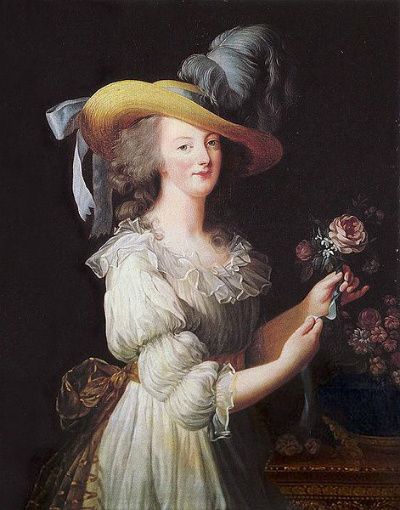
Made famous by Marie Antoinette who preferred to wear at her retreat of Petit Trianon, it sparked a scandal when Elisabeth Vigée Le Brun painted the Queen wearing the informal dress since it was thought too plain for a Queen of France. Some critics said that it looked as if Her Majesty had been painted in her undergarments.

It became fashionable during the late 1770's to early 1780's and at the time most courtiers thought that it resembled more a chemise in the traditional sense - that is basically underwear. The public first came head to head with the style when the portrait of Marie Antoinette was hung in a Paris salon in 1783. However, the outcry became so great that the original portrait (seen below) was removed. The English paper, the Morning Herald, mentioned in 1784 the trend as a "state of undress" which they expected to become quite popular.

Marie Antoinette's portrait that caused such a fuss

The chemise à la Reine is made of several layers of white muslin which is loosely draped around the wearer's body. A coloured sash was bound around the bust and this was often the only colourful element in this dress. As for the shape, it was completely different from the elaborate dresses usually worn at court. Gone were the wide panniers and rustling silks with delicate embroidery.

The inspiration is believed to have come from dresses worn by washerwomen from the West Indies or from an increasing sense of Anglomania; the muslin was often imported from India. This in itself caused problems. Whereas silk had hitherto been a favourite when it came to court dress this new muslin had to be imported often at great costs. The French silk merchants were furious and quickly denounced the trend. Others had more patriotic reasons for disliking the trend. The casual style was a result of increasing English influence on fashion which had so far been all but monopolised by the French.


The Princesse de Lamballe following suit

Surprisingly enough, the Queen's fashion statement was equally detested by courtiers and commoners alike. For once they could agree on one thing: the Queen of France was the fashion symbol of the Western world as well as an outward symbol of the glory of France. She could not be seen wearing such a simple style.

The greatest affront to the older courtiers was that no corset was worn with the dress which for centuries had been an essential part of any woman's attire.

Still, the style spread through Europe and became popular among many a noble ladies. Marie Antoinette's personal friend, the Duchess of Devonshire, wore a chemise à la Reine for an official ball while Princess Louise Augusta of Denmark had her portrait painted in one. The latter portrait was also the cause for some scandal in Denmark when an observer noted that the Princess' legs could almost be seen through the fabric - even though it was merely on canvas. Promptly, more layers of white paint were added to keep the Princess' modesty intact.

Louise Augusta of Denmark

It is not hard to imagine that most fashionable ladies saw the style as an excuse for slipping out of the restricting court costumes and into something more comfortable.

It is rather ironic that the cut of the chemise à la Reine would later be associated with the post-Revolutionary France where a high waistline was the fashion.

Sunday, 11 January 2015

The Calash

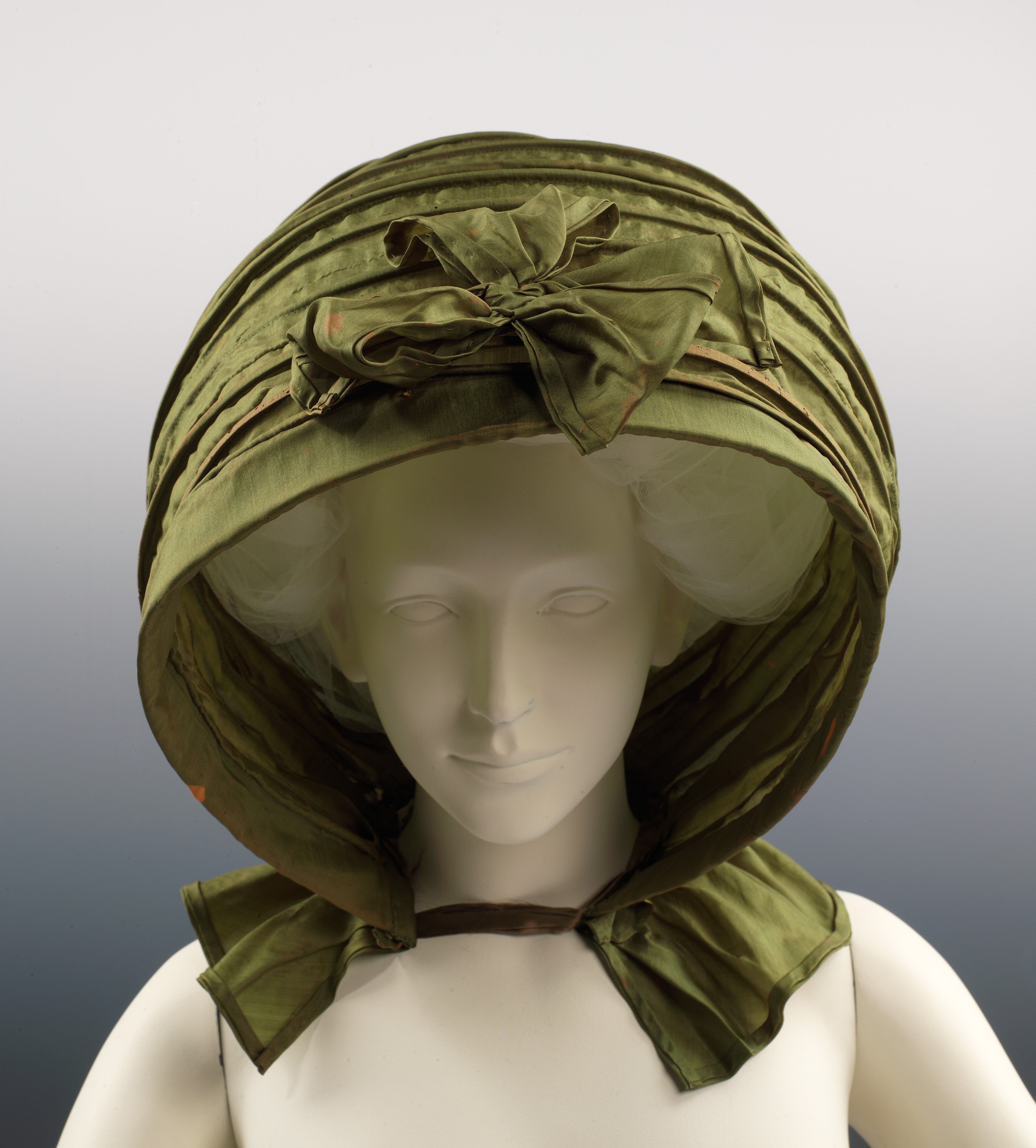
The calash is a stiffened hood which became increasingly popular during the 1770's as a fashionable way of protecting one's elaborate hair-do. The achieve the characteristic hoop effect the hood was stiffened with either whale bone or cane hoops. There is some humour in the naming of the calash; it comes from the French "calèche" which refers to a roof of a carriage that can be folded down.

The calash became particularly popular to use while travelling since it could easily be put down while inside and still provided good protection against the elements. Also, it could be adjusted in such a way to protect the face from the sun. Ribbons with be used to tie the hat to the wearer's head; actually this way of fastening means that it should really be called a bonnet.


Rumour has it that it was the Duchess of Devonshire - a good friend of Marie Antoinette - who came up with the fashion around 1765. The calash was worn well after the fall of the French monarchy.
During the first years of its' existence a genuine calash could only be made of green silk. Later on other materials and colours became acceptable though.


Tuesday, 15 July 2014

The Dormeuse

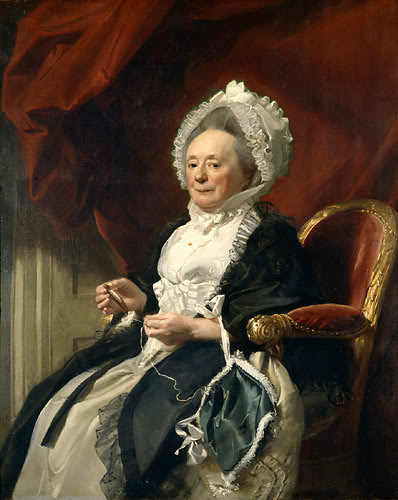
The dormeuse started out as a humble night cap and was one style available for all classes of society; you may also have heard of it under the name of "baigneuse" (bathing cap). For a noblewoman it was only to use at relaxed occasions but never at a ball or other formal event. White was the most common colour for the main part of the dormeuse but it would normally be trimmed with a colourful ribbon preferably of silk. It became very popular in the 1770's in France probably in the same wave that brought the begèret (straw hat) to court as the idealised lives of shepherds were all the rage at this point.
Sometimes the dormeuse was tied underneath the chin with straps attached to the crown of the cap; this crown would be rather close-fitted to the head but avoided a too tight look with the large ruffles.


The dormeuse above is a perfect example of how the edge of the cap was often decorated with a ribbon or pattern that stood out compared to the others - notice the small squares.