Showing posts with label gentlemen-fashion. Show all posts

Sunday, 23 July 2017

The Greatcoat

The greatcoat was chosen by some men as a replacement for the cloak in the 18th century - more specifically around 1750. After this point it was considered too old-fashioned and cloaks were then associated with soldiers or other specific professions (and funerals). For instance, some livery uniforms counted a greatcoat.

The greatcoat was worn out of doors and over the suit; much like the coats we know today. A typical greatcoat was made from heavy, thick materials which provided both warmth and could stand some use. Also, the cuffs and collar could be turned up as a protection against foul weather. This made it perfect for traveling in. 

Gentelman's Greatcoat 1780's France
Back of a French greatcoat, 1780's

As it was intended to be able to bear the bumps and bruises that came with 18th century traveling it was often made of wool. Often, the pockets were quite deep so as to make it possible for the wearer t to keep papers or even food nearby. Little decoration was added to it due to its practical purpose. One thing which all greatcoats had in common was their colour: they were always grey. 

The king's wardrobe contained several pieces of outerwear. His greatcoats were of wool for the winter and of a lighter fabric for the summer. The greatcoat would be sewn with silk cross which was less expensive and far more solid than the silk threads used for the suits.

Relateret billede
Being from 1811 this one is a bit late
but is still like the ones used in the previous
century

The greatcoat reached just below the knee and ended around the calf. It was bulky - a far cry from the otherwise tailored suits seen at court. However, a bulkier coat allowed for the wearer to wear several layers underneath. Unquestionably, this was a welcome article of clothing during the colder months.
Four side panels made up the main part of the coat. Seams ran beneath the arms and down the middle of the back.

As can be imagined with such a purpose it was not confined to the upper classes. Although, the people at the bottom of society could not afford a specifically made greatcoat, it was used by the bourgeoisie as well.
The traditional greatcoat actually continued to be a part of most countries' military uniforms all the way up to the 1930's. It was then widely discarded as being too impractical. 

Billedresultat for portrait greatcoat
English Captain Thomas Coram, 1740 - the English
were more often portrayed in their greatcoats than
the French

Monday, 22 May 2017

The Buckle

In an age without zippers the stylish way to ensure that a garment did not become undone by a gust of wind was by buttons or buckles. Buckles were used for shoes, breeches, hats and stockings - even the occasional banyan was secured by a buckle. Both men and women used buckles although it was used more generally in men's fashions.

The cheaper - and more affordable - versions were often made from brass or iron which could then be coated with tin to give it a silver-look. For the greater court events gold or silver were preferred; these would often be quite intricately made in themselves and often carried the maker's mark on them. As an indicator of how precious such buckles could be they were stored in jewelry-boxes.

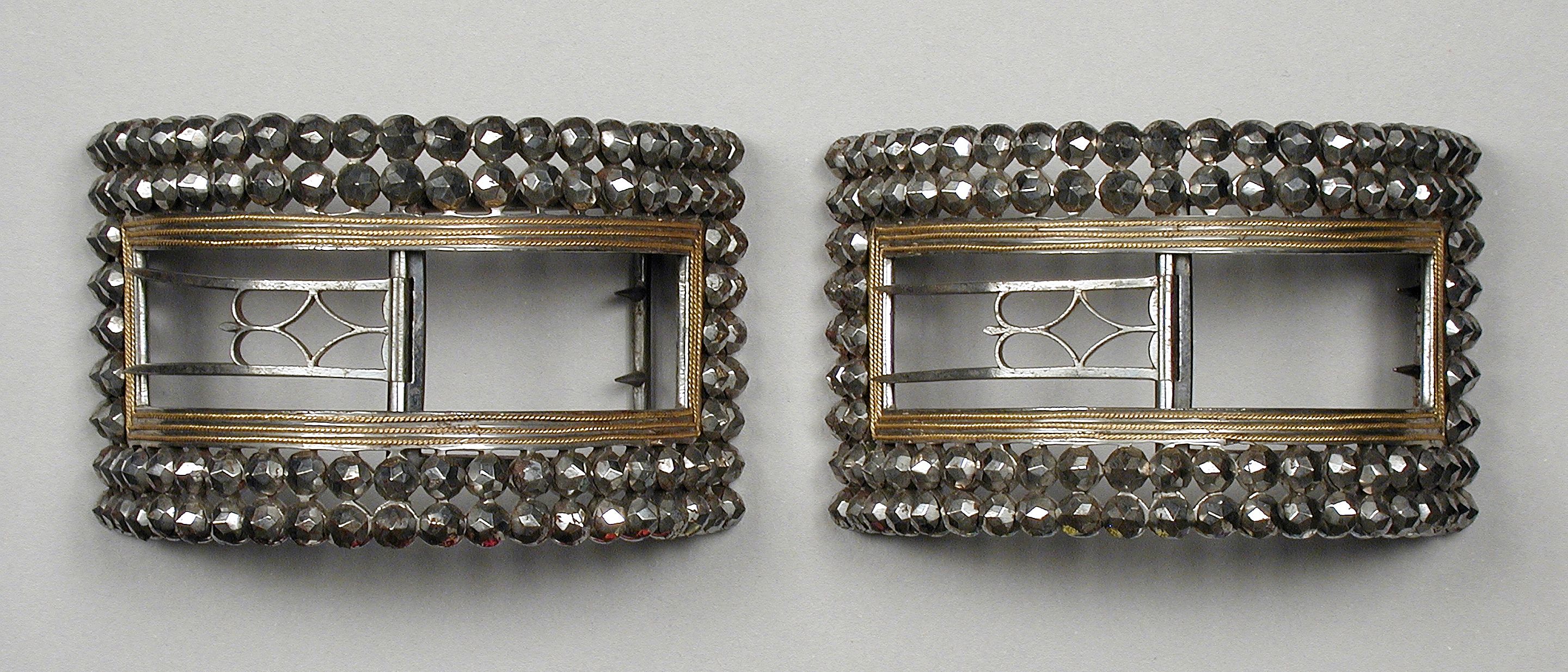
Shoe Buckles
Until 1670 shoes had been tied with ribbon which was tied into large bows. Buckles became more in fashion by this period. The shape of the shoe buckles developed through the ancien regime. During Louis XIV they were largely rectangular but in the 18th century they became smaller and round. Finally, they retook the rectangular shape during Louis XVI by which they were also larger - so large that they covered the foot's length.

Women's shoes, 1740's


At the mid-18th century the fashions for buckles became more splendid. Gemstones and paste were by now frequently used to decorate ornately spun shoe buckles. Although it was far from everyone at court who could afford to adorn their buckles with genuine gemstones some found a way to imitate the style. Coloured glass was often used as a substitute; most of the surviving buckles carry these glass-stones rather than the extravagant gemstones.

Certain gatherings kept their guests first-class by refusing to let "lace-shoed gentlemen" in; only those wearing silver buckles could gain admittance at such parties.

This shoe buckle from 1770 shows how elaborate the
designs could be

From the 1780's onward it became more common amongst men to replace shoe buckles with laces which fitted well with the emerging simpler fashion.

Knee Buckles
Buttons had been the primary method of "binding" breeches to the stockings underneath but buckles gradually became more popular around 1735. The fashionable men would attempt to match their knee buckles with those adorning their shoes. As it became the fashion to wear tight-fitting breeches knee buckles were also used to ensure a close fit.

Knee buckles, 18th century
Unlike the shoe buckles these were small and often oval; the wearer could have three small buckles on each knee. However, the shape depended much on the wearer's taste. In the 1770's both oval and square knee buckles were in fashion.

Hat Buckles
Usually, these were rectangular and made from lighter materials than the brass or iron used otherwise. This was mainly to avoid damaging the delicate fabrics often used for the fashionable hats as well as not weighing down the wearer's head.
Luckily for the fashionable people buckles had more than merely a good look to them; they could just as easily be used to fasten the increasingly elaborate hair accessories. The usage of hat buckles did not really come into style before the 1770's.

Men's shoe buckles, 1775-80


Mourning Buckles
In time of mourning it was considered in extremely poor taste to adorn one-self with ornaments. As such neither gemstones, pearls or paste were worn during mourning periods. Instead, they were bronzed.

As seen in portraits:

The knee buckle can just be seen to the
left

Detail of Louis XIV's shoe buckles


Wednesday, 7 December 2016

Culottes

Culottes were the breeches worn by the nobility and upper gentry; they reached only to about the knee in comparison to the full-length trousers worn by the peasantry. To add to the class distinction the culottes were often made of silk rather than the coarse cloth affordable to the peasantry.

During the beginning of the 18th century the socks reached just above the hem of the culottes; this changed over the decades so that stockings eventually were tucked in underneath the culotte.
The hem of the culotte was fastened either by a buckle or by string to ensure that the breeches fit tightly to the wearer's legs.

The culotte was also equipped with a fly which was usually closed by buttons.


Billedresultat for 18th century breeches
Silk culottes


The upper classes' culottes had a slit at the side which was then fastened by a buckle; those of fewer means simply tied the culottes around the knee.
Over the 18th century the culottes became tighter as the waistcoats got shorter which meant that a man's silhouette altogether became slimmer. Those who insisted on wearing the tightest version occasionally had to be helped into them by their valets!

The culottes were part of the standard military uniforms in the 18th century. For riding the delicate silks were laid aside and the culottes were made of leather or other tougher materials.


Billedresultat for french nobility 18th century
French nobleman showing off his culottes in the park
of Versailles

Due to the connection with the aristocracy the term sansculotte - which emerged around the time of the revolution - implied a person without culottes (sans = without) and referred to a revolutionary.

Wednesday, 17 August 2016

Justaucorps

The justaucorp existed during the entire ancien regime at Versailles as one of the foundations of male fashion. Basically, the justaucorp is the overcoat worn over breeches and a waistcoat. It has often been compared to a frock coat but this is not quite correct since the frock coat is less ornate and more subdued in both silhouette and execution.

It is one of the only articles of the male silhouette to change noticeably during this period. For convenience sake let us take a look at the development:

Second half of the 17th century:
The justaucorp had slowly replaced the doublet. There was no collar and the justaucorps reached the calf. It had buttons all the way down the front but was usually only buttoned at the neck which created an inverted V-shape. The "skirt" of the justaucorp - from the waist down - took after the female counterpart and was stiffened off with whalebone or a like material. It was often equipped with deep pockets but these were placed so low on the coat that the wearer could hardly use them. However, they were immensely decorated. The fabrics reflected the class which typically wore them; the nobility used heavy damask fabrics, silks, brocade and wool. The justaucorps were often distinguishable with their large cuffs which were folded back.

First half of the 18th century:
The pockets had by now moved up to where they could actually be reached and the cuffs no longer folded back. The "skirts" reached their zenith in size which was made possible by only having buttons to waist and leaving the skirt pleats wide. To highlight the wider skirt the opening was rounded rather than being in a reversed V-shape. 

Second half of the 18th century:
The justaucorp was now far more fitted to the wearer's body and only reached just below the hips (not a far cry from today's tuxedo-jackets). This slimming of the silhouette was largely due to developments in the military's uniforms which became a great deal better fitted - as it happens the justaucorp had made its way into high society through the army's influence. Velvet had become a popular fabric but silk and damask were still the favourites among the gentlemen at court. By this point the exquisite embroidery were very much the focus-point of a man's court outfit.
It was no longer referred to as a justaucorp per say since it was now an integrated part of the habit.


Throughout these periods both embroidery and precious buttons were used to decorate the attire. The embroideries of men's fashion is by no means less extravagant than their ladies' - it was considered a duty to dress according to rank for both men and women. Buttons, too, received their fair share of embroidery but would more often than not have precious stones attached to them.

Louis XIV attached particular meaning to a specific type of justaucorp called the justaucorp à brevet. It was characterised by being of blue colour with silver or gold embroidery and was only given to those who had accompanied the King on trips to Marly or had been granted specific permission. It was considered quite an honour to be offered such a piece of clothing but other than that it carried no rights. Louis XIV created a patent on 4 February 1665 stating that only a select few could wear this particular colour combination (blue with gold/silver trimmings) while all others were prohibited without an express permission from the King. Originally, it was to show favour to the Prince de Condé.
An example of how much of an honour it was considered is clearly seen in the memoirs of Bussy-Rabutin who overjoyed could write down that he had receive such a coat. However, the justaucorp à brevet did not last long and was even outdated before the death of Louis XIV.

BONUS: Look-book


As seen in portraits:

Friedrich Wilhelm I um 1701.jpg
Frederick I of Prussia
Luis Francisco de la Cerda
Portrait de Louis N Baron de Breteuil.jpg
Baron de Breteuil
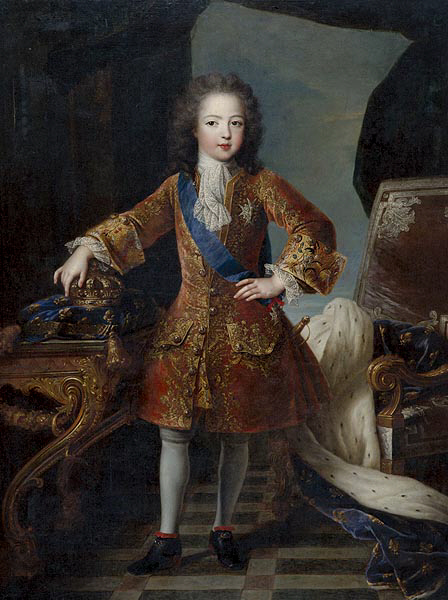
Louis15france1710-2.jpg
A very young Louis XV
Elie de beaumont présumé.jpg
Presumed to be Elie de Beaumont
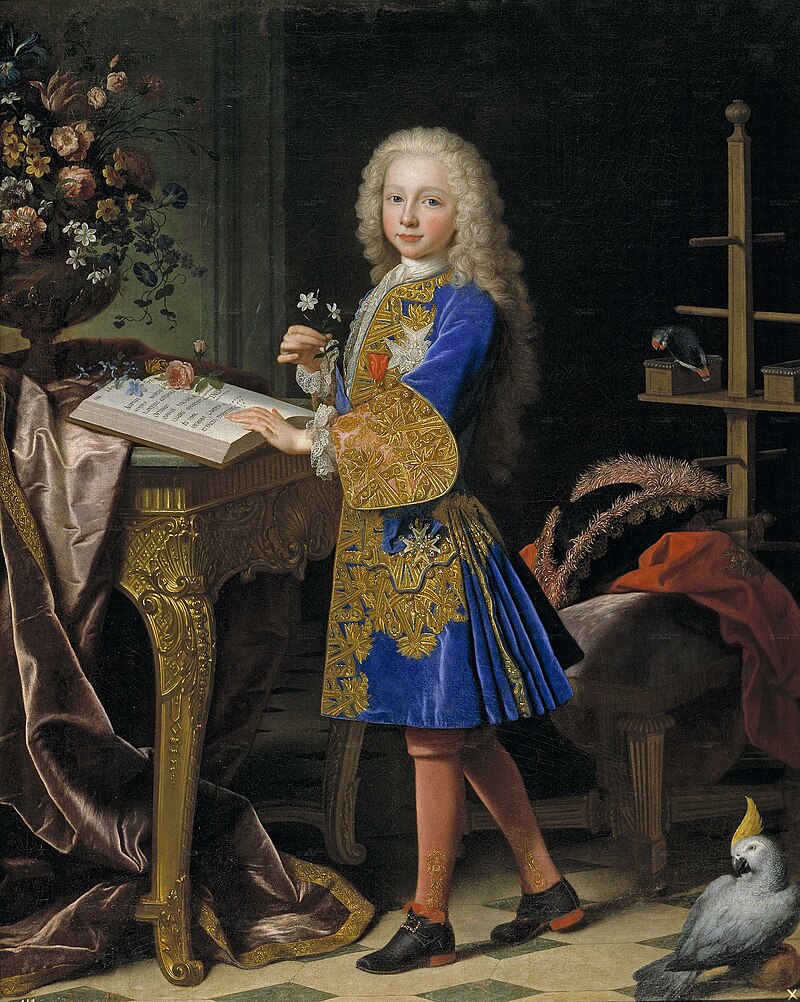
Carlos III, niño.jpg
Carlos III of Spain
Le Grand Condé with his son Henri Jules, Duke of Enghien (future Prince of Condé) by Claude Lefèbvre.jpg
The Grand Condé and his heir


Monday, 8 August 2016

The Sword

The sword has always been a symbol of power and rank and that continued into the ancien regime. It accounted for an elementary part of a gentleman's court clothing. In fact it was so essential that a saying ran "A gentleman is never fully dressed without a sword".
As it happens it was required to wear one if a visitor wanted to watch the royal family dine - if the visitor did not have a sword themselves they could rent on at the entrance to the palace. Without one a man would not be permitted to join the presence of the King.

Wearing a sword remained a symbol of rank. As such on the Ducs and peers could wear their swords at the Parlement and during the King's lit-de-justice. The King himself wore a sword which was fastened to his side by his grand master of the wardrobe.

French court sword

The court sword consisted of a thin blade and an often elaborately decorated hilt with a sheath. Using a sword was a basic part of a boy's education primarily since they were expected to spend some time with the army. On some occasions they were used for duelling but this was considered a hush-hush affair in the late 18th century although it still occurred.
Since the court sword was not intended to be used it decreased in size and became slimmer until it gained the "needle"-look. This turned out to be ideal for duelling.

More French hilts

The swords rarely exceeded 85 cm in length. The hilt could be decorated to immense proportions with engravings, gemstones or etchings.

Louis XIV paid for presentation swords for a great deal of his European co-monarchs at high costs. For example the Sun King paid 40.000 livres for the Duke of Buckingham, 36.000 livres for the Duke of Mantua and an astonishing 76.000 livres for the son of Augustus the Strong!

As seen in portraits

Frederik V of Denmark-Norway
Barely visible but it's there

The Cravat

The cravat took over from the previous fashion of having stiff lace collars framing the neck - these collars became impractical when the style of long hair became the trend. Around 1660 the cravat spread from Paris through Europe and were quickly accepted as the replacement for the collar.

Originally, the cravat was a simple piece of fabric wrapped around the neck in a careless knot but - as is often the case with fashion - it became more elaborate and more opportunities emerged. There was a tendency to take inspiration from how the military wore their clothing and this was indeed the case with the cravat as well. As it happens the cravat got its name from Croatian troops (serving Louis XIII and Cardinal Richelieu) - named cravates in French - who wore white pieces of cloth around their necks.


Another style adapted from the military was the steinkerk which got its name from the Battle of Steinkerk. The ends were folded over one another as one would when starting a braid and was then led through a buttonhole. The style gave off a dishevelled look which was quite intentional; allegedly the troops of the Battle of Steinkerk did not have time to properly tie their cravats.  This became the favourite type of cravat at the French court and would remain so until the 1720's.

Quickly, the cravat spread from the Croatian soldiers to the French aristocracy to the French common people and from there out into Europe. Aristocrats had the luxury of choosing expensive materials and different knots while the working men managed with simply a piece of cloth.

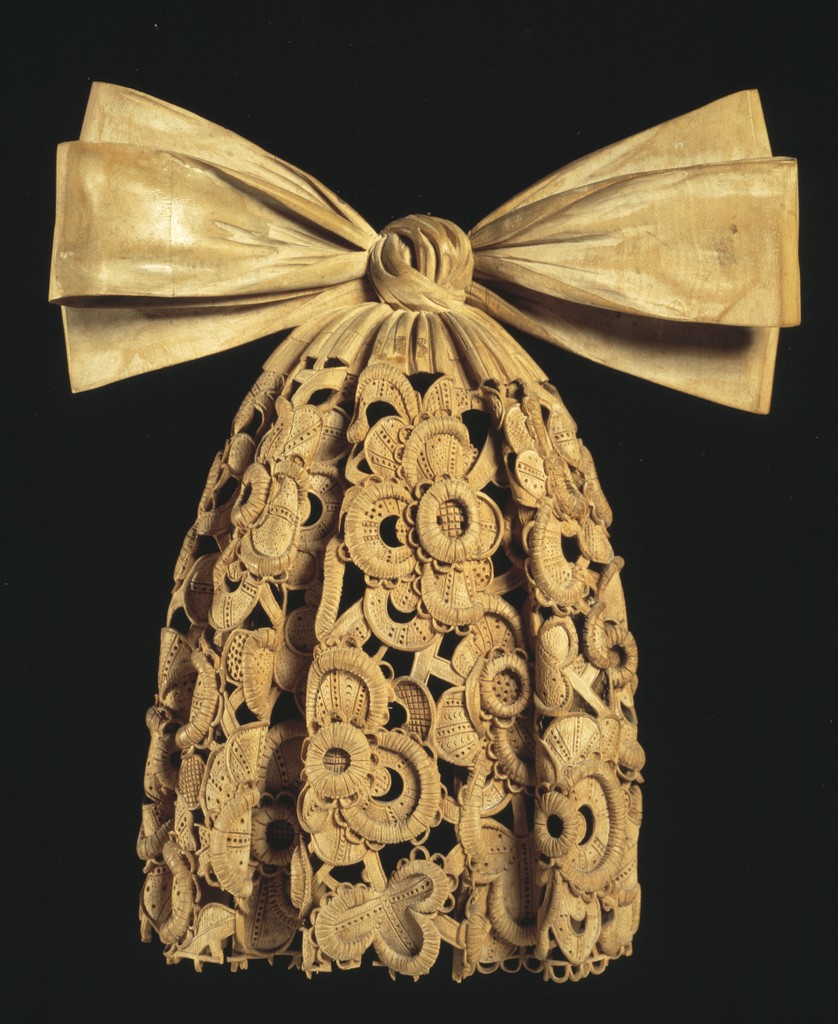
Wooden cravat which was in the collection of Horace Walpole.
It gives a very accurate description of how it looked

Lace became quite a favourite among the nobility and as such it is often seen in portraits. Others were made from cambric, muslin or linen. To keep the expensive laces in place the cravat was tied with an aptly named cravat string; basically, a ribbon to tie around the cravat to keep it where it ought to be. In the 1680's these strings were gradually abandoned and the ends were allowed to hang loosely. This style remained in fashion for quite a while.

The early years of the 18th century the style of having the piece of fabric tied closely around the neck and was either buckled or buttoned in the back. To stiffen off the fabric a sort of cardboard was often added. Eventually, another piece of fabric - this time in black - was added to the "stock" as the style was called. This was usually accompanied by a lovely jabot which was basically frilled laces. This remained in style until the 1770's.


Stock buckle -
used to tie the fabric tightly around the neck

In the 1770's cravat made a comeback due to the so-called macaronis. These were young dandies who were often seen sporting a cravat after having completed their grand tour in Italy and thus it became the trend again.

The remnants of a cravat still exists in men's fashion today - only we call it a tie.

As seen in portraits:

Louis XIV, 1667
James II, 1686

Comte d'Angivillier wearing a "stock" and laced jabot


An English gentleman

Tuesday, 15 July 2014

The Banyan

The banyan was a an informal piece of men's clothing. It was a loose-fitting robe which would be worn at home probably in the morning or evening when one could expect not to receive visitors. It was usually worn over a waistcoat and breeches. Occasionally, these were made of the same material.

A fitted banyan, 
1750-60

Having the banyan quilted throughout was a common design.

1740


It was common for a banyan to be made of a very colourful fabric; the banyan was a product of the Eastern-influence - it compares to a kimono - which was quite in fashion at the time. As it happens the word "banyan" is an anglicised version of the Gujerati (Indian) word for "trader".

Actually, they became so popular that it was acceptable for men in the latter part of the 18th century to be painted wearing a banyan instead of the more formal court suits. The banyan had a dominating collar as well as long sleeves.


oldrags:

Men’s banyan, 1730’s
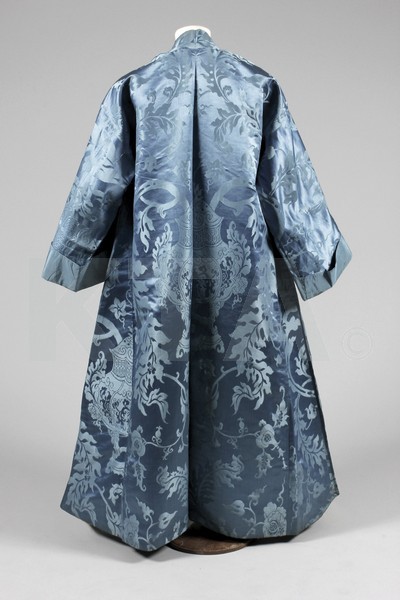
Back and front of a beautifully preserved banyan

The gorgeous example above is French and was created between 1730-40 and is made of Chinese brocade silk - expensive stuff. Not all were of that expensive a material; some were of simpler wool.

It was not uncommon for a banyan to be sewn in such a way that it could be worn with either side out. Usually, the banyan would be sewn in Europe with fabrics imported from the Far East but some were sewn before shipping. The banyan could be fashioned in several ways. One is depicted in the blue banyan above where it simply hangs in a kimono-like style while another was tied with ribbons or fastened with buttons. Some were double-lined for warmth while others were intended for summer use and as such were lighter. The fabrics, too, varied according to season. In the cold winter climate silk, wool and velvet were preferred while a summer-banyan was more likely to be made of calico or a like fabric.

Here worn over waistcoat and breeches,
1720, France

The kimono-typed banyan usually reached the floor while those that were more fitted only reached about knee-length. One of the most convenient aspects of a banyan were the pockets. Rather than having pockets of its own it was usually cut in such a way that the wearer could reach directly into the pockets of his breeches - the space also allowed space for a sword hilt.


As worn in portraits:


Dr. Charles Chauncey wears a banyan, an Asian-inspired garment generally worn as a sort of loungewear and rather frequently adopted by scholars and scientists. Note theloose fit and lack of a shoulder seam.:
Dr, Charles Chauncey
Mozart by Duplessis
Unknown gentleman

ALEXANDER STEWART, father of the 1st Marquess of Londonderry:
Alexander Stewart

Jean-Baptiste Santerre, Portrait of Nicolas Boileau-Despréaux, c. before 1711:
Nicolas Boileau-Despréaux

Friday, 20 September 2013

High and Mighty on Heels - Men's Shoes

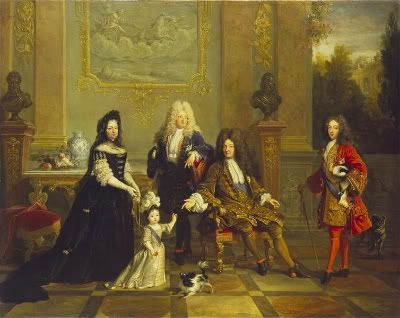
Originally, high heels were made for men and was especially popular at the court of Louis XIV who himself adored the style. He actually had a special type of high heels named after him (the Louis heel) which concave on the heel itself to create an elegant curve. And since Louis loved extravagance his heels were the best of the best. Often towering over five inches above the ground the heels themselves were often decorated with detailed battle scenes! The King made it clear to his court that he was to have the highest heels and no one could wear any as much as a millimetre taller than his.
Red heels were considered especially attractive and Louis XIV quickly made his mark here too. It was only the King himself and those who were in high standing with him who were allowed to wear red heels. One of the reasons for why red was so special was that it was very expensive to colour something that perfect red tone - thus red heels became a symbol of prestige. However, the King's fondness of high heels were not because he was particularly short. On the contrary Louis XIV was considered slightly taller than average height with his 1 meter and 75 centimetres (5,9 inches).

All kind of materials were used for the shoes for example silk, brightly coloured leather and brocades. One thing that remained constant through Louis XIV and Louis XV's reigns was the dominating large buckles on men's shoes. These were either silver or gold and could be very intricately decorated. It was very common to use gemstones - both genuine and look-a likes - to decorate the buckles further. Such a look-a like could be rhinestones which (as the name indicates) were brought to Paris from the Rhine and was a kind of crystals. Paste was also used for decorations despite that we would never consider it very extravagant. However, at the time it was considered just as beautiful because the paste jewels would sparkle especially much when hit by light - also they could be fashioned in all kind of shapes. Samuel Pepys wrote in his diary on 22 January 1660: "This day I began to put buckles on my shoes." The buckles were considered important enough to be sold separate from the shoe itself - the idea was that the buckle was to be used for more than one pair of shoes. Normally buckles would be delivered in special caskets, just like jewellery! It was in the 1720's that the buckles became larger than normally and their period of glory would be between 1760-1780.


Close-up of Louis XIV in his state robes - notice the red heels!


Shoe buckles, late 18th century, French, metal, rhinestone
Made in France in the latter part of the 18th century


Friday, 3 May 2013

The Tricorn Hat

The tricorn was a popular type of hat during the 18th century worn by both men and women - however women would usually wear a smaller version of the hat. Originally the triangular shape was practical because it protected the wearer's face from rain and sun. This made it ideal to use in the army and the navy but it spread to the court which - of course - turned the hat fashionable. Soon the hat was seen decorated by feathers, silk and small ornaments. Originally the hat worn by soldiers was made of simple black, grey or brown fabrics without any other decoration than the national emblem at the front of the hat. The special feature of the tricorn is that the brims were pinned up to the top of the hat - thus creating the triangular shape.
By the end of the 18th century the tricorn had gone out of fashion and slowly evolved into the bricorn.

Portrait of Marie Antoinette shortly after her
arrival in France 
A young Louis XV wearing a feathered and jewelled tricorn hat