Wednesday, 10 August 2016

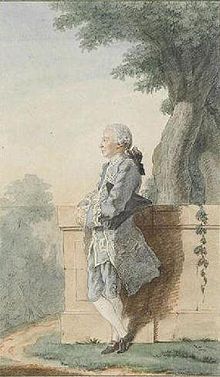
Louis Antoine de Pardaillan de Gondrin, Duc d'Antin

Louis Antoine was born on 5 September 1664 to Louis Henri de Pardaillan de Gondrin, Marquis de Montespan and his famous wife, Francoise Athénais de Rochechouart de Mortemart - better known as Madame de Montespan.

Louis Antoine was their legitimate son and as such was not the son of Louis XIV. He was raised in Gascony with his sister which may have been due to his father's dispute with the King about Madame de Montespan. Nevertheless, he was sent to court in 1683 and was destined for a career in the military where he gained a commission as a lieutenant.

Three years after his arrival at court, Louis Antoine was married to Julie Francoise de Crussol with whom he had two sons. It was through her that he gained access to the inner circle of the Grand Dauphin where he became an established member. Despite his father's well-known and very public dislike of the affair between his wife and Louis XIV - and the children born therefrom - Louis Antoine apparently did not share the dislike. Perhaps he simply saw his royal half-siblings as a golden opportunity but either way he quickly became a fervent supporter of both the Comte de Toulouse and the Duc du Maine.


Sadly, for Louis Antoine not even openly embracing his half-siblings could gain him the affection of the Sun King. For some reason Louis XIV never liked Louis Antoine and the King took the first opportunity to remove Louis Antoine from his military career. This happened in 1707 when Louis Antoine made a grievous miscalculation which resulted in tactical error on the battlefield.

Perhaps his presence had reminded Louis XIV of his mother - who infamously fell from favour - because Louis Antoine only gained favour once she had died. First, he was made governor of Orléanais not long after the death of his mother and then Head of the Bâtiments du Roi - this latter position gave him frequent access to the King who loved building.


He seemed to have become dearer to the King upon closer acquaintance for in 1711 the King bestowed two major favours on Louis Antoine: first he made him Duc d'Antin and then awarded him with the Order of Saint-Esprit. Besides these titles he was also the Marquis de Montespan and Marquis de Gondrin.


There may have been actual talent behind the elevations for Louis Antoine appears to have had an excellent mind for organisation and a fondness for architecture which further endeared him to the King. For example the Salon d'Hercule was finished under Louis Antoine. He further integrated himself with the very building of Versailles when he opened several marble mines in southern France - these would supply marble for fireplaces at Versailles.

Louis Antoine's fondness for building shows in his private life as well. As early as 1692 he purchased the château de Bellegarde and rebuilt it and he inherited the château de Petit-Bourg from his mother where he also effected some changes. Finally, he had a hôtel in Paris which would later become the Hôtel de Richelieu.

Louis Antoine de Pardaillan de Gondrin, Duke of Antin by Hyacinthe Rigaud (Versailles), 1710.jpg


When Louis XIV died Louis Antoine did not linger behind in the "old reign" but instead took up a career as a politician during the regency. He even managed to become President of the Council of Matters. Once these councils were abolished he remained on board but in name only. Finally, he left his position in February 1722. This year appears to have been a turning point in Louis Antoine's life and he decided to retire gradually from public life. He even relinquished his title of Duc d'Antin in favour of his grandson (his own son having died in 1712).

Eventually, he lived mainly in his Parisian abode where he died on 2 November 1736.

House of Broglie

Originating in Piedmont, the Broglie-family established itself in France when the otherwise Italian nobleman Francesco Maria took up service for France during the Thirty Years' War. By 1643, he was naturalised as a Frenchman and consequently changed his name to François Marie de Broglie.

1) François-Marie de Broglie & Olympe Catherine de Vassal de Favria

Having already a long list of Italian titles, such as Count of Revel, François-Marie was made Comte de Broglie for his services. He was also made governor of La Bassé.

Olympe outlived her husband by a staggering 53 years, dying in Paris in 1709. The couple had a single child:
  • Victor-Maurice, Comte de Broglie

2) Victor-Maurice de Broglie & Marie de Lamoignon

Victor-Maurice followed in his father's footsteps and entered the army where he had the immense good luck of serving under both the Grand Condé and Turenne. He was made marèchal de camp in 1676, then Lieutenant General before finally reaching Marèchal de France right before his death.

Marie was the daughter of the Comte de Launay-Courson, with her father being a maitre des requetes. The couple had three children:
  • Charles Guillaume, Marquis de Broglie
  • Marie-Madeleine, Baronne de Bonrepos
  • François Marie, Comte de Broglie
Oddly enough, it would be François Marie who was elevated to the dukedom of Broglie despite Charles Guillaume being very much alive - and with a male heir. The line can therefore be said to have divided in two: the Marquis de Broglie and the Duc de Broglie.

Anonymous painting of Victor Maurice de Broglie, Count of Broglie.jpg
Victor-Maurice


Marquis de Broglie

1) Charles Guillaume de Broglie & Marie Madeleine de Voisin 

Charles also followed his grandfather's military career and was made lieutenant general. Charles was 21 years older than his wife when they married in 1710; sadly, Marie Madeleine died at just 32 years after having given Charles two children:
  • Marie-Françoise, Comtesse de Lignerac
  • Charles Guillaume Louis de Broglie, Marquis de Broglie

2) Charles Guillaume Louis de Broglie & (1) Théodore-Élisabeth-Catherine de Besenval  (2) Agathe Émilie de Menou

Charles and Théodore were married in 1733; she was the daughter of the colonel general of the Swiss guards. When she died in 1778, the newly widowed Charles remarried to Agathe who was 41 years his junior. Agathe was the daughter of the Marquis de Menou.

Charles Guillaume Louis had a son by his first wife, Théodore:
  • Achille-Joseph, Marquis de Broglie

3) Achille-Joseph 

The young Achille-Joseph was about to embark on his own military career; at the age of 17, he was colonel of his own infantry regiment when he was killed by wounds sustained in the battle of Sunderhausen. He had not married nor had children.

Duc de Broglie

1) François Marie de Broglie & Thérèse Gillette Locquet de Grandville

Named for his grandfather, this François Marie is likely the most famous member of the family; it was he who managed to bring the family into the ducal class of the aristocracy while also earning the title of Marèchal de France. Truly, there were few conflicts which he was not involved in. Having fought in the Wars of both the Spanish and Austrian Successions, he also served in the king's Italian campaign. He was finally made Duc de Broglie in 1742 and governor of Alsace, dying two years later.

The couple had five children:
  • Victor François, Duc de Broglie
  • Charles François, Marquis de Ruffec
  • François, Comte de Revel
  • Marie-Thérèse, Marquise de Lameth
  • Charles, bishop

2) Victor François de Broglie & (1) Marie Anne Dubois de Villers (2) Louise Augustine Crozat

Victor François also managed to become Marèchal de France, serving under his own father for a time. Having partaken in both the Seven Years' War and the American colonies' struggle for independence, he returned to France where the revolution soon broke out. He remained a staunch royalist who continued to offer his military services while in exile.

Marie Anne had four sons by her husband but none survived childhood.

Louise was a lady-in-waiting to the king's youngest daughters, Mesdames Victoire, Sophie and Louise. She accompanied her husband into emigration during the revolution.

Louise and Victor had nine children:
  • Louise-Augustine-Thérèse, Comtesse de Damas-Crux
  • Charlotte-Amédée, Comtesse d'Helmstadt 
  • Charles-Louis-Victor, Prince de Broglie
  • Auguste Joseph, Prince de Revel
  • Adélaide-Françoise
  • Charles-Louis-Victor, abbot
  • Maurice-Jean-Madeleine, abbot
  • Aglaé-Charlotte-Marie, Marquise de Murat
  • Victor Amédée Marie, Prince de Broglie

Portrait of François Marie de Broglie, Duke of Broglie, Marshal of France (member of the circle of Hyacinthe Rigaud).jpg
François-Marie

Interesting facts and anecdotes:

  • Francois-Marie was nearly killed when his camp was raided unexpectedly by enemy troops on 14 September 1734 but he managed to escape
  • Victor-Francois briefly served as Minister of War to Louis XVI before fleeing France
  • Charles-Francois (second son of the Francois-Marie) distinguished himself as a diplomatic agent in Louis XV's secret department Secret du Roi
  • Victor (son of the second Duc de Broglie) was killed during the revolution 
  • Charles-Guillaume was given six cannons by the king which he was allowed to use for defense and decoration at his private estate

The line is still existent.


Image gallery of the House of Broglie:

Victor-François, 2nd Duc de Broglie.png
Victor-Francois de Broglie


Jean Ranc (1674–1735), Louise Augustine Salbigothon Crozat, duchesse de Broglie, vers 1775
Louise Augustine


Charles-François de Broglie around 1757-1758
Charles-Francois

House of Aumont

The House of Aumont are descendants of Jean, Lord of Aumont who accompanied Louis IX on his crusade. The family itself hailed from Picardy and held the position of First Gentleman of the King's Chamber for decades.

By 1665, the family's estates were elevated to a duchy which placed the family amongst the leading aristocrats in France. These are the dukes of Aumont during the reign of Louis XIV to Louis XVI:

1) Antoine d'Aumont de Rochebaron & Catherine Scarron de Vaures

Antoine's life was spent remarkably close to Louis XIII; he had served the father of the Sun King from his own childhood. From then on, Antoine focused on a military career which led to him being appointed lieutenant general - he turned out to be a particularly skillful commander. To show his gratitude, the king made him governor of Paris before raising him to the rank of Duc d'Aumont. Sadly, Antoine only got to enjoy his new rank for four years before dying of apoplexy.

Catherine was the niece of a certain Paul Scarron - the first husband of Madame de Maintenon. The couple had four children:

  • Louis-Marie-Victor, Duc d'Aumont
  • Charles, abbot
  • Élisabeth, Comtesse de Broglio
  • Catherine-Marie, abbess

Antoine d'Aumont de Rochebaron
Antoine

2) Louis-Marie-Victor d'Aumont & (1) Madeleine Le Tellier, (2) Françoise-Angélique de La Mothe-Houdancourt

Serving as captain of Louis XIV's personal guard, Louis also made himself useful to the Grand Dauphin. Louis shared a passion for medallions with both Louis XIV and his heir; as such, the new Duc d'Aumont was often asked to search out objets d'art for the Grand Dauphin's personal collection.

Madeleine was a part of the rising Le Tellier-family; a family whose talent for bureaucratic service made them indispensable to the growing state machinery of Louis XIV. The couple married on 21 November 1660. Dying at the age of 22, her cause of death is unknown - perhaps an illness or complications from pregnancy?

The couple had three children:
  • Élisabeth, Comtesse de Châteauneuf
  • Louis, Duc d'Aumont
  • Anne-Charlotte, Marquise de Créquy-Saint-Paul
Françoise-Angélique was quite a well-connected woman. Her own father was both a duke and a maréchal de France; her mother was governess to the Children of France.

She had one child by Louis:
  • Louis, Duc d'Humières

File:Anonymous - Portrait de Madeleine Fare Le Tellier, duchesse d'Aumont (1646-1668) - P2272 - Musée Carnavalet.jpg
Madeleine Le Tellier


Françoise Angélique de La Mothe-Houdancourt
Françoise-Angélique


3) Louis d'Aumont & Olympe de Brouilly

The son of Louis-Marie-Victor and Madeleine, Louis inherited his father's title and lands. He would later become the king's ambassador to the United Kingdom.

Olympe was Marquise de Piennes in her own right and served as dame d'atours to the Duchesse d'Orléans.

The couple had one child:
  • Louis-Marie, Duc d'Aumont

4) Louis-Marie d'Aumont & Catherine de Guiscard

Both Louis-Marie and Catherine had the unfortunate fate of dying young. The former died at 32 years while his wife reached 35 years. Given their ages and the fact that they both died in 1723, it is possible that they died from a disease which infected them both. Before they both died, they had a single child together:
  • Louis-Marie-Augustin, Duc d'Aumont

5) Louis-Marie-Augustin d'Aumont & Victoire Félicité de Durfort

Following his parents' premature demise, the young Duc d'Aumont was just fourteen years old. Besides the familial title, he also inherited a massive fortune, a coveted art collection and the position of First Gentleman of the King's Bedchamber. He was therefore one of the most eligible bachelors at court. Besides his courtly duties, he held the rank of lieutenant general and governor of Picardy.

Victoire was the daughter of the Duc de Duras and the Princesse de Bournonville. Despite being just 21 years old at the time of her marriage in 1727, she was already a widow. Victoire had been married first to the Duc de Fitz-James who died after just one year of marriage. She was then immediately married off again to Louis-Marie-Augustin.

The couple had three children:
  • Jeanne Louise Constance, Duchesse de Villeroy 
  • Louis-Marie-Guy, Duc d'Aumont
  • Louis d'Aumont, Duc de Villequier 

6) Louis-Marie-Guy d'Aumont & Louise-Jeanne de Durfort

Following the military careers of his predecessors, Louis-Marie-Guy rose through the ranks from colonel to maréchal de camp to lieutenant general. 

Louise-Jeanne was positively awash in titles. Besides her title of Duchesse d'Aumont through her marriage, she was also Duchesse de Mazarin, de La Meilleraye and de Mayenne. Like her father-in-law she herself possessed an immense art collection which was sold off after her death.

The couple had one child:
  • Louise d'Aumont

Jean-Marc Nattier - Madame de La Porte - Google Art Project.jpg
Louise-Jeanne


The line died out in 1888.


Titles held by the House of Aumont:
Duc d'Aumont
Duc de Mazarin (through marriage)
Marquis d'Isles
Marquis de Villequier
Marquis de Piennes (through marriage)

Special honours and notes:

  • For 200 years the House of Aumont held the position of First Gentleman of the King's Bedchamber
  • Louis-Marie-Victor was governor of Paris as well as ambassador to London
  • Louis-Marie-Celeste aided Napoleon during the Hundred Days
  • The title of Duc d'Humières came to Louis d'Aumont through his marriage to Anne-Louise-Julie de Crevant; her father died without a male heir and despite being the youngest daughter, her husband got the title
  • Louis-Marie-Augustin d'Aumont amassed a huge collection of artwork which was widely recognised as one of the finest

House of d'Albert de Luynes

The House of d'Albert de Luynes had their roots in Comtat Venaissin and were already among the Ducs (as Duc de Luynes) and Peers when Louis XIV was born - the family was elevated to that rank in 1619. The elevation was thanks to the close relationship between Charles d'Albert and Louis XIII; prior to being made Duc de Luynes, Charles d'Albert already held the position of Marquis d'Albert.

House of d'Albert de Luynes
Charles further strengthened his ties to the reigning houses of France with a marriage to Marie de Rohan. His son, Louis-Charles d'Albert, was further granted the title of Duc de Chevreuse. Honoré d'Albert (brother of Charles) was made Duc de Chaulnes in 1621 - a title he could gain through his marriage to Claire Charlotte Eugénie d'Ailly, Comtesse de Chaulnes. Their last brother, Léon, was first made governor of the Bastille but later acquired the far grander title of Duc de Piney-Luxembourg also through a marriage.

Charles and Marie had the son Louis-Charles who became the second Duc de Luynes. He married three times and had a combined 16 children! His eldest son and heir, Charles-Honoré, married the daughter of the King's infamous minister, Colbert.
Their son, Honoré-Charles d'Albert de Luynes married Marie-Jeanne de Courcillon.

The fifth Duc de Luynes (and Duc de Chevreuse) was their son, Charles-Philippe d'Albert de Luynes. His first marriage was Louise-Léontine de Bourbon with whom he had a son who would later succeed him. He later married Marie Brûlart who was a dame d'honneur to Queen Marie Leczinska; due to his marriage he was introduced to the Queen's circle were he quickly became one of Her Majesty's favourite guests. Also, he was made master of cavalry.

The son of Charles-Philippe's first marriage was named Marie-Charles-Louis d'Albert de Luynes. He chose to venture into the military where he was quite successful. He gained both the Order of Saint-Esprit and the Order of Saint-Michel; in 1770 he was Colonel General of the Dragoons. He was married to Henriette Nicole Pignatellii d'Egmont with whom he had two children: Louis-Joseph-Charles-Amable and Marie Paule Angelique.

Louis-Joseph-Charles-Amable initially followed his father into the military but when the revolution broke out he took up the course of a politician sitting in the Estates Générale.


Titles held by the House of d'Albert de Luynes:
Duc de Luynes
Duc de Chevreuse
Duc de Piney-Luxembourg (transfered to the House of Montmorency in 1697)
Duc de Montfort
Duc de Chaulnes
Prince de Grimberghen
Marquis d'Albert


Special honours and notes:

  • Jeanne-Baptiste, Comtesse de Verrure, was the favourite of Victor Amadeus II of Savoy
  • Charles d'Albert was a Chevalier de Saint-Esprit
  • Charles-Honoré d'Albert was governor of Guyenne
  • Paul d'Albert became a Cardinal and was appointed almoner to the Dauphin
  • Marie Francoise (daughter of Charles-Honoré) became a companion to Marie Adélaide of Savoy


Image gallery of the House of d'Albert de Luynes:

Portrait probable du duc de Luynes par Pourbus.
Charles d'Albert -
favourite of Louis XIII and first Duc de Luynes

Louis Charles d'Albert Duc de Luynes Pair de France.JPG
Louis-Charles d'Albert

Portrait du duc de Chevreuse par Hyacinthe Rigaud
Charles-Honoré d'Albert

Image illustrative de l'article Paul d'Albert de Luynes
Paul d'Albert de Luynes -
Cardinal and almoner to the Dauphin

Tuesday, 9 August 2016

House of de La Tour d'Auvergne

The only branch of the House of de La Tour d'Auvergne existing when Louis XIV ascended to the throne was a cadet-branch of Vicomtes de Turenne. The principal branch died out in 1309 while the elder branch of Comtes d'Auvergne ended with Anne Madeleine de La Tour.

The Vicomtes de Turenne

Henri de La Tour d'Auvergne was the founder of this surviving branch. He was made Duc de Bouillon and Prince de Sedan upon his marriage to Charlotte de La Mark in 1591 but their marriage ended childless. He then remarried to Elisabeth Flandrika d'Orange-Nassau with whom he had seven children: two sons and five daughters.

Frédéric Maurice de La Tour d'Auvergne was the eldest surviving son of Henri and Elisabeth and inherited the title of Duc de Bouillon. He married Eleonore-Catherine-Febronie de Wassenaar de Berg; they had three sons:
The eldest, Godefroy, became the next Duc de Bouillon and was married to Marie Anne Mancini. The second son, Frédéric Maurice, was given the title of Comte d'Auvergne while their third son, Emmanuel-Theodore, became a Cardinal.

The granddaughter, Armande, of Godefroy married the Duc de Melun while the grandson, Charles-Godefroy, married a woman from the Polish nobility, Marie-Charlotte Sobieska. Charles-Godefroy and Marie Charlotte had two children: a son and a daughter. Their son, Godefroy Charles Henri, became the last Duc de Bouillon since he had no children of his own. He did, however, adopt a child but titles were not carried on to adopted children.

Titles held by the House of de La Tour d'Auvergne
Duc de Bouillon
Duc d'Albret
Comte d'Auvergne
Comte d'Évreux
Vicomte de Turenne


Special honours and notes:

  • Henri de La Tour d'Auvergne, Vicomte de Turenne served as a Marèchal de France 
  • Godefroy Maurice de La Tour d'Auvergne was grand chamberlain to the King
  • Louis Henri de La Tour d'Auvergne erected the Palais d'Élysée which later became the home of Madame de Pompadour. He was also made governor of both Poitou and d'Auvergne
  • Armande de La Tour d'Auvergne became the Princesse d'Epinoy and Duchesse de Joyeuse 
  • Godefroy-Charles-Henri de La Tour d'Auvergne was made a Peer of the Realm, Marèchal de France, Grand Chamberlain and deputy to the Estates-General when the revolution broke out
  • Marie-Louise de La Tour d'Auvergne was executed in 1793 during the revolution

Houses connected to by marriage:

  • Mancini-family
  • House of de la Trémoille
  • House of Rohan
  • House of Guise


Image gallery of the House de La Tour d'Auvergne:
Louise de Lorraine -
wife of Godefroy-Charles-Henri
GodefroyMauricedeLaTour dAuvergneNanteuil.jpg
Godefroy-Maurice who married Marie Mancini

Jean-François Colson, Portrait du duc de Bouillon (1775), musée de l'Ancien Évêché, Évreux[1]
Godefroy-Charles-Henri
Henri de La Tour d'Auvergne, maréchal de Francepeinture de style troubadour (XIXe siècle)
The founder - Henri de La Tour d'Auvergne

Image illustrative de l'article Emmanuel-Théodose de La Tour d'Auvergne (1668-1730)
Emmnanuel-Theodore

Robe à l'Anglaise

Currently in the possession of the Victoria and Albert Museum is this wonderful robe à l'Anglaise. The dress was sewn in the 1740's and is made of a certain type of heavy red silk called gros de tours; this was not pure silk but was heavier and warmer.
A fichu covers the collar-bones but is in a heavier material than usually used for this particular piece of clothing.


Robe à la Française


Beautifully preserved, this robe à la Française, is either French or British. It was created between 1760-65. The fabric is a silk plainly weaven (faille) and decorated with metallic lace trim and floral embroideries. It is currently in Los Angeles. 

Woman's Robe a la Francaise and Petticoat LACMA M.56.6a-b (1 of 5).jpg

File:Woman's Robe a la Francaise and Petticoat LACMA M.56.6a-b (5 of 5).jpg


Here are some photos of the exquisite details of this gorgeous gown: