Saturday, 6 December 2014

The Astronomical Clock

One of the more spectacular pieces of furniture in Louis XV's collection is without doubt this magnificent astronomical clock. The clock is the result of a combined working effort between Claude-Simeon Passemant (design), Louis Dauthiau (mechanism) and Jacques and Philippe Caffiéri (case).

Besides being an imposing mechanism, the clock also shows the phases of the moon, planetary movements according to Copernicus, real time, average time and the date. The crystal globe above the clock itself contains a bronze globe with the main cities engraved; surrounding the little earth are waterfalls and rocks. The size alone is astonishing, measuring over 2 metres in height. The clock is made in such a manner as to continue to tell the date until the year of 9999.

In 1749 the clock was brought before the prestigious Academy of Sciences which decided to approve the clock.
The Duc de Chaulnes had the honour of presenting the clock to Louis XV at Choisy on 7 September 1750. Immediately, the King had it installed in his private apartments and eventually the room it occupied became known as "the Clock Room".


Madame de Mailly's Commode

Madame de Mailly - known to history as one of Louis XV's many mistresses - was the proud owner of this beautiful commode by Matthew Criaerd. The style is an imitation of the oriental lacquer which was quite fashionable at the time; though the bright blue and white is more Versailles than the Far East.

Notice that the details are painted silver but is actually made of bronze. This is quite rare since most furnitures of this time would have golden carvings rather than silver - especially when the material already had a golden shine to it. The commode is estimated to have been finished in 1742.

Jewel Cabinet

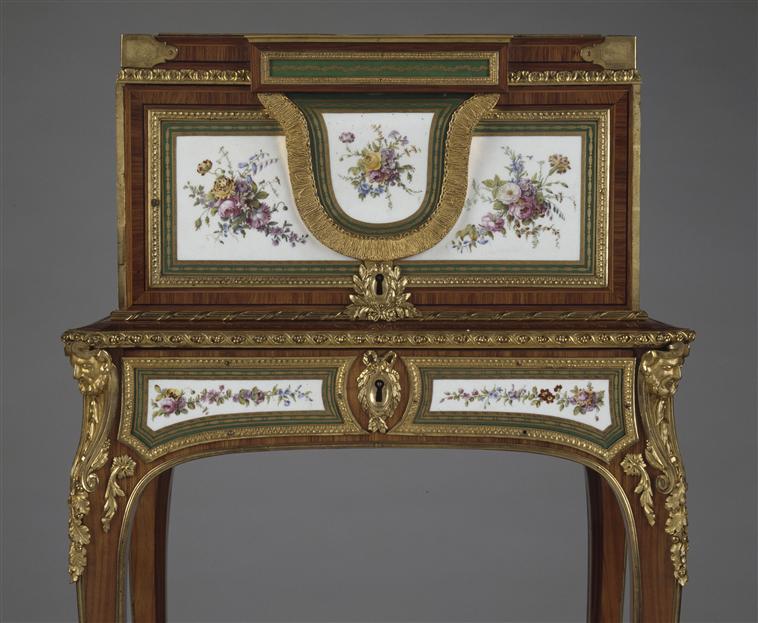
One of the more well-known pieces of furniture in Marie Antoinette's personal collection is this jewel cabinet by Martin Carlin. Rosewood, ebony and sycamore went into the creation of the cabinet as well as fine Sèvres porcelain decorated with flowers - a favourite print of the Queen.


The cabinet was delivered while Marie Antoinette was still Dauphine in 1770. All the edges are gilded with gold.

Les Fleurs de la Reine

Marie Antoinette had a true passion for flowers which most likely was a result of her upbringing with her father who adored his gardens. Already at a young age flowers were dear to her. While travelling through Nancy on her way to Versailles (and her wedding) she had spent the day gathering rose petals.

This fondness for floral prints and flower decorations is clearly shining through in quite a lot of the merchandise presented to the Queen. Among her favourite flowers were roses, violets, lilacs, hyacinths, irises and lilies.


Detail of one of the Queen's chair


Table for the Queen by Martin Carlin

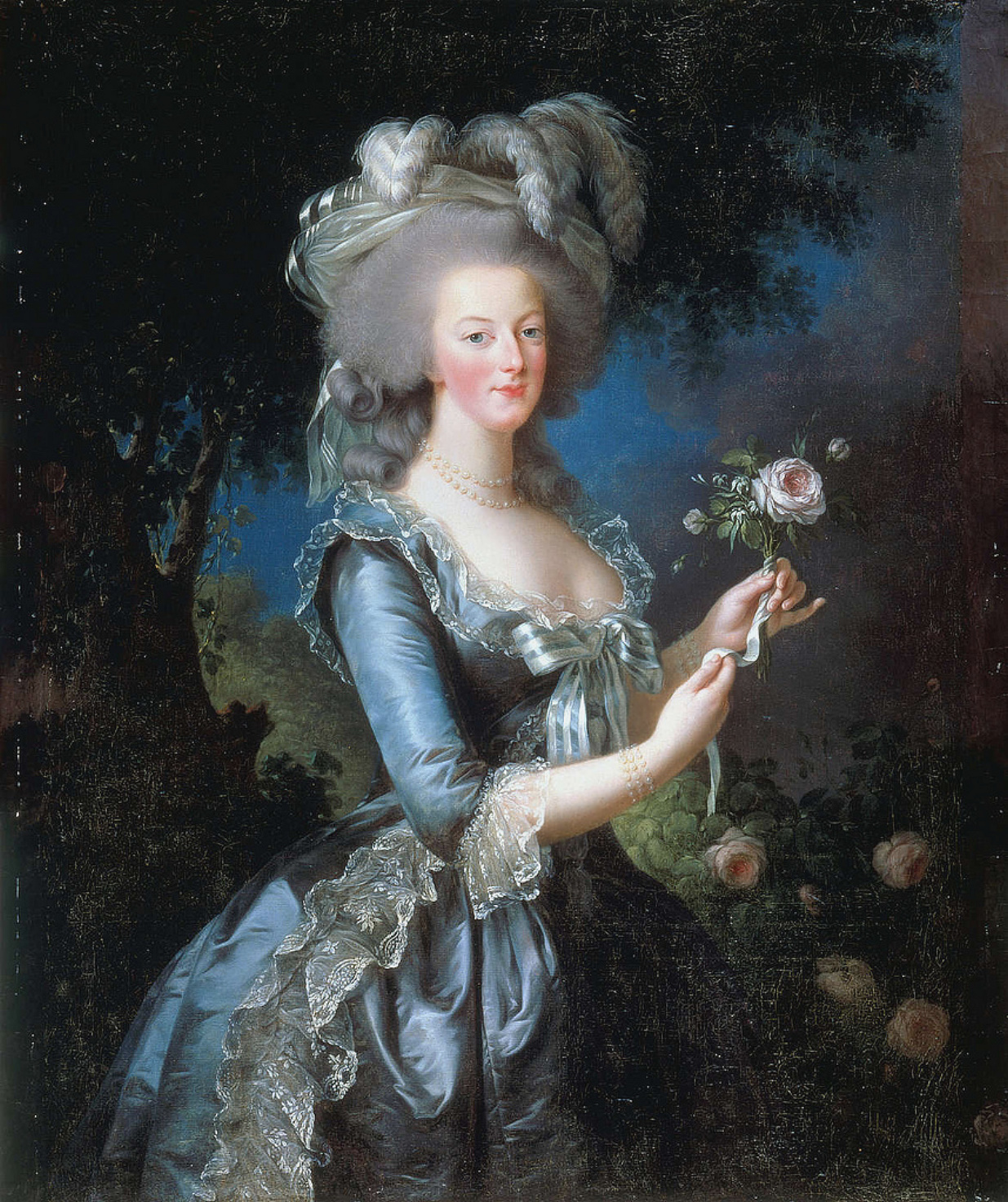
In the Queen's hamlet near the Petit Trianon she had a rose garden planted which provided her with plenty of sweet-smelling, beautiful roses. Roses are often depicted in a central position in portraits of the Queen. Marie Antoinette personally had a hand in all the gardening plans carried out at her private retreat; even the colour schemes of each individual flower bed was chosen by the Queen.


Back at Versailles not only the décor but also the scent of the Queen's apartment was infused with fresh flowers. When her personal perfumer Jean-Louis Fargeon came to see Marie Antoinette he would often bring - besides the flowery perfumes - gloves scented with flowers such as hyacinths and jasmine. It was a specific task for one of her ladies to make sure that the huge vases were always filled with fresh flowers.


Billedresultat for versailles queen's bedroom
Detail of the wallpaper from the Queen's
bedchamber
Boiserie detail at Petit Trianon
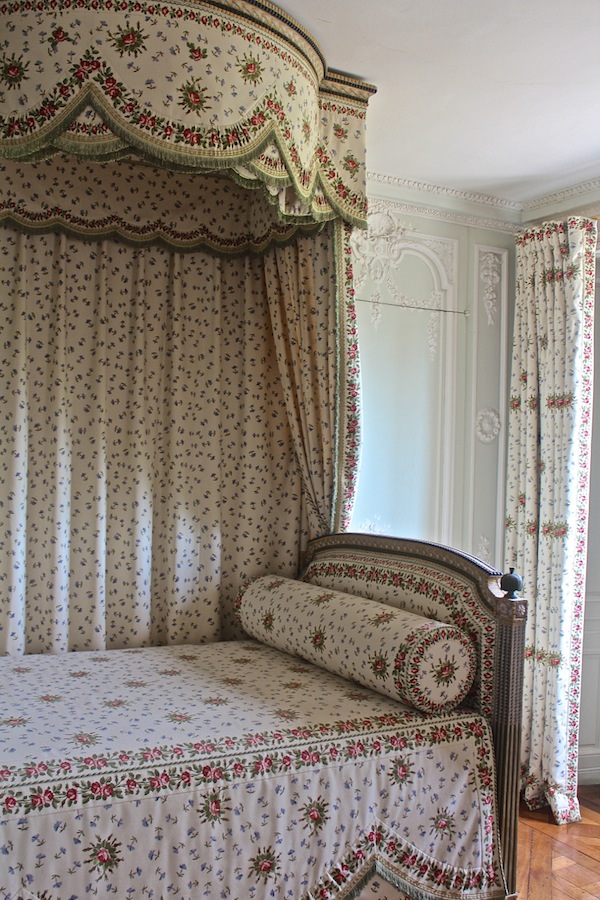
Floral bedding of the Queen's bedroom at the Petit Trianon
Sometime during her reign as Queen consort she heard of a man, named Pierre Joseph Redouté, who was said to be able to draw flowers and plants in richer details than anyone else. Intrigued, she summoned Redouté to court where she was so impressed with him that she invited him to the Petit Trianon. Here, he would sketch many of the Queen's flowers. Sadly, these sketches were burned during the revolution.

The Queen's clothing were also often over-strewn with beautifully embroidered flowers.

Fragment of Marie Antoinette's court dress' petticoat: 1780 Museum of London
Fragment of the Queen's petticoat

Friday, 5 December 2014

Saint-Germain-en-Laye

Saint-Germain-en-Laye has a long history dating back to 1122. It has the honour of being the birthplace of Louis XIV who, as an adult, would use the château as the base of his court - until Versailles was built. Originally, there was a new and an old castle which combined made up the royal palace but Louis XIV had the old palace - long neglected - demolished in the 1660s.

Andre Le Nôtre was given his chance to impress the King when in 1669 he was tasked with redoing the gardens which he completed four years later.

When Louis XIV had definitely moved his court to Versailles he let the exiled King James II of England use Saint-Germain-en-Laye as his royal residence. Unfortunately for the English King he would never return to England and he is buried in the nearby church. The château never really regained royal favour and continued to serve as a residence for the exiled English royal family.


Courtyard


View of the castle and gardens in 1614

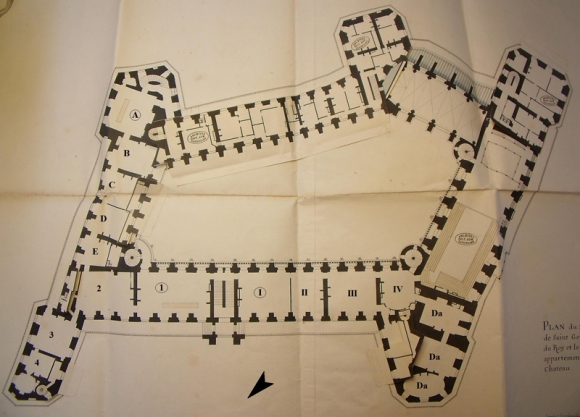
The floor plans:


2nd floor

Thursday, 4 December 2014

The English Garden

The English Garden, designed by Richard Mique, took the place of Louis XV's botanical garden. The English style was wilder and more natural than the straight lines and methodical design that was characteristic for the French garden. As the works of Rousseau became more and more popular, so did this style and Marie Antoinette was more than pleased to be able to break the rather stiff garden design that were usually the style at Versailles.

The English Garden contains these:

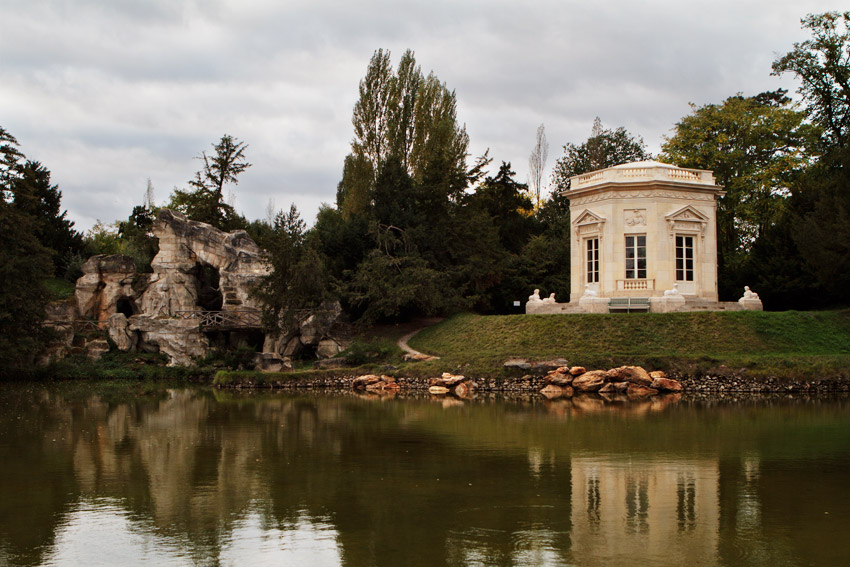
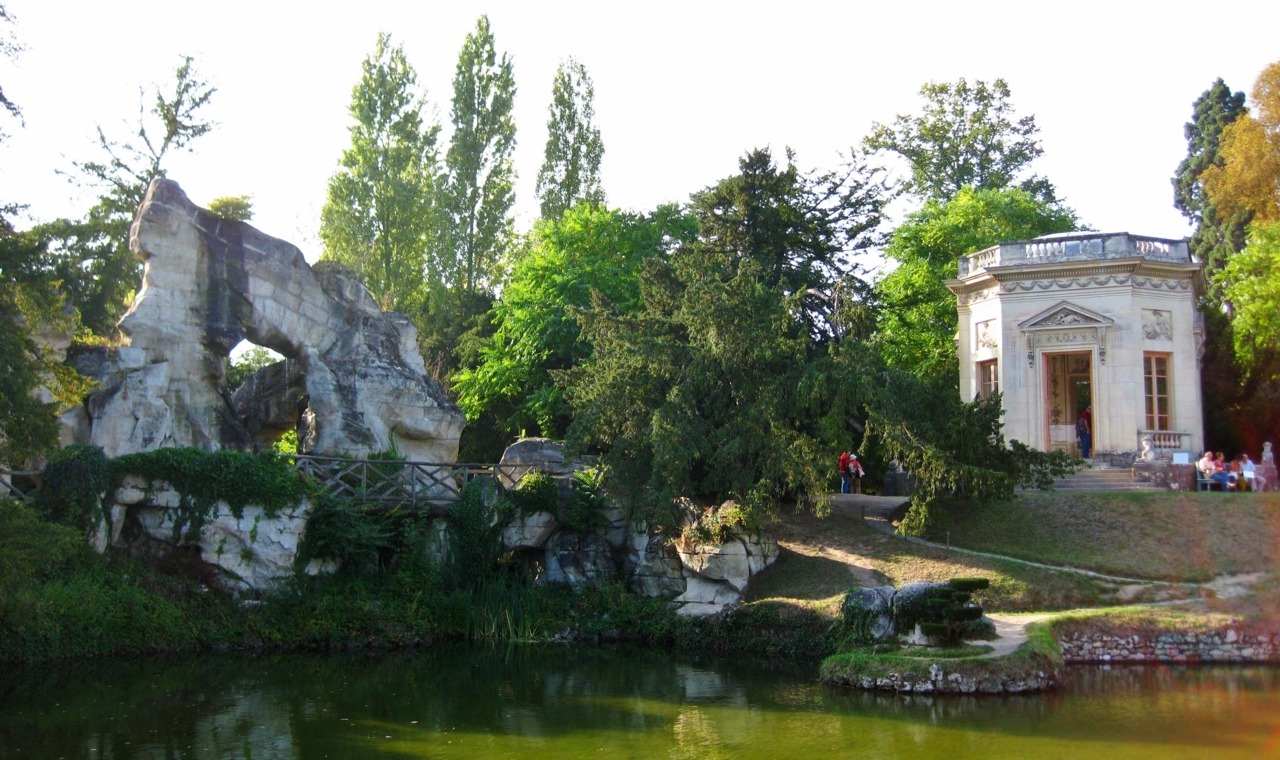
The Belvedere 

Finished in 1777 by Richard Mique, the Belvedere is decorated by Deschamps who chose a frieze decorated with fruits and flowers. Also, hunting and gardening are depicted in detailed pediments while the windows refers to the seasons. The Belvedere consists of one large living room with a mosaic floor designed by Le Riche.
The Belvedere is located such as to be overlooking the lake; the style of the exterior is inspired by the Asian padogas.


The restored murals


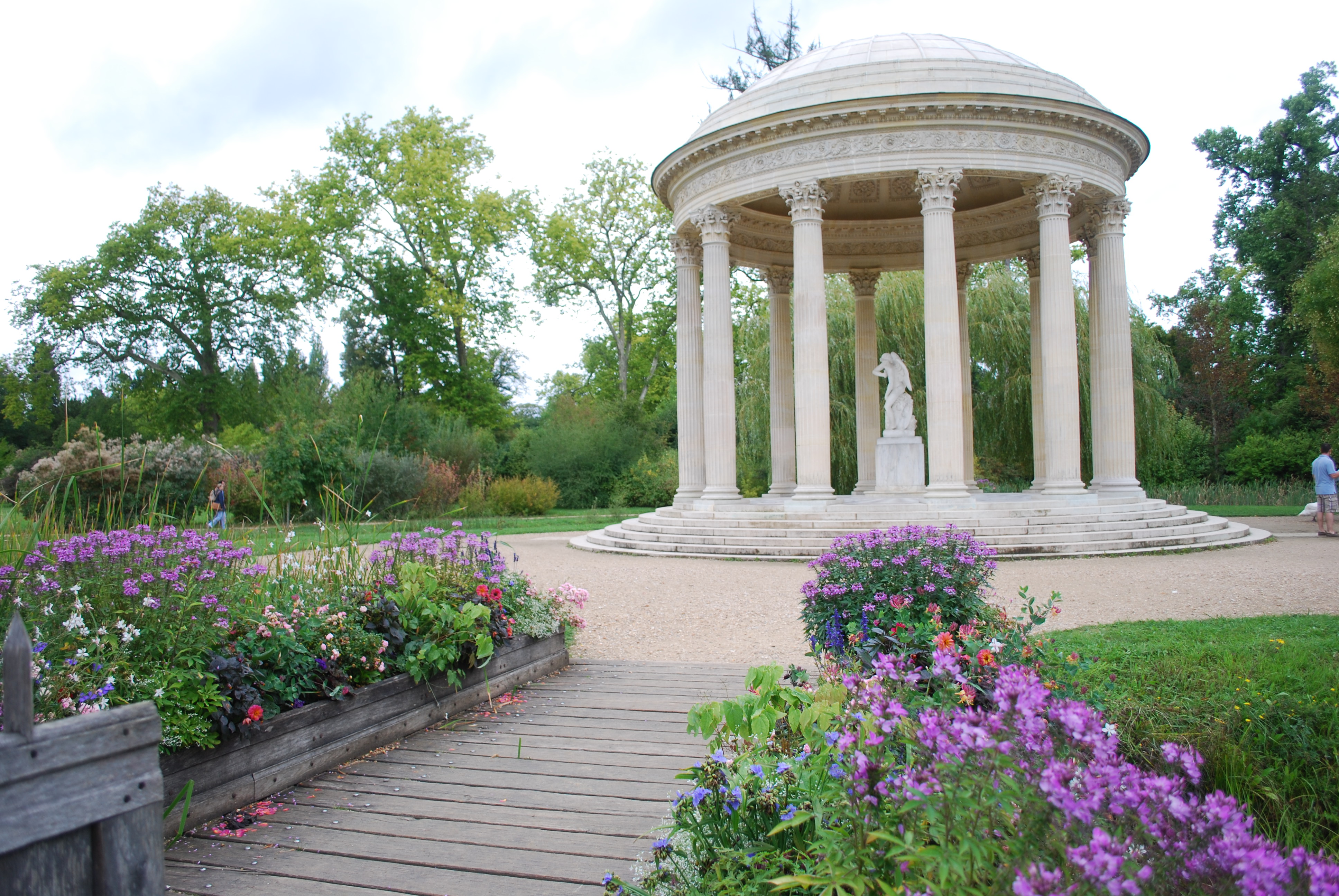
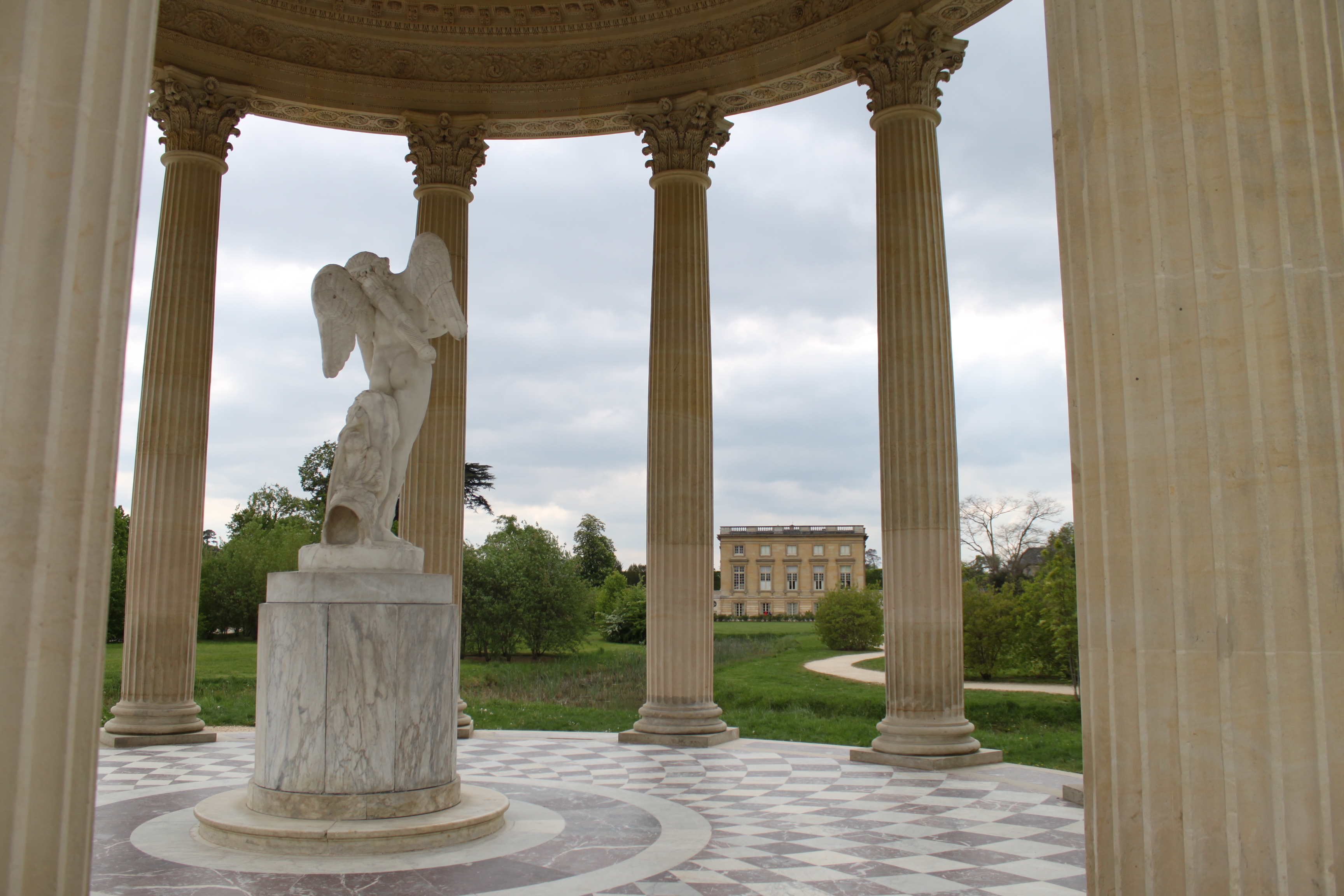
The Love Temple

The Love Temple is one of the most recognizable aspects of the English garden and is visible from the Queen's Bedroom in the Petit Trianon. Richard Mique completed the design for the temple which was finished in 1778 and made entirely out of marble. Once again Deschamps was called in to decorate the temple which was dedicated to love, particularly the love between Louis XVI and Marie Antoinette. Of course, Cupid is a central figure in the design.
When Marie Antoinette hosted parties here the temple functioned as a key figure in theatrical performances.


The Rock, Snail Monument and The Grotto

The Rock was quite difficult to create (being completely out of place in the gardens) and was not finished until 1782. It was designed in such a way to allow water to cascade down the rocks and into the lake. The Rock is located right next to the Belvedere.


From the Grotto a little gap in the rocks Marie Antoinette could see who was coming. In those cases when she did not quite want to talk she could always escape down a little staircase. Marie Antoinette considered this shaded and secluded little spot one of her favourite places in her gardens. In fact the entrance itself was difficult to detect for a newcomer. Legend has it that Marie Antoinette was sitting in that exact spot when she was informed that a mob was headed towards Versailles...


Entrance to the grotto


Wednesday, 3 December 2014

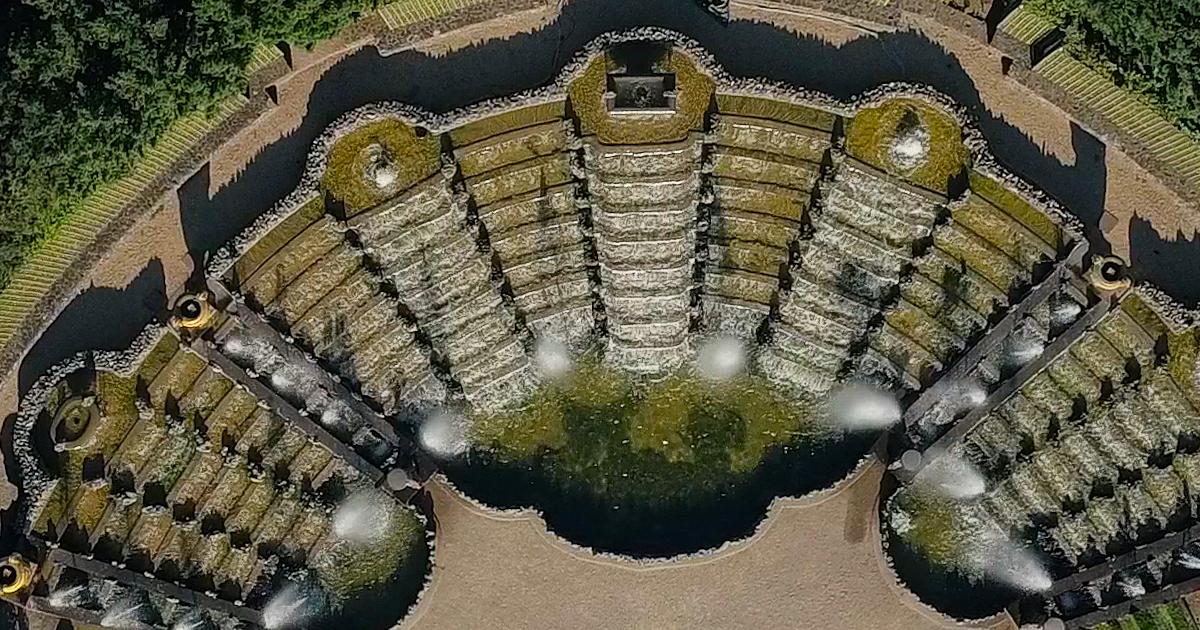
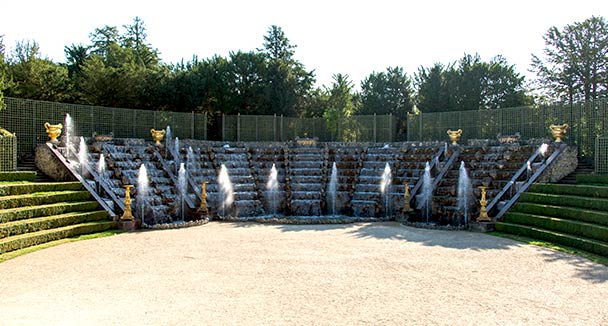
The Water Theatre Grove

Built by Le Nôtre between 1671 and 1674 it was one of the most elaborate pieces of the garden. As such it became the favourite grove of Louis XIV. It would be used for outdoor theatrical performances which were a great favourite with the Sun King's court.

Sadly, for the Water Theatre Grove, neither Louis XV nor Louis XVI had any particular fondness for the grove and it was left pretty much to itself after Louis XIV died. It was not until 1775 Louis XVI had the Grove completely demolished and gave way to a large, circular lawn. The fate of the Grove was further damaged in the 1990's when two successive storms further damaged it and ever since it has been a storage area.

Recently, Louis Benech was chosen to give the grove a new look and restore it to match the rest of the park.

Since the original garden is long gone we have nothing but these contemporary drawings of the layout to show for it.

Billedresultat for versailles water theatre

Billedresultat for versailles water theatre

Billedresultat for versailles water theatre