Showing posts with label courtly-tidbits. Show all posts

Saturday, 6 December 2014

Les Fleurs de la Reine

Marie Antoinette had a true passion for flowers which most likely was a result of her upbringing with her father who adored his gardens. Already at a young age flowers were dear to her. While travelling through Nancy on her way to Versailles (and her wedding) she had spent the day gathering rose petals.

This fondness for floral prints and flower decorations is clearly shining through in quite a lot of the merchandise presented to the Queen. Among her favourite flowers were roses, violets, lilacs, hyacinths, irises and lilies.


Detail of one of the Queen's chair


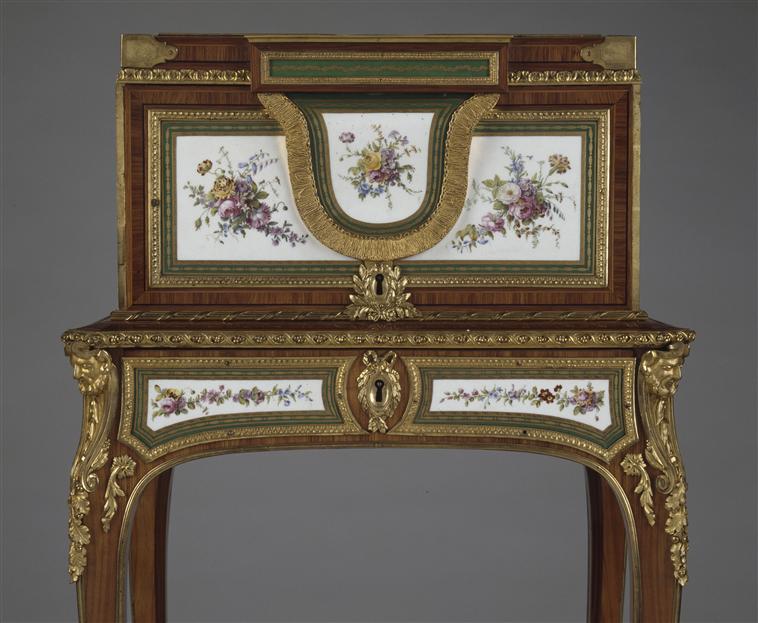
Table for the Queen by Martin Carlin

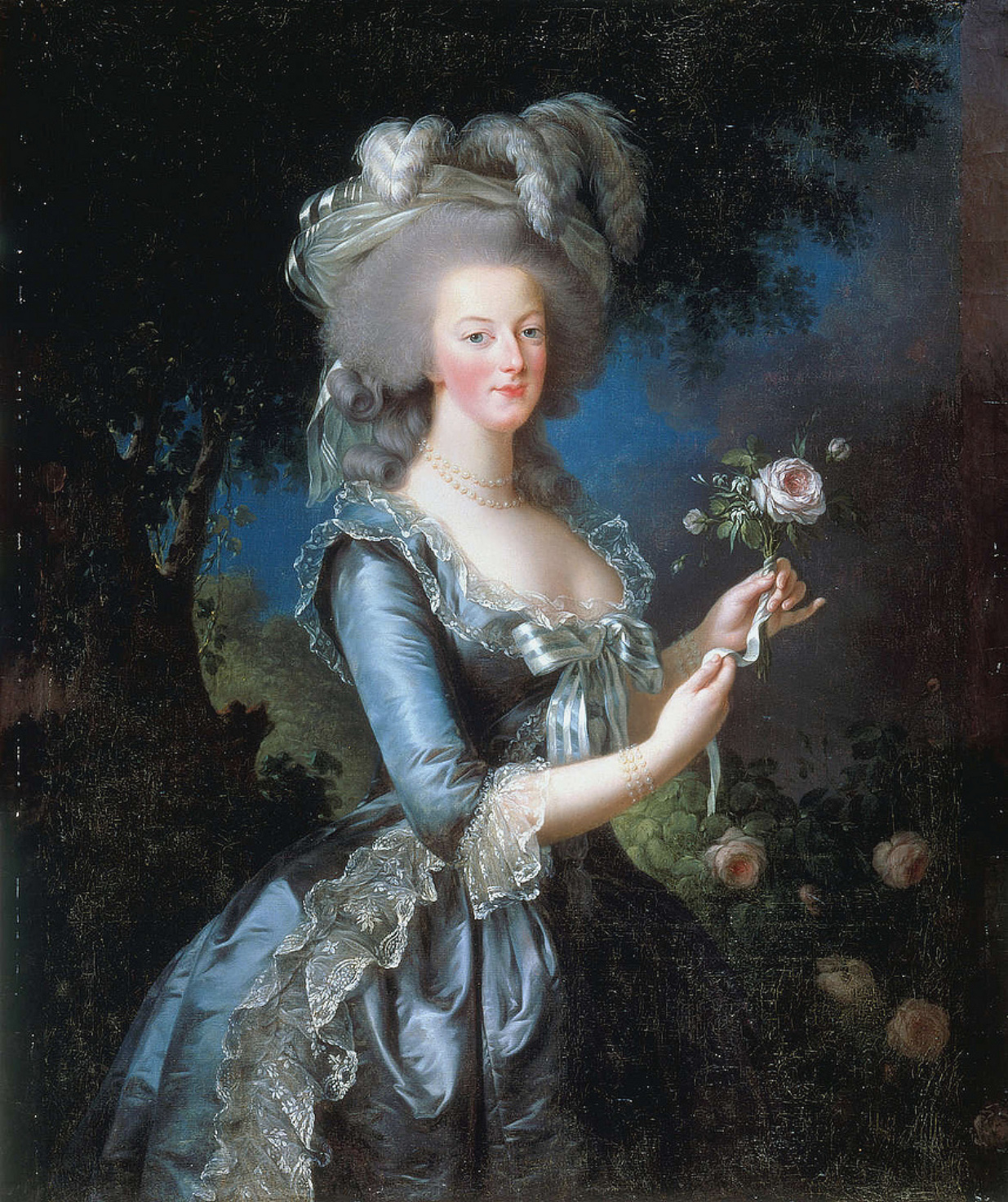
In the Queen's hamlet near the Petit Trianon she had a rose garden planted which provided her with plenty of sweet-smelling, beautiful roses. Roses are often depicted in a central position in portraits of the Queen. Marie Antoinette personally had a hand in all the gardening plans carried out at her private retreat; even the colour schemes of each individual flower bed was chosen by the Queen.


Back at Versailles not only the décor but also the scent of the Queen's apartment was infused with fresh flowers. When her personal perfumer Jean-Louis Fargeon came to see Marie Antoinette he would often bring - besides the flowery perfumes - gloves scented with flowers such as hyacinths and jasmine. It was a specific task for one of her ladies to make sure that the huge vases were always filled with fresh flowers.


Billedresultat for versailles queen's bedroom
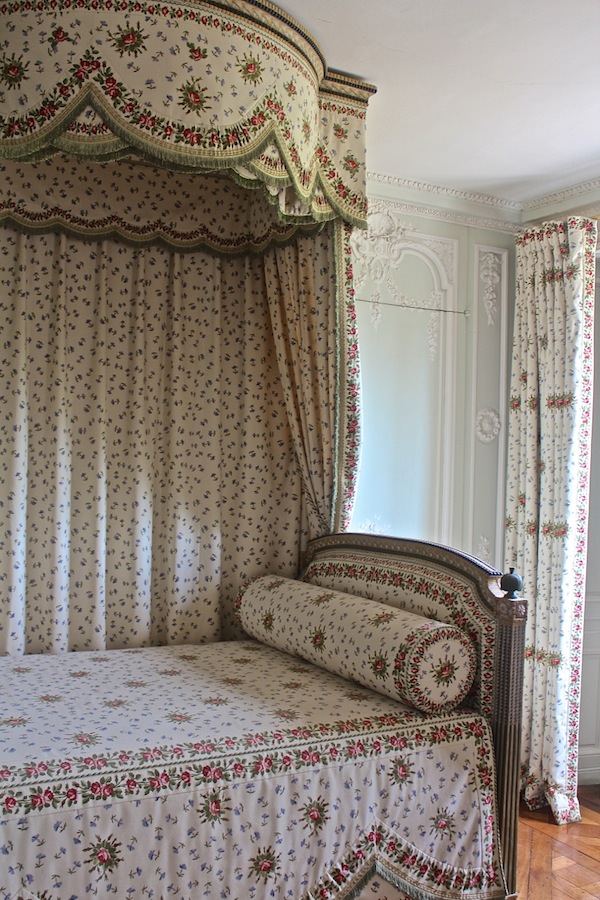
Detail of the wallpaper from the Queen's
bedchamber
Boiserie detail at Petit Trianon
Floral bedding of the Queen's bedroom at the Petit Trianon
Sometime during her reign as Queen consort she heard of a man, named Pierre Joseph Redouté, who was said to be able to draw flowers and plants in richer details than anyone else. Intrigued, she summoned Redouté to court where she was so impressed with him that she invited him to the Petit Trianon. Here, he would sketch many of the Queen's flowers. Sadly, these sketches were burned during the revolution.

The Queen's clothing were also often over-strewn with beautifully embroidered flowers.

Fragment of Marie Antoinette's court dress' petticoat: 1780 Museum of London
Fragment of the Queen's petticoat

Thursday, 30 October 2014

Mistresses and Favourites: What a Cost!

It is no secret that finding the way to King's side - whether by marriage or as a mistress - was a golden road. Both Louis XIV and Louis XV lavished presents on their darlings both because it was thought to enhance the strength of the monarchy but also for a far simpler reason: because they wanted to.

These presents would consists of anything from jewels and extravagant dresses to private châteaux to downright cash.

Both the Queen consorts of Louis XIV and Louis XV lived rather withdrawn lives after their husbands attentions began to wander. Consequently, it is the expenses of the last Queen consort, Marie Antoinette, who has received the most attention. But as it turns out the Austrian-born Marie Antoinette spent far less than Louis XIV's and XV's mistresses had before her.

Madame de Montespan

Madame de Montespan has been referred to as "the real Queen of France" and was certainly treated as such during her years as Louis XIV's mistress. Montespan did not have a claim to a whole lot if you only consider her position as one of the actual Queen's ladies-in-waiting which only brought 6000 livres each year. Interestingly enough, she received a great deal of cash payments from Louis XIV rather than jewels, palaces etc.

Madame de Montespan

Once Madame de Montespan had begun giving birth to the King's children (7 in total) her royal lover bestowed 150.000 livres on her for their children's education and upbringing. Colbert was ordered to place 97.500 livres at her disposal in the spring of 1677. Later in 1680 when she was made a Duchess she received another cash endowment of 80.000 livres.

Like Madame de Pompadour after her Madame de Montespan owned several properties scattered across the French countryside. Two of her residences (Clagny and Glatigny) cost 405.502 livres just for the grounds while the construction of the châteaux cost 2.456.218 livres!

Up until 1707 it is estimated that Montespan received 100.000 livres each year as her revenue - at that point the treasury was basically empty.

Madame de Pompadour

Madame de Pompadour was by far one of the most expensive mistresses of the ancien regime. Upon her death it was estimated that she had spent 35.924.140 livres in her tenure from 1745-64. Today, that translates into about 470.000 pounds or 231.000.000 dollars!
Within this number lies 500.000 livres every year for perfume to be used at her Château de Choisy

Among her priced possessions were the châteaux owned by Madame de Pompadour. Her properties included the Châteaux de Pompadour, de Choisy, de la Muette, de Bellevue, de Champs, de Menars as well as the Hôtel d'Élysées and the Petit Trianon which she never saw finished.
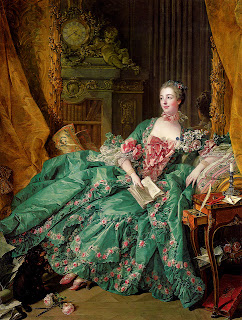
Madame de Pompadour


As it often is with so many estates, they must be kept in fashion. So, 2.500.000 livres were used for Bellevue and 200.000 livres for a complete redecoration at her Château de Champs. Unfortunately, her royal lover was not fond of staying at Champs, so they rarely stayed there. To pay for the Château de Menars she laid down 900.000 livres and sold some pearl bracelets. And when Bellevue became interesting to Louis, she simply sold it back to him for 800.000 livres.

No one did more to ensure that the King was constantly entertained than Madame de Pompadour. Her most famous attribution to the Menus-Plaisirs was a small, private theatre which originally could only entertain 14 guests but was later expanded to 40. Since the essence of the maitresse-en-titre was to entertain the King most expenses were paid by this department. Therefore, we know that about 2.500.000 livres were spent each year (in comparison had the department only spent 400.000 livres under Louis XIV).


Madame du Barry

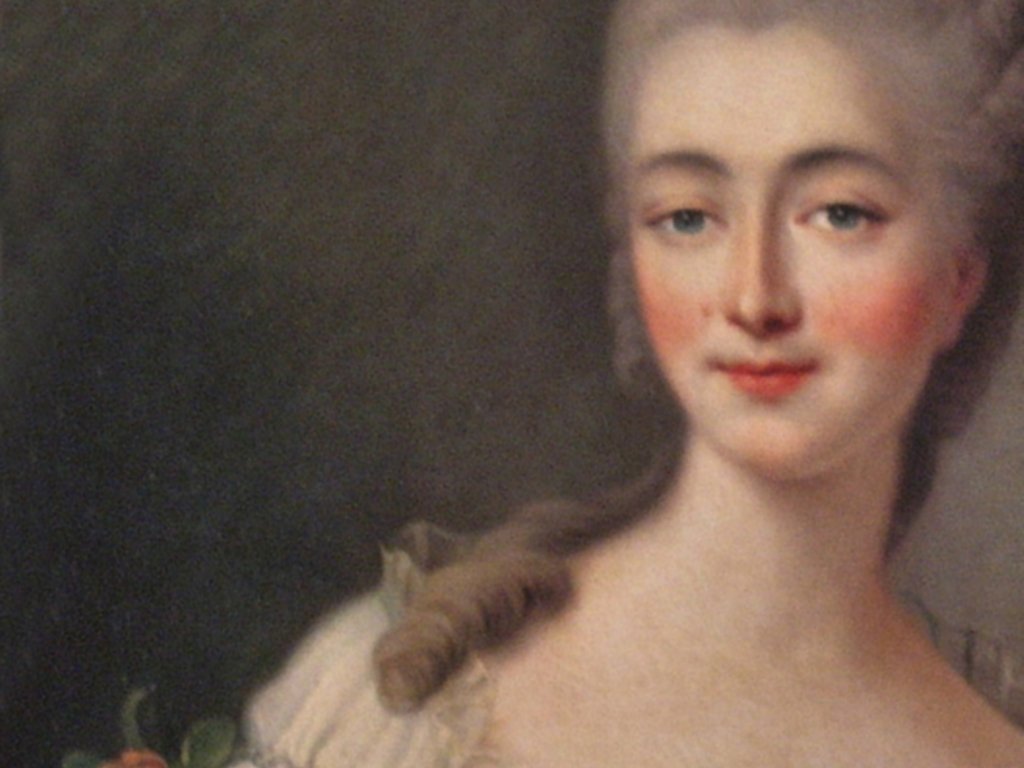
It was a tough job to take over after Madame de Pompadour but Louis XV found one last woman to lavish his affections - and presents - on. Unlike Madame de Pompadour, Madame du Barry was immensely fond of clothing and jewels. 
Her wardrobe became more and more expensive with robes costing anything from 1000-10.000 livres each. Laces were a particular favourite which only added to the expense of the gowns - this raised the sum of a pair of slippers to 600 livres while an English-styled morning robe reached 4000.

The original revenue of a royal mistress was 30.000 livres which was doubled for Madame du Barry. She was also given the so-called Nantes Lodges as a New Year's Gift by the King; these lodges brought in 40.000 livres annually.


Billedresultat for madame du barry waxwork
Madame du Barry

When it came to making a good impression, it mattered little where the money came from or how much was used. The Dauphine Marie Antoinette made no show of hiding her dislike for the royal favourite which Madame du Barry desperately wanted to change. With this object in mind she offered the Dauphine a pair of earrings set with four brilliants in January 1774 at a cost of 700.000 livres - if the Dauphine chose to accept the gift du Barry (or rather the King) would pay the bill.

Monday, 22 September 2014

Silver Furniture of Louis XIV

Louis XIV was a firm believer in the notion that a monarch and his country's power was best shown in his palaces and the furniture in it. However, in 1689 the continuous wars - which the Sun King and his contemporaries also believed was a sign of strength - had exhausted the French treasury. To meet the demands of the finances Louis had his precious silver furniture sent to the mint. But what did these pieces of furniture look like?

Design by Charles le Brun for a console table
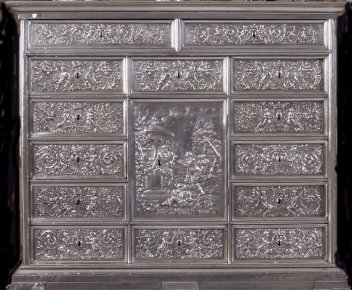
First of all, let me make it clear that the furniture was of solid silver - not gilded tin or wood. At the peak Louis owned just above 200 pieces of solid-silver furniture. The furniture would be displayed particularly in the Hall of Mirrors which was lined with silver candelabras and benches. When the Doge of Genoa visited Versailles he was lead through the King's grand apartment glittering with silver lighted up with thousands of candles before reaching the Hall of Mirrors were the impressive sight of the Sun King, sitting on his silver throne met him.  The furniture was made in Gobelins which is also famous for the tapestries named after the town.

Drawing by Jean Berain (1686) showing the silver throne flanked by six candelabras in the Hall of Mirrors
Beaudrin Yvart (1611-1680) - Cassolette en argent du mobilier de Louis XIV – Musée National du Château de Versailles
One of the vases actually at Versailles
Louis placed the order in 1664 but the furniture collection was not complete until 1682 - just seven years before it would all be sent to the mint. The collection included pretty much everything imaginable. Mirrors, commodes, benches, candelabras, vases, statues etc. Everything was finely carved and decorated in the finest style by masters of Paris.

Here is an computer generated version of what the drawing above would have
looked like
Actually, Charles le Brun was behind the design of many - if not most - of the silver furniture created for Louis XIV. The King probably wanted someone whom he could rely upon to come up with something truly magnificent and who better than one of the architects behind Versailles?
Another one of the main designers was Claude Ballin who personally oversaw the creation 167 pieces of furniture. Fortunately for him, Ballin died three years before the silver was melted down again.

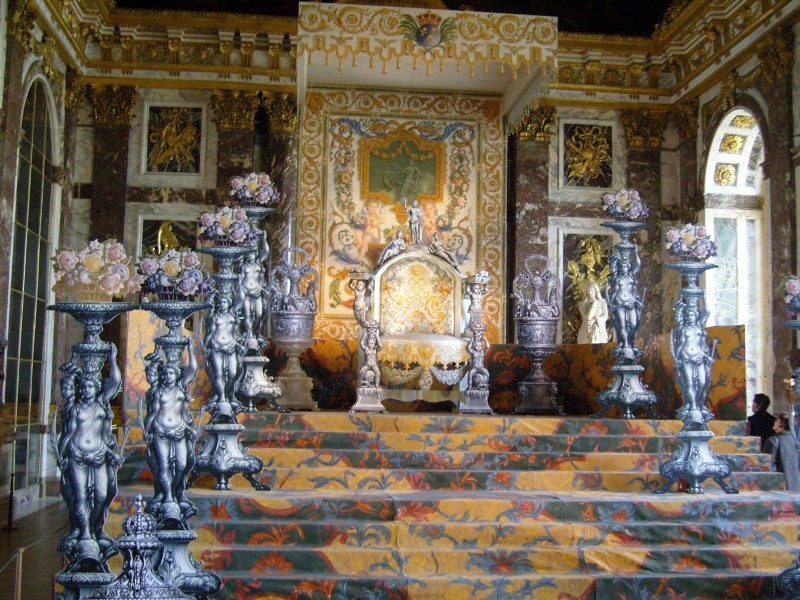
Reconstitution en carton peint du trône de Louis XIV et de la décoration qui l'entourait - Exposition "Quand Versailles était meublé d'argent", Chateau de Versailles, 21 novembre 2007-9 mars 2008
The candelabras
The cost of the silver furniture was immense and put pressure on not just the treasury but also the foundation of Versailles itself. It is estimated that the 200 pieces of furniture weighed a combined 20 tons! Louis XIV had a silver balustrade made to surround his bed which alone weighed more than 1 ton! This balustrade is also estimated to have cost 30.500 pounds in it's day...

Recently, the Château de Versailles hosted an exhibition trying to re-create the sight and impression of silver furniture. Naturally, France has practically none left but Denmark is more than rich on solid-silver furniture. Her Majesty the Queen of Denmark suggested that Versailles could borrow a substantial part of the Danish collection in exchange for cash to repair the castle of Rosenborg in Copenhagen. The deal was made. The Danish collection was complimented with pieces from London, Augsburg and Moscow. These are some of the furniture included in the exhibition, from them you should be able to get an idea of the design used at the court of Louis XIV.

Commode, solid silver, Rosenborg Castle, Denmark

Silver table, made in Augsburg, Rosenborg Castle, Denmark


One of two silver lions, Rosenborg Castle, Denmark


Table, Windsor Castle, England

Thursday, 14 August 2014

The Italian Vice Strikes Versailles

"In France the nobility, in Spain the clergy and in Italy everyone!"
That is how a contemporary quote described what was then known as sodomy but is now known as homosexuality. Indeed, most Frenchmen agreed with the idea that homosexuality had originated in Italy and consequently it was referred to as "the Italian vice" (in Italy they retorted by promptly naming it "the French disease"). So, let's take a look at how the "vice" struck the core of French power.

Philippe, Duc d'Orlèans

Philippe, Duc d'Orlèans - brother of Louis XIV - is probably the most famous homosexual man at the court of Versailles. Knowing that his almighty brother highly disapproved of homosexuality Philippe used it as the only weapon he had to show his displeasure of the King's choices. Consequently, whenever the King made a decision concerning his brother (for example his marriage) Philippe would openly flaunt his sexuality much to the annoyance of his brother. It should be said that Louis never acted against his brother's sexuality but the reason therefore is not out of brotherly compassion; Louis knew that Philippe could never pose a threat to the throne when it was publicly known that he was a so-called sodomite. So, Louis let Philippe continue his outburst knowing that his brother truly had no other weapon.
Over time an entourage would gather around Philippe whose members would often be in some way connected with homosexuality. Thus the King's brother created a safe haven for those whose tastes were not approved of elsewhere.

Sadly, common people were not so fortunate to escape persecution. The penalty for "sodomy" was death and quite a few went to their deaths on this account. In this respect the courtiers were far safer than their subjects since they would hardly ever be executed but rather exiled if things got too far. The common point of view throughout the Ancien Regime was that homosexuality was something best kept in the dark.

Duc de Boufflers

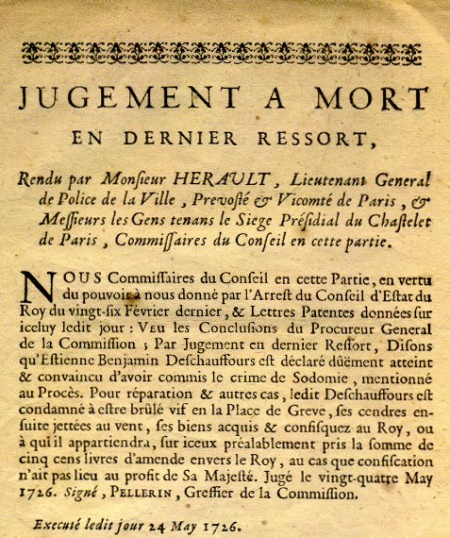
In the beginning of the 1720's (around 1722) a scandal arose at court involving homosexuality. The Duc de Boufflers and the Marquis d'Alincourt were both exiled from court following "sexual escapades" - not necessarily with each other - and when the young Louis XV asked where these gentlemen had gone, he was informed that they had been sent away for destroying some fences in the garden. Still, despite the increased measures taken to contain the spreading of the "vice" more and more courtiers and people of note were becoming involved with the subject. Louis XV's governor, the Marècal de Villeroy, was found out to be in a relationship with the First Gentleman of the King's Bedchamber named La Trémoille. An even larger scandal erupted when the son of a man of state (Benjamin Deschauffours) was discovered to have run a brothel of male prostitutes particularly for the court's use! He was later burned at the stake.

The announcement of Deschauffours' death punishment. As you
can see his execution was scheduled for 24 May 1726

Despite that Deschauffours' fate was meant to be a warning, it had little effect on the courtiers. By the standards of the time nothing was really done to the noblemen who practised this "vice". In 1726 the Marèchal d'Uxelles was openly displaying his sexuality without evoking a single punishment. Again in 1729 a Marquis who last name is lost to history was returned to his offices after a short "break" on account of his sexuality. Another unknown Marquis made open advances to a guard on the terraces of Versailles itself!

This tendency to cover up is exactly why Louis XVI refrained from passing a statue against homosexuals in 1784, it was better not to bring attention to it. The list of courtiers who indulged in their same-sex passions continued to grow throughout Louis XVI's reign. The Ancien Regime's homosexual courtiers were married nonetheless in order to improve the line's standing, mostly to women who would themselves found other lovers.
While the view of homosexuality from the three Kings' point of views were different from one another they were all opposed these tastes. Louis XIV had openly disliked it, Louis XV seemed rather indifferent to it and probably only had the aversion common at the time and Louis XVI was just as prudish about homosexuality as he was about his own heterosexuality.

These are some courtiers who connected with the "Italian tastes":

Philippe, Duc d'Orlèans
Duc de Boufflers
Marèchal de Mouchy
Marquis de Crénolles
Marquis d'Alincourt
Comte de Besenval
Marèchal de Villeroy
Marquis de Chambonas
Baron de Milleville
Marèchal d'Uxelles
Prince de Bouillon
Marquis de Villette

Sunday, 20 July 2014

Significant Earrings

Having the love of the King was no easy matter especially not in a court packed with beautiful, young women all more than willing to become his new mistress. Madame de Montespan certainly knew this and combined with her jealous nature was to make a mortifying discovery in the final years of the 1670's.

The King's maîtresse-en-titre had noticed that the beautiful, red-headed Anne de Rohan-Chabot, Princesse de Soubise was making a very fine figure at court. The Princesse de Soubise was - of course - married and to a man who had a habit of getting her pregnant annually. However, the Prince de Soubise was not the only one attracted to Anne. Louis XIV had noticed her perfect complexion and lush hair and had become rather infatuated with her much to Madame de Montespan's frustration. But the maîtresse was convinced that nothing was going on as of yet.
The observant Montespan had also made another observation: the Princesse de Soubise would wear the same emerald earrings quite often at court. Eager to keep her royal lover she went so far as having the King followed! It became clear to her that the Princesse used the earrings as a signal to the King that the Prince de Soubise would be in Paris and therefore out of the way, making it possible for the couple to indulge in a private rendezvous.

The discovery brought on a rage from the fiery Montespan who was then assured by Louis himself that the affair was over. It was not though but did not last long afterwards. Thankfully for the King Madame de Montespan never learned of it.


Anne de Rohan-Chabot, Princesse de Soubise

Friday, 28 March 2014

Not with a fizzle, but with a bang ...

The Princesse d'Harcourt was widely known at court to be somewhat of a harpy in the words of Saint-Simon. Her fiery temper and greed for money combined with a less fortunate appearance at a court that worshipped beauty meant that her circle of friends was limited. The Duc and Duchesse de Bourgogne loved teasing the hot-headed Princesse and would often play pranks on her knowing how easy she was to agitate. For some reason their pranks concerning this Princesse often involved firecrackers...

One of these pranks happened while a smaller group of courtiers were staying at the Château de Marly. The Duc and Duchesse de Bourgogne had placed fire-crackers all along a foot path where they knew the Princesse d'Harcourt would pass - as it would happen the Princesse was "horribly afraid of everything" again according Saint-Simon. Having bribed the footmen who carried the Princesse in her sedan chair they waited until she was in the middle of the path before the firecrackers were ignited. Screaming the Princesse immediately went into a panic and her two carriers set her down and ran off. The Princesse was furious and continued squealing while she struggled to get out of her chair. By now the noise - and the rumour of the appending scheme - had attracted the courtiers who now hasted to her aid thought mostly for their own amusement. Screaming abuses to all around her especially the Duc and Duchesse de Bourgogne the Princesse eventually took her leave.

Saturday, 4 January 2014

The Royal Enemas ...

Louis XIV was a man who was more than fond of using enemas on a regular basis - in his defence it was a wide-spread fashion among the royals and nobles of Europe since it was thought to be very good for your health. Rumour has it that the Sun King had thousands of enemas performed on his poor behind through-out his lifetime. It was not uncommon that the King excused himself after having had his supper and went into his private apartments, had an enema performed and then rejoined his courtiers! As for Louis XIV himself he was a fervent believer that the regular enemas was the reason behind his good health and his long life.

These buttons are a satirical depiction of
Louis XIV during and after an enema
Of course the very elite of France was not satisfied with using common water for this delicate "operation". Instead the fluids were perfumed with rose, orange and angelica and was even slightly coloured by the request of the users. Louis XIV's father and predecessor, Louis XIII, had been fond of enemas too but he preferred his with almond milk; during one (!) year he had 212 enemas performed.
One little anecdote created quite a sensation but is a perfect example of how common a phenomenon this was. During a court ball the Duchesse de Bourgogne was engaged in a conversation with Louis XIV himself when a maid of hers snug in under the Duchesse's elaborate ball gown and performed an enema right on the spot!
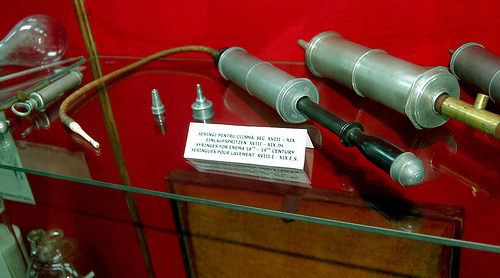
These are the kind of instruments used
at the time
It was not just the high and mighty who were expected to have this peculiar habit. During the enema-fanatic Louis XIV's reign every maid who served at court - especially the ones who performed a duty close to a member of the nobility - was expected to have an enema performed daily so that her work would not be interrupted by visits to the toilet! Thus it became customary for the nobles to ask their maids whether they had performed their "toilet" upon their arrival. Also, young ladies of wealthier families who were not at court nor even of the nobility followed the trend because it was believed to be good for the complexion.

Friday, 27 December 2013

Noble Nicknames

It has always been "fashionable" to bestow nicknames on those in the spotlight - both good and bad. In the l'ancien régieme this was no different and many of the courtiers had to put up with several nicknames that was not always particularly friendly.

Louis XIV is most famously known as the "Sun King" due to his position as the absolute centre of power in France - the entire kingdom "circled" around him, if you will.
Louis XV was for a time given the affectionate nickname "the Beloved" by his people but a series of military and political failures robbed him of the title - and his people's affection.
Louis XVI was given the offending nickname of "Louis the Last" by the revolutionaries - a scary thought considering what happened to him.

Marie Antoinette received countless nicknames by the French people but most of them was far from flattering. She was known as "Madame Deficit" and "L'Autrichienne" - the latter was a particular insulting combination of "Austrian" and "Bitch" (Chienne is French for a female dog). 

Philippe I, Duc d'Orléans had a special ability to marry his children into the Catholic royal families of Europe which earned him the nickname of "grandfather of Europe".

Marie Clothilde de France (younger sister of Louis XVI) was another one who did not escape the courtiers' vicious targeting despite her royal status. As with both her brother and his two successors Marie Clothilde was quite over-weight which meant that she was referred to as "Gros-Madame" - "gros" meaning large or in this case plainly fat Madame.

Louis XV himself was fond of giving his unmarried daughters - Mesdames Tantes - nicknames but not the affectionate kind you might expect from a father - on the contrary! Madame Victoire thus became "Coche" meaning an ageing sow, Madame Adélaïde was "Loque" meaning rag, the disabled Madame Louise was "Chiffe" which translates into bad silk while Madame Sophie was "Graille" or scrap.

It would seem that Madame Elisabeth - the youngest sister of Louis XVI - was among the very few whose nickname was actually flattering. Due to her natural sense of duty towards her tenants of her estate Montreuil and her charity she was called "the good Lady of Montreuil".

Couriters too could receive nicknames. As most people know Marie Antoinette named Comtesse de Noailles "Madame Etiquette" due to her insistence of keeping up the strict etiquette at all times. The daughter of Louis XVI and Marie Antoinette was nicknamed "Serious Mousseline" by her mother.

The Price of a Royal Bride

In the 18th century the tradition of a dowry had already existed for centuries. It was custom that the bride's family would sent large sums of money to the groom or his family; the tradition was based on the fact that a woman was not supposed to work and therefore could not contribute to the total income of her new household. So the money paid was originally intended as payment for the expenses a wife brought with her. But the 18th century was the century of extravagance and the dowries had never been bigger - it had become a symbol of wealth to give a female relative as large a dowry as possible. Dowries were not just money but could also consist of land, jewels, plates, furnitures and so on.
This post looks further into what the foreign brides brought with them to the French court during l'ancien régieme.
NOTE: the following amounts vary in currency and it is important to remember that they were given at different points in history so the economy was probably not the same in all cases.

Marie Thérèse of Spain married Louis XIV in 1660 and came with a promised dowry of 500.000 écus. However, Spain was in financial difficulties due to continuous warfare and the full dowry was never paid.

Marie Antoinette of Austria married Louis XVI in 1770. Her family had provided her with a dowry of 200.000 crowns which was considered to be a very small dowry for an Archduchess but in this case the bride's family paid for her entire wedding trousseau. 

Henrietta of England was married to Philippe, Duke d'Orléans with a promised dowry of 840.000 livres in 1661.


And for the others?

Louise Marie Adélaïde de Bourbon-Penthièvre brought a dowry of a staggering 6.000.000 livres to her wedding to Louis Philippe Joseph d'Orlèans as well as an annual income of 240.000!

Marie Anne de Bourbon (legitimized daughter of Louis XIV and Louise de La Vallière) was given 1.000.000 livres for her wedding to Louis Armand de Bourbon, Prince de Conti.

Wednesday, 11 December 2013

Giving Birth in Public

At Versailles it was the plight of not only every Queen but every royal princesse to give birth in public - that is with a large number of nobles present. To us this seems not only grotesque but also demeaning to the woman who is after all in pain and half-naked. But at the time there was a good reason for this, a vital reason in fact: to make sure that the newborn child was not substituted for another. It was feared - and with good reason considering the times - that a girl might be exchanged for a boy or even a boy might be exchanged if he was born severely disabled. It was all about securing the legacy, in royal cases even the throne.

This custom of giving birth in public is the reason for why the Queen's Bedroom is one of the largest rooms in the private apartments simply because there had to be room for so many people. This room alone saw the birth of 19 enfants de France or Children of France. There is another little interesting fact about birth-giving at Versailles. In 1682 when the first grandchild of Louis XIV was to be born he demanded that the birth was to take place within his splendid palace. Ever since then every single birth of a child who was in the direct line of succession had taken place in Versailles.

Whenever the Queen was about to give birth it was common practise for the distinguished ladies who resided nearby to travel to Versailles simply to witness the occasion. Allow me to walk you through how a royal birth took place. When the lady in question felt the first pangs of labour pains the doctors would be called and this was just about the same as alerting the entire palace. Immediately - no matter what time it was - the courtiers would hasten to the chamber of the mother-to-be which meant that the room itself would be filled up quickly - consequently the antechambers would also be filled to the brinks not only with the most important people in France but simple valets and guards were let in. It was not uncommon for even these noble ladies to hurry so much that they simply did not bother to put their entire ensemble on but merely went in their under-dresses!
On this occasion some of the otherwise rigid etiquette seem to have been slacked quite a lot. Both men and women sat down despite being in the present of the King; during the birth of Louis XV's son some courtiers even had the nerve to sit on the sofa right opposite Marie Leszczynska who was not even shielded by the bed-curtains! Every now and then the King would shortly leave the room to give an up-date to those who could not see for themselves.

It was not until after the near-fatal first laying-in of Marie Antoinette during which the Queen became unconscious that the rule was changed. However, this did not mean that the mother-to-be was allowed the privacy of a modern day woman since the Princes of the Family, the Chancellor, the Princes of the Blood and some ministers were still allowed in during the actual birth.

Drawing of the birth of Marie Antoinette and Louis XVI's
daughter, Madame Royale

Friday, 6 December 2013

An Exotic Creature

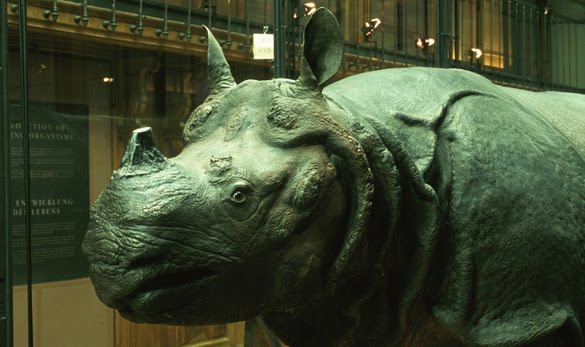
Louis XV was given the unusual gift of a rhinoceros by the French governor Jean-Baptiste Chevalier in Chandernagore in 1769. This meant that the rhinoceros - which was a male - was sent on its way from India to France where it landed on 4 June 1770. However, the strange creature did not arrive at the menagerie at Versailles before 11 September because there was no vehicle capable of transporting the heavy animal so one had to be built first.
For 22 years the rhinoceros made spectators at Versailles gasp at the strangeness of the animal but sadly the rhinoceros had a sad ending. During the revolution a revolutionary saw the animal as a sign of royalty and hacked it to death with his sabre. The mutilated corpse was then brought to the natural institute in Paris where it was stuffed and its skeleton was taken out and is now on display. There was one strange little discovery made as late as 1992 when it was found out that the horn actually belonged to a black African rhinoceros instead of the Indian rhinoceros' horn which is much smaller. After this the horn was exchanged with a horn of a Indian rhinoceros.


Louis XV's rhinoceros

Monday, 9 September 2013

The King and his Teeth

It is difficult to imagine the imposing Louis XIV commanding his troops without teeth... Strangely enough Louis XIV was born with two teeth in his mouth which only happens in one baby out of two thousand. The Sun King suffered from tooth aches from quite early in his life and it was all made worse by the endless supply of sugared fruit and sweet cakes. His tooth aches was at their worst in the 1680's.

In 1685 the tooth ache had gotten so bad that the King needed to have one of his (remaining) teeth extracted. The tooth in question was a molar and it had to go. So, the King had it removed and all seemed well for a time. But his doctors had never taking into account that you probably need to have some level of hygiene when dealing with a place as filled with bacteria as the mouth. Consequently, an infection set in and the doctors decided to make the King undergo a truly horrific operation when you consider that there was no anaesthetics - not even for the King: he had to have all his teeth on his upper jaw pulled out!
It might had been around this time that Louis talked to a Cardinal while eating through a straw. The Cardinal smoothly replied to the King's problem with: "Ah Sire, teeth! Nobody has teeth any more!"

Billedresultat for louis xiv
The king had few of his own teeth left by this time


Normally it was blacksmiths who had been responsible for pulling out teeth and for that reason many doctors refused to have anything to do with dentistry at first because it was considered to be a "mechanical field" and therefore not worthy of a doctor's attention. It was during the reign of Louis XIV that professional dentists first began to appear and the long-suffering Louis quickly added one to his entourage. Jean-François Capperon was the King's "dentiste" and Louis went so far as to ennoble him!
At the very end of Louis XIV's life he had no teeth whatsoever and lived of food that could be sucked up through a straw.

There is one myth also related to Louis XIV's teeth but it seems just a bit to unlikely to be true:
When the King was having yet another tooth pulled out something went wrong and a piece of his jaw was also extracted (ouch). This had the unfortunate consequence that whenever the King drank something it would also come out his nose! This allegedly went on until a surgeon filled the unintended hole. Judge for yourself: is it believable?

Friday, 23 August 2013

For the Love of Gold

Madame de Pompadour had a weakness for gold - it is strange then that she was not a fan of jewellery! She had her own collection of "objets d'art" at her tome house in Paris, the Hôtel d'Evreux, that is a collection of gold tableware. This collection was accumulated between 1755-1757. When it was complete it consisted of spoons, an egg-cup, a coffee grinder, a dish warmer and a coffee pot - all in gold!
And of course it had to be of the best quality so the Marquise ordered her pieces from the best Parisian goldsmiths such as Durand. The collection was stored in a large wooden box. Today the only surviving item from this collection is the coffee grinder (look it up under "Artefacts") and the only reason as to why we know of these is from Madame de Pompadour's inventory list that was made after her death.


Tuesday, 20 August 2013

Royal Interests

I thought it would be interesting to see what the members of the royal family was interested in and what they did as a hobby. The royals were not just swagging around Versailles all day and drinking champagne at night but they had real passions, just like everybody else.

Louis XV was fond of science. Not only was he a patron to many scientists and engineers the King would also take an active position towards the many new discoveries made during his time. When electricity caught the attention of scientists the King was not prepared to stand by; instead he had the Abbé Nollet perform an experiment where electrical discharges would be created in a jar in 1746. Among other things Louis would heartily support the experiments and missions of the French Academy of Science. The King once met with Angélique Du Coudray as a midwife was horrified over how little most French women (including other midwives!) actually knew about pregnancy and giving birth. She created a model of a fætus made of linen and presented it to Louis XV; the King was so impressed that he sent her all over France to spread her knowledge and hereby help his many female subjects. It was also in Louis XV's vegetable gardens that the first successful growth of French pineapple was grown.

Marie Leszczynska loved music and even took singing lessons herself. Due to her Polish origins the music in the chapel at Versailles changed towards more Polish and Polish-inspired music pieces. It was she who received a little up-coming music genius by the name of Wolfgang Amadeus Mozart when he visited Versailles as a child in 1763. During that visit the young prodigy was given the great honour of "standing next to her Majesty the entire evening". The Queen also loved painting. Water-colours were a favourite of hers and she would often use the painting technique herself. This love of the painted art also meant that the Queen would employ the most talented artists to paint some of the beautiful images still seen at Versailles today.

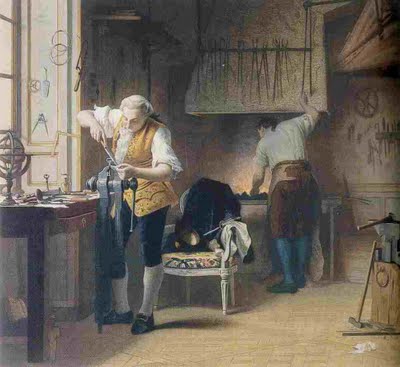
Louis XVI at his forge
Louis XVI had a fascination with locks. He had his own forge installed in his private apartments at Versailles where he could do what he did best: locksmithing. The King would be assisted by the professional locksmith François Gamain; however Gamain betrayed Louis when the French revolution broke out. Louis would not only make locks for fun but also simpler mechanical furniture including a metal chest which he used to store papers. Apparently, this hobby was seen as something positive - or at least when he was a child - because the young Louis was often encouraged to pursue this interest.

Marie Antoinette was also a great lover of music. In Vienna she received music lessons by Glück himself and she would later be his patron in France - her entire Austrian family all loved music. Her favourite instrument was the harp and she would often take lessons on it when at Versailles. When her son, Louis Charles, was born she would play lullabies to him on this harp. Another huge interest of Marie's was that of acting. She often took to the stage at her private theatre at Petit Trianon where she was a brilliant actress (on one occasion her husband got to his feet and applauded her performance). In Austria she had also participated in small plays which was also a tradition at Versailles. The Queen adored children too and always took a keen interest in her ladies' offspring. She would often ask her ladies-in-waiting to bring their children with them to court when they were to serve her.

Louis XIV had many, many interests - so many that instead of going into detail with every single one I am just going to list his main ones: art, dancing, literature, theatre, music, hunting, architecture, science etc.

Friday, 26 July 2013

Robbing the Favourite

After the death of Louis XV Madame du Barry obviously no longer had a position at court. A couple of years later she lived at her château of Louveciennes where she experienced an unpleasant surprise.

On 11 January 1791 Madame du Barry returned to her estate at the news of a robbery. At her arrival she found her beloved jewels and jewellery lost and her bedroom ransacked - even the Sèvres medallions had been smashed. It is reported that the former favourite wept at the sight of it.
But how could a robbery even happen at a château where numerous servants where still staying? There was a number of factors that all contributed to the success of the daring robbery. First of all a Swiss Guard in the du Barry's employment had left his post to go drink with his friends in the nearby village hereby leaving his post unattended. Secondly, Madame du Barry had specifically ordered a servant of hers to sleep in a bedroom right next to her own in order for him to be close if anything happened; however the servant had chosen not to follow the order. Combined this meant that really no one was anywhere near the former favourite's bedroom.
The next mourning a ladder was discovered outside Madame du Barry's bedroom window explaining how the thieves managed to get to her apartment.

A man by the name of Morin was Madame du Barry's trusted man-servant and it was he who immediately contacted the Hôtel de Brissac (where Madame du Barry was staying) and then the police in the towns of Versailles and Louveciennes. Also, the jeweller Jean Joseph Rouen was called upon to carry out a detailed list of the jewels missing - he had a thorough knowledge of the precious belongings of the former favourite. The finished list took up eight full pages! A reward on 2.000 louis was offered and considering the lack of money at the time it was an enormous sum.
But none of those involved had ever thought of the impression the circulation of the list would leave. At a time when most nobles kept a low profile and the revolution was already rolling, the list only reminded the public of the vast wealth of the former King's mistress.

On 15 February a new message arrived for Madame du Barry, this time from London. The jeweller Nathaniel Parker Forth who had caught four people in possession of what seemed to be her jewellery. However, it was not Nathaniel Parker Forth (an untrustworthy character) who had actually found the missing jewels but Baron Lyon de Symons (a far more honest character). Symons had been approached by one of the very thieves and had just happened to see a notice of the robbery at the French embassy - his honest character moved him to contact Nathaniel Parker since it was a well-known fact in London that he worked as an "agent" for Madame du Barry. Symons had already paid 1500 pounds as a deposit and wanted Nathaniel Parker (as acting for du Barry) to remedy this gamble but Nathaniel Parker had never even heard of the robbery and refused to pay anything.
But Nathaniel Parker knew when he could claim a profit and also knew that Symons was too shy a man to reveal the thieves' identities themselves. Consequently, he wrote to a friend at the French embassy to get filled in on all the details of the robbery. But he did not find a helpful hand there and was simply told that the ambassador knew no more of the case. Nathaniel Parker was not that easy to stop and had the five thieves imprisoned in the notorious Newgate prison. Later on it was only the Englishman Joseph Harris who confessed to the robbery.

Madame du Barry and Jean Joseph Rouen travelled across the Channel on 19 February and after a meeting with the English and French lawyers and jewellers, Madame du Barry was reconciled with her precious jewels. Sadly, the Comtesse would not enjoy her rediscovered jewellery for long and just two years later she was beheaded.

Friday, 19 July 2013

The Unfashionable Dauphine

Not every Dauphine was as fashion-minded as Marie Antoinette. The Savoyard Adelaide (or Marie-Adelaide) was Dauphine through her marriage to the Duc de Bourgogne and had from the start been favoured by Louis XIV himself who could find but one flaw with the boisterous young lady: her sloppiness.

File:Marie Adélaïde of Savoy (1685–1712), Duchess of Burgundy in 1710 by Gobert.jpg
Adelaide had no interest whatsoever in neither fashion nor public display of grandeur. And if there was one thing Louis XIV could not stand in a woman then it was sloppiness towards appearance; after all he had become accustomed to be surrounded by beautiful, polished women. Today this would hardly have drawn any attention but amidst the glittering ladies of Versailles it stood out like firework on a dark night-sky. When Adelaide became pregnant she went so far as to ditch her corset! On this her husband backed her up pointing at the importance of her being comfortable.
She was soon reprimanded for this unbecoming behaviour with the words: "Your untidiness displeases the King". Surprisingly enough this did not scare Adelaide very much and she eventually agreed to a compromise: before she went to her visits to the King she would adorn herself with the gorgeous gemstones and jewels that came with the title of Dauphine and when she left she would take them off.

It seems strange that even someone destined for so great a position as the Queen of France took so little interest in what the court thought most highly of: appearance. Perhaps the history of France would have look very differently if Adelaide had lived to ascend the throne.

Tuesday, 30 April 2013

Pets of the Mistresses

A royal mistress was often the centre of the court's attention and nothing escaped the many watching eyes. This was also the case when it came to the pets of the royal favourite. This is a short post to take a look at what kind of pets preferred by some of the mistresses of Louis XIV and Louis XV.

See if you can point out Inés
Madame de Pompadour was very fond of animals - something she shared with her royal lover. She had a little dog that went with her where ever she went. Madame de Pompadour would even be portrayed with a dog or two of hers somewhere in the scene. Her most famous dogs were the two spaniels named Mimi and Inés - Inés is actually on the portrait to the left, sitting on the bench. There were rumours that the royal favourite let her dogs wear collars more precious than many of the courtiers!


It was a rather different type of animal that attracted Madame du Barry when she took over after Madame de Pompadour. This last favourite of Louis XV had always been fond of parrots! Her parrot's exquisite cage adorned with porcelain flowers is a testimony to how dear she held her feathered friend. Apparently, Madame du Barry had taught her parrot not only to recognize her but to loudly exclaim "there goes the lovely lady!" whenever she appeared. According to Joan Haslip in "Madame du Barry: the Wages of Beauty" the parrot had beautiful black feathers. After the death of Louis XV, Madame du Barry moved to her country residence of Louveciennes and took her parrot with her.

Madame de Maintenon brought a large Pyrenean Mountain dog with her back to Paris in 1675. It was the first time the French court had seen this dog breed before and the Sun King immediately liked it - he even gave it the flattering name of "royal dog".


Sunday, 28 April 2013

The Perfumed Court

Hygiene among the nobility was scarce and you can only imagine the smells that would come from hundreds of silk-clothed courtiers packed together at Versailles. One of the main reasons for this was the great fear of water; it was generally believed that diseases travelled through water so the less you bathed the less liable you were to catch a disease. It must have been obvious even to the courtiers themselves for during Louis XIV's reign the use of perfume was wide-spread. Actually the perfumed scent became so heavy in the airs of the gilded salons that the French court became known as "the Perfumed Court" (le cour perfumee). The Sun King himself was an eager consumer of the luxurious scents; he demanded that a different scent should fill his room each day.

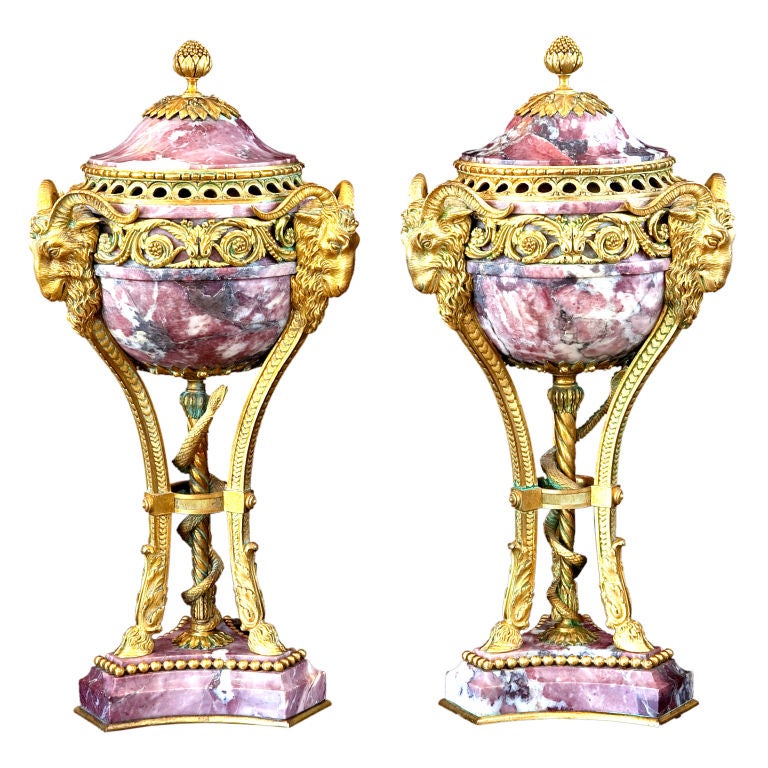
Perfume burners from the time of
Louis XVI
But it was not just to hide a less pleasing scent that the French courtiers used perfume. Perfume was expensive and a sign of luxury; like clothing perfume was used as an indicator of one's wealth. Throughout the palace several bowls were placed filled with flower petals to sweeten the air; in the same manner perfume was sprayed onto furniture. Visitors could easily expect to be doused with perfume upon entry to the palace.
Even the fountain's water was scented with perfume! The constant exposure to perfume would have its effect on Louis XIV at the end of his life - he became excessively sensitive towards scents and the smallest mint of a flowered scent was known to give him a migraine.
The Prince de Condé even helped the King's perfumer Martial with scenting the King's tobacco! Madame de Pompadour was definitely not shy on perfume either. The distinctive scent of musk could still be found in her chamber's curtains 20 years after her departure.

Today we happen to know some of the fragrances used by different courtiers, so take a look - maybe they can inspire you:

The Duchesse d'Aumont used coriander, iris, cloves, sweet flag and nut grass. Her scent was known as "à la Maréchale" because she was married to the Marshal of France.

Madame du Barry's favourite scent was made by the Italian perfumer Gian Paola Ferninis. Its original name was Aqua Admirabilis but that would not quite do at the French court where it was renamed as "Eau de Cologne". It was scented with neroli oil, bergamot, lavender, grape spirit and rosemary.

Of course, Marie Antoinette, was a leading lady when it came to perfume. Especially two of her perfumed fragrances have survived: "Sillage de la Reine" (In the Wake of the Queen) and "Jardin Secret" (Secret Garden). Sillage de la Reine was made of tuberose, orange blossom, jasmine, sandalwood, iris and cedar.  
Jardin Secret was scented with bergamot, cardamom, jasmine, rose, incense, sandalwood, vanilla, patchouli, amber and tonka bean - of course some of these were a very, very small part of the perfume.

Louis XIV was fond of heavy scents when he was younger - his mother used a chocolate-inspired perfume - and the Sun King loved to experiment with new scents. At the end of his life he could only stand the soft scent of orange blossom.

The King's mistress, Madame de Montespan, used to bathe in water scented with vanilla.

Actually perfume became a problem between Louis XIV and Madame de Montespan. The couple was heard arguing as they stepped into the royal carriage with the Queen. Apparently, the King could not stand Madame de Montespan's perfume which was definitely not something that pleased his mistress. It is even said that she used heavy amounts of perfume because she could not take the smell of her royal lover!

Louis XIV would get his orange blossom
from the orange trees at Versailles
But there was a dangerous twist to this perfume frenzy. During the infamous Affair of the Poisons perfume was often used to either disguise poison - or as a poison. There is a story of a Duchesse who died after having her gloves rubbed in a scented poison that would then slowly be absorbed into her skin! The idea with using perfumed gloves was widely spread as well - though not with the same lethal purpose!

The Flying Chair

It was a difficult task for the monarch to have the smallest amount of privacy even when he wanted to visit his mistress. To escape the tedious task of having to climb several stairs - something that might prove difficult with someone of the infamous Bourbon physique - Louis XV used a rather different mechanism. A so-called "flying chair" was installed in 1743 that allowed the royal mistress to secretly visit her lover without the prying eyes of the nosy court. It was originally created for Madame de Châteauroux and was later used by Madame de Pompadour as well.

The flying chair was a small cabinet through which a rope hung - the occupant could pull the rope to either lower or raise the chair. The system depended on a number of counterweights and pulleys but it proved effective. Louis XV ordered the chair done by one of his favourite machinist Blaise-Henri Arnoult. The King could enter the chair from his balcony.

Louis XV had a fondness for this new technology. He had already had "flying" tables installed at the royal retreat of Choisy and was planning to do the same at the Petit Trianon - the tables would be located right above the kitchens and could be lowered down and raised again loaded with food; it allowed the King to enjoy a dinner without the constantly watching servants.

In 1754 the chair was moved to Fontainebleau.

Architectural drawing of the mechanism that still survives 

Tuesday, 9 April 2013

A Little Bet ...

When the Comte d'Artois purchased a minor hunting lodge in the forest of Boulogne in 1775 he decided to turn it into his own private château - the Château de Bagatelle. So he quickly had the old house torn down and began planning his new home when his sister-in-law Marie Antointette proposed a bet - the château had to be finished within three months. Marie Antoinette bet the Comte that he could not finish the project within three months but the Comte himself thought differently.

The workers employed by the Comte d'Artois worked tirelessly on building a neo-classical château by the design of François-Joseph Bélanger. The Comte actually won the bet - the building was complete in 63 days at a cost of more than two million livres!

And here it is today. The château that sparked a little bet...