Tuesday, 17 September 2013
Marly
Ground Floor:
Blue - The King's Apartments
Green - The Queen's Apartments / Monseigneur's
Yellow - Madame's Apartments
Pink - Madame du Barry's Apartments
Purple - The Four Salons of the Seigneurs
Orange - Billiard
Turquoise - Grand Salon
First Floor:
Blue - The Duc d'Orlèans' Apartments
Green - The Duchesse d'Orlèans' Apartments
Yellow - The Princesse de Conti's Apartments
Pink - Apartments of the Captains of the Guards
Purple (left to pink) - Reserved for Ladies at the Court
Turquoise - Madame de Lude's Apartments
Vermilion - Reserved for Ladies at the Court
Orange - The King's Wardrobe
Grey - Corridor
Brown - Unknown
Lime - View to hte ground floor
Monday, 16 September 2013
Bellevue
The Château de Bellevue was designated for Madame de Pompadour when it was built in 1750. It was set in Meudon and had a beautiful view of the Seine - "Bellevue" literally means "beautiful view". However, the château was demolished in 1823 and as such it is yet another château that no longer remains. Conveniently enough it is located between Louis XV's own two châteaux (Meudon and Saint-Cloud). Madame de Pompadour and Louis XV were both passionate amateur architects and took a deep interest in the construction of this little pleasure house. The architect Jean Cailleteau was hired to create Madame de Pompadour's new property.
Madame de Pompadour was given this piece of land by her royal lover just before their physical relationship ended which happened to be in the same year that Bellevue was built. It is a kind gesture on behalf of Louis XV that he is not discarding his maîtresse-en-titre but kept her as his closest friend. Actually this château would serve as a private meeting place for the two. Eventually Louis bought back the property and had the two extra wings added. During the revolution (at this time it was the property of Mesdames Tantes) it was completely looted for the riches there.
| This is how the château looked in 1750 from the courtyard |
Madame de Pompadour's Bellevue
Both of these floor plans face the same way: the outer stairs at the "top" of the floor plan is the view of the Seine while the staircase at the "bottom" is facing the courtyard.
A. Cabinet de Toilette
B. Madame de Pompadour's Bedchamber
C. Back Cabinet
D. Library
E. Hall of the Guards
F. Swiss Staircase
G. Antechamber
H. Vestibule
I. Dining Hall
J. Cabinet de Compagnie
K. Wardrobe
L. Great Staircase
M. Small Gallery
N. Music Salon
O. Small Staircase
The rooms on the first floor has received the number "1" before their letter to avoid confusion with the rooms on the ground floor
1A. Gold Cabinet
1B. The King's Bedchamber
1C. The King's Café
1D. Chamber of the First Valet
1E. Third Chambre
1F. Wardrobe
1G. Antechamber
1H. Second Chamber
1I. Sacristy
1J. Chapel
1K. The Chapel's Antechamber
1L. Council Chamber
1M. Apartment for one of the King's men
1N. Antechamber to M
1O. Great Staircase
1P. First Chamber
1Q. Wardrobe
1R. Cabinet
1S. Cabinet
The Wings Added by Louis XV
The original part (that of Madame de Pompadour) is marked with red and the courtyards with stripes. This floor plan also includes the apartments of Mesdames Tantes after the château became theirs at their father's death. If you are wondering about those three letters after "z" then they are Scandinavian - in this case Danish - and I am just used to using them.
A. Bathrooms
B. 3rd Antechamber of Madame Adélaïde
C. Bedroom of Madame Adélaïde
D. Madame Adélaïde's Cabinet
E. Louis XV's Cabinet
F. Madame Adélaïde's Interieur Cabinet
G. Madame Adélaïde's Bathroom
H. Bedroom of the Captain of the Guard / 1st Antechamber of Madame Adélaïde
I. Louis XV's Toilet
J. Council Chamber / Madame Victoire's Hall of Nobles
K. Louis XV's Bedchamber / Madame Victoire's Bedchamber
L. Louis XV's 2nd Antechamber / Small Cabinet of Madame Victoire
M. Madame Victoire's 2nd Antechamber
N. "English Bed"
O. Louis XV's 1st Antechamber / Chamber of Madame Victoire
P. Dining Room / Second Vestibule
Q. Vestibule / First Vestibule
R. Small Staircase
S. Music Salon / Madame Victoire's Library
T. Great Staircase
U. Small Gallery
V. First Salon / Billiard Room
W. Second Salon / Winter Salon
Y. Great Dining Hall / Great Summer Salon
X. Chapel
Z. Dining Hall
Æ. King's Buffet / Buffet
Ø. Sacristy
Å. Large Gallery
AA. Room of the Lower Courtyard
Sunday, 15 September 2013
Nicolas Fouquet, Marquis de Belle-Île & Vicomte de Melun et Vaux
Tuesday, 10 September 2013
The Ball of the Yew Trees
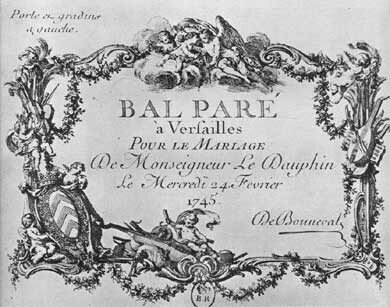
The Ball of the Yew Trees was a great event in two ways. First of all it was the celebration of the marriage between the Dauphin Louis and Maria Thérèse of Spain. Secondly, it was during this ball that Louis XV met a woman who completely swept him away: Jeanne Antoinette Poisson or Madame de Pompadour. They had met previously but this was Jeanne Antoinette's first court ball so all eyes were on her.
The ball was held between the 25.-26. February 1745 in the Hall of Mirrors at Versailles. It was a magnificent ball made a tat strange by the fact that many of the guests wore masks. The guards had been told to stop people entering to check that they were actually of the nobility by the quick removal of the mask. The common people flooded to Versailles as well because the admittance to the ball was free - the crowds in the courtyards had to make way for the hundreds of elaborately decorated carriages that pulled up beginning at 11 o'clock at night. Some 600 people sat on the floor in and around the Oeil de Bouef waiting for the dances to begin. Others waited in the Salon of Hercules. It is estimated that 15.000 people attended the ball all in all.
Large tables were lined up for the guests' sake; since this event occurred during Lent there was served no meat but fish, fruit pyramids, sweets and of course liqueur.
At one point the great doors were opened and Queen Marie Leszczynska appeared dressed in an amazing white court gown glittering with pearls - it is said that the Queen wore two magnificent diamonds in her hair: the Sancy and the Regent. She was not accompanied by the King but by the Dauphin and new Dauphin both of whom were dressed up as a shepherd and shepherdess. Soon the main event was to take place which has given the ball its name.
Eight men suddenly appeared, all dressed up as yew trees and the King was certainly among them. It was Louis XV himself who had come up with the idea because he enjoyed the opportunity to astonish his courtiers and also eyed an opportunity to mingle incognito. Most ladies of the court turned their attention towards these "wooden" men, all in hope that they might become his next mistress. But their efforts were all in vain because the King had already noticed a lady whom he had seen before though never at court and she was far more interesting to him than the many Duchesses, Comtesses, Marquises etc. At one point one of the yew trees drew away from the crowd and headed towards the young Jeanne Antoinette Poison. It was of course the King and he spent the entire ball with the woman who would become his closest friend and advisor.
The ball ended at half past eight the following morning.
The ball was held between the 25.-26. February 1745 in the Hall of Mirrors at Versailles. It was a magnificent ball made a tat strange by the fact that many of the guests wore masks. The guards had been told to stop people entering to check that they were actually of the nobility by the quick removal of the mask. The common people flooded to Versailles as well because the admittance to the ball was free - the crowds in the courtyards had to make way for the hundreds of elaborately decorated carriages that pulled up beginning at 11 o'clock at night. Some 600 people sat on the floor in and around the Oeil de Bouef waiting for the dances to begin. Others waited in the Salon of Hercules. It is estimated that 15.000 people attended the ball all in all.
Large tables were lined up for the guests' sake; since this event occurred during Lent there was served no meat but fish, fruit pyramids, sweets and of course liqueur.
At one point the great doors were opened and Queen Marie Leszczynska appeared dressed in an amazing white court gown glittering with pearls - it is said that the Queen wore two magnificent diamonds in her hair: the Sancy and the Regent. She was not accompanied by the King but by the Dauphin and new Dauphin both of whom were dressed up as a shepherd and shepherdess. Soon the main event was to take place which has given the ball its name.
Eight men suddenly appeared, all dressed up as yew trees and the King was certainly among them. It was Louis XV himself who had come up with the idea because he enjoyed the opportunity to astonish his courtiers and also eyed an opportunity to mingle incognito. Most ladies of the court turned their attention towards these "wooden" men, all in hope that they might become his next mistress. But their efforts were all in vain because the King had already noticed a lady whom he had seen before though never at court and she was far more interesting to him than the many Duchesses, Comtesses, Marquises etc. At one point one of the yew trees drew away from the crowd and headed towards the young Jeanne Antoinette Poison. It was of course the King and he spent the entire ball with the woman who would become his closest friend and advisor.
The ball ended at half past eight the following morning.
![]() |
| Charles-Nicholas Cochin the Younger |
![]() |
| One of the few invitation that actually were sent out |
![]() |
| Another work by Charles-Nicholas Cochin the Younger |
Royal Bastards - Illegitimate Children of Louis XIV
When you have as many mistresses as Louis XIV and Louis XV in an age with any kind of birth control it is inevitable that one of those mistresses becomes pregnant. Especially Louis XIV was known for his particularly nice behaviour towards these illegitimate children and he had many of them legitimised in order to give them the best life possible. Not everyone was fond of this legitimisation because it meant that these royal bastards took place above the other nobles in the much beloved etiquette - the Duke of Saint-Simon hated this procedure and in his memoirs always referred to the King's illegitimate children as "the bastards", noble or not.
Anyway, these are the many children that Louis XIV fathered with pretty much anyone else but his wife. Notice that they are all given the royal surname of "de Bourbon".
Louise de La Vallière had four children by the Sun King but just two of them survived their infancy:
Charles (1663-1665)
Philippe (1665-1666)
Marie Anne de Bourbon (1666-1739); legitimised after which she was known as Mademoiselle de Blois
Louis de Bourbon (1667-1683); Comte de Vermandois
Marie Angélique de Scorailles had one stillborn boy by the King - the birth had been complicated and bloody and she retired to a convent afterwards
Françoise-Athénaïs better known as the Marquise de Montespan had no less than seven children by the King. A surprisingly high number considering how fast he tired of his mistresses:
Louise Françoise de Bourbon (1669-1672)
Louis Auguste de Bourbon (1670-1730); legitimised and created the Duc de Maine
Louis César de Bourbon (1672-1683); legitimised and made the Comte de Vexin
Louise Françoise de Bourbon (1673-1743); legitimised and made Mademoiselle de Nantes
Louise Marie Anne de Bourbon (1674-1681); legitimised and made Mademoiselle de Tours
Francoise Marie de Bourbon (1677-1749); legitimised and created Mademoiselle de Blois
Louis Alexandre de Bourbon (1678-1737); legitimised and made the Comte de Toulouse
Claude de Vin des Æillets became pregnant with a daughter:
Louise de Maisonblanche (1676-1718); not legitimised
Anne de Rohan-Chabot had quite a few children and one of them was suspected to be fathered by Louis because the two were lovers at the time and the great resemblance between the child and the King.
Armand Gaston Maximilien de Rohan (1674-1749); not legitimised
These were the children known to be fathered by Louis XIV (whether he acknowledged them or not) and remember that these were all his mistresses that we know off. It is not difficult to imagine that the King had a fling or two besides these ladies.
Anyway, these are the many children that Louis XIV fathered with pretty much anyone else but his wife. Notice that they are all given the royal surname of "de Bourbon".
Louise de La Vallière had four children by the Sun King but just two of them survived their infancy:
Charles (1663-1665)
Philippe (1665-1666)
Marie Anne de Bourbon (1666-1739); legitimised after which she was known as Mademoiselle de Blois
Louis de Bourbon (1667-1683); Comte de Vermandois
Marie Angélique de Scorailles had one stillborn boy by the King - the birth had been complicated and bloody and she retired to a convent afterwards
Françoise-Athénaïs better known as the Marquise de Montespan had no less than seven children by the King. A surprisingly high number considering how fast he tired of his mistresses:
Louise Françoise de Bourbon (1669-1672)
Louis Auguste de Bourbon (1670-1730); legitimised and created the Duc de Maine
Louis César de Bourbon (1672-1683); legitimised and made the Comte de Vexin
Louise Françoise de Bourbon (1673-1743); legitimised and made Mademoiselle de Nantes
Louise Marie Anne de Bourbon (1674-1681); legitimised and made Mademoiselle de Tours
Francoise Marie de Bourbon (1677-1749); legitimised and created Mademoiselle de Blois
Louis Alexandre de Bourbon (1678-1737); legitimised and made the Comte de Toulouse
Claude de Vin des Æillets became pregnant with a daughter:
Louise de Maisonblanche (1676-1718); not legitimised
Anne de Rohan-Chabot had quite a few children and one of them was suspected to be fathered by Louis because the two were lovers at the time and the great resemblance between the child and the King.
Armand Gaston Maximilien de Rohan (1674-1749); not legitimised
These were the children known to be fathered by Louis XIV (whether he acknowledged them or not) and remember that these were all his mistresses that we know off. It is not difficult to imagine that the King had a fling or two besides these ladies.
Monday, 9 September 2013
The King and his Teeth
It is difficult to imagine the imposing Louis XIV commanding his troops without teeth... Strangely enough Louis XIV was born with two teeth in his mouth which only happens in one baby out of two thousand. The Sun King suffered from tooth aches from quite early in his life and it was all made worse by the endless supply of sugared fruit and sweet cakes. His tooth aches was at their worst in the 1680's.
In 1685 the tooth ache had gotten so bad that the King needed to have one of his (remaining) teeth extracted. The tooth in question was a molar and it had to go. So, the King had it removed and all seemed well for a time. But his doctors had never taking into account that you probably need to have some level of hygiene when dealing with a place as filled with bacteria as the mouth. Consequently, an infection set in and the doctors decided to make the King undergo a truly horrific operation when you consider that there was no anaesthetics - not even for the King: he had to have all his teeth on his upper jaw pulled out!
It might had been around this time that Louis talked to a Cardinal while eating through a straw. The Cardinal smoothly replied to the King's problem with: "Ah Sire, teeth! Nobody has teeth any more!"
![]() |
| The king had few of his own teeth left by this time |
Normally it was blacksmiths who had been responsible for pulling out teeth and for that reason many doctors refused to have anything to do with dentistry at first because it was considered to be a "mechanical field" and therefore not worthy of a doctor's attention. It was during the reign of Louis XIV that professional dentists first began to appear and the long-suffering Louis quickly added one to his entourage. Jean-François Capperon was the King's "dentiste" and Louis went so far as to ennoble him!
At the very end of Louis XIV's life he had no teeth whatsoever and lived of food that could be sucked up through a straw.
There is one myth also related to Louis XIV's teeth but it seems just a bit to unlikely to be true:
When the King was having yet another tooth pulled out something went wrong and a piece of his jaw was also extracted (ouch). This had the unfortunate consequence that whenever the King drank something it would also come out his nose! This allegedly went on until a surgeon filled the unintended hole. Judge for yourself: is it believable?
Subscribe to:
Posts (Atom)