Friday, 14 July 2017

The Anti-Pompadour Faction

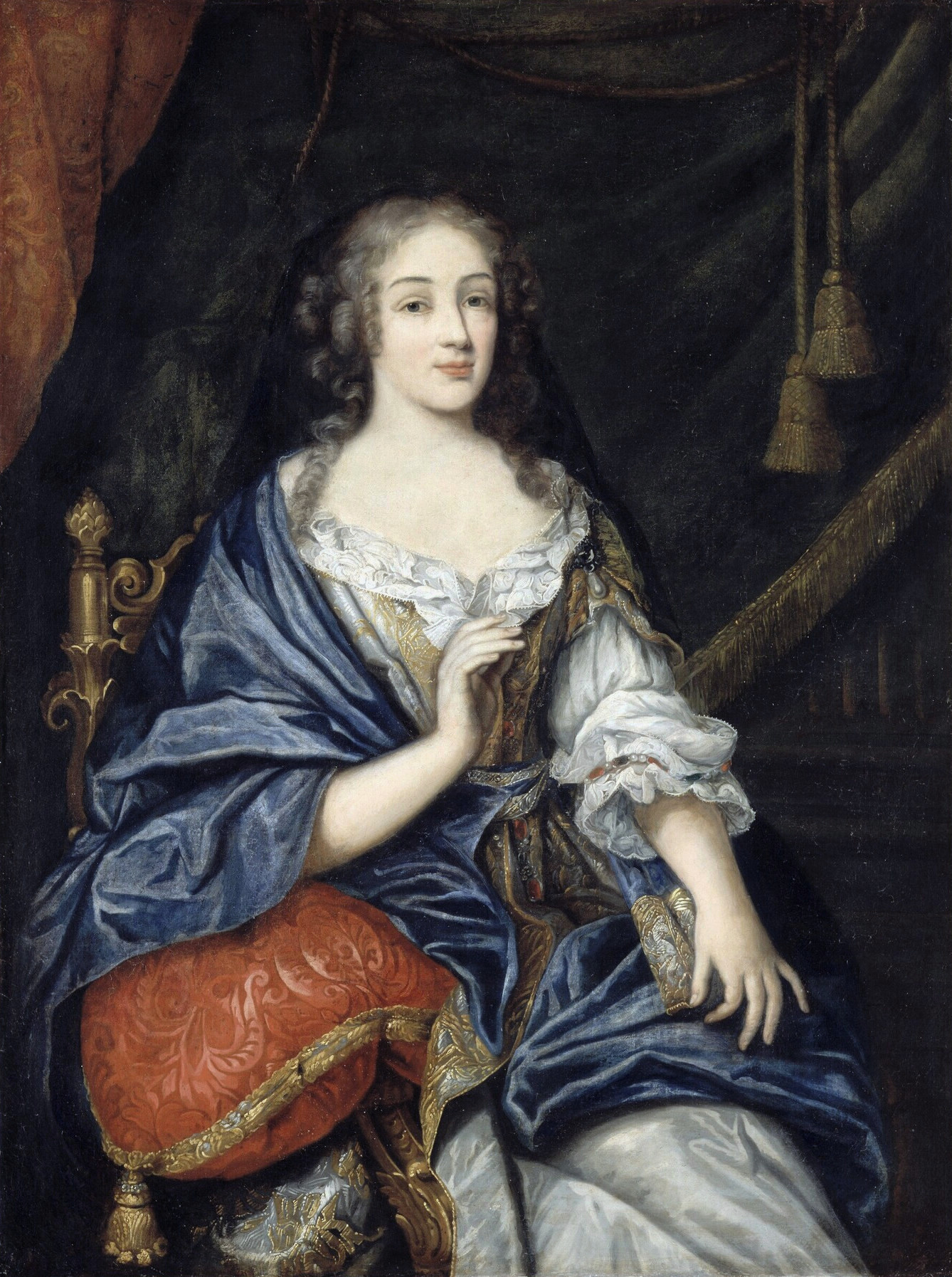
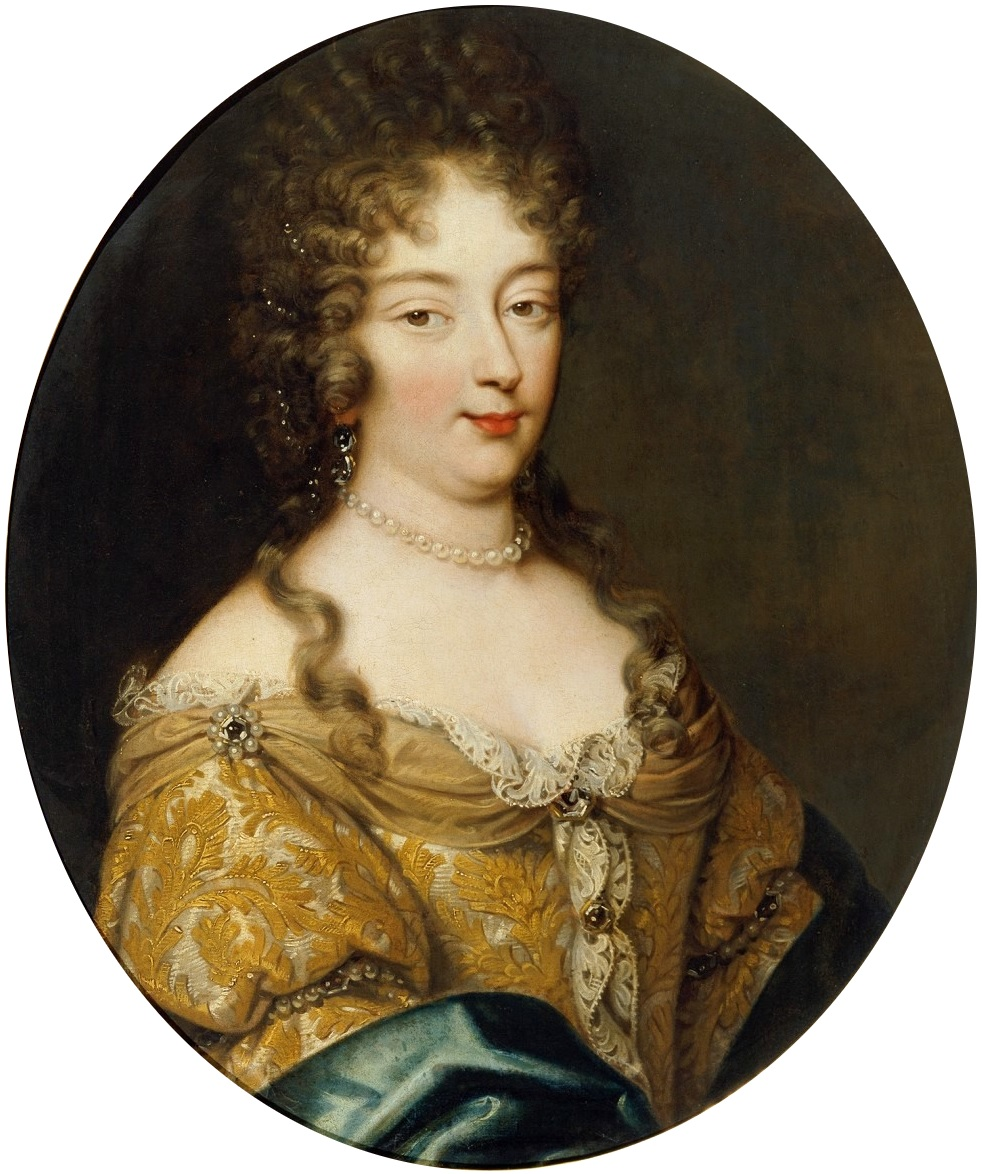
Madame de Pompadour's rise to power angered a great deal of people at court. Some disliked her due to her bourgeoisie background while others had hoped that Louis XV would return his affections to Marie Leszczynska. 

Those included in the anti-Pompadour faction counted the Marquis de Maurepas and the Prince de Conti. The latter was Louis XV's own cousin who supported the Jansenist movement. The Marquis de Maurepas served as Minister for the Navy but fell afoul of Louis XV due to his blatantly obvious disdain for the royal mistress. In 1749 that dislike led to Maurepas being exiled from court; he was not the only one to suffer this fate.

Prince de Conti


While pacing his estates, Maurepas' opinions on Madame de Pompadour had definitely not changed. He continued to attack her reputation from afar which can hardly have helped his case.

It is quite likely that Maurepas had contributed to spreading lewd and degrading songs about Madame de Pompadour in Paris. One of the more popular ones became all the rage in his year of exile. It ran as follows:

Qu'une bâtarde de catin 
A la cour se voit avancée,
Que dans l'amour ou dans le vin
Louis cherche une gloire aisée;
Ah! Le voilà, ah! Ce voici
Celui qui n'en a nul souci

The translation:
That a bastard strumpet
Should advance at court,
That in love or wine,
Louis should seek easy glory,
Ah! There he is, ah! Here he is,
He without a care


This little verse is but one of countless examples of the literature used against the Marquise. In fact the category grew so big it earned its own name: Poissonades. Caricatures and pamphlets were equally popular in the faction.

As a faction the anti-Pompadour circle often overlapped with that of the Dévot faction. Louis XV's children were decidedly against their father's mistress, although their opposition lay more in his having an official mistress at all. Ironically, it does not appear that Marie Leszczynska was a part of the faction. She would later say that Madame de Pompadour was her favourite of her husband's mistresses because she never tried to humiliate her.

Those whose dislike were bound in Reinette's person attempted to replace her in the king's affection. Thus, the faction pushed the Comtesse de Lawner on the king but in vain. 


Marquis de Maurepas

Naturally, the faction also attempted to counteract Madame de Pompadour's political influence. Following the death of the Dauphin Louis Ferdinand, Madame Adelaide attempted to influence her father's choice of ministers. She presented him with a list of men chosen by the late Dauphin as candidates for positions of note. All were anti-Pompadour and included the Marquis de Maurepas and Mauchault. 

Another of her most fierce opponents was the Comte d'Argenson. However, where she was powerless against the songs and vicious caricatures, this was a battle she could win. She managed to get d'Argenson exiled as well on the grounds that he had failed his duties which included keeping Paris in order - there had been riots and a rise in crime lately.
Also Mauchault were dismissed allegedly on the order of the Marquise. So, in this sense the king's mistress was quite succesful. It could be argued that she had the last laugh since she remained in power until her death; the efforts of the anti-Pompadour clan effectively proved futile. 

Wednesday, 12 July 2017

Marly

As Versailles grew in size so did the number of inhabitants. The king sought a retreat where he could indulge in the small pleasures of gambling and hosting minor parties. The key was size; Marly was only meant to be a small château to force the number of invited guests down. The king had demanded that the chosen location must have a good view and be surrounded by forest rich on game. The chosen placed lay 7 km north-west of Versailles; a distance comfortable enough to be easily made in a day.

Ironically, the construction of Marly began already in 1679 - before the court had moved to Versailles. Jules Hardouin-Mansart and Charles Le Brun collaborated with the design. The king's personal pavilion was decorated with references to Apollo in his sun-chariot.

Recontruction of the king's pavilion

By 1684 the construction was finished. In June of that year Louis XIV brought his nearest relations to the opening of the hydraulics. That in itself had been a feat to accomplish. Marly was located on somewhat of a slope which meant that water was not naturally there. Consequently, it had to be brought there by the inventions of man. The result was the so-called Marly machine. Fourteen large paddlewheel were powered by the Seine and provided water for Versailles and Marly. However, it was only possible to supply one at a time. Therefore, it depended on where the happened to be staying. When he was at Versailles the fountains there would be flowing; if he was at Marly the fountains of Versailles would lay dry.

It was not until 1686 that the king could inhabit Marly for the first time. From then on Louis XIV would continue to add to his new retreat. Two years later a small stable was added for the king's horses. This meant that the horses no longer had to be brought from Versailles. Wide paths were added to the hunting grounds for ladies or the elderly to follow the hunt. In 1697-98 the "river" was finished which added a touch of water so important to Baroque design. This "river" led to a remarkably large waterfall which fell over marble decorations.


Marly
- notice the king's pavilion to the centre

The design itself was something quite new. The king and his nearest family would inhabit the largest pavilion which was - naturally - located in the centre. Immediately before and behind the king's pavilion lay large beds of water. Spread out in a straight line were smaller pavilions named after Greek gods or ideals. These were reserved for the privileged few who were invited by the king.

Although Marly was meant to be a pleasure retreat it was still a royal residence. Four pavilions were erected in the vicinity of the king's pavilion. The housed the royal guards. servants and a chapel. One of these were converted in 1688 to a bath for the guests.

View from the front

The pavilions must have been a sight in themselves. They were richly decorated with coloured polychrome which formed trompe-l'oeils. In the years following 1686 the pavilions saw their surroundings embellished. Before their "backyards" had been plain grass banks; these were transformed into groves and parterres with fountains. It can only be imagined that the courtiers who were lucky enough to go appreciated it.
Each pavilion was connected to the next via a trellis arch and flanked by yew trees. Actually, yew trees were often used for the gardens of Marly. So were orange trees; a favourite of Louis XIV.

Towards the end of his life, Louis XIV would spend more and more time at Marly. His visits there varied between an afternoon and little over a week. When the queen died her rooms were given to the Grand Dauphin. Likewise, the members of the royal family had small apartments there. 


Chapel (right) and guards' house (left)


During Louis XIV's reign it was considered an extreme privilege to be included on the guest-list to Marly. Courtiers would announce their interest in going by simply asking "Sire, Marly?". Eventually, this became a nuisance to the king who instead had a list of the invitees posted. This tradition of asking continued with both Louis XV and Louis XVI. However, in 1746 the admittance was far less strict than earlier. This year it became the norm for anyone who asked to be received.

Sadly, neither the Regent nor Louis XV was particularly excited by Marly. The place was seldom visited after 1715. In 1728 the "river" was removed and converted into a field. Still, it was all but deserted.
Grounds of Marly

Louis XVI used Marly as well but not nearly as frequently as Louis XIV had. The interest in Marly had become considerably less enthusiastic since other châteaux had been build: Choisy, Bellevue and La Muette were all more in the modern style. The last royal visit was in June 1789.

Pavilion of Thétys


The château was demolished in 1806 after having been used as a factory which failed. Nothing remains today of the once so beloved château of Louis XIV. Only parts of the park and the so-called drinking pool (for the horses) are still intact.

Monday, 3 July 2017

Marie Adélaide's Ladies

Marie Adelaide played an important role at court since she arrived in the 1690's. From the moment the married she occupied a place in the king's heart and soon found herself first-lady in France. Consequently, she was allotted a personal household with its share of ladies.

Anne-Marie-Francoise de Sainte-Hermine, Comtesse de Mailly
1696-1712: dame d'atours 
Married to Louis de Mailly

When she retired in 1731 she had plenty of experience as dame d'atours; she had performed the office for the Duchesse de Chartres, the Duchesse de Bourgogne and Marie Leszczynska.


Catherine-Francoise d'Arpajon, Comtesse de Roucy
1696-1712
Married to Francois de La Rochefoucauld


Louise Sublet, Marquise de Montgon
1696-1707: dame du palais
Married to Jean-Francois Cordeboeuf de Beauverger


Marguerite Louise Susanne de Béthune, Duchesse du Lude
1696-1712: dame d'honneur
Married to (I) Armand de Gramont, (II) Henri de Daillon, Duc du Lude

When Marie Adélaide was still too young to live with her husband she dined alone with the Duchesse du Lude

Marguerite while still Comtesse de Guiche
(first marriage)
The Duchesse du Lude serving the
Duchesse de Bourgogne

Marie Anne de La Vergne de Guilleragues, "Marquise d'O"
1696-1712: dame du palais
Married to Gabriel Claude de Villers

She was also a friend of Madame (Elizabeth-Charlotte d'Orléans)


Marie Madeleine Agnès de Gontaut Biron, Marquise de Nogaret
1696-1711: dame du palais
Married to Louis de Lout de Calvisson de Nogaret

Became mistress of Louis XIV at some point between 1680-83 but never gained any particular influence


Sophia Marie Wilhelmina von Löwenstein-Wertheim-Rochefort, Duchesse de Dangeau1696-1712: dame du palais
Married to Philippe de Courcillon de Dangeau


Thérèse-Marie de Bellefonds, Marquise du Châtelet
1696-1712: dame du palais
Married to Antoine-Charles du Châtelet


Sunday, 2 July 2017

Marie-Thérèse's Ladies

Louis XIV's consort, Marie-Thérèse, was queen of France from her marriage in 1660 until her death in 1683. During this period she - like her predecessors - was served by a group of ladies. Some inherited their positions while others were appointed by the king - in some cases against the queen's will.

The list is arranged alphabetically according to name.

Anne de Rohan-Chabot, Princesse de Soubise
1674-?: dame du palais
Married to Francois de Rohan

She was a mistress of Louis XIV; two of her children were rumoured to have been fathered by the king rather than by the Prince de Soubise. Their affair ended in 1675

Princesse de Soubise


Anne of Gonzaga, Duchesse de Clèves
1660-61: superintendent
Married to (I) Henri de Lorraine, Duc de Guise, (II) Edward of Bavaria


Duchesse de Clèves


Anne Poussard de Fors du Vigean, Duchesse de Richelieu
1671: dame d'honneur
Married to (I) Francois-Alexandre d'Albret, (II) Duc de Richelieu

Later, she was transferred to the household of the Grande Dauphine


Anne-Armande de Saint-Gelais de Lansac, Duchesse de Créquy
1680-83: dame d'honneur
Married to Charles de Blanchefort-Créquy

She left court when her husband died in 1687; they were later buried together


Anne-Marie de Beauvilliers, Comtesse de Bétonne
1660-83: dame d'atours
Married to Hippolyte de Béthune


Francoise Athénais de Rochechouart de Mortemart, Marquise de Montespan
1679-: superintendent
Married to Louis Henri de Pardaillan de Gondri

Her appointment had come at some cost; originally, the king had wanted to give the post to her earlier but it was already occupied by the Comtesse de Soissons. Eventually, the Comtesse was ordered to retire and Madame de Montespan took her place - to the chagrin of the queen.

Madame de Montespan


Francoise de Brancas, Princesse d'Harcourt
1667-83: dame du palais
Married to Alphonse-Henri de Lorraine


Princesse d'Harcourt


Elizabeth Hamilton, Comtesse de Gramont
1667-?: dame du palais
Married to Philibert de Gramont

In either 1677 or 1678 she would become a mistress to the king

Comtesse de Gramont


Francoise-Madeleine-Claude de Warignies, Comtesse de Saint-Géran
1683: dame du palais
Married to Bernard de la Guiche


Julie d'Angennes, Duchesse de Montausier
1664: dame d'honneur
Married to Charles de Sainte-Maure

She was also made Governess to the Children of France

Duchesse de Montausier


Louise Antoinette Thérèse de la Châtre, Duchesse d'Humières
Dame du palais
Married to Louis de Crevant


Duchesse d'Humières


Louise Boyer, Duchesse de Noailles
1674-?: dame du palais
Married to Anne de Noailles

She had previously been dame d'atours to Anne of Austria

Duchesse de Noailles


Louise de La Vallière, Marquise de La Vallière
Never married

First official favourite of Louis XIV; she had originally been in the service of Elizabeth Charlotte, Duchesse d'Orléans

Madame de La Vallière

Marie d'Albret
Pre-1679-?: dame du palais
Married to Charles-Amanieu d'Albret


Marie-Louise-Antoinette d'Albert de Luxembourg, Princesse de Tingry
1679-1683: dame du palais


Olympe Mancini, Comtesse de Soissons
1663-1674: superintendent

Exiled in 1679 following the Affair of the Poisons; she had also been the mistress of Louis XIV whom she allegedly threatened when he lost interest

Comtesse de Soissons


Suzanne de Baudéan de Neuillant de Parabère, Duchesse de Navailles
1660-64: dame d'honneur
Married to Philippe de Montaut-Bénac

She was forced to resign when she fell into disgrace and was exiled from court

Duchesse de Navailles


Saturday, 1 July 2017

The Royal Households

The most distinguished members of the royal family were entitled to a personal household; these would count several hundred people with the king's being the largest. Here you will find the people who occupied the positions closest to the royal family.

Billedresultat for marie antoinette
Marie Antoinette at her harp

Structure of the households

The structure and positions within each royal household. Since I have focused on the king's and queen's households under another page, this is for the remaining royal family. 


Household of the Grand Dauphin
      1660's

Members of the households

The individual members serving in the royal household from either a given year or collectively throughout the reigns of Louis XIV, XV and XVI.

The King's Service


Grand Officers of the Crown


The Dauphin's Service


The Queen's Service

Marie Thérèse's Ladies


Royal Children's Service


Royal Family's Service


Marie Antoinette's Ladies

When the Austrian Archduchess arrived at Versailles a new household emerged. From this point on the young Marie Antoinette would be surrounded by French ladies; some would serve for a short period while others remained by her side until the revolution. This post concerns itself with those ladies who served the Queen - the Dauphine's dame du compagnie and the Queen's superintendent, dames du palais, dame d'atours and dame d'honneur.

These were far from the only ones employed by the Queen but they are the titled ladies with whom she had most contact.

The list is written alphabetically according to the first-name. This way it makes it easier to track each lady's career in the royal household.


Adélaïde-Diane-Hortense Mancini-Mazarini, Duchesse de Cossé
1770-75: dame d'atours
Married to Louis Hercule Timoléon de Cossé-Brissac

Had serious health issues which led her to resign her position in 1775. She would then travel abroad and to the south of France to seek an improvement in health.

Status: survived the revolution and died in Yvelines

Duchesse de Cossé


Adélaïde-Félicité-Étienette de Guinot de Monconseil, Princesse d'Hénin
1778-89: dame du palais
Married to Charles Alexandre Marc Marcellin d'Alsace, Prince d'Hénin-Liétard

Status: survived the revolution but year of death uncertain (possibly 1823)


Alexandrine-Victoire-Éléonore de Damas d'Antigay, Comtesse de Talleyrand
1780-89: dame du palais
Married to Charles Daniel de Talleyrand-Périgord

Status: survived the revolution


Comtesse de Talleyrand


Anne-Claude-Louise d'Arpajon, Comtesse de Noailles
1770-75: dame d'honneur
Married to Philippe de Noailles

She was the one who Marie Antoinette nick-named "Madame Etiquette"

Status: guillotined in 1794

Comtesse de Noailles


Colette-Marie-Paule-Hortense-Bernardine de Beauvilliers de Saint-Aignan, Marquise de La Roche-Aymon
1775-89: dame du palais
Married to Antoine Charles Guillaume de La Roche-Aymon

Status: survived the revolution and died in Paris


Gabrielle-Charlotte-Éléonore de Saulx-Tavannes, Vicomtesse de Castellane
1785-89: dame du palais
Married to Charles de Saul de Tavannes

Status: survived the revolution. Remained in France during the revolution


Gabrielle-Charlotte-Eugénie de Boisgelin, Comtesse de Gramont d'Aster
1788-89: dame du palais
Married to Antoine-Francois de Gramont

Status: emigrated in 1791; returned to France in 1796


Gabrielle-Pauline Bouthillier de Chavigny, Comtesse d'Adhémar
1770-74: lady-in-waiting to the Dauphine
1774-89: dame du palais
Married first to Joseph Ignace Cosme Alphonse Roch de Valbelle, then to Jean Balthazar d'Adhémar

Before being appointed to the new Dauphine's household in 1770, Gabrielle had been a dame du palais to Marie Leszczynska
During her tenure ship with the Dauphine she married the Comte d'Adhémar in 1772

Status: arrested during the revolution but released after the fall of Robespierre


Geneviève de Gramont, Comtesse d'Ossun
1781-1792: dame d'atours
Married to Charles d'Ossun

Status: guillotined in 1794
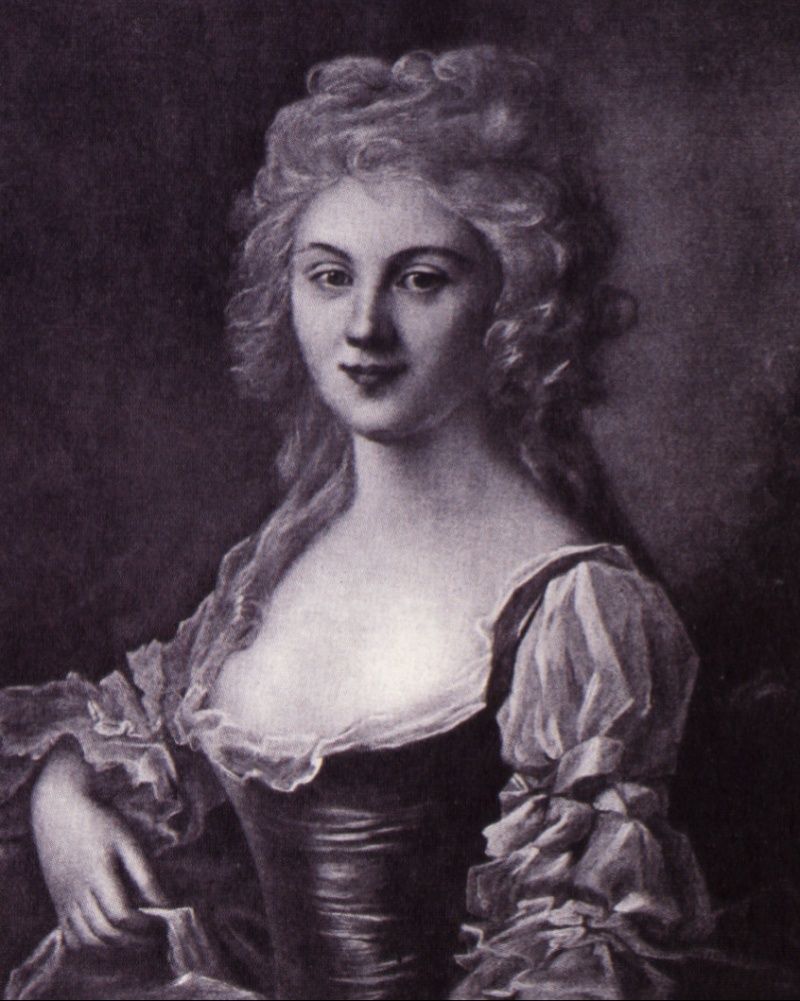

Possibly the Comtesse d'Ossun


Guyonne-Élisabeth-Josèphe de Montmorency-Laval, Duchesse de Luynes
1775-1789: dame du palais
Married to Louis-Joseph-Charles-Amable d'Albert

Status: survived the revolution

Duchesse de Luynes


Guyonne-Marguerite-Philippine-Élisabeth de Durfort, Vicomtesse de Choiseul-Praslin
1770-74: lady-in-waiting to the Dauphine
1774-88: dame du palais
Married to Renaud César Louis de Choiseul

Status: survived the revolution and died in paris


Laure-Auguste de Fitzjames, Princesse de Chimay
1770-74: lady-in-waiting to the Dauphine
1774-75: dame du palais
1775: dame d'atours
1775-1791: dame d'honneur

Status: emigrated to Belgium


Princesse de Chimay


Louise-Adélaïde-Victoire de Durfort de Civrac, Marquise de Clermont-Tonnerre
1770-74: lady-in-waiting to the Dauphine
1774-81: dame du palais
Married to Charles-Gaspard de Clermont-Tonnerre

Status: unknown date of death


Louise-Charlotte-Henriette-Philippine de Noailles, Duchesse de Duras
1770-74: lady-in-waiting to the Dauphine
1774-89: dame du palais
Married to Emmanuel-Céleste de Durfort

Had been supernumerary dame du palais to Marie Leszczysnka

Status: survived the revolution

Duchesse de Duras


Louise-Emmanuelle de Châtillon, Princesse de Tarente 
1786-89: dame du palais
Married to Charles Bretagne Marie de La Trémoille

Accompanied Marie Antoinette and the Princesse de Lamballe to the Tuileries

Status: emigrated to England during the Reign of Terror and later moved to Russia


Princesse de Tarente


Madeleine-Angélique-Charlotte de Bréhan, Duchesse de Maillé
1788-89: dame du palais
Married to Charles Rene de Maillé de La Tour Landry

Status: Sent to the Tuileries with Marie Antoinette but later removed to the prison on the Rue de Sèvres. She was sentenced to death but had been confused with another person which postponed the execution. Luckily for her, Robespierre fell immediately afterwards and sh was released.


Duchesse de Maillé

Madeleine-Suzanne-Adélaïde Voyer d'Argenson de Paulmy, Duchesse de Luxembourg
1771-74: lady-in-waiting to the Dauphine
1774-89: dame du palais
Married to Anne Charles Sigismond de Montmorency-Luxembourg

Status: emigrated to Hamburg


Marie-Anne-Philippine-Thérèse de Montmorency-Logny, Duchesse de Boufflers
1770: lady-in-waiting to the Dauphine (replaced in 1771)
Married to Charles-Joseph-Marie de Boufflers

Had served Marie Leszczynska as dame du palais

Status: year of death uncertain but around 1797


Marie-Éléonore de Lévis de Châteaumorand, Comtesse de Tavannes
1770-74: lady-in-waiting to the Dauphine
1774-85: dame du palais
Married to Charles-Francois-Casimir de Saulx

Also a part of Marie Leszczynska's household

Died in 1793


Comtesse de Tavannes


Marie-Elisabeth Chamillart, Marquise de Talleyrand
1770-74: lady-in-waiting to the Dauphine
1774-80: dame du palais
Married to Daniel Marie-Anne de Talleyrand-Périgord

Died in 1788


Marie-Jeanne de Talleyrand-Périgord, Duchesse de Mailly
1770-74: lady-in-waiting to the Dauphine
1774-75: dame du palais
1775-89: dame d'atours

Died in 1792


Duchesse de Mailly


Marie-Louise de Bonnières de Souastre de Guisnes, Comtesse de Juigné
1784-89: supernumerary dame du palais
Married to Charles-Philibert-Gabriel Le Clerc

Died in 1792


Marie-Louise d'Esparbès de Lussan, Comtesse de Polastron
1782-1789: dame du palais
Married to Denis de Polastron

She was the mistress of the Comte d'Artois

Status: died in London of tuberculosis


Comtesse de Polastron


Marie-Louise-Sophie de Faoucq de Garnetot, Comtesse de Gramont
1770: lady-in-waiting to the Dauphine
1774-88: dame du palais
Married to Antoine-Adrien-Charles de Gramont

Status: emigrated to Brunswick where she died


Marie-Madeleine de Rosset de Fleury, Duchesse de Beauvilliers
1770-74: lady-in-waiting to the Dauphine
1774-86: dame du palais
Married to Paul-Estienne-Auguste de Beauvilliers

She was also a dame du palais to Marie Lescszynska

Status: survived the revolution


Marie-Paule-Angélique d'Albert de Luynes, Duchesse de Chaulnes
1770-74: lady-in-waiting to the Dauphine
1774-81: dame du palais
Married to Marie-Joseph-Louis d'Albert d'Ailly

Died in 1781


Duchesse de Chaulnes


Marie-Sylvie-Claudine de Thiard de Bissy, Duchesse de Fitzjames
1781-1789: dame du palais
Married to Jacques-Charles de Fitzjames

She was greatly esteemed by Marie Antoinette

Status: emigrated to Brussels in 1791. She corresponded with Marie Antoinette who advised her not to return to France

Duchesse de Fitzjames


Marie-Thérèse-Josèphe de Castellane, Princesse de Berghes
1781-1789: dame du palais
Married to Adrien-Joseph-Ghislain, Prince de Berghes

Status: survived the revolution


Thérèse-Lucy de Rothe, Comtesse de Dillon
1780-82: dame du palais
Married to Arthur Dillon

Died in 1782

Comtesse de Dillon

Saturday, 24 June 2017

The Execution of the Comtesse d'Ossun

Geneviève de Gramont, Comtesse d'Ossun served as Marie Antoinette's dame d'amours since 1781. During her service to the queen she was often included in the inner circle of the royal family; for instance she was one of the few ladies permitted to be present at the birth of the second Dauphin.

During the queen's imprisonment she sent a note to the Comtesse on 20 June 1791; the note allegedly mentioned the planned escape of the royal family. Following this exchange Geneviève leaves Paris in favour of her château.
Marie Antoinette had also expressed a keen wish to see her friend again. It is quite likely that this is what caused the Comtesse to return to Paris.

Geneviève was arrested due to her connection with the royal family and particularly with the queen.  Her final days of freedom had been very fearful for the loyal Comtesse. She had been surrounded by spies and could trust very few people. Finally, she was taken from her house on the Rue de la Varenne as a conspirator against the revolution.
The crimes of which she was accused were very vague. The main accusation was that she had failed to report on the queen's "illegal" activities. The note of 1791 was produced as key evidence during the trial. It would eventually prove lethal. During her imprisonment she was kept at the Hôtel de La Force. 

The final appeal for her life was heard on 25 July. The usher who came to collect the prisoners did not seem to know exactly who it was he was collecting. According to another prisoner, M. d'Hornoy, he called for a "Gramont d'Orsan". Unperturbed, the Comtesse stood up and said: "It can only be me". The hearing did not spare her a death on the scaffold; she was sentenced to die the next day. 

The Comtesse was executed on 26 July 1794 - the same evening that Robespierre fell from power. Little is known for sure about the execution itself but Geneviève is said to have conducted herself with the courage and dignity "of a martyr".