Sunday, 10 April 2016

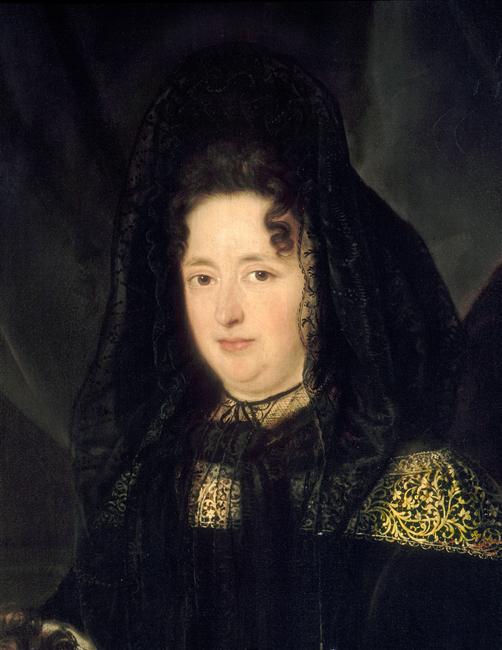
Marie Anne de Bourbon, Duchesse de Vendôme

Born on 28 February 1678 Marie Anne de Bourbon did not have the greatest prospects for a happy family life. Her father, Henri Jules, Prince de Condé, was notorious for his abusive nature and it was a well-known fact that he often beat his wife, the Bavarian Anne Henriette. Sadly, her Marie Anne would also become a victim of her father's abuse as was the case with her siblings.

What she did not have in family happiness Marie Anne could "make up for" in her status. She was born a Princess of the Blood and was known as Mademoiselle de Montmorency before her marriage. Her father was the First Prince of the Blood which meant that there would be no shortage of suitors even though she was the ninth child to her parents.


Originally, her father had wanted to marry her off to the Italian Duke of Mantua but that never came to be. Instead, Marie Anne remained at the Hôtel de Condé where she had been born and spent her entire life so far. Her father died in 1709 which can only have been a relief to her mother as well as those of her siblings still living at home.
Now, it would normally have been up to her mother or eldest brother (who died around this time too) to negotiate a marriage for her. Given that her siblings had married grandly as was expected (her eldest sister married the Prince de Conti while her eldest brother wedded a legitimised daughter of Louis XIV) it was in the cards that she would too.

Marie Anne de Bourbon, Duchess of Vendôme.jpg


This, however, was not to be done the normal way. Marie Anne had no intentions of marrying her mother's choice and was aided by her sister, Louise Bénédicte, in arranging a match for herself. Consequently, Marie Anne married Louis Joseph, Duc de Vendôme on 21 May 1710.

The couple was only united for two days since Louis Joseph left for his château d'Anet while Marie Anne remained at the château de Sceaux where the ceremony had taken place. In the end the marriage was to be a short one. Marie Anne was widowed already two years after her marriage and had had no children. Despite the short marriage it would seem that the couple was on good terms; Louis Joseph died he left his wife the title and dukedom of d'Étampes which meant that she now held that title in her own right.

After her husband's death, Marie Anne moved to Paris where she settled in the Hôtel de Vendôme. Here, she initiated several improvements to the hôtel which would remain her residence until her death. Sadly, that event was not long in happening. Marie Anne died on 11 April 1718 at forty years old.

The Bourgogne Faction

The Bourgogne Faction was centred around Louis, Duc de Bourgogne and by extension his popular wife, Marie Adélaïde of Savoy. The faction was convinced that France was in great need of reform as to the governmental system. This shared opinion was what sparked the faction; the Duc de Bourgogne had developed into an intelligent young man who himself was greatly in support of reforming his grand-father's (Louis XIV) system.


Billedresultat for duc de bourgogne
The Duc de Bourgogne

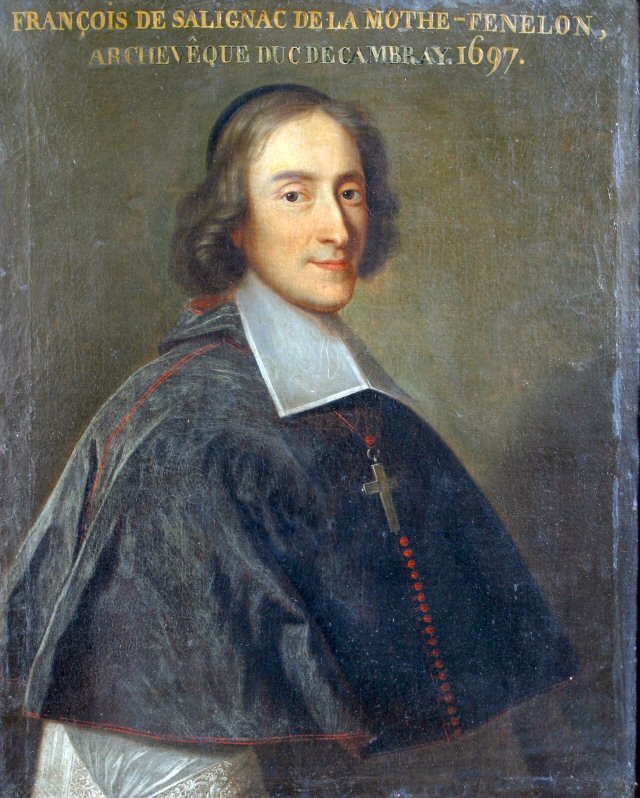
The main protagonist of the faction was the Duc de Bourgogne's tutor, Abbé Fénelon. The Abbé (or Archbishop) was outspoken to say the least. He authored several letters and treatises which were harsh in their critics on the Sun King's regime and nothing short of absolutely adoring of the Duc de Bourgogne. However, in 1699, the King had had enough of Fénelon's critics. He banished him from court and forbade him from having any contact with the royal family.


Other members included the Colbert family such as the Duc de Chevreuse and the Duc de Beauvilliers. The infamous Duc de Saint-Simon has also been connected to the faction.


Duc de Chevreuse (Colbert's son)

The circle around the Duc de Bourgogne remained steadfast. High moral principles were the trademark of the faction which included several of the most progressive philosophers of the time as well as aristocrats who sympathised with the lower classes. The development towards a less absolute monarchy was a main agenda for the factions; rather than the all-mighty King they were in favour of delegation some aspect of governmental power to the provinces.

The disgraced Fénelon
During the life of the Grand Dauphin the group had little to no influence. Then, in 1711, the Grand Dauphin died which meant that the Duc de Bourgogne was now Dauphin. Suddenly, the Bourgogne faction stood to gain everything. The chance of reform seemed to be within reach. The ageing King's health was deteriorating so those who looked to the future sought the next in line. Yet, an ageing King is still King and the Dauphin had not nearly enough influence to achieve the faction's goals.

The end of the Bourgogne Faction came just a year later. The Duc de Bourgogne and Marie Adélaïde both fell ill and died to the great horror of the court. Officially, this was the end and the surviving members would themselves follow their idol to the grave soon after. The ideas did not die out though. During the regency of the Duc d'Orléans government was indeed divided into several sectors which had been one of the main goals of the Bourgogne faction.

Sedan Chairs at Versailles

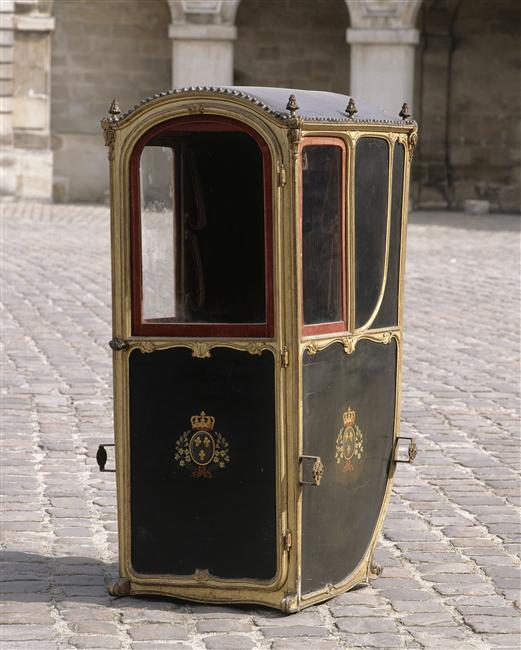
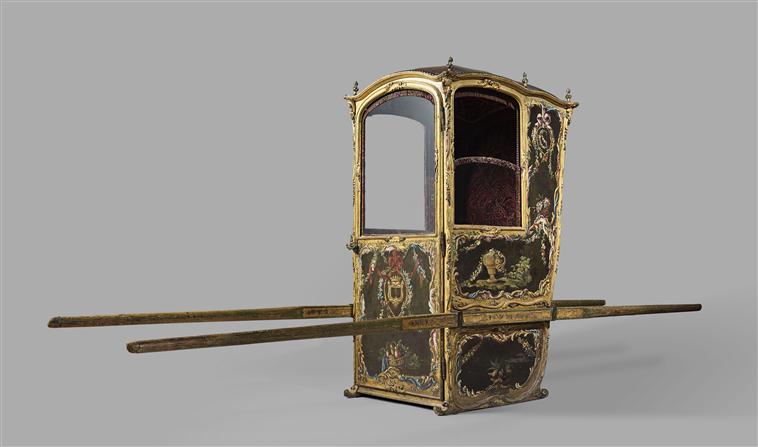
The vast complex of buildings which Versailles and the growing city around had turned into meant that getting from one place to another could be quite a hassle. In came the sedan chairs or chaise à porteur which is basically a seat in a box which is carried by two men; one in front and one in the back.

Those who did not have the Honneurs de Louvre were obliged to disembark their carriages at the gates but did have the opportunity of hailing a sedan chair for the remainder of the way up to the palace itself. Of course, to have this option also meant that sedan chairs had to be available immediately around  the royal residence. In 1674 Louis XIV gave his veteran servicemen as well as the abounding number of homeless and wounded ex-soldiers monopoly on the work as carriers of sedan chairs around the royal palaces.
The sedan chairs for rent were all painted blue; a colour which was shared by livery of the men who carried them. The fare from the gate to the palace was 6 sous.
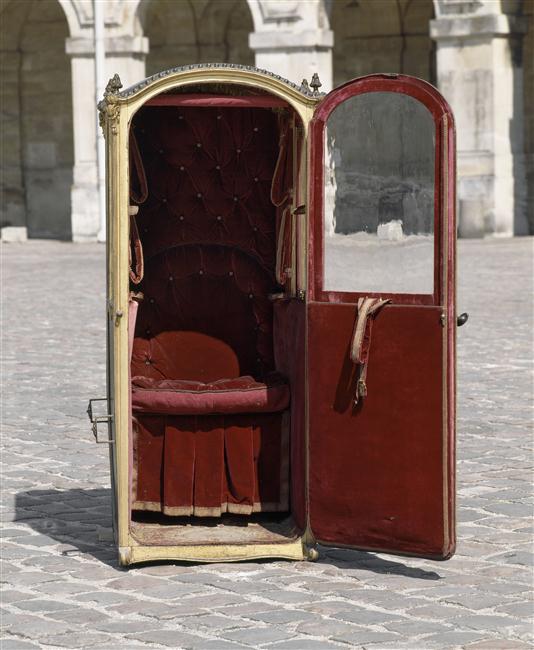


A chaise à porteur from the King's household


Closed
Inside the palace only royalty had the privilege of using a sedan chair in the Grand Apartments. In August 1715 Louis XIV was carried to the apartments of Madame de Maintenon in such a one.

When Louis XV established the Parc-aux-Cerfs chaises à porteur was used to transport the young girls to a hidden door leading up to the King's private chambers. These chairs would always have their windows covered. The same secrecy was often adopted by Louis XV when he went on night tours to balls; on these occasions he preferred to use a kind of sedan chair which was fitted on a wheel and dragged by a single porter.


Even Marie Antoinette's brother, Emperor Joseph, used a sedan chair when he paid his sister a visit in 1777.


As fashion became an ever more important aspect of court life so did the chaise à porteur. To keep the ladies' ever-rising hairstyles intact and the lush silks and velvets of the gentlemen dry every courtier with respect for himself had one. It was the norm to have one's coat-of-arms painted on the sides and back of the sedan chair. Naturally this meant that everyone could tell who was going where. It created quite a bustle of gossip when Madame de Pompadour's sedan chair - with its mistress inside - was seen paying a visit to Maurepas who had never been a friend of hers.


The design of the private sedan chairs became evermore intricate. In the reign of Louis XV it was hard to find one that was not gilded with gold and had a comfortable seat inside rather than a mere plank with a flat pillow.

As Marly became Louis XIV's favourite retreat the popularity of personal chaises à porteurs once again came into play. The distance could be considered somewhat far - especially considering that the King was not as young as he had been - and it was quite normal for the King together with Madame de Maintenon and the Duchesse de Bourgogne to go in this manner.
Speaking of Louis XIV he had a particular fondness for the man employed to carry the front poles of his personal sedan chair. This man was named d'Aigremont and it also fell to him to open the door for the King.
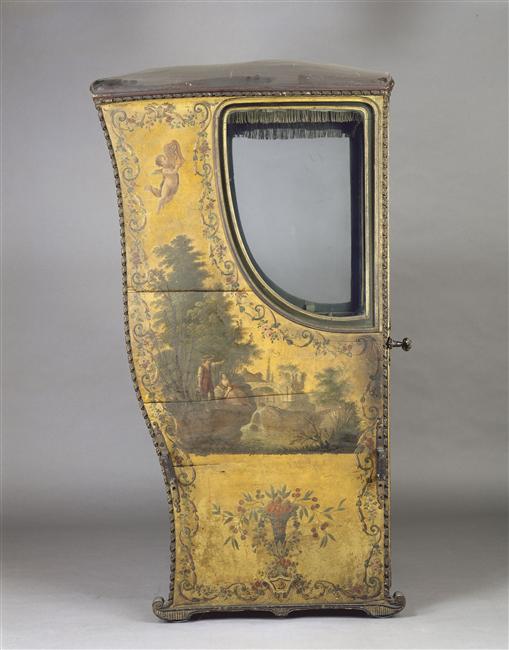
A French sedan chair currently at Compiègne

Occasionally, the sedan chair was taken outside the environs of Versailles. When Louis XIV went to inspect his troops he always took his court with him. Madame de Maintenon was given the luxury of been transported there and viewing the troops through the three glass panes in her chaise à porteur.
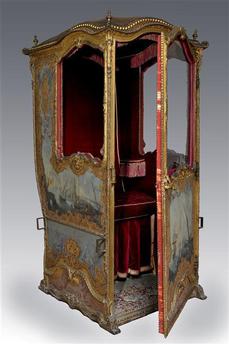
A beautiful example from 1720

Undoubtedly, the use of sedan chairs came as a relief to a great deal of people. The elderly courtiers was spared the need to walk the immense gardens and considering that - depending on their rank - they would often not be allowed a seat when the King was there, it must have been a relief. For those who struggled with their health it was good news too. In his later years, Louis XIV often took to seeing his gardens in this way since he often suffered from pains in his legs. When Marie Adélaïde, Duchesse de Bourgogne had had a hard delivery of her first son, she too, took advantage of it.

Saturday, 9 April 2016

Table Decoration of the Prince de Condé

A solid silver (almost) table decoration which was created in 1736 for Louis Henri, Duc de Bourbon and Prince de Condé. This objet d'art appears to have been dedicated to the pastime of hunting; a stag is seen being attacked by hunting dogs and a wolf has caught its paw in a trap. It is likely that it would have been placed at the centre of the table.


Elizabeth Charlotte d'Orléans and Madame de Maintenon

Elizabeth Charlotte of the Palatinate had been established as Madame at the French court for some years when Madame de Maintenon suddenly usurped Madame de Montespan's place as royal favourite. To the courtiers this change marked the beginning of a gloomy time at court with no entertainment and little to do other than attending Mass. To Elizabeth Charlotte it was a catastrophe; she had never liked the strict and austere governess and was loath to see her rise so high.

It is mainly through her letters and memoirs that one finds Elizabeth Charlotte's honest opinion on the King's last mistress. Describing her mainly as "the old woman" the Duchesse d'Orléans does not shy away from naming her adversary even harsher terms - "the piece of filth" is another reoccurring name. On one occasion Liselotte (as Elizabeth Charlotte was nicknamed) writes on the death of an acquaintance that she would have been far more pleased if it had been Madame de Maintenon who had gone.

Madame de Maintenon

Madame de Maintenon herself was not any fonder of the King's sister-in-law. Whenever the royal family went to Marly she made sure that Elizabeth Charlotte never received an invitation to walks around the grounds with the King. This trick of keeping the King away from was one generally used by Madame de Maintenon. Whereas Louis XIV had hitherto liked his sister-in-law for her brash and honest ways his attitude towards her drastically changed for the worse when Madame de Maintenon came along.

One particular incident which permanently ensured that the two would never see eye to eye was the marriage of Elizabeth Charlotte's son. The German-born Liselotte was a very proud woman and knew what was due to both herself and her offspring. Consequently, when it was rumoured that the King intended to marry her son to one of his bastards, Mademoiselle de Blois, she was furious. Madame de Maintenon had always supported the King's illegitimate children and continued to do so in this case. It soon was obvious that the King's favourite was a great supporter of the match which nothing seemed to be able to prevent. In the end the marriage did take place but Elizabeth Charlotte never forgot or forgave Madame de Maintenon for her role in the matter.

Elizabeth Charlotte, Duchesse d'Orléans

Another thing that rubbed Elizabeth Charlotte the wrong way was the social standing of Madame de Maintenon. Liselotte was convinced - as was the general world-view - that the ranks were separated for a reason and for royalty to marry beneath themselves was an utter disgrace.

It has been suggested that Elizabeth Charlotte was in love with Louis XIV which could be another reason for her dislike of the favourite. However, there is little to suggest that Elizabeth Charlotte actually was in love with the King.

After the death of Elizabeth Charlotte's husband, the Duc d'Orléans, there was an attempt at a reconciliation between the two. Different sources varies as to exactly who initiated the meeting but nonetheless it was to happen. The meeting took place in the apartment of Elizabeth Charlotte where the two both sat down in the presence of Madame de Ventadour who witnessed the whole exchange. The interview went back and fourth and in the end the two agreed to forget the past and be friends from there on - however, it is unlikely that they became close.
 

Adversaries of Madame de Maintenon

A royal favourite would always be an object of equal admiration and jealousy. Madame de Maintenon was no different despite her less showy way of life than her predecessor. Many attributed the gloomy atmosphere at court to the influence of the austere new favourite which is not far off point. The days of splendid fêtes and lively balls were long over and the courtiers were left to amuse themselves however they could. That proved to be a harder task than one could imagine since no one wanted to get on the King's bad side.

Madame de Maintenon

Some were open about their dislike of Madame de Maintenon or at least as open as it is possible to be without attracting the royal wrath. One who was particularly set against Madame de Maintenon was Elizabeth Charlotte of the Palatinate or simply Madame as was her court title as Duchesse d'Orléans. In her letters and subsequent memoirs the Duchesse d'Orléans refers to Madame de Maintenon as "the old woman" or even as "that piece of filth". Madame had a keen way of expressing herself which proves to be quite interesting reading. Another phrase of hers regarding "the old woman" dates to 1692 when the favourite is described "old ripopée" which is a term used for wine that has become so old that it borders on vinegar.
Madame de Maintenon was not fond of the Duchesse d'Orléans either. Whenever the royal family went to Marly she made sure to exclude the King's sister-in-law from walks around the grounds.

Elizabeth Charlotte of the Palatinate -
one of Mme de Maintenon's fiercest enemies

The Duc de Saint-Simon was another of Madame de Maintenon's enemy. Like Madame he found her to be too old which becomes clear in his memoirs where she is referred to as the "old hag". When rumours spread that she had become the King's morganatic wife, he declared that if it was true it was a great dishonour to the throne of France.

Occasionally, opposition to the favourite was more openly demonstrated. An Italian troupe of actors had enjoyed some success at Versailles right until they performed a play named "The False Prude". The play features a certain character which is obviously meant to be Madame de Maintenon. The court rushed to see the play - a demonstration of her unpopularity? - but the King was furious. He immediately closed down the performance and sent the troupe into exile for a year.

Abbé Fénelon

The Abbé de Fénelon was an enemy whom Madame de Maintenon did her best to get rid of. It was well known that Madame de Maintenon had more than once attempted to set the King against Fénelon and she rarely missed an opportunity of "bad-mouthing" him. Apparently, the King - who himself had become somewhat estranged from him - followed the advice of his favourite and appeared to be publicly displeased with the Abbé. Originally, Madame de Maintenon and Fénelon had actually been on pretty good terms; united by piety that same aspect was to tear them apart. Madame de Maintenon found that Fénelon's beliefs leant towards quietism which she would not accept.

For the majority of courtiers who disliked Madame de Maintenon their dislike was far more bounded in their boredom. It seemed a bit too coincidental that life at court would become so much more boring after "the old hag" came into power.

Wednesday, 6 April 2016

Look-Book: Children's wear

Early 18th century, England
French
English
For an infant boy, 1770-80
1770-80
Swiss
Second half of 18th century, Norway
Boy's suit, 1763,
Norway
Infant's jacket, 1775,
the Netherlands
Girl's jacket, 1750-80

1780-85

1740

1760-70

1780-85
Late 17th century,
Russian


1730's, probably French


Spanish
1750-60