Tuesday, 9 July 2019

The New Dukedoms under Louis XIV

From his majority in 1651 until his death in 1715, Louis XIV created or revived no less than 34 ducal titles.  Thus, he elevated a new group of people to the highest rank of the ability. There could be several reasons for why a family might be granted a dukedom - it could be faithful service, personal affections or even as a favour to a mistress. However, all of the families concerned were already well-established in the nobility. It should be noted that the title of duc did not necessarily mean that the holder was a Peer of France - that was another elevation. But how - and why - did the Sun King choose to bestow this honour on them?

These are the titles that were not bestowed on members of the royal family.

The Revived Titles

A title can become extinct if the family holding it dies out. In a society such as the French in the 17th century, Salic law was followed which prohibited females from inheriting titles. Therefore, aristocratic titles were considered to be extinct if there were no more male heirs. These did not necessarily have to be the sons or grandsons of the current title holder - they could just as well be a nephew, an uncle, a brother etc.

Still, once a title became extinct, it became available for the king to bestow on a new family. Louis XIV chose to do just that in these cases:

Duc d'Albret
Last held by: Henri IV (it merged with the crown when Henri became king)

Revived: 1651

Recipient: Frédéric-Maurice de La Tour d'Auvergne

Reason for revival:
Frédéric-Maurice had originally been on the wrong side in the Fronde during the minority of Louis XIV, but was convinced to switch sides. The bait used by Cardinal Mazarin was the dukedoms of both Albret and Château-Thierry - these would be granted if Frédéric-Maurice surrounded the strategically located Sedan and Raucourt to the crown.

Status: extinct in 1802

Frederic-MauricedeLaTourdAuvergneNanteuil.jpg
Frédéric-Maurice


Duc de Bourbon
Last held by: Henri III of France
Revived: 1661
Recipient: Louis de Bourbon-Condé
Reason for revival:

Louis was better known as the Grand Condé and had stood on the opposing side during the second Fronde. Nevertheless, following his defeat, Louis was readmitted into the king's good graces and remained subordinated to the king. It is possible that Louis received this particular title partially due to his subordination and partially due to his lineage.

Status: was dormant from 1830 until 1950 but has been revived and is still in existence

Louis, Grand Condé.PNG
Louis

Duc de Château-Thierry
Last held by: Guillaume Robert de la Marck
Revived: 1651
Recipient: Frédéric-Maurice de La Tour d'Auvergne
Reason for revival: see Duc d'Albret
Status: extinct in 1802


Duc de Rethel
Last held by: Charles IV, Duke of Mantua (sold to Cardinal Mazarin)
Revived: 1663
Recipient: Charles de La Porte
Reason for revival: see Duc de La Meilleraye
Status: extinct 1738


Duc de Roannais
Last held by: Artus Gouffier
Revived: 1667
Recipient: François III d'Aubusson de La Feuillade
Reason for revival:

François could have gotten a title through military service, loyalty during the Fronde and the good luck of being born into a particularly well-connected family. However, he had actually bought the title in 1667 for the price of 400.000 livres as well as agreeing to marry the sister of the former Duc de Roannais (Artus Gouffier).

Status: extinct 1725

François III d'Aubusson.jpg
François

Claude

The New Dukedoms

Duc d'Aumont
Creation: 1665
Recipient: Antoine d'Aumont de Rochebaron
Reason for creation:

Antoine gained his dukedom through the battlefield; this included serving Anne of Austria during the Fronde. For this, he was also awarded with the title of Marèchal de France and later governor of Paris.

Status: still in existence 

Antoine d'Aumont de Rochebaron.jpg
Antoine

Duc de Boufflers
Creation:
Recipient:
Reason for creation:
Status:

Duc de Choiseul
Creation: 1665
Recipient: Caesar de Choiseul
Reason for creation:

Caesar was remarkably talented as a military commander. For that reason it was a blow when he joined the Grand Condé during the First Fronde. However, when conflict broke out again, he chose to remain loyal to the crown - and played an important role in turning the tide. It was he who defeated Turenne, for instance.

Status: this line is extinct but the title was revived in 1817 and changed to Duc de Marmier in 1839
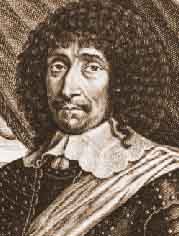
Caesar

Duc de Coislin
Creation: 1663
Recipient: Armand de Camboust
Reason for creation:

Armand might well have been rewarded for his services on the battlefield; he had risen through the ranks and became a lieutenant-general. It is also possible that he was personally liked by the king and his mother since he played an active part in Louis XIV's coronation ceremony.

Status: extinct 1732

Portrait d'Armand de Cambout, duc de Coislin.
Armand

Duc de Duras
Creation:
Recipient:
Reason for creation:
Status:

Duc d'Estrées
Created: 1663
Recipient: François Annibal d'Estrées
Reason for creation

François had served as a diplomat in Rome and therefore the title could be a reward for the political skill he had shown.

Status: although the title lay dormant from 1771-1892, it was revived for the direct descendants of the last Duc d'Estrées under the Ancien Regime and is still in existence
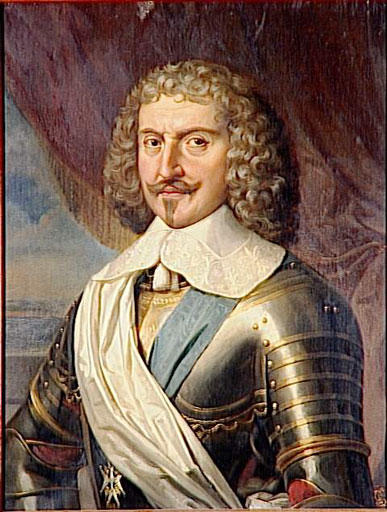
François

Duc de Fitz-James
Creation: 1710
Recipient: James Fitz-James
Reason for creation:

Unlike the vast majority on this list, James was not a Frenchman. In fact - as his name states - he was the illegitimate son of James II of England. An Englishman at the French court could have had a hard time but he used his military skills to fight on behalf of Louis XIV.

Status: extinct 1967

James Fitz-James, primer duque de Berwick (Museo del Prado).jpg
James

Duc d'Harcourt
Creation: 1700
Recipient: Henri d'Harcourt
Reason for creation:

Henri had participated in every single one of the major wars of his period and would then turn to more diplomatic endeavours. He was made ambassador to Spain and served as such when the War of the Spanish Succession erupted. Although it is unknown exactly which role he played, Louis XIV awarded his efforts with a dukedom.

Status: still in existence 


Duc de La Meilleraye
Creation: 1663
Recipient: Charles de La Porte
Reason for creation:

Charles (a relation of Cardinal Mazarin) had served Louis XIII as a competent general for years and had then held the position of Superintendent of Finances. This in itself could be reason for a promotion but it was most likely prodded along by the fact that Charles remained loyal to Anne of Austria during the Fronde and thus aided Louis XIV in keeping his throne. Sadly for Charles, he died just a year after being made a duc.

Status: extinct 1738
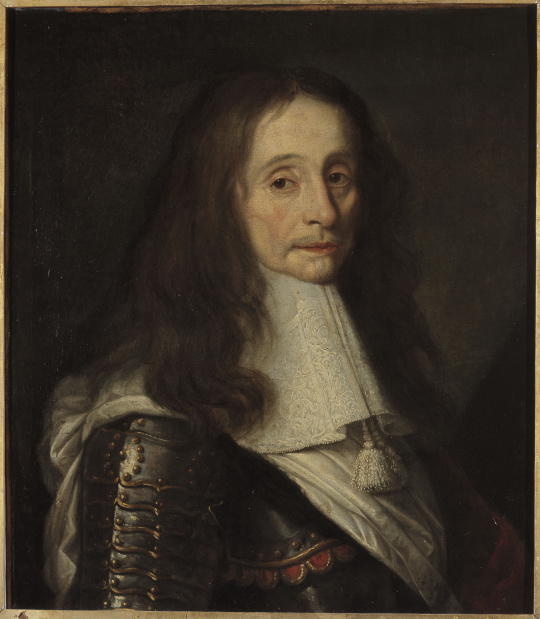

Charles

Duc de Mortemart
Creation: 1663
Recipient: Gabriel de Rochechouart de Mortemart
Reason for creation:

Gabriel had been much favouritism of Louis XII and had served as First Gentleman of the Chamber. He, too, had been a friend of Anne of Austria as well as Cardinal Richelieu. He happened to be the father of Madame de Montespan although he did not owe his elevation to her liaison with the king since he was elevated before their affair began.

Status: still in existence 

Portrait of Gabriel de Rochechouart, Duke of Mortemart wearing the Order of the Holy Spirit (Versailles, unknown artist).jpg
Gabriel

Duc de Noailles
Creation: 1663
Recipient: Anne de Noailles
Reason for creation:

Anne had remained loyal to Anne of Austria and Louis XIV during the Fronde and had used his political acumen and military skill to their advantage. He had also become a close ally of Cardinal Mazarin.

Status: still in existence 

Noailles, Anne cropped.jpg
Anne

Duc de Poix
Creation: 1663
Recipient: Charles de Créquy
Reason for creation:

Charles had travelled Europe in the service of the French king; he had been ambassador to Spain, England, Bavaria and Rome. For instance, he had been sent to Spain to personally deliver Louis XIV's gifts and letters to his fiancée, Marie Thérèse, and served in the same capacity for the Grand Dauphin.

Status: extinct in 1687


Duc de Randan
Creation: 1663
Recipient: Henri-François de Foix de Candale
Reason for creation

This could very well have been a case of favourism at work. Henri-François' mother had been one of Anne of Austria's favourite companions so the elevation was not far off - besides, the family was already in the high-nobility.

Status: extinct in 1714


Duc de Saint-Aignan
Creation: 1663
Recipient: François de Beauvilliers
Reason for creation:
Status: extinct 1828

François was a rather odd figure to be made a duc. He had been disastrous as a military commander - so bad, in fact, that he was imprisoned following the Battle of Thionville. However, he appears to have been more politically astute and remained loyal to Anne of Austria during the Fronde. This earned him his dukedom.


François

Duc de Saint-Cloud
Creation: 1674
Recipient: François de Harlay de Champvalon
Reason for creation:

This particular title was created for the benefit of the Archbishop of Paris. Since the holder was a Catholic clergyman, it was not hereditary but came as a package deal with the office of Archbishop. 

Status: abolished in the revolution
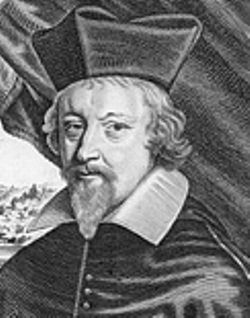
François Harlay de Champvallon.jpg
François

Duc de Tresmes
Creation: 1663
Recipient: René Potier de Tresmes
Reason for creation:

René had served Louis XIII both militarily and politically; he continued especially in the former during the early years of Louis XIV. The title was later changed to Duc de Gesvres.

Status: extinct 1794 (last holder executed during the revolution)

René Potier de Tresmes.jpg
René

Duc de Verneuil 
Creation: 1663
Recipient: Gaston Henri de Bourbon
Reason for creation:

Interestingly enough, Gaston had been destined for the church and served as a cleric for the majority of his life before resigning. He was then knighted and later created Duc de Verneuil. It is possible that his ancestry had something to do with this drastic elevation. He was the illegitimate child of Henri IV which made him Louis XIV's half-uncle.


Status: extinct 1682

Gaston Henri
Duc de Villars
Created: 1705
Recipient: Claude Louis Hector de Villars
Reason for revival:

Claude excelled as a soldier which earned him the title of Marèchal de France and very likely contributed to his elevation to a dukedom. The title is not to be confused with the Duc de Villars-Brancas.

Status: extinct 1775

Hyacinthe Rigaud -Portrait of Claude Louis Hector de Villars (1704) - Palace of Versailles.jpg
Duc de Villeroy
Creation: 1651
Recipient: Nicolas V de Villeroy
Reason for creation:

Nicolas had close ties with Louis XIV since he had served as the young boy's governor which shows that he had enjoyed the favour of Anne of Austria. There is little doubt that Louis XIV also appreciated him; he was later admitted to the king's financial council.

Status: extinct 1794 (eradicated by the revolution)

Nicolas


Sunday, 30 June 2019

The Abducting of Mademoiselle de Roquelaure

The betrothal between Louis, Prince de Léon, eldest son of the Duc de Rohan and Mademoiselle de Roquelaure was considered a suitable - both bride and groom being the offspring of peers of the realm - but there was another advantage for the Duc de Rohan. Mademoiselle de Roquelaure was said to be the daughter of Louis XIV, although the king never recognised her as such. The marriage contract was all but signed when the mother of the bride-to-be suddenly changed her conditions and demanded that the Duc de Rohan gave his son a larger allowance.

Neither the Prince de Léon nor Mademoiselle de Roquelaure were allegedly pleased with this decision but to no avail. Interestingly, neither was the king. The Marquis de Dangeau relates that the king was eager to see the marriage concluded and even went so far as to pressure the Duc de Rohan to increase his son's allowance. 

Consequently, Mademoiselle de Roquelaure was shipped back to the convent where she had received her education. However, she was not to remain there for long. The Prince de Léon had not given up on marrying her and decided to abduct her. Abduction usually infers a sinister motive on behalf of the abductor but in this case it was quite the opposite: the Prince de Léon intended to honour the promises originally made between the two families. It was claimed that the would-be bridegroom had a carriage outfitted with his coat-of-arms and sent to the convent. There, a message was to be given to the Mademoiselle de Roquelaure that her mother was waiting for her. Instead, the carriage would take them to a house owned by the Duc de Lorges. He and Mademoiselle de Roquelaure were married on 6 March 1708.


Mademoiselle de Roquelaure


Infuriated, the Duchesse de Roquelaure - mother of the mademoiselle - went straight to the king to complain. However, the plan did not go quite as she had wished. Rather than being outraged, the courtiers (chief amongst them the Duchesse de Bourgogne) found the whole situation hilarious. The absurdity lay not in the disrupted marriage agreement but in far more personal attributes. Both the Prince de Léon and Mademoiselle de Roquelaure were known to be rather ugly. The latter was said to be hunchbacked and "very ugly" and her husband no better off. The court were accustomed to tales of such heroic romanticism but (then and now) heroes and heroines are always beautiful. Besides, the bride was 25 years old and was not considered likely to make another such advantageous match.

The Duc de Saint-Simon informs us that once the marriage rites had been performed, the couple was left alone for a few hours and the new Princesse de Léon was taken back to the convent where she informed her mother - via letter - of her recent nuptials.

The Duc de Roquelaure was just as furious as his lady wife. He demanded that the Prince de Léon be prosecuted as a criminal. Few took him seriously and those who reasoned that it could not possibly hold up since the bride had not been forced into the marriage.

The king ordered that the marriage be honoured since it had already taken place. In response both the families involved decided to reduce the money given to the newlyweds. The result was that the couple had severe financial difficulties during their first years of marriage. At the end of the day, the efforts of the Prince de Léon turned out to have been all but useless. Hénault relates that the couple were never on good terms.

Sunday, 9 June 2019

The Alcoholism of the Regent

Following the increasingly sombre mood at the court of Louis XIV, the Regency was characterized by excess. Philippe II d'Orléans took the role of Regent and he himself embodied the decadence of his time. The Regent and his entourage - referred to as the roués - were infamous for their excessive drinking. 

According to the Cardinal Dubois, Philippe's alcoholism was apparent to everyone. The Cardinal claimed that the Regent drank a minimum of five bottles a day. Naturally, such a massive consumption of alcohol would leave its mark. It was not uncommon for Philippe to attend mass while heavily intoxicated. On some occasions, his drinking would land him in rather undignified situations. Apparently, following one night of heavy drinking he was returning from Saint-Cloud when he exited his carriage - and fell directly into a muddy ditch. Unable to free himself of this predicament, he sent for his mistress to aid him.

Champagne appears to have been the drink of choice of the Regent. The drink became increasingly popular in his inner circle which was quickly copied both in Paris and abroad. 

Billedresultat for philippe duc d'orleans
Philippe II d'Orléans

Besides the more embarrassing episodes, the Regent occasionally found himself in, there was another aspect of Philippe's nightlife that brought concern to his court. Sometimes he would suddenly tire of the festivities at the Palais-Royal and would strike out with a few companions to roam about in the streets of Paris. Without bodyguards it was feared that he might get himself in serious danger. 

Only rarely did the binge-drinking affect the day-to-day management of the kingdom. Despite spending the majority of the night out and about, he always performed his duties as regent. However, once the Regent put away his work, he did little to nothing to check his impulses. During another drunken dinner with the Cardinal Dubois, the Regent's mistress and the Scottish John Law, someone approached the Regent with a document to sign. However, the Regent was way too intoxicated to actually put pen to paper which he himself remarked upon. 

As the saying goes, the apple does not fall far from the tree. Philippe's daughter, the infamous Marie-Louise-Élisabeth, Duchesse de Berri, was equally addicted to drink.

Sunday, 2 June 2019

The Robe Battante

The Robe Battante is an early version of the robe à la Française but a considerably more comfortable one than the tightly laced ones later favoured by Versailles. It was cut in the same fashion; hanging from the shoulders in pleats. However, a robe battante was unfitted both at the front and at the back - therefore, it was far more informal than a fitted one. In the early part of the 18th century the robe battante was popular as a maternity gown particularly because the stomach could easier be concealed - although the stomacher could still be visible. This was a matter of taste. It was not necessarily cut completely open but could be fastened with buttons or even sewn up for a more modest look.

When the style was still new, it was considered to give the wearer a look of innocence. For that reason it was sometimes nicknamed the "innocente".

Nevertheless, a corset was usually worn beneath it to keep an upright posture. In the case of pregnancy it could be dropped but it was often a matter of formality. Once Louis XV reached his majority, it was always worn with a corset. From around 1718, another piece of clothing was added to the ensemble: the pannier. The result was that the silhouette became even more bell-like.


Some claimed that Madame de Maintenon had created the gown partially because it suited her extraordinarily well and partially due to her frequent pregnancies by the king. It was said that she intended to hide her condition but it soon became almost an official symbol of her being pregnant. As Madame Palatine said: "Madame de Maintenon has put on her robe battante, so she must be pregnant".

Madame de Maintenon's legacy would be carried on by her grand-daughter, the Duchesse de Berri, whose scandalous lifestyle resulted in many pregnancies outside marriage. Even after, the Duchesse's premature death, the robe battante continued to be fashionable during the 1720's - 1740's.

Those who could afford it - like Montespan or the Duchesse de Berri - had their robe battantes made from silk or muslin. Because the stomacher was still on display, it was often made all the more elaborate. It can easily be imagined that some sought to outweigh the simplicity of the gown with a lavish stomacher.


Robe volante


Note that the robe battante is very similar to a robe volante.

Saturday, 1 June 2019

Anne Poussard de Fors du Vigean, Duchesse de Richelieu

Anne de Richelieu was born in 1622 and spent the majority of her life at court of either Louis XIII or Louis XIV. She was the daughter of François Poussard du Vigean, Baron de Fors and Anne de Neufbourg.

She was first married to François-Alexandre d'Albret, Comte de Marennes on 16 October 1644. However, her husband died after a few years of marriage which left Anne once again on the marriage market. Her father was quick to arrange for a new match for her - and a very advantageous one at that. In 1649, Anne was married to the Duc de Richelieu.

The marriage was considered to be somewhat of a mystery. Anne was particularly young nor did she have a fortune. Her father's title was not very grand and Anne herself was not considered to be beautiful. As Madame de Caylus put it, the match was to "the astonishment of the whole court". 

Anne's years as a Duchesse earned her a position of privilege. On 21 November 1671, she was given her own official position at court when she was made Premier dame d'honneur to Marie-Thérèse. Prior to this, she had lived primarily at the Hôtel de Richlieu in Paris which is now destroyed. It was while she served the queen, that she made a new friend: Madame de Montespan. Despite being employed by the spouse of Madame de Montespan's lover, the two got on quite well. As it happens, Anne used her position near the queen to ease the relationship between La Montespan and Marie Thérèse.


Anne

As Madame de Montespan's reign progressed, the royal favourite would learn that her friendship with Anne de Richelieu was truly valuable. In 1675, Madame de Montespan and Louis XIV's relationship was interrupted and the two became temporarily estranged. While Madame de Montespan was absent from court, Anne worked behind the scenes and arranged for a meeting between the queen and La Montespan. The result was that the two were reconciled. Both Madame de Montespan and Louis XIV were well aware of the involvement of Anne and both remained grateful to her.

Meanwhile, in her own marriage, Anne encountered somewhat different troubles. Her husband, Armand Jean de Vignerot du Plessis, had his own established mistress in Françoise de Dreux. Such arrangements were far from uncommon but this particular one almost turned fatal. Françoise de Dreux dabbled in some sinister occult practices and apparently came to consider Anne to be in her way. Françoise attempted to poison Anne but failed. Françoise would later be convicted of the attempted murder as well as several successful ones in 1679.

Anne would never have children of her own. Neither of her marriages produced any known offspring and she does not appear to have had any affairs. 

Marie Thérèse died in 1683 which meant that Anne was without official employ. However, likely due to her favour with the king, she was transferred to the service of the Grande Dauphine. Here she made a new friend who would come to serve the same capacity as Madame de Montespan had: Madame de Maintenon. Apparently, Anne had a habit of making fast friends with the king's mistresses but without sacrificing her own position. Unfortunately for Anne, she would not live to reap the rewards of being the friend of Madame de Maintenon. Anne died on 28 May 1684 in Paris.

Saturday, 18 May 2019

The King's Blood?

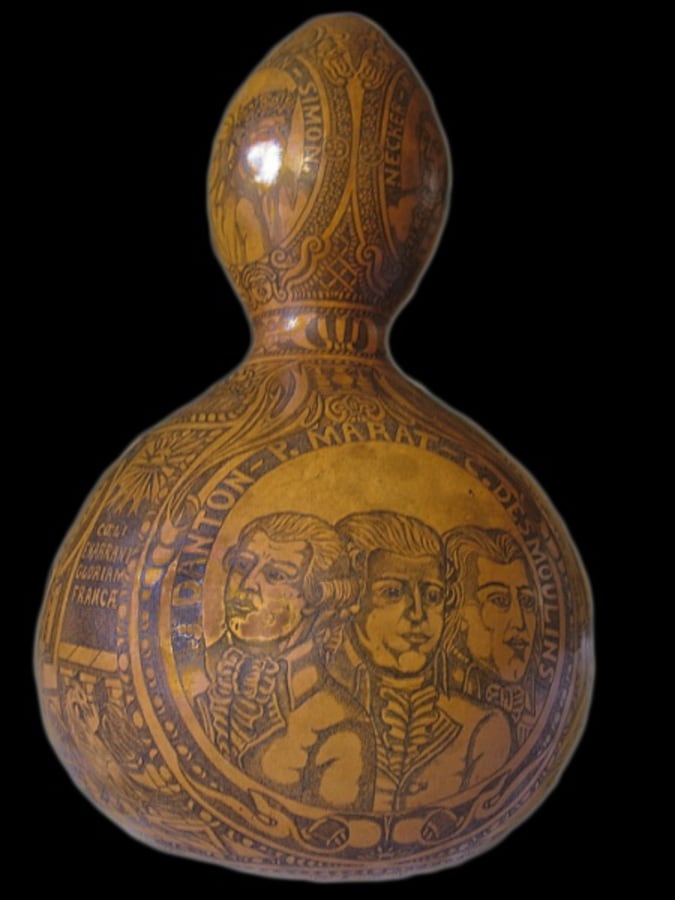
It was common at executions of notable personages to attempt to get a momentum of the macabre event. Naturally, this was also the case with Louis XVI's case. A surviving report tells of how some spectators pushed to the front and dipped their handkerchiefs in the blood of the fallen monarch. Allegedly, one such handkerchief survived which belonged to Maximilien Bourdaloue. He kept the scrap of fabric in a gourd with the inscription "blood of Louis XVI, after his beheading".

The handkerchief itself has not survived but traces of blood within the blood made it possible to run DNA tests. Early on, it was found that the blood could very well have been Louis'. One of the main arguments in favour of the authenticity of the blood is the presence of a rare Y-chromosome. Henri IV's head provided a DNA reference which showed that Henri had had the rare Y-chromosome. Louis XVI was Henri's descendant (7 generations) and the sample showed traces of the same rarity. However, tests carried out in 2013 showed that the mummified head might not have been that of Henri IV at all - rendering it irrelevant in connection with identifying the blood in the gourd.


Billedresultat for louis xvi blood
The gourd

The scientific team involved determined that the sample was most likely to have originating from a person with brown eyes. Louis XVI - on the other hand - had blue eyes. As it happens, Professor Lalueza-Fox considers the possibility of the owner of the blood to have had blue eyes to be between 2.4 - 3 %. 

Furthermore, the test was able to conclude that the 76 % of the deceased's ancestry came from northern Italy. Louis' primary ancestry was French, Polish and German. Louis XVI was said to have been remarkably tall for his age at 185 cm. Yet, the person whose blood was tested was just a little taller than the average male which would have made him little more than 167 cm. 

So, while the blood is unlikely to have been that of the dethroned king, it is still likely that it did come from a person beheaded by guillotine during the French Revolution. Thousands of people were beheaded and the scaffold was not wiped down afterwards. It is possible that the blood belonged to someone beheaded before the king. However, it is also possible that the blood had nothing to do with the guillotine. It has been suggested that Maximilien Bourdaloue might have deliberately lied.

Le Duc d'Orléans: Frère de Louis XIV

Title: Le Duc d'Orléans: Frère de Louis XIV

Author: Christian Bouyer

Rating: 3 out of 5 stars

The life of Philippe d'Orléans is interesting in itself which is why I chose this book. Unfortunately, once I had read it, I did not necessarily think that I knew a lot more about him. The book does a good job of telling the context of Louis XIV's court and the time but the life of Philippe is covered somewhat superficially. To be sure, it mentions the more important events of his life but it never seems to go beyond the surface.

I would recommend it if you are looking for a general idea of the period of Louis XIV from the perspective of Philippe. However, if you are looking for a more in-depth biography, then this is sadly not it.

Billedresultat for philippe duc d'orleans book