Monday, 31 October 2016

The King's Private Apartment

Louis XIV's Private Apartments

Louis XIV was a firm believer in the system he created which allowed him - or his family - little privacy. Consequently, the rooms allotted for his owe personal use were few (compared to the château's size) and were not particularly private at that.


1) The King's Cabinet / Cabinet du Roi

2) Cabinet of the Wigs / Cabinet des Perruques

3) Billard / Cabinet de Billard

4) Salon of the Small Staircase / Salon de Petit Escalier

5) Cabinet of Paintings / Cabinet des Tableaux

6) The Cabinet of Shells / Cabinet aux Coquilles

7) The Oval Cabinet / Cabinet Ovale

8) The Small Gallery / Petite Galerie

9) Cabinet of Curiosities / Cabinet des Curiosities 

a) Antechamber of the Bull's Eye
b) The King's Bedchamber
c) The Ambassador's Staircase


Louis XV's Private Apartments

Louis XV was far more reserved than his great-grandfather had been and found it difficult to cope with the constant public lifestyle created for him. So, he made several alterations to the King's private apartment while he left the majority of the remaining château untouched. He altered the private apartment twice:

1740:


1) Cabinet of the Wigs / Cabinet des Perruques

2) Cabinet

3) Toilet / Chaise Percée


5) Louis XV's Bedchamber / Chambre de Coucher


7) Dinning Salon / Salle de Manger

8) Antechamber / Antichambre 

9) Bath Chamber / Chambre du Bains

10) Bath / Bains

11) Cabinet

12) Oval Cabinet / Cabinet Ovale

13) Salon

14) Small Gallery / Petite Galerie

15) Salon 

16) Cabinet of Medallions / Cabinet des Medailles


Louis XVI's Private Apartment

Louis XVI was not as active with rebuilding and adding rooms to his private apartment. Instead, he made just a few changes which for the most part involved changing the purpose of a room. This particular floor plan is not exactly as the private apartment looks today since this is from before the alterations made by Louis-Philippe following the French Revolution.


1) Bath

2) Toilet


9) The Buffet Salon


13) Cabinet de la Cassette

14) Library


The King's Private Apartment Now

After the Revolution, several years passed with Versailles standing as an empty shell while France was in turmoil. In the 1830's the monarchy was reinstated and the new King, Louis-Philippe, managed to carry out certain drastic changes during his rather short rule. This is how the King's private apartment looks today.

1) Bath

2) Toilet


3a) Corridor


11) Louis XV's Bathroom


13) Cabinet Particulier 


a) Council Chamber
b) Louis-Philippe Staircase
GemGemGemGem

Saturday, 29 October 2016

Marie Thérèse

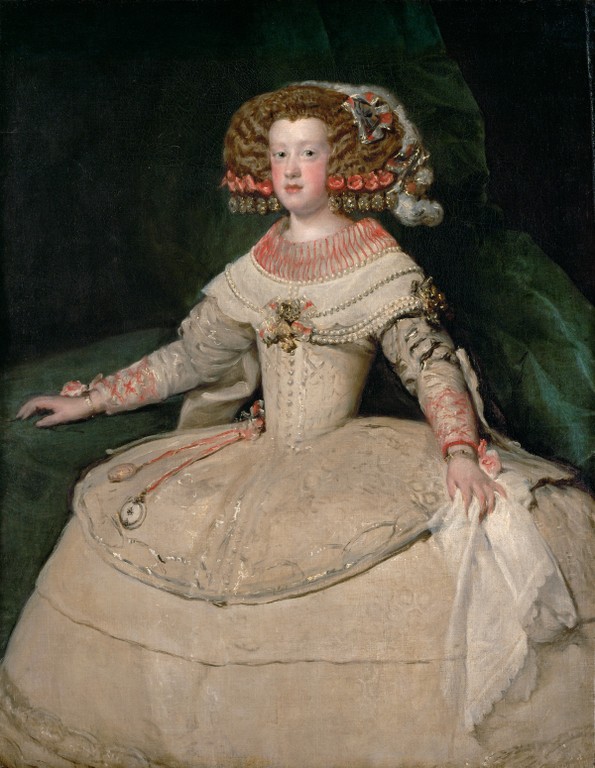
Infanta Marie Thérèse was born on 10 September 1638 to King Philip IV and Elisabeth of France. She became the heir apparent to the throne - since females can inherit the Spanish throne - during the periods when she had no living brothers.

At the age of 20 Spain and France were approaching peace and it was decided that the marriage of Marie Thérèse and Louis XIV would cement the peace alliance. The actual marriage took place on 9 June 1660 but luckily the royal couple was spared the embarrassment of a public consummation.
Once established at the French court the first year of Marie Thérèse's marriage was blissful. Her husband was faithful and eager to please his new wife while her mother-in-law (also her aunt) quickly became a close friend.

Infanta Maria Teresa


Marie Thérèse's bliss in France continued when she became pregnant not long after her marriage.She gave birth to the expected son in 1661 and had as such already fulfilled her main role. For those who had expected her to be a gateway to power they were sorely disappointed. Small of stature, Marie Thérèse had no interest in either politics or court intrigues. Her main interests were religion and gambling. It did not take long for the King to tire of her and he set off to fulfil his "duty" as King and took a mistress,
The Queen was not disheartened since she had been brought up as other young princesses to expect this sort of behaviour - rather it was anticipated than anything else. Only on few occasions did she express her displeasure against the favourites but never towards the King himself. For her part the Queen had little to complain about as to her position. Louis XIV took a long succession of mistresses but he insisted that Marie Thérèse and her position be respected. Likewise, he made sure that she got her share of his attentions and continued to pay her regular visits - both daily and nightly.

Amongst the courtiers the Queen was rather the butt of jokes than a respected figure. She spoke French very poorly and her lack of beauty and wit meant that she was considered completely uninteresting. This was only heightened by the fact that she had neither access to nor interest in power. As a direct consequence Marie Thérèse became increasingly isolated after Anne of Austria's death. She now spent the majority of her time in her own apartments in company with Spanish attendants and her favourite Spanish dwarfs.

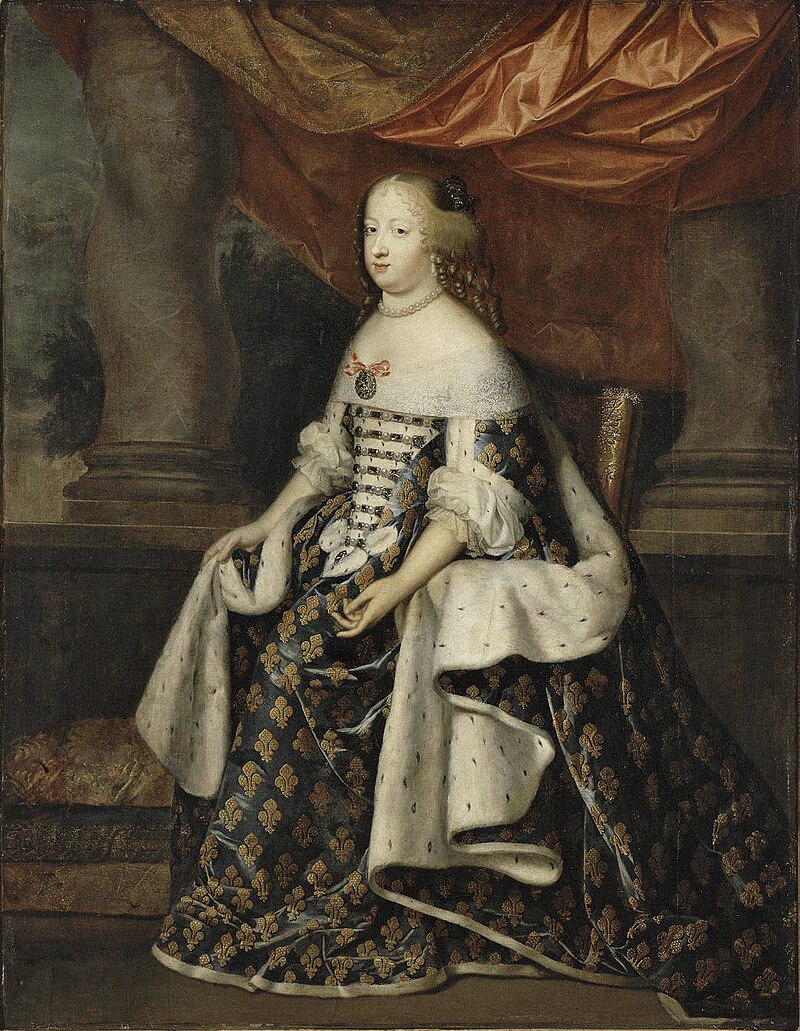
Oil on canvas portrait of Marie Thérèse of Austria (1638-1683) wearing the fleur-de-lis robes as Queen of France.jpg
Marie Thérèse as Queen of France

The only time she had any influence at all was when her husband appointed her nominal regent in his absence. Despite having overall left her to do as she pleased the King and Queen had an oddly peaceful marriage. Marie Thérèse was deeply in love with her husband and completely respected him. She never made any public display of anger against him; not even when he waged war against her home country or flaunted his mistresses at court. For this the King was deeply grateful and made sure that she had everything she could desire.
Marie Thérèse would give birth six times but only her first child lived beyond infancy. In July 1683 she fell seriously ill which prompted the King to sent for the sacraments for his wife. However, there was nothing they could do and the Marie Thérèse died a painful death on 30th July 1683. Louis XIV had refused to leave her side and when he was told of her death famously said: "This is the only trouble she has ever given me".

Saturday, 22 October 2016

The Royal Family


THE KINGS

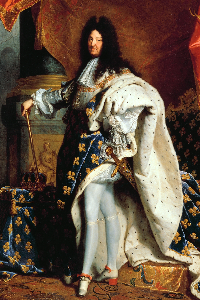
Louis XIV
Louis XV
Louis XVI


THE QUEENS

Marie Thérèse
Marie Leczinska
Marie Antoinette


Billedresultat for couronne de dauphin

THE DAUPHIN & DAUPHINES


Grand Dauphin
Louis,  Duc de Bourgogne
Louis Ferdinand
Louis Joseph
Louis Charles


Maria Anna Victoria
Marie Adélaide 
Maria Teresa Rafaela
Maria Josepha


Billedresultat for couronne de prince de sang

BROTHERS AND SISTERS OF THE KING

Philippe (Monsieur),
Duc d'Orléans
Louis-Stanislas,
Comte de Provence
Charles Philippe,
Comte d'Artois
Marie Clothilde,
Queen of Sardinia
Élisabeth,
Princesse of France


Billedresultat for couronne de prince de sang

LEGITIMATE DAUGHTERS OF THE KING
(* not including children that died very young/were stillborn)
Louise Élisabeth
Henriette Anne
Adélaide
Victoire
Sophie
Louise
Marie Thérèse

Wednesday, 14 September 2016

Apartment of the Comtesse d'Ossun

The Comtesse d'Ossun was dame d'atours to Marie Antoinette which meant that she had permanent lodgings at court. Due to the prestigious position she held the Comtesse was granted apartments on the first floor near the Queen's own apartments.
The Comtesse had plenty of room to do with - especially compared to other inhabitants at Versailles - with a suite of no less than 10 rooms. Of these six had their own chimneys.

Luckily, an inventory from February 1786 gives us a fairly detailed account of the furniture in the Comtesse's apartment. The Comtesse could boast of not only two Ottoman sofas, six bedroom chairs and six moulded chairs a la Reine (basically comfortable armchairs) but also of four moulded chairs and two "tête-at-tête"-chairs. Furthermore, an "imperial style" couch was to be found in her apartment.

Billedresultat for versailles appartement de comtesse d'ossun
Inventory showing the purchases of the Comtesse d'Ossun

Interestingly enough, the Comtesse had also ordered a specific artwork: a bust by Nicolas Vallois and Boulard.

In March of that same year the Comtesse added to her collection with two gilded sofas complete with rosettes, tassels and ribbons as well as a total of eight chairs - four "tête-a-têtes" and four armchairs.
In total no less than eighteen pieces of furniture were delivered to the Comtesse d'Ossun in 1786!
The Comtesse was careful to preserve her furniture as is seen by the expensive varnish used both for gilding and redecorating her suite.

Billedresultat for versailles appartement de comtesse d'ossun
Frame of a chair delivered to Mme d'Ossun in 1786

The Comtesse seemed to have been particularly fond of two large armchairs; these were of yellow damask and appears in the inventories of both 1786 and 1788. In 1790 she had them moved to her bedroom - they were still intact when the furniture of Versailles was sold on auction in 1793.

Tuesday, 13 September 2016

Marie Isabelle de Rohan, Duchesse de Tallard

Marie Isabelle was born in Paris on 17 January 1699 to the illustrious family of the Duc de Rohan-Rohan. She spent her childhood with her four other siblings but it was early a given that she was to make her life at court. There, her family had the honour of being princes étrangere or foreign princes which entitled Marie Isabelle to the title of Her Highness.

At the age of fourteen Marie Isabelle was married off to the son of the Duc de Tallard, Joseph d'Hossun de La Baume - her bridegroom was seventeen years her senior. Now that she was a married "woman" it became essential to get an appointment at court. This she gained as a member of Elizabeth Charlotte d'Orléans' - Madame - household,
Marie Isabelle was not completely alone in Madame's household since her grandmother, Charlotte de La Mothe-Houdancourt - or simply Madame de Ventadour - held the position of Governess to the Children of France. This position she retired from in 1735 and it was handed on to Marie Isabelle.

Princesse Marie-Isabelle Gabrielle de Rohan-Soubise, 2ème. Duchesse d'Hostun, Marquise de La Baume, Comtesse de Tallard, 1699-1754.:
Marie Isabelle de Rohan

During her position as Governess Marie Isabelle had a close relationship with the royal family; particularly Queen Marie Leczynska who doted on her many children. In turn Marie Isabelle was made lady-in-waiting to Madame Henriette (second daughter of Louis XV) as well as the prestigious position of dame du palais to the Queen herself. Word has it that the Queen was very fond of her young companion which must have eased Marie Isabelle's position considerably.

With positions such as those Marie Isabelle was a firm fixture at Versailles where she was honoured with her own apartment. Here she hosted dinner parties which even the King was noted to frequently attend. The royal children themselves appears to have been pleased with Marie Isabelle for the Dauphin made sure that she was also appointed governess to his own daughters.

Despite spending a great portion of her time with children Marie Isabelle never had any of her own. Her marriage appears to have been a typical arranged marriage - the couple was not very close. Marie Isabelle remained at Versailles until her death on the night of 4 January 1754. Her loss was felt dearly by the royal family even those who had not been under her care for a great while.

Friday, 9 September 2016

The Duchesse de Berry's Alcohol Issue

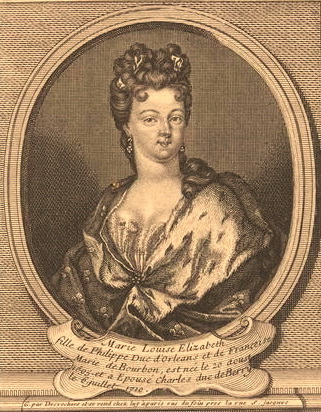
The eldest daughter of the Regent Duc d'Orléans was christened Marie Louise Élisabeth d'Orléans and was easily one of the most scandalous personages at court. Her scandalous behaviour included everything from secret pregnancies to public drunkenness.

This latter problem became very obvious - and awkward - to those of the court that did not share her lifestyle. One particular embarrassing incident took place during a supper party at Saint-Cloud attended by most of the young royal family - including the Duc and Duchesse de Bourgogne. During the evening the Duchesse became more and more drunk until her companions had to discuss what to do with her. In the end it was decided that she was to be transported back to Versailles to sleep it off; however, the Duchesse could not walk herself to the carriage and had to be carried. Likewise, when they arrived at the palace she had to be supported to her apartment.

Billedresultat for duchesse de berry
The Duchesse de Berry

That Marie Louise Élisabeth was fond of a drunk - or five - became clear within a few days of her marriage to the Duc de Berry when she got very drunk at the dinner table. This resulted in a severe scolding from both the King and her father but either the Duchesse was indifferent to their words or she truly had become addicted. The incident at Saint-Cloud had been hidden from the King even though it had been witnessed by a fair share of not only the royal family but the giggling servants as well.

Once the Sun King died there was nothing to hold her back and with the death of her husband shortly after the Duchesse considered herself truly free to do as she chose. As for her drinking there was now no one to stop her; the old King had held some sway over her but that was no more.

Champagne came into fashion shortly after Louis XIV's death and the Duchesse was sure to be a part of the new trend. She was a firm fixture at her father's infamous private suppers where she was well-known to be able to drink most men under the table. Her father did nothing to halt her drinking. On the contrary, he had always adored her and would deny her nothing.

Billedresultat for duchesse de berry
The Duchesse at the end of her life

When at court it could be more troublesome to carry on drinking on such a scale without the privacy of her own home to retire to. It was recorded on several occasions that her drunkenness had often caused her to having to stagger to a corner and throw up.

The Duchesse's extreme lifestyle had done irreparable damage to her body - just imagine the condition of her liver - and eventually it caught up with her. She died at the age of just 23 years old.

Tuesday, 6 September 2016

Eerie Prophecies

The inhabitants of Versailles provide an amazing array of fascinating lives, splendid royal careers and occasionally tragic destines. Occasionally, the destines of some of these people were the target of some eerily accurate prophecies which is fascinating stuff to read from this point in history. Of course we will never know if the people concerned ever thought back on the omens or if they even remembered them at all.

Never himself a King
The Grand Dauphin was allegedly told that his destiny would be to be "the son of a King, the father of a King but never himself a King."
Naturally, the first part was already secured so that is an easy point in favour of superstition. However, the Grand Dauphin as still a child when this prophecy was made which meant that whoever said it - if anyone did, that is - they could not have foreseen the dramatic events in the latter part of the 17th century. In 1700 the King of Spain died without a direct heir which meant that there were two contenders for the throne: the Grand Dauphin and the Austrian Archduke Charles. As heir to the French throne the Grand Dauphin was not permitted by the remaining European powers to sit on both thrones but his own son could. Luckily, he had three and the second were chosen to become King of Spain (the eldest were - of course to remain to ensure the French line of succession). Eventually, the War of the Spanish Succession ended with the Duc d'Anjou becoming Philip V of Spain and his father thus becoming "father of a King".

Billedresultat for grand dauphin
The Grand Dauphin

In 1711 the Grand Dauphin was already in his forties and it seemed as if his father would live forever. The King preferred his grandson and his wife, the Duc and Duchesse de Bourgogne, and treated the Duc more like his direct heir than his son. The Grand Dauphin seemed to have resigned himself to his fate and had removed himself to his private estate of Meudon. Here he died of small-pox on 14 April thus fulfilling the prophecy.

The cut mirror
When Marie Antoinette arrived at the French court as a young Dauphine it seemed as if a splendid destiny awaited her. She reviewed her apartments which had been left without an inhabitant since the death of Marie Leczinska. When she got to her small inner cabinet - later nick-named the Cabinet de la Meridienne since the then Queen would spent her midday hours there - she noticed that one of the mirrors behind the sofa in a cozy nook had an odd defect. The way it was cut and the particular spot where the Dauphine stood made it look as if her head had been cut off.


Billedresultat for cabinet de la meridienne
The mirror

A short life
The vivacious Marie Adelaide of Savoy captivated the French court and especially Louis XIV when she came to Versailles to marry the Duc de Bourgogne. She was indulged in her every whim but there was one creepy prophecy that could dampen the spirit of even Marie Adelaide. It had once been prophesied by an astrologer in Turin laying her horoscope that she would die in her twenty-seventh year. This year was 1712 and there is something to suggest that the then Dauphine herself felt a little uneasy about what her ladies-in-waiting tried to make light of.

Billedresultat for marie adelaide of savoy tomb
Marie Adelaide as Duchesse de Bourgogne

Such an attempt was made in January 1712 when her lady-in-waiting jokingly reminded Marie Adelaide - who was in her absolute prime - about the saying. Marie Adelaide became somewhat pensive and said: "Well, I must make haste. I cannot enjoy myself too much for I shall die this year".
Less than a month later she was dead.

The heart of a King
Jeanne Antoinette Poisson was not born into nobility and during her childhood she received her education partly from her mother's hands and partly from a convent. At the age of 8 years old Jeanne's mother had taken her to soothsayer who had predicted that she would "win the heart of a King".


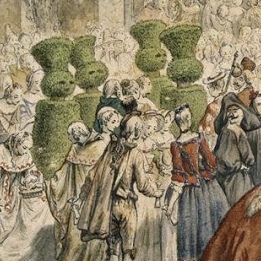
Billedresultat for ball of the yew trees
Detail of an illustration of the ball - the King
was dressed as one of the yew trees

From then on her mother - who firmly believed it - took care to do all she could to bring her daughter closer to the King, Louis XV. The couple's official first meeting took place on 25th February 1745 during the wedding celebrations of the Dauphin. The occasion was the masked ball later known as the Ball of the Yew Trees which sparked the relationship between Louis XV, King of France and Madame de Pompadour.