Thursday, 16 March 2023

The House of Rochechouart

Being amongst the oldest noble families in France, the Rochechouart-family had divided into two branches by the ascension of Louis XIV: Rochechouart and Mortemart. As it happens, this division had already happened centuries before. The elder branch - the Rochechouart - were descendants of Aimery IX de Rochechouart, Vicomte de Rochechouart while the cadet branch - the Mortemart - hailed from his younger brother Guillaume de Mortemart.


The Rochechouart

Such a large family would inevitably divided into further branches with that of the Rochechouart splitting into six separate family units: the original line, the Seigneurs de Bourdet (extinct by Louis XIV), the Seigneurs de Chanendiers, the Seigneurs de Faudoas and the current family.

The Original Family (meaning those descending from the eldest male heir)

The family descending directly from Aimery I was in the hands of female heirs by the Grand Siècle. The then-leading figure was Marie de Rochechouart-Pontville:

1. Marie de Rochechouart-Pontville & Jean-Hélie, Marquis de Pompadour
Marie inherited the title of Vicomte(sse) de Rochechouart which was immediately conferred on her husband when she inherited the title. The two had no children which meant that the title was given to Marie's sister.

2. Marie II de Rochechouart & François II d'Espinay de Saint-Luc
The couple did have a child - a girl. This meant that she had to marry a cousin to keep the title within the family. Therefore the young girl, another Marie, was married to François III de Rochechouart-Pontville. Sadly, Marie III died without living heirs which meant that the remaining line descended from her cousin, the reigning Vicomte François III.


Seigneurs de Chanendiers

1. François II & Marie Loup de Bellenaves

Having served as a councillor to Louis XIII, François would later be permitted to use the title of Comte de Limoges, as he was a direct descendant of the 9th century founder of this title.

The couple had one child:
  • Charles-François, died at 19
With no heirs, the title passed on to the abbot Claude-Charles who - given his Catholicism - could not have official legitimate heirs. The line therefore went extinct.


Seigneurs de Faudoas

The Seigneurs de Faudoas were elevated to the marquisate of the same name before becoming extinct in the male line in 1717. This meant that the marquisate de Faudoas went to a cousin, Charles de Rochechouart.

1. Charles de Rochechouart & Françoise de Montesquieu
Besides receiving his title of Faudoas, Charles also had his title of Baron de Clermont raised to that of Comte de Clermont. If anything, he and Françoise more than made up for the previous lack of heirs by producing ten children:
  • François-Charles
  • Marie-Anne
  • François-Claude
  • Jean-Louis
  • Jean-François-Joseph
  • Pierre-Paul
  • Joseph
  • Gaston
  • Roger
  • Alexandre
  • Jean-Louis-Roger

2. François-Charles de Rochechouart & Marie-Françoise de Conflans d'Armentières
François followed the military careers of his ancestors and was made maréchal de camp by Louis XV. He was later made ambassador to Philip of Parma, the king's son-in-law.

He had three children by Marie-Françoise:
  • Aimery-Louis-Roger, Comte de Faudoas
  • Diane Adélaide, Duchesse de Châtelet-Lomont
  • Zéphyrine Félicité, Marquise d'Antigny

3. Aimery-Louis-Roger de Rochechouart & Madeleine de Barberie de Courteilles
Aimery was amongst the nobles who embraced the ideas of the Enlightenment, including the abolition of slavery. He was appointed as a member of the Estates General, representing the nobility.

The couple had four daughters:
  • Madeleine, Duchesse d'Aumont
  • Diane
  • Rosalie, Duchesse de Richelieu
  • Constance, Princesse de Carency


The Present Family

The present family descends from the third Montigny La Brosse-branch, beginning with Louis de Rochechouart and the children he had by his second wife, Louise Piédefer. By the age of Louis XIV, this family was led by Isaac-Louis de Rochechouart - however, it would be his younger brother, Joseph, who sired the surviving family. Therefore, the following focuses on Joseph's direct line:

1. Joseph de Rochechouart & Marie-Madeleine de Valenciennes
Joseph was the lieutenant colonel of the Vivonne-regiment. The couple had four children:
  • Louis-Joseph
  • Louis-Victor
  • Jean-Louis
  • Louise

2. Louis-Joseph de Rochechouart & Marie-Jeanne Le Vasseur
Very little is known about Marie-Jeanne except that she gave birth to at least one child:
  • Joseph-Louis Michel

3. Joseph-Louis Michel de Rochechouart & Élisabeth Marie Anne d'Aldart de Melleville
Despite their illustrious family name, Joseph-Louis was not particularly high-ranking at court which might explain the match to Élisabeth. She was amongst the young noble girls who were brought up at the school of Saint-Cyr which had been established by Madame de Maintenon. A requirement for being accepted was both noble lineage and poor financial status - therefore, Élisabeth did not hail from a wealthy background.

Like Joseph-Louis' own parents, the couple only had one child:
  • Jules

It is from Jules that the present family descends - he would also be the last of this branch before the revolution. 


The Mortemart

Unlike their cousins, the Mortemart-family tree was a great deal simpler. Despite having a single family with several titles, they managed to climb higher than their relatives, especially during the reign of Louis XIV.

1. Gabriel de Rochechouart & Diane de Grandseigne
Gabriel was an excellent courtier whose instinct placed his family at an immensely favorable position. Managing to successfully navigate the Fronde, he established himself amongst the leading noblemen at court. Ensuring that the children borne to him by Diane de Granseigne were brought up with concern for the infamous Mortemart-wit, they, too, were remarkably successful.

Diane had a reputation for being both pious and compliant which made her an ideal dame d'honneur to the queen. She raised her children at their country estate - likely due to their rather unstable relationship. She was often the object of both admiration and praise considering how she tackled her husband's numerous affairs with silent dignity.

The couple had four children:
  • Gabrielle, Marquise de Thianges
  • Louis-Victor, Duc de Mortemart
  • Françoise-Athénais, Marquise de Montespan 
  • Marie-Madeleine, abbess
Portrait of Gabriel de Rochechouart, Duke of Mortemart wearing the Order of the Holy Spirit (Versailles, unknown artist).jpg
Gabriel

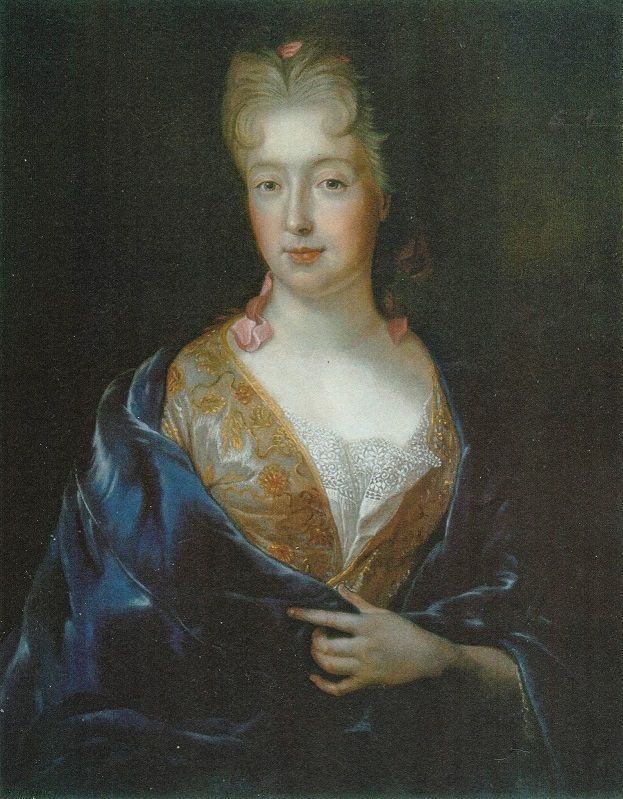
2. Louis-Victor de Rochechouart de Mortemart & Antoinette de Mesmes
Louis-Victor was likely amongst the luckiest men at court. Born to inherit a ducal title, his family's influence, intelligence, and wealth made it possible for him to truly establish himself at the head of the court. When his sister became the king's mistress, his favour rose even more. He was made viceroy of Sicily as well as general of the galleys before finally obtaining the extremely coveted position of first gentleman of the king's bedchamber.

Antoinette was amongst those implicated by the Affair of the Poisons but was acquitted - likely by order of the king. She gave her husband six children:
  • Louis, Duc de Mortemart
  • Gabrielle, abbess
  • Charlotte, Duchesse d'Elbeuf
  • Marie-Élisabeth, Marquise de Castries
  • Louise-Françoise, abbess
  • Gabrielle-Victoire, Duchesse de Lesdiguières
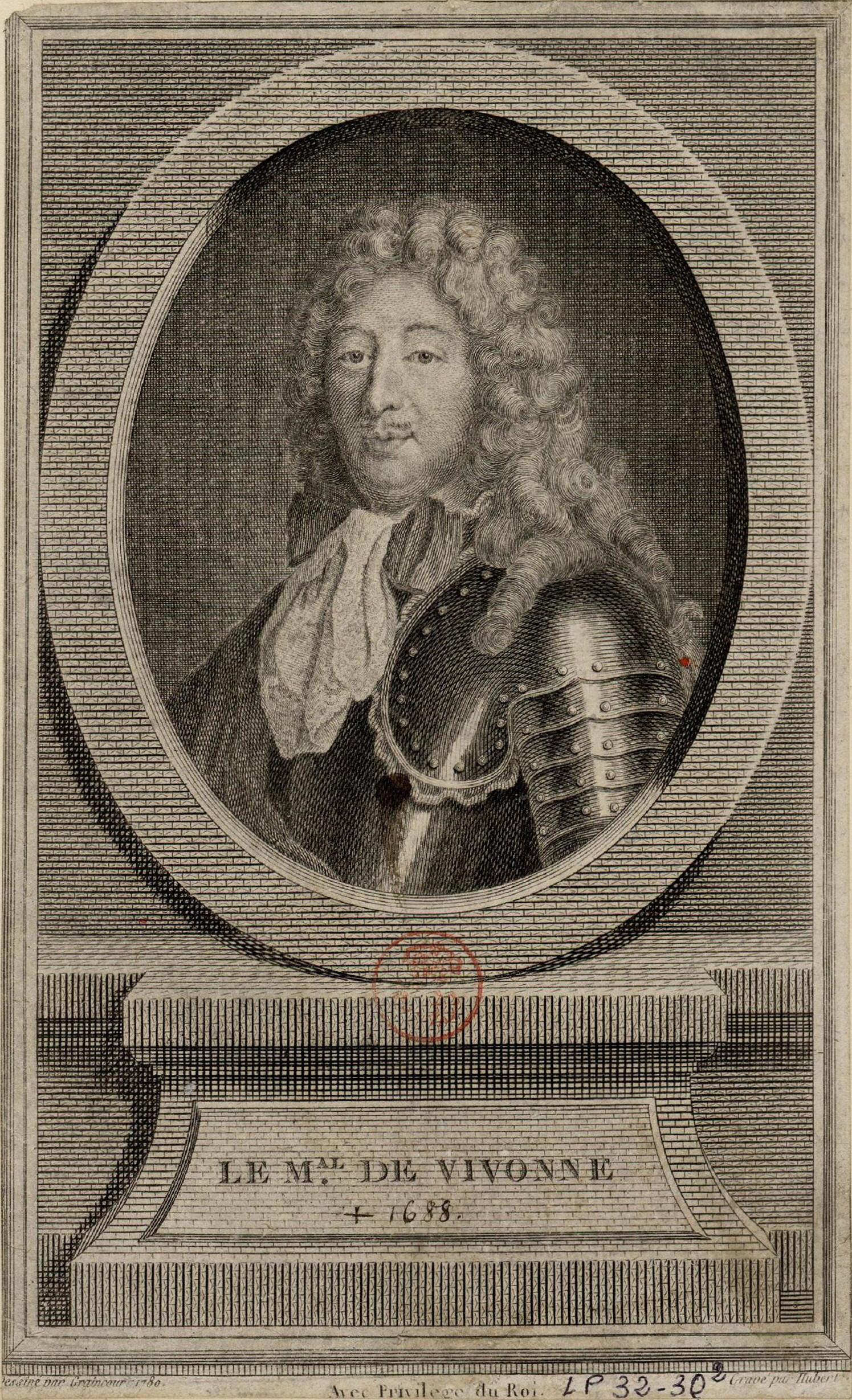
Louis Victor de Rochechouart de Mortemart - Wikipedia
Louis-Victor


Antoinette


3. Louis de Rochechouart & Marie-Anne Colbert
Both a duke and a general, Louis also obtained the otherwise rare achievement of being remembered favourably by the Duc de Saint-Simon. The memoirist branded him the "hope of our age" and lauded him for his vastly superior qualities.

Marie-Anne was the daughter of Louis XIV's minister; theirs was therefore a marriage between the noblesse d'épé and noblesse de robe. They had five children:
  • Louis II, Duc de Mortemart
  • Jean-Baptiste, Duc de Mortemart
  • Marie-Anne, nun
  • Louise-Gabrielle, nun
  • Marie-Françoise, Marquise de Cany


4. Louis II de Rochechouart & (1) Marie-Henriette de Beauvilliers, (2) Marie-Charlotte Élisabeth de Nicoläy
Enjoying the same martial skills as his ancestors, Louis II was maréchal de camp and Lieutenant General. He had inherited his title at the age of just 7 and took the unusual step of abdicating at the age of 49.

Marie-Henriette was herself from a ducal family; she had four children by Louis:
  • Marie-Louise
  • Louis-Paul, Duc de Mortemart
  • Charles-Auguste, Duc de Rochechouart
  • Henriette-Athénais, nun

Louis II de Rochechouart de Mortemart : Family tree by Eric de HULTS  (edehults) - Geneanet
Louis II


5. Louis-Paul de Rochechouart & Marie-Anne de Beauvau
Having added the titles of Prince de Tonnay-Charente and Marquis de Lussac to his already impressive list of titles, Louis Paul was amongst the highest ranking at court. Sadly, he died at just 21 years old without leaving an heir. Therefore, the title went to his younger brother, Charles-Auguste.

6. Charles-Auguste de Rochechouart & Augustine de Coëtquen de Combourg
If Louis-Paul's list of titles had been impressive that of his brother was immense. Besides being a duke and peer, he had two marquisates, three counties and two seigneurships. He was also first gentleman of the king's bedchamber, grandee of Spain (1st Class) and colonel of his personal regiment.

Having married Augustine in 1735, the couple had one child:
  • Louis-François
Louis-François appear died at the age of 3 and Charles-Auguste himself died at 29 years old. The title therefore went to Jean-Baptiste, Duc de Mortemart.

7. Jean-Baptiste de Rochechouart & Marie Anne Colbert de Blainville
Inheriting the dukedom of Mortemart, Jean-Baptiste already had that of Vivonne besides a long list of other titles. He had married Marie Anne in 1706 who had then given him four children:
  • Louis
  • Marie Anne Madeleine
  • Jean-Baptiste Victor, Duc de Mortemart
  • Charles-Auguste

8. Jean-Baptiste Victor de Rochechouart & (1) Éleonore de Crux, (2) Thérèse de Rouvroy, (3) Charlotte de Manneville
Jean-Baptiste was given the ducal title (à brevet) of Duc de Rochechouart by Louis XV as well as a knighthood of the Order of Saint John of Jerusalem. He married thrice, probably out of necessity as neither one of his first marriages provided any children. It was not until he married Charlotte de Manneville that he got his heir.

Charlotte gave birth to four children with increasingly odd names:
  • Victurnien Jean Baptiste Marie, Duc de Mortemart
  • Victurnien Bonaventure Victor, Marquis de Mortemart
  • Victurnien Henri Elzéar, Vicomte de Mortemart
  • Victurienne Nathaline Delphine, Marquise de Rougé
Category:Jean Victor de Rochechouart, Duke of Mortemart - Wikimedia Commons
Jean-Baptiste Victor


The family still exist today.


Interesting facts/anecdotes:

  • Jean-François-Joseph, son of Charles de Rochechouart, became known as Cardinal de Rochechouart
  • Three of Charles de Rochechouart's children were knights of the Holy Spirit at the same time 
  • The loss of his eldest daughter caused Aimery-Louis-Roger to retire early; he would eventually die himself at the age of just 46
  • Marie-Madeleine (daughter of Gabriel de Rochechouart) was known as the queen of abbesses due to her immense influence
  • Louis XIV was enchanted with the Mortemart wit which both Madame de Montespan and her sister, Madame de Thianges, had inherited
  • Both Diane Adélaide (daughter of the Comte de Faudoas) and her husband were guillotined; the same happened to Marie-Victoire, Vicomtesse de Rochechouart

Monday, 13 March 2023

Vicious Superiority: Violence in Aristocratic Households

The employment of servants was not solely an aristocratic practice; most families of the bourgeoisie and even some craftsmen's families had servants or domestics. While there were certainly as many benevolent employers amongst the aristocracy as in other classes, it is often the less kind-hearted households that attracted the attention of the contemporaries - thus, they are amongst those handed down to modern readers.

The rather unknown Marquis de Fimarcon employed a man by the name of Le Franc for about a decade. During this time, the marquis himself freely admitted that he had frequently punished Le Franc by beatings or the so-called "cachot" - these were typically found in prisons. It would therefore seem that he had imprisoned his own servant for various transgressions. Surprisingly, Le Franc did not leave his employer which he would have been more than entitled to do.


As it happens, the image of the ever-obedient servant meekly accepting their master or mistress' beatings were not quite accurate. Over the 18th century, the Enlightenment changed how people treated each other, even in the private sphere. Servants became less averse to openly accusing their "masters" of mistreatment whereas the upper classes developed an attitude more influenced by the shared humanity between themselves and their staff. This might seem obvious to modern readers, but it should be remembered that the social hierarchy was based on the theory of divine planning; those born to be aristocrats had long held a vastly different view of their socially inferiors. Likewise, it was widely accepted amongst these "inferiors" that they were just that - inferior. Their place in society required them to serve those better off which was not questioned for centuries due to the stranglehold of the Catholic Church on society - any criticism of this world order was largely seen as blasphemy and harshly punished. In fact, the church even pointed to the Bible itself to justify the master of the house's right to physically beat his servants by referencing St. Paul.

But by the mid-18th century everything was being questioned - including why someone ought to accept mistreatment simply due to their social status. Thus, society was slowly but steadily changing which also included the relationship between servant and employer. It should be said that the laws of the time did not grant the employer a carte blanche to do as he pleased with his household staff. French law itself forbade "excessive and malicious" treatment of servants; by the 1750's it was not uncommon to see servants contact the authorities if they were mistreated. Large parts of the nobility also considered it beneath an aristocrat to exhibit such brutality - even if they had been entitled to do so by law or clerical teachings.

As with any other societal aspect, there were those who refused to relinquish what they considered their natural right - just as there were those who never laid a hand on their employees. 


Françoise de Brancas, Princesse d'Harcourt – Party like 1660
Princesse d'Harcourt

The Comte de Villefort was, sadly, not amongst the more sensible ones. His servant, Jean Benger, was one of the domestics who contacted the Parisian police force to report the abuse he had experienced at his employer's hands. Villefort was apparently fond of whipping Benger which had led to Benger informing him of his intention to leave.

Even before the emerging ideals of equality, there were those amongst the serving class who simply had no time for such a treatment. The Duc de Saint-Simon recalled how the Princesse d'Harcourt beat her serving-woman through the wall; rather than simply accepting it, the robust servant pounced on her employer and gave her a taste of her own medicine. The unnamed servant quickly made her escape. As it happens, the princesse was notorious for being a terrible mistress who frequently mistreated those in her employ. It is perhaps little wonder that none of her other servants came to the rescue of their mistress. Madame, wife of Philippe d'Orléans, inhabited the apartment below the princesse and corroborated the duke's claim by saying that she often heard the princesse abuse her servants.

Strangely, the Duc de Saint-Simon was amongst those who abhorred violence towards one's staff. It is said that he instructed his son not to use violence with the employees at all which was out of the ordinary in a society largely dominated by violence.


Another instance was that experienced by Legrain, employed by Mirabeau. The two engaged in a quarrel which eventually developed into an outright physical altercation. However, this does not seem to have had a particularly bad effect on the relationship between the two, as Legrain remained in his service. It would seem that Mirabeau was not the only one who indulged in actual fighting with his servants. The Cardinal de Retz was rumoured to have gotten into a fist-fight with one of his stable-boys. The episode was reported by a man by the name of Vauvenargues who even admitted that the cardinal lost.


Verbal abuse were not uncommon either. Marigny, the brother of Madame de Pompadour, shocked his dinner guests when he absolutely exploded upon minor mistakes made by his servant, such as placing a dish slightly wrong. Not even waiting until the company had departed, Marigny began ranting and raving at the manservant to the dismay of everyone involved. It should be said that this episode caused several of his aristocratic guests to part ways with him for good.  

Oddly enough, the decision to leave Marigny's circle of friends was less to do with the unpleasantness of the evening itself but rather what the host's behaviour represented. Many of those present considered his outburst anything but noble which was certainly not something anyone wished to be associated with. Those already predisposed to disdain towards the bourgeoisie-mistress of the king, quickly pointed to such behaviour as been a clear sign of their non-aristocratic origins.


Portrait de M. Abel-François Poisson de Vandières, marquis de Marigny,  directeur Général des Bâtiments du Roi (1727-1781) - Louvre Collections
Marquis de Marigny


There appear to have been a distinct difference in perception of the type of physical punishment used. The more extreme measures were collectively frowned upon but violence was pervasive throughout society. Parents thrashed their children, husbands were legally permitted to "chastise" their wives, masters "disciplined" their apprentices etc. Thus, when the Duc de La Feuillade gave his footman a rap with a whip, it did not cause much consternation - even though it happened in front of the king himself. It is not unlikely that such a behaviour was not only accepted but expected. 

The society of the ancien regime was extremely patriarchal, particularly within the family itself. The households of the nobility thus functioned with the master of the house as the "father" of the entire households; as such, he was given certain privileges including the right to physically chastise his family and staff. However, the difference appear to have been in the manner this discipline was administered. Severe or unwarranted violence was unacceptable, even undignified and certain unbecoming of a nobleman, including a duke. 

Yet, simultaneously, the Duc de La Feuillade would also be expected to control, even correct, his staff if they stepped out of line. In a way, he was considered responsible, as the behaviour of his servant reflected on him.

Monday, 6 March 2023

Relationships: Louis XVI & the Comte de Provence

These two sons of Louis Ferdinand and Marie Josèphe could hardly have been more different. Whereas Louis Auguste - later Louis XVI - was reserved and contemplative, Louis Stanislas Xavier was confident and intensely discontent with his lot as the younger son.

Their relationship had been rocky from an early age. One episode when the two brothers were in their teens involved the accidental breaking of porcelain belonging to the Comte de Provence by his notoriously inelegant elder brother. Quick to anger, the two actually ended in a fight which was only broken up by the interference of the newly arrived Marie Antoinette. The last years of Louis XV's reign saw the three princely pairs (Louis XVI/Marie Antoinette, Comte and Comtesse de Provence and Comte and Comtesse d'Artois) mingling as a family, including with weekly dinners and evenings spent with each other. This period was largely dominated by an awkward stalemate with the power of the king acting as a stabilizing factor. However, when Louis XV died in 1774, the ascension of Louis XVI immediately shattered any illusion of equality between the brothers.

Fundamentally, the brothers were like night and day. Provence tended to prefer a hardline against attacks on the monarchy - he would later urge Louis XVI to handle the revolutionaries with an iron fist. In contrast, Louis XVI had a tendency to dither endlessly on the course of action. This indecisiveness essentially stemmed from an immense insecurity and self-doubt which Provence had little understanding for. Provence himself said that trying to pin his brother's character down was like trying to hold "two oiled billiard balls together". 


Louis Stanislas Xavier, Comte de Provence

Louis XVI's character was incredibly difficult to read as he rarely gave a clear indication of what he was thinking. This, in turn, made it impossible to anticipate his next move which Louis Stanislas Xavier simply did not understand. Like many of their contemporaries, the Comte de Provence likely interpreted the silence of Louis XVI as stupidity - in Provence's case, because he himself would never react in that manner.

The crux of the issue was primarily jealousy. The Comte de Provence considered his brother a weak ruler and often challenged him, even in public. The seven long years of infertility of his elder brother's marriage meant that Louis Stanislas Xavier remained the heir to the throne for close to a decade. However, with the births of two nephews, the Comte de Provence saw himself sliding lower down the succession. This was a source of immense frustration for a man who considered himself better suited for kingship than his brother. Louis XVI - in turn - did not permit his younger brother to play a part in the politics of the court which caused Provence to leave Versailles for extended periods from 1774.

While in his self-imposed exile, the Comte de Provence used his influence to undermine both his brother and his sister-in-law whom he had rapidly fallen out with. The leaking of a confidential memorandum in April 1781 was largely attributed to Provence; as were scandalous pamphlets mocking the infertility of his brother's marriage prior to 1778. After the birth of Madame Royale, Provence turned his attention to questioning her paternity instead. Once again, such seemingly unprovoked - and remarkably vicious - attacks on his brother can be attributed to jealousy. Despite loud boasting of his own virility, the Comte de Provence was by all accounts impotent. His marriage to the Comtesse remained childless and it was even questioned whether it had been consummated at all. In that light, he might have been further angered when Marie Antoinette finally began giving birth to the new generation of royals. If one is to look sympathetically on Provence, it must have been frustrating to always feel outdone by his brother. Not only did Louis XVI possess all the power that Provence desperately desired, he was also able to produce a family. In contrast, Provence was without both influence and children.

While the rumours surrounding his brother's marriage were crude, at least, the memorandum was a political challenge to his brother. The new king had shown himself to be more amenable to the parlements who had caused Louis XV endless troubles with their attacks on royal authority. As usual, Provence advocated a stern response and even went so far as to publicly demand of his brother (in the memorandum) whether he intended to replace an openly disobedient Parlement in a position of power. Naturally, Louis XVI did not take kindly to been thus publicly challenged on his policies.


Louis XVI

If Louis XVI's relationship with his brother had cooled over the years, that with his wife had become far stronger. Having initially been extremely skeptical of Marie Antoinette's intentions (he was instructed to consider her little more than an Austrian spy), the queen's unwavering support of her husband throughout his public trials brought them closer together. Thus, when Provence turned his attacks on Marie Antoinette, any chance of a reconciliation vastly dwindled. 

Oddly enough, despite their differences the two helped each other out when it came to financial issues. Both the Comte and Comtesse de Provence were living lavishly and racked up immense debts which they had no way of repaying. Consequently, Louis XVI paid off 10.000.000 livres for his wayward brother and sister-in-law in 1780. Likewise, it was Louis XVI that the Comte de Provence turned to when he fell out with Beaumarchais after the publication of the Marriage of Figaro. Provence deeply hated that particular play and had publicly criticised it prompting Beaumarchais to retort in a manner considered deeply insulting by Provence. Louis XVI would sanction the imprisonment of Beaumarchais for a brief period.

Ten years later, Provence was implicated in the so-called Favras-conspiracy which focused on the forceful removal of Louis XVI and the appointment of the Comte de Provence as Lieutenant General of the Realm. However, the plans were discovered and quickly abandoned by Provence while Favras himself was executed.


The relationship between Louis Auguste and Louis Stanislas Xavier might have been merely an average fraternal relationship between two very different people - if they had not been royal. However, their very status elevated their internal feuds to nationwide issues; anger that could have been kept within the family was easy to display using the established papers, and jealousy over precedence had influence over the very perception of the monarchy as a unit.

Wednesday, 8 February 2023

Morganatic Marriages: Secret Wives

Royal marriages was the epitome of a state affair. They depended entirely on the negotiations between  the two parties - typically various nations - involved and thus did not cater to personal preferences. Every marriage of the French royal family at Versailles consequently had political overtones with only a few exceptions; these were the so-called "secret" marriages, typically referred to as morganatic marriages.

As their denomination of "secret" infers, such marriages were private affairs, even to the point of doubt. At Versailles, the union of Louis XIV and Madame de Maintenon remained a topic of frustrating obscurity for years; the marriage was rumored to have taken place in the period August 1683 and June 1684, although a later date is more likely. As queen Marie Thérèse only died on 30 June 1683, it seems remarkably coldhearted of Louis to have remarried immediately after - especially as there was no pressing political or dynastic reasons.

The status of the royal mistress was frustrating as she was never proclaimed queen in public. The king bestowed several gestures on his mistress which indicated that they were married but refused to publicly acknowledge it.

Madame de Maintenon's position was typical of a morganatic wife. Her status was not recognised in either law nor public opinion which placed her in a legal limbo. Any children born to their union was not recognised as legitimate nor was she automatically entitled to an inheritance if her husband died first. The prohibition on inheritance stemmed from an ordinance from 1639.


Pierre Mignard - Françoise d'Aubigné, marquise de Maintenon (1694).jpg
Madame de Maintenon - notice the
royal ermine?

At court, such a marriage could have extremely detrimental effects. Not only were children not considered legitimate, they were barred from inheriting whatever title or rank their father had. Likewise, the spouse - typically the wife - would be prohibited from using her husband's rank or assume his surname. For instance, a duke who secretly married a woman would not be able to proclaim her a duchess nor would she be granted the prerogatives of this rank.

Oddly enough, the church fully recognised these marriages, provided that they had been performed according to the typical rites of the church.

Typically, such marriages were the result of a union between two people whose official marriage would otherwise be considered a mésalliance. Louis XIV - as king of France - was entirely unobtainable for most women at court, let alone a marquise of somewhat dubious origins. If Louis XIV had wanted to officially remarry, his bride would have been a princess of a foreign nation, presumably much younger than himself.

Ironically, Louis XIV's only son would also contract a secret marriage. Once again, the discrepancy in rank was a deciding factor. The Grand Dauphin had originally undergone his dynastic duty and entered into an arranged marriage with the Bavarian princess Marie Anne Victoire. However, the unappreciated bride died at the age of just 29 in 1690. This led the widowed Grand Dauphin to contract a marriage with his mistress Marie Émilie de Joly de Choin. Known at court as Mademoiselle de Choin, she had little to demand such an exalted match. Her father had been a baron which was the lowest rank of nobility; meanwhile, she was not considered to be particularly bright or beautiful. 


Mademoiselle de Choin

The couple married in secrecy in 1694 which prompted speculation as to what the king would do. While the Grand Dauphin had technically done his duty and produced three male heirs, tragedies did happen. As for Louis XIV, he did nothing. This has further been interpreted as a sign that he, too, had contracted a morganatic marriage which would leave him in no position to publicly punish his son. Unlike the king, the dauphin made no attempt at hiding the true nature of his relationship with the former Mademoiselle de Choin. When writing to Madame de Maintenon on 19 July 1694, he formally referred to Marie Émilie as his wife.

Marie Émilie was granted the same pseudo-royal rank of Madame de Maintenon. While not officially given the title of dauphine, she hosted diplomatic visits and received personal visits from foreign envoys. Furthermore, despite still being officially referred to as Mademoiselle de Choin, Marie Émilie was given a chair while in the presence of royalty. Generally speaking, Marie Émilie was the perfect woman for a morganatic marriage, particularly as far as the king was concerned. She was neither grasping nor prone to flaunting her position with the heir to the throne; on the contrary, theirs appear to have been an actual love match. When the Grand Dauphin died in 1711, Marie Émilie retired entirely from court and refused the inheritance which Louis XIV was otherwise inclined to allow her. 


Claudine Françoise Mignot made a career of marrying up. While her origins are somewhat obscure, she managed to contract a particularly impressive morganatic marriage. Her first marriage was at the age of 16 to Pierre de Portes d'Amblerieu who served as the treasurer of Dauphiné. After thirteen years of marriage, Pierre either died or the marriage was dissolved. Either way, the now 29-year old Claudine was free to remarry which she did to a maréchal de France: François de l'Hôpital. Her new husband was 75 years old but still managed to survive seven years of marriage. Upon his death, Claudine was set up quite nicely. Widowed twice at the age of just 36, her latest husband had left her a part of his considerable estate; by this time, she had educated herself to be entirely welcomed by the better society of Paris which enabled her to capture her next, and ultimate, prize: a former king. John Casimir had been king of Poland before being replaced by Michael I. He had then moved to Paris where Louis XIV made him welcome. It was while in Paris that he met Claudine whom he married in secret on 14 September 1672.

Sadly, or conveniently depending on your view, John Casimir died after just a few months of marriage. His will left Claudine an immensely wealthy woman and a mother to a young daughter. Claudine would later enter a nunnery where she eventually died.


Françoise-Marie Mignot, maréchale de l'Hôpital - Versailles MV 3469.png
Claudine Françoise while wife of
the Maréchal de l'Hôpital 


It is highly unlikely that the final marriage of Claudine and John Casimir would have happened without the consent of Louis XIV; the fact that she was able to receive an inheritance alone indicate royal consent.


In the following century, the Duc d'Orléans would marry - without Louis XV's consent - the widow Charlotte-Jeanne Béraud de La Haye de Riou, Marquise de Montesson. The marriage took place on 18 April 1773; it should be said that the Duc d'Orléans had been widowed for fourteen years at this point. Louis XV was highly displeased at this defiance and forbade her from assuming the title of Duchesse d'Orléans. Like Marie Émilie, Charlotte-Jeanne was from a modest background and had been the duke's mistress for years prior to their eventual marriage.

The choice of the Duc d'Orléans to remarry without royal permission was a downright challenge to the authority of his cousin. This meant that even when Louis XV himself had died and Louis XVI was on the throne, Madame de Montesson was still prohibited from becoming his official wife. When the duke died, she was not allowed to wear official mourning. It should be said that the union was not just unwelcome to the reigning family but also to the duke's own. His eldest son, the later Philippe Égalité, deeply resented his new stepmother and took months before he would agree to dine with her. He often suspected that she was unfaithful which hardly helped domestic happiness. In a twist of fate, Philippe would be guillotined during the revolution while Madame de Montesson was arrested but released - she would later join the court of Napoleon as a friend to Empress Josephine.


File:Madame de Montesson 2.JPG - Wikimedia Commons
Madame de Montesson


Since 1635, the king had had the opportunity of officially nullifying the marriage of a member of his dynasty which had been contracted without his consent. As the Duc d'Orléans was technically a member of the Bourbon-dynasty, Louis XV did have the option of forcing a divorce through. So, considering his obvious displeasure at the marriage, why did he not use this prerogative? One guess might be that relations were already markedly strained between the royal family and the Orléans-branch. Such a move would undoubtedly have ended any attempt at reconciliation, although the subsequent behavior of the Duc d'Orléans proofed that that ship had sailed. 

Furthermore, it would have been a massive scandal and the king undoubtedly did not want that - also, it should be said that the Orléans-family was becoming increasingly popular with the Parisians. It would therefore had been very unwise for the king to intervene by force.

Tuesday, 7 February 2023

The Maréchaux de France: A Troublesome Rank

Maréchaux de France was the only rank which was deprived entirely from the military; they were the commanders on the battlefield and thus merited a certain recognition at court - but how to properly classify those whose title was not a birth right?


The matter of inheritance is a key aspect of the rank of Maréchal; it was granted entirely on merit and thus did not pass from father to son.

Generally, there were two types of maréchaux: maréchal de camp and maréchal de France. The former was a rank unto itself. As such, a maréchal de camp ranked immediately beneath a General and a Lieutenant General. Unlike the maréchal de France, the maréchal de camp was a far more widespread rank. By the mid-1600's, the French army was divided so as to be employed in different conflicts. This led to a massive increase in the amount of maréchaux de camp; as stated by David Parrott, in 1652 alone Cardinal Mazarin appointed 152 new such. Over time, this would result in plenty of in-fighting over precedence.

Meanwhile, the title of maréchal de France was not a rank per se but a distinction only given to generals who had performed outstanding deeds. Initially, this immense honour was only bestowed on few men; however, during the Bourbon-dynasty, the appointments exploded. For instance, François I had had 11 such while Henri III had seven. In contrast, the record-breaking reign of Louis XIV saw no fewer than 53! The boom had begun already during Louis XIII who appointed 33 but it continued until the revolution. Louis XV's reign counted 49 maréchaux de France while Louis XVI made do with 20.

In broad terms, a maréchal de camp commanded a specific division whereas a maréchal de France had command of an entire army. Naturally, as the number of maréchaux de France often exceeded the amount of separate "armies" available, competition was fierce.


Ill. 2 : Anonyme, Modèle de bâton réglementaire de maréchal de France d'Ancien Régime dit de "Belle-Isle". Dessin et aquarelle. 1758. 0,22 m / 0,645 m. Paris, musée de l'armée.
The symbol of the Maréchal de France was a baton with gilded
fleur-de-lys

Surprisingly, one did not have to be a Frenchman to earn the honour of the title of maréchal de France. Louis XIV and Louis XV both appointed foreigners who had served in the French army to this particular honour, including the Danish Count of Rantzau and the Irish Count of Thomond. In the end, the final maréchaux de France created during the ancien regime were Jean-Baptiste Donatien de Vimeur, Comte de Rochambeau and Comte Luckner - both created in 1791, after the royal family's removal from Versailles.


As a group, the maréchaux had certain prerogatives. At council, they were ranked immediately behind the dukes, however when in the army, the maréchaux took precedence. This is the only instance of such reversal of court precedence which makes it quite unusual. Unlike the duchesses, the spouses of the maréchaux - generally distinguished by adding an "e" to their husband's rank, thus "maréchale" - were not entitled to a tabouret when with royalty. Their husbands, however, had the right to claim a so-called carreau during official visits from ambassadors; the carreau was a large, square pillow which they could rest upon.

As the rank was given individually, the group of maréchaux was far more diverse than any of the other social groups at court. Instead of being composed entirely of noblemen from a certain income bracket, their background was often a good deal more varied.

Generally, there was no hierarchy within the rank of maréchaux itself. In comparison, the precedence amongst the dukes were according to the age of their peerage; thus, the duke whose dukedom was registered earliest ranked above the second-oldest etc. This could potentially cause some friction amongst the maréchaux on the battlefield. As they ranked equally, they were not duty-bound to obey orders from a fellow maréchal. Considering the need for a clear line of command, this caused quite an issue.


Uniform of a maréchal de camp

An instance of such confusion broke out in 1672. The Vicomte de Turenne had been made maréchal général de camp twelve years earlier which meant that he received his orders from Monsieur le Prince. For clarity, the chain of command in this instance went from the king to his brother, Monsieur, to Monsieur le Prince and from then to Turenne. Turenne, in turn, commanded three maréchaux: Bellefonds, Créquy and d'Humières.

That extra step in the chain greatly upset all three. While the three men held the rank of maréchal de France otherwise they outranked Turenne. While Bellefonds and Créquy enjoyed the rank of marquis and d'Humière that of duke, Turenne was a mere vicomte. Consequently, both men outright refused to take orders from Turenne which resulted in all being exiled.

Thursday, 2 February 2023

A Scandalous Mésalliance: The Marriage of Marguerite de Rohan

The house of Rohan occupied an immensely prestigious position both at court and in society as whole. By the early years of Louis XIV's reign, the family was headed by Henri de Rohan, Duc de Rohan, who had married Marguerite de Béthune. The couple had not been fortunate regarding children; having been married in 1603, it was not until 1617 that Marguerite finally gave birth to their only child.

The newborn was a girl - much to the disappointment of the family as girls were prohibited from inheriting. Nevertheless, the young child flourished and was named after her mother, Marguerite. Once it became obvious that the couple would have no more children, Marguerite was made sole heiress of her father's fortune and title. This arrangement was only possible because the king accepted her position.

Once she became of marriageable age, Marguerite de Rohan was quite the catch. As her title of Duchesse de Rohan was held suo jure it would immediately be passed on to her husband when she married. She was also a Foreign Princess, as the Rohan-family classed amongst the Princes Étrangères at court. Naturally, such a dowry - including her fortune - was a tempting prospect and it was taken for granted that she would marry a duke.

However, Marguerite's teenage years passed and no marriage was agreed to, although not for lack of offers. Amongst those who proposed marriage were the Comte de Soissons who was a prince of the blood as well as a cousin to Louis XIII; she was also propositioned by foreign princes including Prince Rupert of the Rhine and the Duke of Saxe-Weimar. However, they were all rejected.


Marguerite de Rohan, Duchess of Rohan, Princess of Léon.jpg
Marguerite de Rohan


The thing was that Marguerite had fallen in love. While the object of her affection was a nobleman he was certainly not her equal. Henri de Chabot descended from an aristocratic family from Poitou but held no higher title than Seigneur de Saint-Aulaye. Henri could not claim a large fortune either or considerable land; in fact, he was the younger son and had no claim to either. What he did have was good popularity with the court (fickle as that might be) as well as the friendship of the Duc d'Enghien, as well as being a confidant of both the Duc d'Orléans (Gaston, not Philippe) and the Prince de Condé.

Despite the obvious mésalliance, Marguerite had chosen her spouse.

Marguerite was no fool. Knowing full well that her status would be decided by the man she married, she approached Anne of Austria who influenced the young Louis XIV to act on Marguerite's behalf. Thus, by 1645, the king decreed that in the case of a marriage between Marguerite de Rohan and Henri de Chabot, Marguerite would retain her position as a foreign princess at court. Furthermore, any children born to the union would be known as Rohan-Chabot rather than just Chabot.

This paved the way for the marriage and simultaneously showed the degree of influence held by the Rohan-family. Marguerite herself was aware that she could still choose not to proceed with the marriage; in fact, when she was asked about her plans, she replied "I do not know If I shall be able to marry him, but I do feel that I could not bear it if he married someone else".

In the end, Marguerite was spared that unpleasant thought. She and Henri married on 6 June 1645; they would go on to found the branch of Rohan-Chabot with their six children. In 1648, Henri was recognised as the Duc de Rohan by virtue of his wife's claim. While the ducal title thus remained in the family, the status of foreign princes was not handed down to their descendants. In stark contrast to the remaining Rohan-cousins, their children were not considered as princes étrangères. 


Oddly enough, it was Marguerite's own mother who voiced the greatest objections to the union. When the king had made it clear that Marguerite and her husband would inherit Henri de Rohan, Marguerite attempted to have an alleged son of her late husband recognised as the legitimate heir. However, Parliament rejected her plea and confirmed the rights of Marguerite and the future Rohan-Chabots.

Marguerite de Béthune - mother
of Marguerite who unsuccessfully
attempted to strip her daughter of her
inheritance

However, was the story truly a love match? It has been suggested that Marguerite agreed to marry Henri de Chabot because the king promised her the continuance of her rank and status at court. This would explain why Marguerite apparently remained somewhat uncertain on whether to actually go through with the marriage beforehand. 

In fact, the Crown had a very good reason to wish for such a seemingly disproportionate marriage. Henri de Rohan - Marguerite's father - had become aligned with the Protestant cause. In contrast, Chabot was a Catholic. By marrying Marguerite to Henri de Chabot, Marguerite would have to convert to Catholicism, thus bringing the dukedom once more under the Catholic faith. The mother of the bride herself was a staunch Protestant which, again, would explain her extreme reluctance to allow the marriage. 

If Marguerite had been entirely opposed to the marriage herself, she would have found herself in an unpleasant situation. The Crown would not have appreciated the refusal and the king could have withdrawn his consent to any other proposed marriage; in that case, he would simply have to wait until Marguerite either died or became too old to have children. That would ensure the end of this branch of the Rohan-line and would have been a far bleaker prospect for Marguerite herself.


All matters considered, this union would seem to be the rare example of duty meeting love. Marguerite was - by all accounts - smitten with Henri which certainly lessened any qualms she might have had at the prospect of marrying beneath her. Besides, their marriage appears to have been a happy one. If one is to look at the positives, neither party had much reason to complain of the other at the time of the marriage. While Marguerite's riches and status has already been discussed, she was further considered to be quite beautiful. Henri, meanwhile, was said to have both a handsome face and a well-made figure. In other words, they would have made a handsome couple - together they could enjoy her riches and rank and his connections at court. While the latter might seem a small bargaining tool, it is worth noting that both the Prince de Condé and the Prince de Conti took Henri's side in a later quarrel with the Duc de La Meilleraye.

As is often the case, the true feelings of the people involved are lost to history; what is more certain is that the marriage caused quite a scandal in 1645.

Wednesday, 1 February 2023

Anne de Rohan-Chabot, Princesse de Soubise

In 1648 - likely in July - Marguerite de Rohan went into labour with her third child. The infant was a girl who was quickly given the name of Anne de Rohan-Chabot before being passed off to a governess. The family in which the infant had just been born was at the top of French society. Her mother was the sole heir to the Duc de Rohan while her father, Henri de Chabot, was a scion of an old aristocratic family from Poitou.


As the daughter of a noble family, Anne was destined to be married off at an early age. While little is known of her upbringing, her education was remarkable for a female of her time. By all appearances, Anne was blessed with a natural quick wit and benefited immensely from her education. When she turned fifteen years old, she was considered old enough to marry and her parents set about finding a suitable husband for her. Their choice was François de Rohan, a distant relative. He was a Lieutenant General in the king's army and also happened to be eighteen years her senior.

Meanwhile, the young Anne was quite a catch. Due to her mother's inheritance, she would bestow the ownership of both the seiagneuries of Soubise and Frontenay on the man she married. Naturally, this was quite a draw for a potential suitor but a risk for the family itself - understandably, they were reluctant to have such a title leave their family. This is likely why François was chosen, especially since he had already been married once.

The newly married Anne was considered to be very beautiful. The portraits of her does not give justice to her natural hair colour which is said to have had tints of red. Her complexion was perfect, with no mention of scarring - quite rare in an age with both smallpox and other diseases which ravaged the skin. Another strong feature of hers were her almond-shaped eyes with their brown hue and her dazzling smile. All in all, Anne had plenty to offer when she was officially presented at court after two years of marriage.

Anne de Rohan-Chabot, Princess of Soubise.jpg
Anne in her 20's - clearly a beautiful
young woman

It would seem that Anne was well aware of her beauty and dedicated her daily regime to maintaining it. Her diet of salads and chicken with a variety of fruit and water mixed with wine became a well-known secret at court. By the time she was presented at court, Anne had already given birth to her first child: another Anne, born in 1664. For the next eighteen years, Anne would find herself pregnant more often than not. In total, she would give birth to eleven children, four daughters and seven sons.

Considering her beauty, it is hardly surprising that she caught the eye of Louis XIV. By 1669, she began an affair with the young Sun King but appear to have been more of a distraction than a contender for the coveted position of maitresse-en-titre. At the time, Louis was wavering between Louise de La Valliére and Françoise-Athénais de Montespan which left little room for a third candidate. It was said that the king had given her a pair of extravagant emerald earrings which she would wear to signal to the king that she was available - conveniently, she always wore them when her husband was away.

Despite not being positioned for that great honour, Louis showered her with symbols of his favour. Besides healthy financial gifts, Anne was given the place of dame du palais to Marie Thérèse which placed her constantly at court - and within reach of the king himself. Therefore, when she fell pregnant yet again in 1674, her fellow courtiers did not fail to remark that she went into labour just five months after her appointment to the queen's household; consequently, she must have been pregnant for four months prior. Perhaps the appointment was in recognition of the king's paternity?


Anne in the 1670's

When Anne gave birth to the child in question - Armand Gaston Maximilien - the king was immediately said to be the child's true father. Truthfully, Armand does have a strong resemblance to Louis if judging by their portraits. Both Anne and her husband, François, proved themselves to be model courtiers in this regard. Anne never attempted to openly supplant the king's official mistress nor did she try to flaunt her relations with the king openly. Meanwhile, François dutifully recognised Armand as his own son and made no fuss about his wife's affair. To the king, this was an ideal situation which allowed him to develop his relationship with Anne without public embarrassment - considering the tantrums which Madame de Montespan's husband threw in public, this was undoubtedly a relief. In stark contrast, François obligingly removed himself to various places where his military experience might be needed.

Louis XIV understood the importance of rewarding those who served him well. François was amply rewarded for his acquiescence with large sums of money and preferments, particularly in the army. As for Anne, the king raised her personal seigneurial of Soubise into a principality. This benefited both Anne and François who could then officially style themselves as Prince and Princesse de Soubise. As for their own relationship, Anne and François appear to have been a typical aristocratic couple, in their attitudes towards one another. From the early onset of their marriage, Anne had devoted herself entirely to her husband whom she continued to treat publicly with respect - ironically, as it may seem to today's readers who find it hard to combine an affair with the king with respect for one's husband. However, both Anne and François were products of their time and knew that such relationships were not necessarily a threat to their marriage. In this case, this shared understanding seem to have been the reason behind their strong relationship which resumed after Anne's affair ended. 

Anne's relationship with Louis lasted for six years before coming to an end in 1675. From then on, Anne resumed her role as a courtier within the queen's household until Marie Thérèse died in 1683. Despite not having been his mistress for quite some time, Anne still held some influence with her former lover. She was able to arrange for a beneficial marriage for her nephew, the Prince d'Epinoy, as late as 1692. Furthermore, she later successfully persuaded the king to bestow two new peerages on her near relatives, including the title of Duc de Rohan-Rohan on her own son and the dukedom of Melun on her great-nephew.

Anne de Rohan-Chabot, Princesse de Soubise (1648-1709), occasional mistress to Louis XIV from 1669-1675, during which time he was also alternating his affections between Louise de Valliere and Madame de Montespan. At least one of her eleven children was probably fathered by the King.
Princesse de Soubise


Judging by references in the numerous letters of Elizabeth Charlotte of the Palatinate, Anne likely attached herself to Madame de Maintenon. This would certainly have cemented the king's continued fondness for Anne as she made little fuss about the change of power. Anne's relationship with Madame de Maintenon grew closer and the two ladies developed a friendship of their own which included a good portion of confidence.

François certainly had little to complain of with regards to his wife. Unlike his first marriage, his union with Anne had produced a multitude of heirs. She had also brought him a principality - which he, as a younger son, would never have achieved alone - and considerable riches. By 1700, the couple was seemingly still going strong and they purchased the Hôtel de Guise which they renamed to the Hôtel de Soubise. 

Meanwhile, Anne's health was not that good. She had suffered from a delicate physique for years which had attracted several snide remarks from Madame de Montespan over the years. Almost twenty years of childbearing had probably not been particularly kind to her health, especially if it was already unstable to begin with. 

After their purchase of this Parisian abode, Anne seem to have divided her time between there and the court. Since the death of the queen, she was without official duties at court which meant that she had far greater freedom than before. She happened to be in Paris when she caught a cold in early 1709. Before long, it became clear that her condition was serious (likely more than a cold) - on 4 February, Anne de Rohan-Chabot died.