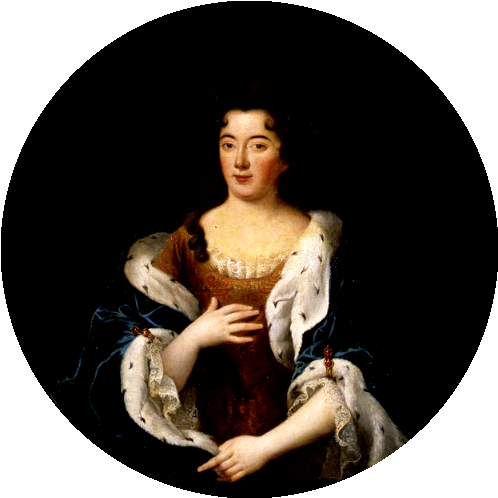
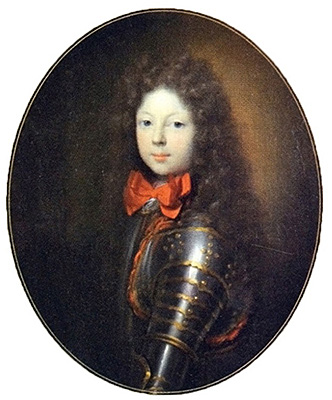
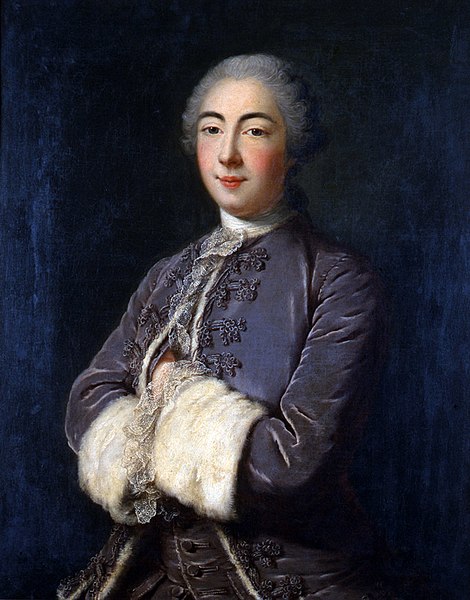
Tuesday, 21 June 2022

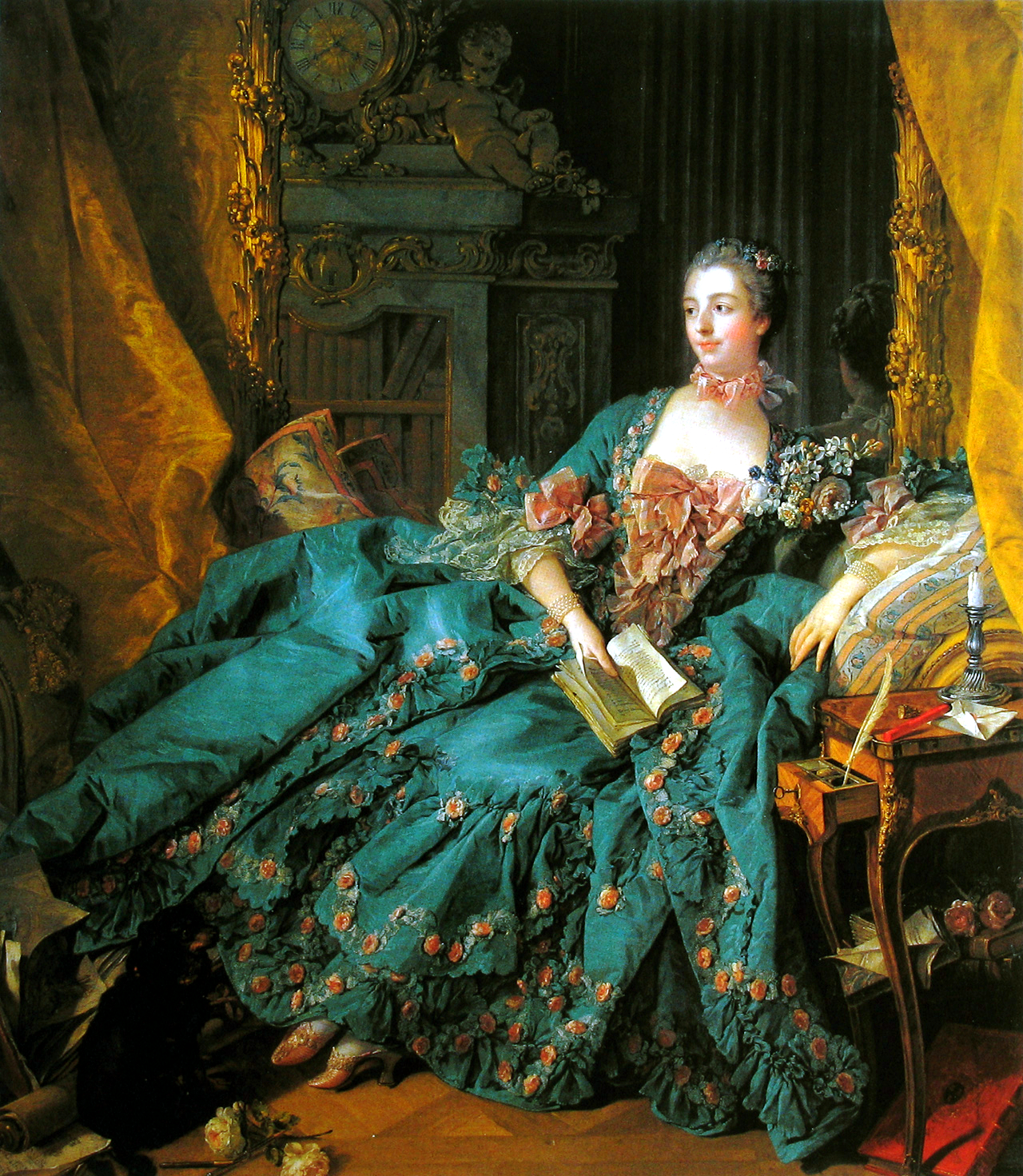
The Ground Floor Apartment of Madame de Pompadour

While this celebrated mistress to Louis XV is primarily known for her attic apartment located above the king's own apartment, it was not the only one she inhabited during her tenure as maitresse-en-titre. Madame de Pompadour was initially lodged on the ground floor of the Corps Central in a remarkably spacious apartment consisting of no less than 11 rooms.


This was the final design proposed by Gabriel on 6th May 1750

The rooms at her disposal were: 1) First antechamber, 2) Second antechamber, 3) Grand Cabinet, 4) Bedchamber, 5) Cabinet particulier, 6) Boudoir, 7) Possibly wardrobe, 8) Chaise, 9) Private staircase, 10 + 11) Bathrooms.

After her physical relationship with the king came to an end around 1750, Madame de Pompadour was given this apartment on the ground floor. While the size was not a downgrade from her attic apartment, it certainly gave a clear signal. The attic apartment was intimate and could be reached by a staircase to which the king alone had access. Thus, it was suitable for a couple. In contrast, the apartment on the ground floor was not connected directly to the king's apartment in quite the same discreet way. Yet the magnificence of the apartment alone showed that the bourgeoisie had not lost her influence over the king - for instance, she still had direct access to him through a private, spiral staircase.

The apartment certainly did not come easily into being. The apartment had briefly been given to Madame Louise Élisabeth for the preparation for her marriage to the Spanish Infante. This meant that the Penthièvre-couple as well as the Comtesse de Toulouse had been temporarily moved. It was then suggested by Pompadour that rather than having the trio move back into their apartments, a new plan was to be made which made room for her. Besides uprooting the Duc and Duchesse de Penthièvre, the original plans suggested by Madame de Pompadour would have encroached a good deal further on Mesdames' apartments. As could be expected, Mesdames were furious at having to make way for their father's low-born mistress. Eventually, a compromise was reached which resulted in the plan above.


Madame de Pompadour

In order to achieve the plan several altercations would have to be made. Walls went up, walls went down - and plans had to be continuously changed. One of the most interesting aspects of the renovations was the rediscovery of the massive, octagonal bathtub of marble which had been a fixture of Louis XIV's apartment when he shared it with Madame de Montespan. Apparently, the interior was adorned with wooden panels decorated by Verbeckt. The long corridor running all the way down along the apartment had several alcoves which were used as wardrobes and utility closets. Finally, a heater was installed to combat the utter lack of insulation.

This spacious apartment overlooked the parterre du Nord; it had previously been inhabited by the Duc and Duchesse de Penthièvre and was located immediately beneath the Salons of Diana, Venus and Mars. The celebrated architect Blondel gave a description of the marquise's apartment in the mid-1750's. He willingly admitted that it was fitted with every possible convenience (including a separate bathroom and chaise percée) and had been decorated with great taste.

Yet, Blondel argued that despite its convenience and spacious rooms, the apartment was not particularly desirable. For one, the humidity of the numerous fountains in the gardens created a very uncomfortable air  and the sun never seemed to fully illuminate the apartment.

Still, few could argue that the owner had taste. It was here that the king's mistress would illustrate rococo in its most delicate manner. Exquisitely carved wooden furniture, flowers of coloured porcelain, elaborate dog houses, vases from Sèvres and delicate boiserie in the most brilliant colours; it was amongst these treasures that Jeanne received both ambassadors and courtiers - and the king. 

It was in this very apartment that Madame de Pompadour would die in 1764.

Sunday, 12 June 2022

The End of an Era: The Fall of Madame de Montespan

Undoubtedly the most celebrated maitresse-en-titre of Louis XIV, Françoise-Athénais de Rochechoaurt had been the king's declared mistress since about 1666; she had since given him no less than seven children. Her relationship with the Sun King was a passionate one and despite several attempts, the couple always found their way back to each other - even the king's growing religious fervor was overcome time and time again.

So, when their relationship began unravelling in ca. 1677, the court probably expected it to be another storm that would eventually end in reconciliation. However, this time it was different. The infamous Affair of the Poisons had created an entirely new breeding ground for suspicions. Due to the nature of their relationship, the king was well-aware that his mistress would always be wary of being supplanted in his affection. So far, the charms, intelligence and beauty of La Montespan had been enough to keep his attention but the king was now persuaded to believe that she might have been involved in more occult methods. 

As the Affair of the Poisons unravelled, it quickly became clear that the royal favourite was somehow associated with the whole sordid affair. It did not take long before rumours started spreading and there was no limit as to what Madame de Montespan was accused of. 

Some said that she had used the services of the "witch" La Voisin to concoct love potions for the king in 1665 before finally succeeding in catching. Others claimed that she had prayed to the devil and had black sabbaths performed - complete with the obligatory sacrifice of an infant - to keep her lover's interest while yet others pointed to the recent death of Mademoiselle de Fontagnes. The young lady had captured the king's attention and had fallen pregnant as a result - she died after delivering the child.


Madame de Montespan


Had the affair simply been a matter of jealousy, the king could easily have overlooked it. But this was something entirely different. This concerned the very life of the king - and it did not take long before scandal mongers started whispering that Françoise-Athénais had attempted to kill the king. Despite the absurdity of this charge - after all, Madame de Montespan would lose everything if the king died - the king was alarmed. One can hardly blame him for being unnerved as the use of poison was not a by-gone weapon in his age; even the typically useless "potions" could be lethal if dangerous ingredients were added. This might not even be intentional as certain ingredients were considered harmless then but is known to be highly dangerous today.

Was there anything to suggest that Madame de Montespan actually was involved? The Lieutenant General of Police, Gabriel Nicolas de la Reynie, was presented with several witness accounts which placed numerous ladies of the court as customers of La Voisin - including Madame de Montespan. Before diving further into this particular claim it is necessary to look closer at the attitude to the occult of the time. 

While the superstitions of the Middle Ages were not nearly as strong as they had been, they were far from eliminated. Even amongst the better educated parts of society a remarkably large number believed that black magic, potions and black sabbaths were very much effective. Others saw it merely as something interesting which could be used for entertainment on a boring day; for instance, young ladies would occasionally seek out palm readers to disclose their future but never went beyond that. Either way, there is no actual evidence to suggest why Madame de Montespan went to La Voisin - or if she even did.

It is telling that the potential visits to La Voisin only became suspicious after Madame de Montespan's maid, Mademoiselle Desœillets, was noted to be a frequent visitor herself. It was therefore easy to claim that where the maid went, so too might the mistress go.

It has often been put forward that Louis XIV's own reaction shows how little merit there was to the accusations levelled at his mistress. He himself had ordered the establishment of the so-called Chambre Ardente (the court passing sentences over the Affair of the Poisons) and as such would have been presented with every finding and evidence. If he had genuinely feared for his life, he would have ended their relationship - but he did not. Instead, she kept her place for no less than another decade.

But if the king did not believe Madame de Montespan to be genuinely guilty, why then did their relationship fall apart? Here it might help to look to something as simple yet complicated as human nature. The two had been together for a long time - far longer than any of his previous liaisons. It is not unheard of that they simply fell out of love with each other. As has often been pointed out, relationships that are so passionate will almost always fade out eventually.


Louis XIV


Furthermore, there is a decided shift in character in Louis XIV at this point in his life. Up until this point, he had been somewhat carefree in his love affairs; whether it was elevating La Montespan while La Vallière was pregnant with his child or having both mistresses ride in the same carriage as his wife, his attitude towards his dalliances were typical of his age. A king was expected to have mistresses - everyone, even the queen, knew this and it was generally accepted as a fact of life. However, as he grew older, Louis became more and more prone to religious reflections. 
Throughout his entire relationship with Françoise-Athénais, the most damning accusation levelled against both of them was that of double-adultery. Of course, the church had never been fond of the king's infidelity but it had turned a blind eye when the lady in question was unconnected by marriage. For instance, both Marie Mancini and Louise de La Vallière were unmarried when they first became the king's mistress - the former apparently never even had a physical affair with him.

Madame de Montespan, however, had been married to the Marquis de Montespan in 1663 and was therefore a married woman when she became the king's mistress. While the church could always explain away the king's guilt by pointing to the divine favour which all monarchs were said to hold, the same could not be said of her. This was therefore a matter of double-adultery - a sin that would not wash off quite so quickly. As it happens, this very reasoning had been the cause of their split in 1675, which had occurred after the church refused to give her absolution and even withstood the pleading of the king. 

In 1675, the church's argument had not been enough - it seemed to be more pressing as the king grew older. 

Thus, it does not seem unlikely that a mixture of cooling passions and growing religiousness was what eventually caused the downfall of Madame de Montespan. What is more certain - and unusual - is the manner in which that downfall occurred.

Typically a jilted royal mistress would be sent off with a handsome parting gift or she would voluntarily retire to a convent. Either way, the rupture would be somewhat obvious to everyone at court. However, Madame de Montespan continued to play a part in the king's life as their relationship cooled. Their split was not one which could be traced to a dramatic final interview or specific event. Rather, it was dragged out over several years. 


Madame de Montespan with her
children, 1677


For those watching - and everyone at court certainly was - the changes were small but of immense significance. The one thing that stood out was how much time the king devoted to a new lady: Madame de Maintenon. She would often be summoned to spend their evenings in conversations while Madame de Montespan remained conspicuous by her absence. Despite her reputation for being a very devout woman, Madame de Maintenon certainly did not shy away from using the king's religious fears to her advantage. Thus, a number of contemporary courtiers remarked that she was sought for by the king because he increasingly felt a need for religious discussion. 

The otherwise always-present Madame de Montespan found herself excluded from more and more activities at court. While she was still frequently invited to the king's beloved Marly in 1686, she would soon receive a very public (figurative) slap in the face. The king was suffering from his highly unpleasant fistula which he sought to cure by taking the waters at Barèges. Naturally, wherever the king went, the court followed - but not Montespan. To her great astonishment and frustration, she was deliberately not invited to this excursion; the message could hardly have been louder. In her anger, she took her youngest son by the king - the Comte de Toulouse - and went to Paris but was stopped on the way with orders that the young boy was to accompany his father. In the end, the trip to Barèges never materialised but the humiliation was complete.

By this point in time, no one had any doubts that their relationship was as good as dead. The king had adored Françoise-Athénais for years and such a public snub would have been unthinkable just a few years ago.

Yet despite this dramatic incident, the king still did not call things off officially. While he certainly was a creature of habit, Louis XIV had never shown a reluctance to cut off people who had displeased him - it therefore seems more likely that the continuance of La Montespan at court was due to a certain respect and affection (although not love) that he must still have had for her. Furthermore, it should not be underestimated that her position as the mother of many of his children earned her some credit with him - after all, he was notoriously fond of his illegitimate children and it would have been a scandal if their mother was thrown out without a second thought, especially after so long a relationship.

These years cannot have been particularly pleasant for Madame de Montespan. Her pride was notorious and she had been accustomed to wielding immense power at court. Now, she was reduced to having to endure both the presence and influence of another woman; much like Louise de La Vallière had before her.  Whereas Françoise-Athénais would have had no problem keeping the king interested in her conversation through her wit and charm, that still required private time with him - and that was increasingly reserved for La Maintenon.

File:Portrait d'Athénaïs de Rochechouart, marquise de Montespan (1641-1707), maîtresse de Roi.jpg
Françoise-Athénais, around 1680


Françoise-Athénais was no fool; she knew that the king's affections were not what they had been and she acknowledged that her time was over. Finally, it would be her who took the step to remove herself from an increasingly awkward situation. In 1691, after 25 years as the king's official mistress, she informed Louis of her decision to leave court. It is very telling that she did not do so in person; rather, she asked the king's trusted Boussuet to deliver the message.

There is one aspect of their final separation that is worth noticing. While much have been made of Louis XIV's ever-increasing religiousness, that same development in Madame de Montespan has been somewhat overlooked. Just like her royal lover, the former favourite was getting older and she shared many of Louis' fears for her eternal soul - after all, she did not have the benefit of claiming divine favour as a redeeming factor in her adultery. Perhaps this is an indication that their relationship simply had run its course - if they still had the same passionate love for each other, their new-found sense of religion could easily have united them as they grew older. This could have been strengthened further by their common interest and genuine affection for their children. Instead, it caused them to finally end their legendary liaison.

Madame de Montespan retired to the convent of Filles de Saint-Joseph in Paris. While Louis would spent the remainder of his life with the austere Madame de Maintenon - potentially even marrying her - the mother of seven of his children spent her years with charity. She spent large sums on charitable works and had cut all contact with the court - and the king. The king appears to have shown some sign of gratitude at her taking the first step; her father was given the governorship of Paris while her brother was made Marèchal de France. As for their children, they had been legitimised and their future was therefore secure.

When she died in 1707, their relationship was a thing of the past. While their children mourned for her, the king curiously forbade them from wearing official mourning. This last act has been interpreted as spiteful by some and it certainly does have elements of pettiness. However, it cannot be said to be an indication of resentment - after all, the king had not seen his former beloved for 15 years. Meanwhile he was desperately trying to have his children by her absorbed into the legitimate lines of aristocracy - perhaps their mother was an unwelcome reminder of the fact that they were, in fact, not only illegitimate but the result of double-adultery.

Whatever the king's motives for refusing mourning was can never be known. What is more certain is that his infamous relationship with Françoise-Athénais de Rochechouart dominated a good portion of his life and brought him seven beloved children. The end of their liaison was also a turning-point in the king's personal life. The carefree and splendid years were behind him and austerity took over - it truly was the end of an era at Versailles.

Thursday, 9 June 2022

House of Boufflers

The House of Boufflers were amongst those who were raised to the French peerage during the age of Versailles; unlike others amongst the peerage, the Duc de Boufflers' title came relatively late. Yet, they were by no means a newly ennobled family, having descended from a long line of lords hailing from Picardy. By the early 16th century, the house of Boufflers split into three somewhat distinct branches, all descending from the sons of Adrien I de Boufflers and Louise d'Oiron. These two had six children of which three of their sons would form their own lines: Adrien II, Adrien the Younger and Jean.

Branch of Duc de Boufflers

1. François II de Boufflers & Louise le Vergeur

François II was the grandson of Adrien II and thus the scion of the eldest branch. François held the title of Comte de Boufflers at court and the rank of Maréchal de Camp in the military. He also held the post of Bailiff of Beauvoisis. Louise married François in 1640 - she would quickly give him five children:

  • François III
  • Louis-François
  • Marguerite-Françoise, Abbess of Avenay 
  • Catherine, nun at Avenay
  • Charlotte, nun at Avenay


2. Louis-François de Boufflers & Catherine Charlotte de Gramont 
Louis-François was born to François II de Boufflers and quickly followed his father's footsteps by entering the army. As it happens, the young Louis-François was a natural on the battlefield. Serving under Turenne, he would distinguish himself by his decided bravery and keen sense of strategy - these talents would be the making of him. His career brought him several distinctions including Knight of Saint-Esprit, Maréchal de France and finally Duc de Boufflers.

Catherine was the daughter of the Duc de Gramont and was married to Louis-François in 1693. At court, she would have her own distinct career, primarily as First Lady of Honour to Marie Leszczynska. It was largely due to her strict sense of morality that she was given the post which brought her into close contact with the queen on a daily basis. She would eventually retire after ten years, at the age of 65. 

The couple had eight children:

  • Louis-François-Gombert (died at 6)
  • Joseph Marie, Duc de Boufflers
  • Louise-Antoinette-Charlotte, Marquise de Remiencourt
  • Antoinette Hippolite, nun
  • Charlotte-Julie, Abbess of Avenay 
  • Catherine-Berthe, Princesse de Petterano (later Duchesse de Popoli)
  • Marie-Josèphine, Duchesse d'Alincourt

Portrait du duc de Boufflers (bgw18 1264).jpg
Louis-François

Catherine Charlotte


3. Joseph Marie de Boufflers & Madeleine Angélique Neufville de Villeroy

Joseph Marie inherited his father's title, lands and held several posts, including governor of Flanders, Lieutenant General and knight of Saint-Esprit. He had also entered the army where he showed some promise. Unfortunately, his full potential would not be discovered before his death. In 1747 he was given command at Genoa where he contracted smallpox which quickly killed him.

Madeleine Angélique was the daughter of the Duc de Villeroy. She took the post of dame du Palais to Marie Leszczynska which she held for fifteen years, from 1734-1749. It was during her tenure that she became a widow before remarrying to the Maréchal de Luxembourg in 1750. After the death of both Joseph Marie and her second husband, she would found her own salon in which she entertained both aristocrats and philosophers. Amongst those to whom she offered patronage was Jean-Jacques Rousseau.

They had two children:

  • Charles Joseph, Duc de Boufflers
  • Josèphe Eulalie de Boufflers (died at 14)


Joseph Marie de Boufflers
Joseph Marie

Madeleine Angélique


4. Charles Joseph de Boufflers & Marie Anne Philippine Thérèse de Montmorency
Born in 1731, Charles Joseph was the sole son and heir of the Duc de Boufflers. He had inherited his father's estate and titles following his death. This meant that he was already Duc de Boufflers at the age of 16 - that same year, he was married off to Marie Anne Philippine Thérèse. Despite his young age, he was a hard pressed man. The family was deeply in debt and eventually had to sell off some of their belongings at a public auction in 1752. Sadly, at the age of just 20, Charles died. 

Marie Anne inherited her mother-in-law's post of dame du palais in 1747; she would continue in her post until Marie Leszczynska's death. Then, she was appointed as dame pour accompagner the new dauphine, Marie Antoinette. She would eventually retire in 1771 - after this, she appears to disappear from court. Her date of death is unknown but is estimated at around 1797.

The couple had two children:

  • Unnamed daughter (1749-51)
  • Marie-Amélie de Boufflers, Duchesse de Lauzun (later de Biron)

Upon the death of Charles Joseph, the ducal line of Boufflers had effectually died out, as females were prohibited from inheriting due to Salic law. 

Marie-Amélie was raised by her grandmother who would later marry her to Armand Louis de Gontaut-Biron in 1766, thus becoming Duchesse de Lauzun. She would serve as dame du palais to first Marie Leszczynska and then to Marie Antoinette. She would be guillotined in 1794, at the age of 43.


Madame de Boufflers (Madeleine
Angélique) and Marie-Amélie

Branch of the Marquis de Remiencourt

1. René de Boufflers & Louise de Gandechart
René held the title of Seigneur de Remiencourt when he married Louise de Gandechart. The couple had four children but very little is otherwise known of them:
  • Charles
  • René, monk
  • Marie, nun
  • Antoinette, nun
2. Charles de Boufflers & Marie du Bos
Born in 1654, Charles was a cornet in a royal regiment of dragoons before marrying Marie du Bos. They had six children:

  • Charles-François
  • Philippe-Aimé
  • Marie-Charlotte
  • Jeanne
  • Marie, nun
  • Marie-Renée, nun
3. Charles-François de Boufflers & Louise-Antoinette-Charlotte de Boufflers
It was with Charles-François that the fortunes of this branch rose. He was elevated to Marquis de Remiencourt and earned the rank of both Lieutenant-General and Maréchal de Camp. It would appear that he had inherited a good deal of the military strategist otherwise so dominant in the branch of the Duc de Boufflers as his military service was acclaimed by Louis XIV himself. The Sun King had even bestowed upon him the honour of being Commander of the Order of Saint-Louis.

He had married Louise-Antoinette-Charlotte, daughter of the Duc de Boufflers and thus his cousin. They had eight children:

  • Louis-François
  • Augustin-Maurice, died in infancy
  • Charles-Louis-Honoré-Victoire, died at 12
  • Vincent-Dominique-Régis, served as standard-bearer and was killed in battle aged 13
  • Catherine-Charlotte, died at 5
  • Marie-Joséphine, Marquise de Marmier
  • Marie-Louise, Comtesse de Roquepine
  • Marie-Cécile, Marquise de Villandry
4. Louis-François de Boufflers & Marie-Françoise-Catherine de Beauvau
Louis-François followed his father's excellent military career and was likewise made Maréchal de Camp. He appears to have been introduced at court by the Duc d'Orléans with whom he apparently had a connection. While he held a considerable military rank and a suitable courtly title, one cannot help but consider Marie-Françoise-Catherine as the better catch in their marriage.

She was the daughter of the Prince de Craon who happened to the governor a young François, Duc de Lorraine - he would later become Holy Roman Emperor and father of Marie Antoinette. Her mother had been lady-in-waiting and dame du palais to the Duchesse de Lorraine and would later hold the same position for Mesdames. 

Marie-Françoise-Catherine herself was apparently quite a woman. Considered beautiful, intelligent and charming, she became the mistress of King Stanislas of Poland and had other lovers during her time. She seems to have been remarkably talented when it came to the arts; she both drew and wrote her own verses.

The couple had four children:
  • Charles-Marc-Jean
  • Stanislas-Jean, known as the Chevalier de Boufflers
  • Catherine-Stanislas, nun
  • Louise-Julie, Marquise de Cucé
Madame de boufflers, born Marie Françoise de Beauvau (Circa 1750, Nattier) .jpg
Marie-Françoise-Catherine

5. Charles-Marc-Jean de Boufflers
Having been raised at the court of the king of Poland, he had received his military education abroad. However, he was sent to France in 1752 upon which Louis XV appointed him ménin to dauphin Louis-Ferdinand. When his uncle, Charles Joseph, died without a male heir, he inherited the century-old position of Bailiff of Beauvoisis.

At the French court, he quickly made use of his military talents to further his career. He rose gradually through the ranks until finally becoming Maréchal de Camp. Charles never married and fathered no children which left his brother, Stanislas-Jean, as his heir. However, Stanislas-Jean also died childless which led to the extinction of this family in the male line.


His sisters were both caught up in the revolution. Louise-Julie had served as lady-in-waiting to Mesdames and was guillotined on 7 July 1794 at the age of 52; she does not appear to have had children. Her sister, Catherine-Stanislas, was also guillotined on the same day - the two sisters were likely executed together.

Branch of the Seigneur de Rouverel

1. François de Boufflers & Marthe de Monçeaux-d'Auxy
Not to be confused with his cousin of the same name, François was the grandson of Jean de Boufflers. He was a captain of a company of light horse as well as the seigneur de Rouverel - speaking in purely hierarchical terms, his rank is significantly lower than both his brothers'. 

He married Marthe de Monçeaux-d'Auxy on 5 November 1649. Marthe was his cousin, on his mother's side, as she was the daughter of Marie-Jeanne de Boufflers and her husband, another François. 

The couple had five children:
  • François II, Seigneur de Rouverel
  • René, Chevalier de Boufflers
  • Françoise, nun
  • Marie, nun
  • Marthe, nun

2. François II de Boufflers & Marie-Anne de Biez
While his birth year is unknown, François II would inherit his father's title as Seigneur de Rouverel. When he was married to Marie-Anne de Biez, it would seem that he "married up". While he was the relative of a comte and a marquis, he himself was "just" a seigneur but had no courtly title. Marie-Anne - on the other hand - was the daughter of the Marquis de Savigny who served as Maréchal de Camp.

The couple had five children:
  • Antoine-François-Oudart, Seigneur de Rouverel
  • Adrienne-Élisabeth, nun
  • Renée-Espérance 
  • Anne
  • Clothilde, Dame de Boisdeffre 

3. Antoine-François-Oudart de Boufflers & Anne-Françoise Wanehep
Born in 1671, Antoine-François-Oudart would rise to the rank of lieutenant in the French army before suddenly travelling south of the border and enlist for the king of Spain. The cause of this sudden move was a scandal which had taken place in Paris. The Seigneur de Rouverel had had a duel with the Sieur de Baquemare in which the latter had been killed; as punishment, Louis XIV confiscated his belongings and Antoine had to go abroad.  

Anne-Françoise was not a stranger to moving. She hailed from the Scottish aristocracy - quite a rarity in the French nobility at the time. The two had married in Madrid and had one child:

  • Edouard de Boufflers
4. Edouard de Boufflers & Marie-Charlotte-Hippolite de Camp-de-Saujeon
As a result of his father's exile, Edouard was born in Spain in 1722. However, at the age of just 7 years old he was sent back to France where he was granted naturalisation and thus recognised as a Frenchman. Despite his less than fortunate start to life, Edouard would prove himself valuable to Louis XV. He entered the army where he distinguished himself to such a degree that he would be made Maréchal de Camp. Interestingly, he would eventually become the head of the Boufflers-family when the last Duc de Boufflers, Charles Marie, died without a male heir.

Marie-Charlotte-Hippolite served as dame de compagnie to the Duchesse de Chartres and as such was a frequent visitor at the Palais Royal. While here, she became the mistress to the Prince de Conti, the brother of the Duchesse de Chartres. For unknown reasons, Marie was obliged to leave the Palais-Royal and moved into a small hôtel where she started her own salon. She appears to have been prone to anglomania and gladly hosted a wide variety of philosophers, including Rousseau, and would later travel to England where she was feted by Walpole and Samuel Johnson.

As for Versailles, she never went there as she had not been officially presented. She apparently had hopes of remarrying after Edouard's death but her plans of becoming Princesse de Conti were crushed. When the revolution came, she was hauled before the tribunal but acquitted. Sadly, despite escaping with her life, the revolution left her almost bankrupt. 

They had one son:
  • Louis-Édouard de Boufflers
Image dans Infobox.
Comtesse de Boufflers
5. Louis-Édouard de Boufflers & Amélie Constance des Alleurs
Louis was to benefit from his mother's connection to the Prince de Conti. He was given a post in the Conti Regiment which took his name after he became its Maitre de Camp in 1776 - from then on, it was known as the Boufflers Regiment. Right before the revolution, in 1788, he was made Maréchal de Camp.

Amélie Constance must have been considered to have a remarkably interesting background compared to many of her contemporaries. Having been born as far away as Constantinople, she was the daughter of the French ambassador to Poland and a Polish princess, Maria Lubomirska.

They had one child:
  • Amédée Joseph

Their son never married and died childless. Thus, the house of Boufflers officially went extinct in the male line - in all three branches. 


Interesting facts/anecdotes:

  • Louise-Antoinette-Charlotte became dame de Remincourt when she married her cousin, Charles Francois de Boufflers
  • Marie-Amélie would be amongst the first to be inoculated against smallpox - she was highly praised by Rousseau when he met her at the age of 10
  • Technically, there were two branches as François III had had a son, Henri. However, the descendants of Henri for some reason did not take the title of Comte de Boufflers
  • There appears to have been an unusual number of women in this family who became nuns - while this was common practice in families with several daughters but few means, it is rather odd that six women became nuns rather than being married off 
  • All three daughters of François II (Seigneur de Rouverel) and two of Charles de Boufflers (Seigneur de Remiencourt) were entered into the school of Saint-Cyr, founded by Madame de Maintenon. This indicates that these particular branches were not wealthy but rather struggling, as the school was solely for young ladies of pristine but impoverished backgrounds. This - in turn - might be the explanation for why so many of the family's daughters became nuns
  • While Antoine-François-Oudarte had all his belongings confiscated by Louis XIV, they did not leave the family - the king bestowed them on his sister, Renée-Espérance
  • Stanislas-Jean, son of Louis-François/Marie-Françoise-Catherine was originally supposed to have taken holy orders but dropped out of the priesthood to pursue a career in the army 

Friday, 3 June 2022

The Trousseau of Marie Leszczyńska

Like all other royal brides, the 22-year old Marie Leszczynska would have been sent to France with a trousseau. A trousseau was the personal wardrobe of a bride; when the bride happened to be royal, she would typically be a foreigner and thus representing another country's court upon her arrival in France. This meant that her initial trousseau would be subject to close scrutiny. Consequently, a good deal of though went into the preparation and completion of a royal woman's trousseau as it would represent her native country's wealth and influence.

Historically, the trousseau of Marie Antoinette has garnered plenty of attention but that of her predecessor - and longest serving queen consort of France - has received far less attention. That is not without reasoning though; the two young women came to the throne of France from two very different backgrounds. While Marie Antoinette was the daughter of a very wealthy and powerful Emperor and Empress, Marie Leszczynska's situation was completely different. As the daughter of a deposed king rather than a reigning king, her trousseau was not nearly as splendid as Marie Thérèse's had been before her and Marie Antoinette's would be after her.


File:Musée historique de Strasbourg-Marie Leczinska.jpg
Marie Leszczynska in 1725


Marie Leszczynska arrived on French soil in July 1725; it was while she was staying at Strasbourg for her proxy marriage that her trousseau was first noted by the French - and they certainly found it lacking. To some of the French courtiers the trousseau was a disappointment; it was deemed to lack in both quantity and quality. For instance, it was determined that she lacked both gowns, slippers and chemises. Consequently, her measurements were taken and reported back to Paris so that the new queen would have a wardrobe befitting her rank. It fell to Madame de Prie (mistress of the prime minister Duc de Bourbon who had largely orchestrated the match) to complete her trousseau.

Originally, the plan had been to send back some of her belongings before she left Wissembourg where she resided; however, her shoes and gloves were in such poor condition that the French envoy had to make his apologies but they would not make for good models. 

The whole procedure of taking the measurements must have been a trial for the young woman. She would be stripped of her clothing, typically in front of several strangers, who would then prod her like a prize calf. Perhaps it was not for nothing that one of Madame de Prie's first additions to Marie Leszczynska's wardrobe was several chemises.

As it happens, the dire financial situation of the bride's father meant that paying for the trousseau fell to the French treasury. The French envoy who had gone to Stanislas himself reported that he ci-devant Polish king was embarrassed by not being able to give his daughter a trousseau - although he could give her the crown of France. He had apparently revealed her fate to her by the word:

"You see Marie, providence rewards honest people; you did not have a chemise in 1725 and you are queen of France"


The price of the trousseau would have been a very expensive post, indeed - in comparison, when her linen alone was renewed in 1738, it cost 30.000 livres; some forty years later, Marie Antoinette's would cost a staggering 400.000 livres. While one has to account for both inflation and the superior position of the Empress of Austria, the number still gives a good idea of how expensive a royal trousseau could be

To her detractors, this was yet another reason for why the young woman was entirely unsuitable. It should be said, though, that the French government was entirely aware of her father's situation; it had been her very place as a non-entity in the power play of Europe that made her such a desirable bride in the first place. Had she been richer, there would have been a greater risk of offending Spain whose royal family were already furious at having their candidate sent back to them.


However, in 1725, the newly arrived bride needed even the most essential parts of a woman's wardrobe, let alone a royal woman. It has been suggested that the physical examination (which she was also subjected to) was made so much of due to her lacking trousseau. By emphasizing her ability to bear children - which the king and country desperately needed - it was hoped that people would be more willing to overlook that the bride was neither rich nor represented a powerful alliance.

On the positive side, the fact that the French court was tasked with filing the new bride's trousseau also meant that they could not possibly find fault with it. That seems to have been the case - no one made negative comments on the bride's wedding dress when the wedding day finally came.

Monday, 30 May 2022

Louis de Rouvroy, Duc de Saint-Simon

Born on 16 January 1675, the young Louis de Rouvroy was born into very good circumstances. His father, Claude de Rouvroy, had been elevated to the rank of Duc de Saint-Simon in 1635 and had enjoyed the benefits of being a favourite of Louis XIII. The new mother was Charlotte de l'Aubespine was of an old, distinguished family but that was far from her best quality.


As it happened, Louis would benefit enormously from his mother. She was very intelligent and undertook her son's education personally while maintaining a good relationship with the elite of the French court. For instance, the chosen god-parents for the young boy were none other than Louis XIV and Marie-Thérèse. Consequently, Louis spent a large portion of his early childhood with his formidable mother - meanwhile his father, who was 68 years old at the time of his birth, would have taken the more traditionally, aloof approach to the infant.

Thus, the young boy grew into a young man who became more and more aware of his dues as a duke of France. At the age of 22, Louis entered the grey musketeers and immediately went into service. In 1692 he participated in the Siege of Namur before fighting at Neerwinden.


While Louis was fighting elsewhere, a marriage was being prepared for him. By this time, Louis was a very eligible bachelor. His father had died in 1693 leaving him as Duc de Saint-Simon at the age of 18. Already at the age of 19, we see clearly the characteristic that has become almost synonymous with the new Duc de Saint-Simon: obsession with rank. Despite his young age, Louis was perfectly prepared to take legal action when the Duc de Luxembourg attempted to move his place up in the inner hierarchy between dukes. At this point in history, there was a pecking order within the dukedoms in which the highest ranking was the one whose dukedom had been created first. Luxembourg attempted to claim that he should be second - rather than eighteenth - which would push Saint-Simon (number 12) further down. As a result, Saint-Simon filed a formal protest.


The Duc de Saint-Simon in his youth


The chosen bride was Marie-Gabrille de Durfort, the daughter of the Duc de Lorges. The two would marry in 1695. Interestingly, their relationship was remarkably well-suited. One would suspect that a young man with such a large sense of superiority would have little regard for his wife but the reverse proved to be the case. Their marriage would be a prime example of a marriage in the ancien regime; while it does not appear to have developed into downright love, they possessed a mutual respect for each other and worked together to further their interests. 

Also, it was noted that she possessed the knack for curbing his most pompous thinking. To the outside world the two appeared to have a relationship built on respect, trust and a certain level of affection.


Meanwhile, Louis - now in his mid-twenties - was eager to demand his dues. Like most other young noblemen he hoped to gain his reputation through military service and he certainly believed that his rank entitled him to a higher military rank or other promotion. Sadly for him, Louis XIV apparently disagreed. In what can only be described as a pique of wounded pride, he would resign his commission as officer in 1702.

This move on his behalf was characteristic of the young Louis de Rouvroy whose pride in his rank and obsession with furthering himself was already well-known. However, he should have known that Louis XIV was not one to take such a tantrum lightly. The king did not see the resignation as a matter of slighted honour but rather as a refusal to carry out his duty. While he probably did not realise it at the time, this act almost cost Louis his entire career at court.


The young Louis at 16

One can only speculate how the Duc de Saint-Simon managed to survive the obvious displeasure of the Sun King - but he did. From then on, Louis would dedicate his life to the routine of Versailles and the never-ending quest for furthering his family's interests.


One of his key points of conjecture was the matter of the royal bastards. Louis XIV had done everything in his power for his illegitimate children much to the shock of the old aristocracy. Saint-Simon was amongst those who were outraged when the king first married his children to princes and princesses of the blood but even that was nothing compared to what was to come. In 1714 he king decreed that his now legitimised sons could indeed inherit the throne of France, if the legitimised branches died out. While the situation seemed far-fetched considering how many people were in line to throne before them, it was hardly impossible - after all, no less than three dauphins had died since 1710.

His open dislike of the king's favourite children combined with his meticulous insistence on every little thing due to a duke, made the king think very little of him. Still, he appears to have been able to please when he wanted to as the Duc de Saint-Simon was still a welcome guest with many of the leading men of his day. Meanwhile, Louis showed himself to lack a talent - or taste - for court politics which is rather ironic considering his intimate knowledge of the goings-on at court. Even when his good friend, Pontchartrain, was made chancellor, he did not take the opportunity to seek further benefits for himself or his family.

While Louis was scheming to keep the legitimised princes out of any influence, his family was growing. Marie-Gabrielle gave him three children: Charlotte (later Princesse de Chimay), Jacques Louis (Duc de Ruffec) and Armand-Jean.


The death of Louis XIV in 1715 must have come as a relief to the Duc de Saint-Simon whose life had increasingly reached a dead-end. He was still far from gaining any favour with the king which essentially stalled his entire career which had instead begun to focus on cultivating useful alliances at court. When Philippe d'Orléans was declared regent - and Louis XIV's legitimised sons were removed from the line of succession - things appeared to have been far brighter than they had for years.

For the first time in years, the Duc de Saint-Simon found himself with a new appointment: he was amongst those chosen for the regency council. However, if he had expected the regent to take any advice from him, he was sorely disappointed. Louis had his own political vision of a France ruled, not by an absolute king, but by a Council consisting of the leading peers. As such, he himself would have exerted a far greater influence than he ever actually had.

Yet he now had an in with the focus of power which he used to obtain the position of ambassador extraordinary to Spain in 1721. His mission was to arrange for the young Infanta Mariana Victoria to be engaged to Louis XV. 


Louis appears to have relished his time in Spain. After all, he was entrusted with a delicate but highly important task and spent lavishly to impress his hosts. Even when he caught the dreaded smallpox, he does not appear to have been too dejected - perhaps being made a Grandee of Spain helped to ease the pain. 


Louis - with his new title
of Grandee of Spain


Once back in France, Louis' career went from lukewarm to ice-cold. His prodigious expenditure while in Spain had further damaged his already shaky finances. Curiously, the otherwise ambitious man does not appear to have done anything about it. Rather than joining the race for any type of profitable benefit, he instead retired from any form of politics. Towards the latter part of his life, he would write his famous memoirs of his time at court.

It seems paradoxical that a man whose legacy is almost entirely in his extensive memoirs should have left so little knowledge of his later years. By 1743 Marie-Gabrielle died and she was followed by their eldest son, Jacques Louis, in 1746. Considering his relationship with his wife, Louis must have been heartbroken. Whether that contributed to his continued absence from any intrigues can only be guessed at. 

What we do know is that his relationships with men of power - including Cardinal Dubois and the Orléans-family - cooled immensely over the years. Naturally, his memoirs leave no indication for the reason behind such a split.


Saint-Simon portrait officiel 1728 détail.png
Louis in 1728 at the age of 53


As his life came to an end, Louis appears to have been a deeply disappointed man. He had grown up with a solid sense of superiority, a superiority which he firmly believed entitled him to some greatness. Yet, he had not received any. Having first been thwarted in his military endeavours by Louis XIV, he was then brushed aside by Philippe d'Orléans who had no time for his political ideas. Even after his successful ambassadorship to Spain, he had no been granted any new office - instead he could only watch the debts pile up. When the Duc de Saint-Simon died on 2 March 1755, he died penniless and somewhat disillusioned.


Looking back on the famous memoirist what type of man was he? Naturally, he is most famous for his almost obsessive insistence on his dues as a duke but he does not appear to have been particularly ambitious. Despite being placed in a prime spot for advancement in the regency council he never made any particular efforts to gain more influence, benefits or even pensions. Haughty to a fault, he appears to have had almost an expectation of being granted such things due to his rank at court - when that failed to materialise, he completely resigned himself. 


The Convenient Marriage of the Duc & Duchesse de Gramont

Béatrix de Choiseul-Stainville was - by all accounts - a difficult woman. She was the sister of the Duc de Choiseul but could not create a life for herself at court when he became Secretary of State for Foreign Affairs in 1758. The reason was that she was unmarried - this being the case despite her having reached her 30th year in an age when noble women were married much earlier. Yet, she was determined the set up a place for herself at court and consequently requested her brother to find a husband for her.

That might have been easier if Béatrix did not have a somewhat murky reputation. She had previously very openly courted the post of Louis XV's maitresse-en-titre but had been unsuccessful. Her rejection was already the knowledge of the entire court but she did not seem to have been deterred from future attempts. While she was admittedly both intelligent and capable, she was also incredibly dominating, ambitious and somewhat shameless in her pursuits of her goals. For instance, her attempts at winning the king's affection had been entirely destroyed by her brazenness - the skittish king was thrown completely off by her open attempts at seducing him.


Roslin Gramont.jpg
Béatrix de Choiseul-Stainville


Thus, her problem in 1758-59 was that she could not live permanently nor participate in court activities without having been officially presented - and for that to happen, she had to be married. 

This is where her brother stepped in. Even with her faults, she was still the sister of a powerful minister who - at the time - had the king's ear. Yet it seemed to have been difficult for the Duc de Choiseul to find a man of suitable rank willing to marry his sister. Finally, he reached an agreement with Antoine VII, Duc de Gramont.


The Duc de Gramont was not much older than Béatrix, just 7 years. There appears to have been an understanding between the two ducal families that the marriage was merely pro forma. As such, Béatrix could claim her position at court both as a married lady and as a duchess. Consequently the union was celebrated on 16 August 1759. If anyone had any doubts that the marriage was little more than a gateway for Béatrix to the gilded halls of Versailles, they were quickly removed when the couple separated - just three months after the wedding. Yet, this separation was not legally binding until an official application for separation had been granted by the Châtelet du Paris.

Apparently, this application for a separation had been filed by Béatrix and was finally granted on 18 July 1761. So while the couple had not lived together for almost three years, they had still been - legally - considered to be husband and wife.

It is unknown what caused the Duc de Gramont to agree to such a union. The couple had no children; indeed, she would immediately move to her brother's household which she quickly took over. As for Antoine, he already had a legitimate heir to his title. He had been married once before to Marie Louise Victoire de Gramont (his first-cousin) who had given him a son before dying in 1756. 


File:Antoine VII de Gramont.jpg
Antoine VII de Gramont


In "Marie Antoinette, Her Early Years" the author briefly mention the rapid breakdown of the couple's marriage but also give a clue as to the Duc de Gramont's reasons to accept. It was suggested that Antoine "preferred the company of the members of the corps de ballet". While that may be more gossip than fact, it would not be unthinkable that the Duc was more inclined to accept a wife if it would lead attention away from his affairs - especially if the affairs were with other men. Of course, this is entirely speculation but that would allow him to continue his affairs while enjoying the respectability of a conventional marriage in an age where homosexuality was not just illegal but punishable by death. To Béatrix, it would also be an ideal arrangement. 

She would not have to endure having to submit to her husband's will while still being able to take his rank at court. She, too, would avoid the stigma of being an unmarried, non-ecclesiastical woman and she would be able to stand by her brother as his career advanced at court.


Their marriage was to endure - albeit in name only - for a staggering 34 years until the revolution. During this time the couple can hardly be said to have resembled anything other than mere acquaintances. Surprisingly, the whole affair does not appear to have made much of a stir at court. While it should be remembered that all marriages within the aristocracy were arranged marriages of convenience, it was still a rare thing to have the matter dealt with so bluntly. Otherwise it would not be uncommon for husband and wife to live in what amounts to little more than a partnership focused on furthering the interests of their family.

Thursday, 26 May 2022

The Battle for Prime Minister of 1743

The early years of Louis XV's reign was remarkably untarnished by political intrigues - the few conspiracies that did appear were quickly dealt with by the regent. However, in the 1740's the court of Versailles had taken on a very different nature. 

Unlike his predecessor, Louis XV was not keen on assuming sole responsibility for state affairs and kept a prime minister; furthermore, his preference for privacy resulted in him retreating to his private apartments. This - in turn - left the courtiers free to form factions in a manner that Louis XIV's near omnipresence had otherwise prevented.

To set the stage, by 1743 the king of France was 33 years old but had not taken on the role of absolute monarch yet; instead, the running of the state went to his Prime Minister, Cardinal Fleury. However, Cardinal Fleury had been old for years - by 1743, he had reached the impressive age of 89. When he died in January of that year, the scene was set for a power play to determine the new Prime Minister.

Ready to fight it out within the gilded halls of Versailles were three powerful factions: Chauvelin, Noailles and Belle-Isle.


Faction of Chauvelin

Named for the king's Keeper of the Seals, Chauvelin, was seen as the obvious candidate by many at court. Indeed, he enjoyed remarkably widespread support from such powerful houses as that of the Condé, the Duc de Villeroy, the Carignan-family, the Prince de Chalais, the Duc de Biron, the Duc d'Aumont, the Duc de Créquy, the Marquis de Beringhen etc.

But one of his most valued supporters was a man of far lower rank but who had the immense advantage of holding one of the most sought-after posts in the king's household: First Valet to the King. Bachelier, as was his name, was one of the most intimate friends of the king and as such in an invaluable position to influence things as he saw fit.

And what of the main figure himself? Germain Louis Chauvelin, Marquis de Grosbois, is a rather unknown figure to contemporary minds. Unlike other ministers of his time such as Fleury, Bourbon and Argenson, he seems to have gone somewhat under the radar. This may have been due to his background. Unlike Noailles and Belle-Isle, Germain Louis Chauvelin was not of noble stock. His family were lawyers and had been attached to the Parlament de Paris; they might never have come any further had they not made several vital connections. The first was with the family of Michel Le Tellier who served as an influential politician to Louis XIV. He apparently saw the talents of the Chauvelins and attached them to his service and later to his son, Louvois.

The second was the introduction of Germain to none other than Cardinal Fleury. From there, the two struck up a mutually beneficial relationship in which Germain acted as an aide to the increasingly powerful Cardinal. Chauvelin would reap the benefits of this connection when he was made Secretary of State for Foreign Affairs - a post he held for a decade between 1727 and 1737. However, in 1737, he was suddenly fired by none other than Cardinal Fleury.

One can only imagine that Chauvelin relished the opportunity to succeed the very man who had turned his back on him.

Germain Louis Chauvelin

Faction of Noailles

Undoubtedly one of the more famous families of French nobility, the house of Noailles had already exerted considerable influence during Louis XIV. They had managed to keep a hold on power during the regency and had been instrumental in the rise of the king's trusted advisor, Cardinal Fleury.

The sheer number of Noailles' at court was a massive boon - for instance, the then-reigning Duc de Noailles (Adrien Maurice) had no less than nine sisters, most of whom were married to other dukes or high-ranking noblemen. This, naturally, bound the family of Noailles closely together with other houses - there were so many of them connected by marriage that the Duc de Luynes simply referred to the family as "the tribe". Amongst these houses were those of d'Estrées, Grammont, La Vallière - and the legitimised son of Louis XIV, the Comte de Toulouse. Through the latter, the faction had a key to the king's inner circle in a good friend of the Comtesse de Toulouse: Madame de Mailly. This young lady happened to be amongst the king's first official mistresses and therefore had access to him in private.

The Duc de Noailles was already Minister for War and upon the death of Cardinal Fleury, he surprisingly showed the king a letter that would have tremendous effect. The author of the letter was none other than Louis XIV and the recipient had been his grand-son who had (then) recently been elevated to the throne of Spain as Philip V. In the letter, the Sun King did not mince his words and clearly instructed the newly-crowned Spanish king to take no prime minister but rule by his own will - the argument was that god had chosen him for the role, and god would provide all the guidance needed.

That would be the tipping point - Louis XV chose no new Prime Minister but took on the role of absolute king. But why would the Duc de Noailles do such a thing? One could argue that he missed the chance of becoming Prime Minister himself.

There is one thing that is worth remembering. The Duc de Noailles was no fool and he knew the king's character remarkably well. He knew that Louis XV hated change but also that the king would not hesitate to get rid of a minister who had become bothersome - the king was infamous for his often callous manner of dismissing his ministers as he would rarely give them an opportunity to speak to him. Instead, he would simply have someone else deliver a message of dismissal.

A creature of habit, the king was far more likely to keep people around him whose company he enjoyed and whom he was used to. Much like he would keep Madame de Pompadour as his official mistress for years, even after they stopped sleeping together, so the king disliked an interruption of his normal life. A minister was easy to replace - a friend harder.

That could very well have been the thought behind the action. Perhaps the Duc de Noailles considered his chance of having lasting influence to be greater if he had access to the king in a more intimate atmosphere than merely at the council table. If so, he would have been quite right - as the years following 1743 would show, Louis could be influenced but primarily by those he shared a close bond with.

Féron - Adrien Maurice de Noailles (1678-1766) - MV 1082.jpg
Adrien Maurice de Noailles


Faction of Belle-Isle

Charles Fouquet, Duc de Belle-Isle was no stranger to intrigue. Having spent the majority of his life in military service, he attempted to persuade Louis XV to join forces with Frederick II of Prussia who was in the midst of violating his own treaty by attacking the newly-crowned Maria Theresia of Austria.

Supported by several influential persons at court, the Duc de Belle-Isle managed to avoid potential disaster when Cardinal Fleury learned that he had previously had ties to another faction which had been forcibly disbanded in 1723. It was only due to the influence of his ally, the Duchesse de Lévis, that Cardinal Fleury not only overlooked it but promoted him to lieutenant-general. 

Besides the Duchesse de Lévis, he could count amongst his friends the Cardinal de Rohan, the Duc de Richelieu (on occasion), Marechal de Boufflers and Madame de Castries. He had also married a member of the Béthune family. However, he would eventually make a blunder. 

Having succeeded in persuading Louis XV to enter the War of the Austrian Succession, France soon found herself in an unfortunate situation. Once Prussia had gotten what they wanted, they hastily made peace with Austria. This left the outnumbered French troops alone against the Habsburg-forces. While Belle-Isle did manage to retreat in a dignified manner - his courage and use of his military experienced gained him respect even from the Austrians - his troubles did not end there. He was said to have openly criticised Cardinal Fleury - it was even rumoured that he had called him an "old fool". 

Naturally, the French were not too pleased to learn that their army had been sent packing and Belle-Isle's reputation suffered. To make matters worse, he found that Cardinal Fleury had little to say in his defence and it is hardly unlikely that the Cardinal would have complained of Belle-Isle to the king. Unfortunately for Belle-Isle he was not even present to defend himself at court. On route back to Versailles, he had been captured by the English army who held him prisoner for a year. One can only imagine the damage that would have done to his reputation.
 

Charles Louis Auguste Fouquet.jpg
Charles Fouquet, Duc de Belle-Isle


Interestingly, none of these men's rise to influence resembled one another. Chauvelin had climbed up from the position of lawyer and had reached his peak thanks to a mixture of patronage and talent. Noailles - while being astute and intelligent himself - came from an old family to which there were traditional allies to draw on. Finally, Belle-Isle had had to extricate himself several times from former scandals and had used his success on the battlefield to gain further influence.

What they all did have in common were three key characteristics: ambition, intelligence and pragmatism. Each of them had seen the necessity of cultivating a good relationship with Cardinal Fleury (at least until Belle-Isle became too bold) and all had drawn on family connections to achieve their ends. That was hardly a new invention - on the contrary it was all but impossible to make a name for oneself without having at least one, powerful connection already at court.


So, when Louis XV chose to lead France himself, which one of these would-be Prime Ministers came out on top?


The Duc de Noailles continued to exert considerable influence at court; politically, he held the post of Minister of Foreign Affairs for a brief period in 1744. Otherwise, his extensive family ties ensured him a considerable amount of influence at court.

The Duc de Belle-Isle once again demonstrated his uncanny ability to survive immense adversity. Once back on French soil, he was soon dispatched to the army again, despite the previous disaster. This proved to be the right choice as he managed to prevent an invasion of Provence. In return, the king raised him to duke and peer - even his dreams of politics were not unanswered. In 1758, he became Minister for War before dying in 1761.

The man who got the short end of the stick was undoubtedly Chauvelin. Having been exiled to his estates following his dismissal from his post of Secretary of State, he saw the death of Fleury as an opportunity to regain royal favour. Unfortunately, Louis XV would have none of it and in what must have been extremely embarrassing circumstances, Chauvelin was obliged to - once again - leave court for his estates. It was not until his friend, d'Argenson, interceded on his behalf that he was finally allowed near the court in 1746 - but any dream of further political office was over. He would never hold a position of note again.