Saturday, 9 April 2016
Table Decoration of the Prince de Condé
A solid silver (almost) table decoration which was created in 1736 for Louis Henri, Duc de Bourbon and Prince de Condé. This objet d'art appears to have been dedicated to the pastime of hunting; a stag is seen being attacked by hunting dogs and a wolf has caught its paw in a trap. It is likely that it would have been placed at the centre of the table.

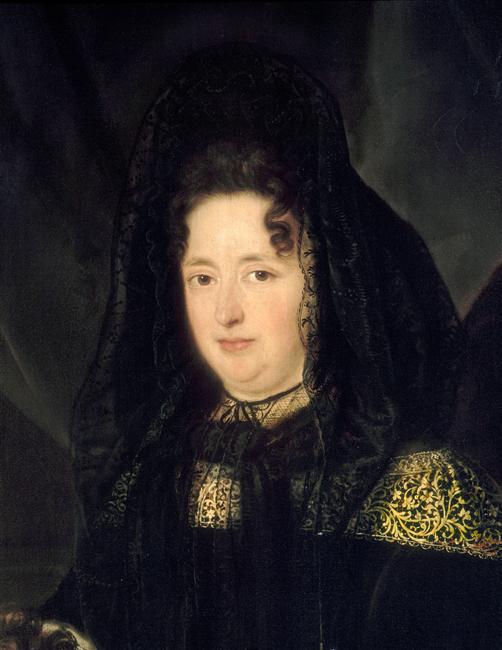
Elizabeth Charlotte d'Orléans and Madame de Maintenon
Elizabeth Charlotte of the Palatinate had been established as Madame at the French court for some years when Madame de Maintenon suddenly usurped Madame de Montespan's place as royal favourite. To the courtiers this change marked the beginning of a gloomy time at court with no entertainment and little to do other than attending Mass. To Elizabeth Charlotte it was a catastrophe; she had never liked the strict and austere governess and was loath to see her rise so high.
It is mainly through her letters and memoirs that one finds Elizabeth Charlotte's honest opinion on the King's last mistress. Describing her mainly as "the old woman" the Duchesse d'Orléans does not shy away from naming her adversary even harsher terms - "the piece of filth" is another reoccurring name. On one occasion Liselotte (as Elizabeth Charlotte was nicknamed) writes on the death of an acquaintance that she would have been far more pleased if it had been Madame de Maintenon who had gone.
Madame de Maintenon herself was not any fonder of the King's sister-in-law. Whenever the royal family went to Marly she made sure that Elizabeth Charlotte never received an invitation to walks around the grounds with the King. This trick of keeping the King away from was one generally used by Madame de Maintenon. Whereas Louis XIV had hitherto liked his sister-in-law for her brash and honest ways his attitude towards her drastically changed for the worse when Madame de Maintenon came along.
One particular incident which permanently ensured that the two would never see eye to eye was the marriage of Elizabeth Charlotte's son. The German-born Liselotte was a very proud woman and knew what was due to both herself and her offspring. Consequently, when it was rumoured that the King intended to marry her son to one of his bastards, Mademoiselle de Blois, she was furious. Madame de Maintenon had always supported the King's illegitimate children and continued to do so in this case. It soon was obvious that the King's favourite was a great supporter of the match which nothing seemed to be able to prevent. In the end the marriage did take place but Elizabeth Charlotte never forgot or forgave Madame de Maintenon for her role in the matter.
Another thing that rubbed Elizabeth Charlotte the wrong way was the social standing of Madame de Maintenon. Liselotte was convinced - as was the general world-view - that the ranks were separated for a reason and for royalty to marry beneath themselves was an utter disgrace.
It has been suggested that Elizabeth Charlotte was in love with Louis XIV which could be another reason for her dislike of the favourite. However, there is little to suggest that Elizabeth Charlotte actually was in love with the King.
After the death of Elizabeth Charlotte's husband, the Duc d'Orléans, there was an attempt at a reconciliation between the two. Different sources varies as to exactly who initiated the meeting but nonetheless it was to happen. The meeting took place in the apartment of Elizabeth Charlotte where the two both sat down in the presence of Madame de Ventadour who witnessed the whole exchange. The interview went back and fourth and in the end the two agreed to forget the past and be friends from there on - however, it is unlikely that they became close.
It is mainly through her letters and memoirs that one finds Elizabeth Charlotte's honest opinion on the King's last mistress. Describing her mainly as "the old woman" the Duchesse d'Orléans does not shy away from naming her adversary even harsher terms - "the piece of filth" is another reoccurring name. On one occasion Liselotte (as Elizabeth Charlotte was nicknamed) writes on the death of an acquaintance that she would have been far more pleased if it had been Madame de Maintenon who had gone.
![]() |
| Madame de Maintenon |
Madame de Maintenon herself was not any fonder of the King's sister-in-law. Whenever the royal family went to Marly she made sure that Elizabeth Charlotte never received an invitation to walks around the grounds with the King. This trick of keeping the King away from was one generally used by Madame de Maintenon. Whereas Louis XIV had hitherto liked his sister-in-law for her brash and honest ways his attitude towards her drastically changed for the worse when Madame de Maintenon came along.
One particular incident which permanently ensured that the two would never see eye to eye was the marriage of Elizabeth Charlotte's son. The German-born Liselotte was a very proud woman and knew what was due to both herself and her offspring. Consequently, when it was rumoured that the King intended to marry her son to one of his bastards, Mademoiselle de Blois, she was furious. Madame de Maintenon had always supported the King's illegitimate children and continued to do so in this case. It soon was obvious that the King's favourite was a great supporter of the match which nothing seemed to be able to prevent. In the end the marriage did take place but Elizabeth Charlotte never forgot or forgave Madame de Maintenon for her role in the matter.
![]() |
| Elizabeth Charlotte, Duchesse d'Orléans |
Another thing that rubbed Elizabeth Charlotte the wrong way was the social standing of Madame de Maintenon. Liselotte was convinced - as was the general world-view - that the ranks were separated for a reason and for royalty to marry beneath themselves was an utter disgrace.
It has been suggested that Elizabeth Charlotte was in love with Louis XIV which could be another reason for her dislike of the favourite. However, there is little to suggest that Elizabeth Charlotte actually was in love with the King.
After the death of Elizabeth Charlotte's husband, the Duc d'Orléans, there was an attempt at a reconciliation between the two. Different sources varies as to exactly who initiated the meeting but nonetheless it was to happen. The meeting took place in the apartment of Elizabeth Charlotte where the two both sat down in the presence of Madame de Ventadour who witnessed the whole exchange. The interview went back and fourth and in the end the two agreed to forget the past and be friends from there on - however, it is unlikely that they became close.
Adversaries of Madame de Maintenon
A royal favourite would always be an object of equal admiration and jealousy. Madame de Maintenon was no different despite her less showy way of life than her predecessor. Many attributed the gloomy atmosphere at court to the influence of the austere new favourite which is not far off point. The days of splendid fêtes and lively balls were long over and the courtiers were left to amuse themselves however they could. That proved to be a harder task than one could imagine since no one wanted to get on the King's bad side.
Some were open about their dislike of Madame de Maintenon or at least as open as it is possible to be without attracting the royal wrath. One who was particularly set against Madame de Maintenon was Elizabeth Charlotte of the Palatinate or simply Madame as was her court title as Duchesse d'Orléans. In her letters and subsequent memoirs the Duchesse d'Orléans refers to Madame de Maintenon as "the old woman" or even as "that piece of filth". Madame had a keen way of expressing herself which proves to be quite interesting reading. Another phrase of hers regarding "the old woman" dates to 1692 when the favourite is described "old ripopée" which is a term used for wine that has become so old that it borders on vinegar.
Madame de Maintenon was not fond of the Duchesse d'Orléans either. Whenever the royal family went to Marly she made sure to exclude the King's sister-in-law from walks around the grounds.
The Duc de Saint-Simon was another of Madame de Maintenon's enemy. Like Madame he found her to be too old which becomes clear in his memoirs where she is referred to as the "old hag". When rumours spread that she had become the King's morganatic wife, he declared that if it was true it was a great dishonour to the throne of France.
Occasionally, opposition to the favourite was more openly demonstrated. An Italian troupe of actors had enjoyed some success at Versailles right until they performed a play named "The False Prude". The play features a certain character which is obviously meant to be Madame de Maintenon. The court rushed to see the play - a demonstration of her unpopularity? - but the King was furious. He immediately closed down the performance and sent the troupe into exile for a year.
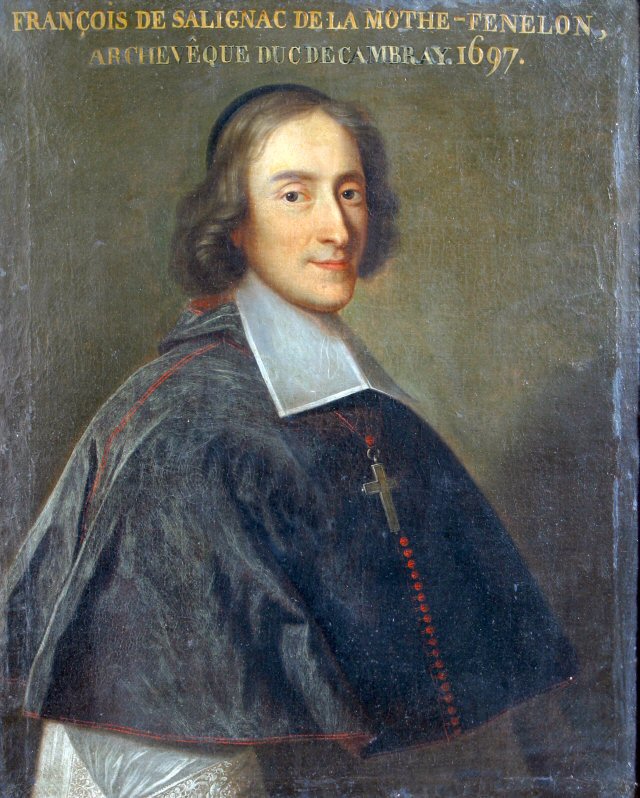
The Abbé de Fénelon was an enemy whom Madame de Maintenon did her best to get rid of. It was well known that Madame de Maintenon had more than once attempted to set the King against Fénelon and she rarely missed an opportunity of "bad-mouthing" him. Apparently, the King - who himself had become somewhat estranged from him - followed the advice of his favourite and appeared to be publicly displeased with the Abbé. Originally, Madame de Maintenon and Fénelon had actually been on pretty good terms; united by piety that same aspect was to tear them apart. Madame de Maintenon found that Fénelon's beliefs leant towards quietism which she would not accept.
For the majority of courtiers who disliked Madame de Maintenon their dislike was far more bounded in their boredom. It seemed a bit too coincidental that life at court would become so much more boring after "the old hag" came into power.
![]() |
| Madame de Maintenon |
Some were open about their dislike of Madame de Maintenon or at least as open as it is possible to be without attracting the royal wrath. One who was particularly set against Madame de Maintenon was Elizabeth Charlotte of the Palatinate or simply Madame as was her court title as Duchesse d'Orléans. In her letters and subsequent memoirs the Duchesse d'Orléans refers to Madame de Maintenon as "the old woman" or even as "that piece of filth". Madame had a keen way of expressing herself which proves to be quite interesting reading. Another phrase of hers regarding "the old woman" dates to 1692 when the favourite is described "old ripopée" which is a term used for wine that has become so old that it borders on vinegar.
Madame de Maintenon was not fond of the Duchesse d'Orléans either. Whenever the royal family went to Marly she made sure to exclude the King's sister-in-law from walks around the grounds.
| Elizabeth Charlotte of the Palatinate - one of Mme de Maintenon's fiercest enemies |
The Duc de Saint-Simon was another of Madame de Maintenon's enemy. Like Madame he found her to be too old which becomes clear in his memoirs where she is referred to as the "old hag". When rumours spread that she had become the King's morganatic wife, he declared that if it was true it was a great dishonour to the throne of France.
Occasionally, opposition to the favourite was more openly demonstrated. An Italian troupe of actors had enjoyed some success at Versailles right until they performed a play named "The False Prude". The play features a certain character which is obviously meant to be Madame de Maintenon. The court rushed to see the play - a demonstration of her unpopularity? - but the King was furious. He immediately closed down the performance and sent the troupe into exile for a year.
![]() |
| Abbé Fénelon |
The Abbé de Fénelon was an enemy whom Madame de Maintenon did her best to get rid of. It was well known that Madame de Maintenon had more than once attempted to set the King against Fénelon and she rarely missed an opportunity of "bad-mouthing" him. Apparently, the King - who himself had become somewhat estranged from him - followed the advice of his favourite and appeared to be publicly displeased with the Abbé. Originally, Madame de Maintenon and Fénelon had actually been on pretty good terms; united by piety that same aspect was to tear them apart. Madame de Maintenon found that Fénelon's beliefs leant towards quietism which she would not accept.
For the majority of courtiers who disliked Madame de Maintenon their dislike was far more bounded in their boredom. It seemed a bit too coincidental that life at court would become so much more boring after "the old hag" came into power.
Wednesday, 6 April 2016
Look-Book: Children's wear
Look-Book: Aigrettes
|
| ||||
|
|
||||
|
|
||||
|
|
||||
|
|
||||
|
|
||||
|
|||||
Monday, 4 April 2016
House of Béthune
The House of Béthune had roots in the area of Artois (as a former province) where they were recognized as Lords of Béthune. Here they had their main seat in the castle overlooking the town of Béthune. The family line is dated back to around 1000. The family rose through the centuries from being local lords to being princes, dukes and counts. However, as time went on the House of Béthune was separated into seven branches (there are a few more but these are either disputed or ended before the reign of Louis XIV). Each branch was distinguished from each other through their titles:
Béthune-Charôst
In 1681 Adrien I François married the heiress to the titles of Comte de Saint-Venant and Vicomte de Lières and thus added them to his own name. It eventually died out in 1812.
The House of Béthune is now completely extinguished except for the disputed branch of Béthune-Hesgineul.
| Maximilien I |
Béthune, Ducs de Sully
Was founded by Maximilien I (himself son of François, Baron of Rosny) who served as a minister to Henri VI. In return for his services the King rewarded him with the duchy of Sully in 1606 which Maximilien then expanded by purchasing the principality of Boisbelle. It was in this principality that this branch had their main seat in the town of Henrichemont (founded by Maximilien).
The line died out in 1807.
Béthune-Orval
Founded by the second son of Maximilien I, François, who actually had the honour of being made Peer of France with the title of Duc d'Orval by Louis XIII. However, for some reason the creation was never officially registered which meant that the title was not hereditary. This meant that the son of Francois (Maximilien-Alpin) never became a Duc but had the titles of Marquis de Béthune and Comte d'Orval.
Eventually, the grand-son of Maximilien-Alpin combined the lines of the Ducs de Sully with that of Béthune-Orval when he inherited the title of Duc de Sully. With his death the line of Béthune-Orval died out.
Béthune-Charôst
Surprisingly enough, this branch was founded by a cardinal. The younger brother of Maximilien I was Philippe who held the title of Comte de Charôst, Comte de Selles and Marquis de Chabris. He would later receive his red hat from the Pope but managed to father a few children first who carried on the family name.
As it happens, Philippe divided his titles between his two sons. The second son (Henri) also went into orders and became an Archbishop while it was up to the third son to carry on the Béthune-Charost line and as such held the title of Comte de Charôst.
Philippe's grandson, Louis, was made the first Duc de Charôst - a title which was passed from father to son until the extinction of the line in 1800.
Béthune-Chabris
The first son of Philippe was named Hippolyte, Marquis de Chabris and Comte de Selles. His sons would carry on the line until its extinction in 1833. However, the title of Marquis de Chabris went to the fifth son of Hippolyte (the founder of Béthune-Selles) upon his father's death which left the remaining members with the title of Marquis de Béthune.
Béthune-Selles
The fifth son of Hippolyte went into the army rather than becoming a clergyman. There he became a Lieutenant-Colonel which he added to his already existing titles of Marquis de Chabris. He also married Marie Louise de La Grange whose sister was Queen of Poland.
Thus, many of his descendants are to be found in the Polish aristocracy.
![]() |
| Philippe de Béthune |
Disputed branches:
Béthune-Hesdigneul
Actually, this line is a cadet-branch of Béthune des Planques whose claim has been somewhat disputed. The family originates from the sons of Pierre de Planques (himself the first to be somewhat accepted in his claim). His eldest son, Jean, founded this line which is still in existence.
The branch held the title of Marquis de Hesdigneul until Eugènie François Léon was elevated to the rank of Prince. From then on they were known as the Princes de Hesdigneul and also held the titles of Comte de Noyelles and Vicomte de Nielles.
Béthune-Saint-Venant
The youngest son of Pierre de Planques, Georges, founded this line.In 1681 Adrien I François married the heiress to the titles of Comte de Saint-Venant and Vicomte de Lières and thus added them to his own name. It eventually died out in 1812.
Look-Book: Necklaces
Subscribe to:
Posts (Atom)