Thursday, 7 May 2026

The Fall of Madame de Montespan

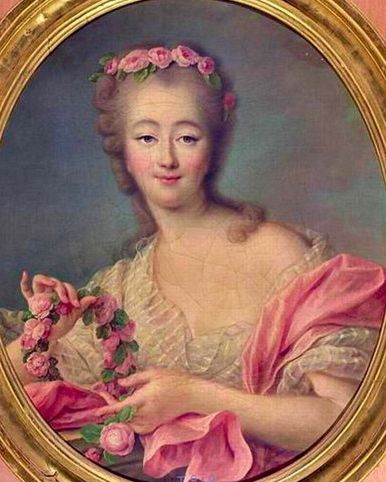
In 1678 Madame de Montespan gave birth to her seventh child by Louis XIV. Françoise-Athénaïs had reached her 38th birthday and had been the king’s maitresse en titre for no less than thirteen years. Her reign had been long – longer than most women could manage – and for the time being all seemed quite normal. Yet, the year marked not just the birth of her final child but also the beginning of the end for the glittering mistress.


On the surface, everything seemed normal. The king still spent hours every day with Athénaïs but before long people started noticing that he did not stay the night. Shortly after, it was widely noted that the two had seemingly ceased their intimate relationship. Traditionally this shift has been blamed largely on Athénaïs’ change in figure. Having had nine children in total, a family history of weight issues and an intense fondness for rich food, Athénaïs physical appearance had changed quite drastically. While still being a remarkably beautiful woman, her body was (understandably) not the same.


undefined
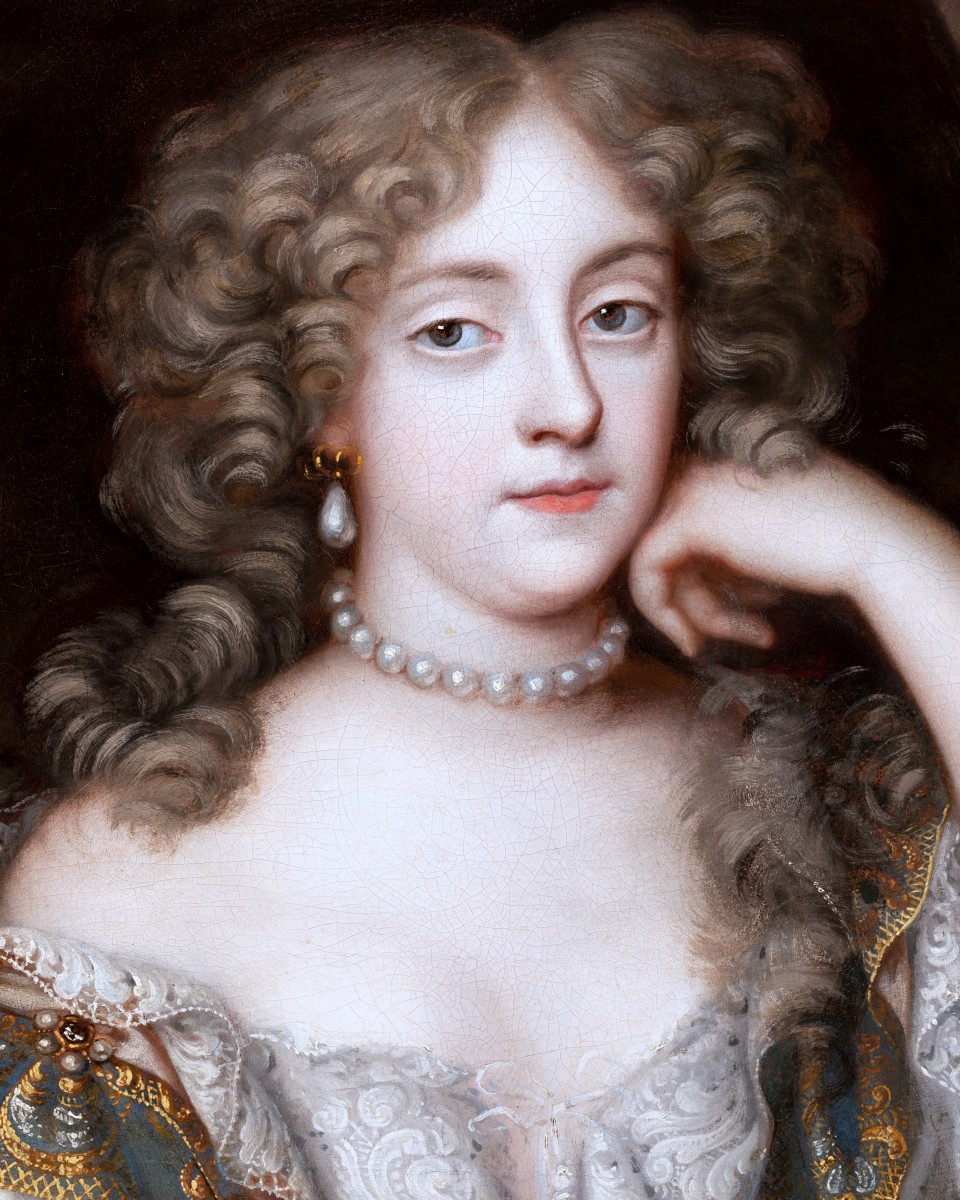
Madame de Montespan at the
height of her influence


Meanwhile, the king who otherwise adored routine was beginning to shift his attentions and priorities. The tempests that had accompanied his relationship with Athénaïs for years had lost some of their charm. After all, the king was aging, too. The shift was subtle. While Louis XIV could certainly exhibit a streak of cold-heartedness and a definite selfishness, he was also a gentleman to the bone. The woman he had loved passionately for years was not to be thrown out the door – yet Athénaïs’s deroute became increasingly obvious.


It has been argued that the Affair of the Poisons hastened her downfall but there is little to suggest that to be the case. For instance, Louis would never have allowed her to remain anywhere near him if he genuinely thought that she had tried to either poison or seduce him with dangerous potions or powders. The mere fact that she remained at court for over a decade after the Affair of the Poisons at the very least heavily indicates his reassurance on that part.


While he continued to spend his obligatory minimum of two hours with her, it seemed more routine than outward passion. Likewise, Athénaïs continued to plan the season’s social calendar and retained her status as the star of the court. Later, though, the hours became gradually shorter and shorter.


As early as 1680, Athénaïs received what could be seen as an initial parting gift. It was customary for kings to end their relationships with a maitresse en titre with a suitably grand gift - a gesture of former intimacy. Athénaïs received the rights of a duchess but without the title which could not be granted to her due to her husband. The Marquis de Montespan had openly and scandalously objected to his wife's affair with the king and Louis was fervently opposed to rewarding such behaviour with a dukedom. As Athénaïs, a married woman, could not be made a duchess with also conferring the rank on her husband, she had to make do with the pomp surrounding it. Likewise, she was made Superintendant of the Queen's Household which was the highest position attainable for women at court.


Then, in 1684, the king decided to expand his own apartment which he did by simply absorbing the sumptuous space hitherto occupied by Athénaïs. In compensation, she was offered the luxurious Appartement des Bains on the ground floor where they had spent hours together privately. To the uninitiated, it was not exactly a punishment but to the courtiers, it was a clear sign that something was afoot. At Versailles, the closer you were housed to the monarch himself, the higher in favour you were – and Athénaïs had just been moved down a floor. If that was not enough, the king’s new mistress, Madame de Maintenon, did not hesitate to hammer home the point. The Appartement des Bains had been connected to the king’s private apartment via a private staircase. That was until Madame de Maintenon took advantage of the king’s convalescence after his surgery to have the staircase permanently bricked up. 


On a grander scale, the fall of Athénaïs was blatantly obvious. Her influence amongst the courtiers had long rested entirely on the devotion of Louis XIV. While Athénaïs herself belonged to one of the most prestigious aristocratic families at court, she still relied on the king’s favour to wield the influence she had enjoyed. With that fading, she now had to seek a new avenue which cannot have been anything but humiliating. As it happens, Athénaïs had to apply to the king’s new mistress, Madame de Maintenon. For instance, it was to Maintenon that Athénaïs had to make a request on behalf of her son in 1685 to join the dauphin’s household. That same year, Athénaïs had to endure yet another reminder of her replacement. Much like poor queen Marie Thérèse had been forced to endure previously, Athénaïs had to share a carriage with both the king and Madame de Maintenon while hunting in the autumn of 1685.


To a modern observer it seems quite odd that the king would insist on such an arrangement but to Louis XIV, it was the natural order of things. The king knew full well that his relationships would eventually fade and a new one would begin - the ladies he involved himself with knew it too. Thus, he did not exactly see it as a punishment but rather the way of the world. If anything, Louis had done the same thing once before. Then, it had been Athénaïs who was on the ascendancy and Louise de La Vallière who had to swallow the bitterness of being replaced. Yet, this was nonetheless slightly different. Louise de La Vallière had never truly found peace in her role as royal mistress. Her religious scruples eventually led her to literally flee the court only for the king - strongly displeased - to bring her back. Only a few years later was she permitted to finally join the convent she had escaped to. That episode greatly hurt the king's pride which could not abide being the one to be abandoned. But this time, the slighted mistress wanted to stay and the power lay entirely with the king. 


Athénaïs, ca 1670


By 1686, Athénaïs presence was no longer necessary for the king. Just the year before, she had had one of her greatest triumphs when her daughter, Louise Françoise, was married to the Prince de Condé who was one of the king’s own cousins. Thus, she had established her daughter firmly in the royal family for good. It would create a precedent which ensured that all her children by Louis were firmly integrated into court society long after their mother’s final dismissal. Perhaps Voltaire was correct when he referred to it as her “last great triumph” at the French court.


It would certainly seem so, for the following year she was omitted from the party invited to accompany the king on his trip to Barèges to take the waters for his fistula. Allegedly, she fainted from sheer anger when she heard. At this point, she cannot have been unaware that she would likely not regain her former position, but this was a step too far, too publicly. If she had had any doubts, her relegation to one of the ordinary apartments while the king’s court visited Fontainebleau that year should have cemented her new role.


The ascendancy of Madame de Maintenon was too obvious to deny and Athénaïs was no fool. By 1691, she finally decided that time was up. Athénaïs retired to a convent and only visited court a few times afterwards.

Friday, 24 April 2026

Madame de Sablé: A Hypochrondriac?

Madeleine de Souvré was quite an odd character at the court of Louis XIV. She had the distinction of being born in the previous century - in 1599, to be exact. Thus, she was already 44 years old when the five-year old Louis XIV ascended to the throne.

By this point, she sported the title of Marquise de Sablé through her marriage to Philippe Emmanuel de Laval-Bois Dauphin. She had been married at the age of fifteen and was widowed in 1640. By the beginning of Louis XIV's reign, her beauty was fading but what marked her out was her salon. She was an intellectual who acted as patron for La Rochefoucauld and harboured constant concerns for her health. As it happens, she was described as a notorious hypochondriac as well as a sharp wit. 


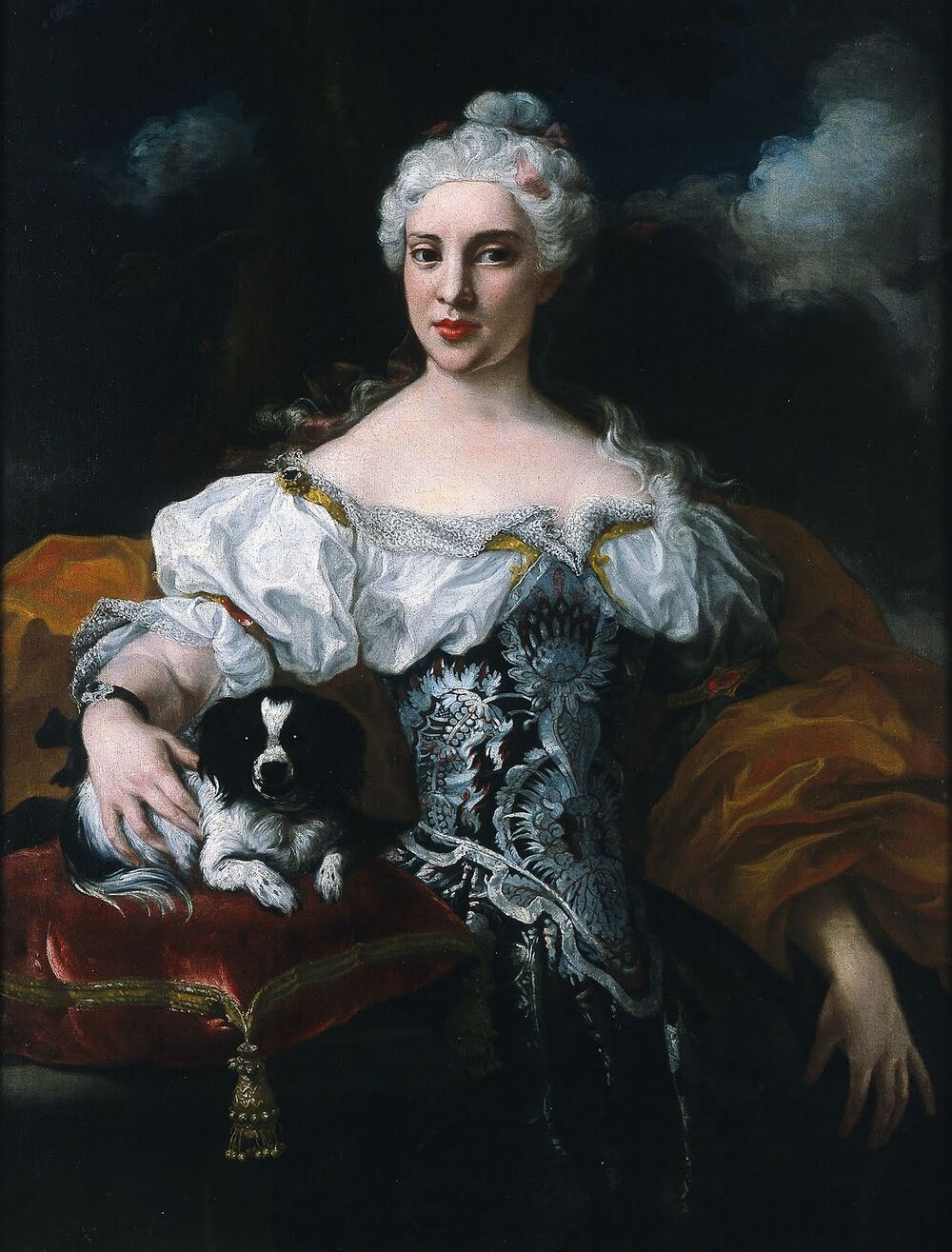
Madeleine de Souvré,
Marquise de Sablé

Her continuous complaints occasionally prevented her from engaging in social engagements. For instance, a surviving letter of hers from 1650 makes her excuses that she has been suffering from several complaints which "have made it difficult for me to pay visits". 

Was she actually sick, though? It is hard to know for sure but her contemporaries certainly thought she exaggerated. Tallemant des Réaux gave a less than flattering image of her: "a fat woman who has no other illness than any she might imagine". Apparently, she combined a deep devotion with a perpetual concern for her own health which caused to fervently avoid any talk of death. An even harsher image is conjured up by Sainte-Beuve in a scathing summary. Sainte-Beuve referred to Madeleine in the years after her retirement from court in 1656:

"In lodging near Port-Royal of Paris, in a building she had constructed next to the convent, she created a novel position for herself... hearing everything, fussing over everyone, interfering with everything, making herself the finest wit and the greatest theologian; avid for the smallest bit of gossip and for the most religious tome; interested from now on only in her salvation and in her new circle of monks, but still maintaining all her best friends from before; keeping close to her austere confessor, but not dismissing her cook; consulting both her physician and her moral theologian on her migraines and on her scruples; sponsoring lectures, colloquia and debates in her salon, but feeling supported by the nuns on Communion day; helping the nuns by her marvelous potions and all-purpose elixirs, but putting into her jams and jellies only what is absolutely permitted..."

If such a character might have been difficult to engage with, Madeleine nonetheless found a close friend in the Comtesse de Maure - another hypochondriac. The two ladies allegedly could spend hours together discussion their "fragile" healths. To be honest, while the description by Sainte-Beuve is not exactly flattering, it also does not invoke the image of a woman who had any ill intent. 

While it is easy to dismiss a hypochondriac as being in good health but merely complaining, it should at least be considered whether she actually did have any genuine complaints. She was described as having "chronic rheumatism" (she herself refers to it) which can be a reference to perceived rheumatism - but what if it was not? As with most medical diagnoses of the time, "rheumatism" could refer to any number of things but would generally cause stiffness and pain the joints. If that was the case, it would certainly explain why she was unable to travel in 1650. It was not the first time that she had been poorly enough to not go where she please. She had wanted to leave Paris for a while but could not go as her health did not permit it which she wrote to the abbess Angélique Arnauld.

There can be no doubt that Madeleine had a penchant for the dramatics. For one, she wrote to her friend, Renaud de Sévigné (uncle of the Madame de Sévigné): "I hate the world, I flee it; pray that I might hate myself as much and that I might think on nothing other than my own salvation". Might be dramatic, but if she was suffering from chronic pain such an existence must have been severely uncomfortable, especially in a time before effective over-the-counter painkillers. 

Another thing was that she was seemingly perpetually having a blocked nose leading her to sneeze frequently and apparently had a never-ending cycle of the common cold. It was said that when she was encumbered by that particular complaint, she could focus on nothing else but her stuffed nose. 

As with all sources, it should be considered where the charge of hypochondria came from. Most of her detractors had fundamental differences on a spiritual, philosophical and religious level and found it quite convenient to dismiss her as a hysterical, aging lady. It further added to her reputation that she became increasingly eccentric as she grew older which often just referred to someone (especially a woman) living on her own terms which she certainly did. 

So, vapours, rheumatisms, colds and fevers were seemingly a recurrent theme in Madame de Sablé's life - whether imaginary or not. She died in 1678 at the age of 79; seemingly of natural causes. 

Thursday, 27 November 2025

The Tragic Case of Marie Thérèse de Choiseul-Stainville

Marie Thérèse de Choiseul was the niece of Louis XV's famous minister Étienne François de Choiseul who played a key role in arranging the marriage between Louis XVI and Marie Antoinette. Her parents - the duc and duchesse de Stainville - welcomed her into the world on 8 December 1766. Unbeknownst to everyone her life would be both short and unjust.

Considering her elevated birth, a prestigious marriage was arranged for her. At the age of 16 she was married off to Prince Joseph of Monaco. Before she left France she was permitted a formal presentation to the king and queen on 8 December 1782 where she officially took a seat on a tabouret as befit her new rank. Thus, she was shipped off to Monaco to make a life for herself as best she could. Luckily, her marriage to Joseph seems to have been a happy one. Marie Thérèse gave birth to three children while in Monaco: Honorine, Athénais and Delphine. Her three daughters came like clockwork - every two years from 1784-1788. Unfortunately, Delphine died while young. 

While Marie Thérèse was busy setting up her life, something was brewing across the border in France - the revolution was coming. And finally, it came. Monaco was officially annexed by revolutionary France in March 1793 which spelt disaster for Marie Thérèse and her husband. The French had just executed Louis XVI and the Reign of Terror was in full swing. By sheer coincidence, Marie Thérèse was alone when the revolutionaries came to her home. The revolution reduced her family to normal citizens but their reduction in rank was not enough.

The problem was that Joseph spent a considerable amount of time abroad in an effort to obtain loans to keep his family afloat. Unfortunately, this immediately marked him - and his family - as suspicious. In the fever of revolutionary France everyone could be a spy; especially someone who moved frequently beyond French borders. However, the revolutionary authorities had a problem. It was Joseph's activities that raised their suspicions but they could not get a hold of him while he remained abroad - but they could arrest his family.

Thus, Marie Thérèse was arrested alongside her in-laws on charges of conspiracy. The irony was that the whole thing could have been avoided. Both Marie-Thérèse and Joseph had apparently left France (where they were visiting) when things started to heat up. As the situation became more dire, Marie-Thérèse reentered French territory to seek out her daughters who were staying elsewhere for the moment. When she returned, she was arrested. Initially, the authorities recognised that she was technically a foreigner (by marriage but a woman's status and nationality depended on her marriage - Marie Thérèse had become Monegasque by marriage). 

However, it did not last long. Shortly after, Marie-Thérèse was arrested again while in Paris. The family was taken to the prison of Sainte-Pélagie. Luckily her daughters were spared the imprisonment and left in the care of their governess. Over the next weeks Marie Thérèse was moved from prison to prison which indicates that she was separated from her family.


undefined
Marie Thérèse


It quickly became clear that Marie Thérèse was in dire trouble. Despite having been away from the French court for over a decade, her association by birth was a serious threat. Combined with her husband's activities after the outbreak of the revolution, her fate was sealed. Without much ado, Marie Thérèse was found guilty of conspiracy and sentenced to death.

In a desperate attempt to gain a little more time Marie Thérèse claimed that she was two and a half months pregnant. Taken aback, the authorities had her examined by an apothecary which caused somewhat of a scandal as typically such an examination was done by an official "health officer". It was quickly discovered to be a ruse. The reason was heartbreaking. She wanted one more day so that her hair could be cut to be sent to her daughters as a keepsake. The alternative was that the executioner would hack away at her hair before discarding it on the floor. 

Her final day was spent bleakly. She had technically obtained an audience with Antoine Quentin Fouqier-Tinville, a man known disturbingly as the "provider to the guillotine". He had acted as prosecutor for none other than Marie Antoinette herself. However, he never granted her the promised audience - in consequence, she spent her last day waiting in his antechamber. In response she wrote a letter protesting her imprisonment as a foreign princess but to no avail.

Marie Thérèse was taken to the guillotine on 27 June 1794 - at the age of just 27. She had donned rouge in the morning to mask any whiteness from fear. The cart taking her there was later referred to as "the last cart to the guillotine" - not quite accurate but almost. 

Her last words were allegedly addressed to another prisoners on the cart: "Be brave, my friend, crime alone display weakness". She had even had the wherewithal to address the crowds lining the road to the guillotine with the words: "Citizens, I go to my death with all the tranquility which inspires innocence; I wish you a better death". 

Her execution coincided with the very same day that the Jacobin government fell - the very same authorities that had condemned a young woman to death on flimsy to no evidence. In a case of twisted irony her own prosecutor would be guillotined himself. The tale of Marie Thérèse is particularly tragic because this was a woman who had technically "gotten away". Her marriage had seen her sent away from Versailles a decade before the revolution broke out but it still did not safe her. Furthermore, she had survived the most violent times of the revolution for an aristocrat. 

Her husband survived the ordeal. Upon learning of the fate of his family, he remained in exile in Great Britain where he eventually remarried. Both her daughters' married but only Honorine had children. As it happens, she actually got her last wish. Her hair was indeed delivered to her daughters after her death.

Sunday, 5 October 2025

Marie Antoinette & Axel von Fersen: Truly an Affair?

One of the great mysteries surrounding Marie Antoinette was – and is – the nature of her relationship with Count Axel Fersen. 


Throughout her life, the queen was continuously accused of various types of affairs including lesbian affairs, an affair with her brother-in-law (the Comte d’Artois) and a whole array of other candidates. The accusation of adultery was a tried-and-tested way of diminishing the character of a public figure, particularly female ones. However, whereas her contemporaries readily believed any slur against her character, history has been kinder to this aspect of Marie Antoinette’s character. 


Yet, her relationship with Count Fersen has never quite escaped further scrutiny and even today some historians consider him to have been the queen’s lover. But was he really?


Marie Antoinette met Count Fersen on New Years’ Day in 1774. The Swedish Count was blessed with a mixture of handsome looks, a vast personal wealth – and a person whose foreign birth meant that he had no allegiance to the complicated system of powerful French families at court. His gentleman-like air and his pleasant manners quickly meant that he was included in the queen’s private circle which included the Princesse de Lamballe, the Duchesse de Polignac and several middle-aged gentlemen of the court. 


Marie Antoinette in a chemise à la reine - the
casual ensemble which Fersen must have seen
her in


Throughout the remaining 15 years of court life, he led a nomadic existence where he frequently visited the French court before disappearing for months – or years – at a time. Thus, the dauphine (and later queen) frequently corresponded with him during his absences. 


It was certainly not a matter of love at first sight. Upon their meeting, Fersen was on route to England where he intended to woo an English heiress by the name of Catherine Lyell whereas Marie Antoinette was deeply concerned with the state of her own marriage. It is a tell-tale sign that Fersen did not mention Marie Antoinette personally in his private journal – a pursuit he kept throughout his life, and which frequently discuss the beauty and attractiveness of various ladies he had met on his travels. Neither does Marie Antoinette seem to have considered him as anything more than a welcome breath of fresh air to her social circle.


What exactly was it about their relationship that made even Lady Antonia Fraser (author of one of the most comprehensive biographies on Marie Antoinette) conclude: “But did the Queen in fact sleep with the handsome Count? On balance of probabilities, the answer must be yes”. But must it?


Lady Antonia Fraser herself provides no proof of any physical romance whatsoever. On the contrary, herself admits that the contemporary sources – including the scandalmongering pamphlets which otherwise freely accused the queen of sleeping with anyone she may meet – does not mention it. It would have been irresistible ammunition for her enemies who never drew back from slandering her in any way possible, if the queen had committed that betrayal. In fact, it could have provided the basis for returning her to her native Austria in disgrace. Fraser only provides two contemporary sources for her conclusion: the memoir of the Comtesse de Boigne and the journal of Lady Elizabeth Foster. 


The Comtesse de Boigne published her memoirs after the revolution. The main reference to the “affair” made by the Comtesse is the sentence that “intimates scarcely doubted that she yielded to his passion”. The problem with this particular source is that she was born in 1781. She was therefore an infant and toddler when these events allegedly occurred and was therefore not present herself. Neither was she a second-hand witness. Her statement was based on court gossip – a fact that Lady Antonia Fraser herself readily admits – and the court gossiped about everyone. For instance, the Comtesse’s own uncle was also rumoured to have been the queen’s lover, but that gossip was not taken as proof. Considering the sheer number of men that the queen was accused of “entertaining”, she would have had a prodigious track record if even half was true.


The other source mentioned was Lady Elizabeth Foster. As can be gleaned from her name, the author of the journal was an English lady who never met Marie Antoinette. They did, however, share a mutual friend in Georgiana, Duchess of Devonshire. Lady Foster wrote on 29 June 1791 that Fersen was “considered the lover and was certainly the intimate friend of the queen for these last eight years”. In fact, their friendship – platonic or romantic – reached back to 1774. What exactly made Lady Foster consider Fersen to be the lover of the French queen? It is not mentioned. It can therefore be speculated that that was also the biproduct of gossip, particularly because the queen’s reputation was at an all-time low.


A contemporary who was actually present (and an adult) was the Marquis de Bombelles. His memoirs were published in 1978 – long after any sensibilities regarding the persons concerned had ceased to be regarded. He himself mentions the rumour of their relationship but rejects that anything physical took place.


It has been suggested that the silence regarding Fersen in other contemporary sources is a confirmation of something suspicious. To be sure, the queen’s friends might want to lightly pass over any physical affair in correspondence, but her enemies certainly had not such scruples. Considering that foreign ambassadors – for one – had no reason to hide such an affair, it would be odd indeed if they collectively decided to ignore something as grand as the infidelity of a queen. As a parallel example, Queen Caroline Mathilde – wife of King Christian VII of Denmark – had been discovered to have had an affair with the king’s own doctor. Nothing stopped gossip from spreading like wildfire in that (contemporary) case and when the Danish King eventually sent her away, it was likewise widely publicised. 


Axel von Fersen


The few contemporary sources that do allude to Fersen’s relationship with the queen never provide any clue, proof or even slight hint at something concrete. On the contrary, those that actively claim that he is “known” to be Marie Antoinette’s lover make that claim on seemingly nothing more than gossip. 


Fersen himself exhibited no particular loyalty towards the queen on a romantic level. The Count had a seemingly endless stream of mistresses and continued his pursuit of a wealthy wife. Consequently, even if the count had managed to seduce the queen (or vice versa) the relationship was clearly not an exclusive one on his side. It obviously could not have been exclusive on Marie Antoinette’s side as she was married to Louis XVI.


That leads to another vital aspect to be considered – an aspect that is oddly (and quite uncharacteristically for the otherwise extremely well-written book) omitted in the consideration of an affair between queen and count: the queen’s character. As repeatedly put forward by Lady Fraser herself, the queen was anything but a romantic coquette. Ironically, when (re-) reading Lady Fraser’s book, it is difficult not to be struck by the self-contradictions in the assertion as the author spent page after page denouncing the use of mere gossip as a reliable source (for other incidents, political and courtly) before concluding that such a damaging accusation against the queen must be true – on the basis of gossip. It is, however, a testament to how good Lady Fraser’s book otherwise is that deservedly has received the Enid McLeod Literary Prize. 


Of all the charges of frivolity or recklessness put on Marie Antoinette, that of flirtatiousness was omitted. There were two instances where the queen was faced with open attempts at flirtations. One by the Duc de Lauzun whom she icily – but politely – rejected with the freezing “Go, Sir”, after he dared to propose himself as a lover.


Her own brother, Emperor Joseph II, visited Versailles in an attempt at sorting out why the marriage to the king remained unconsummated. Joseph liked his sister but had no illusions about her personality and he certainly did not shy away from ruthless criticism when he saw fit. He described her as sexually prudish – a sentiment echoed by other courtiers. One other courtier noted that she had a talent for being gracious and amiable while simultaneously keeping her male courtiers at an arm’s length. 


It should also be considered the history of such intimate pursuits in her life. To Marie Antoinette physical intimacy was a duty required of her to fulfil her role bearing children. Throughout her childhood, this point had been hammered home and when she married the dauphin, she received regular letters from her mother on the subject. Enjoyment or pleasure was never considered an object in that regard. Furthermore, the humiliation of having been constantly scrutinised, blamed and shamed for not consummating her marriage to the king had likely led to that prudishness later observed by her brother. While such unpleasant associations certainly do not mean that she could never have wanted to experience that sort of physical pleasure, it makes it extremely unlikely that she would in one fell swoop turn from being the “prude” to the adulterer.


Marie Antoinette’s sense of duty was another matter. She considered it her unwavering duty to remain by the king’s side – even when her own life was threatened. Upon the outbreak of the revolution, she was given several chances to flee with her son, but she refused on the very ground that her place was by the king’s side. That hardly corresponds to a woman who had happily betrayed him physically. Louis XVI himself might have been a passive monarch in many aspects but there is a reason to suspect that infidelity on behalf of his wife would not have met with passive acceptance. From his childhood he had been inculcated with a suspicion of all things Austrian and when his marriage to the Austrian Archduchess Marie Antoine was announced, he was warned not to trust her. It took her years to gain any kind of trust from him – surely an extramarital affair would have destroyed whatever trust he did develop. One might even say that the king would have seen it as confirmation of all those warnings of his youth.


Furthermore, each sexual encounter would have resulted in the risk of pregnancy or STD. Certainly, birth control in the shape of condoms did exist but they were far from a reliable contraceptive. Considering that even today’s versions are not entirely safe, it is unlikely that the 18th century versions would have been more so. It seems unthinkable – considering Marie Antoinette’s character – that she would have gambled with her position as both queen and mother of the royal children by risking an illegitimate pregnancy. Louis XVI, for one, never doubted that the children she did bear were his.


As has also been stated, the gallant Count was a bit of a womaniser. The risk of contracting a disease would therefore have been heightened by his frequent change of bed partner.


The correspondence between Fersen and Marie Antoinette offers another clue. The queen had a massive network of people with whom she wrote regularly – or as regularly as an irregular correspondent such as herself could. Codenames were normal and several letters addressed to a “Josephine” was likely occasionally the queen – one of her middle names was Josepha. However, she was not the only one whom the gallant Count referred to by that name as several other ladies have been identified as also being “Josephine”. It might simply have been the moniker he chose for ladies whose identity he might not wish to be revealed. Besides using a codename is hardly even an indication that the people involved were engaged in a sexual affair.


Marie Antoinette


Occasionally Fersen referred to staying the night “chez Elle” when he was referring to his various mistresses. Much has been made of his use of that phrase on a singular occasion when he visited court. Once again, it seems a massive leap to conclude that this means that he slept with the queen – particularly because the phrase literally translates to “at her (house)” not “with her”. It would also be odd that after years of discretion he should suddenly openly mention it in his own writings.


An argument occasionally used is that Fersen’s correspondence with the queen during the revolution was published by his descendant. In the first publication, this descendant had redacted or blotted out various sentences which immediately made people assume that this concealed incriminating evidence of a physical affair. For years, the descendent claimed that he had destroyed the remaining evidence “out of respect”. In that respect it is no wonder that people immediately surmised that something untoward had happened. However, the descendent had not been entirely honest. He had not destroyed the evidence and in 1982, the documents were found by other, later descendents of Count Fersen. His redactions were so efficient in the original documents that we cannot know what they said. One reference, however, was revealed from the queen’s hand: “I can tell you that I love you”.


Given the nature of their relationship, it is not unlikely that the queen and the count did have strong feelings for one another, perhaps even romantic feelings. The language of the time – for one – was far more intimate than today. Relationships – platonic and otherwise – were often described in very flowering terms. For instance, it was not unusual for Marie Antoinette to sign letters to her friends and family with declarations of love or fidelity. These “declarations” were fashionable at the time. Yet, trendy as they may have been, they obviously do not eliminate actual declarations of love.


It would be irrational to reject the possibility that they may have been in love – but the conclusion that that resulted in a full-blown, physical affair is equally irrational as well as self-contradictory considering the factors mentioned above.


The conclusion is therefore difficult to make as we can never truly know exactly what occurred between Marie Antoinette and Count Fersen. It is bordering on irresponsible to conclude outright that the two did have a physical affair as no actual evidence exist to proof this. Whether they had a romantic connection seems more likely but the escalation into a full-blown liaison does not follow as a matter of course. It is difficult not to see the continuation of the various accusations of adultery when such conclusions are drawn on a virtually non-existent basis. To continue the question posed by Lady Antonia Fraser – must the queen have had a sexual affair with Count Fersen? On the balance of probabilities – it seems unlikely. 

Friday, 15 August 2025

A New Husband for the Princesse de Lamballe?

When Marie Thérèse Louise of Savoy was brought to France in 1767, she was married to Louis-Alexandre de Bourbon-Penthièvre. As such, she assumed the title of Princesse de Lamballe and became a Princess of the Blood (by marriage). On paper, the match was certainly good - her new status put her at the zenith of the French aristocracy and her father-in-law was one of the wealthiest men in France.

However, not everything was too good to be true. Louis-Alexandre was an incorrigible debauchee whose wild existence caused endless scandal at court. He was initially fascinated by his new wife but before long he resumed his old ways. Louis-Alexandre had contracted a venereal disease - likely syphilis - which killed him on 6 May 1768 - a year after his marriage.


This left Marie Thérèse Louise as a young widow - she was just nineteen years old. Luckily, she does not seem to have been infected by her husband during their brief marriage nor did she have children by him. 

The question soon arose - would she remarry? She was certainly in a good position to do so but the situation was not nearly as straightforward as that. For one, she held an immensely privileged position at court and enjoyed a very good relationship with her father-in-law. The latter had seen her as a potential good influence for his wayward son and continued to hold her in high esteem after the death of Louis-Alexandre. Financially and status-wise she was therefore secure.

It should also be remembered that her experience with marriage (albeit brief) was not particularly pleasant. Just five months into her marriage her husband had attempted to elope with a mistress which naturally caused her immense public humiliation. Furthermore, his deteriorating condition meant that she was at constant risk of catching his venereal disease herself. She might not have been particularly willing to enter into another union anytime soon.


undefined
Marie Thérèse Louise


Yet the wishes of a princess rarely counts and before long several matches were proposed. The most glittering match has already been covered in another post and shall just briefly be mentioned: Louis XV. It was put forward that the aging Louis XV should marry the teenaged Princesse de Lamballe after the death of queen Marie Leszczynska. It was hoped by his family - especially Mesdames - that her pious and caring nature would lead their father away from his mistress. Technically, Marie Thérèse Louise would have been an ideal candidate as she was easily used as a pawn. She lacked intelligence and possessed no passion for intrigue - Marie Antoinette referred to it as her lacking the "Italian spirit", as Marie Thérèse Louise was part Italian and part German. Thus, she would have been very easy to manipulate by others. Yet Marie Thérèse Louise herself never advocated for the match and when her father-in-law outright refused to give his consent, she did not protest. Neither did the king and the marriage plans evaporated.


Marrying the king of France was a tad too grand a match but there were other candidates for the beautiful Marie Thérèse Louise. One was the Prince de Lambesc who was proposed as a candidate in 1771. Charles-Eugène de Lorraine-Brionne was a member of the house of Lorraine and of Guise and a dedicated soldier.  He was twenty years old in 1771 and - unlike Louis-Alexandre - did not have a tarnished reputation. The union was suggested by Charles-Eugène's own mother, the Comtesse de Brionne.

The match would have required Marie Thérèse Louise to take a step down the hierarchical ladder of Versailles. As it happens, it proved one of the first delicate tests of another young foreigner at court: Marie Antoinette. She had recently made the acquaintance of Lamballe and had quickly become firm friends with her. As such, the new dauphine could easily have put her weight behind the match but it would have been a precarious position.


undefined
Prince de Lambesc

This was one of those situations were the intricate and complicated relations of the French court came to the fore. Marie Antoinette herself was descended from the house of Lorraine so some might expect her to support the match. Yet, the Comtesse de Brionne had spearheaded recent attempts on behalf of the Lorraine-family to advance themselves at court - against protocol. Thus, if the new dauphine actively supported her Lorraine "relatives" she would likely have walked straight into a hornets nest and incurred the wrath of the collective princes of the blood. Wisely, the Austrian ambassador counseled his young charge to simply defer the matter to the king himself. Marie Antoinette agreed and the match was consequently brought before Louis XV.

Luckily for Louis XV - who hated squabbles of the kind - the prospect of potentially being publicly rejected by none other than the king himself was too much of a risk. The Comtesse de Brionne dropped the matter and Marie Thérèse Louise remained unwed. As for Charles-Eugène, he would marry twice but only after the revolution.


It has been suggested that her father-in-law actively opposed her remarrying at all. If that is true then it is a testament to how much she had endeared herself to the Duc de Penthièvre. It certainly was not a financially sensible solution of him to make. According to her marriage contract, in the case of the death of her husband (as happened) she was the financial responsibility of her father-in-law. He had to pay for her upkeep, her allowance, her staff - everything. In return, her family surrendered her person but they were relieved of the expenses of keeping her. That arrangement would cease if she remarried. Such cold and calculated measures (after all, she was a person, not a pet) were quite common in these cases but it would certainly give her father-in-law an incentive to get her off his hands. It therefore suggests that their relationship was genuinely good.


undefined
The Prince de Lamballe - her first
and only husband


Marie Thérèse Louise would never remarry. Undoubtedly, she continued to be the object of several projects but she quickly found that her position at court was quite enjoyable. She enjoyed both immense wealth, a high rank and independence. Nor did she have to contend with an unpleasant husband such as her first husband had proven to be. Whether she actually wished to remarry is uncertain - she has not left any clues behind. Or has she?

One thing is written clues or contemporaries accounts, but Marie Thérèse Louise's own actions surely speak for themselves. It is a clue in it self that she herself never advanced any candidate for her second husband and remained either outright passive or quietly opposed to the new marriage proposals mentioned above. After the ascension of Marie Antoinette to the throne of France, Marie Thérèse Louise would have excellent opportunities to marry a man of her own choice - especially as the queen was known for denying her friends nothing. It might simply be the truth that she never wished to remarry at all. 


She also had another option: returning to Savoy. As the childless widow of a prince, she could have returned to her homeland - an option that was out of the question for most princesses who never saw their homes again. Yet, she did not. She seems to have carved an existence for herself at the court of France that she came to enjoy and appreciate. That was further augmented when the position of Surintendante of the Queen's Household was reinstated for her sake. It placed her at the pinnacle of the royal households and ensured her actual influence at court, her own income and esteem amongst both French and foreign courtiers. Furthermore, her reputation was stellar - Marie Antoinette herself described her as "pure" and that sentiment was shared by many. It was certainly heightened by the fact that she never took a lover either. Consequently, she came to enjoy an excellent reputation as well. It is therefore easy to ask - why would one give that up?

Tuesday, 22 July 2025

Pepper: The Sun King's Lasting Addition to the Dinner Table

The timeless classic of setting a table with both salt and pepper originated with none other than Louis XIV. Salt had always been somewhat easily accessible - to all classes of society - but pepper was far more exotic and therefore more expensive. Thus, it quickly became a status symbol - but how did the Sun King and his court treat the now so commonplace spice?


French cuisine was already ahead of the curve and the royal cooks had every chance to experiment with new recipes. However, Louis XIV preferred to have his food only slightly seasoned which is where the combination of salt and pepper came in. Salt compliments most (if not all) dishes and was therefore already a stable for most. Pepper, with its subtle but delicious taste, quickly became a favourite of the French king. And so it spread - as it happens, it is thanks to Louis XIV that salt and pepper are now the most commonplace pairing on any dinner table. 

As for Louis XIV, the combination remained on his table until his death. By 1709, he was still recorded as being particularly fond of seasoning his dishes - including salads - with certain herbs and salt and pepper. They remained at Versailles, too, where a page of Louis XVI would later describe how the king and queen's salt and pepper were served on silver-gilt trays. 


A Journey into the Medical Record of Louis XIV by Yigal Liberant
Louis XIV


Pepper was expensive. It had to be imported from Asia but fortunately - for the majority of Europe - it was one of the few spices that the Dutch did not have a monopoly on importing. This could have had an impact on how widespread the use of pepper became as more countries could import - the French themselves certainly did as did the Dutch (naturally), the Danish, many of the German States, the English, the Swedish etc. It certainly had an influence on the price which fell continually throughout Louis XIV's reign. 

Besides the delicious food combinations, pepper was also believed to have certain medicinal properties. By the 17th century, the king's own pharmacist recommended rubbing pepper oil on the perineum to assist a gentleman who might need help in the bedroom. One can only wonder if the king ever tried that...


Wednesday, 2 July 2025

A Taste for Tea: An Expensive Import

Whereas chocolate and coffee would become symbols of sensuality and the exotic, tea had a slightly different entry into the court of France. Allegedly introduced by Cardinal Mazarin, it was imported for its medicinal properties. The cardinal himself used tea to ease his gout which it was said to be an efficient remedy against.


Louis XIV would later replicate Cardinal Mazarin's cure by also consuming tea for his own gout and vertigo as early as 1665. The king would have herbal tea for breakfast, occasionally substituting it for broth.  By this point, tea had taken a hold of French high-society. If Madame de Sévigné is to be believed, several of the aristocrats at court were quite taken by it. She wrote in 1684 that the Princesse de Tarente enjoyed twelve cups per day whereas Monsieur le Landgrave allegedly drank 40 cups; the latter was dying and seemed to be revived somewhat by the drink. It would seem that the French even suggested adding milk to tea at this early stage.

As with most imported goods, tea was typically preserved for the upper classes and was closely associated with polite society. Louis XIV had been gifted a splendid teapot of gold from the Siamese ambassador in which his tea was brewed. Not everyone was equally impressed. Madame - Elizabeth Charlotte of the Palatinate - was vehemently against the fad of tea. She considered "good for nothing but to fill one's bladder" and thus stuck with mulled wine instead.


A French lady with her tea


Whereas some praised the medicinal properties of tea, others warned against excessive use. The Marèchale de Mirepoix had acquired an odd twitch from drinking tea daily while the Duc de Lévis proclaimed that while both tea and coffee were "slow poisons" but that tea would kill you much faster. He referred to an experiment (true or not is unclear) in which two prisoners sentenced to death were experimented on by providing them with daily cups of tea or coffee respectively. According to Lévis, the tea drinker died at 27 while the other passed his 80th birthday, thus concluding the terrible side effects of tea. 

Still, it did not prevent Louis XIV from importing an increasing amount of tea from Thailand, Persia and China. The exotic product could cost a fortune; according to Jacques Levon one pound of Chinese tea cost as much as 70 gold francs whereas Japanese tea was twice as expensive. 


Louis XV seems to have preferred coffee and hot chocolate - which he brewed himself - but presented Marie Leszczynska with an elaborate tea set upon the birth of the dauphin in 1729. Conveniently, the set could also be used for both coffee and hot chocolate. The fascination with the Far East also helped promote the fashionable about tea; Marie Leszczynska's own father was adamant about the benefits of tea. He might have been less pleased when Augustus II (the man who had supplanted him on the throne of Poland) sent the French queen a lavish tea set in 1737.

Tea had a resurgence during Louis XVI when anglomania became fashionable. Marie Antoinette is said to have particularly enjoyed a rose-and-apple blend which was initially made for her in 1776 - it is still served by Nina Diaz today. 

By this point, the import of tea had skyrocketed - by 1785, France imported 400 times more tea than in the 1690's. Yet, it remained firmly a symbol of luxury and thus the upper classes even with the widespread emergence of tea salons in Paris. That particular association would prove disastrous for tea when the revolution came around - it would take years before tea was enjoyed on a large scale again.

Thursday, 10 April 2025

Floral Favourites: The Perfumed Mistresses of Louis XV

During the 18th century, the court of Versailles was known as la cour parfumée - the perfumed court - and Madame de Pompadour certainly did her part for that reputation. 


The royal favourite's patronage of the porcelain factory at Sèvres ensured that her perfume burners were always exquisite. The factory delivered intricate burners which ensured that her apartment at Versailles always had a strong scent of perfume. Smaller bottles for individual use - or to transport with someone - also became popular. The burners could also be used without fire to display potpourri. 

It was not just her perfume burners that were exquisitely expensive. It was said that Madame de Pompadour spend about 100.000 livres per year on perfumes. Some sources have that number at 500.000 francs or even as high as 1.000.000 francs. Regardless of which number is accurate, it is apparent that she spent a fortune on her scents. 


Pompadour at Her Toilette - Wikipedia
Madame de Pompadour at her toilette

Her fascination with scents even transferred to France's diplomatic relations. Madame de Pompadour routinely gave visiting diplomats small vials of rose essence which the king himself occasionally distilled within the sanctuary of his laboratory. Madame de Pompadour herself experimented with customised scents including a scented vinegar around 1740.√

She had a hand in making the timeless eau de cologne popular; the scent had been invented by Farina but really received its heyday after the interference of the royal mistress. 

As for Madame de Pompadour's own favourites, lavender water is said to have been a continual favourite but so was jasmine and rose. If she was to live up to the trend of a different scent every day of the week, she could certainly afford to have a few different favourites. But one thing was being fond of individual ingredients, it was quite another to combine them. Amongst her preferred scents was called Oil of Venus and consisted of rose, sandalwood and iris. Another was eau de Portugal which had a citrus scent dominated by oranges. 


Besides actual perfumes, Madame de Pompadour followed the trend of adding perfume to just about everything. Her fans could be scented as could the gloves covering her fingers. Wigs, too, were a popular target for perfume and small satchets of perfume could be attached to clothing. Flowers themselves were valued as a decorative element that had the benefit of smelling nicely. Thus, both her estate of Choisy and the gardens of Trianon were abundant with sweet-smelling flowers. 

Even inside, an anecdote tells of a prank (an expensive one) that she played on Louis XV. Having invited him to her estate of Bellevue in the dead of winter. When the king arrived, she had arrayed her house in flowers - despite the time of year - which the king immediately stooped down to sniff. He then realised that the flowers were porcelain and the scent was perfume.


As for her successor, Madame du Barry, she did not hold back either. Her signature scents - plural, like Pompadour - indicates a different taste than her predecessor. Whereas Madame de Pompadour leant towards the florals, Madame du Barry's perfumes were heavier. One of her favourites contained iris root and amber while another was an intoxicating mix of bergamot, neroli, rosemary, lavender and grape spirit. However, she was also a fan of the eau de cologne which Madame de Pompadour had made so popular.

Madame du Barry also made use of the satchets used by Pompadour. She was said - allegedly - to have used them to seduce the king as the scents she hid under her gowns were said to be aphrodisiacs. To be honest, that sounds rather more like the almost inevitable rumour spread about a royal mistress but does show that satchets for personal use were still in fashion.


Louis XIV: 'the sweetest-smelling king of all' - The Perfume Society
Madame du Barry

To the annoyance of the royal family, du Barry was given free access to the royal perfumer, Fargeon, which spurred her interests. It certainly added to her expenses as she ordered 1400 livres to be transferred to Fargeon in 1776 - two years after Louis XV's death.

In fact, Madame du Barry's taste for perfumes long outlived her stay at Versailles. At the time of her death by guillotine, she owed her perfumer 2.275 livres - quite a large sum.

Sunday, 23 March 2025

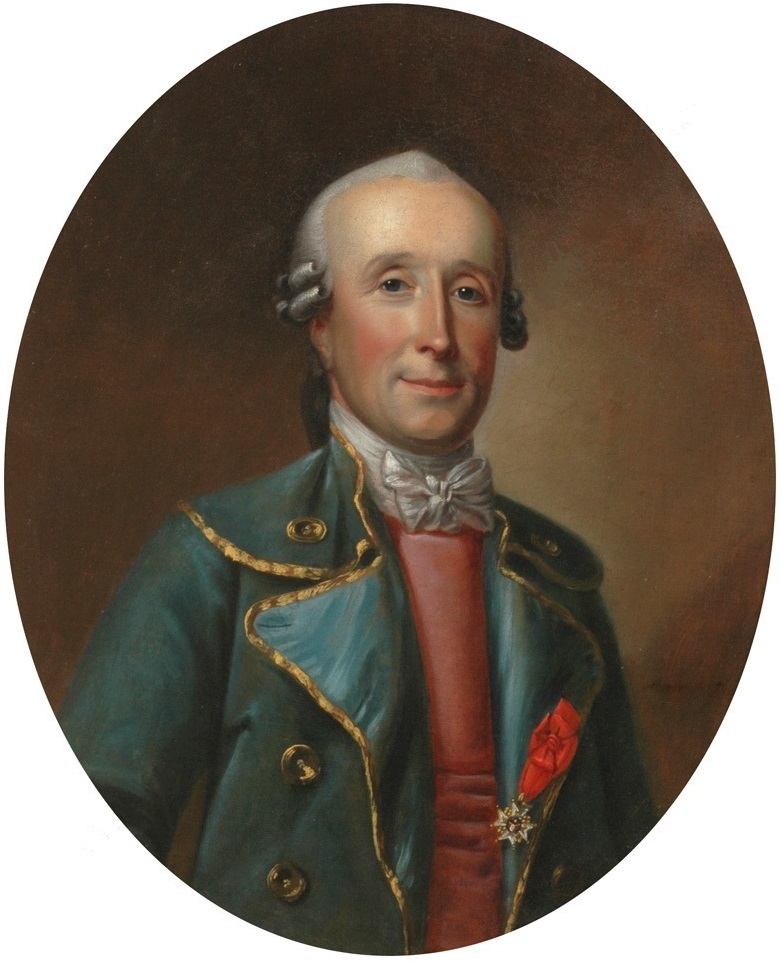
Charles Juste de Beauvau, Prince de Craon

Charles Juste de Beauvau was born in the capital of Lorraine, Luneville, on 10 September 1720, into the second-most powerful family in the region. His parents were a remarkably fertile couple - having 20 children, Charles Juste was the thirteenth. 

Little is recorded of his upbringing which was largely undertaken by a governess before he would be handed over to a male governor. It was not until a marriage had been arranged that his name reentered the courtly annals. His family had found a suitable bride for the then 25-year old Charles Juste. The choice was Marie Charlotte de La Tour d'Auvergne who gave birth to their only child after five years of marriage. Their daughter - Anne-Louise-Marie - was born on 1 April 1750. 

Marie Charlotte died at just 33 years old in 1763 which left Charles free to remarry. He did - a year later - to Marie Charlotte Sylvie de Rohan-Chabot. The couple had no children so Charles' only heir was Anne-Louise-Marie who married into the Noailles-family. It seems that he and his second wife lived almost entirely separate lives as she rarely ever features in the mentions of him in contemporary literature. She would eventually survive him by eleven years.


undefined
Charles Juste


Throughout his career at court, Charles Juste continuously rose. He inherited his father's princedom in 1754 when he became the Prince de Craon. At this point, he was already an experienced soldier who had achieved the rank of field marshal in 1748. He certainly earned his spurs; having begun his French military career in 1738, he served in Spain and the Czech Republic where he seemingly tirelessly worked on behalf of the king. Luckily for him, when he volunteered for the French army, he had already been made a colonel of the Duke of Lorraine's regiment - who was conveniently his mother's lover.

As a reward for his loyal service, the king showered him with favours. Charles Juste was made Grandee of Spain as well as governor of both Provence and Languedoc before also obtaining the knighthood of the Saint-Esprit. His governorship of particularly Provence was very positive. He facilitated a resurgence of trade and navigation as well as cultivating commerce within the region. 


Despite primarily distinguishing himself as a soldier, he had an intellectual side, too. Hosting a fashionable salon where he received poets, philosophers, politicians and authors. Charles Juste himself often dealt with the Académie Française where he obtained a seat in 1771. 

Amongst other qualities, Charles Juste appears to have been quite tolerant when it came to religion. The story goes that he was touring a prison (as one does, apparently) when he came upon a group of people who had been arrested solely for being protestants. He immediately ordered them released and (allegedly) exclaimed that both justice and humanity spoke for the unfortunates who had been thus imprisoned; he consequently declared that he would have no more arrests for such a "crime". Naturally, not everyone was pleased at this and he was threatened that the king would surely be told so he had better order the re-incarceration of the prisoners upon threat of losing his command. He is said to have responded that the "king was master and could justly deprive him of the command he had entrusted to him but that he could not prevent him from doing his duty by his conscience and honour". 

Luckily for Charles Juste, the threat of tattling to the king would likely not have worked regardless. Louis XV later expressed that he had nothing but respect and admiration for his loyal Prince de Craon.


By 1783, Charles Juste had turned 53 and was made maréchal de France. On the eve of the revolution, he was made Secretary of State for War but only served for six months. Politically, Charles Juste appears to have been in favour of reform but does not seem to have been radical in any way. On the contrary, he remained a royalist and firmly supported Louis XVI whom he only survived by a few months. Louis XVI himself had had an immense faith in Charles Juste. The ill-fated king had brought Charles Juste with him to Paris immediately prior to the revolution as the king knew that Charles Juste was immensely popular with the people. Louis XVI fully recognised not just the popularity of his secretary but also that it was very well deserved. Sadly, the presence of Charles Juste did not ultimately save the king.

The upheaval of the revolution never managed to get the better of him - likely due to his popularity - as Charles Juste managed quite a feat: he died peacefully on 21 May 1793.

Sunday, 8 December 2024

The Turbulent Marriages of the Prince de Soubise

Charles de Rohan, Prince de Soubise, was primarily noted for his renown on the battlefield but deserves some attention for his rather turbulent private life. A man of his standing was a prime target for the noble families of the court and he certainly did not lack for potential wives.

In 1733, he was betrothed to Anne Marie Louise de La Tour d'Auvergne - an 11-year old girl from an equally ancient family. The couple was married on 29 December 1734 when the bride had turned 12 years old; Charles himself was 19. At the time of his marriage his new wife had not yet been presented at court but that would be rectified in 1737; it is not quite clear whether Anne Marie Louise was already pregnant at this time. If not, she shortly became so and gave birth to a girl, Charlotte Élisabeth Godefride. The fifteen-year old mother fell pregnant again two years later when disaster struck. 

Anne Marie Louise went into labour while staying at the Hôtel de Soubise, the private hotel of her husband. The very same hotel had just recently been refurbished with depictions of love in mythology by Boucher himself; whether the remodeling (and choice of motif) was her choice or that of her husband is not clear. She died giving birth to a son at just 17 years old; her boy was not baptised as he died at just three years of age.


Charles de Rohan


Charles still needed a male heir but was still a man in his prime. He waited four years before marrying Anne Thérèse of Savoy who had grown up in Paris despite her Savoyard background. She was described as a rather reserved person who saw little of the world. Unlike her predecessor, Anne Thérèse had already passed through puberty when she married the prince. She was 24 years old upon their marriage in 1741 and became pregnant in 1743. She gave birth to a daughter who was named Victoire Armande Josèphe. She would later become the Princesse de Guéménée who notoriously suffered the greatest private bankruptcy in the ancien regime. 

Anne Thérèse became pregnant again in late 1744 and went into labour on 5 April 1745. Sadly, she would not survive the ordeal and died that same day. It is unknown whether her child lived or even if it was a boy or a girl.


Anne Thérèse


Frustrated by the continued lack of a male heir, Charles did not hesitate to look about for a new wife. Whereas he had had the decency to wait a few years after the death of Anne Marie Louise, he certainly did not this time. Charles remarried just six months after the death of Anne Thérèse.


Much like the princesses of Europe began side-eyeing Henry VIII when he came proposing, it is hard to imagine that any new candidate would not be slightly disturbed by the track-record of his unfortunate wives. The choice for Charles' third wife was a German: Victoria of Hesse-Rotenburg, whose named was "French-ified" into Victoire.

Victoire was 17 years old upon her marriage while Charles had reached 30. The marriage very quickly turned sour. Charles kept a string of mistresses (particularly with ballerinas) and before long, Victoire followed suit. That led to a remarkable scandal which erupted in 1757 or about 12 years after their marriage. By this point, the union had not produced any children and would remain childless. The relationship between the two appears to have broken down completely and Victoire attempted to leave France with her lover, Monsieur de Laval-Montmorency. However, she was arrested in Tournal as she had taken jewellery with her which was said to amount to 900.000 livres. Due to the laws of the time, any property she herself might have brought into the marriage immediately became her husband's property.

Having noticed that the jewels - and his wife - was missing, Charles had turned to Louis XV had her arrested before she could leave the country. Others claimed that Victoire had been supplying her brother - currently on the wrong side of a conflict with France - with privy information. Considering that she was in a prime position to intercept such information it might have been true. Typically, wives were not exiled even after the break-down of their marriages so there was likely a political motive, too. 


undefined
Victorie of Hesse-Rotenburg

It was apparent that any reconciliation was out of the question. As a further punishment, the king exiled Madame de Soubise from court which left her in a very unpleasant situation. Finally, an agreement was reached with her parents who accepted a pension of about 24.000 livres to basically take her back. Victoire promptly moved back to Germany and remained separated from her husband. Ironically, this seemingly shameful conclusion to their marriage might have been what saved her life.


Charles himself died in 1787, on the eve of the French revolution but Victoire was still very much alive. She outlived her husband by five years (dying on the exact same date) and would have been a prime target for the revolutionary mobs. 

Charles' quick (and disastrous) remarriage to Victoire was undoubtedly a quest for the coveted male heir. Alas, he would never achieve his goal and the title died out with him. His marital life had definitely been a turbulent one; in the space of eleven years he had had married three wives and lost two.

Saturday, 7 December 2024

House of Melun

The family of Melun were amongst the French aristocracy since time immemorial; over the years, the family had divided into no fewer than nine different branches of which five were extinct by the birth of Louis XIV. This left four extant families - for clarity's sake, the various branches have been named by the rank of their individual heads: Prince d'Epinoy, Vicomte de Melun, Marquis de Richebourg and Marquis de Cottenes.

The following post only focuses on the family of the princes d'Epinoy as the remaining families did not appear frequently - or at all - at the French court.


Princes d'Epinoy

1. Alexandre Guillaume de Melun & (1) Louise Anne de Béthune, (2) Jeanne-Pélagie de Rohan-Chabot

Alexandre was the second son of the former Prince d'Epinoy and inherited the title when his older brother was killed at the siege of Aire. Like his brother, Alexandre was a keen soldier who participated in several campaigns for Louis XIV. Prior to his birth, the lands of his family had been divided into various families (most had gone extinct) but after having sustained a particularly unpleasant wound, he petitioned Louis XIV to have those lands restored to him. Grateful for his services on the battlefield, Louis XIV acquiesced which led to the restoration of the lands of Antoing, Cysoing and Roubaix. The lands were dearly won as he would suffer from his war wounds for the remainder of his life.

He was married initially to Louise Anne de Béthune, the daughter of the Duc de Charost. Louise Anne fell pregnant in 1666 and died in childbirth at the age of 23. The child was:

  • Louise Marie Thérèse, Duchesse de Charost

Secondly, Alexandre married Jeanne-Pélagie de Rohan-Chabot, the daughter of the Duc de Rohan. At the time of their wedding, Alexandre was 32 years older than his new wife. Jeanne-Pélagie gave birth to four children:
  • Marie Marguerite Françoise, unmarried
  • Anne, unmarried
  • Louis, Prince d'Epinoy
  • François Michel Auguste, died at 17

2. Louis de Melun & Élisabeth-Thérèse de Lorraine

Louis must have kept a very low profile as little is known of his life. He was made marèchal de camp in 1702 before dying of smallpox in 1704. His marriage was suitably grand for the seventh Prince d'Epinoy. Élisabeth-Thérèse was a princess of Lorraine and princesse de Lillebonne in her own right. She was a personal friend of the Grand Dauphin and served as lady of honour to the Princesse de Conti. 

The couple had two children:
  • Louis, Prince d'Epinoy
  • Anne-Julie-Adélaide, Princesse de Soubise

Élisabeth-Thérèse

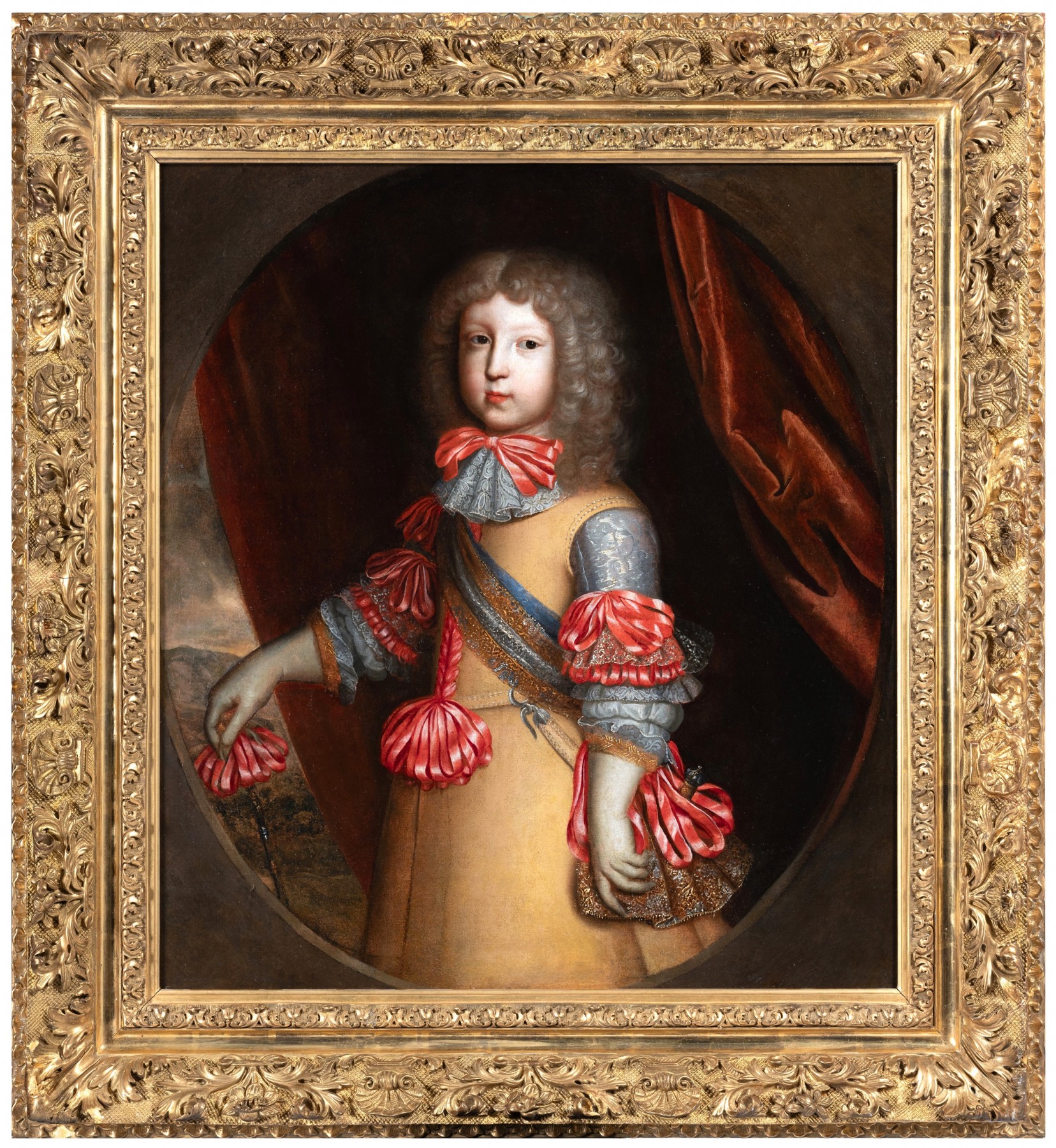
3. Louis de Melun & (1) Armande de La Tour d'Auvergne, (2) Marie Anne de Bourbon

Beside the inherited title of Prince d'Epinoy, Louis was made Duc de Joyeuse after the extinction of the ducal family of that name. Louis is mostly known for his bizarre death; he was apparently killed by a stag during a hunt at his own estate at the age of 30. His body was never recovered.

Armande died just a year after their marriage at just 19. She died in childbirth; sadly, she had lost her own mother just the previous month.

Marie Anne de Bourbon was the granddaughter of Louis XIV by Madame de Montespan. She was the daughter of the Prince de Condé which made her a princess of the blood. The marriage was conducted in secret as the disparity of their ranks - despite her husband's lineage - was considerable. She appears to have been genuinely attached to Louis and was distraught by his early death. She was the head of the queen's household and as such had considerable status at court. She never remarried.

Louis had no children by either of his wives, so the title went to his nephew, a Rohan by his father's side.


undefined
Marie Anne de Bourbon


The Complicated Labours of Marie Thérèse

Marie Thérèse was brought to France in 1660 as the bride of Louis XIV. Her marriage had a dual purpose: ending hostilities between France and Spain and producing an heir to the French throne. Marie Thérèse duly fell pregnant the following year and would eventually give birth to a total of six children - and bury five. As queen of France, she was subjected to the ritual of public childbirth; unfortunately, two of her pregnancies proved to be near-fatal to the mother.

From the moment Marie Thérèse had fallen pregnant, she had taken precautions. Not only would a miscarriage obviously involve a set-back in the plans for filling the nursery but Marie Thérèse had her own reasons for being apprehensive. Her own mother had died from complications of a miscarriage and Marie Thérèse was understandably afraid of suffering the same fate. Consequently, she remained firmly planted in sofas for as long as possible.


Marie Thérèse as a young woman

The birth of the Grand Dauphin

On 31 October 1661, the court was informed that the queen had gone into labour. Marie Thérèse had become queen of France the year before when she married her first-cousin, Louis XIV. The new queen quickly became pregnant and by Halloween, the baby was due.

Marie Thérèse was facing an arduous deal. By tradition, the birth of an heir to the throne was not a private event and her bedchamber was filled with those high enough on the hierarchical ladder to bear witness to the event. This precaution was to ensure that a stillborn, disabled or - gasp - female child was not substituted for a healthy, male child. While those who were present would eventually see the birth of the Grand Dauphin, they would also witness a harrowing birth.

The young queen - 23 years old - was experiencing her first childbirth. According to contemporary sources, the birth was particularly difficult. The labour dragged on and on throughout the night, thus utterly exhausting Marie Thérèse. Louis XIV remained by her side until five in the morning when he was informed that the queen might not survive the childbirth. He then removed himself to the chapel and prayed for his wife - and son. Having prayed for a while, the king returned to the queen, took her hand and remained by her side until the child was finally born.

For hours, it was uncertain whether Marie Thérèse would survive the birth. The situation became so dire that she was administered the last rites. As it happens, a royal birth was always attended by various high-ranking clergymen for this particular situation. One of those present was the Abbé de Choisy - he would later be present at the birth of the Grand Dauphin's own first child. 

Another witness was Marguerite de La Cuisse. She had neither high rank nor great fortune - but she was a "wise woman" or as close to a midwife as possible. Naturally, the queen was already surrounded by doctors but the presence of a woman whose sole profession was to deliver children must have been a comfort to Marie Thérèse. Marguerite lived and worked in Paris and the king is said to have issued a secret order to fetch her for the birth. There appears to have been a collaboration between Marguerite and the doctors - somewhat unusual for the time, but it serves to show the respect Marguerite had earned in her trade.

It was mentioned that the queen was already ill when she went into labour which could hardly have been beneficial to the strength she needed for the ordeal ahead.

The poor Marie Thérèse was finally released from her agony just before noon on 1 November, when her son was born. Undoubtedly, the experience must have been terrible for her - the pain and anxiety in itself but also having to go through that in front of a group of spectators. Over the next decade, she would repeat the process a further five times - and buried all five successive children. 

While the king's behaviour was both supportive and kind, his attention did not remain long with his long-suffering wife. Having completed a thanksgiving pilgrimage to Chartres, he returned directly to court - but not to the queen. Instead, he rejoined his mistress, Louise de La Valliere, while Marie Thérèse was left to recover by herself and her ladies. The king and queen's relationship was said to have rewarmed after the birth but the position of Louise de La Valliere as the king's official mistress was undeniable - and likely hard for the queen to ignore. In fact, she was said to be heart-broken by the increasingly obvious affair.

Fil:Queen Marie Thérèse and her son the Dauphin of France, dated circa 1663 by Charles Beaubrun.jpg
Marie Thérèse with the Grand Dauphin

A second close call

In the first half of 1664, it became obvious that the queen was pregnant again. Her last child had been born in November 1662 (a son who died that same December) and hopes were high that the queen would deliver a third son. For months, the pregnancy progressed as planned. Marie Thérèse was scheduled to give birth in December 1664 - but then something went wrong.

In early November, the queen's health went drastically downhill. She became feverish and complained of pains in her legs and back. While it may be expected that a woman in her eight month of pregnancy would experience unpleasant sensations in both legs and back, the queen's situation was far worse than just unpleasantness. In fact, she was said to be in considerable pain.

On 16 November - nearly a month before her due date - Marie Thérèse went into labour in dramatic fashion. Once again, Marie Thérèse nearly succumbed during the birth. As she gave birth, Marie Thérèse became so weak that the clergymen brought out the last sacraments again. However, this time Marie Thérèse utterly refused to take them. She is said to have uttered: "I will gladly take communion but I do not want to die".

As before, Louis XIV was by her side and it was he who eventually convinced her to submit to the last rites. The fact that she eventually gave in undoubtedly gives the impression that Marie Thérèse herself felt her strength waning. The birth dragged on and on to the point where Louis XIV allegedly inquired whether it would be possible to save the mother before the child was born.

The doctors present were utterly helpless and their solution was more cruel than helpful. Their remedy was to force-feed the poor Marie Thérèse an emetic intended to make her vomit. Initially, Marie Thérèse understandably refused - can anyone blame her? - but the doctors wore her down. Once the emetic had taken its toll, Marie Thérèse was utterly exhausted. Seemingly by miracle, the child was eventually born - a girl who was promptly named Marie-Anne. The infant had been severely deprived of oxygen and was born almost purple in the face (this would later give rise to the unsubstantiated rumour that the queen had had a black child).

The doctors managed to revive the young Marie-Anne while Marie Thérèse herself was barely hanging on to life. In fact, afterwards, she suffered from severe convulsions which further weakened her health. It was suspected that she suffered "an attack of the nerves" for which her attendants threw water in her face. The conclusion was that she had generally nervous disposition and had become over-agitated by the ordeal - it is hard to see how anyone, stoic or hysterical by nature, could remain level-headed after such a terrible experience.

Sadly, Marie-Anne lived for just a little more than month, dying on 26 December 1664.

... and a third

Two years passed before Marie Thérèse found herself pregnant again - one could hardly blame her if she was apprehensive. On the very first day of 1667, Marie Thérèse went into labour for the fourth time after having gone through an entire nine months pregnancy.

As usual, the traditional birthing process was put into place. Louis XIV duly found his way into her chamber where he allegedly helped the leading doctor, Félix, strap Marie Thérèse's legs down to the birthing bed. Whether she had been restrained in a similar fashion previously is unclear but it can hardly have been reassuring. 

The birth - like the previous ones - was a long one. It was not until the following day (2 January 1667) that the child was born: another daughter, named Marie Thérèse after her long-suffering mother. She would become known as Petite Madame and for years, she seemed to thrive. Tragically, she died of consumption at age 5.

While Marie Thérèse recovered, court life went on. Just fifteen hours after the labour had ended, the court enjoyed the spectacle of a ballet composed by Molière, in which the king himself danced - alongside his mistress, Louise de La Vallière.


The Grand Dauphin - only surviving child
of Marie Thérèse


The three episodes were tragically typical of the treatment of Marie Thérèse - and other royal women. Nothing was mentioned about whether she received any care after her ordeal - such a thing would simply not have been recorded. In fact, that the birth of the dauphin was so difficult in itself is hardly ever mentioned at all. Instead, biographies of the king or the court typically only mention that the queen gave birth but never bothers to elaborate on the sufferings she went through or the fact that she nearly died. Ironically, the celebrations that followed the birth has been given more attention than the process which occasioned them. 

Likewise, the attentions bestowed upon her by the king was the focus point of considerable admiration. Naturally, this was a time when kings - or fathers in general - were rarely (if ever) involved in childbirth which did make the king's contribution both touching and unusual. However, the comment made by Madame de Motteville during the birth of the Grand Dauphin is quite telling:

"As long as she (the queen) was in great pain, the king seemed so distressed and so noticeably overcome with pain that he left no doubt of the love he had for her"

Full of admiration and attention of the king - the near-dying queen reduced to being in "great pain" while her husband is praised to the skies. Even afterwards, the efforts of the queen was not touched upon again.


Even for the standards of the time, the childbirths experienced by Marie Thérèse seems overly brutal. Strapped down, force-fed emetics and having religious items shoved in her face - icons of her own imminent death - there was nothing glamorous about Marie Thérèse's experiences. The queen herself left no trace of her own feelings in writing nor do any of the numerous memoirs seem to have given it a second thought.

Was she apprehensive upon her next pregnancy? She could hardly not have been anything but nervous, especially given her preexisting fears. Did she receive any post-natal care? How did she feel herself, how did she experience the ordeals? We do not know.