Tuesday, 26 January 2021

The Scandalous Conduct of the Comte de Saint-Vallier

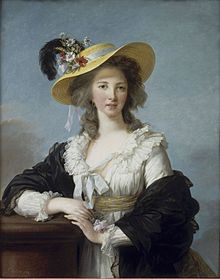
The nobility sought to have their marriages sanctioned by the king - while they did not legally need the king's permission, woe be to him who married in spite of the king's wishes! Such an act would attract the king's wrath which was tantamount to career suicide.

Consequently, when Pierre-Félix de la Croix de Chevrières, Comte de Saint-Vallier wished to marry Mademoiselle de Rouvroy, he sought the king's permission - and got it. Saint-Vallier had purchased the post of Captain of the Garde de la Porte while Mademoiselle de Rouvroy served as a fille d'honneur to the queen. Besides the king's official blessing, the bridegroom was also given 1.675 francs in a brevet de retenue as well as a pension of 6.000 francs. It would appear that the Comte de Saint-Vallier was in financial troubles which caused him to borrow 10.000 écus from his future mother-in-law. So far, so good, but the affair was about to turn scandalous.

No sooner had the captain borrowed money from Madame de Rouvroy before he sent her a promise of that very sum - and promptly disappeared.

Naturally, Monsieur and Madame de Rouvroy were furious, their daughter embarrassed and the king indignant. When Louis XIV was informed, he is said to have uttered: "It is all very well that M. de Saint-Vallier should make a mockery of M. and Madame de Rouvroy, but I will not accept him making a fool of me". Following that he issued an ultimatum to the runaway groom: return and marry the young Mademoiselle or go into exile, relinquish your post and have the acquisition of that title taxed. 


The young captain was not the only one who risked feeling the brunt of the royal disfavour. His father was the President of the Parlement in Grenoble and had initially refused to give his blessing to the match. While he eventually came around, the actions of his son might have made him wish that he never changed his mind.


While Saint-Vallier dithered, the courtiers amused themselves by making witty couplets on the occasion:

Ӄpouse, ou bien nՎpouse pas,

De ta charge il te faut défaire;

Une femme, avec tant d’appas

Donne au logis assez d’affaire;

Renonce à la porte du Roi,

Et te fais portier de chez toi”


(”To marry or not marrying,

Of your charge, you must relinquish,

A woman with so many charms,

Gives the home enough concern,

Renounce the king’s gate

And guard your own”)


The couplet indicate that the young Mademoiselle de Rouvroy was somewhat careless with her favours. Indeed, she had been dismissed from the queen's service - along with several other ladies - and was rumoured to have been one of the king's minor dalliances. This could very well explain why Louis XIV agreed to sign their marriage contract - and why the President was unwilling to give his consent. The dismissal was not due to personal misconduct though, it was the work of Madame de Montespan who feared that the king might find solace amongst the queen's younger attendants. Even so, the favourite's intrigues does not appear to have been completely successful as Mademoiselle de Rouvroy appears to have been the king's bedfellow for a brief period in 1681.


Mademoiselle de Rouvroy was considered to be one of the beauties of the court. Both Saint-Simon and Primi Visconti describes her as a great beauty. Undoubtedly, this and her lineage helped her to quickly gain new employment. She was placed as fille d'honneur to the new Madame, Elizabeth of the Palatinate, before marrying the Comte de Saint-Vallier.


Eventually, there was little doubt as to the outcome. In an absolute monarchy, it was all but impossible for a nobleman to thrive while in the king's bad graces. Pierre-Félix saw some sense and must have returned to his charming lady. We know that the couple married between 13 June and 10 July 1675 since Madame de Sévigné first mentions the scandal in a letter to her daughter of 12 June and finally tells of the couple's marriage in that of 10 July 1675.


Thus ended the unusually dramatic preparations for the marriage of the Comte and Comtesse de Saint-Vallier.

Sunday, 24 January 2021

The End of Louis XV

In the last days of April 1774, Louis XV returned from Petit Trianon with a few members of his inner circle, including Madame du Barry. Over the following days, the king began complaining of feeling unwell but nevertheless continued on his usual hunting trips. However, by the 28th April the king was still ill, so his First Doctor was summoned. On the doctor's orders, the king was removed back to Versailles.


Once returned to his gilded palace, the king was placed on a camp-bed in his own bedchamber. Usually, he would be surrounded by a throng of ambitious courtiers but on this day they had been replaced by bickering doctors. These men of science could not agree on the diagnosis - and consequently on how to treat him. After almost an entire day of arguing back and forth, they decided on their usual course of action: blood-letting. 

The king was first bled on the 29th April in the morning. Not long after, at around 10.30, it became apparent that the king was suffering from smallpox. Smallpox was a very common disease in the 18th century but was no less deadly for that. Louis XV had never been exposed to smallpox before and as such had not developed immunity from the disease. When the news inevitably seeped out through the bedchambers' walls, the courtiers' reactions were mixed. Some were rather relieved; after all, since smallpox was so well-known, it was thought that the doctors could cure the king of it. Others, on the other hand, were concerned at both the king's age and his lack of immunity to the disease.

Amongst themselves, the courtiers immediately took to scheming according to their own advantages. Madame du Barry's supporters were insisting that the disease was not something to worry about; they absolutely refused that the king should have need of the last rites. On the other hand, the Duc de Choiseul and his supporters were pressing for the Grand Almoner to be summoned at once - not because they were particularly concerned about the king's disease, but rather because if the king received the last sacrament, then he would have to send away Madame du Barry.


The next days were particularly unpleasant for the king. His fever grew worse as did his headaches. As if this was not bad enough, his body soon began to break out into the tell-tale pustules of smallpox. Still, by the 1 May his condition did not worsen which led to some hope for his medical entourage. As the pus was lanced from his body, Louis seemed to get better. While the king's health was wavering, he summoned Madame du Barry on the 4 May. By this point, the king must have known that he was likely not going to recover because he took formal leave of his mistress - while declaring that he would not repeat the scenes after Metz. By these words, the young woman was made perfectly clear that she should not expect to be called back if the king recovered.


Louis XV


Meanwhile, the doctors were waiting for the decisive point in the disease which came about a week later. On 8 May, the symptoms suddenly reappeared - and worse than before. The fever grew higher while the king's pulse was abnormally fast; it also became impossible to lance his pustules. It is hardly a wonder that the king became delirious at this point. While the doctors were scrambling to save him, it quickly became evident that the king was going to die.


The king was not quite alone in his demise. The Abbé Maudoux, the king's confessor, remained with him which caused the Abbé to also catch smallpox (he eventually recovered). The two had many conversations during the king's illness. His daughters, Mesdames Adélaide, Victoire and Sophie, were with him too. Although the doctors urged the royal princesses to withdraw to avoid contagion, they refused and shut themselves up with the king. It should be said that none of the women had ever had smallpox themselves and thus risked their very lives by attending to their dying father. 

The disease was - and is - extremely contagious. Fifty people in the palace caught the disease; it was said that they had caught it by merely walking in the Hall of Mirrors.


Louis XV in 1770


The remaining pustules turned black while the pustules in his throat become so sore that he could no longer swallow. It was a terrible sight to behold. The man who had long been considered the handsomest man at his own court had been turned into a hideous effigy of himself. Finally, the doctors admitted defeat and sent for the king's Grand Almoner who administered the last rites. While the king was definitely ill, he was not quite motionless. When the priest arrived, the king - albeit with difficulty - managed to get out of his bed himself and kneel to receive his final sacrament. Once the king had received that, the official repentance was read aloud. This was done by the Grand Almoner who formally asked pardon on the king's behalf for any wrongs he might have done.

By 10 April, the king was still conscious - although he might have wished it otherwise. He did not move and by around 11 o'clock, it was clear that the king's end was near. Due to the risk of contagion, a signal had been agreed upon, to announce the king's death. A candle was placed in the window which was to be blown out at the moment of death. At a quarter past three in the afternoon, the candle was finally extinguished.


While the courtiers rushed to congratulate the new king and queen, the corpse of the newly deceased king had already begun til rot. Due to the condition of the king's body - caused both by the disease and the useless remedies administered by the doctors - the decomposition was fairly swift to set in. Many refused to enter the chamber until finally a few did - all died not long after. This caused the doctors to refuse to embalm the king's body as was otherwise custom for a dead monarch; he would be the only Bourbon king not to be embalmed. Thus, Louis XV's remains were swiftly taken from Versailles to his grave in Saint-Denis without much pomp.

Sunday, 22 November 2020

Ladies Behaving Badly: Exiles and Misbehaviour in the Royal Households

Marie-Henriette de Polastron, Comtesse d'Andlau

The aunt of Madame de Polignac, Marie-Henriette was employed as an assistant governess to Madame Adélaide. Rumours began spreading that she had been providing her young charge with indecent reading material; the most pervasive rumour was that she had read Le Portier des Chartreux to Adélaide. This book - by an anonymous author - was one of the most read erotic tales of the time - hardly appropriate reading for a young Fille de France!

Once Madame de Polignac became the reigning favourite of Marie Antoinette, the Comtesse d'Andlau received an annual pension of 6.000 livres - despite still being exiled from court.

Jean-Marc Nattier (1685-1766): Portrait of the Comtesse d'Andlau, née Marie Henriette de Polastron. 1743
Comtesse d'Andlau


Françoise Madeleine Claude de Warignies, Comtesse de Saint-Géran

The Comtesse de Saint-Géran served as a dame du palais to Marie Thérèse in the latter's last year. However, the Comtesse found herself in trouble when she offended Louis XIV's strong sense of propriety. Françoise had been married to Bertrand de La Guiche who died in 1696. Usually, a widow (or widower) was expected to keep a period of mourning for their late spouse during which specific types of entertainments were frowned upon.

Yet, the relationship between Françoise and Bertrand cannot have been very close - as was often the case with arranged marriages. Their marriage appears to have been particularly ill-suited. Madame de Saint-Géran appears on a list from 1686 of women who had applied for judicial separation. Since divorce was not accepted for the Catholic French, this was the closest thing she could get. However, Bertrand had opposed her application and that was that. Their relationship can hardly be expected to have improved after this. 

When Bertrand eventually died, Françoise apparently did not exhibit sufficient mourning and did not keep the prescribed period for grieving. The king took offense at her gaiety, particularly because they had been married for 29 years. She was exiled to her estates in the country but allowed back later on.


Bonne de Pons d'Heudicourt, Marquise d'Heudicourt

The Marquise was amongst the ladies-in-waiting of Marie Thérèse when she became the mistress of Louis XIV. That affair did not last long because Bonne's uncle - strongly disapproving of the affair - removed her from court and Louis moved on from their dalliance. Once she had been married, she was returned to her official court duties. She was no longer an object of interest of the king's but still remained on friendly terms with him and his new maitresse: Madame de Montespan, who also happened to be Bonne's cousin-by-marriage. 

As such, the Marquise was well aware of the fact that the king had had several children by La Montespan and that these were kept in a house away from court. The royal lovers were not willing to let their existence be publicly known yet. However, this was ruined when Bonne started writing several of her friends about the royal off-spring living in hiding. Amongst others, she wrote the Marquis de Rochefort and even the Polish ambassador. 

The king was furious and she was sent packing into exile in 1672. She was only allowed to return four years later.


Marie-Louise-Sophie de Faoucq de Garnetot, Comtesse de Gramont

Dame du Palais to Marie Antoinette, the Comtesse de Gramont followed an altercation between herself and the king's favourite, Madame du Barry. One night at the theatre, the latter had had seats reserved for herself and her entourage but there were more spectators than seats; as the royal favourite had not yet arrived, the Comtesse de Gramont and her friends took the otherwise reserved seats. 

Once Madame du Barry arrived she was treated with complete contempt and her request for them to move was met with the utmost disdain. Finally, du Barry had to retreat to her own chamber. Understandably, she quickly complained to the king. Louis XV did not care much for minor scuffles between his courtiers but such behaviour to his own mistress was a step too far. The Comtesse de Gramont was immediately sent from court into exile - she would only return after three years away.

Monday, 16 November 2020

The Queen's Expensive Favourite: Madame de Polignac

The family of Polignac were of sound aristocratic stock but sadly impoverished. Before they rose in favour, they had had to mortgage their estates to an amount of 800.000 livres. Therefore, they could not afford to stay at court and rarely had a chance to mingle with those higher up on the social ladder. However, their fortune was to change - and abruptly, too.

In 1775, the Comte and Comtesse de Polignac went to Versailles to pay homage to the new king and queen. There, Yolande de Polignac caught the eye of the young queen Marie Antoinette. The queen was immediately charmed by the new arrival and before long Madame de Polignac was a welcome sight in the royal apartments. Once the royal favour was caught, the family of Polignac entered a golden age - the consequences of which they could not have anticipated.

Life at court was expensive and Madame de Polignac soon amassed significant debts. However, on the queen's request, the king cleared her debts of 400.000 livres. When the queen found herself pregnant (after 7 long years) the coveted post of Governess to the Children of France was bestowed on Yolande. This caused considerable anger at court; usually, that was one of the most prestigious female posts at court and it was felt that it should have gone to a higher ranking lady. The post brought her an annual salary of 50.000 livres.

The position of Governess meant the right to a permanent apartment at court. On an almost unprecedented scale, Marie Antoinette ensured that her friend got a most sumptuous apartment - of 13 rooms! As if this was not enough, the queen's own Maître d'Hotel was appointed to prepare the new suite for the royal favourite. 

Besides the salary that Yolande received she was also further enriched by the queen's generosity. On several occasions, the queen paid out of her own pocket for her friend's expenses. 


Duchess de Polignac.jpg
Yolande de Polignac


Even in the queen's private sphere, Madame de Polignac was granted exceptional favours. When the Hameau de la Reine had been built, Yolande was given her own little house there. This was an area that was otherwise completely off-limits to anyone who had not been given express permission from Her Majesty. 

However, Yolande was not the only one who benefited enormously from her friendship with the queen. Her immediate family saw the chance of quickly enriching themselves by taking advantage not only of their relation but of the queen's generous nature.

The first to benefit was Yolande's husband, Jules de Polignac. Hitherto, he had enjoyed the rank and title of Comte de Polignac. In 1780, he was raised to Duc de Polignac - a considerable social step forward. He was also made First Equerry of the Queen which brought him a solid wage of 80.000 livres per year. The post also gave him access and use of the queen's horses and her carriages. Finally, he was given the post of Director of the Post from which he could get a handsome pay.


Aglaé - daughter of Yolande

The daughter of Yolande and Jules - Aglaé Louise Françoise Gabrielle - was to make a very advantageous marriage. She was betrothed to the Duc de Guiche and needed a dowry worthy of the match. However, her parents were not quite capable of providing this in 1780, so the king and queen provided an immense sum of 800.000 livres. While it was not uncommon for the royal family to give dowries to favourites, this was a great sum indeed. 

The new member of the family, the Duc de Guiche, was made Captain of the Guards while Yolande's brother-in-law, the Vicomte de Polignac, was given the coveted post of ambassador to Switzerland. The latter post caused some strife, as the Minister for Foreign Affairs, Comte de Vergennes, had wanted for a relative of his own.

Meanwhile, Diane de Polignac (Yolande's sister-in-law) was given a position in the household of Madame Élisabeth as dame d'honneur. It was she who had officially presented Yolande to Marie Antoinette - bizarrely enough, the queen did not like her but accepted her presence as a courtesy to Yolande.


Diane de Polignac

The entire family received massive pensions - paid for by the royal treasury. The new Duchesse de Polignac had a pension of 90.000 livres alone. In total, the family received pensions amounting to 700.000 livres per year. This was enough to cause considerable consternation amongst the other courtiers - especially since pensions were handed out to a far wider circle of people than usually. 

For instance, Madame d'Andlau received a pension of 6.000 livres. At first glance, this does not appear to be particularly extravagant. Comtesse Marie-Henriette d'Andlau was Yolande's aunt and had been in the household of Madame Adélaide (daughter of Louis XV). However, when it is taken into consideration that Madame d'Andlau had been exiled from court for providing her young charge with a pornographic book, the pension becomes far more questionable.


After all these favours, the family asked for the estate of Bitche which was worth 100.000 a year. For once, they were rejected but not without compensation. Instead, they were given the estate of Fénestrange which was worth 60-70.000.


The shower of positions, pensions and properties made plenty of enemies for the Polignacs. The major court families resented both their somewhat lowly status before their drastic rise and the fact that they completely cut off the queen from the rest of the court. The queen readily handed out the most coveted posts to members of their family and they were often the only guests allowed in the queen's apartments.

However, rumours of the expensive habits of the Polignacs seeped out to Paris. As was usually the case, the public loved to hate the royal favourites. As the 1780's wore on, the public hate against especially Madame de Polignac became so intense that the family was forced to flee shortly before the revolution broke out.

Friday, 6 November 2020

Opposing the Crown: the Frondeurs

The earliest years of Louis XIV were marked by the tumultuous period known as the Fronde. During this time, several aristocrats and parliamentarians rose up against the king, Louis XIII, after the king had issued seven edicts - including ones to raise taxes to fund the war against Spain. While the background is further complicated than this (as is usually the case with a civil war) the main question was the king's power - especially when contrasted with those of the Parlements and his nobility. The Fronde was technically two separate rebellions that occurred immediately following each other. The latter was known as La Fronde des Nobles - or the Nobility's Fronde - as it was led by the Prince de Condé.

In the end, Louis XIV's mother, Anne of Austria, and Cardinal Mazarin won the day - if they had not, the absolute monarchy of the Sun King would likely never have happened. The aftermath posed several vital questions. The French aristocracy had been split between those loyal to the crown and the so-called Frondeurs. With the king (or rather Queen Regent and Cardinal, given that the king was five years old) emerging victorious the question remained - what of those who stood against them?

While the Frondeurs counted many more aristocrats than listed here, this post focusing on the more prominent members of the French nobility who found themselves on the losing side - and the price they paid for it.


Gaston de Bourbon, Duc d'Orléans

The brother of Louis XIII, Gaston appeared to never fully have taken the leading position that his high birth would otherwise suggest. Initially, he had supported Cardinal Mazarin but appears to have changed his mind; in 1651 he joined the coalition of nobles who ousted Cardinal Mazarin. It is likely this choice of action that saved him from further retribution - had he been an open opponent to the king from the beginning, he might have been punished more severely.

Consequence of rebellion: Gaston was exiled to the Château de Blois - he would never return to court as he died there in 1660. His dukedom of Orléans was given to Louis XIV's brother, Philippe, rather than Gaston's surviving daughter Anne Marie Louise.


Louis de Bourbon, Prince de Condé

Louis de Bourbon - better known as the Grand Condé - was the driving force behind the aristocratic Fronde. Ironically, he had initially been summoned by Anne of Austria to quash the opposition from the Parlement (the previous Fronde) and certain other aristocrats. This he did quite successfully. 
However, much to the shock of Anne of Austria, he then turned and become the focal point of the Fronde des Nobles. He was arrested in 1650 and imprisoned at Vincennes. 

The Grand Condé was released following demands from his brother, the Duc de Bouillon, and the Marèchal de Turenne. Tensions were at an all-time high when the aristocratic Fronde found itself alone; the Parliamentarian had made common cause with the royal family. The Marèchal de Turenne was amongst those who had joined the royal side; he and Condé came head-to-head at the decisive Battle of Faubourg St. Antoine in July 1652. Unluckily for the Grand Condé, he suffered a final defeat.

He was not done yet, though, although the chance for him to overthrow the royal party by military force was over. La Grande Mademoiselle ordered her soldiers to open fire on the king's soldiers before the Bastille and convinced the Parisians to open the gates to the capital. Thus, Louis de Bourbon-Condé managed to escape to Spain with his closest allies.

Consequence of rebellion: by 1659, the Franco-Spanish War came to an end with the Treaty of the Pyrenees. This meant that Louis de Bourbon-Condé found himself in the unpleasant situation of having to choose between going into exile somewhere else - or bending the knee to the Sun King. He chose the latter and was officially welcomed back to court with his official titles restored; nevertheless, he was never again given the opportunity for having decisive power. Understandably, Louis XIV kept a close eye on his relative.
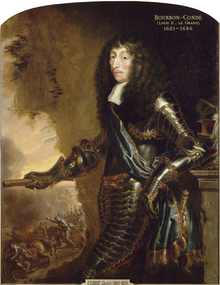
Le Grand Condé


Anne Marie Louise d'Orléans, Duchesse de Montpensier (La Grande Mademoiselle)

The daughter of Gaston d'Orléans - and thereby the cousin of Louis XIV - Anne Marie Louise played a particularly active part in the Fronde.
By 1652, the royalist troops were pressing on the Bastille where La Grande Mademoiselle's own soldiers were based. On 2nd July she personally ordered her soldiers to fire their cannons at the young king's soldiers.

It has been argued that La Grande Mademoiselle's opposition to Cardinal Mazarin was not purely political but also a matter of personal revenge. She had allegedly hoped to marry Louis XIV but her overtures to him had been strongly rejected by the Cardinal. However, by this period any such pretensions had been given up and she instead hoped to wed the Prince de Condé. Indeed, her order worked as a life-line to the prince.

Consequence of rebellion: Anne Marie Louise's betrayal was taken personally by Louis XIV as she was one of his closest relatives. She was immediately exiled to her estates. She was permitted to return to court in 1657 but it was not until 1664 that she was permanently relocated there.

Henri de La Tour d'Auvergne, Marèchal de Turenne

Henri had initially attempted to stay clear of the in-fighting between Condé and Mazarin. However, his reluctance to choose a side led Cardinal Mazarin to remove him from his position in the French army. Henri left France for the Netherlands where he remained until the first Fronde was over. He then returned to France where he joined causes with the rebellious aristocrats. One of his tasks was to secure the Frondeurs aid from Spanish troops. 

He was originally intended to have been imprisoned with Condé, Conti and Longueville but managed to escape. Along the line, he reconciled with the king and rejoined the court. It was largely due to Turenne's military prowess that the royal forces gained the upper hand in the martial part of the rebellion. In recognition of his - although belated - loyalty, he was later given the title of Marèchal de France.

Henri de la Tour d'Auvergne, Vicomte de Turenne by Circle of Philippe de Champaigne.jpg
Turenne


Armand de Bourbon, Prince de Conti

Armand's role in the Fronde was largely decided by his siblings (the Prince de Condé and the Duchesse de Longueville) since Armand's mental health was declining. Still, he was named generalissimo of the Frondeurs and as such held considerable sway in the movement. He was arrested with La Grande Condé in 1650 and taken to Vincennes. Sometime during his imprisonment he sustained a wound to the head which enabled him to smuggle messages out when he was visited by his doctors. He was released with his brother in 1651 only to face an uphill battle. 
Armand retreated to Bordeaux where he eventually surrendered to the royal forces in 1653.

Consequence of rebellion: exile to La-Grange-des-Prés where he began thinking of ways to regain position at court. The solution came when a match was proposed between himself and a niece of Cardinal Mazarin, Anne-Marie Martinozzi. Much to the chagrin of his family, he agreed to the match and was pardoned.

François de Bourbon-Vendôme, Duc de Beaufort

The Duc de Beaufort was already in prison when the Fronde broke out; he found himself there after his part in a plot to assassinate Cardinal Mazarin. He managed to escape, though, and joined forces with the Frondeurs. In Paris, he was a general favourite with the public due to his looks and the fact that he was a legitimised son of the immensely popular Henri IV.
He acted as one of the leading generals of the rebellion and personally led the patrols circling Anne of Austria to prevent her from escaping with the young Louis XIV. 

Consequence of rebellion: he was exiled and not recalled until 1658. Wisely, he chose to focus on his post as admiral rather than make himself too noticed at court

LE DUC DE BEAUFORT (1616-1669)
Duc de Beaufort


Anne-Geneviève de Bourbon-Condé, Duchesse de Longueville

If the Fronde had a First Lady, it would have been the Duchesse de Longueville. The first Fronde was largely centered around her - and she brought both her husband and brother (Prince de Conti) into it. Her failure was in attempting to convince her other brother, the Prince de Condé.
However, once the latter had joined the Frondeurs, she acted as a focal point for the rebellion and used her talent for persuasion and many connections to further their cause. When the war was coming to an end she went into the region of Aquitaine 

Consequence of rebellion: following her two unsuccessful attempts at thwarting the crown, she was persona non grata at court. Having been abandoned by her lover, the Duc de La Rochefoucauld, she rejoined her husband and dedicated herself to Jansenism and charity for the remainder of her life

The Duchesse de Longueville -
ironically, she is depicted as
peace and concord


Jacques Henri de Durfort, Duc de Duras

Jacques Henri had initially supported the Prince de Condé but decided to abandon the rebellious cause for the royal one. It is likely that he was lured by the promise of several prestigious titles; shortly after his return to court, he was name lieutenant-general. 

His quick return to royal grace meant that there were no consequences for his initial disloyalty - rather, the Duc de Saint-Simon mentions that he was able to say whatever he pleased in front of Louis XIV

Duc de Duras

Henri II de La Trémoille, Duc de Thouars

Henri lend his services as a soldier to the Prince de Condé - and quite openly supported him in public. Apparently, he had long been at odds with Cardinal Mazarin.

Consequence of rebellion: imprisonment until 1658 in Amiens. He was only released after several months of petitioning by his mother and promptly shipped to Poitou and further to the Netherlands to serve in the military. He kept a very low profile after the Fronde and focused on maintaining his father's estates

1652 - Récit de la prise de Pons (17) par les troupes des Frondeurs -  Histoire Passion - Saintonge Aunis Angoumois

Charles-Amédée de Savoie-Nemours, Duc de Nemours

The Frondeurs might have appreciated the support of another duke in their cause but they soon came to regret the inclusion of Charles Amédée. Rather than being an asset, he caused considerable chaos in his own camp by ill-timed flirtation with his comrades' wives and constant bickering with his brother-in-law.

The Duc de Nemours would eventually participate in the final salute of the Fronde, the Battle of the Faubourg St. Antoine where he was wounded. He would not live to see the end of the rebellion, though, as he was killed in a duel by his brother-in-law, the Duc de Beaufort.

François de La Rochefoucauld, Duc de La Rochefoucauld

Originally, François had been a friend of Anne of Austria but the increasing power of Cardinal Mazarin set the two on collision course - and it certainly did not help that the Duc's mistress was the Duchesse de Longueville. Soon, therefore, he found himself on the side of the Frondeurs.

He partook in the defence of Paris from the royal forces and would later fight in the Battle of the Faubourg St. Antoine where he was shot in the head. Miraculously, he survived that and spent the next year recovering. Once he returned to health, his circumstances had drastically changed. His fortune was diminished and he was not particularly welcome at court. 

Consequence of rebellion: he slowly reclaimed some of his fortune through his friends and finally returned to court when Mazarin died. He appears to have turned his focus from sieges to salons and wrote his memoirs in the following period

François de La Rochefoucauld
Duc de La Rochefoucauld


Louis d'Astarac de Fontrailles, Marquis de Marestaing

Louis had long been a thorn in the eye of the royalist party. He had participated in a plot against Cardinal Richelieu and had even concluded a secret peace treaty with Spain in exchange for gold before attempting to oust Cardinal Mazarin. Unsurprisingly, he also joined the Fronde but does not appear to have had much influence there.

Consequence of rebellion: Louis XIV officially allowed him to return to court but would never forgive him his (many) treasons. Thus, he was excluded from any political or honorary office. Realising that he would gain nothing but a cold, royal shoulder the Marquis returned to his estates where he died


Frédéric-Maurice de La Tour d'Auvergne, Duc de Bouillon

Much like the Duc de Duras, Frédéric-Maurice found his personal ambition to be stronger than his rebellious side. He was lured from the side of the Prince de Condé by Cardinal Mazarin with the promise of land (in compensation of those he had lost) and high positions in the king's service. The Duc de Bouillon accepted the terms, turned his back on the rebellion and thus suffered no further punishment once order had been restored


Marie de Rohan, Duchesse de Chevreuse

The Duchesse de Chevreuse was another notorious intriguer who had already been exiled several times. She had always been close to Anne of Austria and drifted a bit closer to Cardinal Mazarin in the initial stages of the Fronde. 
However, that did not last long. Once she joined the Frondeurs, she was a valuable ally. Her long spells abroad had brought her important connections with Spain

Consequence of rebellion: she appears to have gotten off rather easily - probably due to her close relationship with the queen mother. She turned from intrigues and would eventually die in a convent, having retired from court
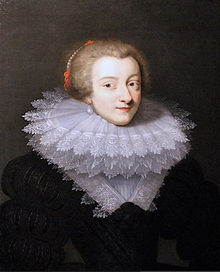
Marie de Rohan Chevreuse.png
Duchesse de Chevreuse


There you have the fates of the primary plotters. It is remarkable that the civil war came to such a "clean" end; none of the participants found themselves on the scaffold despite having committed high treason. Rather than spilling the blood of his ci-devant enemies - and in some cases, relatives - Louis XIV contended himself with creating a system of absolute monarchy where his courtiers were held on a short leash. The strategy worked; the next revolt faced by the French monarchy came not from the nobility but from peasants.

Friday, 30 October 2020

The Maréchaux of Louis XIV

The title of Marèchal de France was specific to the court of France; it should not be confused as being a military rank - rather it was an honourific title granted to generals who had distinguished themselves in an extraordinary manner on the battlefield. The outward signs were the baton of office which were blue and adorned with golden fleur-de-lys. The uniform of the lucky recipient also underwent changes once the honour was granted; seven stars were embroidered onto the epaulettes.
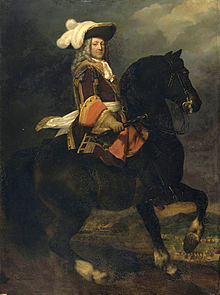
During the reign of Louis XIV, the title was granted to no fewer than 53 officers. Below you will find a complete list of their names, familial allegiances reason for receiving the honour - and a fun fact.


César de Choiseul, Duc de Choiseul

Family: Choiseul
Year granted: 1645
Military campaigns: La Rochelle, Isle of Ré, Italian campaign of 1635
Interesting fact: he remained on the side of the royal family during the Fronde which earned him the gratitude of both Anne of Austria and Louis XIV

Caesar, duc de Choiseul.jpg

Josias Rantzau, Comte de Rantzau

Family: Rantzau
Year granted: 1645
Military campaigns: Franco-Spanish War (for France)
Interesting fact: Josias was a Dane who used his military skill on behalf of four different sovereigns: the king of Denmark, the king of France, the Prince of Orange and the king of Sweden

Alaux - Josias Rantzau (1609-1650) - MV 1002.jpg

Nicolas V de Neufville de Villeroi, Duc de Villeroi

Family: Neufville de Villeroi
Year granted: 1646
Military campaigns: Italian campaign (possible the Cretan War of 1645)
Interesting fact: he gained the honour through Cardinal Mazarin and was later appointed as governor of the young Louis XIV


Antoine d'Aumont de Rochebaron, Duc d'Aumont

Family: Aumont
Year granted: 1651
Military campaigns: Fronde, Thirty Years' War
Interesting fact: he died from a fit of apoplexy in 1669

Antoine d'Aumont de Rochebaron


Jacques d'Étampes, Marquis de La Ferté-Imbert

Family: d'Étampes
Year granted: 1651
Military campaigns: Fronde, La Rochelle, Thirty Years' War
Interesting fact: before Louis XIV's ascension to the throne, he served Louis XIII in his wars against the French Protestants

Jacquesdestampes.jpg


Henri II de la Ferté-Senneterre, Duc de la Ferté-Senneterre 

Family: La Ferté-Senneterre
Year granted: 1651
Military campaigns: Dutch revolt against Spain, La Rochelle, Louis XIII's campaign in Lorraine and Rocroi
Interesting fact: he received his title following a successful defense of Hesdin against the Spanish army in 1639. When he was captured - during a campaign - in 1656, he was ransomed by Louis XIV to whom he had remained loyal during the Fronde


Charles de Monchy, Marquis d'Hocquincourt 

Family: Monchy
Year granted: 1651
Military campaigns: Franco-Spanish War, Thirty Years' War
Interesting fact: he died while defending Dunkirk

Charles de Monchy d'Hocquincourt

Jacques Rouxel, Comte de Grancey

Family:
Year granted: 1651
Military campaigns: Thirty Years War, Religious Wars
Interesting fact: he was originally intended - as the sixth child - to go into the church but decided on the army instead

Armand Nompar de Caumont, Duc de La Force 

Family: Caumont
Year granted: 1652
Military campaigns: Italian and German campaigns of Louis XIV
Interesting fact: he was a Huguenot Protestant who had no less than two horses shot out from under him during the Siege of Hondarribia

Armand de Caumont, duc de La Force.jpg

Philippe de Clérambault, Comte de la Palluau 

Family: Clérambault
Year granted: 1652
Military campaigns: Thirty Years' War, Fronde
Interesting fact: he was granted his title of Marèchal for his loyalty to the crown during the Fronde

Philippe de Clérambault

César Phoebus d'Albret, Comte de Miossens 

Family: Albret
Year granted: 1652
Military campaigns: Eighty Years' War (fighting for the Dutch against the Spanish), Dunkirk and Mardyck 
Interesting fact: Cardinal Mazarin was hesitant about fulfilling his promise of the title of Marèchal; it was only after court intrigue - including by César's cousin, Madame de Montespan - that César was given it.


Louis de Foucault de Saint-Germain-Beaupré, Comte de La Daugnon

Family: Foucault
Year granted: 1653
Military campaigns: Fronde and Siege of Orbetello
Interesting fact: he was initially opposed to the crown during the Fronde but changed sides in 1653


Jean de Schulemberg, Comte de Montejeu  

Family: Schulemberg
Year granted: 1658
Military campaigns: Thirty Years' War (where he partook in the defenses of Coblenz and Arras before commanding troops in both Berry and Artois)
Interesting fact: one of his finest military moments was when he drove back the Grand Condé before the city of Arras in 1654

Abraham de Fabert, Marquis d'Esternay

Family: Fabert
Year granted: 1658
Military campaigns: sieges of La Rochelle, Stenay and Exilles during the Huguenot Rebellions
Interesting fact: Abraham differed from the majority of the men on this list in one particular aspect - he was not an aristocrat. As such, he would become the first commoner to reach the title of Marèchal de France.

Fabert, Abraham (de), BNF Gallica.jpg


Jacques de Mauvisière, Marquis de Castelnau 

Family: Caustelnau-Bochetel
Year granted: 1658
Military campaigns: Flanders Campaign, Thirty Years' War, Franco-Spanish War
Interesting fact: he was shot while inspecting the Fort of Léon but managed to return to court. A short time later he died of his wounds

Jacques de Castelnau

Bernardin Gigault, Marquis de Bellefonds 

Family: Gigault
Year granted: 1668
Military campaigns: Fronde, Franco-Spanish War of 1635-59, War of Devolution, Franco-Dutch War of 1672-78, War of the Reunions, Nine Years' War etc.
Interesting fact: he was given the prestigious posts in the royal households of both Louis XIV and the Grand Dauphine and Grande Dauphine. If anything, he certainly deserved his promotion - he spent 41 years in active service!

Bellefonds, marechal.jpg

François de Créquy, Marquis des Marines 

Family: Blanchefort de Créquy
Year granted: 1668 
Military campaigns: Franco-Spanish War of 1635-59, Occupation of Lorraine, War of Devolution and War of the Reunions
Interesting fact: both he and his brother remained loyal to the crown during the Fronde. He would fall from grace in 1675 when he failed to hold the city of Trier - he was blamed for the failure by both Louis XIV and his ministers. Although not entirely disgraced, he would never enjoy the same confidence again

François de Blanchefort de Créquy (1629-1687).jpg


Louis de Crevant, Duc d'Humières 

Family: Crevant
Year granted: 1668
Military campaigns: Franco-Spanish War of 1635-59, Nine Years' War, War of Devolution and War of the Reunions
Interesting fact: along with the Marèchaux de Créquy and Bellefonds, he was exiled briefly in 1672 when they refused to serve under Turenne - it was a long-standing tradition that one Marèchal did not serve under another

Louis de Crevant, maréchal d'Humières, Grand Maitre de l'Artillerie (1685-1694).jpg


Godefroy d'Estrades, Comte d'Estrades

Family: d'Estrades
Year granted: 1675
Military campaigns: Italian Campaign of the 1640's, Catalonian Campaign of the 1650's and the Dutch Campaign of 1675
Interesting fact: he was a skilled negotiator who was sent by Louis XIV to settle the treaties of Breda with Denmark and Nijmwegen with the Netherlands. He also arranged the restitution to France of Dunkirk.


Philippe de Montaut-Bénac, Duc de Navailles 

Family: Montaut-Bénac
Year granted: 1675
Military campaigns: Thirty Years' War, Fronde, Franco-Spanish War, Ten Years' War, War of Devolution, Franco-Dutch War
Interesting fact: he was exiled with his wife when she refused Louis XIV entry in the chamber of Anne of Austria's young ladies

Philippe de Montaut-Bénac de Navailles


Friedrich Hermann von Schönberg, Duc de Schomberg 

Family: Schönberg (Schomberg in French)
Year granted: 1675
Military campaigns: Catalonian Campaign and many others (but for foreign powers)
Interesting fact: This German (born in Heidelberg) had the honour of being not "only" a French Marèchal but also a General in both the English and the Portuguese Armies. He was forced to leave France after the Edict of Nantes was revoked. He died in the Battle of the Boyne.


Jacques Henri de Durfort, Duc de Duras

Family: Durfort
Year granted: 1675
Military campaigns: War of the Grand Alliance and Thirty Years' War
Interesting fact: he took part in the destruction of the Palatinate - home of Madame, Louis XIV's sister-in-law. He was in high favour with the king who allowed him to say what he pleased.


François d'Aubusson, Duc de La Feuillade 

Family: d'Aubusson de La Feuillade
Year granted: 1675
Military campaigns: Fronde, Franco-Spanish War, Austro-Turkish War, Franco-Dutch War and War of Devolution
Interesting fact: he spent lavish sums on his Hôtel de La Feuillade which is said to have cost over 7.000.000 livres.

François III d'Aubusson.jpg


Louis Victor de Rochechouart, Duc de Mortemart

Family: Rochechouart 
Year granted: 1675
Military campaigns: Flanders, Franco-Dutch War
Interesting fact: he was the brother of Madame de Montespan whose influence aided him in getting the position of General of the Galleys. He was later made Viceroy of Sicily and First Gentleman of the King's Chamber

1780 engraving of the "Maréchal de Vivonne" (Louis Victor de Rochechouart, Duke of Vivonne).jpg


François-Henri de Montmorency, Duc de Luxembourg 

Family: Montmorency-Bouteville
Year granted: 1675
Military campaigns: Franco-Dutch War, War of the Grand Alliance and War of Devolution
Interesting fact: he suffered from the disability of being hunch-backed; nevertheless, his mind was sharp and he is credited with never having lost a battle

Marshal luxembourg.jpg


Henri Louis d'Aloigny, Marquis de Rochefort 

Family: d'Aloigny
Year granted: 1675
Military campaigns: War of Devolution, Franco-Dutch War
Interesting fact: he was gravely wounded in 1676 which led to his death at Nancy


Guy de Durfort, Duc de Lorges 

Family: Durfort
Year granted: 1676
Military campaigns: Franco-Dutch War, Nine Years' War and the Destruction of the Palatinate
Interesting fact: he was born a twin, but his brother died in infancy. He would later so impress Louis XIV that he was elevated from his title of Comte de Lorges to Duc de Lorges

Blondel - Guy Aldonce de Durfort de Lorges (1630-1702) - MV 1042.jpg


Jean II d'Estrées, Comte d'Estrées 

Family: d'Estrées
Year granted: 1681
Military campaigns: Caribbean and Franco-Dutch War
Interesting fact: he was the nephew of Gabrielle d'Estrées, mistress to Henri IV. He suffered a naval disaster at Las Aves for which he was blamed by some. Nevertheless, once he made it back to France, the king absolved him of blame


Claude de Choiseul, Marquis de Francières 

Family: Choiseul
Year granted: 1693
Military campaigns: Franco-Dutch War


Jean Armand de Joyeuse, Marquis de Grandpré 

Family: Joyeuse 
Year granted: 1693
Military campaigns: Nine Years' War, Franco-Dutch War and War of the Spanish Succession
Interesting fact: during the Battle of Neerwinden he was shot which resulted in the end of his active military career


François de Neufville, Duc de Villeroi

Family: Neufville de Villeroi
Year granted: 1693
Military campaigns: War of the Grand Alliance, Franco-Dutch War and War of the Spanish Succession
Interesting fact: his nomination was almost entirely based on royal favour. He had been the governor of Louis XIV and had been a firm favourite for years. When he was made Marèchal he had never had a significant command in either army or navy. It was he who - for no apparent reason - decided to bombard Brussels to such an extend that the city had to be rebuilt in the 18th century

Caminade - François de Neufville de Villeroy (1644-1730) - MV 1043.png


Louis François de Boufflers, Duc de Boufflers

Family: Boufflers
Year granted: 1693
Military campaigns: Conquest of Lorraine, Franco-Dutch War and Nine Years' War
Interesting fact: he was wounded while besieging Mons and partook in the Siege of Namurs alongside Louis XIV 

Portrait du duc de Boufflers (bgw18 1264).jpg

Anne-Hilarion de Costentin, Comte de Tourville

Family: Costentin
Year granted: 1693
Military campaigns: Nine Years' War
Interesting fact: he was an immensely successful naval commander who managed to heavily damage the 97 ships of the Anglo-Dutch fleet while himself having just 45 ships at his disposal - eventually, his enemies sent fireships at him which forced him to retreat. He would also inflict another defeat on the English-Dutch alliance in 1690 when he sunk or captured 15 ships

Tourville-musee-marine.jpg

Anne Jules de Noailles, Duc de Noailles

Family: Noailles
Year granted: 1693
Military campaigns: Nine Years' War and War of the Spanish Succession
Interesting fact: he raised a regiment which (naturally) was named after him

Anne-Jules, duc de Noailles (1650-1708).jpg

Nicolas Catinat

Family: Catinat (commoner)
Year granted: 1693
Military campaigns: War of Devolution, Franco-Dutch War, Italian Campaign and War of the Spanish Succession 
Interesting fact: the other commoner on the list, Nicolas was the son of a magistrate


Louis Joseph de Bourbon, Duc de Vendôme

Family: Bourbon-Vendôme
Year granted: 1695
Military campaigns: Franco-Dutch War, Nine Years' War and War of the Spanish Succession 
Interesting fact: he was one of the best strategists of his time, even receiving praise from Eugene of Savoy. He earned the respect of his men by his calculated maneuvers which caused minimal loss of lives

Duc de Vendôme, 1706.jpg

Claude Louis Hector de Villars, Duc de Villars

Family: Villars 
Year granted: 1702
Military campaigns: Franco-Dutch War, Nine Years' War, War of the Spanish Succession and War of the Polish Succession
Interesting fact: while being a successful general, he was better known at court for his boasting - and his love for young men

0 'Le maréchal de Villlars' - Rigaud - Vaux-le-Vicomte.JPG

Noël Bouton, Marquis de Chamilly

Family: Bouton
Year granted: 1703
Military campaigns: Franco-Dutch War, Nine Years' War, War of the Spanish Succession and War of Devolution
Interesting fact: he was granted the Order of the Holy Spirit


Victor Marie, Duc d'Estrées 

Family: d'Estrées 
Year granted: 1703
Military campaigns: Franco-Dutch War, War of the Spanish Succession 
Interesting fact: he served as a member of the Regency Council but had little flair for politics. Instead, he devoted his time to his enormous collection of art and books

Nicolas de Largillière - portrait of Victor Marie d'Estrées, Duke of Estrées in 1710.jpg


François Louis Rousselet, Marquis de Château-Renault 

Family: Rousselet
Year granted: 1703
Military campaigns: Franco-Spanish War, Nine Years' War and War of the Spanish Succession
Interesting fact: he managed to withstand an attack by Cornelius Evertsen with 25 ships despite having just 6 ships at his own disposal

Chateaurenault.jpg

Sébastien Le Prestre, Marquis de Vauban

Family: Preste de Vauban
Year granted: 1703
Military campaigns: Franco-Dutch War, Nine Years' War, War of Devolution, War of the Reunions and War of the Spanish Succession
Interesting fact: he was a forward thinker whose ideas clashed with the time he lived in. For example, he suggested that taxation should be spread out more equally and that borders should be decided by coherence and defensibility 

Sebastien le Prestre de Vauban.png

Conrad von Rosen, Marquis de Rosen

Family: Rosen
Year granted: 1703
Military campaigns: Franco-Dutch War and Nine Years' War
Interesting fact: he was originally from Livonia - then under Swedish control - where he was exiled for killing an officer in a duel

1705 - Conrad von Rosen-Kleinröb (copie Joué).jpg


Nicolas Chalon du Blé, Marquis d'Huxelles 

Family: Chalon du Blé
Year granted: 1703
Military campaigns: Nine Years' War
Interesting fact: he represented the king during the negotiation for the treaty of Utrecht  

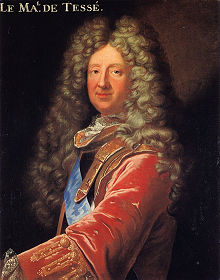
René de Froulay, Comte de Tessé

Family: Froulay
Year granted: 1703
Military campaigns: Franco-Dutch War, NineYears' War, War of the Spanish Succession
Interesting fact: he was one of the leading officers who carried out Louis XIV's scorched-earth policy in the Palatinate

Le maréchal de Tessé.JPG


Camille d'Hostun, Duc de Tallard 

Family: Hostun de La Baume
Year granted: 1703
Military campaigns: Nine Years' War, War of the Spanish Succession 
Interesting fact: Camille witnessed the utter destruction of the forces under his command at the Battle of Blenheim after which he was captured by the English. Nevertheless, he was made a Marèchal and made a duke when he returned to France


Nicolas Auguste de La Baume, Marquis de Montrevel 

Family:
Year granted: 1703
Military campaigns:
Reason for receiving the title:
Interesting fact:


Henri d'Harcourt, Duc d'Harcourt 

Family: d'Harcourt
Year granted: 1703
Military campaigns: War of the League of Augsburg, Nine Years' War, Franco-Dutch War
Interesting fact: he was serving in the French Army of the Rhine when he suffered a stroke which forced him to retire

Maréchal d'Harcourt Beuvron.jpg


Ferdinand de Marchin, Comte de Marsin 

Family: Marchin
Year granted: 1703
Military campaigns: War of the Spanish Succession, Flanders Campaign
Interesting fact: Ferdinand died while serving as he was severely wounded at the Battle of Turin. He was captured and died in prison shortly afterwards


James FitzJames, Duke of Berwick 

Family: Stuart
Year granted: 1706
Military campaigns: Nine Years' War, War of the Spanish Succession
Interesting fact: he was the illegitimate son of James II of England (whose claim to the English throne Louis XIV supported) and Arabella Churchill

James Fitz-James, primer duque de Berwick (Museo del Prado).jpg


Charles Auguste Goyon, Comte de Matignon 

Family: Goÿon de Matignon
Year granted: 1708
Military campaigns: Franco-Dutch War, War of the Spanish Succession
Interesting fact: he accompanied James II when set sails for Ireland

Charles Auguste de Goyon de Matignon

Jacques de Bazin, Marquis de Bezons 

Family: Bazin de Bezons
Year granted: 1709
Military campaigns: War of the Spanish Succession, Nine Years' War and Siege of Candia
Interesting fact: he was made a member of the Regency Council following the death of Louis XIV

Pierre de Montesquiou, Comte d'Artagnan  

Family:
Year granted: 1709
Military campaigns: War of the Spanish Succession
Interesting fact: not to be confused with the famous Musketeer from Alexandre Dumas' "The Three Musketeers" - although he was the cousin of the man whom that character was based on. He had no fewer than 3 horses shot out from under him during the Battle of Malplaquet

Alberico III Cybo-Malaspina, Duc de Massa

Family: Cybo-Malaspina
Year granted: 1703
Interesting fact: he was an Italian and appears to have led a rather obscure life