Friday, 9 April 2021

The Château de Meudon: The Grand Dauphin's Personal Retreat

In June of 1695, the Sun King struck a bargain with Anne de Souvré - widow of his minister Louvois and owner of a charming château called Meudon. In exchange for the Château de Choisy and the balance in cash, Meudon would be sold to the crown. Once Madame de Souvré agreed, the king gave it as a present to his son and heir, Louis.

Meudon had the exquisite advantage of being located right between Paris and Versailles. Therefore, the heir could be close enough for his all-seeing father to keep an eye on him but far enough away to establish a semblance of privacy. Until then, the Grand Dauphin had been living with his father for the vast majority of his life. It is therefore not surprising that Louis treated his new estate as a true gift.

The painting of the château below shows a somewhat small castle in red bricks. This is the Château-Vieux, or the Old Castle. In the background stands the Château Neuf which was added later on to house more people. To the right in the painting is a single story block; here, the dauphin's offices, kitchens and servants' quarters were placed.


File:Détail chateau meudon pierre denis martin 1723.JPG
Meudon at the time of the Grand Dauphin


As can be seen from the floor plans below, the guests were primarily the Grand Dauphin's immediate family and his friends. As such, it was definitely a change from the bustling of Versailles where any courtier was not only admitted but expected to appear. That, however, would not last forever. By 1705 the court was beginning to look for new beginnings. The king was getting old and some decided to curry favour with the heir to the throne. This created the problem of housing a new score of courtiers at a rather small retreat. 

Amongst those who flocked to the dauphin were courtiers who felt overlooked by the king or even unfairly treated. They saw the Grand Dauphin as their golden ticket back into the favour of a monarch - or at least maintaining their connections with members of the royal family. The latter was easily done at Meudon since especially the dauphin's half-sisters and his sons and daughters-in-law were frequent guests there.

Like his father, Louis had a love for building. He had a grotto in the garden - long outdated and considered unfashionable - replaced with an entirely new building. This was referred to as the Château Neuf and will be discussed briefly below. While the Grand Dauphin was there he could indulge in both his love of architecture (he had some rooms redone several times) and his passion for hunting. The woods surrounding the estate were filled with deer and he did not have to travel far to engage in his favourite type of hunting: wolf hunting.


File:Distribution rez de chaussée 1700 château de Meudon.JPG
Ground floor of the original château, 1699/1700


Despite being the Grand Dauphin's personal retreat, he was never quite far from his father's control. It was registered as a royal building under the control of the Bâtiments du Roi which meant that any maintenance and embellishment were paid for by the king's coffers. It is therefore a tad surprising that Louis XIV allowed the extravagant sums that his son's projects cost. At least 3.000.000 livres were spent in the sixteen years that the Grand Dauphin had the enjoyment of his château. A massive sum, indeed, but the king was hardly one to lift an admonishing finger considering the sums he had spent on Versailles and Marly.

The décor of the château was almost a mix of the signature baroque style of Versailles and the Regency-style that was to come. Some has credited the artists working on Meudon with laying the first steps for the development of the rococo. For the Grand Dauphin, this new domain provided a unique opportunity for setting his own, personal stamp on an estate. While he still had to rely on the artists employed by his father - a direct consequence of being administered by the Bâtiments du Roi - Louis did what he could to make the place truly his. He removed a part of his extensive collection of objets d'art to Meudon which certainly added to the château's prestige. Amongst these pieces were his exquisite collection of Chinese porcelain.

Both the old and the new châteaux were redecorated with paneled woodwork which was often either gilded or painted in light tones. Especially the latter touch was a break with the darker, deeper tones used in Versailles.

First floor, 1701


The dauphin was immensely found of the elaborately decorated wooden furniture which were produced by both Boulle and Foulon. Naturally, these would become a firm fixture in the furnishings of Meudon. While the original château is long gone, we do have some insight into the taste of décor utilised by the Grand Dauphin. Besides his personal collection, it is known that his bedroom alcove was decorated with twelve wooden panels. These were completed by Claude III Audran and were designed so that each panel represented a month of the year - with a pagan deity signifying the specific month as well as a zodiac sign. 


The Château Neuf (left) with the original castle at the centre,
both overlooking their shared garden

The Château Neuf

The Château Neuf was a beautiful albeit odd building. Having been built on a rather steep slope, it is not the same from both sides. The subaltern levels were primarily used for either storage or services such as kitchens. The floor plans of the Château Neuf are usually either blurry or in French. I have edited them to provide some clarity. The letters corresponds to the following "code":

A = Bedchamber, B = Cabinet, C = Wardrobe, D = Grand Staircase, E = Vestibule, F = relating to services, i.e. meal preparation and wine cellars, G = Corridors, H= Chapel, H1 = Tribunes used during service, I = Staircase, K = Open to the vestibule below, L = Guards' Room, M = King's Bedroom, N = King's Antechambers, O = Gallery and P = Toilet


From the floor plans it is very clear that the sole purpose of the new building was to provide a temporary accommodation for courtiers. There were 24 apartments, all of which consisted of a bedchamber, a cabinet and a wardrobe. In such cases, a wardrobe would also be the sleeping quarters of a chamber maid or lackey.

It is also interesting to note that specific chambers were marked for the king's use but were never actually used by the king. Instead, he slept in the original château. It was customary to provide such accommodations, even in castles not owned by the royal family.


Louis would fall seriously ill in April 1711. Eventually, he would die at Meudon that same month. From then on the château became the official château of the dauphin of France. However, none of the subsequent dauphins showed nearly as a great a passion for it as their late relative. As such, it was seldom used during the reign of Louis XVI. It was used as a retreat for the ailing dauphin in the 1780's as the air was said to be particularly pure there - unfortunately, it did not save the boy's life. Sadly, Meudon was one of the estates that did not survive the test of time. Unlike many other royal residences, this one was not destroyed in the revolutionary fury. Rather, the château burned down in 1795. 

Thursday, 8 April 2021

The Colour Palette of Fashion: Orange

Unlike red natural sources for a pure orange dye was rare in Europe. Generally, such sources as Campeche and pernambuco wood had to be imported from the Americas which caused them to be very expensive. A rule of thumb was that natural dyes that could produce either red or yellow could also be used to produce orange. Two instances of this can be found in Godfrey Smiths "The Laboratory..." from 1740. In this book, he provides the reader with two recipes for dyeing silk orange - both requires alum and so-called Orléans yellow.

Robe à l'Anglaise 1745, Robe à la Française 1750's,
Robe à la Française 1750-90 and unknown date


The colour orange was used in a more political sense too. For instance, Louis XIV is said to have banned wearing the colour orange in 1672 as France was then at war with the Prince of Orange, the future William III of England. The immediate consequence was that orange clothing was quickly dyed another colour. Luckily for fans of the colour, the ban was not permanent and orange was once again seen on the fashion scene in the 18th century.


Robe à la Française 1770's, robe à la Française
1735-40, robe à la Française 1740's and open
robe 1750-80

Orange does not appear to have ever reached great popularity in France. Rather, it is far more common to see surviving pieces with orange used as a complimentary colour rather than the primary one. Ironically, the use of orange blossoms were very popular both as perfume and embroidered on silks.

There is definitely a reason for the absence of orange in the often-changing fashions of the late 18th century. Marie Antoinette was said to abhor the colour and is alleged to have declared - whether true or not - that she would not receive anyone who wore the colour. If this is even remotely true, then it is not a big surprise that the colour was not seen much at court at that time.


Suits from 1750's, 1765, 1775-90 and 1760's
respectively

Due to rather limited use of orange in fashion, there are only a few references to orange clothing in connection with Versailles. Yet, we know that on the bedding ceremony of the Duc and Duchesse de Bourgogne, the dressing gown handed to the young groom by Louis XIV was made of orange silk. This alone clearly shows that the king's ban on the colour had already abated by this period. 

In 1786, the Prince of Wales wore a suit of orange serge for his father's birthday; his suit was heavily adorned with silver tissue as well as diamond and sapphire studs. 


Unknown lady, Javier de Bourbon, Marie Barbara
Eleonore of Schaumburg-Lippe and Xavier of Saxony


Wednesday, 7 April 2021

What Happened to the Other Royal Children?

It is well-known that Louis XIV and Marie Thérèse produced an heir in the shape of Louis - better known as the Grand Dauphin. However, Louis had five siblings none of whom survived their childhoods. But exactly what happened to them?

The Grand Dauphin was the eldest child of the couple. He was born in 1661 and augured well for the hopes of any future progeny - he was both male and robust. However, whatever hopes his birth might have sparked, these were soon shattered.


The very next year - 1662 - saw the arrival of another royal baby. This time it was a girl who was  born on 18 November and christened Anne-Élisabeth. However, after just over a month of life, the little girl contracted a chest infection which led to her death on 30 December. Apparently, the tradition of placing the hearts of deceased royalty in the Val-de-Grâce arose around the time of Anne-Élisabeth's death. The nuns allegedly requested Anne of Austria permission to keep the young girl's heart which was granted - and following that it would be the final resting place of the literal hearts of the royal family.

One aspect stands out as a testament to the rigid calendar of court life. Anne-Élisabeth's death occurred in the midst of the festival season. Just a week after her death, the court ballet "Ballet des Art" was performed - and re-performed the day after her funeral. Several members of the royal family performed in person, including Louis XIV and Henrietta of England. 

To modern observers this appears obscene, at best. However, there was not a tradition for putting on mourning for children under the age of 7 - not even royal ones. While the parents were naturally allowed to grieve in private, no public show of grief was exhibited: no court festivities were halted. This can also be attributed to the sex of the child. Female children were considered to be of less importance since they could not inherit - thus, their deaths in infancy were rarely mourned.

Marie Thérèse with the Grand Dauphin

After the death of Anne-Élisabeth, the Queen found herself pregnant two years later. Another daughter was born and named Marie-Anne; but the story of Anne-Élisabeth repeated itself with eery similarity. The child was born on 16 November and would die on 26 December. Like her sister, there was no official show of mourning for the young Marie-Anne. It was Marie-Anne's birth that gave rise to the rumours that the queen should have given birth to a dark-skinned child. However, contemporary sources refer to the fact that the child was possibly born prematurely and was born with a bluish tint usually associated with deprivation of oxygen. Either way, the infant must have recovered her breath since she did manage to live for little over a month.


When Marie Thérèse went into labour for the fourth time, the court was sorely disappointed when yet another daughter was born on 2 January 1667. The newborn was named after her mother and proved to be more robust than her older sisters. At court, she became known as Madame Royale - a title later renewed for the daughter of Louis XVI. Apparently, Marie Thérèse were eager to place her daughter on the throne of Spain - her own native country. If this had happened the implications - genetically speaking - could have been disastrous. 

While her mother was thus dreaming of a future queen of Spain, the little girl was adored by both the royal family and the court. She was raised at the Château de Saint-Germain-en-Laye, which also happened to be the birthplace of her august father. Sadly, this would also turn out to be her last residence. At the age of 5, the young Madame Royale contracted tuberculosis from which she died on 1 March 1672.


Marie Thérèse de France, Madame Royale by Jean Nocret (Museo del Prado).jpg
Madame Royale


If the birth of Madame Royale had been a disappointment, the arrival of Philippe-Charles on 5 August 1668 was anything but. The young boy was named after his uncle and immediately given the title of Duc d'Anjou - incidentally, this title had previously belonged to that very uncle. While it was hoped that the dauphin Louis would grow into adulthood and inherit the throne, it was always necessary to have a "spare" in case of sudden death. For the royal couple, there was yet another reason to rejoice at the birth of their newest child. Marie Thérèse is alleged to have repeatedly attempted to make him the sole heir of the king's cousin, the Grande Mademoiselle, whose fortune was unequalled.
Once again, the queen's hopes were dashed. Like his sister before him, Philippe-Charles contracted a chest infection which led to his death on 10 July 1671.

The final child of Louis XIV by Marie Thérèse was another longed-for son: Louis-François. He was born on 14 June 1672. Like his brother, he was given the title of Duc d'Anjou. Unfortunately, his life would be short and he would die on 4 November 1672 - aged just five months old.


Detail of a portrait of the royal family as Greek gods.
Standing is the Grande Mademoiselle,
Louis XIV is wrapped in a golden cloak,
Marie-Thérèse dressed in pink and blue.
The three children are the Grand Dauphin (with the red sash over his legs), 
Philippe-Charles as cupid and the little Marie-Thérèse with a garland of
flowers.


There are a few aspects about the children's deaths that warrants comment. First, they were all born and lived at the same place: the Château de Saint-Germain-en-Laye. Considering that at least two of the children died of chest infections, it might have been a contributing factor. After all, the royal castle had been built in 1124 and rebuilt in 1529 which meant that building features such as insulation and sanitation were not ideal. 

Child mortality was rampant, too, for much of history. The Institut National d'Études Demographiques records that by the 18th century, one in three French children died in infancy or childhood. As such, the death of the royal children were not surprising. It should also be remembered that even though they were born into a state with physicians and regular food - far from the norm - they were definitely not more secure against the scourges of childhood. For instance, the quality of medical practices were far from high and the drastic "cures" applied to them might just as well have killed them.

But there is one final aspect that should definitely not be overlooked: inbreeding. Louis XIV and Marie Thérèse were cousins - and first-cousins at that. Furthermore, besides the fact that their parents were siblings, their other ancestors were often related to some degree. It cannot be ruled out that the inbreeding had had seriously detrimental health consequences for the young, royal children. 

Saturday, 3 April 2021

The Colour Palette of Fashion: Purple

In Ancient Rome, the colour purple was reserved exclusively for the Emperor himself - it has given rise to the name Imperial Purple which is still used today. The reason for this limitation was not just due to a concept of distinction but a financial one as well. The colour purple was achieved by crushing Murex shellfish - which first had to be removed manually from their shells - which was a very costly procedure.

The idea of purple being the colour of royalty had not abated by the 18th century. Even today, the phrase "born in the purple" refers to a person born into either a royal family or unusually privileged families. After the outbreak of the French Revolution, the colours green and royal purple became associated with the counterrevolution. Marie Antoinette, for one, arranged her fashion choices to illustrate this allegiance by  ordering both clothes in both "Artois green" and royal purple. Louis XVI, too, took up the age-old purple symbolism when he attended the opening of the Assembly of Notables in 1787 - dressed in a suit of purple velvet.

Robe à la Française 1765-70, suit 1780's, robe à
l'Anglaise 1780's and suit late 1780's

At Versailles, the king wore violet mourning clothing for other monarchs - but he was the only one to use this colour for mourning. Cardinals, in turn, wore a more distinct purple shade. Madame de Pompadour used the colour - with golden embroideries - for her livery when she was given the estate of Bellevue.


Robe (possibly for a young girl) 1780's, robe à la
Française 1780's, suit ca. 1789-90 and corset 1760


By the 18th century, purple was still an expensive colour to manufacture. It was not until the following century that chemical advances made it more available. Imported rochella (a type of lichen) found on the Canaries Islands also produced a purple colour but had to be imported. A similar source was cudbear which was - from a French point-of-view - unfortunately found primarily in England.


Due to the symbolic connection between purple and the monarchy, it is hardly surprising that it was a colour often used in official ceremonies. For instance, when Louis XV presided over a lit de justice in 1743, he did so from a throne of purple velvet. Likewise, a purple canopy with golden fleur-de-lys was used in a procession led by Louis XVI and Marie Antoinette.  


Princesse de Lamballe, Marie Antoinette, Madame
Victoire and the Princess of Liechtenstein 


The purple that was available became most popular in the 1770's and 1780's where popular shades were lilac, mauve and even the infamous puce. For those who could not afford the pure-purple dyes, a common trick was to dye something first red, then blue - the result was a mixture which resembled purple but could not rival the real deal.Marie Antoinette - and Rose Bertin - were both great fans of pastels. The colours of lavender and violet were great favourites with the queen. 

It appears to have been quite popular to use purple as a complimentary colour - possibly due to the cost of it. There are quite a few examples of clothing been adorned with embroidered, purple flowers. Madame du Barry gifted a suit of silver with lilac spangles to Louis XV, as an example.


Two portraits of Louis XVI, an unknown gentleman
and Prince Golitsyn

Thursday, 1 April 2021

The Colour Palette of Fashion: Red

The court of Louis XIV was definitely not a stranger to a variety of strong, red colours. The Sun King himself made the red heels on shoes not only fashionable but a mark of distinction. He would even pass a sumptuary law in the 1673 which meant that only those aristocrats who had the king's permission could use the signature red heels.

While the colour was very much in vogue during Louis XIV - and before - its popularity did not fade with the dead of the king. The greatest revolution in the use of red is attributed to Madame de Pompadour by Amanda Sikarskie. According to the author, the royal mistress promoted the use of softer fabrics of cotton and chintz over the traditional velvet. The consequence was that the red became less vivid than hitherto which fit perfectly with the marquise's taste for rococo delicacy. It was not until pastels took over that bright red was exchanged for a more delicate pink; but still, the colour remained a firm fixture of both royal dress and décor. 

Marie Leszczyńska, Marie Antoinette, Marie 
Adélaide of Savoy and Madame Henriette

Red is one of the tones that is found in a wide array of natural sources, although not all of them were available to the 17th or 18th century markets. One of the oldest in Europe was madder which was widely used by textile manufacturers in this age. It had the definite advantage of being found naturally in France which meant that the cost of import was avoided.

Kermes were insects that was originally found in Asia but was brought to southern France specifically with the intention of harvesting them for use as dyes. For this particular reason, oaks were planted in this region since this is what the insects fed on. Once the system was in place, it also avoided the expensive taxes placed in imported goods.


Mademoiselle de Blois, Elizabeth Charlotte of the
Palatinate, Richard Middleton and Duchesse de
Montbazon

However, with the increasing influx of goods from the Americas meant that there were soon competitors to the traditional source - including cochineal beetles. While there were already cochineal in Eastern Europe - Albania was a hotspot for it - the cochineal coming from Mexico gave amazingly brilliant red hues. Other more available sources were iron oxide which was readily available in rust. The English created so-called India red in the early 17th century by using just that.


Robe à l'Anglaise 1760's, Robe à l'Anglaise 1770,
Mantua 1740 and Robe à la Française 1760's

Naturally, imported cochineal made fabrics dyed with this very expensive. This also contributed to making it - initially, at least - reserved for the wealthy upper class.

However, cheaper red dyes were used for uniforms within the royal households. The king's royal bodyguards were blue and red uniforms throughout the Ancien Regime. Marie Antoinette and Marie Leszczynska also had that colour incorporated into their own households. For instance, the household of the queen's bedchamber included several femmes rouges who assisted the femmes de chambre. Their name was derived from their bright red uniforms. Marie Antoinette herself has been painted several times in a deep red hue - including the famous portrait of her surrounded by her children. 

Another familiar sight at court was the bright red of the cardinals' robes. As a powerful Catholic country, the first families of France usually produced cardinals, some of which remained at the French court or travelled between Paris and Rome. Soldiers, too, were often dressed in red. Particularly the French hussar regiments were decked out in red uniforms.


Suit 1730, suit 1750-75, suit 1755 and waistcoat 
1750


The very interior of Versailles was not unfamiliar with crimson tones. The king's state bedchamber is famously adorned with red fabrics brocaded with gold thread. Even through history, the colour continually reappears in the reports by contemporaries. For instances, the jewellery cabinet containing the royal jewels was handed over to Marie Leszczynska on her wedding day - but not before being carefully covered with a red cloth. Likewise, Marie Antoinette had a carriage with crimson upholstery and Madame de Pompadour (as mentioned above) favoured the colour in her own furniture - she apparently died on a bed of red-and-white striped fabric.

The fascination with the Far East from the middle of the 18th century, also contributed to the popularity of red. Symbolically, red has long held an honoured in Asian cultures, particularly in China. Several of the pieces of Chinese lacquer-wares brought to Versailles were adorned with brilliant red. Louis XV received several such pieces in 1763, including a secretaire (writing desk) decorated in red and gold. 


Top left: Salon of Mars, Top Right: brocade from
the king's bedchamber and Bottom: Salon of Apollo


Considering that red was so clearly favoured by the monarchy, it is quite odd that the revolutionaries would so readily embrace it. Not only did red feature in the tricolore-ribbons worn by supporters of the revolution. The Phrygian cap, too, became a fashion symbol of the new world order. The cap is completely red with a tassel; a pamphlet during the last years of the monarchy shows a defeated-looking Louis XVI wearing it.

Saturday, 20 March 2021

The Colour Palette of Fashion: Yellow

China was one of the larger influence of yellow clothing in the 18th century. So-called "Nankeen"-yellow - originating in Nanjing - became fashionable; it was a paler version of yellow. During the 18th century, the trading between China and Europe became more common which inevitably led to an increased influence of Chinese cultural views in Europe. In fashion, the colour yellow became associated with wealth and prosperity - thus perfect for the aristocracy. As for the Chinese, they had long considered yellow to be an indicator of glory, wisdom and wealth.


From the left: 1) possibly a gown for a young girl, unknown origin,
2) a plain robe à la Française, 3) a robe à la Française, 1760's, UK


The colour yellow could be achieved from a variety of natural sources. The expensive - and imported - silks from China were usually dyed with saffron. Considering that saffron remains the most expensive spice in the world, it is not hard to imagine how high the prices could get for quality silk. The connection was China was not limited to imported goods. From the mid-18th century, most European courts (and Versailles, too) became fascinated with Asia where the colour yellow was often associated with royalty.


1) Robe à la Française 1760-79, British or French, 2) Robe à la Française, 1760
3) Robe volante, 1730's


On a more domestic level, weld was widely used and had been since the Bronze Age. This could come in handy for those courtiers who wanted to imitate the more expensive colourings but lacked the funds for it. Tumeric were also a good, natural source.


1) Another gown for a child, 1775-85, British
2) Robe à la Polonaise, 1770's
3) Robe à la Française, 1760, British


A new source of yellow dye became more available in the 18th century, as ships brought back new materials from the Americas and French colonies. Amongst the new sources were fustic and "quercitron" - the inner bark of a specific type of oak (called Eastern Black Oak) growing in North America. However, fustic had the unfortunate tendency to fade, especially on cotton.


1) Robe à la Française, 1750-75, 2) Robe à la Française, 1750's
3) Robe à la Française, 1760's


Different shades of yellow had their own time in the sun. Around 1735, pale yellow was considered very fashionable; a trend that would later be revisited when pastels took over from a more vibrant colour-scheme. Diana Reid Haig mentions that Marie Antoinette and her milliner, Rose Bertin, used lemon yellow which the author refers to as an "unusual hue" - it can therefore be deduced that this particular shade of yellow was not in fashion in the mid-1770's.

The favour of pale yellow is quite unusual since at this point in time stronger hues were usually preferred. An observer at the court of England in 1744, noted a lady wearing a gown and petticoat both in yellow which was "very much the mode in England at present".


1) Waistcoat, 1730's, French, 2) Coat, 1750-70, possibly British,
3) Full suit, 1750-80, French


1) Banyan, 1780, British, 2) A full suit, 1785, Spanish
3) Waistcoat, 1750's, French


Naturally, the colour found its way into the very furniture of the court. When the sickly dauphin, Louis Joseph (son of Louis XVI), was sent to Meudon to recover his health, it was noted that this tutor, the Duc d'Harcourt was given a new bed of yellow damask. In a similar vein, wallpapers and various pieces of furniture were adorned with the sunny colour. For instance, Madame du Barry's antechamber was painted in a mixture of lilac and yellow.


1) Waistcoat, 1730's, 2) Full suit, 1770's, Italian
3) Waistcoat, 1750's


However, yellow had been fashionable earlier, too. From the letters of Madame, we know that the Duchesse de Foix wore a yellow gown with matching yellow ribbons in her hair for a ball in 1720. Even earlier, the English Princess Louisa Maria Stuart (in France with her exiled family) wore a set of yellow velvet for the New Year's celebrations of 1708.

Yellow was one of those colours that survived throughout the 18th century due to its innumerable shades. Everything from the palest yellow, to primrose to a deep saffron yellow could be found in the milliners' shops. New shades of yellow meant new - and often ridiculous - names: "dying ape", "poisoned ape" (one can only wonder what the apes did to deserve such a fate), "Merry Widow", "unhappy friend" - even "sick Spaniard"!


1) A hunting coat - or Caraco - for a woman, 1720-40,
2) Shoes, French, 3) Corset, French, 4) Embroidered
cap, French


Luckily for those who delighted in the sunny shade, there were several types of gemstones that perfectly fit their yellow garb. Anne of Austria, for one, owned a necklace of pearls and yellow diamonds. Likewise, the Princesse de Lamballe received (amongst many others) a pair of bracelets adorned with yellow diamonds.

One of the more popular types of using yellow in clothing was embroidering yellow silk with colourful flowers. The Parisians appear to have been particularly creative in this regard. Elisabeth Farnese, queen of Spain, wrote to her friend, the Duchesse de Saint-Pierre in which she spoke of a beautiful silk from Paris which she had recently ordered. It was the colour of straw and had small, embroidered flowers.


Madame Thélusson, Unknown lady (1720-40),
Lady Monoux


Hortense Mancini, Unknown lady, Johanna Warner


When Madame de Pompadour began establishing herself at Versailles, she chose yellow as the colour of her livery, for the time being at least. Meanwhile, the House of Bourbon-Conti had long had yellow as their livery.  Towards the last years of the French royal family, yellow was not in good standing with the French people. Yellow and black happened to be the colours of the Habsburg Empire and as their (then) hated queen Marie Antoinette was Austrian, yellow became associated with the counterrevolution. 


Francisco Cabarrús and an unknown,
Italian man


Wednesday, 17 March 2021

Eau de la Reine d'Hongrie

The so-called "elixir" of eau de la Reine d'Hongrie was known to the English as Hungary Water. The name is derived from the woman for whom it was first made: Elizabeth of Hungary. Legend has it that a hermit offered the queen a vial in 1370 - this would be the first alcohol-based perfume. Allegedly, the new wonder-water preserved the queen's beauty. From there, it was transported via Hungarian merchants throughout Europe.

Its dominant notes were rosemary but later lavender would be added - some would even add a bit of sage or thyme. The latter two were described in the recipe for the concoction by Simon Barbe. He would also advocate adding the plant alkanet which rendered the water a delicate purple. Besides the alcohol, it would be distilled with rosemary water.

Rather than being considered merely as a perfume, it was also believed to have strong medicinal powers. For example, it was thought to be ideal as a replacement for smelling-salts. As is usually the case for such concoctions, its medicinal purposes were considered to be wide-ranging. The Princesse d'Epinoy held such high hopes on her Hungary Water that she is said to have asked her son to bring her some, as she was feeling very unwell. Whether he did or not is unclear but she would die shortly after from apoplexy. 

In the next century, Fargeon prescribed the perfume as a soothing agent for Marie Antoinette when she expecting her first child. She suffered under the intense heat of the summer and used the water to help her relax before going to bed. Fargeon was not the first to use it in this manner, though. Almost 70 years prior - specifically on 29 July 1720 - the Regent of France (Philippe II d'Orléans) had been seized with what appears to have been a panic attack during a council meeting. However, as Mathieu Marais relate, he was restored to his senses after having been given the famed elixir.

Sébastien Matte la Faveur described the production process of Hungary Water in detail in his "Pratique de Chymie" of 1671. Naturally, he was amongst those who sung the medicinal praises of the water. He proclaimed that it was well-known to be a cure for all illnesses related to cold, including gout and tremors. It was also claimed to work against jaundice and even heart palpitations. 


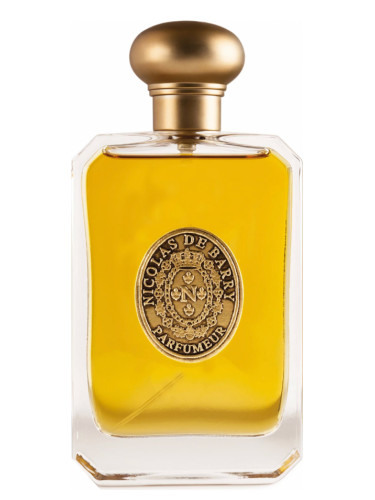
Eau De La Reine De Hongrie Maison Nicolas de Barry for women
A modern bottle of Hungary
Water by Nicolas de Berry


The production appears to have been a lengthy process. Faveur dedicated at least 3 days just for the initial distillation of rosemary and Barbe advocated that the finished product was to be left exposed to sunlight for a whole month.

It is therefore not surprising that eau de la Reine d'Hongrie would be a stable amongst the French aristocracy. When the Duc de Saint-Simon described the rigours of the winter of 1709 he specifically mention that it was cold enough indoors to freeze even the Hungarian Water. Later, it would be given as a gift from Empress Maria Theresia to Madame de Pompadour upon the alliance between France and the Austrian Empire in 1756 - quite a fitting gift, since Maria Theresia was Queen of Hungary. Nor was the present unappreciated, as the royal mistress was noted to rub her temples with it.

Madame de Maintenon had declared it to be her favourite and had it distributed to her young wards in the Saint-Cyr institute. Likewise, Madame de Sévigné swore by it.

The eau de la Reine d'Hongrie appears to have universally favoured - both men and women had it and it remained a stable within aristocratic society throughout the 18th century even when it received competition from eau de Cologne. Besides its suggested benefits, it was naturally used as a perfume, too. It is still being used today - for instance, the exclusive perfumer Nicolas de Barry carries it in its original form.