Saturday, 22 July 2023

House of Phélypeaux

Few families have played such consistent part in the political engine of Versailles than that of the Phélypeaux. Originating near Blois, at the heart of France, the family had divided into two branches by the ascension of Louis XIV: Pontchartrain-Maurepas and La Vrillière.

The family had an iron grip on one of the coveted positions as Secretary of State; rather unusually, both branches were equally invested in the political game and both were remarkably successful. This made the family quite a powerful dynasty whose very power lay rather in their service than in their lineage. While their nobility was uncontested, they did not enjoy generations of ducal or princely rank. They were largely considered to be noblesse de robe as their family was almost exclusively committed to politics and parliaments rather than military service.


La Vrillière

Preceding the branch of Pontchartrain-Maurepas, that of La Vrillère began in the 16th century with Raymond Phélypeaux. Their name was derived from the fact that Raymond was seigneur of La Vrillière. Raymond had died before Louis XIII and consequently, the head of the branch was:

1. Louis Phélypeaux & Marie Particelli

Oddly enough, Louis was known by the La Vrillière-name rather than his otherwise established titles of Marquis de Châteauneuf or Comte de Saint-Florentin. Louis toiled away for decades within the inner machinery of political power and amassed several important posts, including those of Minister of State and Secretary for Protestant Affairs.


The couple had five children:

  • Louis
  • Balthasar, Marquis de Châteauneuf
  • Marie
  • Michel, Bishop of Uzès
  • Agnès


2. Balthasar Phélypeaux & Marguerite de Fourcy

Remarkably little is known of the second Phélypeaux; it must be surmised that he did not attract particular notice but managed his affairs in a quiet manner.

Marguerite - or Marie-Marguerite, she is sometimes referred to - was also a member of the noblesse de robe. Her father had been a councillor of the Grand Conseil during Louis XIV's minority. 

The couple had two children:

  • Louis, Marquis de La Vrillière
  • Charlotte Thérèse, Duchesse de La Feuillade


File:Balthazar Phélypeaux de Châteauneuf.jpg
Balthasar 

3. Louis II Phélypeaux & Françoise de Mailly-Nesle

Inheriting the job of Secretary for Protestant Affairs, he would also take on the role of Secretary for the Navy. He would later be replaced by a cousin, Jean-Frédéric, in the naval department but handed down the Huguenot-position to his own son. At court, Louis was known as the Marquis de La Vrillière.

Françoise served as Marie Leszczynska's dame d'atours which placed her in both considerable standing at court and provided her with a personal income. She was the grandmother of the infamous Nesle-sisters, four of whom became Louis XV's mistresses. However, she was not fond of the idea of Julie Louise being the king's mistress and therefore attempted to have her replaced with Marie-Anne.

Françoise was only married to Louis for five years before he died. She would later remarry to the Duc de Meilleraye, who happened to also die - three months after their wedding.

The couple had four children:

  • Anne Marie
  • Marie Jeanne, Comtesse de Maurepas
  • Louis, Duc de La Vrillière
  • Louise Françoise, ambassadress to Denmark

Louis II

4. Louis III Phélypeaux & Amélie Ernestine de Platen

Louis inherited the position of Secretary of Protestant Affairs and would later assume the role of head of the King's household; he would even take the post of Secretary of Foreign Affairs after the fall of Choiseul. After an impressive career in politics (which included the record for years in service), he retired in 1775. Louis was rewarded with the elevation to Duc de La Vrillière.

Amélie was the daughter of a German margrave; her family is still living while most emigrated to Denmark.

The couple does not seem to have had children.

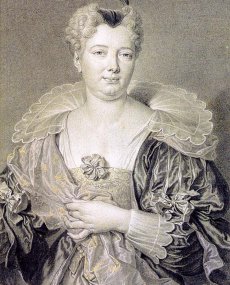
Louis III


PLATEN ALLERMUND Amalie Ernestine von
Amélie Ernestine


Pontchartrain-Maurepas

The Pontchartrain-Maurepas was founded by Paul Phélypeaux who assumed the position of Secretary of Protestant Affairs. He died prior to Louis XIV's enthronement, as did his son, Louis I. This meant that by the time Louis XIV was crowned, the family was headed by Louis II Phélypeaux de Pontchartrain.

1. Louis II Phélypeaux de Pontchartrain & Marie de Maupeou

Whereas his cousins dealt with the ministerial posts, Louis focused on the parliaments. During particularly unrestful times, he managed to bring about a peaceful resolution with unruly parliamentarians which caught the eye of Louis XIV. Summoned to court, the king recognised his obvious abilities for bureaucracy and his efficiency; Louis was made Controller-General of Finances. He would later assume the ministries of the navy and of the king's personal households. Both were a testament to the king's satisfaction with Louis' work. Being made Chancellor of State, his intelligence was widely admired as was his ability to command respect without force; even Saint-Simon admitted that here was a man who knew what he was doing.

At court, he was referred to as either the Marquis de Phélypeaux or the Comte de Maurepas while also holding the title of Comte de Pontchartrain.

The couple had one child:
  • Jérôme, Marquis de Phélypeaux


Louis II

2. Jérôme Phélypeaux de Pontchartrain & (1) Éleonore Christine de La Rochefoucauld de Roye, (2) Hélène d'Aubespine

Like his father, Jérôme began his career in the parliaments before being groomed to take over his father's ministerial posts. He was particularly involved in the settlement of Louisiana (of French nationals, of course) and founded the Academie des Inscriptions et Belles-Lettres.


Éleonore was just 29 years old when she died although it is unclear what killed her at such an early age. 

Jérôme had five children by Éleonore:

  • Marie Françoise Christine
  • Louis François, Comte de Maurepas
  • Jean-Frédéric, Comte de Maurepas
  • Paul Jérôme, Marquis de Chefboutonne
  • Charles Henri, Bishop de Blois
Hélène gave him another two daughters:
  • Marie Louise
  • Hélène Françoise Angélique, Duchesse de Nevers

Jérôme 

3. Jean-Frédéric Phélypeaux de Pontchartrain & Jeanne Phélypeaux

Jean-Frédéric dutifully took over the family ministries and proved to particularly adept at the naval ministry; it was largely thanks to his administration that the French navy regained some international recognition. He had one of the most efficient networks throughout Europe which made it possible for him to foresee the maneuvers of rival states, particularly the British. Despite his obvious talent for his trade, he was overthrown in a coup headed by the Duc de Richelieu and supported by Madame de Pompadour, whom Jean-Frédéric had insulted.

Jean-Frédéric was recalled into service by Louis XVI, he committed his greatest blunder when he caved in to public pressure and recalled the parliaments. This would eventually have disastrous consequences and paved the way for the revolution.

Jean-Frédéric

The couple did not have children.


Interesting facts and anecdotes:

  • Jérôme was compelled to resign his ministries upon the death of Louis XIV but managed to keep them in the family 
  • It was Raymond Balthasar Phélypeaux who - as ambassador to Savoy - discovered the plot against France concocted by the Duc de Savoy
  • The Phélypeaux had a habit of reaching remarkably high ages; Jérôme died at 73 while his father lived to 84 and his grandfather to 72

Thursday, 20 July 2023

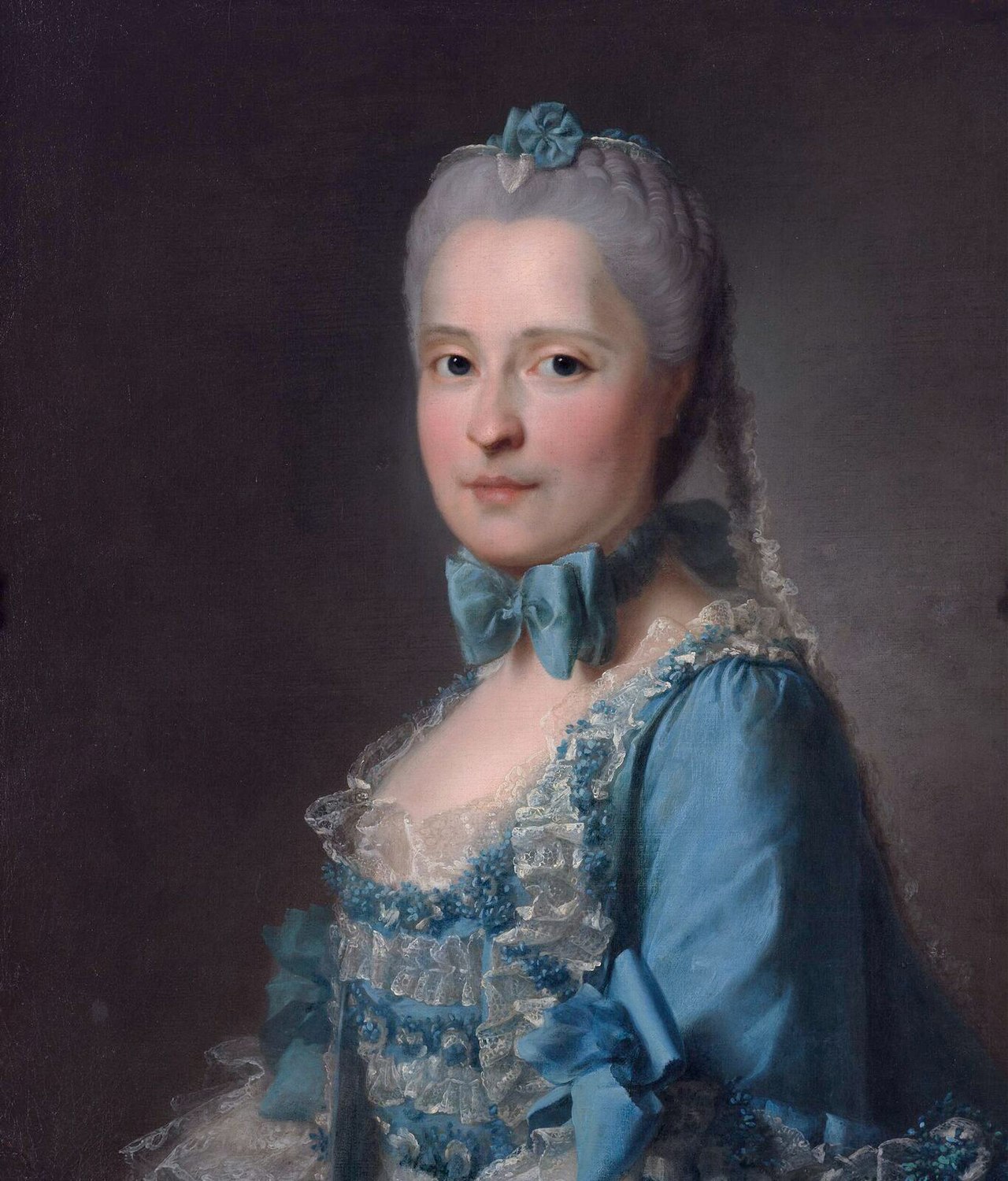
The Widowed Dauphine: Status of Marie Josèphe after the Death of the Dauphin

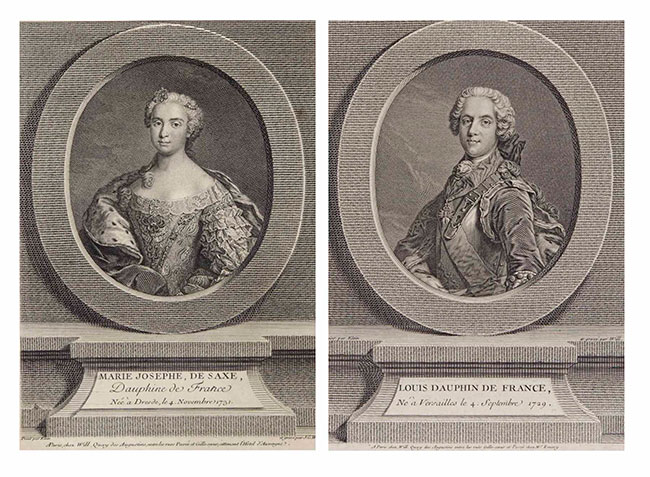
The marriage between Marie Josèphe of Saxony and Louis Ferdinand of France on 9 February 1747 bestowed the rank of Dauphine on the German princess. This automatically made her the second-highest ranking woman in France as well as the future queen.


Over the years, Marie Josèphe cemented her position by having no fewer than thirteen children; three of whom would become kings: Louis XVI, Louis XVIII and Charles X, while five were stillborns. For years, the position of Marie Josèphe was seemingly secure - until the death of her husband. Louis Ferdinand died unexpectedly on 20 December 1765, at just 36 years old. 

The loss was devastating to Marie Josèphe; the couple had grown very close despite having a somewhat unfortunate beginning to their marriage. Louis Ferdinand had only just lost his first wife whom he had become deeply in love with; his consent to the second marriage had been somewhat forcibly extracted which resulted in a less than ideal start to a new marriage. The entire relationship between the dauphin and new dauphine rested on how the new-comer might deal with the situation - and Marie Josèphe certainly rose to it. Rather than forcefully trying to chase the memory of the late dauphine from her husband's mind, she consoled him for his loss and gradually won his friendship. This would lay the foundation for a marriage of mutual respect and even love. 


Marie Josèphe


By a single stroke of particularly ill fortune, Marie Josèphe had lost not just her husband, but her position at court. She would never become queen of France, as otherwise expected. This new situation left her in an uncomfortable position at court; there was no question of sending her back as she had given birth to three male heirs; consequently, one of them would inherit the throne after Louis XV and making her the king's mother. Yet, as a dauphine-no-longer, she could not claim the same status as before. Thus, her position was neither set in stone nor easily defined.


The first change after the death of Louis Ferdinand concerned her living quarters. She requested that she be moved elsewhere as their shared apartment held too many memories of her late spouse. Naturally, Louis XV consented and provided her with a new apartment: that of Madame de Pompadour who herself had recently died in 1764. This new apartment was as close to that of the king as possible. He made sure that she had everything she might wish for and visited her frequently - more than he had when Louis Ferdinand was still alive. Marie Josèphe herself did not resent having to occupy the apartment of the former maitresse-en-titre; she and Madame de Pompadour had had a good relationship, as it was the influence of Madame de Pompadour who had brought Marie Josèphe to France.


Marie Josèphe's mental health never recovered from the loss of Louis Ferdinand. She was reported as suffering from depression - some claimed that her dramatically expressed grief (including the hanging of black curtains everywhere in her apartment and insisting on having portraits of her husband on his deathbed) was a sign that she regretted the loss of the crown more than him. It is hardly fair to lay such a claim on a woman whose marriage had long been admired for being remarkably happy; yet, one would not be entirely surprised if she was disappointed at never becoming queen. After all, the future she had planned with Louis Ferdinand was inextricably bound up in their assuming the throne.

Another often-forgotten aspect was that Louis Ferdinand was only the last in a series of recent and devastating losses for Marie Josèphe. In a remarkably short period of time she lost almost her entire immediate family: her mother died in 1757, her sister in 1761 while both her father and eldest brother died in 1764. Added to that were the numerous children she had already lost. It is hardly surprising, then, if Marie Josèphe should succumb to a severe depression.


Louis Ferdinand

The timing itself was not fortunate either. Marie Josèphe was just 34 years old which meant that she might live on for many years. Technically, this would place her in the same position as the king's daughters whose very lives was seen as a drain on already strained finances. However unlike Mesdames, Marie Josèphe could not hope to alleviate that strain by marrying and thus removing herself from court - as stated, her position as mother of a future king made her place at court certain. The question remained - in what capacity?

She would no longer be the second-highest ranking lady in France nor could she be entirely discarded. The only thing that could prevent her from slipping entirely into the shadows was her close relationship with the king. At court, proximity to the monarch was the foundation for one's status there. Louis XV never showed any signs of lessening his sympathy for his bereaved daughter-in-law which would likely have been beneficial to her later years.

As it happens, the king was very well aware of the changed circumstances of his daughter-in-law. He announced that it was the natural right of any mother to follow in the footsteps of their children; while he could not offer her a crown any longer, she was to enjoy her position until her son became king. Thus, the king had decided on her future fate. It was further noticed that Louis XV went out of his way to console her, granting her everything she wished for.


Dual portraits of the dauphin and dauphine


It is interesting to speculate what might have happened to Marie Josèphe if she had not had children by Louis Ferdinand. At 33 years of age she would have been considered too old to remarry to another heir as the likelihood of her becoming pregnant would be slim to none. Likewise, if the court of France were to simply sent her back to Saxony, this would - naturally - be seen as a massive insult causing political damage to the two countries' relationship. One might wonder whether Marie Josèphe might not have been persuaded to enter a nunnery, if that had been her situation. Given her noted piety it is not difficult to imagine that she would have accepted what must have been the best possible outcome for all parties.


Oddly enough, no other dauphine had been in the same position during the age of Versailles. Marie Anne Victoire of Bavaria, Marie Adélaide of Savoy and Marie Raphaëlle of Spain (Marie Josèphe's predecessor) had all predeceased their husbands. While Marie Antoinette would outlive her husband it was only for ten months before she, too, was executed. Consequently, the court of Versailles had not seen a similar situation since Mary, Queen of Scots, had become widowed in 1560.

Therefore, the decision on behalf of the king to allow Marie Josèphe to keep her prerogatives could have been decisive in future similar situations - that is, if the monarchy had not fallen in the following generation. 


If anyone would still have doubts as to the ci-devant dauphine's status, they were settled definitively in 1767. Just 15 months after the death of her husband, Marie Josèphe caught the same disease which had sent him to his grave: tuberculosis. Marie Josèphe died on 13 March 1767 at just 36.


The Lost Bathrooms of Versailles

The transformation from royal residence to national museum undertaken by Louis-Philippe was a harsh ordeal for Versailles. While it gained the so-called Empire-rooms - and the Salle des Battailles - it lost the majority of personal apartments of the resident courtiers. This included the accommodation for their servants and their private installations. Sadly, the few semi-permanent bathrooms of the royal family were also demolished. 

This has led to the idea that Versailles was inhabited by people who never washed - while fixtures such as permanent bathtubs were rare, the ideals of hygiene advanced rapidly during the 18th century. This meant that the majority of the royal family had their own, private bathrooms. Sadly, only three survives today: those of Madame du Barry, that of Louis XVI (without the bathtub) and that of Marie Antoinette.


Marie Leszscynska 

The queen's interior apartment today entirely shows the taste of its last inhabitant - Marie Antoinette. Her predecessor, Marie Leszczynska, had her own distinct style which was gradually replaced as the new queen made her mark on the few rooms allocated to the queen's personal use.

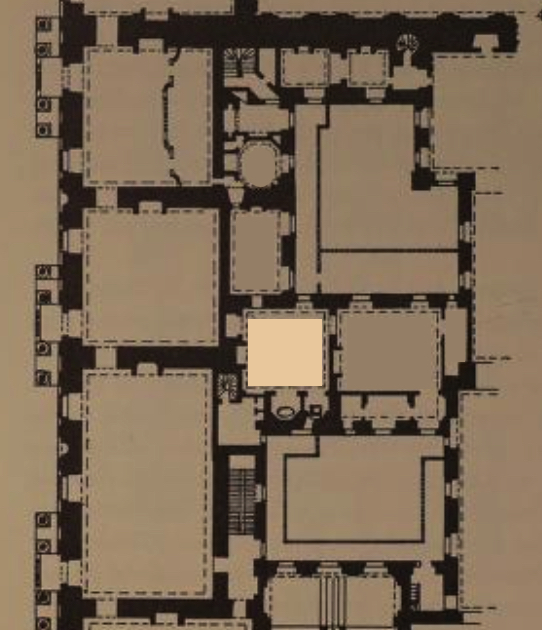
Whereas Marie Antoinette's bathroom is largely intact, that of Marie Leszczynska is entirely gone. It was replaced by a supplementary library. The bathroom was installed in 1728 and was remodeled in 1769. The queen made regular use of her bathroom which is attested by the fact that it was temporarily closed due to maintenance in 1746; Marie Leszczsynska had to make use of her husband's bathrooms while the plaster was still moist. This particular cabinet was done in a blue-grey colour scheme; it was joined immediately by a small cabinet in which she could relax after her bath. That cabinet was decorated by five large paintings of landscapes by Oudry.

Meanwhile, the bathroom itself was decorated by Natoire who chose pastoral scenes with a definite poetic theme. He was joined by Verbeckt and Guesnon who provided the panelling.  

The small rooms contained a water tank as well as a so-called "Peking-bed"; a style inspired by the Far East which was very much an interest of Marie Leszczynska. At the time of her death, the bed was in white and blue.


Marię Lezczynska's bathroom marked, 1747


Madame Adélaide

The first bathroom of Madame Adélaide received a makeover in 1737 which saw imitated marble painted on the walls; this was a far cheaper way of achieving that particularly expensive look. This bathroom was either changed - likely when she was moved to another apartment - or updated.

She had another bathroom which was made in 1765. This room overlooked what is currently the Louis-Philippe Staircase and was decorated with golden figures, mostly associated with water, such as fishing and swimming. The bathroom was directly connected with her then-bedroom (now Louis XVI's library).

Plans exist from the late 1780's which suggested an entirely new bathroom for the aging Madame Adélaide on the ground floor - they were likely never carried out.


Marie Josèphe 

While the reigning dauphine, Marie Josèphe's apartment included a small salle de Bain. It was decorated with stucco by Chevalier (the same man who had redone Madame Adelaide's bathroom); the renovations by the king's stucateur were only enjoyed briefly by Marie Josèphe as her husband died shortly afterwards. Her bathroom was oval in shape and delicately decorated with boiserie. The dauphine entered her bathroom from her interior cabinet.

Interestingly, Marie Josèphe shared a bathroom with her husband, the Dauphin Louis-Ferdinand, before it was demolished to make room for a new staircase.


Bathrooms were rarely mentioned in details in contemporary literature - whether that be correspondence or memoirs. Like today, they were considered particularly private areas and were rarely seen by any other than the owner and their staff. At Versailles, a permanent bathroom was the prerogative of the royal family; several courtiers submitted applications for erecting their own bathrooms in their apartments but were refused. This left them with the options of either having a bathtub being manually brought into their apartment when needed or using their private hotels in town - if they had one.


The Numerous Children of Lorraine

 The numerous children of the Noailles-family or even the constant pregnancies of Marie Leszczynska has attracted its fair share of attention, the equally impressive feat of Élisabeth-Charlotte d'Orléans is rarely touched upon.


Élisabeth-Charlotte was the only daughter born to the marriage of Philippe d'Orléans and Elizabeth-Charlotte of the Palatinate. For years, her parents searched for a marriage that would be suitable for a young lady of her rank; after all, her half-sisters had married a king and a reigning duke. Yet as she grew older and older, the political map of Europe made it impossible to find a similar mate for the young Élisabeth-Charlotte. Eventually, the choice fell on Leopold of Lorraine - a match which the bride's mother termed "meh". It was neither glorious nor beneath her daughter as it neither gained nor cost her anything.


The couple married in 1698 when the bride was 22 and the bridegroom 18 years of age. While the court might have snickered at the less than brilliant match, the two would happen to be particularly well-suited. Shortly afterwards, Élisabeth-Charlotte fell pregnant with her first child. Over the next twenty years, Élisabeth-Charlotte would give birth to fourteen children:

  • Léopold
  • Élisabeth-Charlotte
  • Louise Christine
  • Marie Gabrielle Charlotte
  • Louis
  • Josèphe Gabrielle
  • Gabrielle Louise
  • Léopold-Clément
  • François III Étienne
  • Élénore
  • Élisabeth-Thérèse
  • Charles-Alexandre
  • Anne Charlotte
  • Unnamed female

Tragically, only six would survive into adulthood. Added to that was the numerous miscarriages suffered by the Duchesse de Lorraine; while she gave birth fourteen times, she had been pregnant nineteen times. Of the ducal children, the following died prematurely:

  • Léopold - 1 year
  • Élisabeth-Charlotte - 11 years
  • Louise Christine - 1 month
  • Marie Gabrielle Charlotte - 9 years
  • Louis - 7 years
  • Josèphe Gabrielle - 3 years
  • Gabrielle Louise - 3 years
  • Élénore - under one year
  • Unnamed female - likely stillborn or died shortly after birth

The year 1711 would be particularly deathly for the family. No fewer than three children (Élisabeth-Charlotte, Marie Gabrielle Charlotte and Louis) all died within the same period of 12 months. Their deaths were attributed to an outbreak of smallpox. The little Élisabeth-Charlotte was the first to catch the dreaded disease which was quickly spread to her two siblings. Even though the girl was just 11 years of age, she had already been the cause of considerable political considerations. Her father preferred an ecclesiastical career for her as the Abbess of Remiremont; however, Louis XIV was concerned at the lack of a male heir  to the duchy of Lorraine and wished to keep Élisabeth-Charlotte out of the convent in case she would have to assume the ducal crown - a potentiality in which the king made it very clear that he was willing to back his niece. Sadly, neither Leopold nor Louis were to have their way - Élisabeth-Charlotte was long dead before any agreement could be made.


Description de cette image, également commentée ci-après
Élisabeth-Charlotte

One can only feel for the parents; at this point in time, the Duchesse de Lorraine had given birth ten times but only two children remained alive. Over the years, more would follow but only few would go on to have their own lineages:

Léopold-Clément

Léopold-Clément managed to survive the turmoil of infancy and was immediately trained for the army. By 1721, he reached his majority and was officially proclaimed heir to the duchy of Lorraine. He attended the coronation of Louis XV and was intended to set out for Vienna when he caught smallpox. The disease killed him in a few days - he was just 16 years old and had not married.


undefined
The duchesse de Lorraine with
either Léopold-Clément or 
François Étienne

François III Étienne

François inherited his brother's position as heir of the duchy at a time when the Duc de Lorraine was turning towards the Emperor rather than the king of France. This would have enormous influence on the future of François. By far the most famous member of the brood, François would later make a very illustrious marriage: Maria Theresia of Austria. He would become Holy Roman Emperor as well as king of Austria and Bohemia. This would make him the father of none other than Marie Antoinette.


Élisabeth-Thérèse

Élisabeth-Thérèse was born in the very year which saw three of her siblings die - 1711. Yet, she herself managed to escape contagion and even survive infancy. She was briefly considered as a bride for Louis XV but was passed over; instead, she was married to Charles-Emmanuel III of Sardinia. This, in turn, would make Élisabeth-Thérèse a queen. She gave birth to four children before dying at the age of 29 following her latest childbirth.


Illustration.
Élisabeth-Thérèse


Charles-Alexandre

With François poised to become Duc de Lorraine, another vocation needed to be found for Charles-Alexandre. He would eventually became governor of the Austrian Netherlands; this position as well as his marriage would prove just how far towards to Emperor the house of Lorraine had turned. He would marry Marie-Anne of Austria with whom he had children.

This marriage into the very royal family of the Emperor was likely due to the snubbing of Élisabeth-Thérèse. It was seen as an affront by Élisabeth-Charlotte that her own daughter - and a great-granddaughter of France - was passed over for an entirely unknown Polish princess.


Anne Charlotte

As the last daughter of an impoverished ducal house, Anne Charlotte was almost certainly destined for the church from an early age. She would become the Abbess of Remiremont like so many other daughters of Lorraine had been before her. Thus becoming a nun, she would never marry - she died at 59.


While the ducal remained very much attached to one another, the decision of Leopold to engage in an affair was a blow to his wife. Élisabeth-Charlotte chose to willfully ignore the affair which was carried on with a lady of her own household - a decision which earned her the respect of both their small court and her people. Nevertheless, her letters betray the heat-ache she felt at this infidelity.

It is hardly a wonder if the health of Élisabeth-Charlotte - both physically and mentally - was worn down after two decades of constant childbirth and loss of children. Yet, she managed to outlive her husband by a whole fifteen years. She would even act as regent while her son was underage; few could have known it, but Élisabeth-Charlotte was to be the last Duchesse de Lorraine, as the duchy would merge with the French crown.

Wednesday, 31 May 2023

The Reluctant Queen: The Forced Marriage of the King's Niece

The fate of Marie Louise d'Orléans is a remarkably sad one. Being the eldest daughter of Philippe, brother to Louis XIV, she was destined to make a glorious match when she became old enough to marry. For years, it had been speculated that she would marry her first-cousin, the Grand Dauphin, which would make her the future queen of France. As she grew older, Marie Louise herself became quite enamoured with the idea of marrying the heir to the throne - and likely the idea of becoming queen herself.

The union would not have been unthinkable despite their very close familial relationship. Louis XIV himself had married his own first-cousin, Marie-Thérèse, and it would also serve as a means of uniting the two branches of the family on the throne. Their ages, too, were compatible. Marie Louise had been born just a few months after the Grand Dauphin and they had grown up together.

Thus, when the 17-year old Marie Louise was summoned to the presence of both the king and her father, the Duc d'Orléans, in July 1679, she likely expected to hear news of a forthcoming marriage. However, her fate was not to become queen of France - but of Spain.


undefined
Marie Louise at the time of her marriage


Louis XIV wished to place his niece on the throne of Spain which required her to marry Charles II. The bride-to-be was absolutely distraught. Having been convinced for years that she would marry her cousin Louis, this development brought a whole onslaught of startling consequences. For one, she would have to leave her family - permanently. If she had married the Grand Dauphin, she would have had the privilege of remaining in her native country with her own family for the rest of her life. Now, she was to leave France behind immediately after the wedding.

Marie-Louise is said to have protested fiercely against the marriage to the best of her abilities. This included beseeching her all-powerful uncle, Louis XIV, to allow her to stay in France. Yet, there was not budging the Sun King who assured her that by making her queen of Spain, he could not have done more for his own daughter. Marie Louise is said to have responded by retorting: "No, but you might have done more for your niece". It was even said that she threw herself at the feet of the king, begging him not to make her go. Alas, sacrificing a niece was easily done for the good of the realm.


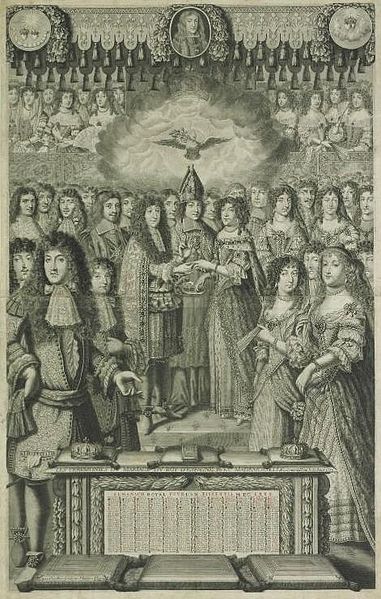
File:The proxy marriage of Marie Louise d'Orléans to Carlos II of Spain on 30 August 1679 the king represented by the Prince of Conti at Fontainebleau by an unknown artist.jpg
Proxy marriage


The bridegroom himself was not exactly a promising prospect either. Despite having the decided advantage of being king of Spain, Charles II was the result of generations of intense inbreeding and is thought to have suffered from several debilitating disabilities as well. The combination was not attractive for a young woman who was already determined to marry someone else. Her future husband was notoriously unattractive and prone to illnesses; while it was suggested that he was feebleminded, there is little to suggest that that was actually the case. He was also an avid hunter which would have been impossible if he had been entirely disabled.

The behaviour of the Spanish king was erratic, at best. Having become notorious for his fits of rage at his own courtiers, he had become besotted with his future wife from the moment he received her portrait. He continued to be devoted to her but also came to resent that she never conceived a child.


Another dreaded aspect was the extremely restrictive Spanish court. Whereas Versailles was ruled by etiquette, Madrid was strangled by it. The lives of the monarchs were so isolated by the countless prohibitions on direct contact with them that Marie-Louise would inevitably have a very lonely life. Furthermore, any carefree private life was entirely ruled out.


The preparation for the big event was a mixed affair. While the bride was obviously downcast and often seen weeping, her father relished both the idea of having a queen for a daughter and being able to equip her with a splendid trousseau. Meanwhile, the bride continued her outward display of grief at what she considered a terrifying fate. The wedding by proxy took place on 30 August 1679; the couple was married in person on 19 November that year.


Ficheiro:Marie Louise d'Orléans by Mignard wearing the Fleur-de-lis (showing her dignity as a Grand daughter of France) and the Spanish crown.jpg
Marie-Louise as queen of Spain 

Upon her final goodbyes to her family, she was once again reminded of the purpose of her new life by Louis XIV himself; the king informed her that it would be the greatest unhappiness if she ever saw France again. 

Undoubtedly, this did little to comfort the teenage-bride and indeed she never did see her native country again. Finding a devoted husband in Charles II, she nevertheless suffered from his sterility - which was blamed on her - and the suffocating life at the Spanish court. Besides being obliged to witness the Inquisition perform its terrible practices, she was prevented from even looking out the windows of the royal palaces by etiquette. Her every move was scrutinized but the monotony was not broken up by the opulent parties of Versailles. Instead, the court of Madrid was oppressive and dour. It was not long before Marie Louise's fears for her future seemed to come true; after ten years of gilded solitude, Marie Louise died suddenly at just 26 years old.

Chosing Another Madame: The Choice of Elizabeth-Charlotte

The untimely death of Henrietta of England, Duchesse d'Orléans, in 1670 meant that there was (in the words of Louis XIV) a vacant position at court: that of Madame, sister-in-law of the king. Such an elevated position warranted a princess from impeccable background. Henrietta herself had been a beautiful and well-educated woman who was beloved by her brother-in-law. Undoubtedly, it would be a difficult task to step into her shoes.


The choice fell on the nineteen-year old Elizabeth Charlotte of the Palatinate. Unlike her predecessor, Elizabeth Charlotte was no beauty but had a strong intellect and even stronger opinions. The choice might seem a rather odd one. France had preferred to import their royal wives from the major powerhouses of Europe, particularly their southern neighbor of Spain. Furthermore, Elizabeth Charlotte's family were not rich nor did they rule a particularly large or strategically important territory. The Palatinate was located in the middle of modern Germany and was made up of many, some very small, territories. So why was Elizabeth Charlotte chosen?


As for Spain, there were no suitable princesses available. The reigning king, Charles II, was notoriously inbred and apparently infertile. Even if he had had a daughter by his first wife, the idea of a union between her and Philippe was unthinkable. The problem was that the girl in question would have been Philippe's own granddaughter, as Charles' first wife was Philippe's daughter, Marie Louise. Even the premature death of Marie Louise and her replacement by Maria Anna of Neuburg did not result in a princess; she would undoubted have been far too young as well. Thus, Spain was not a possibility.


undefined
Elizabeth-Charlotte at the time of her
marriage


The choice of a royal bride was always a matter of politics. In this case, it was the foreign politics of Louis XIV that placed the unlikely candidate of Elizabeth Charlotte at the court of Versailles. The Sun King's combination of diplomacy and military might had ensured that the neighboring states were neutralised as a threat to France - except for the Palatinate. Hitherto, the Palatinate had had no definitive pact with France which provided France's enemies with a potential route directly to the French border. It would also enable the king to expand his interests to other German states.

There was also the possibility of physically pushing France's own borders. In lieu of a dowry - the Elector being both unwilling and unable to pay a large enough sum - the succession rights of Elizabeth Charlotte remained intact. Should the male line fail, France might just claim the territory in her name - as it happens, that is exactly what happened. In 1685, Charles II of the Palatinate - or Karl as Liselotte would have known him - died. He had been the brother of Elizabeth Charlotte and had had no children by his wife, a Danish princess.

This prompted Louis XIV to raise the claim of his sister-in-law which famously resulted in the ravaging of Elizabeth Charlotte's homeland, including the palace she had grown up in. Elizabeth Charlotte would never forgive her brother-in-law for this assault on her native country but preferred to assign blame to Louvois.


By 1671, this was still in the future but remained a very strong argument for the choice of Elizabeth Charlotte. Furthermore, she might not have been a royal princess in her own right but she was connected to important families. For instance, she was the granddaughter of the King of Bohemia and the great-granddaughter of the King of England. Such distant ties might potentially prove desirable.

For the bride's father, Charles Louis (Karl Ludwig) the union was beneficial. There was the obvious attraction of a high-ranking match for his daughter, especially as he was unlikely to have thought of marrying her so advantageously. However, the Elector realistically had little choice. Imagine that he had refused the offer altogether. He would have made a powerful enemy who had a dominating presence in every state surrounding him. Viewed in that light, agreeing to a marriage was the preferable option even if it meant having his daughter convert to Catholicism.


undefined
Philippe, ca. 1670 


That was another thing that nagged the courtiers of Versailles. Elizabeth Charlotte was born a Protestant, had been raised a Protestant and had been educated in a remarkably religiously tolerant society. However, a member of the French royal family could not possibly be anything but a Catholic. Such matters were not typically a hindrance as a bride was easily converted. Yet, the Protestant family from which she came was far from pleased at the prospect. In the end, the Elector begrudgingly agreed that she could convert but stipulated that the conversion could only take place once she had left his own territories. Elizabeth-Charlotte herself was not too pleased about this forced conversion but accepted it for the good of her family.


The interference of Anne of Gonzaga should also not be overlooked. Anne was herself a member (by marriage) of the Palatinate-house; as such, she was the "original" Princess Palatine at the court of Louis XIV. Having been raised in France, Anne was a half Italian/half French lady who had been married to Edward of Simmerm, son of a former Elector of the Palatinate. She managed to get one of her daughters married to the Prince de Condé and maintained a close relationship with the French court. She was quite involved in many of the arranged marriages of her relatives and thus did not hesitate to suggest her niece-by-marriage, Elizabeth Charlotte. Interestingly, Anne was a close friend of Philippe which might have been a reason for him accepting the match without further ado.


As for Elizabeth Charlotte herself, she would later reveal to an old friend that she would much have preferred remaining unmarried. She had little inclination to marry anyone and had undoubtedly heard of the somewhat scandalous life of her future husband. Also, her predecessor had died suddenly with rumours of poisoning swirling which hardly added to any incentive she might have had. Nevertheless, Elizabeth Charlotte was a pragmatic to the core. As she stated in one of her numerous letters, marriages were made in heaven - they were one's destiny and one could not avoid them.

Elizabeth Charlotte, Princess Palatine, Duchess of Orleans, with her son Philippe, later Regent of France, and daughter, Elizabeth, later Duchess of Lorraine
Elizabeth-Charlotte with her two
surviving children: Philippe and yet another
Elizabeth-Charlotte

The matter of fertility was also an issue. The entire reason for marrying off Philippe again was that the house of Orléans needed an heir. Elizabeth Charlotte was nineteen at the age of their marriage and by all accounts a healthy young woman. Her own mother had had two children and would likely have had more if her marriage to the Elector had not dissolved in a truly spectacular fashion. Meanwhile, the Elector had a staggering eighteen children!

Traditionally, German princesses had a reputation for being particularly fertile which certainly suited the purpose. Elizabeth Charlotte happened to be of a childbearing age - 19 years - and did indeed fall pregnant not long after her wedding which can only have seemed to confirm the theory.


It is hardly a wonder that the marriage between Elizabeth Charlotte and Philippe was a rocky one. Dynastically, it was a success as the couple produced both an heir and a daughter, but their personal relationship was quickly soured by their different dispositions. Elizabeth Charlotte viewed marriage as an inevitable duty which she had not sought herself. Meanwhile, Philippe was not too pleased at having a wife who was less than attractive; added to that was the life-long influence of his lover, the Chevalier de Lorraine. While the marriage served its political purpose (from the French point of view) the people involved would likely have been happier if they had been left alone.

Tuesday, 23 May 2023

Beauty and Scandal: Filles d'Honneur of Madame

The household of Madame, the wife of Louis XIV's only brother, was large by default. When Elizabeth-Charlotte arrived in France as the second wife of Monsieur, she automatically assumed the role of second lady in France. Thus, the establishment which surrounded her had to be suitably large and impressive. 


Amongst the more celebrated aspects of her household was the contingent of four filles d'honneur - "girls" in waiting, thus called because of their unmarried state. This also meant that the position was typically meant to be somewhat short-lived and definitely temporary. It would usually be terminated when the young ladies were married off. Consequently, both Henrietta of England and Elizabeth-Charlotte of the Palatinate had plenty of filles d'honneur come and go in their service.

These young ladies were invariably from noble families but there seems to have been another requirement: beauty. The filles d'honneur of Elizabeth-Charlotte were renowned for their beauty which helped to attract more visits from the king himself. Madame herself did not scruple at such an arrangement as she enjoyed the frequent visits from her brother-in-law.

However, the combination of young, beautiful and very eligible ladies and a court dictated by courtly romance, scandals were bound to arise.


The Duchess of Orléans by Rigaud.jpg
Elizabeth-Charlotte

The most infamous character from Madame's gaggle of filles d'honneur was Mademoiselle de Fontanges. She was considered immensely beautiful and quickly caught the eye of the king who impregnated her. She was one of the only women who ever posed a serious threat to Madame de Montespan's position and she might just have supplanted her. Yet, Mademoiselle de Fontanges lacked one thing that Madame de Montespan had in abundance: wit. The young Marie Angélique was notoriously "stupid as a basket" but nevertheless charmed the king with her youthful ways. Her pregnancy progressed but when the time came for her to give birth it quickly became apparent that something was wrong. She was prematurely delivered of a son during a childbirth which was a downright disaster. For a while she was thought to recover but was considered "an invalid" due to her ordeal. Sadly, she never recovered and died at just 19 years old.


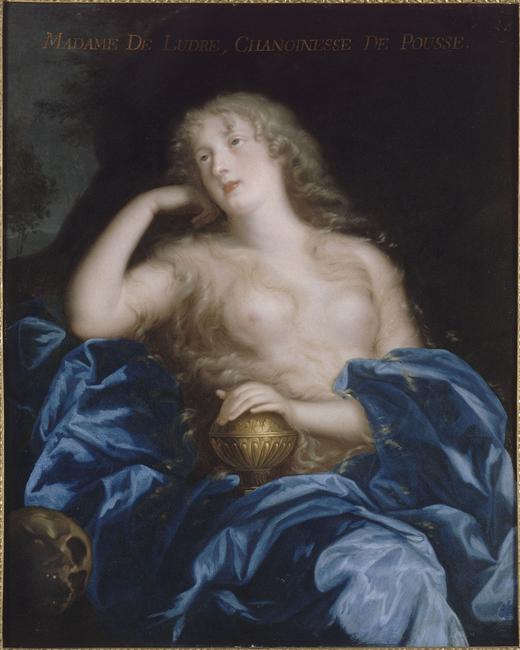
The household of Madame furnished the king with another mistress: la belle Ludres. The gorgeous Isabelle de Loudres likewise captured the king's attention and had more wit than Fontanges but little intelligence. She was extremely haughty and played her hand too quickly. Flaunting her royal favour and openly fanning suspicions that she, too, might replace Madame de Montespan, the king quickly tired of this drama. It was bad enough that Madame de Montespan was furious at such brazen attempts at supplanting her but even worse that Ludres occasionally gave the impression that she had more power over the king than she actually had. Thus, her time in the king's bed was cut short and she retired to a convent.


Portrait de Madame Marie-Elisabeth de Ludres, chanoinesse de Poussay , maîtresse de Louis XIV, représentée en Marie-Madeleine.jpg
La belle Ludres

The king was not the only nobleman who searched for love - or variants of it - at the Palais-Royal. Uranie de la Crompte-Beauvais caught the eye of the Comte de Soissons who decided to marry her. This caused some scandal as Uranie was said to be an illegitimate daughter of an écuyer in the service of the Prince de Condé whereas the Comte de Soissons belonged to the powerful Soissons-Carignan family. The marriage was therefore conducted in secret which did not help the scandal. Especially the mother of the groom was furious as the marriage eliminated any chance of an alliance with either a French or a Savoyard princess. Uranie herself is said to have refused the king's advances which led to the couple leaving the French court for Savoy.


Louise de Kéroualle had served the previous Madame - Henrietta of England - and would later set out on an illustrious career as the mistress of Charles II of England. Across the channel her position earned her the title of Duchess of Portsmouth while she enjoyed that of Duchesse d'Aubigny while in France.


The case of Mademoiselle de Loube provides an ample mystery. Françoise de Loube is mentioned directly in one of Madame's numerous letters; on 12 March 1718, Madame refer to the "Loube-affair", seemingly reminiscing of something that happened long ago. However, exactly what this "affair" entailed in not quite clear. Madame did not mention in it any previous (surviving) letter but a few of the other contemporary writers provides bits and pieces of the mystery. A semi-popular ballad refer to the young Loube as yearning for an end to her post as an - unmarried - fille d'honneur. The ballad heavily implies that she was eager to find either a husband or a lover. However, when the Marquis de Dangeau mention her in 1686, she has resolved to become a nun. So, what happened? It is entirely possible that the public ballad was completely wrong; after all, these were often meant to mock and degrade courtiers and thus did not rely on facts. Yet, it is tempting to speculate whether her sudden turn to religion was the result of something else - perhaps an unfortunate love affair?

Either way, Françoise did not become a nun but was potentially transferred to the service of the dauphine in 1689. I have not been able to find any trace of her marrying which further add to the mystery.


46C0D94A-F382-470E-9F13-2A9645063F85
Mademoiselle de Séry

Even Madame's own son was not immune to the attractions of his mother's household. Philippe II (later regent of France) became enamored with Mademoiselle de Séry. The young lady was born Marie Louise Madeleine Victoire le Bel and served as fille d'honneur when she became pregnant. This immediately caused her dismissal but Philippe II made every gesture to acknowledge to child. For one, he provided her with a house and income before publicly announcing that she was his official mistress. She was later given the title of Comtesse d'Argenton. Their relationship ended in 1710 upon which she asked to become a nun - surprisingly, Philippe refused her request and provided her with a pension and a husband instead.

Whereas Elizabeth-Charlotte enjoyed the royal attention garnered by her pretty attendants, she was far from the only one to use such attributes to manipulate the king. It has been suggested that Anne of Austria and Philippe were eager to dispel rumours that Louis XIV and Henrietta of England were engaged in an affair. The way to do this was to provide the king with a suitable alternative. Consequently, three young women were chosen amongst Madame's own filles d'honneur to provide that distraction. These included a young Louise de La Vallière (the king's first maitresse-en-titre who famously attempted to flee to a convent before being finally permitted to cloister herself) and Bonne de Pons.


By the death of Louis XIV, it was deemed expedient to suppress the office of fille d'honneur to Madame. Elizabeth-Charlotte herself was furious at having to let them, particularly as she suspected the move to that of Madame de Maintenon, her old foe. Madame herself enjoyed the company of her young attendants as they made her laugh. She utterly disagreed that they were unruly as she had both a governess and a sous-governess to educate and chaperone them. Yet considering the many scandalous stories to come from this single part of Madame's household perhaps its suppression was for the best.