Monday, 18 September 2023

The Battle of the Brothers: Philippe & Louis

The balance of power between Louis XIV and his only brother, Philippe, had never been the slightest askew. Philippe was left entirely out of power and would eventually see his successful military career be halted, as well. Over the years, Philippe might have grumbled at the state of affairs, but he nevertheless understood the ways of the worlds.

Knowing full well that the instruments of power were out of his reach, the Duc d'Orléans focused his attentions on his satellite court at his various splendid residences, including the Palais-Royal and Saint-Cloud. Here, the death of his first wife, Henrietta of England, had left him without an heir to his immense fortune. After contracting his second marriage, the new Madame had quickly provided him with two sons and a daughter - both very much legitimate.

At Versailles, the king was not quite that fortunate. Marie Thérèse had given her husband six children but just one had survived childhood - the Grand Dauphin. On the other hand, the king's mistresses were far more fortunate in that department as both Louise de La Vallière and Françoise-Athénaise de Montespan had given him several living children. Living - but illegitimate. 

The king did his utmost to integrate his otherwise disenfranchised children a firm foothold in the upper echelons of French nobility. First by legitimising them, then by arranging marriage after marriage to the legitimate princes and princesses of the blood. Finally, the children of Philippe had grown enough to contemplate marriage and Louis eyed an opportunity.


Philippe I, hertug af Orléans 1640-1701 | Antoine Mathieu
Philippe, Duc d'Orléans


Initially, the idea had been a double marriage between the cousins. The heir to Philippe - the Duc de Chartres - was intended for Françoise Marie de Bourbon while Elisabeth-Charlotte was destined for the Duc du Maine. The attitudes of the parents were not particularly encouraging. The Duchesse d'Orléans was aghast and famously retorted to slapping her son in public for his acquiescence to the marriage before turning her back to the king himself. Philippe, too, was not pleased at the prospect but knew too well that his brother's will always carried in the end - better to agree immediately and reap the benefits of cooperation. 

In the end, only one of the marriages materialised: that of the Duc de Chartres to Françoise Marie. The couple were infamously ill-matched; he would later refer to her by the moniker "Madame Lucifer" whereas Françoise herself had made her sentiments clear when she declared that she cared not whether he loved her, only that he married her.

The official reasoning was that there were no other suitable candidate for the 17-year old Chartres. The on-going war ruled out any Catholic princess, the princesses of the blood were too young - so the only possible alternative was to bestow the king's own natural daughter on his nephew. The fact that a marriage could possible wait a year or two apparently did not seem reasonable.


undefined
Duc de Chartres, son of Philippe

The scene was set for family bliss (outwardly at least) which ought to have benefited the Orléans-family immensely. That was clearly the expectation of Philippe and his thought-process is not hard to follow. By bestowing his only surviving male heir on a woman who was a result of double adultery and legitimised to boot, the Duc d'Orléans was surely justified in expecting something in return. His own military career had been very promising but he had quickly become sidelined by the king. The turn had now come for his son to reap his own laurels. Consequently, the Duc de Chartres had been trained for years and by 1701 the War of the Spanish Succession had erupted.

Understandably, Chartres clearly expected to be given a prime command by his uncle/father-in-law. Yet, that was not to happen. Rather than being deployed to the front, the king kept him back to the scandal of both Philippe and Chartres. To the on-lookers, it was definitely a slap in the face and neither father nor son were prepared to overlook the snub.


Louis XIV's reasoning for denying his nephew a chance to shine was to be found in the very marriage that Philippe had reluctantly agreed to. As mentioned, the Duc and Duchesse de Chartres were anything but a happy couple, and the Duc had quickly taken an official mistress by the name of Mademoiselle de Séry. While not particularly unusual, Chartres had then taken to parading Mademoiselle de Séry for everyone to see. She was not the first one either - there had been two other ladies of dubious reputation which hardly added to the loving atmosphere at home. Naturally, the Duchesse could hardly help but seeing it as an insult - regardless of their clear dislike for each other, it was still an affront to her position.

Years of unfulfilled potential and seeing the pattern continue with his son - despite their sacrifice - brought Philippe to a rare outwards burst of rage against his brother. Meanwhile, Louis felt utterly justified in his conduct. The ground was laid for a serious clash on 8 June 1701 when the two brothers met for dinner at Marly. 


undefined
Françoise Marie

Initially, Louis reproached his brother for his nephew's "scandalous" behaviour towards his beloved daughter, Françoise. It is likely that Louis had expected the conversation to go as usual - a bit back and forth but eventually he would come out on top. However, Philippe was in no mood to humour his elder brother and immediately retorted that Chartres had done nothing which the king had not done himself to his long-suffering wife, Marie Thérèse. Apparently, Philippe pointed out that Louis had not exactly been discreet in his affairs so the argument that flaunting one's mistress was ground for public punishment was absurd. Amongst the things which Philippe allegedly threw in the king's face was the disrespect shown to Marie Thérèse when she was obliged to share the coach with both Mesdames de La Vallière and de Montespan - an incident which had caused people to gather to look at "the three queens".

One can only imagine the shock of Louis who had become increasingly focused on his religious persona after the ascent of Madame de Maintenon. Having his former behaviour thrown back at him was likely neither welcome nor even comparable to the aging king. However, if Louis had expected the reprimand to be a brief - and singular - charge from his brother, he was sorely mistaken.

Years of pent up frustrations were bubbling up to the surface. Whilst unspoken at this particular meeting, Philippe had had to suffer much at the hands of his brother - and Louis undoubtedly felt the same way. One thing was being utterly kept from any influence but the passing over entirely of Philippe - and his son - when it came to the candidature for the throne of Spain was insufferable. Given that Louis had secured his line (the devastating year of 1712 was still a decade away) it was incomprehensible to Philippe that he was not even considered when the crown of Spain became vacant. Louis XIV had chosen his second-oldest grandson, the Duc d'Anjou, as his official candidate and even presented him to the court as the king of Spain. Philippe was - once again - passed over and left wondering where his claim had gone. After all, his own claim to the Spanish crown was equally as strong as the Duc d'Anjou's, stronger even, if one considers that Philippe was the elder.

Philippe had clearly not forgotten the promises made when he agreed to let Chartres marry Françoise - promises that Louis had not kept entirely. Whilst the official ownership of the Palais-Royal had indeed changed hands and the Chevalier de Lorraine had received a handsome pay-off and a knighthood of the Saint-Esprit, there was something vital missing from the bride's dowry: a key role for the Duc de Chartres in the coming war. 

Added to that was the payment in full of the immense dowry promised. Considering the circumstances, Louis had seen fit to double to dowry he had given to his other daughter which raised the sum to 2.000.000 livres. Yet, the dowry itself had only been paid in full five years after the marriage upon the end of the Nine Years' War. One might argue that Madame was the greatest loser in the game - she had "lost" her son to the one thing she dreaded the most: an illegitimate princess. Adding to the injury was that fact that the marriage was largely promoted by her arch-enemy, Madame de Maintenon. She could not even rejoice at the financial gains as they were all given to either Philippe or the Chevalier de Lorraine. Madame herself saw not a sou.

undefined
Louis XIV in 1701


The problem was that although Louis loved his children, he was not blind either. He knew full well that the mésalliance between a legitimised person (even a king's daughter) and a legitimate prince of the blood was a massive concession on his brother's part. According to Hugh Stokes, the king retorted with a thinly veiled threat: the drain on the treasury caused by the new war meant that retrenchments in the royal pensions were inevitable. In other words - watch it or I'll cut you off.

This latest attack on the king's lack of fulfilling his own part was interrupted by the announcement of dinner. For a brief period, the brothers cooled down while dining but tempers were still raw when they parted after the food was cleared away. Whether anything of note was said between them is known only to them yet Philippe had clearly not obtained his goal of greater recognition for his son. During the whole of the dinner - witness, of course, by spectators - the king was noted to be his usual stoic self while Philippe was so obviously livid that some suggested he be bled immediately. Upon his departure, he was noticeably still furious.

That same evening, Philippe collapsed from a massive stroke which eventually proved to be his death. He died the next day at noon.

Sunday, 27 August 2023

Cabinet of Curiosities: The Duc de Sully

Few people managed to assemble a truly curious collection of oddities to rival that of the Duc de Sully. Louis-Pierre-Maximilien de Béthune was born in 1685 and seemingly took the conventional path of a male aristocrat: he joined the military. Over the years, he would acquire the rank of colonel of the queen's regiment but it was his taste for the oddities of life that never truly left him.

Art, natural history, medallions, and weaponry - all featured in the duke's collection which was housed in his private residences. The collection was divided into twenty categories of which a few choice pieces are repeated here.

Plenty of courtiers shared his taste but few collections are as well-documented as his. This is due to the fact that upon his death in 1761, his collection was sold - for this purpose, an exhaustive inventory was drawn up which has survived to this day. No fewer than 792 lots were put up for auction which shows the sheer size of the collection. The auction took place on 8 March 1762.


Lot - LOUIS PIERRE MAXIMILIEN DE BETHUNE, 6TH DUKE OF SULLY
The Duc de Sully

The collection contained numerous pieces of antiquity, including several very finely preserved statues of Egyptian priests and gods. Of the ancient Roman statues, the duke appears to have been particularly fond of Venus and Jupiter; both of whom he had several likenesses. Likewise, Etruscan antiquities, medallions and etchings were plentiful. Rather tellingly, the long list of bronze antiquities is quaintly ended with the listing of a bronze equestrian statue of none other than Louis XIV.

However, the "curious" pieces in the collection are the ones that truly draws attention:

  • An ivory tooth (likely an elephant tusk) delicately carved with bacchanalian scenes
  • A red coral still attached to a rock
  • Two nautiluses mounted on golden stands
  • Skin of a rattlesnake 
  • Petrified wood
  • A collection of starfish
  • A lantern discovered in an ancient sepulcher 
  • A gondola cut from rock crystal
  • A rhinoceros' tail and two horns
  • Fossil of marine animals
  • Antique weapons from the Far East 
  • A narwhale's horn
  • Various clusters of minerals 
  • A taxidermy ibis 
  • 326 coins from foreign countries
  • Various sea urchins 

Besides his obvious fascination with antiquity, the Duc de Sully had two other interests which clearly shines through: the Far East and natural history, particularly pertaining to the ocean. His collection was full of various types of sea creatures (both living and fossilized) including rare species of fish, starfish, corals, crabs etc. Likewise, he had an entire collection of gemstones, minerals and silver.

Animals, too, seems to have generally been a topic of interest for him. Amongst his numerous bronze sculptures, he had an entire little menagerie which included a wolf, a horse, a dog, a lion, a crab, a frog - even mythological creatures such as dragons and sphinxes.

Meanwhile, China and India has an entirely separate category dedicated solely to such exotic influences. Figurines, books, and even fabrics could be found amongst the lots at the auction. Japanese lacquerwork was also a frequent material amongst his cabinets. The duke would not have been alone in this fascination; Europe was deeply intrigued by the wonders of Asia with its magnificent luxury, revolutionary technology and utterly different traditions in art. The collection of books on the subject in his collection shows that the duke's interest was more than a mere trend but a genuine interest in the societies of the Orient.


The duc de Sully had arranged his collection in four connected rooms, as reported by d'Argenville. The first one housed etchings, maps and various drawings including numerous sculptures, particularly busts and two cabinets with fossils. The second room held his antiques, mainly the Egyptian ones, as well as his collection of engraved precious stones and antique jewellery. These were - like the fossils - kept safe in their own boxes. The third room was dominated by sea-shells - and the antique lantern - while the fourth room had medallions, coins and more antiques.


Catalogue d'une très belle collection de bronzes et autres curiosités  égyptiennes, étrusques, indiennes et chinoises [...] : [
Frontispiece of the catalogue prepared for the auction


The amount of antiquities amongst his collection might indicate that the duc de Sully had a penchant solely for times long gone. However, his collection also included several pieces of far newer date, including an etching of the wedding of princess Louise Élisabeth (Louis XV's eldest daughter) to the Duke of Parma - an event which he himself would have attended. This could indicate that the duke merely appreciated good craftsmanship. 

While the duke was not particularly scholarly himself, he was allegedly always prepared to show his collection off to those who might be interested.

Friday, 25 August 2023

Abel-François Poisson, Marquis de Marigny

When Abel-François Poisson de Vandières was born in 1725, no one expected him to cut a figure at the French court. His family were not aristocratic but rather financiers. Little to nothing is known of his early childhood; it was not until his 20th birthday that his life was drastically changed. 

In 1745, his sister became the official mistress of Louis XV and assumed the name of Madame de Pompadour. The elevation of his sister was the cataclysm of his career. Once established as the maitresse-en-titre, favours began raining down on Madame de Pompadour's relatives, including Abel-François. It did not take long before he was granted an important position as the next Dirécteur-Général of the Batiments du Roi - the head of the king's buildings. The post gave him a suitable reason to remain at court, an income and some status.

Abel-François was still a young man and he was entrusted to the care of Charles Antoine Coypel for his education. He was sent on a tour of Italy in 1749 during which he collected numerous pieces of art for the royal collection. Some of the pieces were put on display at the Palais du Luxembourg; this happened to make the exhibition the first museum in France.


undefined
Abel-François

Upon the death of the current Dirécteur-Général in 1751, he was recalled to France to assume his post. To the surprise of most people, he managed to survive the premature death of his sister and remained in his post until 1773 - the longest term served in an administrative post.

Yet, despite his lucrative post and obvious favour with the king, Abel-François was not particularly well-liked by his fellow courtiers. His temper was notorious and he was never able to escape the sense of inferiority of not having a noble background. It did not help his ego that his lack of an aristocratic title meant that he was known simply as Monsieur de Vandières at court; to remedy the situation, a marquisate de Vandières was quickly discovered. The friends he did manage to gather around him praised his intelligence and his keen sense for organisation - both key characteristics of a good administrator.

His character was difficult for the courtiers to understand. He never did acquire that tact which was necessary for court life and did not seem particularly interested in advancing himself as an aristocrat. For instance, he could easily have agreed to the demands of his sister that he marry an impoverished nobleman's daughter but he did not. At the same time, he was deeply conscious of the very lack of a coat-of-arms; perhaps he resented the idea of owing his nobility to a wife?

Abel-François even shocked his dinner guests one particular evening with an unexpected display of brutality. A household servant committed some minor blunder which caused Abel-François to fly into a rage which he did little to control. In front of his horrified dinner guests, he beat his servant mercilessly before dismissing him. The event caused considerable outrage amongst his fellow courtiers. While physical punishment had long been a stable of a household, the upper classes began to consider it uncivilized to use such methods. After all, noblesse oblige. 


François Abel Poisson


The incident caused Abel-François to be shunned by several high-ranking contemporaries.  However, not everyone was so easily deterred especially as Louis XV continued to show him considerable favour. Madame de Pompadour teasingly referred to him as petit frère which the king began imitating. Immediately, the star of Abel-François sky-rocketed as such a term undoubtedly indicated unbounded royal favour. To be sure, Abel-François enjoyed access to the king in a manner which few others could boast of. 

Nevertheless, he assumed to title of Marquis de Marigny in 1754. Over the years, he began to display the same taste for building as Madame de Pompadour had. He acquired numerous private residences which he filled with his immense collection of art. Professionally, he lend his considerable knowledge to various institutions including the École Militaire while acting as patron for now-esteemed painters such as Boucher, Soufflot and van Loo.

With his background as a bourgeois, an aristocratic marriage of the first class was out of the question. For years, he remained unmarried, despite the efforts of his sister to establish him firmly in the nobility. At last, he married at the age of forty-two to the just sixteen-year old Julie Marie Françoise Filleul. She was the illegitimate and unrecognised daughter of Louis XV by Irene du Buisson de Longpré. 

At this point, he remained largely out of sight. After the death of his sister several decades previously, Abel-François' tendency for privacy had increased. He had never shared her personal ambition and seemingly did nothing to further advance himself under the reign of the new king. On the contrary, he assumed a rather private existence.

The couple had a single child, a daughter who did not survive infancy. As he grew older, Abel-François began suffering from gout which greatly impeded him. He outlived Louis XV, saw the ascension of Louis XVI and the birth of the new generation of royal princes; despite his gout, his health was seemingly good. However, Abel-François died suddenly at the age of 56 in 1781.

Saturday, 22 July 2023

House of Phélypeaux

Few families have played such consistent part in the political engine of Versailles than that of the Phélypeaux. Originating near Blois, at the heart of France, the family had divided into two branches by the ascension of Louis XIV: Pontchartrain-Maurepas and La Vrillière.

The family had an iron grip on one of the coveted positions as Secretary of State; rather unusually, both branches were equally invested in the political game and both were remarkably successful. This made the family quite a powerful dynasty whose very power lay rather in their service than in their lineage. While their nobility was uncontested, they did not enjoy generations of ducal or princely rank. They were largely considered to be noblesse de robe as their family was almost exclusively committed to politics and parliaments rather than military service.


La Vrillière

Preceding the branch of Pontchartrain-Maurepas, that of La Vrillère began in the 16th century with Raymond Phélypeaux. Their name was derived from the fact that Raymond was seigneur of La Vrillière. Raymond had died before Louis XIII and consequently, the head of the branch was:

1. Louis Phélypeaux & Marie Particelli

Oddly enough, Louis was known by the La Vrillière-name rather than his otherwise established titles of Marquis de Châteauneuf or Comte de Saint-Florentin. Louis toiled away for decades within the inner machinery of political power and amassed several important posts, including those of Minister of State and Secretary for Protestant Affairs.


The couple had five children:

  • Louis
  • Balthasar, Marquis de Châteauneuf
  • Marie
  • Michel, Bishop of Uzès
  • Agnès


2. Balthasar Phélypeaux & Marguerite de Fourcy

Remarkably little is known of the second Phélypeaux; it must be surmised that he did not attract particular notice but managed his affairs in a quiet manner.

Marguerite - or Marie-Marguerite, she is sometimes referred to - was also a member of the noblesse de robe. Her father had been a councillor of the Grand Conseil during Louis XIV's minority. 

The couple had two children:

  • Louis, Marquis de La Vrillière
  • Charlotte Thérèse, Duchesse de La Feuillade


File:Balthazar Phélypeaux de Châteauneuf.jpg
Balthasar 

3. Louis II Phélypeaux & Françoise de Mailly-Nesle

Inheriting the job of Secretary for Protestant Affairs, he would also take on the role of Secretary for the Navy. He would later be replaced by a cousin, Jean-Frédéric, in the naval department but handed down the Huguenot-position to his own son. At court, Louis was known as the Marquis de La Vrillière.

Françoise served as Marie Leszczynska's dame d'atours which placed her in both considerable standing at court and provided her with a personal income. She was the grandmother of the infamous Nesle-sisters, four of whom became Louis XV's mistresses. However, she was not fond of the idea of Julie Louise being the king's mistress and therefore attempted to have her replaced with Marie-Anne.

Françoise was only married to Louis for five years before he died. She would later remarry to the Duc de Meilleraye, who happened to also die - three months after their wedding.

The couple had four children:

  • Anne Marie
  • Marie Jeanne, Comtesse de Maurepas
  • Louis, Duc de La Vrillière
  • Louise Françoise, ambassadress to Denmark

Louis II

4. Louis III Phélypeaux & Amélie Ernestine de Platen

Louis inherited the position of Secretary of Protestant Affairs and would later assume the role of head of the King's household; he would even take the post of Secretary of Foreign Affairs after the fall of Choiseul. After an impressive career in politics (which included the record for years in service), he retired in 1775. Louis was rewarded with the elevation to Duc de La Vrillière.

Amélie was the daughter of a German margrave; her family is still living while most emigrated to Denmark.

The couple does not seem to have had children.

Louis III


PLATEN ALLERMUND Amalie Ernestine von
Amélie Ernestine


Pontchartrain-Maurepas

The Pontchartrain-Maurepas was founded by Paul Phélypeaux who assumed the position of Secretary of Protestant Affairs. He died prior to Louis XIV's enthronement, as did his son, Louis I. This meant that by the time Louis XIV was crowned, the family was headed by Louis II Phélypeaux de Pontchartrain.

1. Louis II Phélypeaux de Pontchartrain & Marie de Maupeou

Whereas his cousins dealt with the ministerial posts, Louis focused on the parliaments. During particularly unrestful times, he managed to bring about a peaceful resolution with unruly parliamentarians which caught the eye of Louis XIV. Summoned to court, the king recognised his obvious abilities for bureaucracy and his efficiency; Louis was made Controller-General of Finances. He would later assume the ministries of the navy and of the king's personal households. Both were a testament to the king's satisfaction with Louis' work. Being made Chancellor of State, his intelligence was widely admired as was his ability to command respect without force; even Saint-Simon admitted that here was a man who knew what he was doing.

At court, he was referred to as either the Marquis de Phélypeaux or the Comte de Maurepas while also holding the title of Comte de Pontchartrain.

The couple had one child:
  • Jérôme, Marquis de Phélypeaux


Louis II

2. Jérôme Phélypeaux de Pontchartrain & (1) Éleonore Christine de La Rochefoucauld de Roye, (2) Hélène d'Aubespine

Like his father, Jérôme began his career in the parliaments before being groomed to take over his father's ministerial posts. He was particularly involved in the settlement of Louisiana (of French nationals, of course) and founded the Academie des Inscriptions et Belles-Lettres.


Éleonore was just 29 years old when she died although it is unclear what killed her at such an early age. 

Jérôme had five children by Éleonore:

  • Marie Françoise Christine
  • Louis François, Comte de Maurepas
  • Jean-Frédéric, Comte de Maurepas
  • Paul Jérôme, Marquis de Chefboutonne
  • Charles Henri, Bishop de Blois
Hélène gave him another two daughters:
  • Marie Louise
  • Hélène Françoise Angélique, Duchesse de Nevers

Jérôme 

3. Jean-Frédéric Phélypeaux de Pontchartrain & Jeanne Phélypeaux

Jean-Frédéric dutifully took over the family ministries and proved to particularly adept at the naval ministry; it was largely thanks to his administration that the French navy regained some international recognition. He had one of the most efficient networks throughout Europe which made it possible for him to foresee the maneuvers of rival states, particularly the British. Despite his obvious talent for his trade, he was overthrown in a coup headed by the Duc de Richelieu and supported by Madame de Pompadour, whom Jean-Frédéric had insulted.

Jean-Frédéric was recalled into service by Louis XVI, he committed his greatest blunder when he caved in to public pressure and recalled the parliaments. This would eventually have disastrous consequences and paved the way for the revolution.

Jean-Frédéric

The couple did not have children.


Interesting facts and anecdotes:

  • Jérôme was compelled to resign his ministries upon the death of Louis XIV but managed to keep them in the family 
  • It was Raymond Balthasar Phélypeaux who - as ambassador to Savoy - discovered the plot against France concocted by the Duc de Savoy
  • The Phélypeaux had a habit of reaching remarkably high ages; Jérôme died at 73 while his father lived to 84 and his grandfather to 72

Thursday, 20 July 2023

The Widowed Dauphine: Status of Marie Josèphe after the Death of the Dauphin

The marriage between Marie Josèphe of Saxony and Louis Ferdinand of France on 9 February 1747 bestowed the rank of Dauphine on the German princess. This automatically made her the second-highest ranking woman in France as well as the future queen.


Over the years, Marie Josèphe cemented her position by having no fewer than thirteen children; three of whom would become kings: Louis XVI, Louis XVIII and Charles X, while five were stillborns. For years, the position of Marie Josèphe was seemingly secure - until the death of her husband. Louis Ferdinand died unexpectedly on 20 December 1765, at just 36 years old. 

The loss was devastating to Marie Josèphe; the couple had grown very close despite having a somewhat unfortunate beginning to their marriage. Louis Ferdinand had only just lost his first wife whom he had become deeply in love with; his consent to the second marriage had been somewhat forcibly extracted which resulted in a less than ideal start to a new marriage. The entire relationship between the dauphin and new dauphine rested on how the new-comer might deal with the situation - and Marie Josèphe certainly rose to it. Rather than forcefully trying to chase the memory of the late dauphine from her husband's mind, she consoled him for his loss and gradually won his friendship. This would lay the foundation for a marriage of mutual respect and even love. 


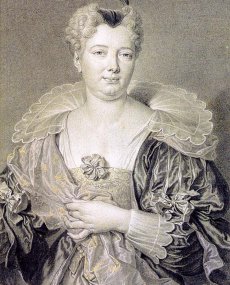
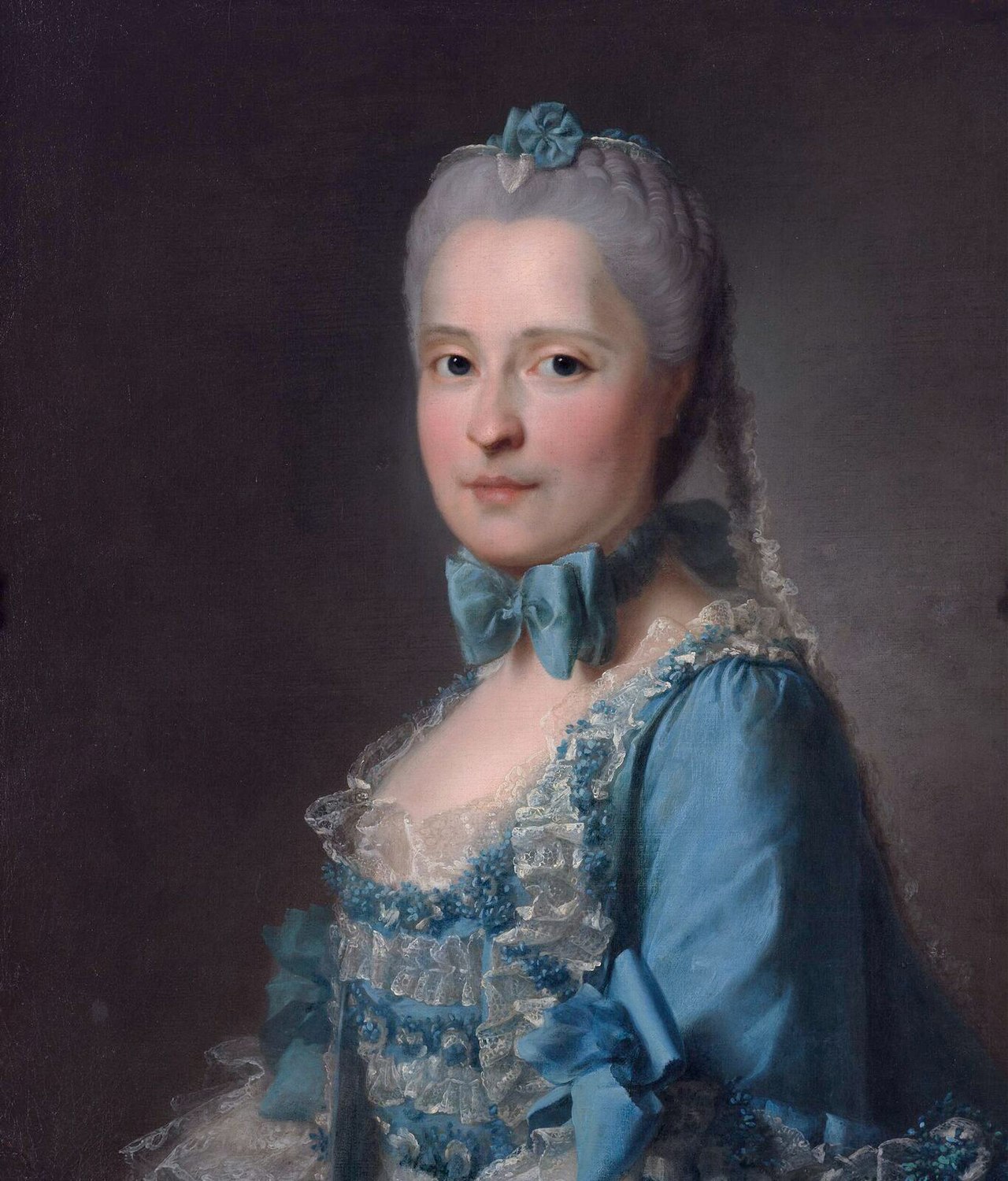
Marie Josèphe


By a single stroke of particularly ill fortune, Marie Josèphe had lost not just her husband, but her position at court. She would never become queen of France, as otherwise expected. This new situation left her in an uncomfortable position at court; there was no question of sending her back as she had given birth to three male heirs; consequently, one of them would inherit the throne after Louis XV and making her the king's mother. Yet, as a dauphine-no-longer, she could not claim the same status as before. Thus, her position was neither set in stone nor easily defined.


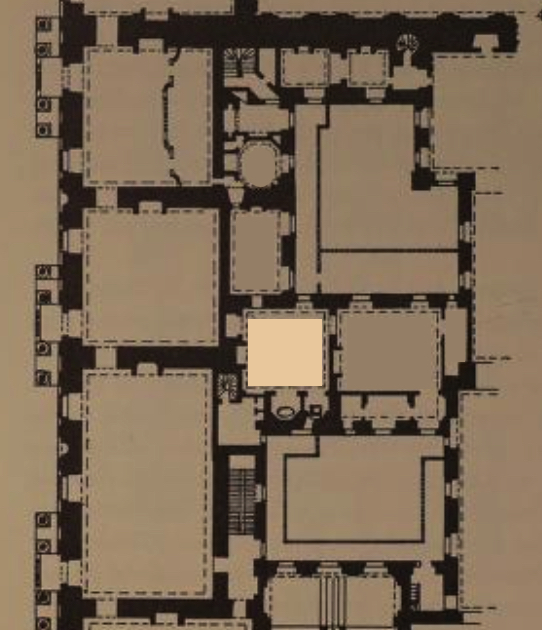
The first change after the death of Louis Ferdinand concerned her living quarters. She requested that she be moved elsewhere as their shared apartment held too many memories of her late spouse. Naturally, Louis XV consented and provided her with a new apartment: that of Madame de Pompadour who herself had recently died in 1764. This new apartment was as close to that of the king as possible. He made sure that she had everything she might wish for and visited her frequently - more than he had when Louis Ferdinand was still alive. Marie Josèphe herself did not resent having to occupy the apartment of the former maitresse-en-titre; she and Madame de Pompadour had had a good relationship, as it was the influence of Madame de Pompadour who had brought Marie Josèphe to France.


Marie Josèphe's mental health never recovered from the loss of Louis Ferdinand. She was reported as suffering from depression - some claimed that her dramatically expressed grief (including the hanging of black curtains everywhere in her apartment and insisting on having portraits of her husband on his deathbed) was a sign that she regretted the loss of the crown more than him. It is hardly fair to lay such a claim on a woman whose marriage had long been admired for being remarkably happy; yet, one would not be entirely surprised if she was disappointed at never becoming queen. After all, the future she had planned with Louis Ferdinand was inextricably bound up in their assuming the throne.

Another often-forgotten aspect was that Louis Ferdinand was only the last in a series of recent and devastating losses for Marie Josèphe. In a remarkably short period of time she lost almost her entire immediate family: her mother died in 1757, her sister in 1761 while both her father and eldest brother died in 1764. Added to that were the numerous children she had already lost. It is hardly surprising, then, if Marie Josèphe should succumb to a severe depression.


Louis Ferdinand

The timing itself was not fortunate either. Marie Josèphe was just 34 years old which meant that she might live on for many years. Technically, this would place her in the same position as the king's daughters whose very lives was seen as a drain on already strained finances. However unlike Mesdames, Marie Josèphe could not hope to alleviate that strain by marrying and thus removing herself from court - as stated, her position as mother of a future king made her place at court certain. The question remained - in what capacity?

She would no longer be the second-highest ranking lady in France nor could she be entirely discarded. The only thing that could prevent her from slipping entirely into the shadows was her close relationship with the king. At court, proximity to the monarch was the foundation for one's status there. Louis XV never showed any signs of lessening his sympathy for his bereaved daughter-in-law which would likely have been beneficial to her later years.

As it happens, the king was very well aware of the changed circumstances of his daughter-in-law. He announced that it was the natural right of any mother to follow in the footsteps of their children; while he could not offer her a crown any longer, she was to enjoy her position until her son became king. Thus, the king had decided on her future fate. It was further noticed that Louis XV went out of his way to console her, granting her everything she wished for.


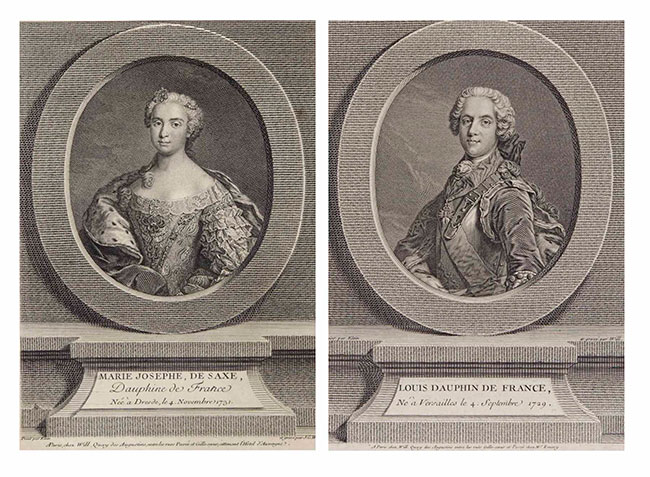
Dual portraits of the dauphin and dauphine


It is interesting to speculate what might have happened to Marie Josèphe if she had not had children by Louis Ferdinand. At 33 years of age she would have been considered too old to remarry to another heir as the likelihood of her becoming pregnant would be slim to none. Likewise, if the court of France were to simply sent her back to Saxony, this would - naturally - be seen as a massive insult causing political damage to the two countries' relationship. One might wonder whether Marie Josèphe might not have been persuaded to enter a nunnery, if that had been her situation. Given her noted piety it is not difficult to imagine that she would have accepted what must have been the best possible outcome for all parties.


Oddly enough, no other dauphine had been in the same position during the age of Versailles. Marie Anne Victoire of Bavaria, Marie Adélaide of Savoy and Marie Raphaëlle of Spain (Marie Josèphe's predecessor) had all predeceased their husbands. While Marie Antoinette would outlive her husband it was only for ten months before she, too, was executed. Consequently, the court of Versailles had not seen a similar situation since Mary, Queen of Scots, had become widowed in 1560.

Therefore, the decision on behalf of the king to allow Marie Josèphe to keep her prerogatives could have been decisive in future similar situations - that is, if the monarchy had not fallen in the following generation. 


If anyone would still have doubts as to the ci-devant dauphine's status, they were settled definitively in 1767. Just 15 months after the death of her husband, Marie Josèphe caught the same disease which had sent him to his grave: tuberculosis. Marie Josèphe died on 13 March 1767 at just 36.


The Lost Bathrooms of Versailles

The transformation from royal residence to national museum undertaken by Louis-Philippe was a harsh ordeal for Versailles. While it gained the so-called Empire-rooms - and the Salle des Battailles - it lost the majority of personal apartments of the resident courtiers. This included the accommodation for their servants and their private installations. Sadly, the few semi-permanent bathrooms of the royal family were also demolished. 

This has led to the idea that Versailles was inhabited by people who never washed - while fixtures such as permanent bathtubs were rare, the ideals of hygiene advanced rapidly during the 18th century. This meant that the majority of the royal family had their own, private bathrooms. Sadly, only three survives today: those of Madame du Barry, that of Louis XVI (without the bathtub) and that of Marie Antoinette.


Marie Leszscynska 

The queen's interior apartment today entirely shows the taste of its last inhabitant - Marie Antoinette. Her predecessor, Marie Leszczynska, had her own distinct style which was gradually replaced as the new queen made her mark on the few rooms allocated to the queen's personal use.

Whereas Marie Antoinette's bathroom is largely intact, that of Marie Leszczynska is entirely gone. It was replaced by a supplementary library. The bathroom was installed in 1728 and was remodeled in 1769. The queen made regular use of her bathroom which is attested by the fact that it was temporarily closed due to maintenance in 1746; Marie Leszczsynska had to make use of her husband's bathrooms while the plaster was still moist. This particular cabinet was done in a blue-grey colour scheme; it was joined immediately by a small cabinet in which she could relax after her bath. That cabinet was decorated by five large paintings of landscapes by Oudry.

Meanwhile, the bathroom itself was decorated by Natoire who chose pastoral scenes with a definite poetic theme. He was joined by Verbeckt and Guesnon who provided the panelling.  

The small rooms contained a water tank as well as a so-called "Peking-bed"; a style inspired by the Far East which was very much an interest of Marie Leszczynska. At the time of her death, the bed was in white and blue.


Marię Lezczynska's bathroom marked, 1747


Madame Adélaide

The first bathroom of Madame Adélaide received a makeover in 1737 which saw imitated marble painted on the walls; this was a far cheaper way of achieving that particularly expensive look. This bathroom was either changed - likely when she was moved to another apartment - or updated.

She had another bathroom which was made in 1765. This room overlooked what is currently the Louis-Philippe Staircase and was decorated with golden figures, mostly associated with water, such as fishing and swimming. The bathroom was directly connected with her then-bedroom (now Louis XVI's library).

Plans exist from the late 1780's which suggested an entirely new bathroom for the aging Madame Adélaide on the ground floor - they were likely never carried out.


Marie Josèphe 

While the reigning dauphine, Marie Josèphe's apartment included a small salle de Bain. It was decorated with stucco by Chevalier (the same man who had redone Madame Adelaide's bathroom); the renovations by the king's stucateur were only enjoyed briefly by Marie Josèphe as her husband died shortly afterwards. Her bathroom was oval in shape and delicately decorated with boiserie. The dauphine entered her bathroom from her interior cabinet.

Interestingly, Marie Josèphe shared a bathroom with her husband, the Dauphin Louis-Ferdinand, before it was demolished to make room for a new staircase.


Bathrooms were rarely mentioned in details in contemporary literature - whether that be correspondence or memoirs. Like today, they were considered particularly private areas and were rarely seen by any other than the owner and their staff. At Versailles, a permanent bathroom was the prerogative of the royal family; several courtiers submitted applications for erecting their own bathrooms in their apartments but were refused. This left them with the options of either having a bathtub being manually brought into their apartment when needed or using their private hotels in town - if they had one.


The Numerous Children of Lorraine

 The numerous children of the Noailles-family or even the constant pregnancies of Marie Leszczynska has attracted its fair share of attention, the equally impressive feat of Élisabeth-Charlotte d'Orléans is rarely touched upon.


Élisabeth-Charlotte was the only daughter born to the marriage of Philippe d'Orléans and Elizabeth-Charlotte of the Palatinate. For years, her parents searched for a marriage that would be suitable for a young lady of her rank; after all, her half-sisters had married a king and a reigning duke. Yet as she grew older and older, the political map of Europe made it impossible to find a similar mate for the young Élisabeth-Charlotte. Eventually, the choice fell on Leopold of Lorraine - a match which the bride's mother termed "meh". It was neither glorious nor beneath her daughter as it neither gained nor cost her anything.


The couple married in 1698 when the bride was 22 and the bridegroom 18 years of age. While the court might have snickered at the less than brilliant match, the two would happen to be particularly well-suited. Shortly afterwards, Élisabeth-Charlotte fell pregnant with her first child. Over the next twenty years, Élisabeth-Charlotte would give birth to fourteen children:

  • Léopold
  • Élisabeth-Charlotte
  • Louise Christine
  • Marie Gabrielle Charlotte
  • Louis
  • Josèphe Gabrielle
  • Gabrielle Louise
  • Léopold-Clément
  • François III Étienne
  • Élénore
  • Élisabeth-Thérèse
  • Charles-Alexandre
  • Anne Charlotte
  • Unnamed female

Tragically, only six would survive into adulthood. Added to that was the numerous miscarriages suffered by the Duchesse de Lorraine; while she gave birth fourteen times, she had been pregnant nineteen times. Of the ducal children, the following died prematurely:

  • Léopold - 1 year
  • Élisabeth-Charlotte - 11 years
  • Louise Christine - 1 month
  • Marie Gabrielle Charlotte - 9 years
  • Louis - 7 years
  • Josèphe Gabrielle - 3 years
  • Gabrielle Louise - 3 years
  • Élénore - under one year
  • Unnamed female - likely stillborn or died shortly after birth

The year 1711 would be particularly deathly for the family. No fewer than three children (Élisabeth-Charlotte, Marie Gabrielle Charlotte and Louis) all died within the same period of 12 months. Their deaths were attributed to an outbreak of smallpox. The little Élisabeth-Charlotte was the first to catch the dreaded disease which was quickly spread to her two siblings. Even though the girl was just 11 years of age, she had already been the cause of considerable political considerations. Her father preferred an ecclesiastical career for her as the Abbess of Remiremont; however, Louis XIV was concerned at the lack of a male heir  to the duchy of Lorraine and wished to keep Élisabeth-Charlotte out of the convent in case she would have to assume the ducal crown - a potentiality in which the king made it very clear that he was willing to back his niece. Sadly, neither Leopold nor Louis were to have their way - Élisabeth-Charlotte was long dead before any agreement could be made.


Description de cette image, également commentée ci-après
Élisabeth-Charlotte

One can only feel for the parents; at this point in time, the Duchesse de Lorraine had given birth ten times but only two children remained alive. Over the years, more would follow but only few would go on to have their own lineages:

Léopold-Clément

Léopold-Clément managed to survive the turmoil of infancy and was immediately trained for the army. By 1721, he reached his majority and was officially proclaimed heir to the duchy of Lorraine. He attended the coronation of Louis XV and was intended to set out for Vienna when he caught smallpox. The disease killed him in a few days - he was just 16 years old and had not married.


undefined
The duchesse de Lorraine with
either Léopold-Clément or 
François Étienne

François III Étienne

François inherited his brother's position as heir of the duchy at a time when the Duc de Lorraine was turning towards the Emperor rather than the king of France. This would have enormous influence on the future of François. By far the most famous member of the brood, François would later make a very illustrious marriage: Maria Theresia of Austria. He would become Holy Roman Emperor as well as king of Austria and Bohemia. This would make him the father of none other than Marie Antoinette.


Élisabeth-Thérèse

Élisabeth-Thérèse was born in the very year which saw three of her siblings die - 1711. Yet, she herself managed to escape contagion and even survive infancy. She was briefly considered as a bride for Louis XV but was passed over; instead, she was married to Charles-Emmanuel III of Sardinia. This, in turn, would make Élisabeth-Thérèse a queen. She gave birth to four children before dying at the age of 29 following her latest childbirth.


Illustration.
Élisabeth-Thérèse


Charles-Alexandre

With François poised to become Duc de Lorraine, another vocation needed to be found for Charles-Alexandre. He would eventually became governor of the Austrian Netherlands; this position as well as his marriage would prove just how far towards to Emperor the house of Lorraine had turned. He would marry Marie-Anne of Austria with whom he had children.

This marriage into the very royal family of the Emperor was likely due to the snubbing of Élisabeth-Thérèse. It was seen as an affront by Élisabeth-Charlotte that her own daughter - and a great-granddaughter of France - was passed over for an entirely unknown Polish princess.


Anne Charlotte

As the last daughter of an impoverished ducal house, Anne Charlotte was almost certainly destined for the church from an early age. She would become the Abbess of Remiremont like so many other daughters of Lorraine had been before her. Thus becoming a nun, she would never marry - she died at 59.


While the ducal remained very much attached to one another, the decision of Leopold to engage in an affair was a blow to his wife. Élisabeth-Charlotte chose to willfully ignore the affair which was carried on with a lady of her own household - a decision which earned her the respect of both their small court and her people. Nevertheless, her letters betray the heat-ache she felt at this infidelity.

It is hardly a wonder if the health of Élisabeth-Charlotte - both physically and mentally - was worn down after two decades of constant childbirth and loss of children. Yet, she managed to outlive her husband by a whole fifteen years. She would even act as regent while her son was underage; few could have known it, but Élisabeth-Charlotte was to be the last Duchesse de Lorraine, as the duchy would merge with the French crown.