Wednesday, 28 October 2020

Worn for War: Louis XIV

Uniforms & Armour


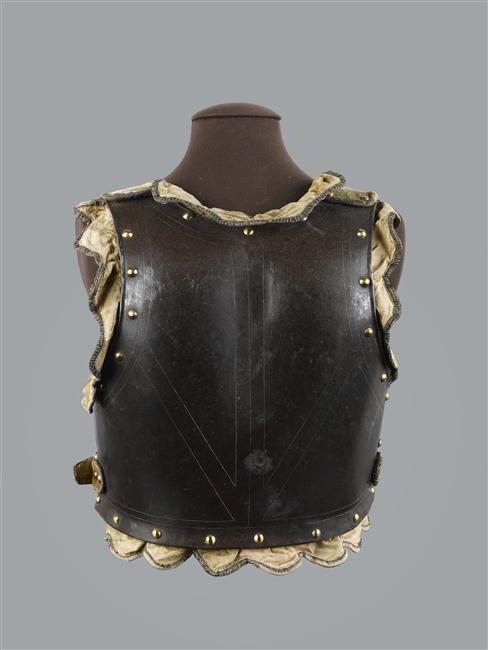
Considering that all courts across Europe had a tradition of sending their young aristocratic men into military service, it is hardly surprising that accessories for their martial part of life were common gifts. Louis XIV was gifted this armour in 1668 by the Republic of Venice. It was worn over the chest in an attempt to deflect incoming "projectiles" - whether in the shape of bullets, wood splinters or the like. It would seem that the plate has been subjected to some kind of use - note the indentation on the right side. Whether that happened during the Sun King's time or later is unknown.


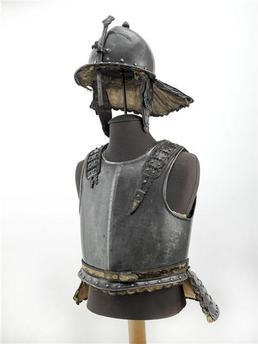
The breastplate below is historically associated with the Marèchal de Turenne, to whom it may have belonged. It was created in the latter half of the 17th century with an outer "shell" of iron and a lining of velvet.

The crude metal of the protective armour was neatly contrasted by ornate embroidery, lace and rich fabrics. This coat, waistcoat and breeches belonged to either a French General or Marèchal. It is dated between 1690 - 1710 which would destine it for either the War of the Spanish Succession or the Nine Years' War.
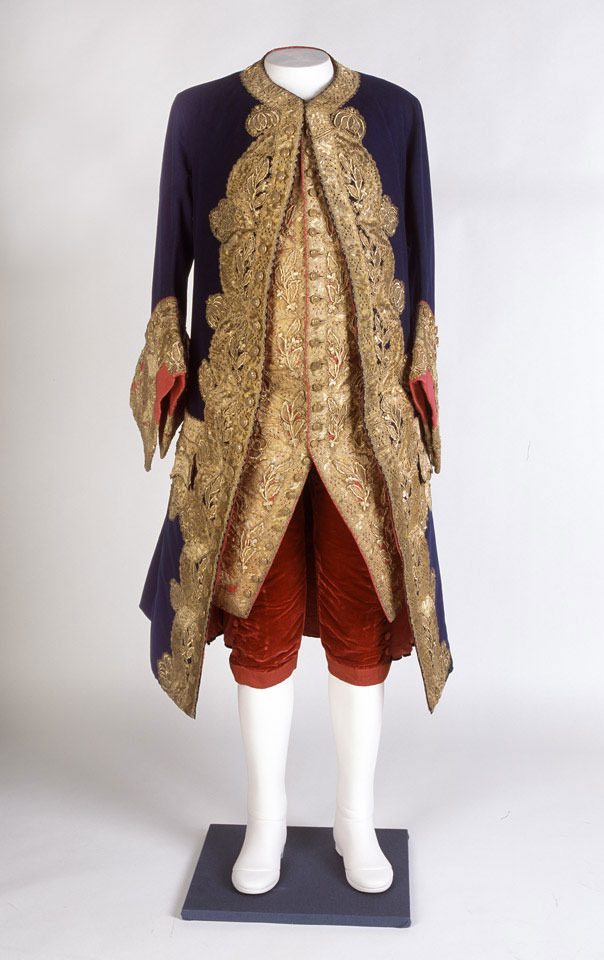
General Officer's or Marshal's coat, 1690 (c)-1710 (c)


While not technically a uniform, this remarkably well-preserved set gives a good impression of the main part of a cuirassier's armour during the 1650's. Photo credit: Musée de l'Armée, Dist. RMN-Grand Palais / Pascal Segrette. Just like the breastplate of Turenne's above, this one is lined with velvet.


While being from a slightly earlier period than what this blog usually deals with, these tassets were just too ideal to not include. They were created in 1630, either in France or Flanders. Tassets were meant to be strapped to the thighs, thus offering protection to this area. This pair was rather sophisticated as it has been designed to cover the larger part of the knee. The tassets was worn by a cuirassier.
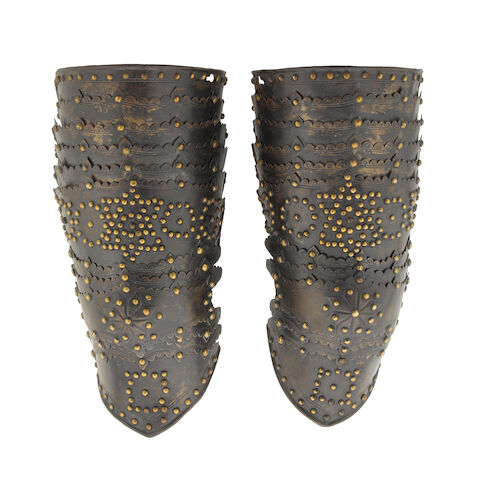
A Pair Of Tassets From A Cuirassier Armour


Another pair of tassets produced in 17th century France. This one covers the entire knee; one tasset is made up of 29 metal plates. The pair was sold at auction by Czerny's.


A pair of cuirassiers tassets dating: 17th Century provenance: France One complete with twenty-ni


Weaponry

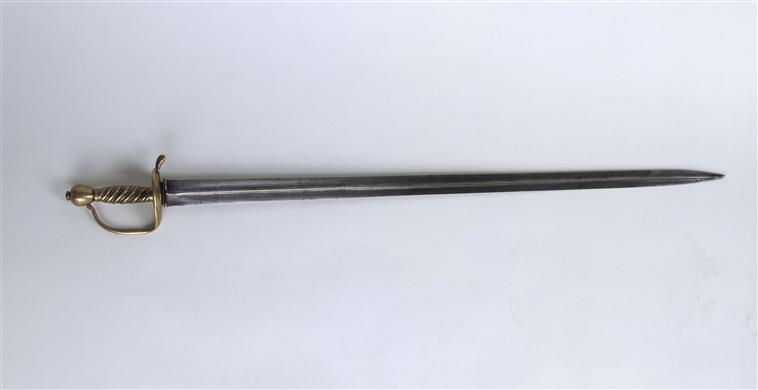
Swords were not only a symbol of aristocracy but (naturally) used in its intended setting: war. This particular sword belonged to an officer in the Tessé Regiment of Dragoons. It was made between 1685-90 - as such it could have been used in the War of the League of Augsburg.

In contrast to the sword above, the rapier below was not originally intended to be wielded on a battlefield. Instead, it was intended to serve as the customary accessory to a nobleman's everyday attire. Since the Middle Ages, swords were worn as a status symbol and this continue well into the Enlightenment and beyond. Indeed, the only official requirement for access to the palace of Versailles (for a male) was that he wore a sword by his side. This particular one (now in the Metropolitan Museum of Art in New York, from whose website this photo is taken) was made in France in the 1650's. Note that the blade is significantly slimmer than the sword above - but it was still very much capable of inflicting mortal injury.

Smallsword, Steel, gold, wood, copper alloy, French, probably Paris


It was not uncommon for the king to bestow especially beautiful articles of weaponry on men who had conducted themselves in an exceptional manner while fighting for the king. This sword was given by Louis XIV to his Captain of the Corsairs, Alain Porée in 1693. The latter had participated in the defense of Saint-Malo against the English onslaught where he had distinguished himself. Unlike the sword from the unknown Dragoon above, this one is clearly intended to be for more ceremonial use. It is not only heavily gilded but is adorned with portraits of both the king and the captain. 

Antique Weapon, Sabre Sword, British Army | M.S. Rau Antiques


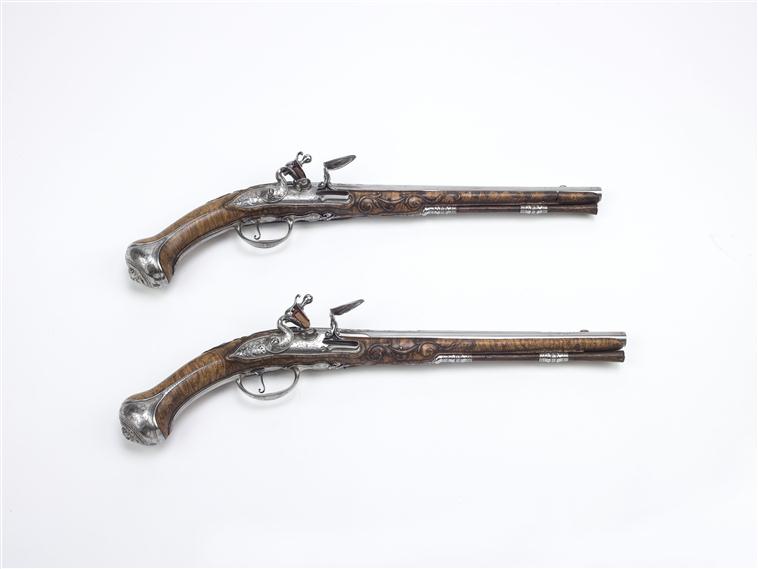
Not all weapons were intended solely for war. Hunting or shooting parties were common pastimes, so it was no unheard of for a man of the time to have a veritable armoury at hand - even in peacetime. These pistols were made for the Grand Dauphin and does not appear to have been made for use in active warfare. They are from 1687.


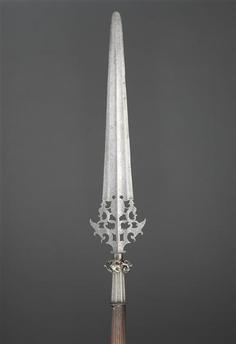
Generally, weapons were not an uncommon sight at court. Besides the mandatory sword worn by gentlemen and the sporting pistols of the aristocracy, the palace was heavily patrolled by both Swiss and French guards. Naturally, their primary function was to keep the king safe and they were fully equipped for the purpose. This pole arm was carried by the king's bodyguards between 1678-1710 and proudly display the sun - in clear reference to their sovereign lord. Note also the coat-of-arms with the French fleur-de-lys.


The one below belonged to a guardsman in the Dauphin's bodyguard - quite a difference between his and his father's! Nearest to the blade, there appears to be two dolphins (in their mythical shape) supporting the blade. This was quite common for articles belonging or referring to the Dauphin, as the French word for "dolphin" happens to be dauphin. The photo credit belongs to Réunion des Musée Nationaux.

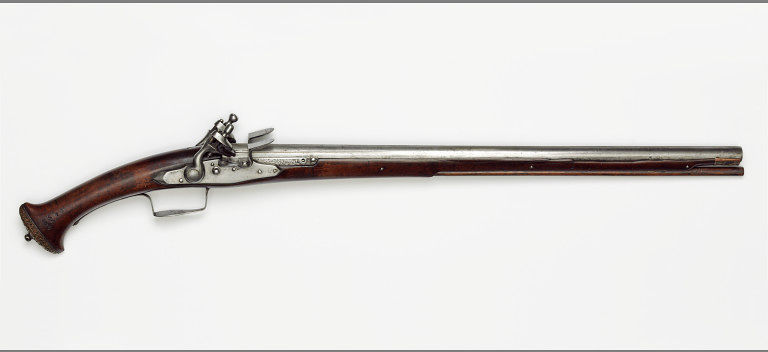
The firearm below is flintlock pistol from ca. 1650 and was made in France. The metalwork is more detailed than what one might think by a quick look at it. It is adorned with both cupids and flowers. It is currently in the collection of the English Victoria & Albert Museum.


Accessories 

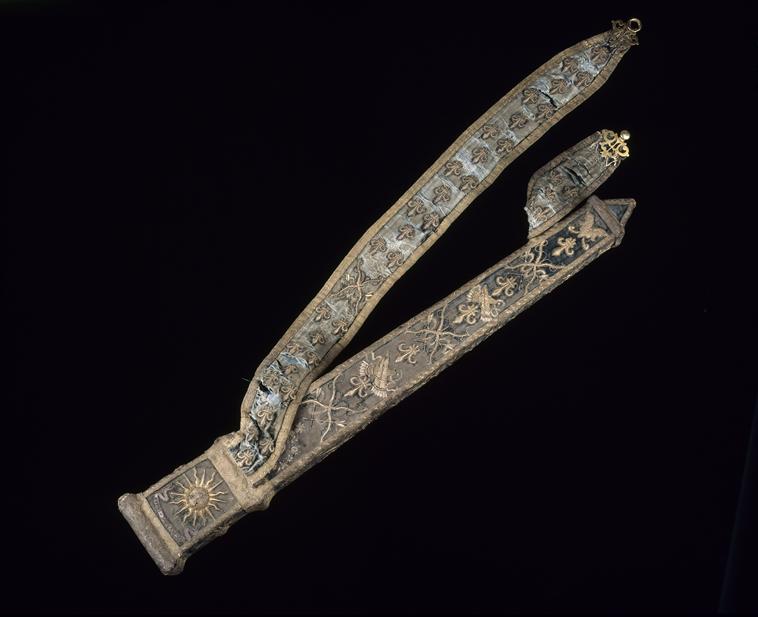
Going to war, as royalty, meant more than the political issue at hand. Once a member of the royal family arrived, he would often take part of or complete leadership. As such, it was necessary for him to be easily recognised. This sword sheath is adorned with the arms of the Duc de Bourgogne - note the fleurs-de-lys and the sun.
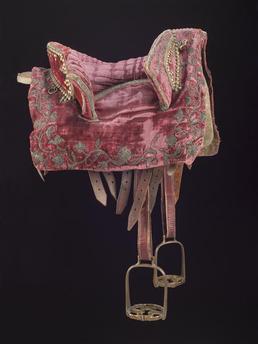
The saddle below (photo credit: Musée de l'Armée, Dist. RMN-Grand Palais / Anne-Sylvaine Marre-Noël) belonged to an officer. The saddle is particularly made in order for the rider to sit perfectly erect while performing the intricate maneuvers usually associated with French horsemanship. The officer must have been of some means; the saddle is made from velvet and has been adorned with golden embroideries.

Sunday, 25 October 2020

The Remarkable Fertility of Marie Josèphe de Saxe

In an age when marriages were conducted solely on a political basis certain things were looked for in a prospective royal bride. Naturally, her family (and thereby the alliance she would bring) was the major consideration and was often only challenged by one other aspect - her ability to bear children.

In France, women - even royal ones - held little to no official political power. Even a queen only had a chance of having political influence if she acted as regent for her son until he came of age. A foreign bride's entire success was determined by whether she had given birth to a healthy son. The court of Versailles saw plenty of such foreign princesses who not only put under immense pressure but risked being "returned" to their families if they did not fulfil their primary function. This had been the case with Mariana Victoria of Spain who was betrothed to Louis XV but was later sent home when the Prime Minister realised that she was too young to bear children in the immediate future. Marie Antoinette, too, stands as another example of a woman whose child-bearing capabilities risked an alliance between France and the empire of Austria-Hungary.  

In 18th century Europe, the country of Saxony was renowned for producing remarkably fertile princesses. This is hardly surprising when one takes a look at the rulers of that part of the Holy Roman Empire. Augustus III of Poland, who was also hereditary Duke of Saxony, had at least 14 children by his wife and his heir, Frederick Christian had 9 by his Austrian wife - also named Maria Josepha.


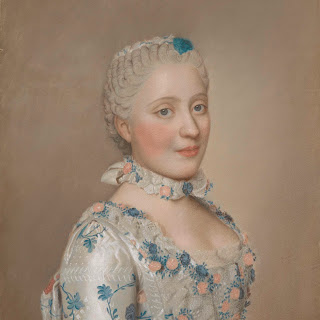
Marie Josèphe in 1749

Understandably, this caused Louis XV to look there when searching for a bride for his son. Amongst these royal women were one in particular whose fertility astonished even those who expected children from her. 

Marie Josèphe de Saxe was married to Louis Ferdinand, son of Louis XV in February 1747 and conceived shortly after. However, the then 16-year old's future as a mother was far from certain. Her first two children - been in 1748 and 1749 respectively - were both stillborn. Naturally, this caused some concern and before long tongues started questioning whether the new Dauphine were able to carry a living child to term.

Such scrutiny and pressure cannot have helped Marie Josèphe's health. Despite this, she was soon pregnant again and gave birth to a daughter, Marie Zéphyrine, who died at the age of 5. Those who questioned the Dauphine's fertility were quickly silenced.  Between 1748 and 1759 she gave birth once a year (except for in 1758). In 1762, Marie Josèphe found herself pregnant again but suffered a miscarriage. Her final child was born in 1764.

In total, Marie Josèphe gave birth 13 times - and buried 8 of her children before they turned 10 years old. Those who survived to adulthood were Louis XVI, Louis Stanislas Xavier, Charles Philippe, Marie Clothilde and Marie Élisabeth.


Portrait of Marie-Zephirine of France,as a little girl, 1751. Jean-Marc  Nattier.
Marie Zéphyrine - the first child of Marie Josèphe who was
not stillborn. Sadly, she would die at the age of 5 (just
two years after this portrait was painted)

It should also be noted, that it is possible that she suffered more miscarriages in early pregnancy. Bertrand Fay claims that she suffered no less than eleven miscarriages but this number seems a bit high considering that she spent almost a decade being constantly pregnant. Despite losing so many of her children, Marie Josèphe had still produced three future kings.

As the years passed, the talk of the Dauphine's fertility turned to fervent praise rather than censure. Upon the birth of the future Louis XVI, the Marquis d'Argenson said of her: "There is a brave German who is giving us so many heirs to the throne". The Marquis de Souvré went further and declared that "one should only take women in Saxony (for brides, that is)".

Praised or not, Marie Josèphe's fertility undoubtedly took a toll on her health. The process of carrying and then giving birth to a child causes immense pressure on both body and mind - and this was in an age with little to no actual knowledge of either bacteria or obstetrics. Seen in this light, it is a wonder in itself that Marie Josèphe not only survived 13 births but also an unknown amount of miscarriages and the subsequent risk of infection. In this regard, the praise of her contemporaries was quite merited. 

Saturday, 17 October 2020

The Massacre of the Duc de Brissac

Louis Hercule Timoléon de Cossé-Brissac had long played a prominent role at the court of Versailles when the 1780's came to a close. His loyalty to the crown remained even after the 6th October 1789. When the National Assembly decreed that the ci-devant king was to have a so-called "Constitutional Guard", it fell to the Duc de Brissac to led the guard - a task he took on willingly. His loyalty was aptly illustrated by his answer to why he chose to take on such a dangerous position: "I do it because I owe it to the king's ancestors and mine".

However, the National Assembly grew increasingly paranoid at the thought of the king having an armed guard at his side. Soon, they became convinced that it was only a matter of time before the guard would pose a threat to the new regime. Thus, it was disbanded. 

That was not the end of the matter for the Duc de Brissac. Louis XVI had attempted to warn his loyal courtier but in vain. Once again, the courage and loyalty of the Duc de Brissac shone through. He responded to Louis XVI's advise to flee with:

"Sire, if I flee they will call me guilty and you will be thought an accomplice; my flight would be an accusation against you and I would rather die!"

He was charged with treason; the claim was that he had encouraged the guardsmen to abandon the National Assembly and join the king's cause. Louis Hercule was to be sent to Orléans where he would face his "trial". Once at Orléans, he was imprisoned in Minimes where he was interrogated. 


Louis-Hercule-Timoléon de Cossé, duke of Brissac - Anonyme — Google Arts &  Culture
Louis Hercule Timoléon de Cossé-Brissac


The Duc did not lose his nerve behind bars. He set up games for his fellow prisoners to distract them from their dire circumstances. Nevertheless, he was not unaware of the position he was in. When the royal family were transported to the Temple he thought it necessary to rewrite his will - apparently, he knew the outcome of his upcoming trial. 

By September he was to be transported to Versailles. On the 9th September 1792, the wagon with 54 prisoners arrived at the former royal village. The Duc de Brissac stood upright in the third wagon with his blue sash fastened across his chest.  When the convoy came to a halt it was met by a group from Paris which has been described with the sinister term "assassins". According to some, they immediately asked who the Duc de Brissac were. Once he was pointed out they attacked - Louis Hercule was dragged down from the cart. He could not properly defend himself as his hands were shackled. Nevertheless, he managed to hold off his assailants for quite some time before he was cut down by a sword.

His attackers did not leave his body in peace. Instead, his ears and head were cut off and put on spike. From there they marched to the Château de Louveciennes where the mistress of Louis Hercule lived. She was particularly well known by the contemporary world as Madame du Barry. His head was then taken off the spike and thrown through her windows. As for the rest of his body, sources vary on what happened. Some claim that the limbs of those massacred were stuck on the fences of Louveciennes. 

Now, the remains of the Duc de Brissac are buried in the Cemetery Saint-Louis at Versailles.

Friday, 16 October 2020

Louis III de Bourbon-Condé, Prince de Condé

When Louis de Bourbon-Condé was born on 10 November 1668, he was immediately given the title of Duc de Bourbon. The third of his parents nine children, he would spent the majority of his childhood in relative obscurity. It was not until he turned 18 years old that Louis began to play his part as a courtier of Louis XIV.

By 1686, he was given the rank of Chevalier de Saint-Esprit. From then on, his military career blossomed. In quick succession he became first a colonel, then a Marèchal de Camp and finally a Lieutenant General. The mid-1680's were generally a busy time for Louis. Besides his newfound military life, he was also destined to make an illustrious match.

Undoubtedly, his future bride's identity had been discussed for years by his parents. They could hardly have imagined that they would be obliged to marry off their son to a woman who had been born illegitimate. The redeeming aspect was that that woman's father happened to be Louis XIV. Mademoiselle de Nantes was born by Madame de Montespan and fathered by Louis XIV. When the match was proposed, the majority of the court expected a prompt refusal on behalf of the young man's father. However, Henri-Jules de Bourbon-Condé had other ideas. In an attempt to gain royal favour, he agreed to the mésalliance.

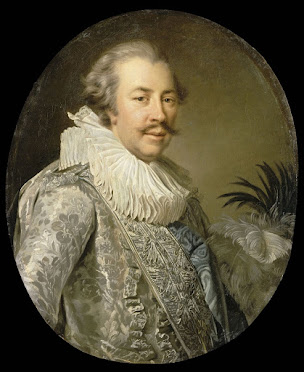
SAS LE PRINCE LOUIS III DE BOURBON-CONDÉ MONSIEUR LE DUC DE BOURBON PRINCE  DU SANG | Bourbon, Royal family portrait, French prince
Louis III de Bourbon-Condé

Thus provided with a wife, Louis entered Versailles were he was known as Monsieur le Duc. He did not cut a very striking figure. His family were generally known to be remarkably short - even for the times. Even though he was not as short as his doll-like sisters, he was still quite short. The more notable feature was his head. Louis suffered from macrocephaly, a condition that results in an unusually large head.

His education had been quite good and he appears to have had a sound understanding. Nevertheless, he was not exceptionally bright and had no need to further himself beyond his already exalted position. At Versailles, this meant that he faded into the background. The one point that did mark him out for attention was an unfortunate legacy from his father: insanity. Whereas Henri-Jules was known to have been incurably insane, Louis appears to have slipped further into madness as he got older but never reached the complete mental collapse of his father.

Louis' semi-royal bride provided him with nine children; the first of which was born a few years after the marriage.

By 1709, Louis inherited the title of Prince de Condé as well as the considerable assets of this title. However, he would not enjoy them for long. One night, he was driving across the Pont Neuf in Paris when he suffered a fit of apoplexy. Louis died on 4 March 1710.

Saturday, 26 September 2020

Cabinet of Curiosities: Comte de Menars

Abel-François Poisson, Marquis de Menars was known primarily through his connection to his sister: Madame de Pompadour. Just like his sister, he was an avid collector and had a rather substantial collection including pieces of art and more unorthodox items. His collection included 166 paintings, 7 enamel portraits, 24 miniatures, 23 sculptures, 11 vases, 22 bronze figurines, 20 medallions, hundreds of drawings, countless books, porcelain etc.

The collection included an astonishing amount of royal likenesses. Most of the royal family were represented but primarily Louis XV - understandably, considering his connection as both sovereign and his sister's lover.


upload.wikimedia.org/wikipedia/commons/thumb/7/...
The Marquis de Menars


Of the more interesting features were:


2 globes (one celestial, one terrestrial) decorated with copper rings, mounted on wooden stands

1 cameo of a female in profile, made from carnelian and onyx and surrounded by brilliants

1 "Lanterne Magique". This was the precursor to a projector which allowed the user to insert different                 glass images which would be projected onto a wall. The Marquis' set included twelve different glass images.

2 heads carved from Carnelian 

1 odometer, a round apparatus which measures a distance travelled 

1 coconut from Manilla (considered so exotic that it warranted its place here!)

2 small bronze cannons, mounted on wood

1 natural crystal mounted on an ivory stand

Several pieces of fabric from Tahiti

1 model of a turning fireplace

2 rosaries, one with beads of lapis lazuli and one with agate 

Several models of sheep (one wonders why)


The Marquis appears to have been a man of varied tastes. Besides his more notable features, he also possessed the more mundane features of an amateur scientist, such as thermometers, barometers, scales and a microscope.

On the few occasions that the Marquis did venture to Versailles, it is likely that he shared his interest for science with Louis XV - who was infamously fond of the new discoveries within that field.

Cabinets of Curiosities

Throughout history, royalty has had collections of "oddities". These would range from exotic stones to alleged mythical creatures. As the Age of Enlightenment spread through Europe, the interest for science rose. An increasing amount of aristocrats began to collect their own cabinets of curiosities. 

Some collections were vast and counted several hundreds of bizarre items while others were rather modest. Today, they provide us with an interesting insight into both the personality of the owner and the age in which he lived.

Due to the restricted amount of space available at Versailles, anyone who had a substantial collection was obliged to store it elsewhere - usually in their country estates.
These were some of the courtiers who built up their own cabinets of curiosities:


Thursday, 24 September 2020

Selling the Queen's Jewels: Marie Antoinette's Jewels Sold

Hosted by Sothesby's, the jewels belonging to the Bourbon-Parma family were sold in 2018. These included jewels that once adorned the Queen of Fashion herself - Marie Antoinette. But how did the ill-fated queen's jewels end up there?

Most of the royal family's Crown Jewels were sold by the revolutionaries and often broken up into pieces. However, the beleaguered royal family did manage to smuggle out some pieces which were sent to the queen's nephew, the Emperor of Austria-Hungary. From there, they passed through the hands of several royal families before finally ending up on the auction block at Sothesby's. As such, it should be remembered, that the diamonds, pearls and other precious stones are not necessarily in the original design - almost the contrary. It was not uncommon to have diamonds reset in modern patterns; besides the smuggling itself would occasionally require pieces to be broken up.

Nevertheless, these were the magnificent jewels whose origin can be traced back directly to Marie Antoinette or others connected with the court of Versailles (NOTE: unless stated otherwise, the photos were taken by Sothesby's to whom credit goes).


A superb diamond parure

In order to create this stunning diamond parure, a great deal of exquisite stones were needed; many of which came from the collections of persons connected with Versailles. The five largest stones are believed to have been the property of Marie Antoinette while others belonged to her daughter, Madame Royale, and the Duc de Berry.

Price realised: 855.000 CHF (724.128 pounds)


A pearl necklace with clasp

While the (detachable) rows of pearls are impressive in themselves, it is the clasp that warrants closer attention. Once, Marie Antoinette had a matching pair of bracelets with that very clasp and also six rows of pearls. It is a pretty good example of how a piece can be altered into a new purpose.

Price realised: 100.000 CHF (84.693 pounds) 


Three diamond rings

These rings must have meant something special to Madame Royale, as they were left to her by her mother, Marie Antoinette. The first ring is mounted with diamonds and contains a profile miniature of the late queen herself. 

Price realised: 250.000 CHF (211.733 pounds)


The second ring shows Marie Antoinette's monogram set in diamonds. The ring also contains another, more personal remnant of the queen: a lock of her hair. Undoubtedly, that is why the ring was sold for such an exuberant amount.

Price realised: 447.000 CHF (378.579 pounds)


The last shows the letters MD for Monseiur le Dauphin, Madame Royale's grand-father (he is better known as Louis-Ferdinand). Naturally, Louis-Ferdinand and Madame Royale would never meet but it must have been a reminder of the family that she had lost. It had once been in the possession of Marie-Josèphe de Saxe, mother of Louis XVI.

Price realised: 125.000 CHF (105.866 pounds)


The queen's pearls

This is one of the pieces that is closest to its original form. When Marie Antoinette owned the necklace, it was longer and included the pearls from both images. They were later split up to form the two separate necklaces we see today. The necklace contains no less 119 pearls (of which just three are freshwater pearls).

The clasp of the first, three-rowed necklace is in the shape of a star and is set in diamonds. The clasp was added later, so it is not a part of the original piece.


Price realised for the first: 2.295.000 CHF (1.943.713 pounds)

Price realised for the second: 447.000 CHF (378.579 pounds)

These earrings are also made up of pearls that belonged to the same necklace as the ones above. It has later been set with diamonds. All four pearls were saltwater and the "new" design is from the early 19th century.

Price realised: 447.000 CHF (378.579 pounds)


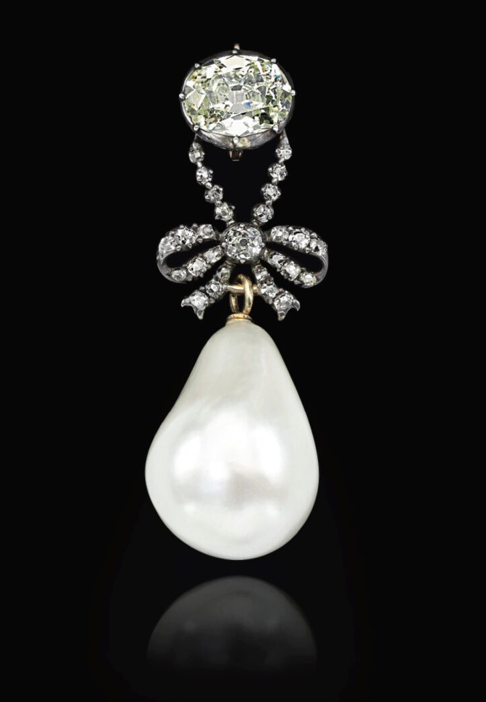
However, that is not the end of the pearl necklace! The original piece was adorned with a pearl pendant which is now an individual brooch but otherwise in the same fashion as before. The large pearl dangles from a bow of smaller diamonds which again are suspended from a large, oval diamond.

This piece was one of the most expensive at the auction and fetched a record price of 36.427.000 CHF! For those of us who do not usually deal with Swiss francs this is 30.851.260 pounds.


In case you are having a hard time imagining the original piece in all its glory, Sotheby's attached the following image: 


A diamond brooch

The trend of bow-shaped brooches was popular throughout most of the latter half of the 18th century. This particular diamond bow belonged to Marie Antoinette. The large, yellow diamond is detachable. Originally, the brooch was a part of a set including possibly a tiara.


Price realised: 2.115.000 (1.791.265 pounds)


A golden pocket-watch

This golden pocket watch looks rather modern compared to the other pieces. When opened, it displays the queen's initials, MA, and three fleurs-de-lys. Besides the gold, the watch is adorned with many small pearls and blue enamel. It would have hung from a chain.


Price realised: 250.000 CHF (211.733 pounds).


The entire auction included 100 lots - some of the pieces have not been seen in public for more than 200 years, as they have been privately owned. The ten pieces that originally belonged to Marie Antoinette sold for a total of 33.740.293 pounds!