Sunday, 3 April 2016

The Families of Power

As in all other countries - especially during these times - a few families held a very large portion of power. During the Ancien Regime in France this was somewhat diminished thanks to Louis XIV's success with distracting his power-hungry courtiers with obscene etiquette. Still, some families maintained a strong name and if you follow the links you will find a brief history of each family with notable members.


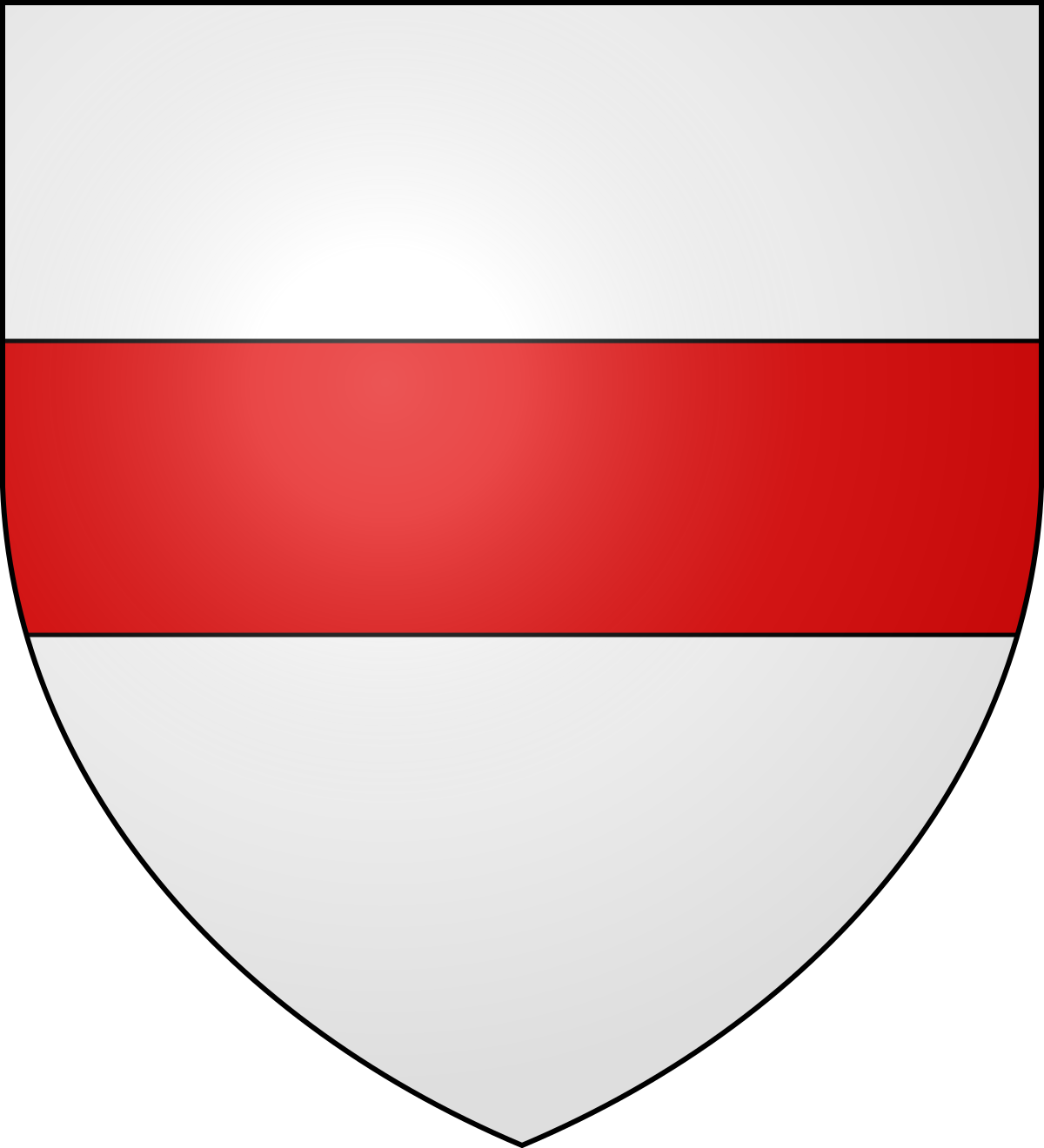
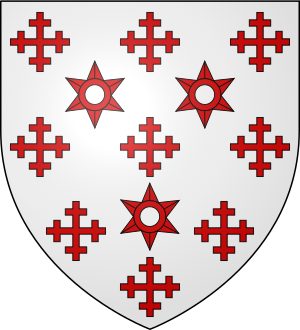
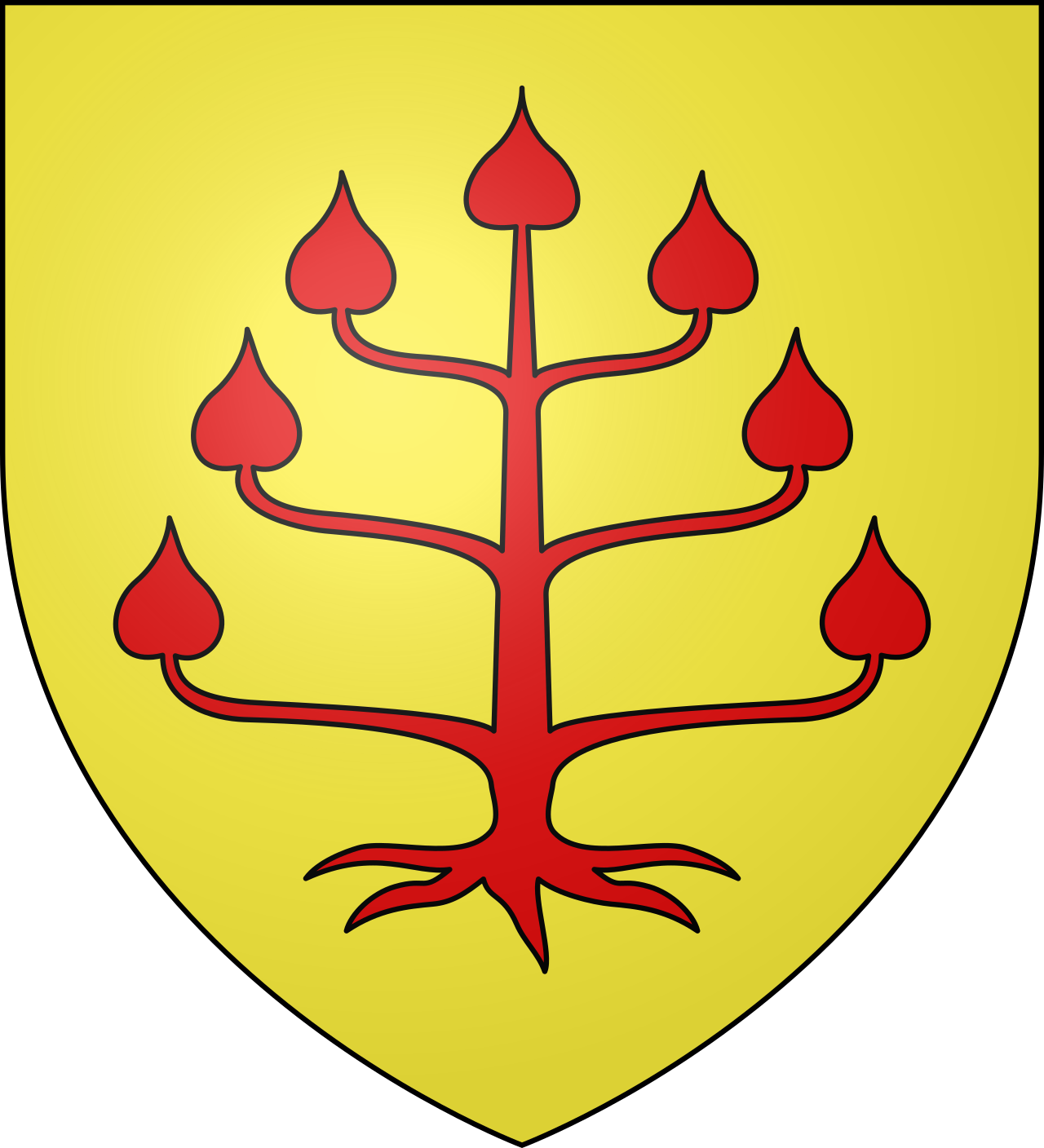
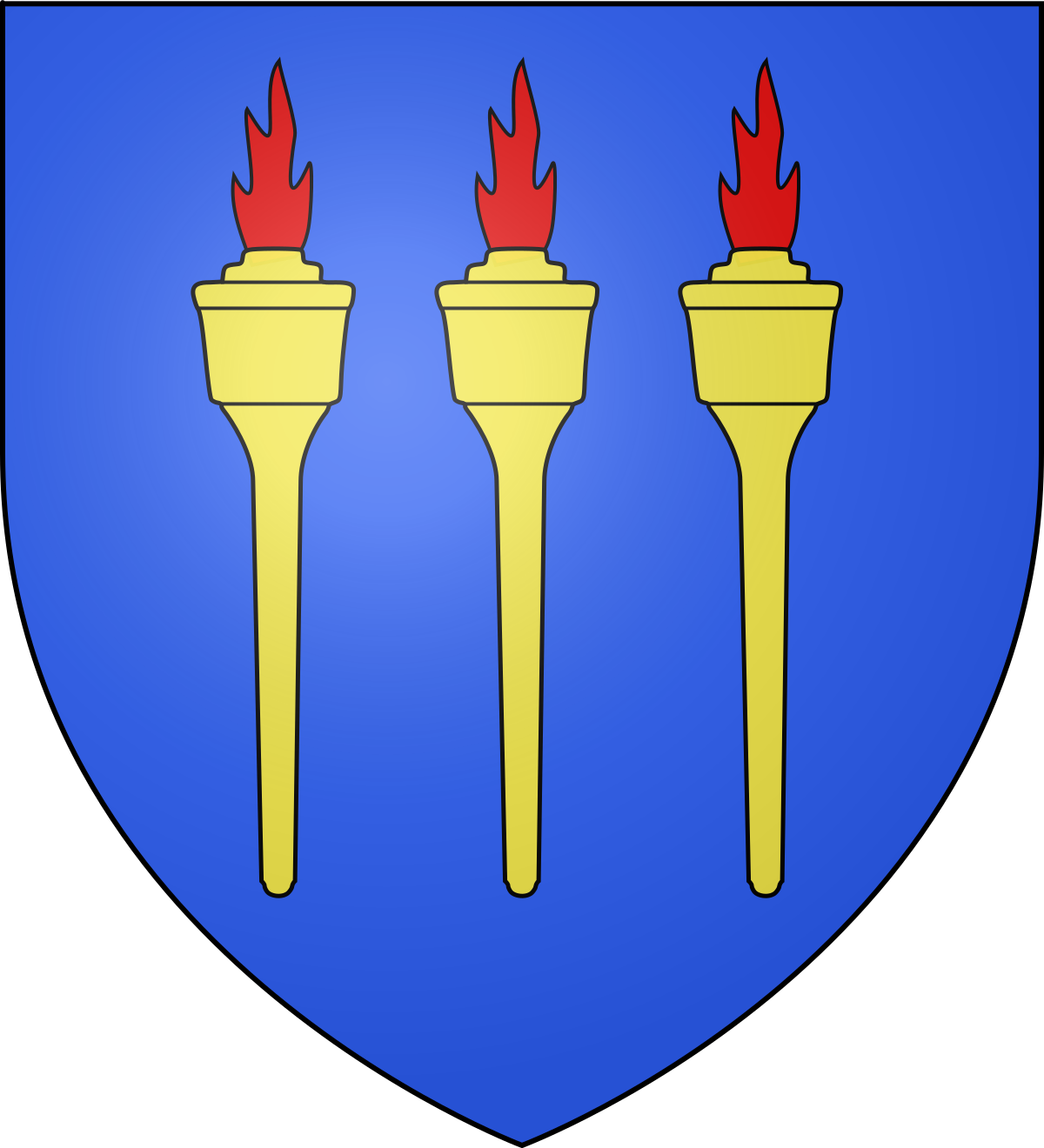
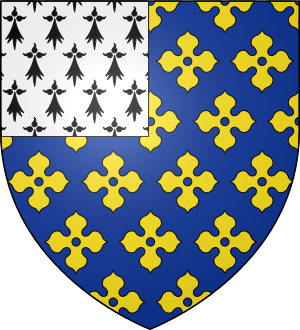
Armes de la famille.
de Villars

GemGemGemGem

Hercule Mériadec, Duc de Rohan-Rohan

Hercule Mériadec de Rohan was born on 8 May 1669 into the prestigious family of Rohan. His family were influential at court and had the honour of being one of only a few permanently established families to hold the title of Prince étranger or Foreign Prince at court.

His parents were François de Rohan and Anne Julie Rohan-Chabot; his mother had for a time been the mistress of Louis XIV which led to speculation as to his younger brother's real paternity. It was his mother who bought the Lordship of Soubise to the family. Hercule Mériadec was the second son and as such was given the lot of being in his older brother's shadow. However, that all changed when his brother died unexpectedly at the age of 22 leaving Hercule Mériadec as the heir of the family.

Rohan, 1. Duc de Rohan-Rohan, 2. Prince de Soubise, Hercule Mériadec de
Hercule Mériadec
With his newly acquired importance he was styled as Prince de Maubuisson until the day when he would inherit his father's dukedom. Given his family's role at court Hercule Mériadec spent the majority of his time there during his lifetime. In 1694 it was decided that he was to marry Anne Genviève de Lévis (better known as Madame de Ventadour) - the wedding took place on 15 February that year. Together the couple would have five children of which three survived to carry on the family line.

In 1710 Hercule Mériadec became Duc de Rohan-Rohan; that same year also saw the birth of his first grand-son, Charles, who would one day succeed him. Five years later his family was given the further distinction of having his wife appointed governess to the child-king Louis XV.
In 1724 the only son and heir to Hercule Mériadec died alongside his wife - both of smallpox. This meant that the then fourteen year old Charles was left orphaned but not abandoned. Hercule Mériadec took the young boy into his own personal care and raised him at court. There Charles became the close friend of Louis XV probably to joy of his grand-father. Sadly, Anne Genviève died just three years after her son leaving Hercule Mériadec a widower.

Following the death of his wife Hercule Mériadec decided to have his town-house, the hôtel de Soubise, redone in the modern style which has survived to this day.

Hercule Mériadec was in no rush to remarry. Actually, he remained unmarried for 27 years before he wed Marie Sophie de Courcillon on 2 September 1732. Unlike his first marriage this match produced no children but at this point the line of succession was already secured.

Hercule Mériadec died at the ripe old age of 79 in 1749.

Thursday, 25 February 2016

The Social Circle of Marie Leszczynska

With the birth of the "Madame Last" the relationship between Louis XV and Marie Leszczynska dwindled into a mere formality. As the King drew further away from the Queen, so did the rest of the court since there was little use in spending time with Her Majesty if it could do nothing for one's career.

However, Marie Leszczynska was not totally abandoned although it often appeared so to spectators.
The family of de Luynes were faithful attendants in the Queen's private apartments with both the Duc and Duchesse de Luynes as well as the Cardinal de Luynes being often in attendance. The son and daughter-in-law of the Duc and Duchesse de Luynes - the Duc de Chevreuse and his wife - were equally welcome at the Queen's table. As it happens the Duc de Chevreuse was deeply in love with the Queen which resulted in many jokes on his behalf within their private little circle.

Marie Leszczynska

Another close friend was Françoise de Mailly, Duchesse de Mazarin who surprised the court when she took the Queen's side during the King's affair with her cousin, Louise Julie de Mailly. Undoubtedly, Marie Leszczynska valued the loyalty shown by the Duchesse.
The Président Hénault was another friend of the Queen's but few held as much confidence with Marie as the Comte d'Argenson.

The Comte d'Argenson enjoyed an extraordinary intimacy with the otherwise reserved Marie Leszczynska. He was even requested not to address the Queen with her august title - a major breach of etiquette which Marie Leszczynska otherwise strictly upheld. Also, it was him she would go to if she wished to procure a pension or position for a favourite; she knew well enough that the King as good as never listened to her.

The Comte d'Argenson

The Queen was generally perceived as belonging to the Dévots whose religious morals and charitable way of living was seen as dull by the rest of the court. Indeed, the Queen's private circle was often referred to as dull; the card parties which etiquette demanded she hosted was said to be frequented only by old courtiers and a few older officers - with the exception of the Duc and Duchesse de Chevreuse no one in her circle was under 60 years of age. Her own father, the ex-King Stanislaus of Poland, claimed that the most boring Queens in Europe must be his wife and daughter.

However, the Queen's private circle of friends were very much in disagreement with that particular notion. They all agreed that Marie was very amusing and would often leave them all in a roar of laughter. It was even hinted that although Marie was a good-natured woman she could have an eye that would miss nothing.

The Queen would dine with these friends almost every night when etiquette allowed. Their evenings were not very eventful and certainly far too dull to attract the melancholy Louis XV and his pleasure-seeking courtiers. Most nights would consist of a little chatter by the fireplace until someone dozed off.

Sunday, 20 December 2015

Madame de Montespan: the Real Queen of France?

Even though Louis XIV never permitted his mistresses to openly insult his wife, the Queen, he himself did nothing to prevent his consort from feeling miserable. The most dominating of the King's mistresses was Madame de Montespan whose magnificence was never matched by any other mistress at Versailles.

But how differently was Marie Thérèse treated from Madame de Montespan?


The long-suffering Marie Thérèse

The King spent most of his time in the apartment of Madame de Montespan where he would do everything from meeting his ministers to dining with their children. Meanwhile the Queen had to be contend with seeing her husband when he decided to fulfil his conjugal duties.

Usually when travelling the Queen had once been reduced to sitting with both Madame de La Vallière and Madame de Montespan. This had been the case in 1673 when Louis XIV dragged the entire court to the front-line - at this time Madame de Montespan was heavily pregnant. But when Madame de Montespan had finally gained complete ascendancy she travelled with the King in his carriage. The Queen was from then on travelling alone or with her ladies in her carriage - behind the King's.

Once Versailles was finally completely finished the difference once again became painstakingly obvious. The Queen was given eleven rooms to make up her apartment on the second floor. Meanwhile, Madame de Montespan could dance around in no less than twenty rooms on the first floor.


Madame de Montespan

Whenever the Queen and the maitresse-en-titre was out promenading their elaborate gown made it necessary to have someone carry their trains. The Queen had to make due with a simple non-titled page but Madame de Montespan had the honour of having her's carried by the Duc de Noailles.

It did not take long before Madame de Montespan even to take control over the Queen's closest circle. Marie Thérèse had been allowed 12 ladies-in-waiting when she became Queen of France. Madame de Montespan worried that having 12 beautiful ladies swirling beneath the King's eyes would be too great a temptation. The ladies-in-waiting were transformed to 12 dames du palais and Athénaïs soon made it possible to dismiss all twelve of them if only one transgressed.

At one point Marie Thérèse was reduced to imploring the favourite to not send a Spanish attendant of the Queen's home to Spain. As it happens, it had been Athénaïs who had had the attendant dismissed in the first place since she had insulted the mistress. Madame de Montespan agreed to letting the Queen keep her friend but the signal was obvious: the mistress outranked the Queen.

Despite these obvious humiliations the Queen never complained to the King. Her complete submission to the King's infidelities resulted in an odd kind of respect from Louis. Although he never treated her with more respect than a Queen should deserve upon her death Louis remarked: "This is the only trouble she has ever caused me".

Saturday, 19 December 2015

Splendour of the Crown: Royal Gifts

As an addition to my other post on New Year's festivities at Versailles I have gathered some examples of the sort of presents that were exchanged within the gilded walls of Versailles. These include presents given in all sorts of occasions.
Gifts of cold hard cash was common too but I find that these represents the splendour of the court of France. Also, posts and positions were frequently given away, especially at weddings.


Presents
When the Duchesse de Bourgogne gave birth to the future Louis XV she received an oriental casket from Louis XIV. It opened via a secretly hidden spring and once the Duchesse found it she discovered a perfect set of pearls and 4.000 louis d'or.

Louis-Philippe received two horses from the royal stables when he first met Louis XV at the age of fourteen

Marie Antoinette sent a chemise à la Reine to her friend, the Duchess of Devonshire. Once the Duchess had been seen sporting the new trend it immediately became all the rage.


Wedding Presents

Marie Thérèse sent Louis XIV a beautiful chest filled with chocolate - a treat that had not yet established itself at the French court.

Louis XIV gave jewellery worth 73.000 livres to Mademoiselle d'Orlèans when she married the Duc de Berri. The groom was given jewels worth a staggering 300.000 livres!

When the King's brother, Monsieur, married Louis XIV bestowed on him the vast palace of the Palais-Royal. It would remain in the hands of the Orlèans family.

Madame de Montespan arranged the marriage of one of her sons to the eldest daughter of the Duc d'Uzès, Julie-Françoise. She then proceeded to give the bride a necklace of diamonds and emeralds worth 40.000 écus and a basket filled with scents, ribbons, fans and gloves.

Marie Antoinette received the diamonds and pearls that had belonged to the previous Dauphine as well as a single-row pearl choker brought to France by Anne of Austria. A fan encrusted with diamonds was also a part of the King's wedding gifts; so was bracelets with her cipher written on the blue enamel clasps. As a gesture of good faith Madame Adélaïde gave the new Dauphine a key that would allow her to use the private corridors. 

It was common - especially during Louis XV's reign - to give the ladies attending a wedding (such as maid-of-honour) fans as presents.

New Year's Presents

When Madame de Montespan's career as the King's maitresse-en-titre was coming to an end Athénaïs decided to grant her (soon-to-be) former lover a present in her typical splendid style. Athénaïs paid 4000 pistoles to have a book illustrating the sieges of the campaign in Holland in 1672 created. Not only was the book bound with gold it contained verses by Racine and Boileau. Louis XIV was thrilled with his present.

The first son of Marie Antoinette and Louis XVI was gifted with a set of dominos made from the same stone and marble used for the Bastille.

Marie Lescszynska received a golden snuff-box from the King; however, what the Queen did not know was that the box had originally been intended for the King's new mistress, Madame de Pompadour's mother.

Diplomatic Presents

Louis XIV received the speciality wine of Transylvania called Tokaji from Francis II Rákóczi. That actually resulted in wine becoming rather popular with the French court.

In 1668 Louis XIV received an elephant from the King of Portugal. The elephant had originally come from Congo and died in 1681.

In 1686 the King of Siam sent a substantial amount of gifts to the entire royal family. These gifts were as exotic as one would expect from the King of Siam since they all related to the relatively new trend of drinking hot chocolate. The King received two silver chocolate pitchers; similarly the Dauphin was also given two pitchers but these were decorated with elaborate floral motifs in gold. The Queen received a smaller but golden pitcher.

Two porcelain vases, a centrepiece and two smaller ewers were sent from Saxony to France as a part of the plan to have the Dauphin married to Marie Josepha of Saxony. In that same period another set was made for the Duc de Richelieu who had been sent to Saxony for the proxy wedding in January 1747.

In 1758 Louis XV sent the first diplomatic set of Sèvres-porcelain to King Frederik V of Denmark. It consisted of 72 plates and 164 hollow ware pieces; the cost was 34.542 livres. The set was in response to a stallion of the Frederiksborg breed sent by the Danish King earlier.

Plate from the set sent to
Frederik V


Madame de Pompadour played an essential role in getting Louis XV closer to a reconciliation with Austria and for that Empress Maria Theresia (Marie Antoinette's mother) sent the royal favourite two lacquer boxes from the Empress' own collection. The boxes were personally selected and sent from Vienna. The gift truly was magnificent since the mounts were not of ormolu as was usually the case but of solid gold and a portrait of the Empress was incorporated into the design. 

Louis XVI received two large eagles for the royal menagerie from the Governor of Kamchatka

Estate Presents

Louis XIV gave Madame de Montespan the estate of Clagny in response to the golden book mentioned earlier in 1682

In 1769 Louis XV gave the château de Louveciennes to Madame du Barry

A month after ascending to the throne in 1774 Louis XVI handed over the keys for the Petit Trianon to Marie Antoinette.

Madame Élisabeth received the estate of Montreuil - where she had spent a great part of her childhood - as a present from her brother.

Thursday, 10 December 2015

The Battle for the Throne: The Princes vs. the Legitimised Bastards

In the early years of the 1700's the King was old and everyone had their eyes both on the still all-powerful Louis XIV and on who were to succeed him.
After Louis XIV had legitimised his sons by Madame de Montespan the French court was primarily divided into two opposing factions: that of the Princes and that of the legitimised sons.

The Princes' faction was made up of the old garde of the French nobility; these were the proper noble families whose birth was not stained by bastardy. That last part was especially easy to publicly demonstrate since the legitimised children of the King were obliged to display a clear bar on their coat-of-arms indicating their dubious ancestry. That was not required of those born on the right side of the sheet.


Portrait of Philippe d'Orléans, Duke of Orléans in armour by Jean-Baptiste Santerre.png

Especially the houses of Orlèans, Conti and Condé were the frontrunners of the Princes' faction. The Legitimised party was headed by the Comte de Toulouse and the Duc du Maine - referred to as "the bastards" by the Duc de Saint-Simon - but had the support of the other children of the King - most of whom had been married into the noble families of France. Another supporter was Madame de Maintenon whose patronage can probably be traced back to the support from the King's natural children to see her recognised as Queen of France.

Everything depended on who were to rule France once the King was dead. Since the Dauphin was just a few years old the Duc d'Orlèans was entitled to the regency. To prevent this from happening the Legitimised faction launched an attack on the would-be regent. When the Duc and Duchesse de Bourgogne suddenly died the rumours of poisoning swept through court. Thanks to the combined efforts of the legitimised sons and the King's confessor (another supporter of "the bastards") it did not take long to point out the suspect. Soon after the public took hold of the idea as well and the Duc d'Orlèans had to put up with being shouted after when he went to Paris.


Duc du Maine2.jpg
The Duc du Maine

After considering the case news reached the Duc d'Orlèans at his estate of Saint-Cloud that the King had found him to be entirely innocent. Just like that everything changed once again for the future Regent - and the bastards.

In 1715 on the first day of September Louis XIV died and all hell broke lose. However, since the Duc d'Orlèans had been publicly cleared of the charges made against him he stood in a strong position to claim the regency. But the will of the late monarch disappointed him; rather than naming the Duc d'Orlèans as Regent, Louis XIV had established a regency council - with the Duc du Maine and Comte de Toulouse. Although the Duc would still be presiding over the council he would have no actual power.

Portrait painting of Louis Alexandre de Bourbon, Count of Toulouse by Hyacinthe Rigaud.jpg
The Comte de Toulouse
The end to the bitter feud came swiftly and dramatically. Already on the day after the King's death the Duc d'Orlèans swept into Paris and declared that he had law and tradition on his side (which was true). The "bastards" could only sit and watch as the Duc d'Orlèans easily gained the approval of the gathered parlament. By the end of that day it was settled. The Duc d'Orlèans became Regent while the King's legitimised sons quickly went into an embarrassing retreat.

Tuesday, 1 December 2015

The South Wing - First Floor of 1775-80


A) Duchesse de Tallard (Governess of the Children of France until she was replaced by the Princesse de Lamballe)

B) Apartments of Mesdames Tantes

C) Unknown

D) Mademoiselle de Roche-sur-Yon

E) Comte d'Estrées

F) Grand Prior

G) Comte de Toulouse

H) Governor of the Dauphin

I) Marèchale Berwick

J) Madame de C.

K) Unknown Monsieur

L) Duchesse de Duras

M) Prince de Rohan

N) Captain of the Guard

O) Duchesse de Luynes

NOTE: Apartments D and E were given to the Princesse de Lamballe when she became Governess of the Children of France